Custom Transformer Head-to-Head: Dry-Type vs Oil-Immersed Selection
The choice between a dry-type and an oil-immersed Custom Transformer is a project decision, not a product preference. In a direct head-to-head, dry-type cast-resin transformers are normally selected for indoor, fire-sensitive or close-to-load locations, while oil-immersed transformers are normally selected for conventional distribution and power substations, larger capacity ranges and outdoor installations. The wrong starting point is to ask which type is 'better'. The right starting point is to fix the installation location, the applicable fire strategy, the electrical duty and the substation format, then let those constraints select the insulation and cooling architecture.
Custom Transformer here means an engineered-to-order unit: the rating, vector group, impedance, tap changing, cooling, enclosure and interface are fixed for the project rather than taken from a catalogue. Apex Power Systems (Nanjing) Co., Ltd. is an international trading and supply-partner company for power transformers and substation equipment; it is not a manufacturing factory, was established in 2024, and supplies through audited manufacturing partners. That distinction matters in a head-to-head evaluation because the buyer is not only choosing dry-type or oil-immersed - the buyer is also choosing how the supplier will audit, test, document and deliver the unit.
Problem Definition: The Type Decision Is a Freeze Point
The most expensive mistake in a custom transformer project is to freeze the transformer type before the installation context is fixed. A dry-type unit may be technically compliant but unsuitable if the project has no indoor electrical room and needs a large outdoor power transformer. An oil-immersed unit may be technically compliant but creates oil-handling and maintenance obligations where a dry-type unit could be placed close to the load.
The decision also changes the enclosure and interface. A Dry Type Transformer for Data Center may sit inside the building, while an Oil Immersed Transformer may be integrated into a Box Type Substation, Prefabricated Compact Substation, European Box Substation, American Box Substation or Containerized Mobile Substation. Each choice changes civil works, footprint, testing, documentation and commissioning. For that reason, the comparison should be run before the enquiry is issued, not after the drawings are approved.
The same logic applies when the package includes Complete Switchgear, Medium Voltage Switchgear, Gas Insulated Switchgear (GIS), Air Insulated Switchgear (AIS) or a Ring Main Unit (RMU): the transformer type must be coordinated with the switchgear, protection and automation interface. The transformer is not an isolated item in a substation package.
Industry Background: Why Both Architectures Remain in Demand
Demand is not uniform, which is why both architectures remain relevant. According to Fortune Business Insights, the global transformer market is estimated to reach USD 80.8 billion in 2026. Grand View Research projects the global distribution transformer market to grow from USD 26.0 billion in 2026 to USD 47.7 billion by 2033 at a CAGR of 9.1%. The U.S. data center substation market was valued at USD 3.44 billion in 2024, according to Grand View Research, and the box-type substation for photovoltaics market is estimated at USD 4.54 billion in 2026. These are different duty profiles: data centers and commercial buildings concentrate dry-type demand indoors, while distribution grids, PV plants, wind farms and energy-storage projects use both oil-immersed and dry-type units depending on site layout.
Efficiency rules also shape the decision. China's GB 20052-2024 'Minimum allowable values of energy efficiency and energy efficiency grades for power transformers' took effect on 1 February 2025. In the United States, the DOE 2024 rule for distribution transformers requires a transition towards amorphous electrical steel starting in 2029. Neither rule selects dry-type or oil-immersed by itself, but both make loss evaluation part of the comparison. A Low Loss Energy Efficient Transformer specification should be checked against the destination market's rules before the design is frozen.
Detailed Solution: A Direct Decision Rule
Use the following rule as the first filter. If the transformer will be installed indoors, close to occupied areas, or in a location where an oil-free design is preferred, start with a dry-type unit. If the transformer will serve a conventional distribution or power substation, needs a larger distribution capacity, or will be installed outdoors in an oil-immersed substation package, start with an oil-immersed unit. Then verify the electrical duty and the destination-market compliance before either choice is confirmed.
Dry-Type First
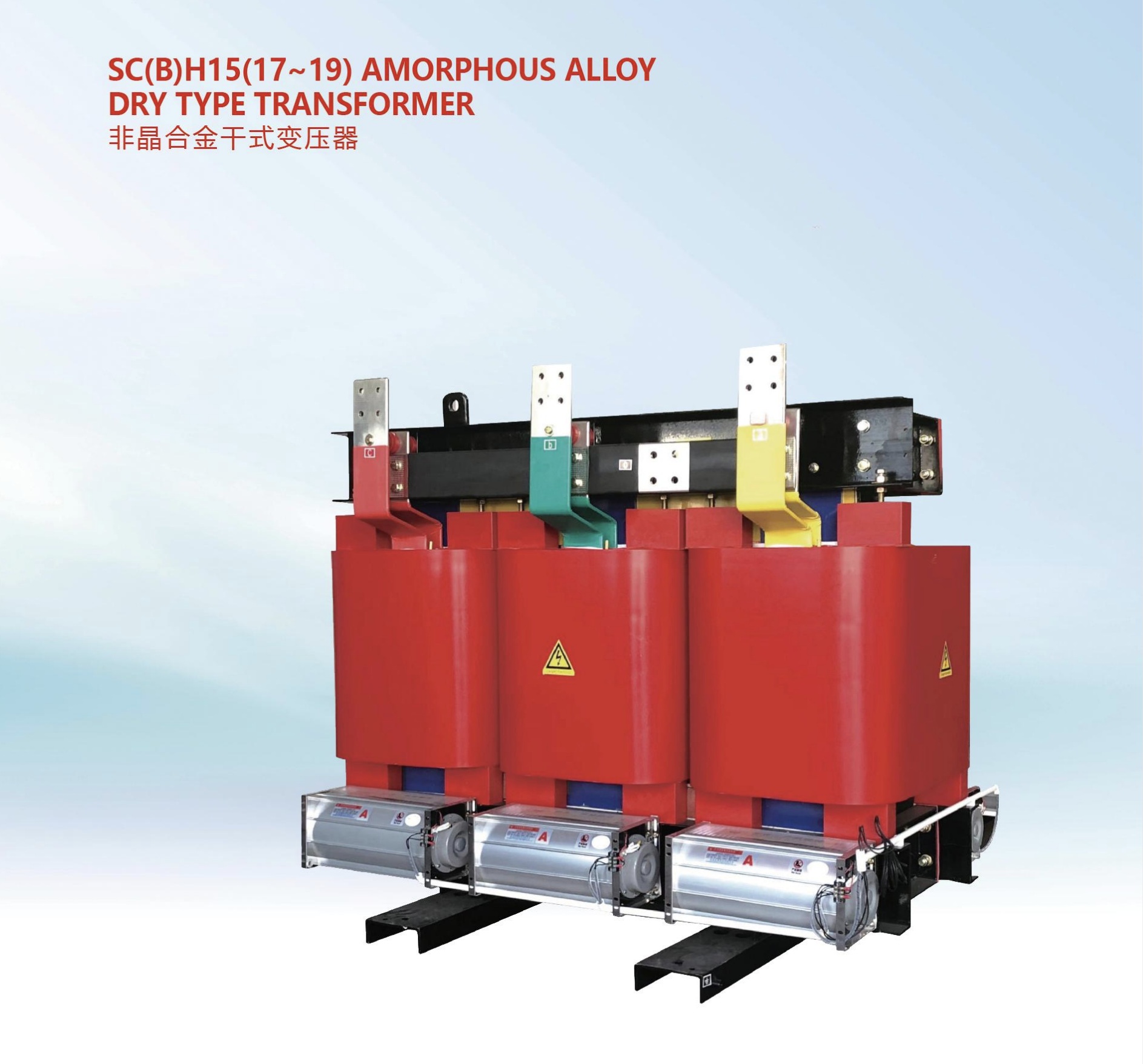
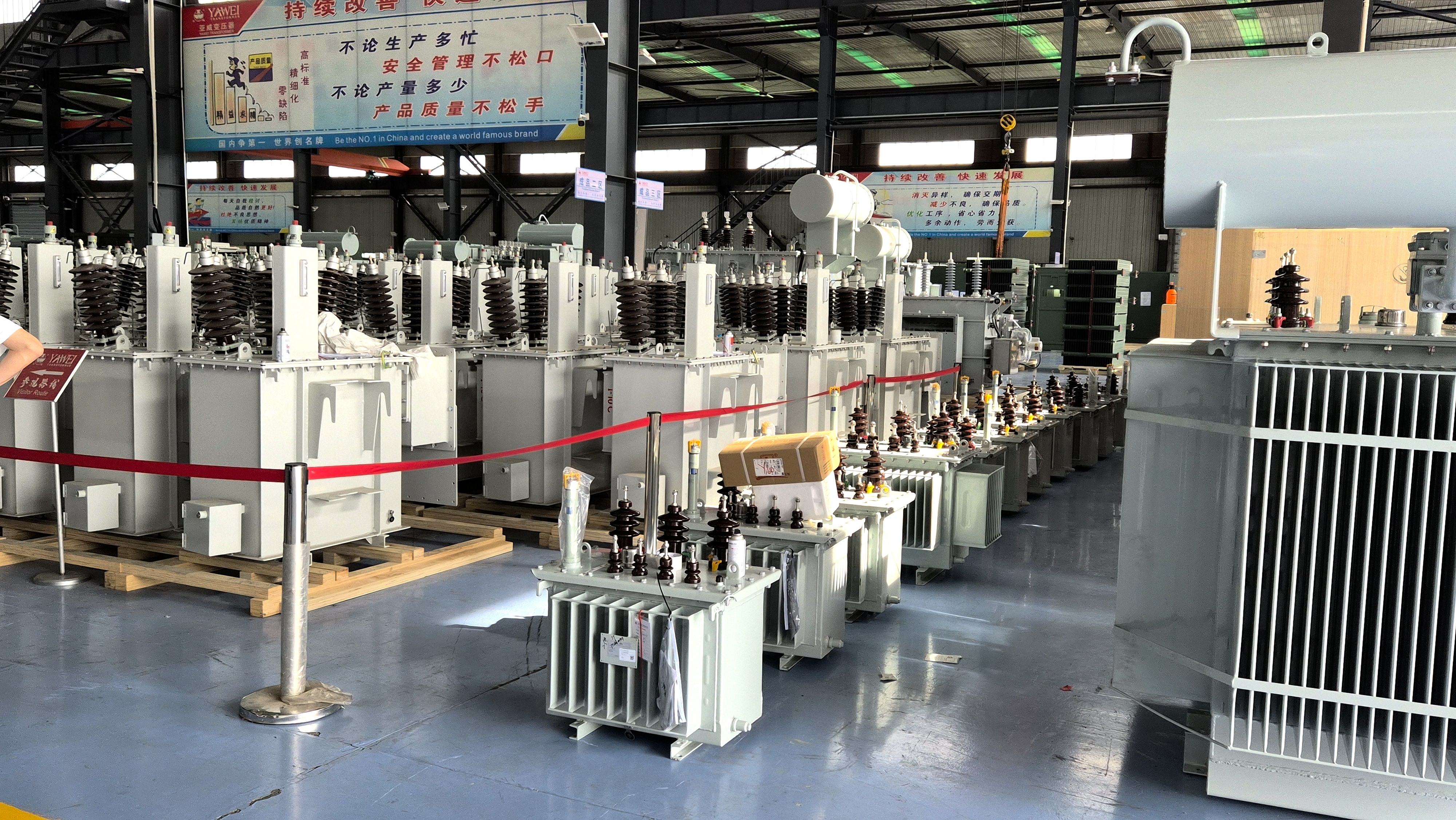
The SCB12-SCB18 Series is an epoxy resin cast dry-type power transformer. Rated capacity is 30-2,500 kVA for the 10 kV class and 800-25,000 kVA for the 35 kV class; the 35 kV class is available up to 25,000 kVA for large industrial and renewable-energy applications. HV is 6/10/10.5/11/20/35 kV; LV is 0.4/0.69/3.15/6.3/10.5 kV; frequency is 50/60 Hz; vector group is Dyn11 or Yyn0; insulation class is F (155°C) or H (180°C); cooling is AN or AF; temperature-rise limits are F 100 K and H 125 K; protection is IP00/IP20/IP23.
The dry-type design contains no insulating oil, is flame-retardant and explosion-resistant, and can be installed close to the load. It is maintenance-free and easy to install, with low lifecycle cost. The cast-resin design is moisture-resistant: it operates normally at 100% humidity and can be energised after shutdown without pre-drying. Under forced-air cooling it can carry up to 150% rated load. H-class non-encapsulated, amorphous-alloy and marine versions are available. The series is IEC 60076-11 compliant.
Oil-Immersed First
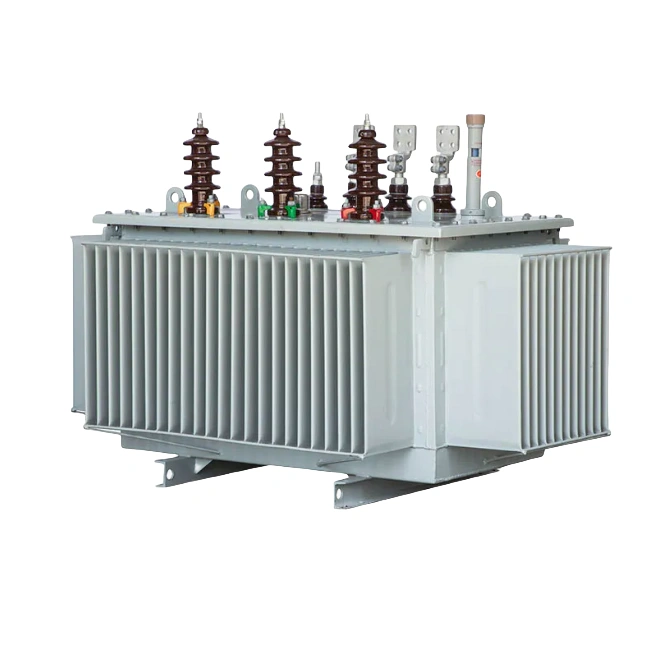
The S13/S14/S15 Series is a three-phase two-winding oil-immersed distribution transformer. Rated capacity is 30-3,150 kVA for the 10 kV class and 3,150-31,500 kVA for the 35 kV class. HV is 6/10/10.5/11/35 kV; LV is 0.4/0.69/3.15/6.3/10.5 kV; frequency is 50/60 Hz; vector group is Dyn11 or Yyn0; impedance voltage is 4/4.5/6/6.5/7/8/10%; tap changing is off-circuit ±2×2.5% or on-load; cooling is ONAN; efficiency is Grade 1 or Grade 2 under GB 20052.
The tank is corrugated for ratings up to 1,600 kVA and uses tubular radiators for ratings of 2,000 kVA and above. Insulating oil can be No. 25 mineral oil, No. 45 low-temperature oil or FR3 natural ester oil. The unit is fully sealed. For this series, average no-load current is reduced by 60-80% and average no-load losses by 25-35%.
For large power duty, the SFZ-250000/345 (250 MVA/345 kV) is a three-phase oil-immersed on-load voltage regulating power transformer. It is rated 345/34.5 kV at 60 Hz, vector group Dyn1, with cooling stages ONAN 185 MVA, ONAF1 225 MVA and ODAF2 250 MVA. Tap range is (345 +17/-17 × 0.625%) / 34.5 kV. Lightning impulse withstand is HV 1175 kV and LV 200 kV; switching impulse withstand is HV 975 kV. The OLTC is 3×SHZVI-400/363C-18353W. The unit is supported by a KEMA Labs Type I Inspection Report and tested to IEC 60076-1/-2/-3/-10/-11 and IEEE C57.12.00/C57.12.90.
Where both types are technically feasible, the decision should be made on five project criteria: installation location and fire strategy; required capacity and voltage class; substation or enclosure format; maintenance capability and oil handling; and destination-market certification. A generic preference for 'dry' or 'oil' is not a selection method.
Step-by-Step Breakdown: How to Run the Head-to-Head
Step 1: Fix the installation location and fire strategy
Record whether the unit will be installed indoors or outdoors, in an electrical room, a commercial building, a tunnel, a data center, an industrial plant or a substation yard. For a Dry Type Transformer for Data Center or a unit in a hospital, school, subway or high-rise building, the oil-free construction of the SCB12-SCB18 Series is the natural starting point. For an outdoor distribution substation, a Box Type Substation or a Prefabricated Compact Substation, the oil-immersed S13/S14/S15 series is the natural starting point.
Step 2: Define the electrical duty
Fix the capacity, HV and LV voltage, frequency, vector group, impedance voltage, tap-changing requirement and cooling stage. For a Medium Voltage Transformer or High Voltage Transformer, the vector group and impedance must be stated on the enquiry because they affect parallel operation and protection. The dry-type SCB12-SCB18 range covers 10 kV up to 2,500 kVA and 35 kV up to 25,000 kVA. The oil-immersed S13/S14/S15 range covers 10 kV up to 3,150 kVA and 35 kV up to 31,500 kVA; the SFZ-250000/345 covers 250 MVA at 345 kV.
Step 3: Select insulation and cooling
For dry-type, choose F or H insulation class and AN or AF cooling. For oil-immersed, choose ONAN cooling and the oil grade: No. 25 mineral oil, No. 45 low-temperature oil or FR3 natural ester oil. The cooling class and temperature-rise limits define the permissible loading, so they must be checked against the ambient temperature and altitude of the site. Do not compare a dry-type AN rating with an oil-immersed ONAN rating without confirming the cooling stage and temperature-rise basis.
Step 4: Select the enclosure or substation format
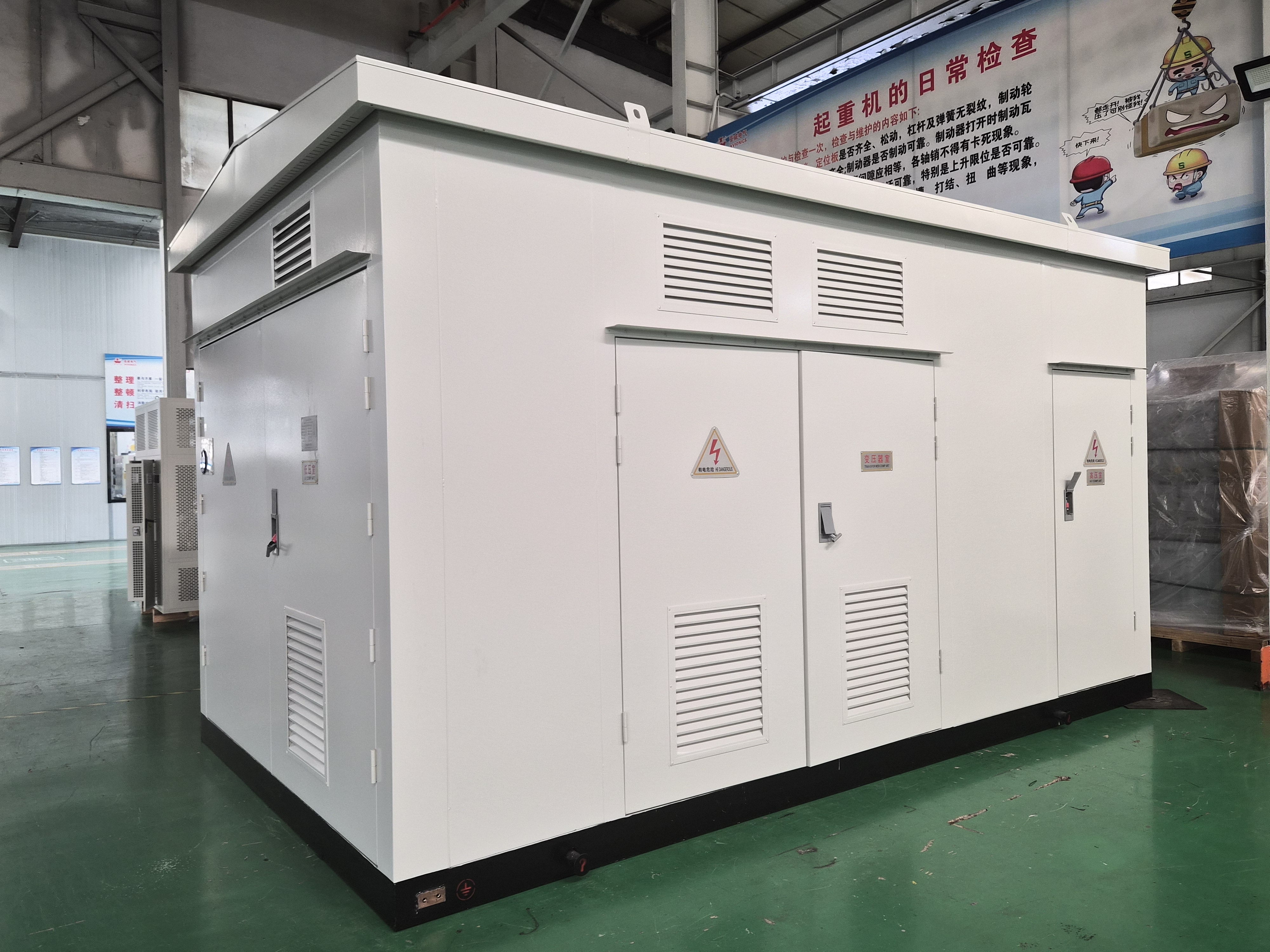
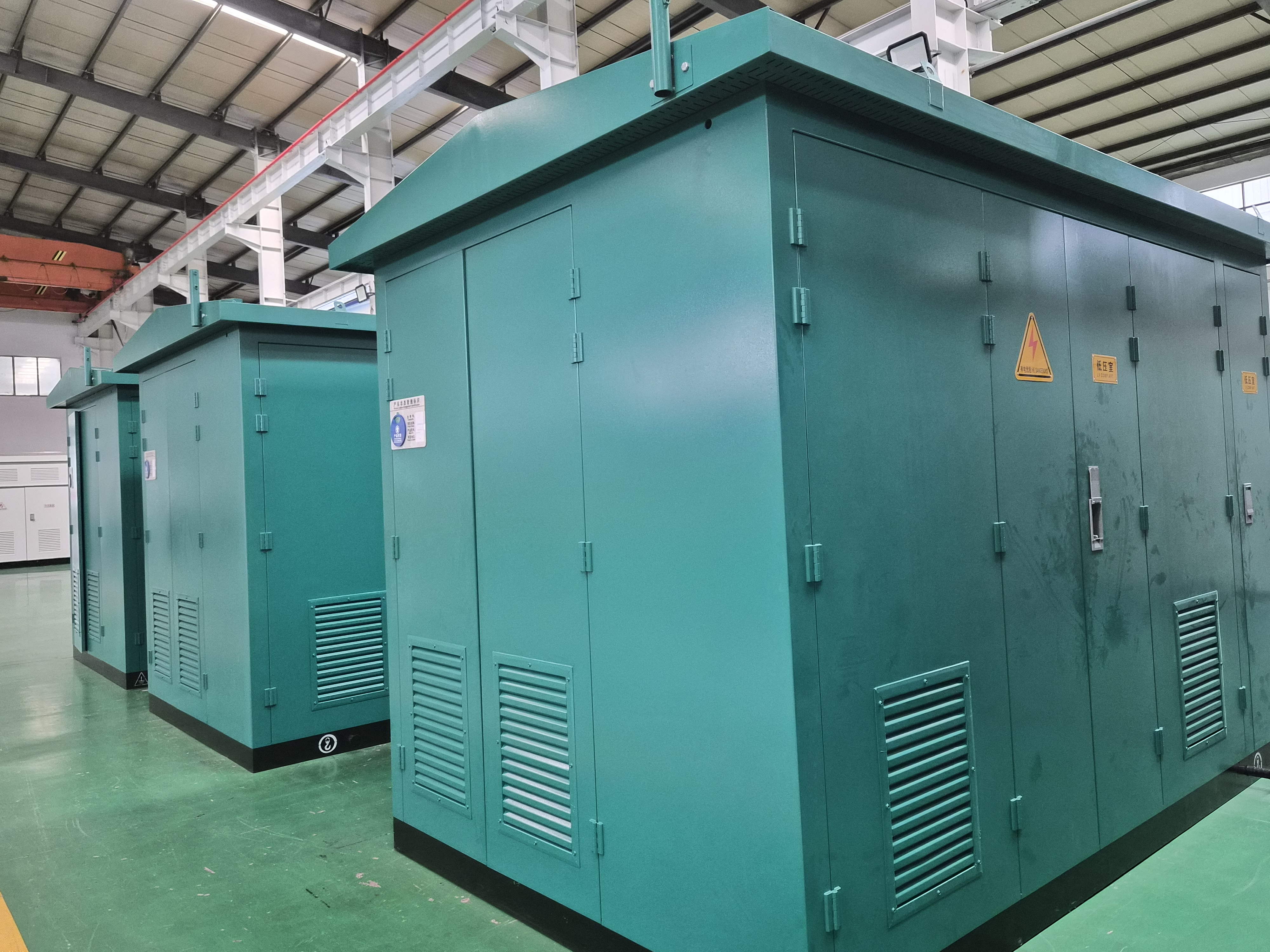
A dry-type unit may use IP00, IP20 or IP23 protection and sit in an indoor electrical room. An oil-immersed unit may be supplied as a standalone transformer, or integrated into a Box Type Substation, Prefabricated Compact Substation, European Box Substation, American Box Substation or Containerized Mobile Substation. The prefabricated cabin substation YBM/ZGS11/ZGS13 is a 10/35 kV package with transformer capacity of 500-50,000 kVA; the transformer can be oil-immersed or dry-type. It integrates HV switchgear, transformer, LV switchgear, compensation equipment, automation system, AC/DC power supply and environmental control, with IP54/IP55 protection and an ambient temperature range of -40°C to +50°C.
Step 5: Match compliance to the destination market
For IEC projects, the dry-type SCB12-SCB18 series is IEC 60076-11 compliant, and the oil-immersed range is supported by IEC 60076 testing. For North America, liquid-filled distribution transformers rated above 750 V are certified to UL requirements for the United States and CSA standards for Canada, supported by the IEEE C57.12 series. The manufacturing base holds UL Certificates of Compliance covering XPLH7 transformers, distribution, liquid-filled type, over 750 volts, certified for Canada, evaluated to CSA C2.1-06 (1st Ed.) and CSA C227.4 (3rd Ed.). For utility projects, the purchasing utility's own specification and the IEEE C57.12 test requirements also apply.
Step 6: Plan factory tests and documentation
Write the test programme into the purchase order. For oil-immersed and dry-type units, the factory acceptance programme should include ratio, winding resistance, no-load and load loss, insulation, temperature rise and lightning impulse as applicable. Apex controls quality risk by requiring witnessed routine and type tests at factory acceptance and by arranging third-party inspection where required. The same discipline applies to the 250 MVA/345 kV power transformer, which is supported by a KEMA Labs Type I Inspection Report.
Step 7: Plan installation and commissioning
Dry-type units are maintenance-free and moisture-resistant, and can be energised after shutdown without pre-drying. Oil-immersed units require oil processing and oil testing: the installation sequence includes vacuum treatment, oil filling under vacuum, dielectric strength and moisture checks, ratio and winding resistance tests, protection checks, tap-changer operation and trial operation under load. The installation method for a prefabricated cabin substation is transport as a complete unit and crane lifting with on-site connection, which reduces site work in regions with limited infrastructure.
Use Cases: Where Each Type Fits
Data centers and AI computing parks
For indoor MV/LV distribution inside a data center or AI computing park, the dry-type SCB12-SCB18 transformer is the recommended starting point because it contains no insulating oil, is suited to fire-sensitive locations and handles non-linear, harmonic-rich IT load. For the main incoming supply, an oil-immersed power transformer or a prefabricated substation is the recommended starting point because higher capacities are available. Where the site must be energised quickly, a containerized prefabricated substation removes most site civil works. This is the practical meaning of a Dry Type Transformer for Data Center specification: dry-type inside the building, oil-immersed or prefabricated at the incoming supply.
Commercial buildings, hospitals and transport hubs
High-rise buildings, commercial centers, hospitals, schools, subways, stations, airports and tunnels are dense, fire-sensitive environments. The dry-type SCB12-SCB18 series is designed for indoor electrical rooms and commercial buildings, with low noise, no oil pollution and close-to-load installation. The oil-immersed S13/S14/S15 series remains appropriate where the project has a dedicated distribution substation or outdoor transformer area and the oil-immersed unit can be integrated into the substation design.
PV, wind and energy-storage projects
The New Energy Transformer SC10/SZ18/SZ20 is available in oil-immersed or dry-type configuration. Its LV output range of 0.4-1.14 kV is compatible with inverters from different brands, and the prefabricated cabin configuration can shorten construction time by up to 60%. A 40,000 kVA energy-storage project in Bulgaria has been delivered. For a Box Substation for Solar Power Plant, the choice between oil-immersed and dry-type should follow the site layout, fire strategy and local substation practice; both configurations are available in the prefabricated cabin package.
Distribution grids and industrial plants
Urban and rural distribution-grid construction and upgrades, industrial plant auxiliary power, commercial buildings, residential communities, hospitals, schools and municipal utilities are the core applications of the oil-immersed S13/S14/S15 series. The series is also used in transformer packages for renewable-energy substations. Reference projects include a 15 MVA pad-mounted transformer project for an American transmission company in the United States, a 132 kV power transformer for the Seville steel-plant substation in Spain, and a 345 kV fully-insulated power transformer project for a US-Georgia power transmission company.
Mining and hazardous locations
Underground coal mines, underground metal mines, tunnel construction and explosion-proof areas in chemical plants require a different answer: the KBSG/KBSGZY Series mining explosion-proof dry-type transformer. It is a dry-type unit in a flameproof welded steel enclosure, with rated capacity 50-6,300 kVA, HV 6/10 kV, LV 0.4/0.69/1.2/3.3/3.45 kV, H-class insulation, AN cooling and Exd I marking for underground coal mines. This is not a general dry-type versus oil-immersed comparison; it is a hazardous-area selection where the enclosure and certification drive the decision.
Comparison Table: Dry-Type vs Oil-Immersed Custom Transformer
| Decision factor | Dry-type (SCB12-SCB18) | Oil-immersed (S13/S14/S15 and SFZ power) | Selection implication |
|---|---|---|---|
| Insulation and cooling | Vacuum-cast epoxy resin; AN or AF cooling; F (155°C) or H (180°C) insulation; temperature rise F 100 K / H 125 K. | Paper-oil insulation; ONAN cooling; No. 25 mineral oil, No. 45 low-temperature oil or FR3 natural ester oil; fully sealed tank. | Dry-type is oil-free; oil-immersed requires oil handling and oil testing in the project scope. |
| Capacity range | 30-2,500 kVA at 10 kV; 800-25,000 kVA at 35 kV. | 30-3,150 kVA at 10 kV; 3,150-31,500 kVA at 35 kV; SFZ-250000/345 at 250 MVA/345 kV. | Both cover distribution duty; oil-immersed covers larger distribution and power transformer ratings. |
| Typical installation | Indoor electrical rooms, high-rise buildings, commercial centers, data centers, hospitals, schools, subways, airports and tunnels. | Distribution grids, industrial plant auxiliary power, outdoor or indoor substations, renewable-energy substations and power transmission projects. | Fix the installation location before the type is frozen. |
| Enclosure and protection | IP00/IP20/IP23; stainless steel or powder-coated steel enclosure options. | Fully sealed tank; corrugated tank up to 1,600 kVA; tubular radiators at 2,000 kVA and above. | The enclosure changes civil works, footprint and installation method. |
| Loss and efficiency options | Low losses and low partial discharge; up to 150% rated load under forced-air cooling. | Average no-load current reduced by 60-80% and average no-load losses by 25-35% for the S13/S14/S15 series; Grade 1 or Grade 2 under GB 20052. | These are not a direct dry-type versus oil-immersed loss comparison; evaluate the specified unit, cooling stage and destination-market rule. |
| Energy-saving option | Amorphous-alloy dry-type version available in the S(B)H15(21-25)-M family. | Amorphous-alloy oil-immersed version available in the S(B)H15(21-25)-M family; no-load losses 60-80% lower than conventional silicon-steel transformers. | Amorphous alloy is a core option, not a substitute for the dry-type versus oil-immersed decision. |
| Standards and certification | IEC 60076-11 compliance. | IEC 60076 testing; KEMA Labs Type I Inspection Report for the 250 MVA/345 kV unit; UL/CSA for liquid-filled distribution transformers over 750 V in North America. | Certification must match the destination market and the product family, not just the brand. |
| Maintenance | Maintenance-free; moisture-resistant; can be energised after shutdown without pre-drying. | Routine oil testing (dielectric strength, moisture and dissolved gas analysis), breather and cooling-system checks, and tap-changer operation checks. | Choose the type the owner can actually maintain over the service life. |
| Best fit | Indoor, fire-sensitive, close-to-load and oil-free locations; data centers; commercial buildings; hospitals; transport hubs. | Conventional distribution and power substations; larger distribution capacity; outdoor substation packages; transmission projects. | Use the project constraints to select the architecture, then verify the rating and compliance. |
Table notes: The capacity, cooling, insulation, protection and application facts above are drawn from the SCB12-SCB18, S13/S14/S15 and SFZ-250000/345 product data. The UL/CSA statement applies to liquid-filled distribution transformers rated above 750 V for North America. The GB 20052 and DOE 2024 references are regulatory context, not a claim that one transformer type is automatically compliant.
FAQ
What standards should I specify for dry-type and oil-immersed custom transformers?
For a dry-type unit in the SCB12-SCB18 range, specify IEC 60076-11 compliance. For oil-immersed distribution transformers in the S13/S14/S15 range and for the SFZ-250000/345 power transformer, specify the applicable IEC 60076 test programme. For North America, liquid-filled distribution transformers rated above 750 V must be certified to UL requirements for the United States and CSA standards for Canada, supported by the IEEE C57.12 series; the manufacturing base holds UL Certificates of Compliance covering XPLH7 transformers, distribution, liquid-filled type, over 750 volts, certified for Canada, evaluated to CSA C2.1-06 (1st Ed.) and CSA C227.4 (3rd Ed.). For utility projects, add the purchasing utility's own specification and the IEEE C57.12 test requirements.
Can both dry-type and oil-immersed transformers be supplied inside a prefabricated or box-type substation?
Yes. The YBM/ZGS11/ZGS13 prefabricated cabin substation is a 10/35 kV package with transformer capacity of 500-50,000 kVA, and the transformer can be oil-immersed or dry-type. The package integrates HV switchgear, transformer, LV switchgear, compensation equipment, automation system, AC/DC power supply and environmental control, with IP54/IP55 protection and an ambient temperature range of -40°C to +50°C. It is transported as a complete unit and crane-lifted for on-site connection.
How do efficiency rules affect the dry-type versus oil-immersed decision?
Efficiency rules make loss evaluation part of the comparison, but they do not automatically select one type. China's GB 20052-2024 took effect on 1 February 2025, and the U.S. DOE 2024 rule for distribution transformers requires a transition towards amorphous electrical steel starting in 2029. The oil-immersed S13/S14/S15 series is available in Grade 1 or Grade 2 under GB 20052. The S(B)H15(21-25)-M amorphous-alloy transformer is available in oil-immersed or dry-type form, with no-load losses 60-80% lower than conventional silicon-steel transformers. The correct approach is to specify the required efficiency grade for the destination market, then compare the losses of the actual quoted units.
Can I witness factory tests before shipment?
Yes. Apex controls quality risk by auditing the plant's production and test equipment before ordering, and by requiring witnessed routine and type tests at factory acceptance, including ratio, winding resistance, no-load and load loss, insulation, temperature rise and lightning impulse as applicable. Third-party inspection can be arranged where required. The 250 MVA/345 kV power transformer is supported by a KEMA Labs Type I Inspection Report. The buyer can also request factory visits and witnessed factory acceptance testing as part of the order.
How do I start a custom transformer inquiry with a China supplier?
Send the installation location, single-phase or three-phase duty, capacity, HV and LV voltage, frequency, vector group, impedance voltage, tap-changing requirement, cooling, enclosure or substation format, destination market and required standards. Apex Power Systems (Nanjing) Co., Ltd. is a trading and supply partner, not a manufacturing factory; it audits the manufacturing partners, verifies certificates with the issuing body, and manages design, production, factory acceptance testing, documentation, freight and commissioning. For a project-specific review, contact xuke@apexps-nj.com, telephone or WhatsApp +86 132-0157-1341, or visit apexpowerlink.com.
Conclusion: Select the Constraint, Then the Transformer
The dry-type versus oil-immersed decision becomes simple once the constraints are fixed. Start with the installation location and fire strategy, then the electrical duty, then the enclosure or substation format, then certification and testing. Dry-type cast-resin units are the natural choice for indoor, fire-sensitive, close-to-load and data-center applications. Oil-immersed units are the natural choice for conventional distribution and power substations, larger distribution capacities and outdoor substation packages. Where both are technically feasible, compare the quoted losses, maintenance capability, oil handling and destination-market certification - not a generic product preference.
Apex Power Systems (Nanjing) Co., Ltd. supports this selection as an independent trading and supply partner, not as a factory. The company was established in 2024, exports to the EU, USA and Middle East markets, and supplies through audited manufacturing partners. For a project inquiry, use the contact details below and request the current catalog.
Next Step: Request a Project Review
Send your dry-type or oil-immersed Custom Transformer requirement with the installation location, capacity, voltage class, vector group, cooling and destination market. Apex can review the specification, confirm the applicable compliance route and arrange factory acceptance testing through the audited manufacturing partners.
Contact: Simon | Email: xuke@apexps-nj.com | Tel / WhatsApp: +86 132-0157-1341
Address: Room 1001, Xinke Building, No. 209 Pubin Road, Jiangbei New Area, Nanjing City, Jiangsu Province, China
Website: apexpowerlink.com | an-ele.com
Have Questions or Need More Details?
Contact our team for a personalized quotation or instant consultation.
Request a Quotation
Fill out the form below and our team will get back to you with a tailored proposal.
WhatsApp Direct Chat
Prefer to chat in real-time? Message us on WhatsApp for instant assistance & quick answers.
- Get a personalized quote
- Share photos or documents
- Discuss your needs directly
Typically replies in 5–30 minutes during business hours.