Custom Transformer Recommendation List for Mining: Special Mining and Distribution Units
For a mining project, the order of the shortlist matters more than its length. The recommended sequence is: 1) Special Transformer (Mining), KBSG / KBSGZY series — first, wherever the scope genuinely requires a mine-duty unit rather than a re-applied distribution transformer; 2) oil-immersed distribution transformers, S13 / S14 / S15 series — the volume unit for surface yards, workshops, camps, conveyors and pump stations; 3) prefabricated cabin substations, YBM / ZGS11 / ZGS13 — where the intake or a satellite station must be factory-assembled, factory-tested and energised quickly. Dry-type SCB12–SCB18 transformers sit outside the ranked three as a conditional alternative, used where the installation location rules out insulating oil.
Apex Power Systems (Nanjing)Co., Ltd. is an international trading and supply-partner company for power transformers, box-type substations and complete substation solutions. It is not a factory: it selects and audits Chinese manufacturing partners, then manages design review, production supervision, testing, documentation, freight and site commissioning on the buyer's behalf. Every certificate and test report cited below belongs to those audited partners rather than to Apex itself.
One boundary applies to the whole article. The supplied reference record contains utility, heavy-industrial, energy-storage and commercial deliveries — including a 132 kV steel-plant substation transformer in Seville, a 345 kV unit for a US-Georgia transmission company and a 15 MVA pad-mounted project in the USA — but no named mining site. The ranking below is therefore built from documented product scope, rating coverage and customisation capability, and each entry still has to be validated against the mine's own load schedule, environment and statutory approvals.
Why a mine cannot simply reuse a distribution-transformer shortlist
The electrical problem on a mine is the familiar one of load flow, fault level and insulation coordination. What changes is the set of conditions wrapped around it. Feeders run long distances to shovels, drills, crushers and conveyor drives, so motor starting and voltage dip become everyday design questions rather than occasional ones. Variable-speed drives and rectifier loads inject harmonic current into a network that may be weak at the far end. Equipment stands in dust, wash-down water and, at some sites, aggressive groundwater, at ambient temperatures and altitudes that vary from the coast to the high Andes.
Two commercial conditions matter just as much. First, mine layouts move: a distribution point that serves one pit phase may need to be relocated or re-rated for the next. Second, maintenance windows are short and skilled site labour is scarce, which shifts value towards equipment that is assembled, tested and documented before it leaves the factory. A general distribution transformer re-applied to mine duty leaves all of these questions to be argued case by case at the tender stage; a unit that is specified as a mine-duty special transformer starts from the application itself.
None of this makes a standard distribution transformer unsuitable everywhere on a mine. The correct reading is architectural: the mine-duty position and the ordinary distribution positions are different slots in the single-line diagram, and they should be filled by different product families rather than by one family stretched to cover both.
How the recommendation order was set
The three ranked entries are ordered by four criteria, none of which is price and none of which is a measured performance comparison: how specifically the family addresses mine duty; whether documented rating and voltage coverage reach the mine's distribution level; what verification evidence exists for the family; and how the equipment is delivered and commissioned. The dry-type option is placed outside the ranking because, in the assigned scope, it is a conditional substitution rather than a competing first choice.
Rank 1 — Special Transformer (Mining), KBSG / KBSGZY series
The mining special transformer takes first place because it is the only entry in the supplied product range that is defined by the application rather than by the network level. The manufacturing partners list mine-duty units within a special-purpose transformer category that also contains furnace, rectifier and traction units, and supply them under the KBSG / KBSGZY series designation. That matters in procurement terms: a mine-duty requirement can be written into the enquiry as a named product family, instead of being expressed as a list of extra conditions attached to a distribution transformer.
The customisation scope behind these units is what makes the family usable across different mine designs. It covers custom voltage ratios, capacities, impedances, vector groups and tap ranges; special cooling methods; noise reduction; anti-corrosion classes C3, C4 and C5; high-altitude derating; seismic design; and special protection ratings IP54 and IP55. For a mine, those are the levers that answer the practical questions — how much voltage dip a long feeder and a large motor starter will produce, how much ingress protection the switchyard or plant room demands, and how much corrosion allowance the local water chemistry justifies. A technical proposal normally follows in 3–5 business days and the design cycle runs 15–30 days, with a one-unit minimum order.
What the supplied data does not establish. The product data provided for this article does not include a rating or voltage table for the KBSG / KBSGZY series, and it does not include a mining-specific statutory approval such as a national mining mark. What it does include is conformity evidence for other product families — IEC, UL, CSA, CE and EAC — plus classification-society and KEMA type testing. A buyer whose regulator requires a mining-specific approval should make that approval a tender condition and require the certificate number before design freeze; an absent document in this article is not evidence that the unit cannot be built, only that the document was not supplied here.
Four parameters should be fixed in writing at enquiry stage, because they are the ones that cannot be corrected cheaply after manufacture: the vector group, so the unit can be paralleled with existing mine transformers; the impedance, so motor starting and downstream fault levels stay inside the protection settings; the tap range, so the unit can be adjusted as the pit's load grows; and the ingress protection and anti-corrosion class, so the enclosure matches the plant room or switchyard it stands in.
Rank 2 — Oil-immersed distribution transformer, S13 / S14 / S15 series
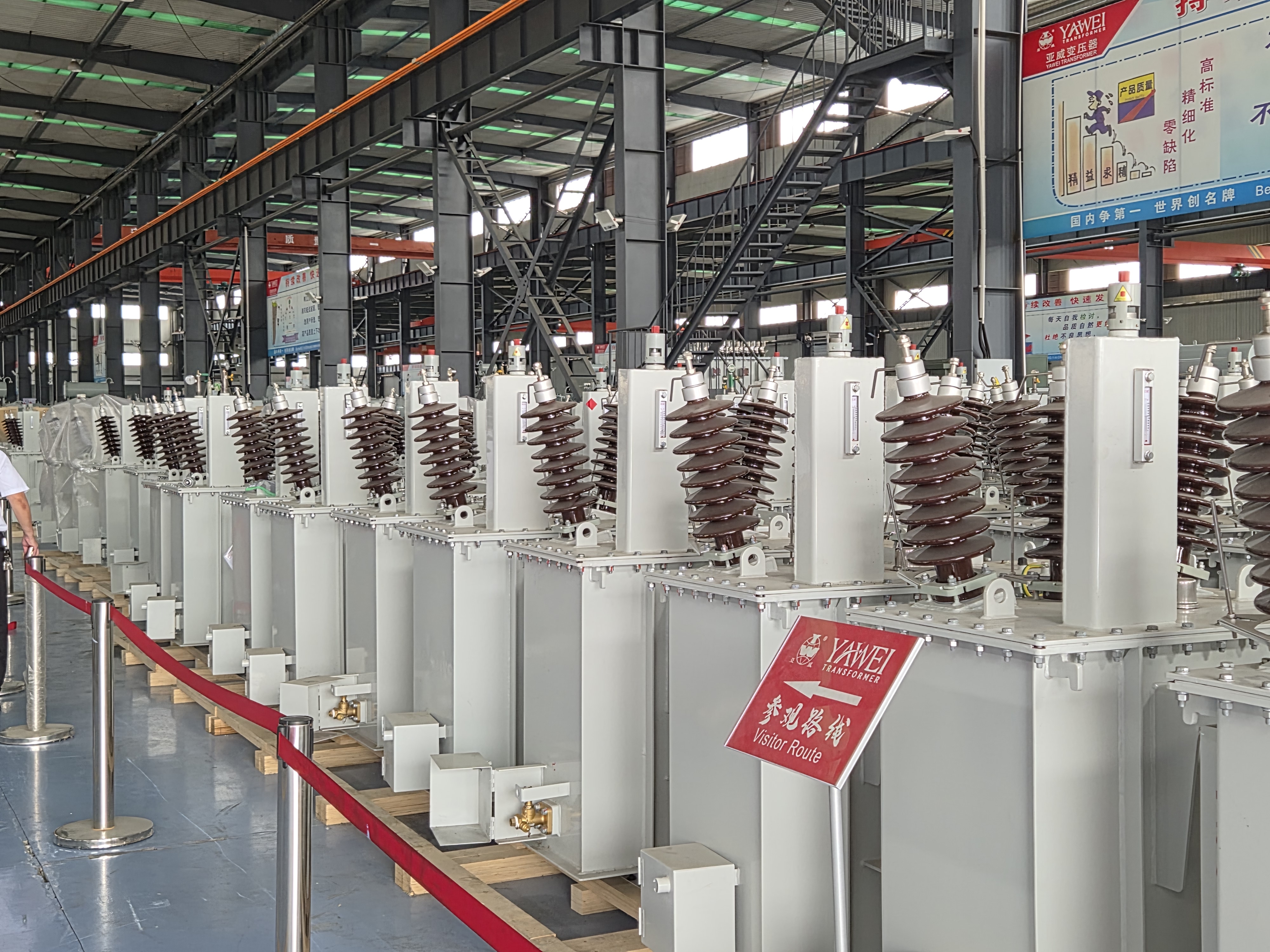
The oil-immersed distribution range is the second entry because it carries the largest share of a mine's distribution load, not because it is a substitute for a mine-duty unit. It is documented from 5 kVA to 3,150 kVA at the 10 kV class and up to 31.5 MVA at the 35 kV class, with high-voltage classes of 6, 10, 11, 13.2, 13.8, 24.94 and 34.5 kV and low-voltage outputs of 0.4, 0.69, 0.415, 0.48 and 0.6 kV at 50 or 60 Hz. Copper or aluminium windings and amorphous or silicon-steel cores are both available, with corrugated or radiator tanks.
That coverage maps directly onto the surface layer of a mine: workshops, the camp, offices, conveyor drives, dewatering pumps and small processing loads. Capacity is documented at approximately 100 units per month for 35 kV oil-immersed units, with a 30–60 day lead time on standard models and 45–75 days on customised ones. Routine testing follows IEC 60076 or ANSI/IEEE C57.12 and covers turns ratio, winding resistance, no-load and load losses, impedance, insulation and oil quality, with type and special tests available on request.
Verification for this family is the strongest in the supplied set. A KEMA inspection report, 109600301-26, records routine, type and special tests witnessed by KEMA inspectors between 23 and 28 December 2025 and issued on 12 February 2026, against IEC 60076-1, -2, -3 and -10 together with IEEE C57.12.00:2021 and C57.12.90:2021. North American liquid-immersed certification is held under UL-CA-2242874-0, UL-CA-2320692-0 and UL-CA-2328358-0 to CSA C2.1-06 and CSA C227.4; CE certification under the EMC Directive is held as M.2022.206.C7198 and 3N230310.JYTU038, valid to 7 September 2027; and EAC declaration POCC RU Д-CN.PA01.B.07433/24 is valid to 25 February 2027 to GOST Р 52719-2007.
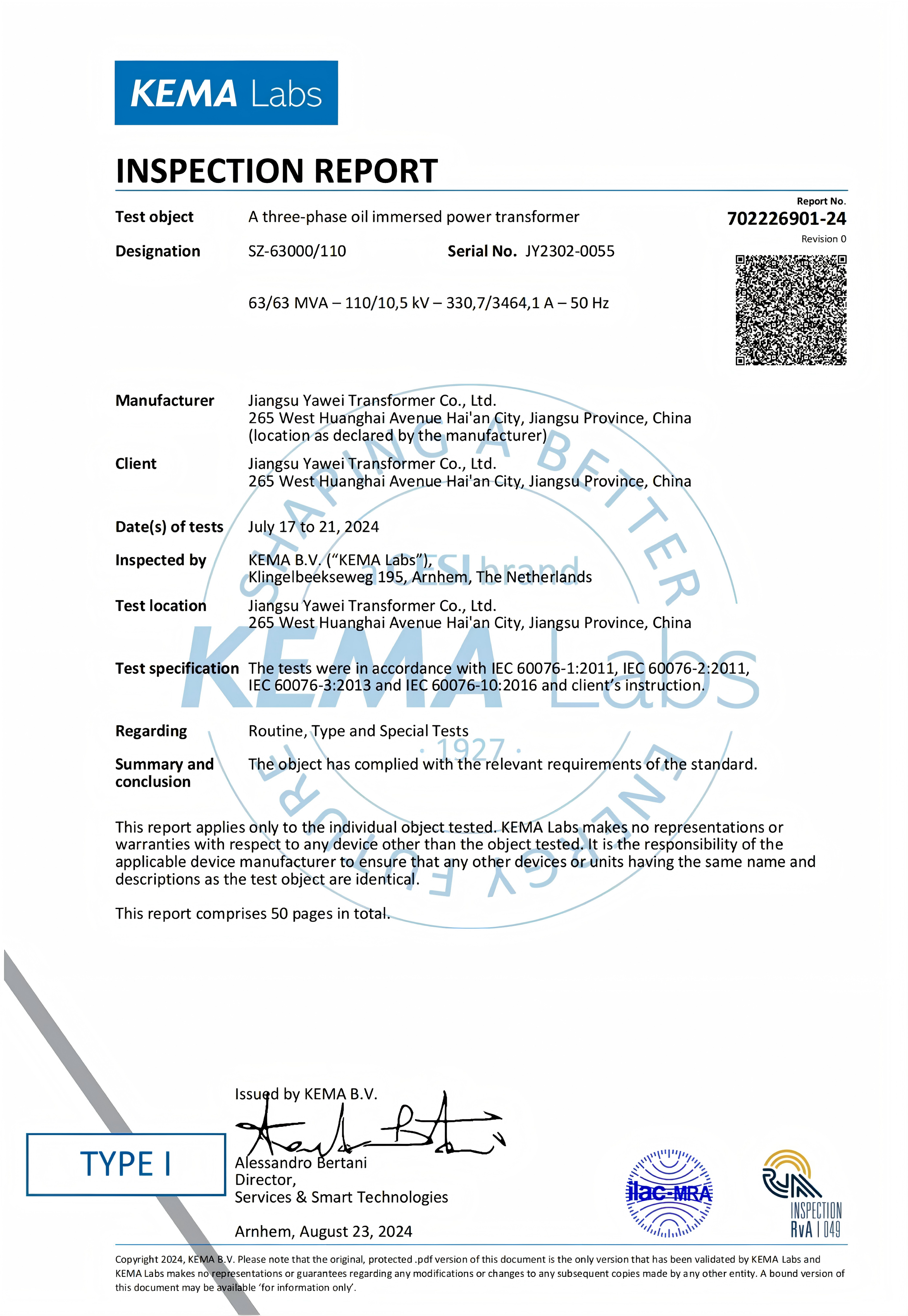
The limitation is inherent to the technology rather than to the supplier: an oil-filled unit needs oil testing as part of its maintenance regime and needs fire separation or bunding where the local code requires it. Where a mine connects at 110 kV or above, the same supply base builds power transformers from 10 kV to 765 kV with a maximum of 250 MVA, including a 250 MVA / 345 kV unit covered by KEMA Type I inspection report 702226901-24, tested 17–21 July 2024 — but that is a transmission-level discussion and sits outside this shortlist.
Rank 3 — Prefabricated cabin substation, YBM / ZGS11 / ZGS13
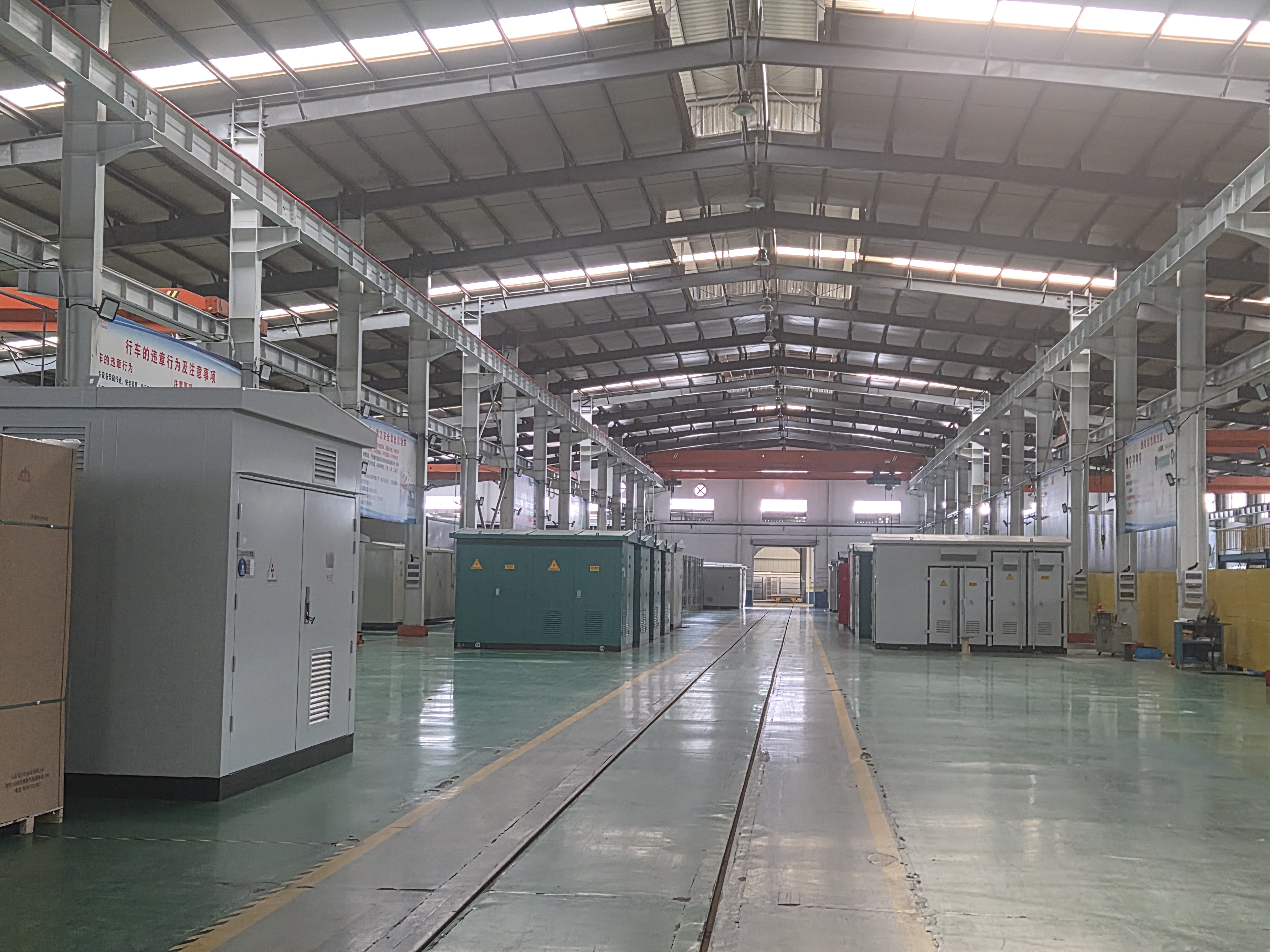
The prefabricated cabin substation is third because it is a supply arrangement rather than a transformer type: it packages whichever transformer the network study selects, together with the surrounding equipment. Documented scope covers 10 kV and 35 kV cabins from 500 kVA to 50,000 kVA, integrating HV switchgear, transformer, LV switchgear, automation and monitoring in one enclosure. Assembly and full-load testing happen in the factory, and the delivery route runs from prefabrication through modular transport to site connection, with integrated system commissioning tests and a 12–24 month warranty, plus remote monitoring options.
It earns its place on a mine for three situations: a remote intake where civil works would dominate the schedule, a satellite station that must be energised before the plant is complete, and a site where skilled erection labour is the real constraint rather than the transformer itself. Lead time is documented at 90–120 days, with a one-cabin minimum order. Naming is worth settling early in the tender, because the same family is described in different markets as a box-type substation, pad-mounted substation, packaged substation, prefabricated cabin or containerised substation.
The trade-off is that a prefabricated unit is only as good as its internal single-line diagram. The buyer is committing to a fixed internal arrangement, so the specification must fix protection, metering, cable entry, earthing and the spare-capacity margin at the design stage. Conventional civil-built stations remain the better answer where very large capacity, complex multi-bay layouts or local utility standards require a bespoke arrangement.
Alternative — Dry-type transformer, SCB12–SCB18 series, where conditions call for it
Dry-type units contain no insulating oil, which is why they are used in indoor, underground and public locations and in fire-sensitive areas; they need less maintenance but are generally limited to lower voltage classes and cost more per kVA at large ratings. Within this supply base, dry-type manufacture is scoped up to 35 kV, at approximately 56 units per month for 35 kV dry-type units. North American evidence is held as UL-US-26119070-0 for the United States and UL-CA-2687596-0 for Canada, issued 29 May 2026 against UL 1561 Ed.4 and CSA C22.2 No.47 Ed.5, alongside an EAC declaration for the dry-type range valid to 25 February 2027.
At a mine, the realistic triggers are a plant room or MCC building where oil is excluded by the owner's fire strategy, a confined or underground location, or a destination code that rules out oil-filled equipment at that spot. The decision should follow the installation environment, voltage class, capacity and local fire-code requirements rather than preference. An industrial precedent in the supplied record is a Consorcio Industrial S.A. installation combining an SCB10-1000 kVA dry-type transformer at 13.2/0.4 kV with an SG-400 kVA isolation transformer at 0.38/0.22 kV, operating since 2023 — an industrial distribution reference, not a mining one.
Side-by-side comparison
| Rank and option | Where it fits on a mine | Documented scope | Evidence to request |
|---|---|---|---|
| 1. Special Transformer (Mining) KBSG / KBSGZY | Distribution points the project design classifies as mine duty, where a general distribution unit is not the intended starting point | Mine-duty series within a special-purpose range; custom ratio, impedance, vector group, tap range, cooling, IP54/IP55, C3–C5 anti-corrosion, altitude derating. Rating table not included in the supplied data | Technical proposal and approved drawings; type-test reports for the exact rating; the mining approval the destination regulator requires, named in the contract |
| 2. Oil-immersed distribution transformer S13 / S14 / S15 | Surface distribution: workshops, camp, conveyors, pump and dewatering stations, offices | 5–3,150 kVA at 10 kV class; up to 31.5 MVA at 35 kV class; HV 6–34.5 kV; LV 0.4–0.69 kV; 50/60 Hz; Cu or Al; amorphous or silicon-steel core; ~100 units/month at 35 kV; 30–60 days standard | KEMA 109600301-26; UL-CA-2242874-0 and related; EAC POCC RU Д-CN.PA01.B.07433/24; CE M.2022.206.C7198 |
| 3. Prefabricated cabin substation YBM / ZGS11 / ZGS13 | Remote intake, satellite station, staged expansion, sites limited by skilled erection labour; relocatable | 10/35 kV, 500–50,000 kVA; HV switchgear + transformer + LV switchgear + automation + monitoring; factory pre-assembly and full-load testing; 90–120 days | Integrated system commissioning test plan; IEC routine and type tests; the internal single-line diagram fixed at design stage |
| Alternative (not ranked). Dry-type transformer SCB12–SCB18 | Indoor, confined or fire-sensitive locations where oil is excluded by the owner's fire strategy or local code | Oil-free; manufacturing scope up to 35 kV; ~56 units per month at 35 kV dry-type | UL-US-26119070-0 / UL-CA-2687596-0 (UL 1561 Ed.4, CSA C22.2 No.47 Ed.5); dry-type EAC declaration |
Step-by-step: from shortlist to a fixed specification
- Build the load and network schedule. Record capacity in kVA with a growth margin, the HV and LV voltage levels, the vector group required for parallel operation, the cooling class, and whether an on-load or off-circuit tap changer is needed. Non-linear load should be identified at this stage, not after the transformer is ordered.
- Fix the point of supply and the station architecture. Decide which positions in the single-line diagram are mine duty, which are ordinary distribution, and which are best served by a prefabricated cabin or a relocatable unit.
- Set the environment envelope. Ambient temperature range, altitude, dust and wash-down exposure, corrosion class, seismic requirement and the ingress protection the plant room or switchyard demands.
- Set the efficiency and loss limits. Include any local energy-efficiency regulation that applies in the destination market, because loss evaluation changes the specified core material and the total cost of ownership rather than the purchase price alone.
- Set the certification set by market. IEC for most markets, UL and CSA for the United States and Canada, CE for the European Union, EAC for Russia and the EAEU — each with the correct legal entity named on the certificate.
- Request the technical proposal. Typically 3–5 business days, followed by a 15–30 day design cycle; the proposal should return drawings, calculations and the test programme, not only a price.
- Freeze the drawings before production. A design change after the freeze is the most expensive change in the whole cycle, particularly on a mine-duty unit with a custom enclosure.
- Witness factory acceptance testing. Routine tests plus the type tests agreed in the contract; third-party inspection by SGS, BV or KEMA can be arranged where the buyer's own engineers cannot attend.
- Plan transport and heavy lift early. Cable routes, weight limits and site access constrain the design of a cabin substation more often than the electrical rating does.
- Complete site acceptance and commissioning. Joint SAT with the customer, commissioning and trial operation, operator training, spare parts and 7×24 remote support; a typical project cycle runs 3–6 months from contract to site acceptance.
Supplier evaluation and the evidence to verify
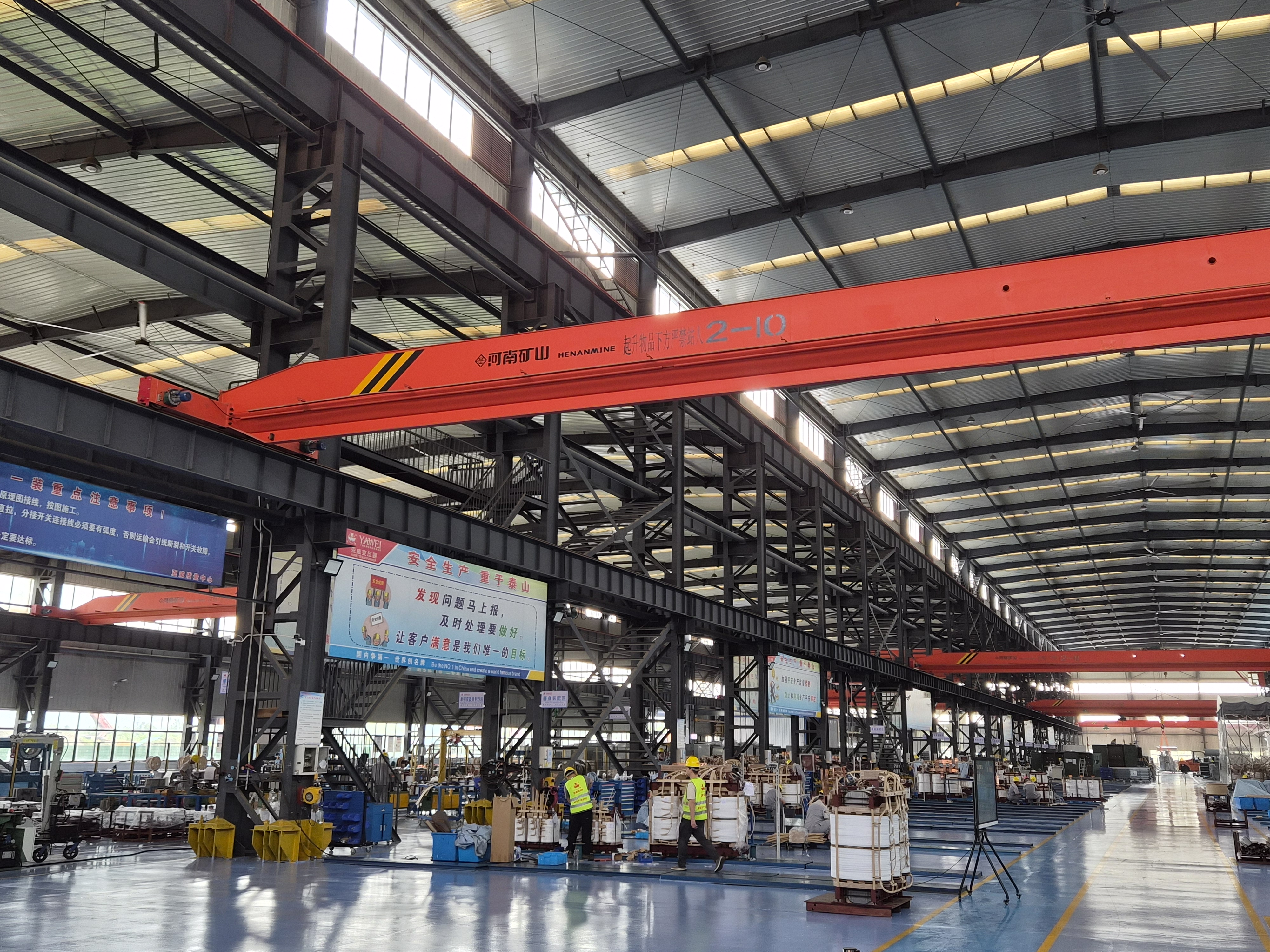
Selecting the transformer is half the decision; the other half is selecting the party that will still be accountable when the unit arrives. The checklist is consistent across all four options: verified manufacturing and test capability for the rating ordered; current certifications in the correct legal entity name that cover the ordered product family; export record and reference projects of comparable rating; production capacity and current order book; financial standing; willingness to accept witnessed testing, third-party inspection and warranty obligations; and documentation capability in the buyer's language. Shortlist two or three plants and audit each against the same form, so the comparison is evidence-based rather than brochure-based.
Certificate verification follows three checks: confirm the number directly with the issuing body rather than accepting a scan, confirm the expiry date, and confirm that the holder's legal entity name and the listed model range actually match the contracting party and the unit being bought. Two legal limits are worth knowing. A UL Certificate of Compliance confirms that representative samples were evaluated, but authority to apply the UL Mark is granted separately under the UL Follow-Up Services procedure. A CE declaration of conformity always remains the manufacturer's own responsibility, supported by voluntary third-party verification but never replaced by it.
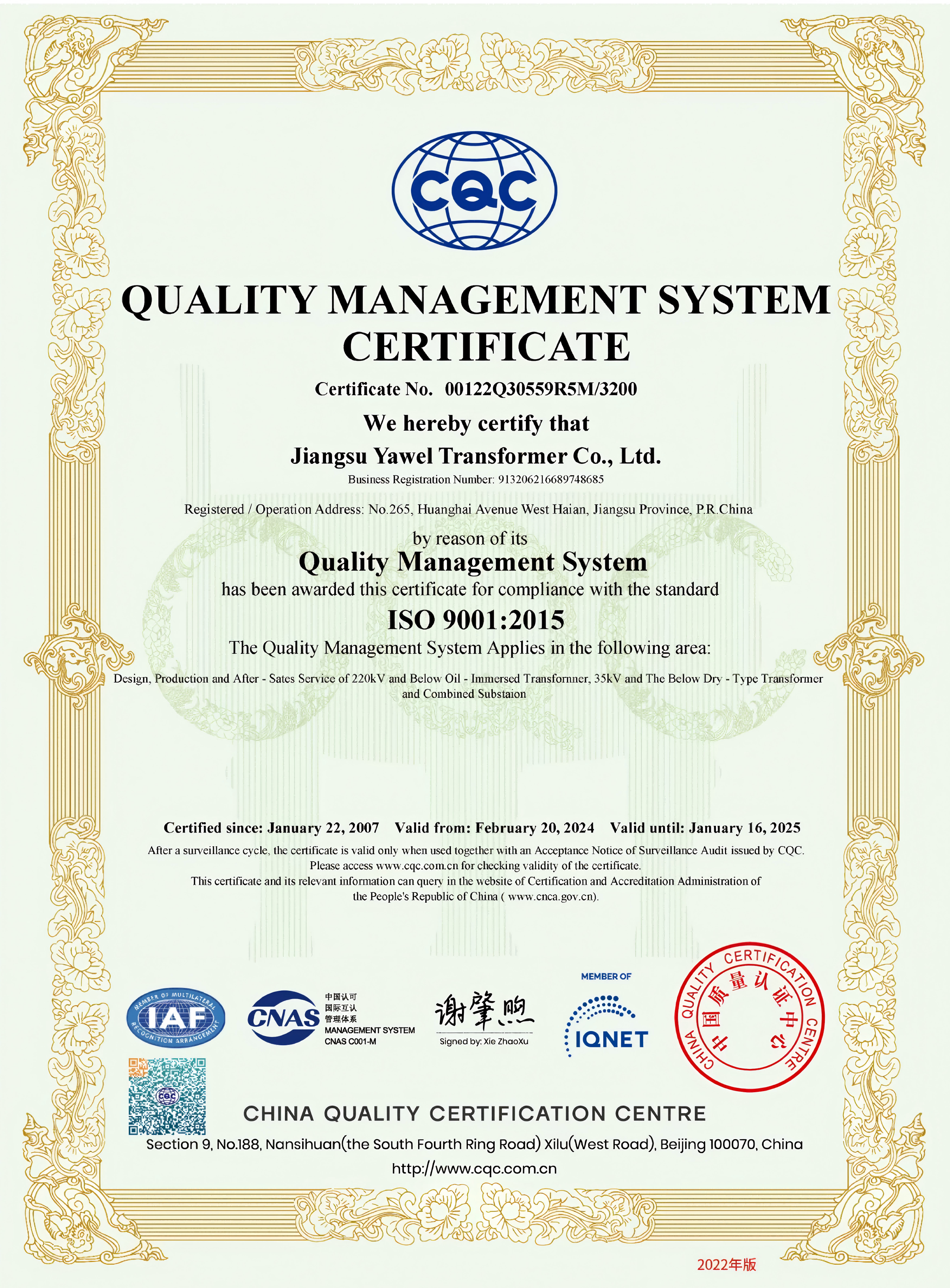
For this supply chain, the current management-system certificate is ISO 9001:2015, number 04325Q30129R0M, issued by Beijing United Intelligence Certification Co., Ltd. on 16 January 2025 and valid to 15 January 2028, with a scope covering design and production of oil-immersed transformers up to 220 kV, dry-type transformers up to 35 kV and box-type substations. The supplied set also contains ISO 14001:2015 and ISO 45001:2018 entries with a stated expiry of 16 April 2026, which is why the buyer should always request the certificate as currently issued for the order date. Type-test evidence is stronger than certificate listing: KEMA Type I inspection report 702226901-24 for a 250 MVA / 345 kV power transformer (tested 17–21 July 2024, issued 23 August 2024) and TÜV Rheinland type test report CN231PY4 001 for a three-phase outdoor oil-immersed power transformer (issued 26 June 2023) both test against IEC 60076-1, -2, -3 and -10.
Two further documents show how special-application approvals are handled in this partner group, and both should be read for exactly what they say. CCS Type Approval JS25PTB00105, issued 13 August 2026 and valid to 12 August 2031, covers a marine power and lighting transformer under the China Classification Society rules. BV Mode II approval SMS.W.II./144156/A.0, valid to 13 November 2027, covers a marine transformer manufacturing facility and quality procedure under BV NR320. Neither covers a mining unit — their value in a mining tender is that the partner has secured type approval for a non-standard duty before, which is the same discipline a mine-specific approval would require. A CSA field evaluation report, 80127142 from an evaluation carried out 10–20 May 2022, additionally covers a switchgear unit substation assembly for North America.
Where the buyer has no in-house audit capability, an independent partner such as Apex Power Systems performs the audit and then manages production supervision, witness testing, documentation and logistics under a single contract. The export record behind these units includes the United States, Canada, Australia, New Zealand, India, Indonesia, Madagascar, Vietnam, Cambodia and Laos, among other markets across Asia, Europe and the Americas.
Frequently asked questions
Does Apex Power Systems provide in-house design and testing for custom mining transformers?
Design and testing are carried out in-house by the audited manufacturing partners, not by Apex Power Systems, which is a trading and audit partner rather than a factory. The partner engineering scope covers custom voltage ratios, capacities, impedances, vector groups and tap ranges, special cooling methods, noise reduction, anti-corrosion classes C3, C4 and C5, high-altitude derating, seismic design and IP54/IP55 protection ratings, supported by senior-engineer design review, electromagnetic, thermal and mechanical verification, and prototype testing for new designs. A technical proposal normally follows in 3–5 business days and the design cycle in 15–30 days, with a one-unit minimum order. The partner test laboratory runs lightning-impulse, no-load and load-loss, ratio, winding-resistance, temperature-rise and insulation test benches; pre-shipment factory acceptance testing can be witnessed, and third-party inspection by SGS, BV or KEMA can be arranged.
How can a mining buyer verify the certificates behind a transformer order?
Verify the certificate number directly with the issuing body — KEMA, TÜV, UL, UDEM, ECM, CSA or the relevant EAC authority — rather than relying on a scanned copy, then check three things: the expiry date, whether the holder's legal entity name matches the party that will sign the contract, and whether the listed model range covers the unit being purchased. Current examples in this supply chain include ISO 9001:2015 certificate 04325Q30129R0M valid to 15 January 2028, KEMA report 109600301-26 issued 12 February 2026, EAC declaration POCC RU Д-CN.PA01.B.07433/24 valid to 25 February 2027, and CE certificates M.2022.206.C7198 and 3N230310.JYTU038 valid to 7 September 2027. Note the legal limits: a UL Certificate of Compliance does not by itself authorise the UL Mark, and a CE declaration of conformity always remains the manufacturer's own responsibility.
When should a mining project choose a dry-type transformer instead of an oil-immersed unit?
Choose dry-type, such as the SCB12–SCB18 series, when the installation location rules out insulating oil: indoor plant rooms, confined or underground spaces, and fire-sensitive areas where the owner's fire strategy or the local code does not accept oil-filled equipment. Dry-type units are fire-resistant and need less maintenance, but they are generally limited to lower voltage classes and cost more per kVA at large ratings. Choose oil-immersed distribution transformers, S13 / S14 / S15, for outdoor surface distribution and for higher capacities, accepting that they require oil testing and fire separation or bunding where the code demands it. The decision should follow installation environment, voltage class, capacity and local fire-code requirements.
How should a mine evaluate and select a transformer supplier?
Score every candidate against the same list before discussing price: verified manufacturing and test capability for the rating ordered; current certifications in the correct legal entity name covering the ordered product family; export record and reference projects of comparable rating; production capacity and current order book; financial standing; willingness to accept witnessed testing, third-party inspection and warranty obligations; and documentation capability in the buyer's language. Shortlist two or three plants, audit each on site against the same form, and attach the audit findings, certificate verification and witness-test plan to the purchase contract rather than leaving them as verbal assurances. Where the buyer lacks in-house audit capability, an independent supply partner can perform the audit and then supervise production and testing.
What lead time, minimum order and acceptance terms apply to a custom mining transformer?
Minimum order is one unit or one cabin, project-based, and a one-off design may carry a design fee that is refundable against bulk orders subject to technical evaluation. A technical proposal takes 3–5 business days and the design cycle 15–30 days. Standard distribution transformers run 30–60 days, customised models 45–75 days, prefabricated cabin substations 90–120 days, and standard power transformers 45–90 days with large or custom power units at 90–150 days; a full project cycle from contract to site acceptance typically runs 3–6 months. Acceptance is factory acceptance testing before shipment plus a joint site acceptance test with the customer, with a 12–24 month warranty per contract and third-party inspection available. Payment is typically 30% deposit, 30% at mid-production, 30% before shipment and 10% after acceptance, or by letter of credit at sight.
Next step. A shortlist becomes a specification only when the load schedule, single-line diagram, environment envelope and destination-market certification set are on the table together. Send those three inputs to Apex Power Systems (Nanjing)Co., Ltd. — email xuke@apexps-nj.com, telephone or WhatsApp +86 132-0157-1341 — to receive a project-specific technical proposal covering the mining special transformer, distribution and prefabricated cabin options. The full product range, ratings and certificate list are available in the Apex Power Systems catalogue.
Conclusion
For a mining project, the working order is: Special Transformer (Mining), KBSG / KBSGZY first where the scope requires a mine-duty unit; oil-immersed distribution transformers, S13 / S14 / S15, for the surface distribution layer that carries most of the load; prefabricated cabin substations, YBM / ZGS11 / ZGS13, where the intake or a satellite station must be factory-built and energised quickly; and dry-type SCB12–SCB18 units where oil is excluded by location or code. The rank reflects fit to mine duty, documented scope and available verification evidence — not price, and not a measured performance comparison between families.
Two disciplines decide whether the shortlist survives contact with the project. The first is fixing vector group, impedance, tap range, ingress protection and certification before the drawings are frozen, because those are the parameters that cannot be corrected after manufacture. The second is verifying documents rather than accepting descriptions: certificate numbers checked with the issuing body, legal entity names matched to the contracting party, and type-test reports matched to the exact rating. On a mine, the transformer is rarely the constraint; the schedule around it usually is.
Have Questions or Need More Details?
Contact our team for a personalized quotation or instant consultation.
Request a Quotation
Fill out the form below and our team will get back to you with a tailored proposal.
WhatsApp Direct Chat
Prefer to chat in real-time? Message us on WhatsApp for instant assistance & quick answers.
- Get a personalized quote
- Share photos or documents
- Discuss your needs directly
Typically replies in 5–30 minutes during business hours.