Custom Transformer Supplier Evaluation: Large Power Transformer Delivery Risk Checklist
On a large power transformer project, supplier evaluation is not a price exercise. It is a sequence of verification gates: prove the manufacturer can build and test the unit, prove the delivery path is controlled, and prove the acceptance criteria are enforceable before the purchase order is signed.
This checklist is written for utility, EPC and industrial buyers selecting a custom transformer supplier for a large power transformer or a complete substation package. It sets out what to verify at each gate, which evidence to request, and where the delivery and quality risks that surface later in a project can be mitigated earlier in the process.
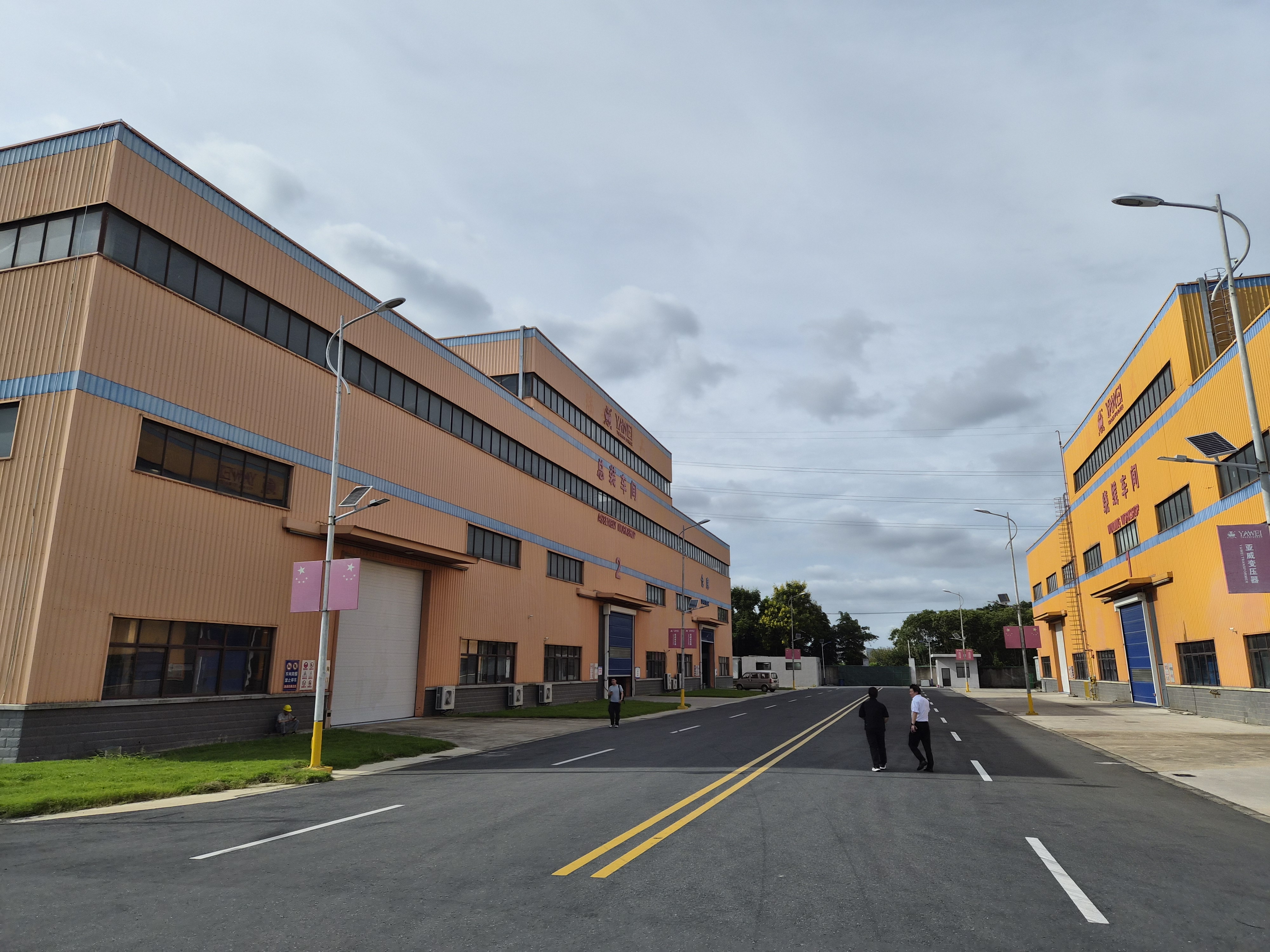
The evaluation criteria follow the audit, testing and project-delivery practice of Apex Power Systems (Nanjing) Co., Ltd., an international trading and supply-partner company specialising in power transformers, box-type substations and complete substation solutions. Apex is not a factory: it selects and audits manufacturing partners, and the manufacturing, certification and test evidence it presents belongs to those audited partners.
Why One Large Power Transformer Carries Most of the Delivery Risk
On a distribution order, a late unit is an inconvenience. On a large power transformer order, it is a blocked substation, because the transformer sits on the critical path of civil works, protection settings, cable termination and energisation. The risk profile is different in kind, for four reasons.
- There is no catalogue reference. A custom transformer is engineered to a specification — voltage ratio, impedance, vector group, tap range, cooling and protection — and has to be verified as a design, not only as a product. Senior-engineer design review, electromagnetic, thermal and mechanical verification, and prototype testing for new designs all sit between the order and the first factory test.
- The cycle is long and mostly sequential. Large and custom power transformers typically require 90–150 days, against 45–90 days for standard models. Project-based overseas delivery typically runs 3–6 months from contract to site acceptance, subject to technical evaluation. Winding, core assembly, oil processing, testing, packing and shipping cannot be compressed indefinitely without adding risk.
- Verification is documentary and witnessed. A buyer cannot inspect what is inside a sealed tank after delivery. Confidence comes from production hold points, a witnessed factory acceptance test, third-party inspection where required, and a complete test-report package.
- A site failure cannot be repaired on the same schedule. Insulation condition, oil processing and dielectric performance are settled at the factory. A problem found at commissioning costs far more than the same problem found at FAT.
What Is Changing in the Supply Market
Two shifts make structured supplier evaluation more important than it was a few years ago.
- Cross-border trade is growing. Global trade in electrical transformers with a power capacity above 500 kVA (HS 850434) reached USD 2.5 billion in 2024, a 12.7% year-on-year increase, according to OEC trade data. More units crossing borders means more projects where the buyer and the manufacturing site sit in different jurisdictions, with different document and inspection expectations.
- Efficiency requirements are tightening. China released GB 20052-2024, the standard for minimum allowable values of energy efficiency and energy efficiency grades for power transformers, effective 1 February 2025. In the United States, the Department of Energy 2024 rule under 10 CFR Part 431 moves distribution transformers toward amorphous electrical steel starting in 2029. A specification written against an older efficiency grade can trigger a redesign — and a redesign is a schedule risk.
The practical consequence is that 'compliant' has become a claim that must be dated and evidenced. The gates below treat certification, efficiency grade and test evidence as verification items rather than assumptions.
The Three Verification Gates
A useful supplier evaluation separates three questions that are often merged into one questionnaire: can this manufacturer build the unit, can the delivery be controlled, and will the unit be accepted on the criteria written into the contract. Each gate has its own evidence.
Gate 1 — Capability Verification
Capability verification answers one question: can the manufacturer named in the technical documents actually build, test and document this unit? The audit itself covers production capability, test laboratory equipment, quality-management certifications, export record and financial standing.
Before any of that, establish the entity. When a trading or supply partner presents certificates, read them against the company that actually holds them, in the correct legal name, covering the exact product family being purchased. Certificates for a different product family, or held by a different entity, do not transfer to the order.
| Verification item | Evidence to request | What it establishes |
|---|---|---|
| Factory identity and role | Legal entity name, factory audit report, a written statement of which company manufactures the unit | Whether the certificate holder is the manufacturer |
| Management systems | ISO 9001:2015, ISO 14001:2015 and ISO 45001:2018 certificates with issuing body and validity dates | Process, environmental and safety control |
| Product certification | IEC conformity for 10 kV / 35 kV power transformers and box-type substations; UL; CSA; CQC | Market access for the exact product family |
| Independent type test | KEMA Labs Type I Inspection Report for a 250 MVA / 345 kV three-phase transformer, tested to IEC 60076-1/-2/-3, IEC 60076-10, IEC 60076-11 and IEEE C57.12.00 / C57.12.90 | Third-party verification of design and testing capability |
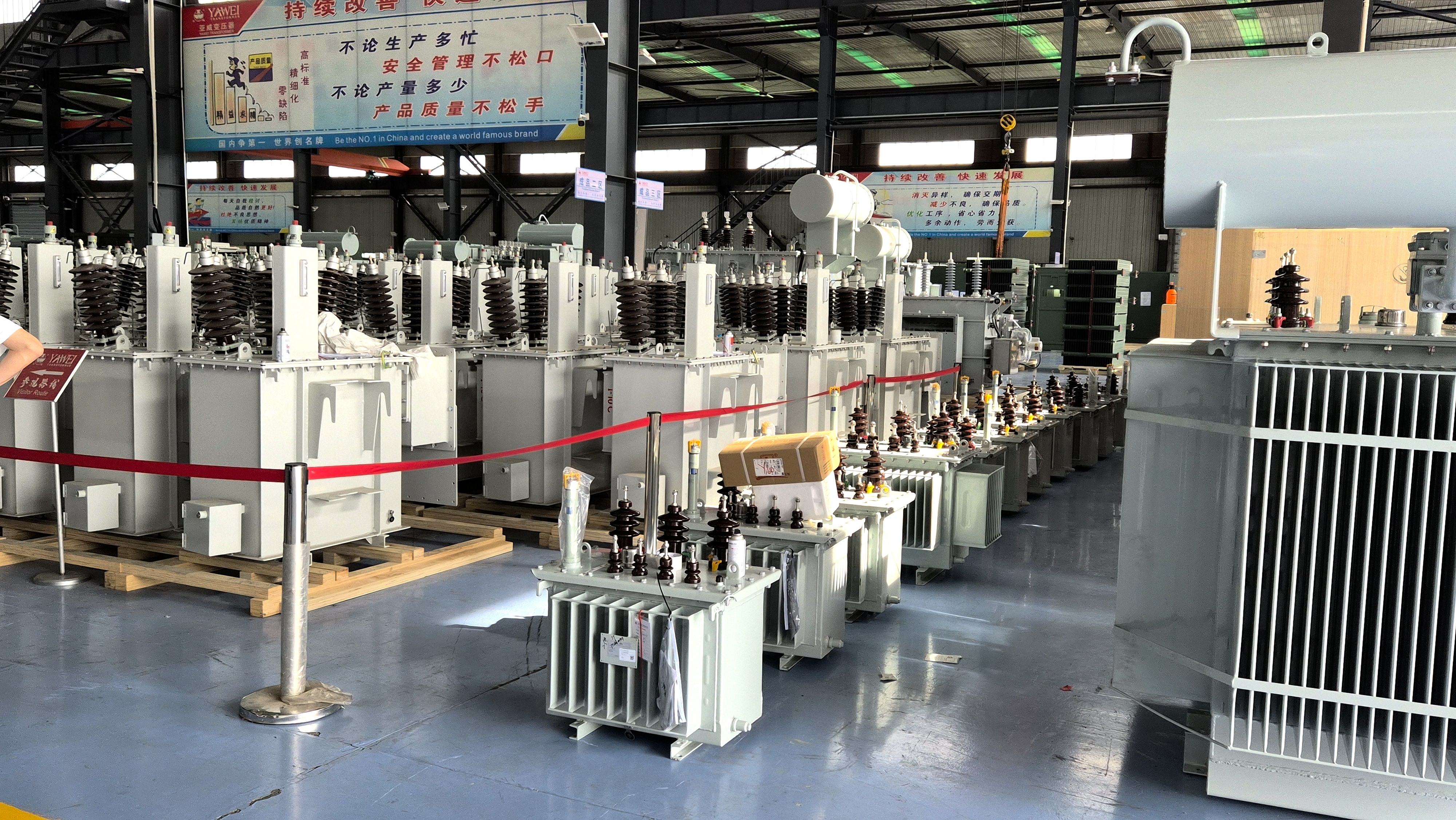
| Test laboratory | Lightning-impulse, no-load and load-loss, ratio, winding-resistance, temperature-rise and insulation test benches | Ability to run the tests the contract will require |
| Production capacity | 110 kV class approximately 22 units per month; 220 kV class approximately 17 units per month; 345 kV and above project-based | Whether the promised delivery date is realistic |
Test capability matters as much as production capacity, because a unit that cannot be tested to the specified programme cannot be accepted. The test laboratory behind Apex-audited partners includes lightning-impulse, no-load and load-loss, ratio, winding-resistance, temperature-rise and insulation benches, and in-house testing capability extends to 500 kV, which is what allows a 345 kV class unit to be routine-tested before shipment.
Capacity is a schedule signal rather than a sales figure. If a delivery date assumes a shared 35 kV / 10 kV production platform, ask which line and which slot the unit is planned into. Component control matters for the same reason: in-house manufacture of transformer tanks, radiators and enameled wire, with component lead times of 20–45 days, is a supply-chain control point that can be audited.
Gate 2 — Delivery Assurance
Delivery assurance is the difference between a date in a quotation and a date the supplier can defend. The controllable milestones are known early: a technical proposal in 3–5 business days, a design cycle of 15–30 days depending on complexity, then production, testing and shipment.
For large and custom power transformers the production lead time is typically 90–150 days, with project-based delivery running 3–6 months from contract to site acceptance, both subject to technical evaluation. A supplier who will not break that period down into engineering, production, testing and logistics is not giving a plan.
- Design review and drawing approval. Submittals, AutoCAD drawings, factory test reports and operating manuals are delivered in the format the utility or EPC requires, and drawing approval is a hold point, not a formality.
- Production hold points. Winding, core assembly and oil processing are the stages where defects are created and hidden. Monitoring these stages is part of the quality-control practice, not an optional extra.
- Pre-shipment FAT. The factory acceptance test is witnessed before shipment, and factory visits and witnessed testing can be arranged as part of the order.
- Third-party inspection. SGS, BV or KEMA can be engaged where the project or the lender requires independent witnessing.
- Contractual instruments. Engineering and production review, supervision, warranty obligations and performance guarantees belong in the contract, backed by on-site commissioning support.
- Logistics. Packing, freight terms such as FOB Shanghai under Incoterms 2020, and shipping documentation are managed as one sequence with the production plan.
- Post-installation SAT. A joint site acceptance test with the customer closes the delivery loop rather than the shipment.
Gate 3 — Acceptance Criteria
Acceptance criteria should be written before the order and copied into the test plan, so that the FAT and the SAT measure the same things. The following items belong on the list for a large power transformer.
- Nameplate data and vector group. Two transformers can only be operated in parallel if their vector groups are compatible, so the vector group on the rating plate, the drawings and the enquiry must match. Common configurations include Dyn11, Yyn0, YNd11 and YNyn0d11.
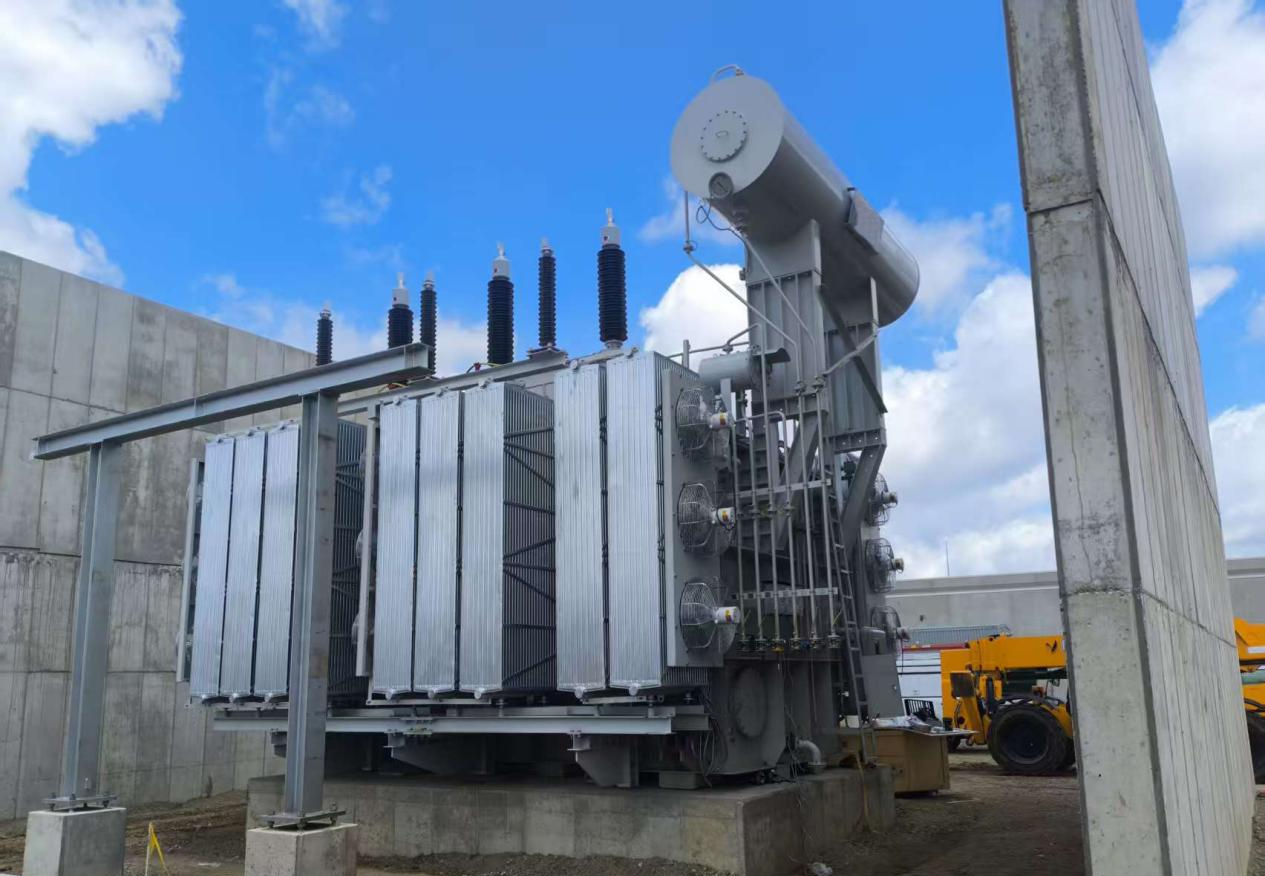
- Rating at each cooling stage. A single unit can carry several ratings. A 250 MVA / 345 kV transformer, for example, is rated 185 MVA under ONAN, 225 MVA under ONAF1 and 250 MVA under ODAF2. Acceptance should name the stage being tested.
- Routine tests per IEC 60076 / IEEE C57.12. Winding resistance, turns ratio, load loss and impedance, no-load loss and current, insulation test, induced withstand with partial-discharge measurement, lightning impulse and oil test.
- Impulse and insulation levels. For the same 250 MVA / 345 kV unit, lightning impulse withstand is 1175 kV on the HV side and 200 kV on the LV side, with a switching impulse withstand of 975 kV.
- Oil condition before energisation. Moisture and trapped air reduce the dielectric strength of oil-paper insulation, so the active part is dried, the tank evacuated and filtered hot oil introduced under vacuum; dielectric strength and moisture content are then measured on oil samples.
- Site acceptance. Insulation resistance, ratio, winding resistance and oil dielectric strength are confirmed at site against the manufacturer's limits and the applicable IEC 60076 requirements before the unit is energised.
Step-by-Step: Running the Evaluation in Sequence
- Freeze the specification before shortlisting. Voltage ratio, capacity, impedance, vector group, tap range, cooling, protection rating and the destination market's certification requirement. A specification that moves during evaluation makes every quotation incomparable.
- Shortlist on capability, not on brochure. Audit the shortlisted plants for production capability, test laboratory equipment, quality-management certification, export record and financial standing.
- Run the certification gate. Confirm that each certificate is current, in the correct entity name, and covers the exact product family. Certificate numbers can be checked with the issuing body.
- Approve the design before production starts. Design review, computational verification and prototype testing for new designs are the cheapest place to remove a technical risk.
- Agree hold points and the inspection plan. Winding, core and oil processing, with notification before each, plus the format of the test report package.
- Witness FAT and add third-party inspection where warranted. For a transmission-class unit or a project with lender requirements, independent witnessing by SGS, BV or KEMA is proportionate.
- Control packing, shipping and documentation. Transport mode, packing specification, freight terms and the document set — submittals, drawings, test reports, operating manuals — should be fixed before the FAT, not after it.
- Plan SAT and commissioning before shipment. On-site installation guidance, commissioning, trial operation, training and 7×24 remote support should be scheduled while the unit is still in production.
Use Cases: What the Reference Record Actually Shows
A reference project is only useful if it exercises a specific delivery risk. The following Apex-coordinated projects are representative, and each one stresses a different part of the chain. The manufacturing base behind these projects exports to 72 countries and regions.
- Azerbaijan Power Energy Company — 4 × 110 kV power transformers, including design, manufacture, testing and installation guidance, operating for multiple years. Exercises multi-unit scheduling and on-site technical support.
- Tajikistan Power Transmission Company — Siroch Bahrom 115 kV substation, design, supply and installation guidance, completed within one year. Exercises a compressed schedule.
- Mongolian Power Transmission Company — 110 kV substation equipment, 6 units, energised and operating. Exercises cold-climate design and site coordination.
- US–Georgia Power Transmission Company — 345 kV fully insulated power transformer, 4 units over a 3-year period, design through commissioning. Exercises high-voltage manufacture, testing and commissioning.
- US–Puerto Rico Power Distribution Company — 115 kV substation transformer equipment, 30 units plus a 40 MVA transformer for an island system, 3-year duration. Exercises volume delivery, island logistics and grid-reliability requirements.
- Bulgarian Transmission Company — 40,000 kVA energy-storage project, 3 units, including design, manufacturing, on-site delivery, installation guidance, testing and commissioning. Exercises storage integration and multi-stage site work.
- Spanish Transmission Company — 132 kV transformer for the Seville steel-plant substation, 3 units. Exercises heavy industrial load duty.
- Ecuador national grid project — 75,000 kVA, 230 kV transformer with a 230±2×2.5% / 13.8 kV specification and YNd11 connection. Exercises large-capacity, high-voltage single-unit delivery.
- European PV developer / EPC — five large-capacity PV transformers, including 40 MVA units at 115/158 kV class with YNyn0d11 multi-winding design and a 25 MVA unit, operating since 2023. Exercises renewable-energy multi-winding design and grid-connection testing.
Comparison Table: Configuration and Verification Focus
The same supplier capability is verified differently depending on what is being bought. The table compares the main configurations on verified ratings and on the verification emphasis each one carries.
| Configuration | Verified ratings and key parameters | Verification focus | Typical project fit |
|---|---|---|---|
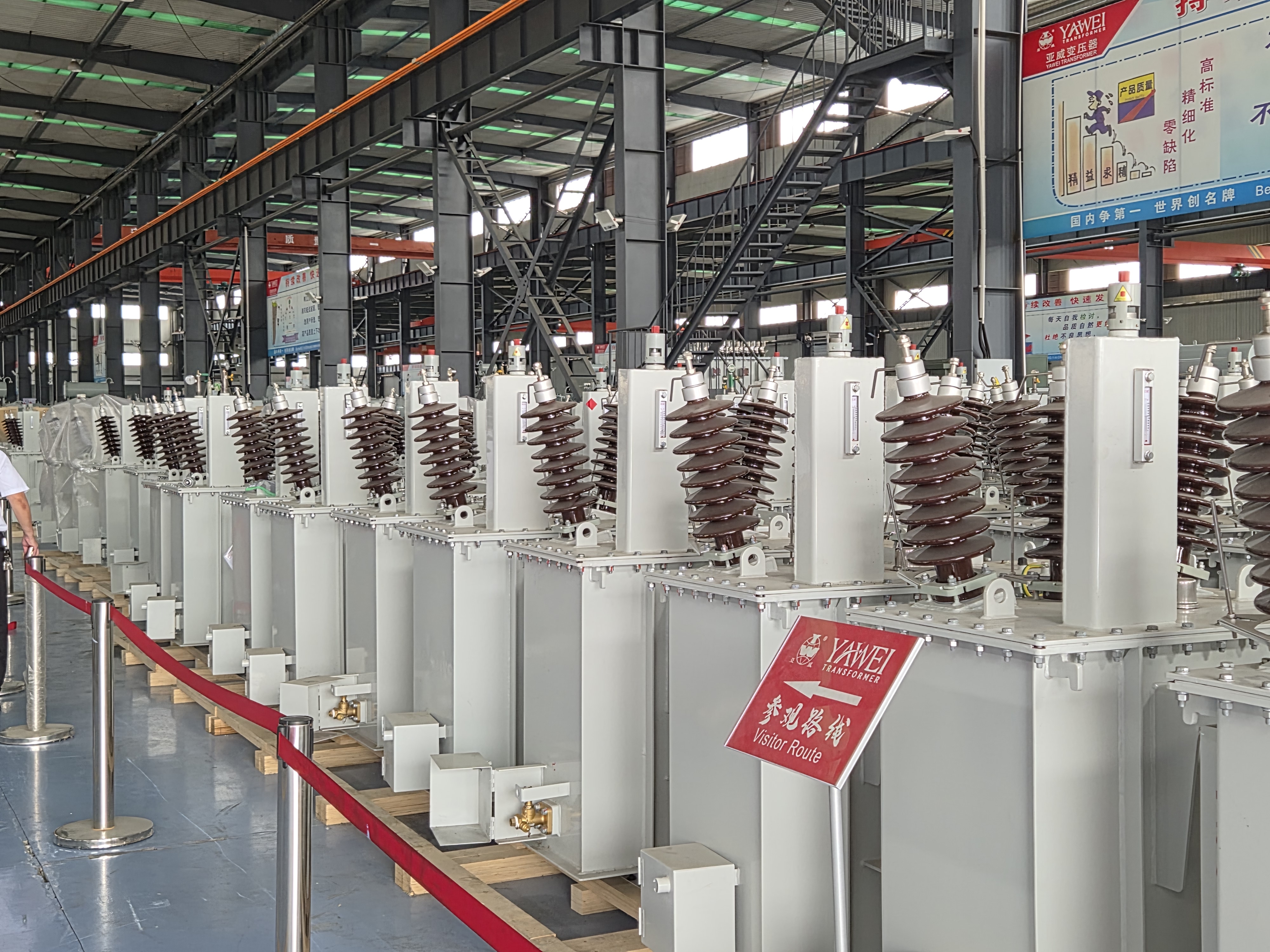
| Large power transformer (oil-immersed) | 10 kV–765 kV voltage classes; maximum capacity 250 MVA (KEMA verified); ONAN / ONAF / ODAF cooling; on-load or off-circuit tap changing; vector groups such as Dyn11, YNyn0, YNd11, YNyn0d11 | Independent type test, full routine tests, impulse and partial-discharge measurement, oil test, witnessed FAT | Transmission substations, utility grids, large industrial loads, renewable step-up |
| Three-phase oil-immersed OLTC power transformer (SFZ-250000/345) | 250/250 MVA, 345/34.5 kV, 60 Hz, Dyn1; ONAN 185 MVA / ONAF1 225 MVA / ODAF2 250 MVA; tap range +17/−17 × 0.625% | Lightning impulse 1175 kV HV / 200 kV LV; switching impulse 975 kV; partial discharge; oil condition before energisation | High-voltage grid supply and large AI or data-centre substations |
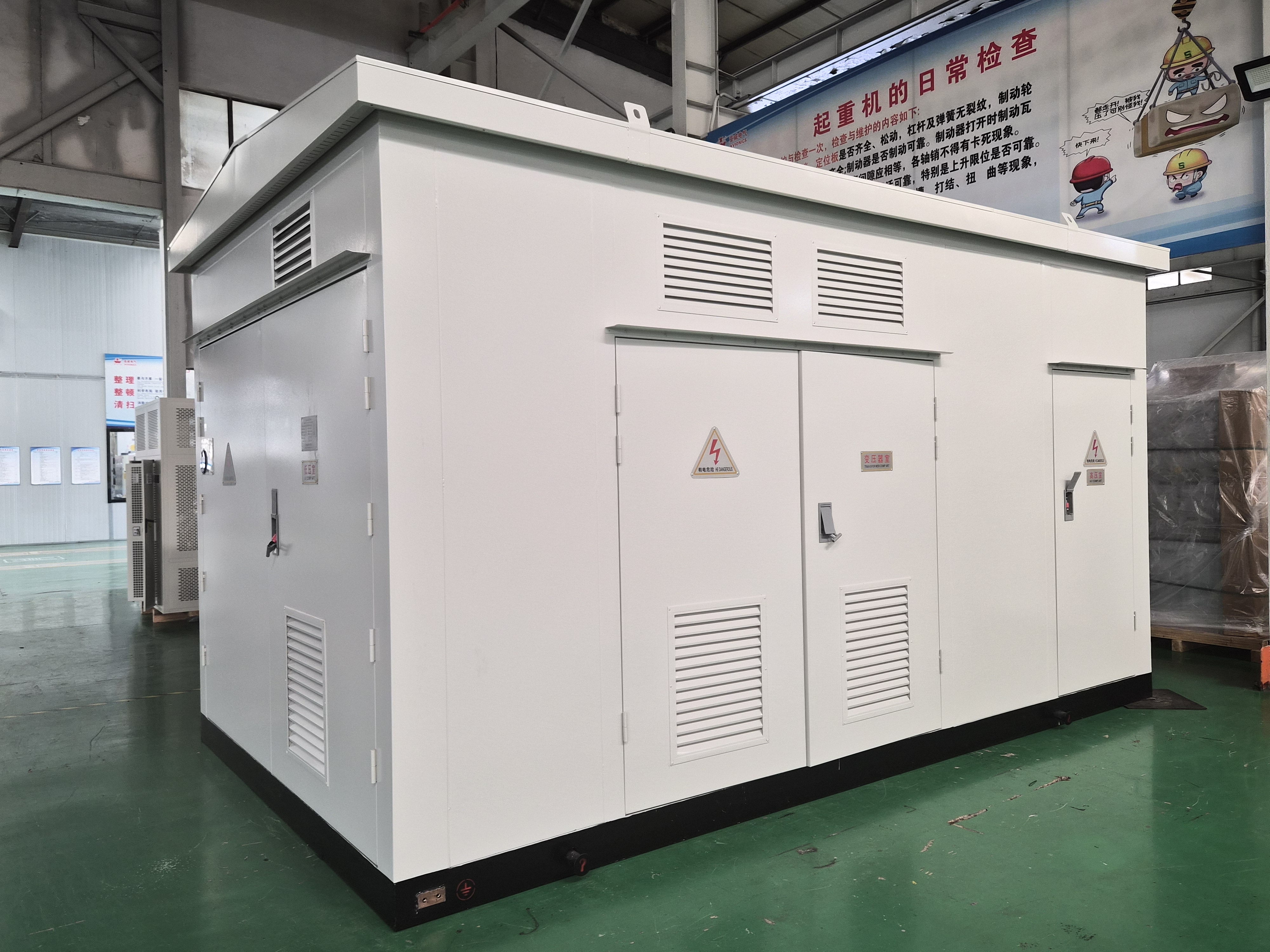
| Prefabricated cabin substation | 10 / 35 kV; transformer capacity 500–50,000 kVA; IP54 / IP55; ambient −40 °C to +50 °C; integrated HV switchgear, transformer, LV switchgear, compensation, automation and environmental control | Factory pre-assembly and full-load testing; integrated system commissioning; protection and monitoring verification | Fast deployment, remote sites, PV, wind and storage step-up, EPC projects with limited site access |
| Dry-type transformer (SCB12–SCB18) | 30–2,500 kVA at 10 kV class; 800–25,000 kVA at 35 kV class; insulation class F / H; AN or AF cooling; IP00 / IP20 / IP23 | Routine and type tests; partial discharge; temperature-rise verification; enclosure and protection rating | Indoor MV/LV distribution in data centres, transport hubs, commercial and high-rise buildings |
| Oil-immersed distribution transformer (S13 / S14 / S15) | 30–3,150 kVA at 10 kV class; 3,150–31,500 kVA at 35 kV class; vector group Dyn11 / Yyn0; impedance 4–10%; ONAN cooling | Routine tests per IEC 60076 / ANSI C57.12; loss and impedance measurement; oil quality; efficiency grade | Distribution networks, industrial auxiliary power, municipal infrastructure |
Frequently Asked Questions
How do I verify that a custom transformer supplier's certificates are genuine and actually cover my unit?
Check three things: validity, entity name and product family. Each certificate carries a number that can be checked with the issuing body, and the qualification package should list the number, issuer, validity and the product family each certificate covers. Where a trading or supply partner presents the evidence, read it against the manufacturer that actually holds it. Certificates relevant to a power transformer order include ISO 9001:2015, ISO 14001:2015 and ISO 45001:2018 management systems; IEC conformity for 10 kV / 35 kV power transformers and box-type substations; UL and CSA product certification for the relevant markets; CQC for box-type substations and switchgear; and, for large units, an independent KEMA Labs Type I Inspection Report for a 250 MVA / 345 kV transformer tested to IEC 60076-1/-2/-3, IEC 60076-10, IEC 60076-11 and IEEE C57.12.00 / C57.12.90. For North American projects, also confirm ANSI/IEEE compliance and UL/CSA certification for the specific unit type.
What should a factory audit cover before I place a large power transformer order?
An audit covers production capability, test laboratory equipment, quality-management certifications, export record and financial standing. The test laboratory is the part buyers most often under-check. Ask specifically for lightning-impulse, no-load and load-loss, ratio, winding-resistance, temperature-rise and insulation test benches, because those are the tests the contract will require. Engineering capability should be checked at the same time: senior-engineer design review, electromagnetic, thermal and mechanical verification, and prototype testing for new designs. Capacity is the final check — around 22 units per month at the 110 kV class and around 17 units per month at the 220 kV class, with 345 kV and above produced on a project basis, all subject to technical evaluation.
How is a custom transformer quotation built, and can we order a single unit?
A custom transformer is quoted after a technical evaluation, not from a catalogue, so the fastest route to a comparable price is to freeze the specification and the verification scope first. The minimum order quantity is one unit; one-off projects may incur a design fee, which is refundable for bulk orders and is subject to technical evaluation. A technical proposal is typically available within 3–5 business days and the design cycle runs 15–30 days depending on complexity, which means the technical and commercial picture is settled early rather than after the production slot is booked.
Can we test a prototype or witness testing before shipment?
Yes. Prototype testing is carried out for new designs, and factory acceptance testing can be witnessed before shipment; factory visits and witnessed testing can be arranged as part of the order. Third-party inspection by SGS, BV or KEMA is available where the project or its financing requires independent witnessing. The deliverable is a complete document set — submittals, AutoCAD drawings, factory test reports and operating manuals — in the format the utility or EPC requires, plus a joint site acceptance test after installation.
How long does a large custom transformer take, and what is most likely to delay it?
Large and custom power transformers typically require 90–150 days, against 45–90 days for standard models, and project-based overseas delivery typically runs 3–6 months from contract to site acceptance, subject to technical evaluation. In-house components such as tanks, radiators and enameled wire carry 20–45 day lead times and are synchronised with transformer production. The realistic delay drivers are late drawing approval, specification changes after design release, a failed test that requires rework, and shipping or commissioning scheduling. Each is controlled by the same instrument: named hold points, a witnessed FAT, and a SAT planned before the unit leaves the factory.
Conclusion
Delivery risk on a large power transformer is reduced by three habits: verify the entity and the evidence before shortlisting, put hold points and witnessed tests into the contract, and define the acceptance criteria before the design is released. A supplier that can show audited manufacturing partners, current certificates in the correct entity name for the exact product family, a test laboratory able to run the specified tests, and a reference record at comparable ratings is not a guarantee — but it is the part of the risk that can be controlled before the purchase order is signed.
Next Step: Request the Catalogue or a Technical Proposal
Send the project specification — voltage class, capacity, vector group, tap range, cooling and destination market — and Apex Power Systems will return a technical proposal within 3–5 business days, together with the certification package and the reference list for comparable ratings.
Email: xuke@apexps-nj.com | Tel / WhatsApp: +86 132-0157-1341 | Website: apexpowerlink.com
Download the full product catalogue (PDF): Apex Power Systems Catalog
Address: Room 1001, Xinke Building, No. 209 Pubin Road, Jiangbei New Area, Nanjing City, Jiangsu Province, China.
Have Questions or Need More Details?
Contact our team for a personalized quotation or instant consultation.
Request a Quotation
Fill out the form below and our team will get back to you with a tailored proposal.
WhatsApp Direct Chat
Prefer to chat in real-time? Message us on WhatsApp for instant assistance & quick answers.
- Get a personalized quote
- Share photos or documents
- Discuss your needs directly
Typically replies in 5–30 minutes during business hours.