Custom Transformer Vector Group Selection: Technical Guide and Parameters
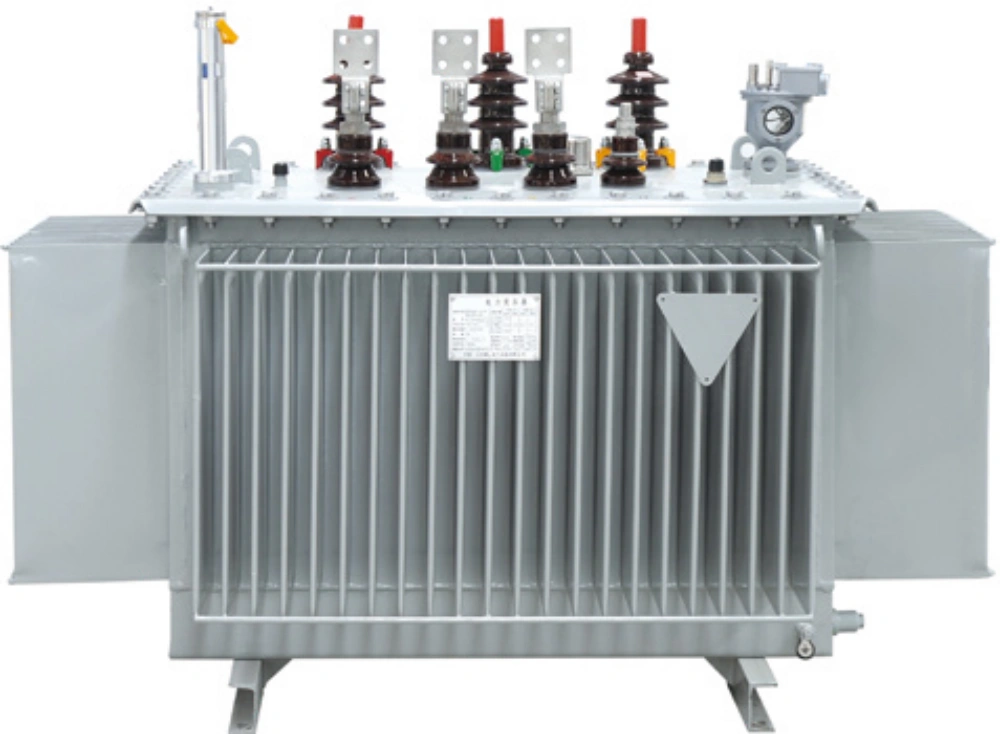
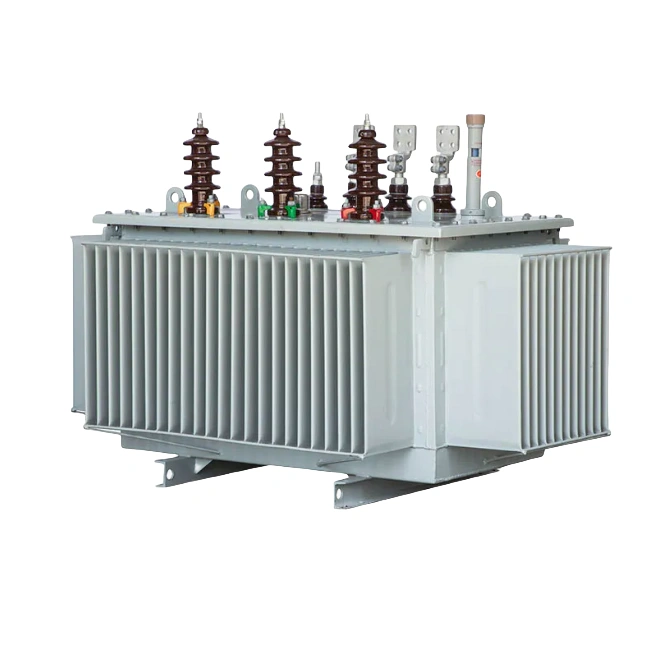
Vector group selection for a custom transformer: an oil-immersed distribution transformer, one of the most frequently customised units in distribution networks.
A custom transformer is ordered because a catalogue unit will not fit the network — and the vector group (connection symbol) is one of the few parameters that cannot be corrected after delivery. It records how the high-voltage and low-voltage windings are connected inside the tank, whether a neutral is brought out on each side, and how far the low-voltage phasor is displaced from the high-voltage phasor. A unit can pass every factory electrical test and still be unusable on site if the vector group does not match the transformers already installed.
Short answer. The vector group is the code that tells you how the HV and LV windings are connected — star, delta or zig-zag, and whether a neutral is brought out — together with the phase displacement between the HV and LV voltages expressed in clock notation. The leading letters give the HV winding connection and the following letters the LV connection; the number is the LV phasor lagging the HV phasor in units of 30 degrees. YNyn0 means both windings are star-connected with the neutral brought out and zero phase displacement; Dyn11 means a delta HV, a star LV with neutral, and a 330-degree displacement.
The Problem: A Vector Group Error Is Not Corrected on Site
Two transformers can only be operated in parallel if their vector groups are compatible. The phase displacement also affects protection settings and the connection of other equipment. Because the vector group appears on the rating plate, in the enquiry and on the drawings, an incorrect vector group is one of the most common causes of a transformer arriving that cannot be paralleled with the existing units on site.
The commercial pattern behind that failure is consistent. Sourcing risk is highest when the buyer orders directly from an unknown plant without an audit, when only a scanned certificate is supplied without independent verification, when the ordered rating is above the plant's proven test capability, when the contract contains no witnessed-testing or warranty clause, and when the destination market's certification requirements are not confirmed before the design is frozen. The vector group belongs to that last category: it is a design-stage decision. Once the windings are wound and the tank is closed, the connection symbol is no longer a commercial detail that can be negotiated at shipment.
Industry Background: Why Vector Group Specification Sits Earlier in the Process
Transformer demand is expanding across the same three segments that dominate custom orders — distribution, renewable generation and data centres. The global transformer market is estimated to reach USD 80.8 billion in 2026 (Fortune Business Insights); other research houses put the same market lower for the same year, around USD 69.66 billion, largely because of a different treatment of industrial versus utility-scale custom solutions. The distribution transformer segment alone is projected to grow from USD 26.0 billion in 2026 to USD 47.7 billion by 2033 at a CAGR of 9.1% (Grand View Research). The box-type substation market for photovoltaics is estimated at USD 4.54 billion in 2026, and the U.S. data centre substation market was valued at USD 3.44 billion in 2024, driven by AI and cloud computing growth.
Trade data shows how international this order flow has become: global trade in electrical transformers with a power capacity above 500 kVA (HS 850434) reached USD 2.5 billion in 2024, a 12.7% increase year on year (OEC).
Efficiency regulation is tightening in parallel. China released GB 20052-2024, “Minimum allowable values of energy efficiency and energy efficiency grades for power transformers”, effective 1 February 2025, and the U.S. Department of Energy 2024 rule under 10 CFR Part 431 requires distribution transformers to transition towards amorphous electrical steel starting in 2029. Neither rule changes the vector group code. What they do change is how much is frozen at design stage — loss grade, core material, cooling and rating all move at the same time as the winding connection — which is why vector group, impedance and cooling are increasingly specified together rather than sequentially.
How the Vector Group Code Is Built
The code has three parts, and each part answers a different purchasing question.
- The leading letter or letters give the HV winding connection — star, delta or zig-zag — and, where present, whether the HV neutral is brought out.
- The following letter or letters give the LV winding connection and whether the LV neutral is brought out.
- The closing number is the phase displacement of the LV phasor relative to the HV phasor, expressed in clock notation in units of 30 degrees. Eleven therefore means 330 degrees.
In practice: YNyn0 means both windings are star-connected with the neutral brought out and zero phase displacement; Dyn11 means delta HV, star LV with neutral brought out, and a 330-degree displacement; YNd11 means a star HV with neutral brought out, a delta LV and a 330-degree displacement, read from the same set of rules.
| Element of the code | Position | What it tells the buyer |
|---|---|---|
| HV winding connection (Y, D or Z) | Leading letter | How the HV winding is connected — star, delta or zig-zag |
| HV neutral (N) | After the HV letter, where applicable | A neutral point is brought out on the HV side |
| LV winding connection (y, d or z) | Following letter | How the LV winding is connected |
| LV neutral (n) | After the LV letter, where applicable | A neutral point is brought out on the LV side — the letter that decides whether a four-wire LV system is possible |
| Clock number | End of the code | Phase displacement of the LV phasor relative to the HV phasor, in units of 30 degrees |
| Example: YNyn0 | — | Both windings star-connected with the neutral brought out; zero phase displacement |
| Example: Dyn11 | — | Delta HV, star LV with neutral; 330-degree displacement |
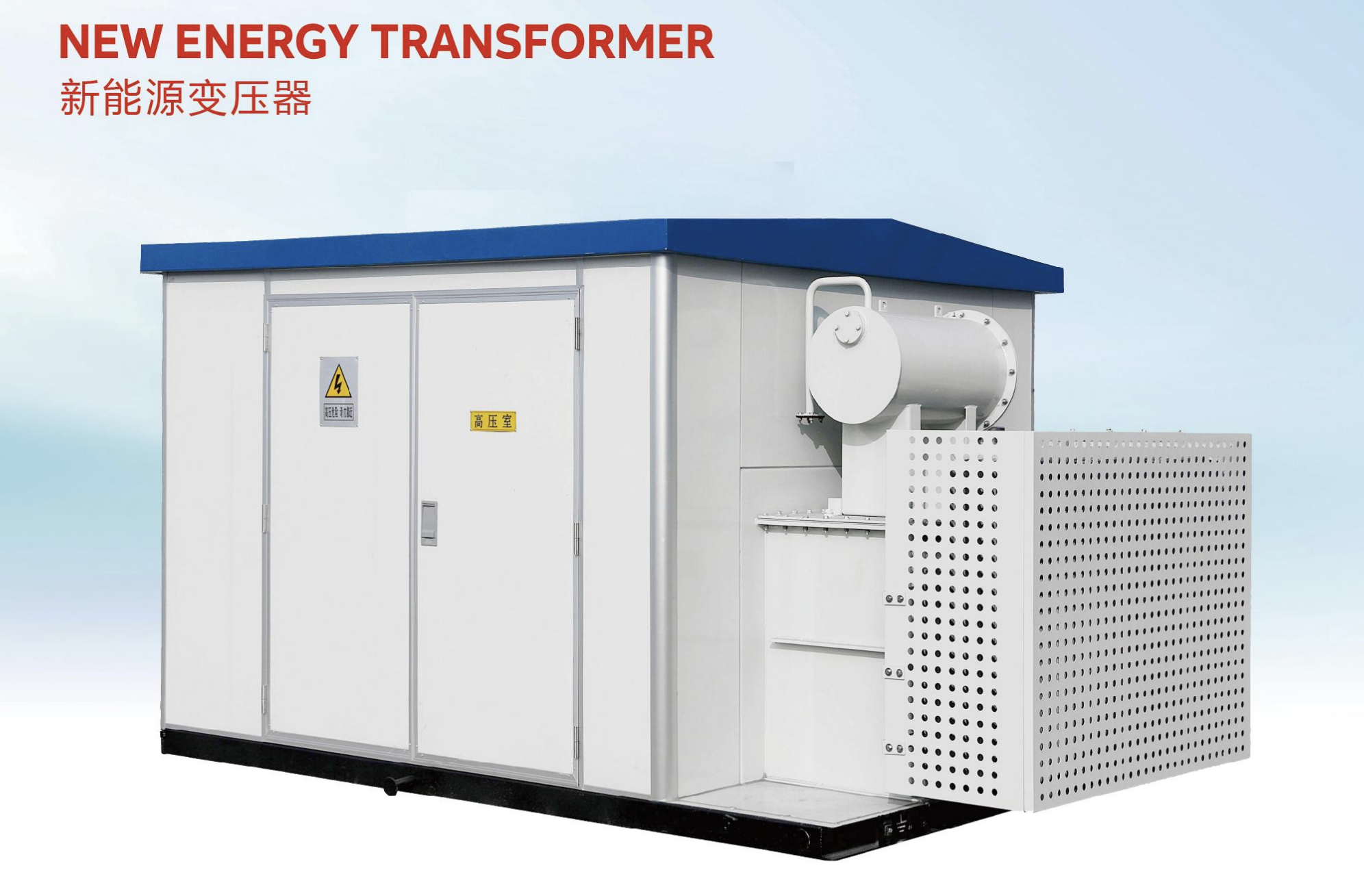
Amorphous-alloy energy-saving transformers are supplied with the same Dyn11 / Yyn0 convention as conventional distribution units, so retrofits keep parallel-operation options open.
Parameters That Must Be Fixed Alongside the Vector Group
Selecting the vector group in isolation is not enough: it interacts with grounding, capacity, impedance, tap changing and cooling. The parameters below are the ones that belong on the same enquiry sheet.
1. System grounding and the neutral requirement
The presence or absence of the neutral letters (N on the HV side, n on the LV side) is the most important single decision for system grounding. YNyn0 brings out a neutral on both windings, while a code without the letter on a given side does not. Where a distribution network has to supply a four-wire LV system, the LV neutral is not optional; with a delta LV design, no LV neutral point is available at all.
2. Rated voltage, capacity and frequency
Capacity and voltage class define the winding design that the vector group is applied to. Typical ranges in the current custom families are 30–3,150 kVA for the 10 kV class and 3,150–31,500 kVA for the 35 kV class in oil-immersed distribution transformers, up to 250/250 MVA at 345/34.5 kV, 60 Hz in large power transformers.
3. Phase displacement, parallel operation and protection
The clock number is the part of the code that governs parallel operation and protection settings. If a new unit will run in parallel with existing transformers, the vector group of the installed units must be confirmed before the order is placed — not discovered after delivery.
4. Impedance voltage
Impedance voltage is specified on the same datasheet as the vector group. Oil-immersed distribution transformers are available with 4, 4.5, 6, 6.5, 7, 8 or 10%, while renewable-energy transformers offer 6.0–14.0% for different system short-circuit capacities.
5. Tap changing
An on-load tap changer changes the turns ratio while the transformer remains energised, so the output voltage can be corrected continuously as load and upstream voltage vary. An off-circuit tap changer must be operated with the unit de-energised and can only correct a seasonal or planned voltage change. Off-circuit tap changing is typically ±2×2.5%, while a high-capacity OLTC may carry a designation such as 3×SHZVI-400/363C-18353W in German MR or ABB brand configuration.
6. Cooling class
The cooling class is a separate code — ONAN, ONAF and so on — in which O stands for oil and A for air, N for natural circulation and F for forced circulation. ONAN means oil-immersed with natural oil circulation and natural air circulation; adding fans (ONAF) raises the permissible loading, which is why the same transformer often carries two ratings on its nameplate, one for each cooling stage. A 250 MVA unit can therefore be rated ONAN at 185 MVA, ONAF1 at 225 MVA and ODAF2 at 250 MVA.
7. Standards and market certification
For North America, liquid-filled distribution transformers rated above 750 V are certified to UL requirements for the United States and CSA standards for Canada, supported by the IEEE C57.12 series. Applicable standards include UL Certificate of Compliance category XPLH7, CSA C2.1-06, CSA C227.4, NFPA 70 and, for switchgear units, UL 891 and NFPA 791-2018; for utility projects the purchasing utility's own specification and the IEEE C57.12 routine, type and special test requirements must also be met. Large power transformers are verified against the IEC 60076 series: a KEMA Labs Type I Inspection Report covers a 250 MVA / 345 kV three-phase power transformer tested in accordance with IEC 60076-1/-2/-3, IEC 60076-10, IEC 60076-11 and IEEE Std C57.12.00 / IEEE C57.12.90.
Step-by-Step: Specifying a Vector Group for a Custom Transformer Project
- Confirm the grounding arrangement on both sides. Decide from the network design whether an HV neutral and an LV neutral must be brought out. This fixes the N and n letters.
- List every transformer the new unit will run in parallel with. Record the vector group from each rating plate. Compatible vector groups are a precondition for parallel operation.
- Check the protection and metering scheme. Phase displacement affects protection settings and the connection of other equipment, so the clock number should be agreed with the protection engineer.
- Match the vector group to the application. Distribution transformers in the current range are typically Dyn11 or Yyn0; renewable-energy transformers are typically Dyn11 or Yd11; large utility power transformers may use a code such as Dyn1.
- Fix capacity, voltage class and frequency on the same sheet, so that winding design, losses and insulation level are engineered against the final connection symbol.
- Fix impedance voltage and tap-changing type. Impedance affects short-circuit withstand; off-circuit tap changing (±2×2.5%) suits planned voltage adjustment, while an OLTC is required where voltage must be regulated under load.
- Fix the cooling class and the cooling-stage ratings, and confirm them against site ambient temperature and altitude.
- Write the vector group onto the enquiry, the drawing and the rating plate, and verify it at factory acceptance. Witnessed routine and type tests at factory acceptance include ratio, winding resistance, no-load and load loss, insulation, temperature rise and lightning impulse; the ratio (connection group) test is the check that confirms the winding connection actually delivered.
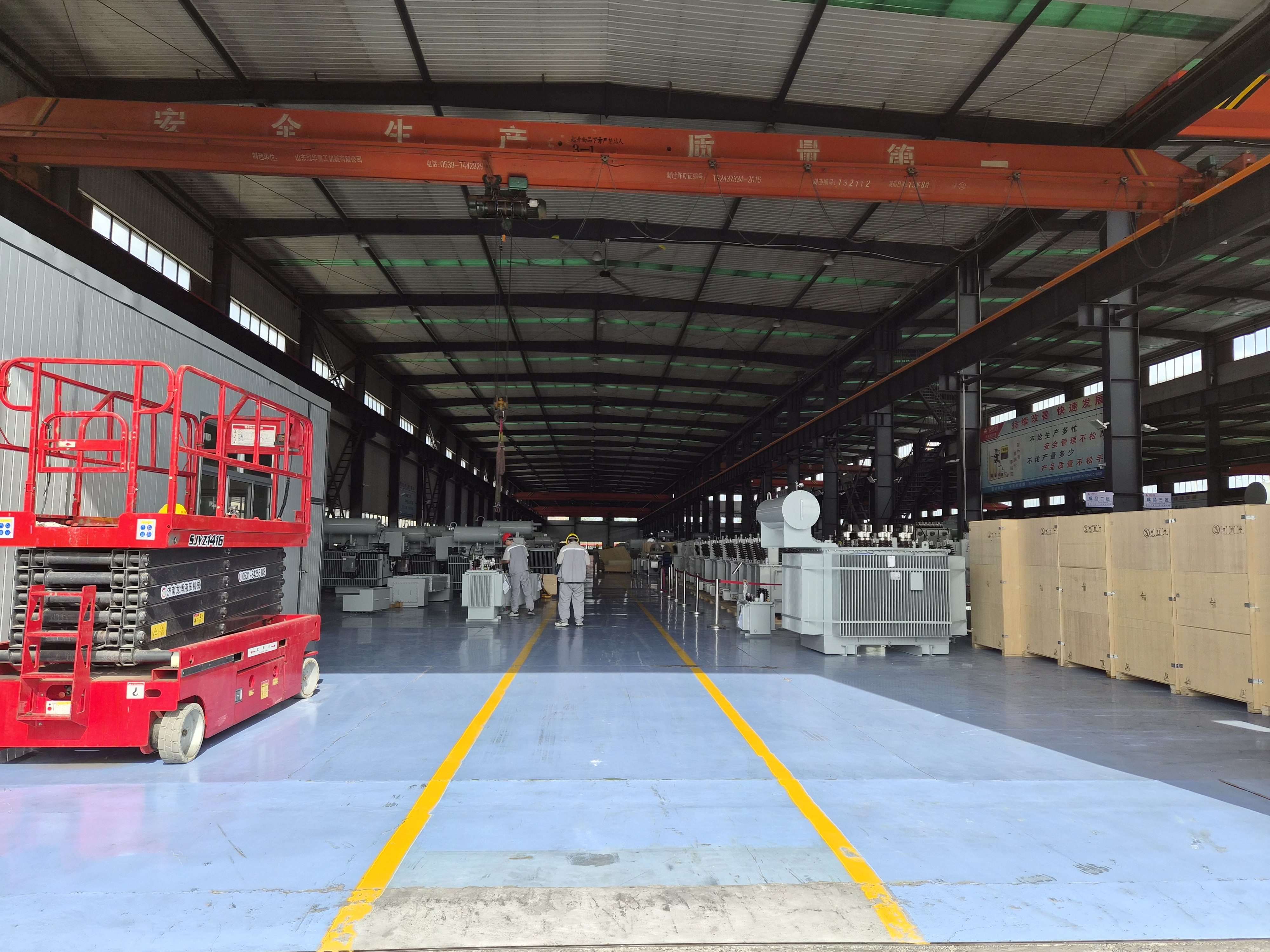
Vector group is proved at factory acceptance: ratio, winding-resistance, loss, insulation, temperature-rise and impulse tests are witnessed before shipment.
Use Cases: What the Correct Vector Group Looks Like in Practice
Distribution networks, commercial buildings and institutions
The three-phase two-winding oil-immersed distribution transformer series S13 / S14 / S15 is available with Dyn11 or Yyn0, in ratings from 30–3,150 kVA (10 kV class) up to 3,150–31,500 kVA (35 kV class), for urban and rural distribution-grid construction and upgrades, industrial plant auxiliary power, commercial buildings, residential communities, hospitals, schools and municipal utilities. Where the transformer must stand inside a building — a high-rise, a hospital, a data centre hall or a tunnel — the epoxy resin cast dry-type series SCB12–SCB18 uses the same Dyn11 / Yyn0 convention, with 30–2,500 kVA at the 10 kV class and 800–25,000 kVA at the 35 kV class. This is where the LV neutral letter matters most: a four-wire service voltage cannot be supplied without an LV neutral point.
Renewable generation and energy storage
Renewable-energy transformers in the SC10 / SZ18 / SZ20 family are specified with Dyn11 or Yd11, with 500–12,500 kVA at the 10 kV class and 1,000–12,500 kVA at the 35 kV class, impedance voltage of 6.0–14.0% and off-circuit tap changing of ±2×2.5% or ±5%. A wide-range low-voltage winding of 0.4–1.14 kV is used so that inverters from different brands can be connected. For plant designers, the vector group decision here usually follows the inverter and step-up interface rather than distribution practice; a delivered 40,000 kVA energy-storage project in Bulgaria is an example of the application.
Utility substations, data centres and AI computing parks
At transmission level the vector group is part of the system design. The SFZ-250000/345 three-phase oil-immersed on-load voltage regulating power transformer is a 250/250 MVA, 345/34.5 kV, 60 Hz unit with vector group Dyn1, a tap range of (345 +17/−17 × 0.625%)/34.5 kV, ONAN / ONAF1 / ODAF2 cooling ratings of 185 / 225 / 250 MVA, and lightning impulse withstand of 1175 kV on the HV side and 200 kV on the LV side with 975 kV switching impulse. It is used for utility substation and grid transmission scenarios, large AI computing centres and data centres, and step-up substations for wind, solar and energy-storage plants. A 345 kV transmission project in the U.S. state of Georgia is a delivered reference for this model.
Staged expansion: packaged substations and parallel operation
Where capacity is added in stages, the vector group of the new units must match what is already energised. Modular prefabricated cabin substations — voltage class 10/35 kV, transformer capacity 500–50,000 kVA, transformer oil-immersed or dry-type — allow capacity upgrades by adding further cabins, and a containerised substation can shorten construction time by up to 60% because assembly, testing and commissioning are completed at the factory. That speed only helps if the incoming transformer's vector group is compatible with the existing installation.
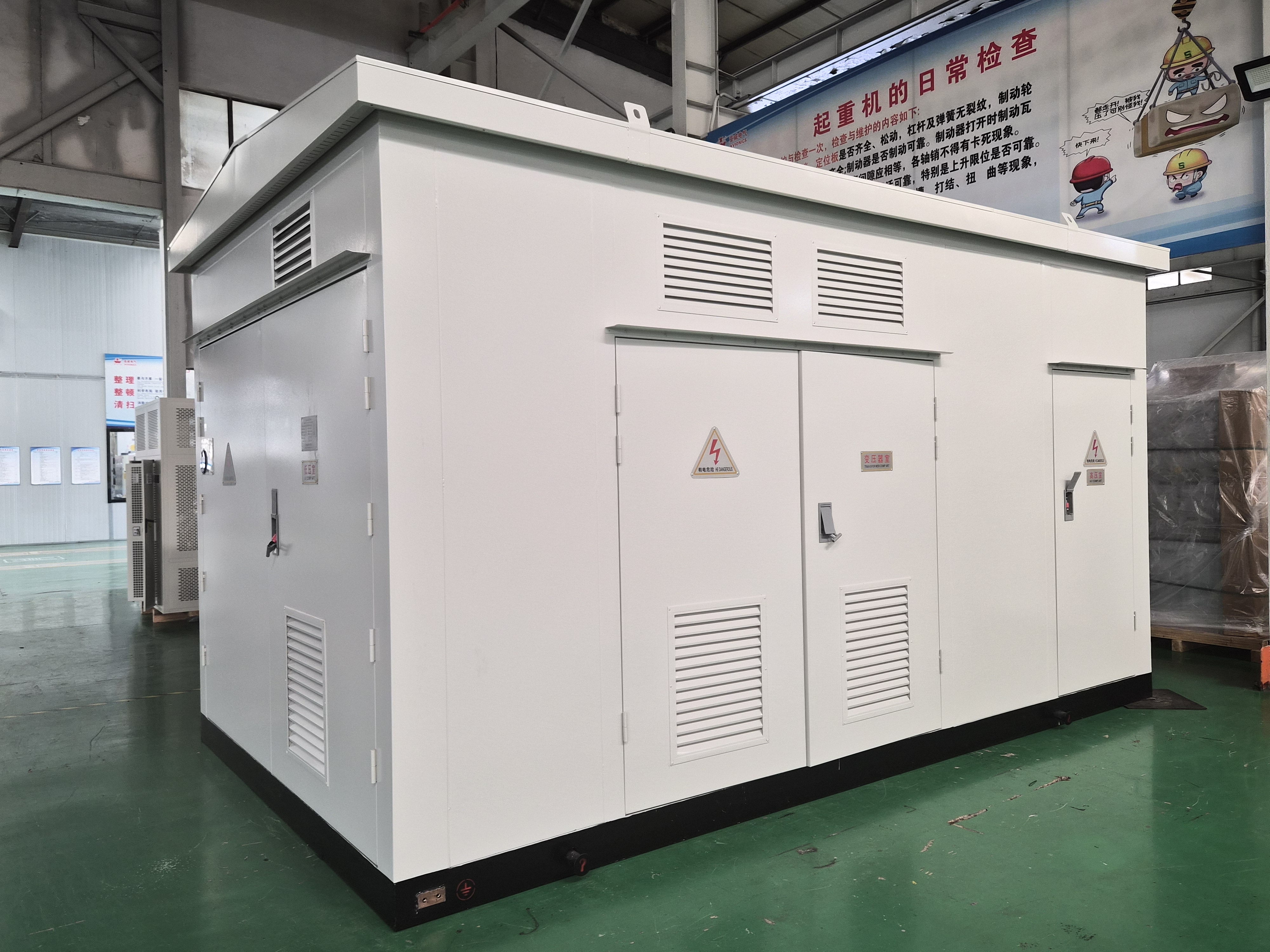
Modular prefabricated cabin substations add capacity in stages — the incoming transformer's vector group must match the units already energised.
Comparison Table: Vector Groups and Key Parameters by Transformer Family
The table lists the vector groups and parameters held in the current custom transformer range. Every figure is a published product parameter; values outside these ranges are engineered per project.
| Product family | Type | Vector group | Key parameters | Typical application |
|---|---|---|---|---|
| S13 / S14 / S15 Series | Three-phase two-winding oil-immersed distribution transformer | Dyn11 / Yyn0 | 30–3,150 kVA (10 kV class); 3,150–31,500 kVA (35 kV class); HV 6 / 10 / 10.5 / 11 / 35 kV; impedance 4 / 4.5 / 6 / 6.5 / 7 / 8 / 10%; off-circuit ±2×2.5% or on-load tap changing | Urban and rural distribution grids, industrial auxiliary power, commercial buildings |
| SCB12–SCB18 Series | Epoxy resin cast dry-type power transformer | Dyn11 / Yyn0 | 30–2,500 kVA (10 kV class); 800–25,000 kVA (35 kV class); insulation class F (155°C) / H (180°C); AN / AF cooling | Indoor electrical rooms, data centres, hospitals, tunnels, fire-sensitive sites |
| S(B)H15(21–25)-M | Amorphous alloy transformer (oil-immersed / dry-type) | Dyn11 / Yyn0 | Oil-immersed 30–2,500 kVA; dry-type 500–2,500 kVA; HV 6 / 10 / 10.5 / 11 / 20 / 35 kV; no-load losses 60–80% lower than conventional silicon-steel cores | Grid loss-reduction programmes, data centres and communication base stations |
| SC10 / SZ18 / SZ20 | New energy transformer for PV, wind and energy storage | Dyn11 / Yd11 | 500–12,500 kVA (10 kV class); 1,000–12,500 kVA (35 kV class); impedance 6.0–14.0%; LV 0.4 / 0.69 / 0.4–1.14 kV | PV plants, onshore and offshore wind farms, energy-storage plants, microgrids |
| SFZ-250000/345 | Three-phase oil-immersed on-load voltage regulating power transformer | Dyn1 | 250/250 MVA; 345/34.5 kV; 60 Hz; ONAN 185 MVA / ONAF1 225 MVA / ODAF2 250 MVA; HV lightning impulse 1175 kV | Utility substations, large AI and data centres, renewable step-up substations |
Frequently Asked Questions
What does the vector group of a transformer mean?
The vector group is the code that tells you how the HV and LV windings are connected and what phase displacement exists between them. It matters for two practical reasons: two transformers can only be operated in parallel if their vector groups are compatible, and the phase displacement affects protection settings and the connection of other equipment. Because it appears on the rating plate, the enquiry and the drawings, an incorrect vector group is one of the most common causes of a transformer arriving that cannot be paralleled with the existing units on site.
Can two transformers with different vector groups be operated in parallel?
No. Parallel operation requires compatible vector groups: the phase displacement expressed by the clock number in the code must match. That is why the vector groups of the units already installed should be recorded from their rating plates before a new custom transformer is ordered, rather than discovered at commissioning.
Which vector groups are available in the current custom transformer range?
Distribution transformers — the oil-immersed S13 / S14 / S15 series, the epoxy resin cast dry-type SCB12–SCB18 series and the amorphous-alloy S(B)H15(21–25)-M series — are available with Dyn11 or Yyn0. Renewable-energy transformers in the SC10 / SZ18 / SZ20 family are available with Dyn11 or Yd11. Large power transformers follow the project design; the SFZ-250000/345 (250 MVA / 345 kV) unit is specified with vector group Dyn1.
What must a buyer give a China custom transformer manufacturer before the vector group is fixed?
At minimum: the system grounding arrangement on both sides, the vector groups of any transformers the new unit will run in parallel with, the protection scheme expectations, rated capacity, voltage class and frequency, impedance voltage, tap-changing type and the required cooling class. Because these items are frozen at design stage, they should be confirmed before the drawing is approved. Working through a partner that audits the manufacturing plant is how those parameters are verified: Apex Power Systems (Nanjing) Co., Ltd. is an international trading and supply-partner company for power transformers and substation equipment, established in 2024, which audits production and test equipment before ordering, verifies certificates with their issuing bodies, requires witnessed routine and type tests at factory acceptance, and arranges third-party inspection where required.
How is the vector group verified before shipment, and how can I request a quotation?
The vector group is stated on the rating plate and confirmed during factory testing: witnessed routine and type tests at factory acceptance include ratio, winding resistance, no-load and load loss, insulation, temperature rise and lightning impulse. Buyers may request witnessed testing and third-party inspection as part of the order. To receive a specification and quotation for a custom transformer, send the required vector group, rated capacity, voltage class, frequency, impedance voltage, tap-changing type, cooling class and destination market to the contact below.
Conclusion: Fix the Vector Group Before the Design Is Frozen
Vector group selection is a design-stage decision that determines whether a custom transformer can be paralleled, how the protection scheme will be set, and whether the LV system can supply a neutral. The code itself is compact — winding connections, neutral availability and a clock number for phase displacement — but it must be specified together with capacity, voltage class, impedance, tap changing and cooling, and then verified by the ratio test at factory acceptance. The parameters in this guide cover the current custom transformer range; anything outside them is engineered per project rather than assumed.
Next step. Send your required vector group, rated capacity, voltage class and destination market, and we will return a matched specification and quotation. A sample review or a witnessed factory acceptance test can be arranged as part of the order, and the full product catalogue with ratings, configurations and reference projects is available for download.
Download the Apex Power Systems product catalogue · apexpowerlink.com
Contact
Apex Power Systems (Nanjing) Co., Ltd. — international trading and supply partner for power transformers and substation equipment.
- Contact: Simon
- Email: xuke@apexps-nj.com
- Tel / WhatsApp: +86 132-0157-1341
- Address: Room 1001, Xinke Building, No. 209 Pubin Road, Jiangbei New Area, Nanjing City, Jiangsu Province, China
- Websites: apexpowerlink.com | an-ele.com
Have Questions or Need More Details?
Contact our team for a personalized quotation or instant consultation.
Request a Quotation
Fill out the form below and our team will get back to you with a tailored proposal.
WhatsApp Direct Chat
Prefer to chat in real-time? Message us on WhatsApp for instant assistance & quick answers.
- Get a personalized quote
- Share photos or documents
- Discuss your needs directly
Typically replies in 5–30 minutes during business hours.