
How to Specify an IEC-Compliant Custom Transformer
How to Specify an IEC-Compliant Custom Transformer
An IEC-compliant custom transformer is not a standard unit with a different nameplate. It is a design whose changed parameters — capacity, voltage ratio, impedance, vector group, cooling class and enclosure protection — still sit inside a verified test and certification envelope.
That distinction separates a technically valid design from a procurable one. A 5,000 kVA unit with a non-standard voltage ratio and a non-standard cooling class can be calculated and drawn without difficulty. Whether it can be delivered with a type test report that a utility or an EPC reviewer will accept is a different question, and it is usually the question that delays the project.
Apex Power Systems (Nanjing) Co., Ltd. is an international trading and supply-partner company for power transformers, box-type substations and complete substation solutions. It is not a manufacturer. It audits, selects and supervises a network of Chinese manufacturing partners, then manages design review, production, factory testing, documentation, freight and site commissioning on the buyer’s behalf. Every certification and test reference in this article belongs to those audited manufacturing partners and is presented here as the reference point for the specification process.
The short answer — three questions decide whether a custom design is procurable:
- Certification scope. Does the design stay inside a certified product family and a named legal entity, or does it need new evidence?
- Parameter consistency. Do the changed parameters remain consistent with the cooling specification, the impedance voltage and the resulting test programme?
- Evidence. Can the buyer’s reviewer be handed a third-party type test report, a routine test record and a witnessed factory acceptance test?
If all three answers are yes, the custom design is procurable. If any one of them is unclear at enquiry stage, it will surface later — usually at the acceptance test or at the interconnection approval.
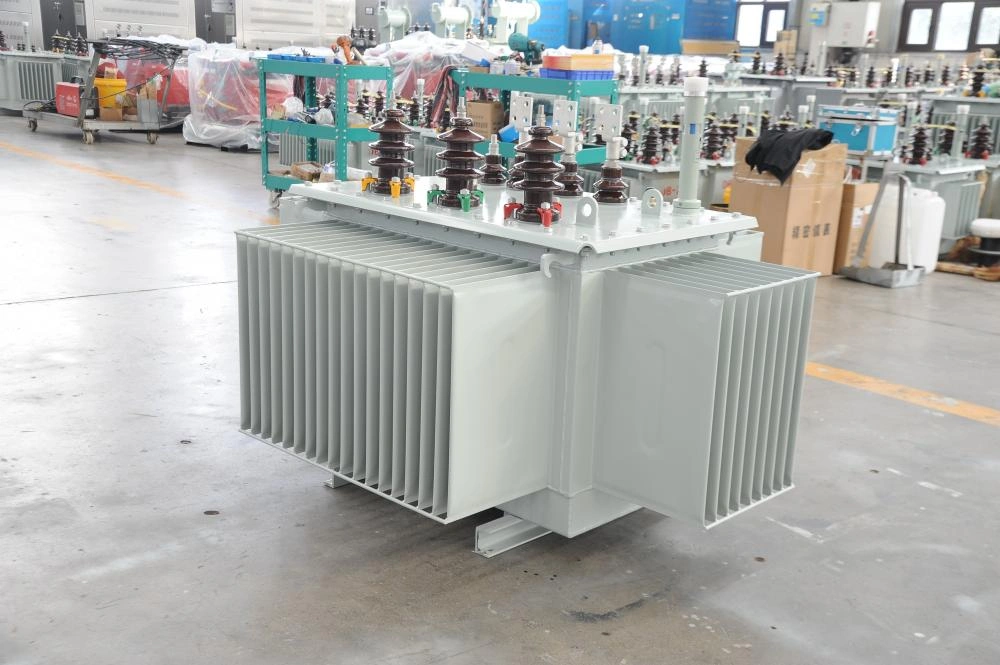
What “Custom” Actually Changes: The Constraint Chain Behind a Non-Standard Transformer
A custom requirement almost always enters through the electrical envelope. Rated capacity, high-voltage and low-voltage classes, frequency, vector group, impedance voltage, tap range and cooling class are the parameters a buyer specifies first, and each of them is connected to the others through the design and through the test programme.
Capacity drives the core and winding design, which drives loss and temperature rise, which drives the tests that prove the unit. Voltage class drives the insulation level and the impulse withstand requirement. The clearest illustration of the cascade is the cooling class. The SFZ-250000/345 three-phase oil-immersed on-load voltage regulating power transformer is rated 250/250 MVA at 345/34.5 kV and carries three different ratings by cooling stage: 185 MVA in ONAN, 225 MVA in ONAF1 and 250 MVA in ODAF2. The nameplate rating is therefore a function of the cooling specification, not an independent number. Change the cooling requirement and the rating, the temperature-rise test and the fan or pump configuration all move together.
Impedance voltage behaves the same way. New energy transformers in the SC10/SZ18/SZ20 series are offered across a 6.0–14.0% impedance range so that the transformer can be matched to the short-circuit capacity of the system it connects to. Impedance is not a selection detail added at the end; it changes the short-circuit forces the windings must withstand and therefore the mechanical design and the type test.
Vector group is the parameter most often checked last and most often wrong. Oil-immersed distribution transformers are supplied in Dyn11 or Yyn0, dry-type units in Dyn11 or Yyn0, new energy units in Dyn11 or Yd11, and the SFZ-250000/345 power transformer in Dyn1. Two transformers can only be operated in parallel if their vector groups are compatible, so a unit that is technically correct in isolation can still be unusable on a site where it has to run alongside existing equipment.
The second layer of constraints is physical rather than electrical:
- Insulation architecture. Oil-immersed designs use paper-oil composite insulation; dry-type designs use cast epoxy resin. The choice decides fire behaviour, maintenance intervals and where the unit may be installed.
- Cooling and loading. Dry-type units run in AN (natural air) or AF (forced air) and can carry up to 150% of rated load under forced-air cooling. Oil-immersed units run in ONAN, ONAF or ODAF.
- Enclosure protection. Dry-type transformers are supplied at IP00, IP20 or IP23. Prefabricated cabin substations are supplied at IP54 or IP55.
- Site conditions. Prefabricated cabin substations are specified for −40 °C to +50 °C and for high altitude, high humidity, dust and salt-spray environments. The single-phase pole-mounted D-M series is specified for −40 °C to +40 °C and elevations up to 2,000 m. Anti-corrosion classes C3, C4 and C5, high-altitude derating and seismic design are custom engineering inputs, not finishing options.
The problem this creates is specific. Certification is written against a product family and a legal entity, not against a calculation. The UL compliance evaluation for dry-type transformers covers open ventilated dry-type air-cooled general-purpose transformers. The EAEU declaration names the S13/S14/S15 oil-immersed distribution transformer, the SCB12–SCB18 dry-type transformer and the SFZ-250000/345 power transformer. A custom design that steps outside those descriptions does not carry the existing evidence with it. Buyers who specify performance only, and suppliers who quote a price only, discover the gap at the point where the certificate is checked.
Why Certification Evidence Now Decides the Technical Bid
Transformer procurement has moved from product description to evidence. Utilities, EPC contractors and interconnection reviewers increasingly ask for type test reports and destination-market certificates before a technical bid is accepted, because the cost of discovering a certification gap after award is measured in months rather than in money.
The evidence that is requested now falls into recognisable categories. Management-system certificates are asked for to demonstrate process control. Product safety certifications are asked for to demonstrate market access. Third-party type test reports are asked for to demonstrate that the design itself has been independently verified. Classification-society approvals and field evaluation reports are asked for where a specific regulator, insurer or site authority has to be satisfied.
Independent witnessing has become the strongest form of evidence in this market. For the audited manufacturing partners, KEMA Test Report (Type Test) 702226901-24 was issued on 2024-08-23 by KEMA B.V. (KEMA Labs), Arnhem, Netherlands, and covers routine, type and special tests conducted from 17 to 21 July 2024 to IEC 60076-1:2011, IEC 60076-2:2011, IEC 60076-3:2013 and IEC 60076-10:2016. KEMA Test Report 109600301-26 was issued on 2026-02-12 and covers tests witnessed by KEMA inspectors from 23 to 28 December 2025, adding IEEE C57.12.00:2021 and IEEE C57.12.90:2021 to the same IEC basis. Reports of this type cover the S13/S14/S15 oil-immersed distribution transformer, the ZGS-H/ZGS-Z three-phase pad-mounted transformer and the SFZ-250000/345 power transformer.
Two details decide whether that evidence is actually usable. The first is the entity. A certificate is issued to a named legal entity; if the certificate holder and the manufacturer named on the purchase order are different companies, the certificate answers a question nobody asked. The second is the expiry date. Certificates move through recertification cycles, and the dates matter at bid stage. The ISO 9001 certificate, for example, runs from 2025-01-16 to 2028-01-15; the CE certification to the EMC Directive runs to 2027-09-07; the EAEU declaration runs to 2027-02-25; the CCS type approval runs to 2031-08-12; and the BV Mode II approval runs to 2027-11-13. A specification that quotes a certificate without a validity date is an incomplete specification.
The Four Layers of Compliance Evidence
IEC compliance is often treated as a single document. In practice it is four layers, and each layer answers a different question.
Layer 1 — Management system certification: does the factory control its process?
ISO 9001:2015 certificate 04325Q30129R0M was issued on 2025-01-16 by Beijing United Intelligence Certification Co., Ltd. (UICC) under the standard GB/T19001-2016/ISO9001:2015, with a scope covering the design and production of oil-immersed transformers up to 220 kV, dry-type transformers up to 35 kV, and box-type substations. ISO 14001 and ISO 45001 certificates are held under the same international mutual recognition framework, and the audit process applied by Apex checks that each certificate is current and in the correct entity name. Management-system certification proves how the factory works. It does not prove what the product will do.
Layer 2 — Product safety certification: may the unit enter the destination market?
For dry-type transformers supplied to the United States and Canada, the UL compliance evaluation is recorded under UL-US-26119070-0 for the United States and UL-CA-2687596-0 for Canada, issued by UL LLC on 2026-05-29 to UL 1561 Ed.4 and CSA C22.2 No.47 Ed.5, and covering open ventilated dry-type air-cooled general-purpose transformers. For liquid-immersed distribution transformers, UL/CSA product safety certification is recorded under UL-CA-2242874-0, UL-CA-2320692-0 and UL-CA-2328358-0 to CSA C2.1-06 and CSA C227.4, covering the S13/S14/S15 series and the SFZ-250000/345 power transformer. For the European Union, CE certification to the EMC Directive 2014/30/EU is held under M.2022.206.C7198 (UDEM) and 3N230310.JYTU038 (ECM), against EN IEC 61000-6-2:2019, EN IEC 61000-6-4:2019, EN 61000-3-2:2019, EN 61000-3-3:2013 and the EN 60076 series. For Russia and the Eurasian Economic Union, the EAEU Declaration of Conformity POCC RU D-CN.PA01.B.07433/24 was issued on 2024-02-26 by the Russian certification body OOO «KASKAD» to GOST R 52719-2007.
Layer 3 — Third-party type test reports: has the design been independently verified?
Type test evidence is the layer that most directly answers the HVQ2 question about IEC-compliant designs. Beyond the two KEMA reports, a TÜV Rheinland Type Test Report, number CN231PY4 001, was issued on 2023-06-26 by TÜV Rheinland (Shanghai) Co., Ltd. following tests conducted from 20 to 22 June 2023 to IEC 60076-1:2011, IEC 60076-2:2011, IEC 60076-3:2013+A1:2018 and IEC 60076-10:2016, covering the S13/S14/S15 oil-immersed distribution transformer and the SFZ-250000/345 power transformer.
Layer 4 — Classification society approval and field evaluation: does the site authority accept the unit?
Where a specific authority has to be satisfied, general IEC evidence is not enough. For marine and offshore engineering, a CCS Type Approval Certificate, number JS25PTB00105, was issued by China Classification Society Jiangsu Branch on 2026-08-13 and is valid to 2031-08-12 under the CCS Rules for Classification of Sea-going Steel Ships, Part 4, Chapter 3, including drawing approval and type test for marine power and lighting transformers. A BV Classification Society Mode II Approval Certificate, number SMS.W.II./144156/A.0, was issued by Bureau Veritas Marine & Offshore and is valid from 2023-11-20 to 2027-11-13 under BV NR320 for marine transformer manufacturing facility and quality procedure approval. For North American site acceptance, a CSA Field Evaluation Report, number 80127142, was issued by CSA Group on 2022-05-20 following evaluation from 10 to 20 May 2022 of a switchgear unit substation to NFPA 791-2018, NFPA 70-2017, IEEE C57.12.00, IEEE C57.12.90, UL 891 and IEEE C37.121-2012. For hazardous areas, the KBSG/KBSGZY mining transformer holds an explosion-proof certificate and a China MA safety mark with the marking Exd I for underground coal mines, precision-machined flameproof joints compliant with GB 3836, enclosure protection IP54 or higher, and testing by the National Quality Supervision and Inspection Center for Explosion-proof Electrical Products. Box-type substations and switchgear product lines additionally hold CQC product certification, and the manufacturing facility holds a provincial metrology qualification.
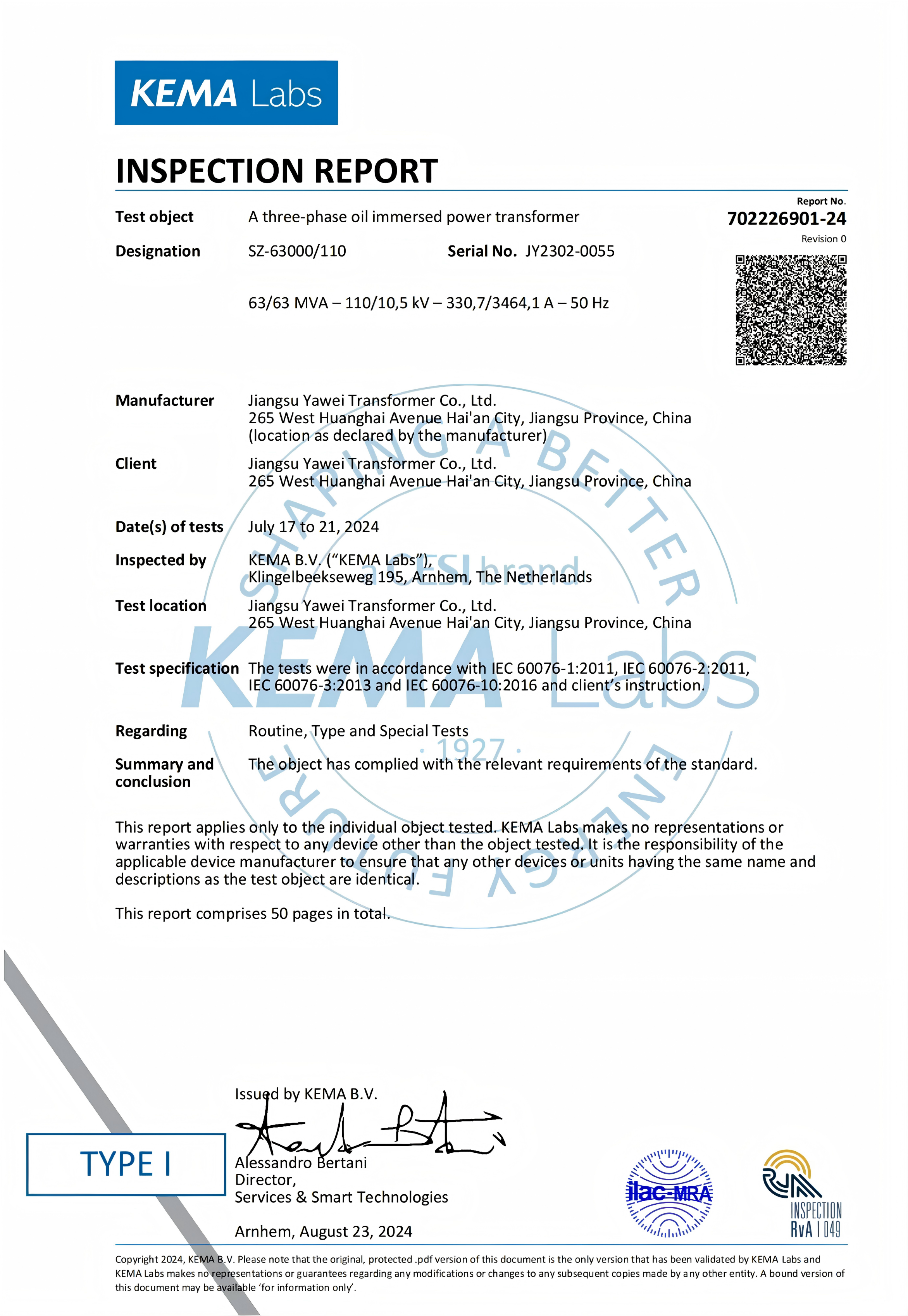
Certification matrix: which document answers which question
| Destination / requirement | Evidence type | Number | Issued by | Standard | Product family covered |
|---|---|---|---|---|---|
| US & Canada — dry-type product safety | UL compliance certificate | UL-US-26119070-0 (US) / UL-CA-2687596-0 (CA) | UL LLC | UL 1561 Ed.4; CSA C22.2 No.47 Ed.5 | SCB12–SCB18 open ventilated dry-type air-cooled general-purpose transformer |
| US & Canada — liquid-immersed distribution | UL/CSA product safety certification | UL-CA-2242874-0 / UL-CA-2320692-0 / UL-CA-2328358-0 | UL LLC | CSA C2.1-06; CSA C227.4 | S13/S14/S15 oil-immersed distribution; SFZ-250000/345 power transformer |
| European Union | CE certification (EMC Directive 2014/30/EU) | M.2022.206.C7198 (UDEM) / 3N230310.JYTU038 (ECM) | UDEM International; Ente Certificazione Macchine | EN IEC 61000-6-2:2019; EN IEC 61000-6-4:2019; EN 61000-3-2:2019; EN 61000-3-3:2013; EN 60076-1:2011; EN 60076-2:2011; EN 60076-14:2013 | SFZ-250000/345; S13/S14/S15 |
| Russia & Eurasian Economic Union | EAEU Declaration of Conformity | POCC RU D-CN.PA01.B.07433/24 | OOO «KASKAD» | GOST R 52719-2007 | SFZ-250000/345; S13/S14/S15; SCB12–SCB18 |
| Global — witnessed type test | KEMA Test Report (Type Test) | 702226901-24; 109600301-26 | KEMA B.V. (KEMA Labs), Arnhem, Netherlands | IEC 60076-1/-2/-3/-10:2011–2016; IEEE C57.12.00:2021; IEEE C57.12.90:2021 | SFZ-250000/345; S13/S14/S15; ZGS-H/ZGS-Z |
| Global — type test | TÜV Rheinland Type Test Report | CN231PY4 001 | TÜV Rheinland (Shanghai) Co., Ltd. | IEC 60076-1:2011; IEC 60076-2:2011; IEC 60076-3:2013+A1:2018; IEC 60076-10:2016 | S13/S14/S15; SFZ-250000/345 |
| Marine & offshore | CCS Type Approval Certificate | JS25PTB00105 | China Classification Society Jiangsu Branch | CCS Rules for Classification of Sea-going Steel Ships, Part 4, Chapter 3 | Marine power and lighting transformer |
| Marine & offshore — factory approval | BV Classification Society Mode II Approval | SMS.W.II./144156/A.0 | Bureau Veritas Marine & Offshore | BV NR320 | Marine transformer manufacturing facility |
| North America — site acceptance | CSA Third-Party Field Evaluation Report | 80127142 | CSA Group | NFPA 791-2018; NFPA 70-2017; IEEE C57.12.00; IEEE C57.12.90; UL 891; IEEE C37.121-2012 | Switchgear unit substation |
| Global — quality management | ISO 9001:2015 certificate | 04325Q30129R0M | Beijing United Intelligence Certification Co., Ltd. (UICC) | GB/T19001-2016 / ISO 9001:2015 | Oil-immersed transformers up to 220 kV; dry-type up to 35 kV; box-type substations |
How to Specify a Custom Transformer: Eight Steps from Enquiry to Acceptance
Step 1 — Fix the electrical envelope before anything else
State rated capacity, HV and LV voltage classes and frequency first, because everything else is derived from them. Reference envelopes from the audited manufacturing base: oil-immersed distribution transformers cover 30–3,150 kVA at 10 kV class and 3,150–31,500 kVA at 35 kV class, with HV at 6, 10, 10.5, 11 or 35 kV and LV at 0.4, 0.69, 3.15, 6.3 or 10.5 kV. Dry-type transformers cover 30–2,500 kVA at 10 kV class and 800–25,000 kVA at 35 kV class. New energy transformers cover 500–12,500 kVA at 10 kV class and 1,000–12,500 kVA at 35 kV class. Power transformers range from 10 kV to 765 kV, with a maximum verified capacity of 250 MVA.
Step 2 — Fix the site envelope in the same document
Ambient temperature range, altitude, humidity, dust, salt spray and seismic requirements belong in the enquiry, not in a later clarification. A prefabricated cabin substation is a different product at IP54 than at IP55, and a pole-mounted transformer is specified for −40 °C to +40 °C and elevations up to 2,000 m. Anti-corrosion class C3, C4 or C5 changes the tank treatment and the surface finish. High-altitude derating changes the capacity actually available at the site.
Step 3 — Choose the insulation and cooling architecture deliberately
Oil-immersed or dry-type is the first fork in the specification. Dry-type units use cast epoxy resin insulation, are oil-free, self-extinguishing, moisture-resistant and maintenance-free, operate normally at 100% humidity, can be energised after shutdown without pre-drying, support up to 150% rated load under forced-air cooling, and comply with IEC 60076-11 at IP00, IP20 or IP23. Oil-immersed units use paper-oil composite insulation and generally offer more capacity per unit cost at higher ratings. Both are available, which is exactly why the choice has to be justified in the specification rather than assumed.
Step 4 — Map the destination market to the certificate
State the market and the acceptance authority in the enquiry. United States and Canadian projects require UL and CSA evidence for the specific product family. European Union projects require CE marking to the EMC Directive. Russia and EAEU projects require an EAC declaration to GOST R 52719-2007. Marine and offshore projects require classification-society approval. Underground coal-mine projects require an explosion-proof certificate, the China MA safety mark and compliance with GB 3836. A custom design can be engineered towards a target certification, but the certification path has to be decided before the design is frozen, not after.
Step 5 — Define the evidence pack before negotiating the price
Ask for the type test report number and the issuing laboratory, the routine test records, and the witness arrangements. Routine tests for distribution transformers follow IEC 60076 or ANSI/IEEE C57.12 and include turns ratio, winding resistance, no-load and load losses, impedance, insulation and oil quality; type and special tests are available where the project requires them. For power transformers, the routine test programme adds induced withstand and partial discharge measurement, lightning impulse and oil testing.
Step 6 — Confirm the legal entity named on the certificate
Check that the certificate holder is the manufacturer named on the purchase order and that the certificate scope covers the exact product family being bought. Because Apex Power Systems is a trading and supply partner rather than a manufacturer, all certification belongs to the audited manufacturing partners; verifying the entity and scope match is part of the audit and selection service, and the buyer receives the verified position rather than a self-description.
Step 7 — Agree FAT, SAT and third-party inspection in the contract
Factory acceptance testing before shipment, joint site acceptance testing with the customer after installation, and third-party inspection by organisations such as SGS, BV or KEMA are all available and can be written into the contract. Factory visits and witnessed factory acceptance tests can be arranged as part of an order, and drawings, factory test reports and operating manuals are delivered in the format the utility or EPC requires.
Step 8 — Lock lead time, quantity and spares
Lead times vary by product family. Standard distribution transformers run 30–60 days and customised models 45–75 days; new energy transformers 60–90 days; prefabricated cabin substations 90–120 days; standard power transformers 45–90 days and large or custom power transformers 90–150 days. A project-based cycle typically runs 3–6 months from contract to site acceptance. The minimum order quantity for a sample is one unit, with bulk orders typically ten or more units per container and a design fee on one-off projects that is refundable against bulk orders. Tanks, radiators and enameled wires are produced in-house within the manufacturing base, so replacement parts and spares are available rather than sourced externally.
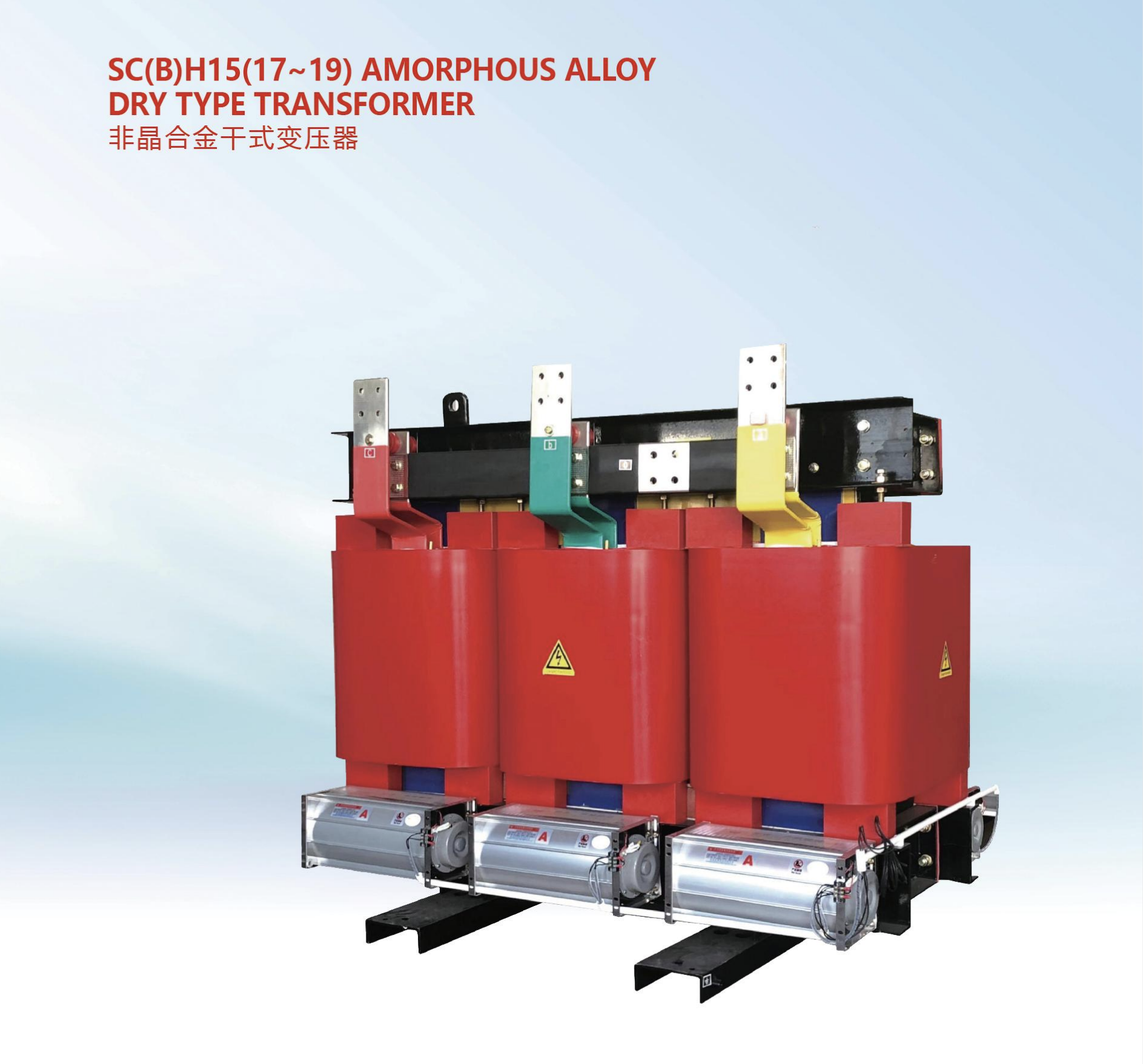
Use Cases: Where a Constrained Custom Design Matters
Custom engineering is not an abstract capability. The clearest way to judge whether a supplier can carry a constrained design is to look at projects where the constraints were real and the acceptance authority was external.
Utility substations and transmission projects
Azerbaijan Power Energy Company received four 110 kV power transformers with design, manufacture, testing and installation guidance. Mongolian Power Transmission Company received a 110 kV substation designed, supplied and installed, energised and operating in a cold-climate environment. Tajikistan Power Transmission Company received the Siroch Bahrom 115 kV substation and the PS “Chomi” 115 kV substation, both designed, supplied and installed. In Uzbekistan, multiple substations received 40 MVA 110/115 kV units (SFZ-40000), 16 MVA 115 kV units (SFZ11-16000), 10 MVA 36.75 kV units (SZ11-10000) and distribution transformers from 63 kVA to 2,500 kVA — a range that demonstrates supply capability across distribution and power classes rather than in a single niche.
High-voltage and ultra-high-voltage applications
The 345 kV fully insulated power transformer supplied for the US–Georgia project was designed, engineered, manufactured, tested, delivered, installed and commissioned, with a documented deliverable installed at Trenton, Ohio. The SFZ-250000/345 is a 250/250 MVA, 345/34.5 kV unit with a Dyn1 vector group and three cooling-stage ratings, covered by KEMA type test evidence. An Ecuadorian substation received a 75,000 kVA, 230 kV transformer with a YNd11 vector group, and a Spanish steel-plant substation received a 132 kV power transformer. A 115 kV substation project for the US–Puerto Rico power distribution company included equipment shipped to the Port of Ponce with “Approved for Installation” status, AutoCAD drawings and client supervision.
Data centres and AI computing parks
Data centre work typically needs two different answers. For indoor medium-voltage to low-voltage distribution, a dry-type transformer for data centre use is the normal specification, because the unit contains no insulating oil and therefore suits fire-sensitive locations, while handling the non-linear, harmonic-rich load of IT equipment. For the incoming supply, an oil-immersed power transformer or a prefabricated substation is used where higher capacity at lower cost per kVA is required, with an on-load tap changer specified where the supply voltage varies. Where the site has to be energised quickly, a containerized prefabricated substation shifts assembly and testing into the factory and reduces on-site civil works.
Solar, wind and energy storage
A 40,000 kVA energy-storage project in Bulgaria was delivered by a Bulgarian transmission company with design, manufacture, supply, on-site delivery, installation guidance, testing and commissioning. PV projects have used large multi-winding step-up transformers, including 40 MVA and 25 MVA units. The design logic behind these units is specific: a wide-range 0.4–1.14 kV low-voltage winding makes the transformer compatible with inverters from different manufacturers, a low-loss core improves plant yield, and impedance-voltage options from 6% to 14% allow the transformer to be matched to the system short-circuit capacity. For a box substation for solar power plant applications, the prefabricated cabin integrates the transformer, MV switchgear, LV switchgear, compensation equipment, automation, AC/DC supply and environmental control in one transportable unit.
Industrial plants and mining
Heavy industry imposes load profiles that reward conservative specification. The Seville steel-plant substation in Spain took a 132 kV transformer, and the Myanmar Conch cement plant took an S13-1250/10/0.4 distribution transformer. An industrial customer in Central America received an SCB10-1000 kVA dry-type transformer at 13.2/0.4 kV together with an SG-400 kVA isolation transformer at 0.38/0.22 kV, a combination chosen for a specific distribution arrangement. In mining, the KBSG/KBSGZY series covers 50–6,300 kVA with an H-class insulation system, copper conductors with NOMEX paper insulation and H-class varnish, and an integrated flameproof feeder switch on the LV side in mobile-substation configuration for towing and relocation.
North American distribution networks
A 15 MVA pad-mounted transformer project for an American transmission company was delivered and installed to ANSI/IEEE standards. The three-phase pad-mounted ZGS-H/ZGS-Z series covers 75–2,500 kVA with HV options of 4.16, 12.47, 13.2, 13.8, 22.86, 24.94 or 34.5 kV, LV options of 240, 480, 600 or 347 V, and efficiency specified to DOE (2016) and CSA (2023). Where a specification follows the American pad-mounted convention, the HV bushings are epoxy-resin moulded with elbow connectors and the enclosure is a fully sealed welded tank with anti-corrosion powder coating; where it follows the European box substation convention, the transformer is integrated into a prefabricated cabin with MV switchgear. Both are legitimate configurations, and the enquiry should say which one applies.
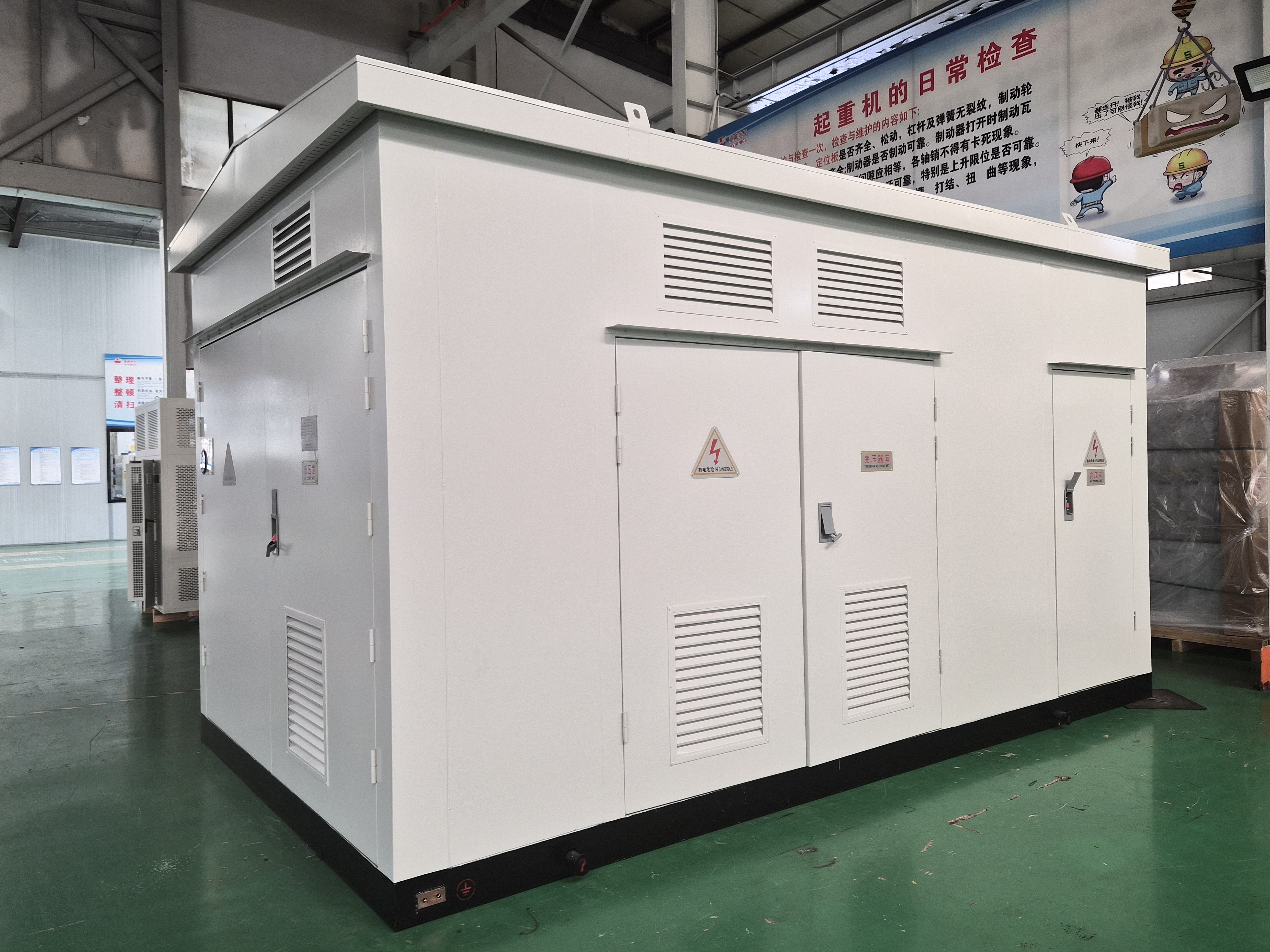
Product Selection Matrix: Matching Each Constraint to a Transformer Family
Once the electrical envelope, the site envelope, the insulation architecture and the destination market are fixed, the product family usually follows. The matrix below maps the families supplied through the audited manufacturing partners against their rating ranges and their certification evidence.
| Product family | Model series | Rating / parameter range | Insulation & cooling | Certification evidence | Typical application |
|---|---|---|---|---|---|
| Oil-immersed distribution transformer | S13 / S14 / S15 | 30–3,150 kVA (10 kV class); 3,150–31,500 kVA (35 kV class); HV 6–35 kV; LV 0.4–10.5 kV; impedance 4–10%; efficiency Grade 1 or Grade 2 (GB 20052) | Paper-oil composite; ONAN | KEMA type test; TÜV type test; UL/CSA; EAC; ISO 9001 | Urban and rural distribution grids, industrial auxiliary power, commercial buildings |
| Dry-type transformer | SCB12–SCB18 | 30–2,500 kVA (10 kV class); 800–25,000 kVA (35 kV class); HV 6–35 kV; LV 0.4–10.5 kV; insulation class F/H | Cast epoxy resin; AN or AF; IP00/IP20/IP23; IEC 60076-11 | UL-US-26119070-0 / UL-CA-2687596-0; EAC; ISO 9001 | Data centres, high-rise buildings, hospitals, transport hubs, fire-sensitive sites |
| Three-phase pad-mounted transformer | ZGS-H / ZGS-Z | 75–2,500 kVA; HV 4.16–34.5 kV; LV 240/480/600/347 V; efficiency DOE 2016 / CSA 2023 | Fully sealed welded tank; natural mineral-oil circulation | KEMA type test; UL/CSA; ANSI/IEEE compliance | North American distribution networks, commercial complexes, municipal utilities |
| Single-phase pad-mounted and pole-mounted transformers | ZGD-H / ZGD-Z; D-M | ZGD: 15–250 kVA; D-M: 5–167 kVA; D-M rated −40 °C to +40 °C and up to 2,000 m elevation | Fully sealed tank; ONAN; copper windings with NOMEX or cable paper | UL/CSA with DOE/CSA efficiency; ISO 9001 | Residential distribution, rural electrification, street lighting, small commercial loads |
| Power transformer | SFZ-250000/345 | 250/250 MVA; 345/34.5 kV; 418/4184 A; 60 Hz; Dyn1; ONAN 185 MVA / ONAF1 225 MVA / ODAF2 250 MVA; LI 1175 kV HV, 200 kV LV; SI 975 kV | Paper-oil composite; fully sealed outdoor | KEMA 702226901-24 and 109600301-26; TÜV CN231PY4 001; UL/CSA; CE; EAC; CSA field evaluation | Grid transmission, large AI computing centres, renewable step-up substations, heavy industry |
| Prefabricated cabin substation | YBM / ZGS11 / ZGS13 | 10 / 35 kV; 500–50,000 kVA; −40 °C to +50 °C; IP54 / IP55 | Containerized steel structure with rock-wool insulation; oil-immersed or dry-type transformer optional | ISO 9001; ISO 45001 scope; CQC product certification for box-type substations and switchgear | PV, wind and storage step-up substations; data centres; remote and EPC sites with limited infrastructure |
| New energy transformer | SC10 / SZ18 / SZ20 | 500–12,500 kVA (10 kV class); 1,000–12,500 kVA (35 kV class); LV 0.4–1.14 kV; impedance 6.0–14.0%; Dyn11 or Yd11 | Oil-immersed or dry-type; ONAN or ONAF; low-loss core | Covered under the ISO 9001 and ISO 45001 scopes; EAC for the dry-type family | Centralized and distributed PV, onshore and offshore wind, energy-storage plants, microgrids |
| Amorphous alloy energy-saving transformer | S(B)H15 (21–25)-M | Oil-immersed 30–2,500 kVA; dry-type 500–2,500 kVA; no-load losses 60–80% lower than conventional silicon-steel cores | Oil-immersed fully sealed corrugated tank or vacuum-cast epoxy resin; H-class | National energy-saving product listing; CQC product certification | Grid loss-reduction programmes, green buildings, data centres, communication base stations |
| Mining transformer (mobile substation) | KBSG / KBSGZY | 50–6,300 kVA; HV 6/10 kV; LV 0.4–3.45 kV; insulation class H; Exd I; IP54 or higher | Dry-type in flameproof welded steel enclosure; natural air cooling | Explosion-proof certificate and China MA safety mark; GB 3836 flameproof joints; tested by the National Quality Supervision and Inspection Center for Explosion-proof Electrical Products; CCS and BV approvals for the marine variant | Underground coal and metal mines, tunnels, hazardous areas in chemical plants |
Frequently Asked Questions
What makes a Chinese custom transformer manufacturer’s distribution transformer design IEC-compliant?
IEC compliance is a three-part condition: the design must be tested to the IEC 60076 series, the tests must be documented by an accredited laboratory, and the certificate must name the product family that is actually being supplied. For the audited manufacturing partners, the distribution-level evidence includes KEMA Test Report (Type Test) 702226901-24, issued by KEMA B.V. (KEMA Labs), Arnhem, Netherlands, covering routine, type and special tests to IEC 60076-1:2011, IEC 60076-2:2011, IEC 60076-3:2013 and IEC 60076-10:2016; TÜV Rheinland Type Test Report CN231PY4 001, issued on 2023-06-26 to the same IEC basis with IEC 60076-3:2013+A1:2018; and KEMA Test Report 109600301-26, issued on 2026-02-12, which adds IEEE C57.12.00:2021 and IEEE C57.12.90:2021. Together these cover the S13/S14/S15 oil-immersed distribution transformer, the SCB12–SCB18 dry-type transformer and the ZGS-H/ZGS-Z three-phase pad-mounted transformer. Dry-type designs additionally comply with IEC 60076-11. Because Apex Power Systems is a trading and supply partner and not a manufacturer, this evidence is presented on behalf of the audited manufacturing partners, and each report number can be verified directly with the issuing laboratory.
Can a custom transformer be built outside the standard rating range?
Yes, within defined limits. Custom engineering covers voltage ratios, capacities, impedance, vector groups, tap ranges, special cooling methods, noise reduction, anti-corrosion classes C3/C4/C5, high-altitude derating, seismic design and protection ratings up to IP54/IP55, including design work oriented towards KEMA, UL and CSA certification. Power transformers span 10 kV to 765 kV with a maximum verified capacity of 250 MVA, and the SFZ-250000/345 is a 250/250 MVA, 345/34.5 kV unit with a Dyn1 vector group verified by KEMA testing. For distribution products, oil-immersed units cover 30–3,150 kVA at 10 kV class and 3,150–31,500 kVA at 35 kV class, while dry-type units cover 30–2,500 kVA at 10 kV class and 800–25,000 kVA at 35 kV class. A technical proposal is typically returned within 3–5 business days, with a design cycle of 15–30 days depending on complexity.
What drives the cost of a custom transformer, and what is the minimum order quantity?
The main cost drivers are the core material (grain-oriented silicon steel or amorphous alloy), the winding material, the cooling class, the insulation architecture, the enclosure protection rating, the test scope, and any certification work required for the destination market. An amorphous-alloy core reduces no-load losses by 60–80% compared with a conventional silicon-steel core, which changes both the purchase price and the operating cost, and the choice has to be made against the project’s energy targets rather than by default. The minimum order quantity for a sample is one unit, with bulk orders typically ten or more units per container; one-off projects may carry a design fee that is refundable against bulk orders. Distribution transformers run 30–60 days for standard models and 45–75 days for customised models, so quantity and timing should be discussed together rather than separately.
Can a custom transformer be validated before shipment — sample, FAT, and third-party inspection?
Validation is structured in three stages. Before shipment, a factory acceptance test is carried out, including the routine tests for the product family — for distribution transformers, turns ratio, winding resistance, no-load and load losses, impedance, insulation and oil quality to IEC 60076 or ANSI/IEEE C57.12, with type and special tests available where the project requires them. At the factory, witnessed factory acceptance testing and factory visits can be arranged, and third-party inspection by organisations such as SGS, BV or KEMA is available. After installation, a joint site acceptance test is carried out with the customer. Documentation is supplied with the unit, and because each certificate carries a number that can be checked with the issuing body, the buyer can verify the evidence independently rather than relying on a verbal assurance.
What lead times and delivery support should be planned for a custom transformer project?
Plan by product family rather than by a single figure. Standard distribution transformers run 30–60 days and customised models 45–75 days; new energy transformers 60–90 days; prefabricated cabin substations 90–120 days; standard power transformers 45–90 days; and large or custom power transformers 90–150 days. A project-based cycle typically runs 3–6 months from contract to site acceptance. Delivery support covers on-site installation guidance, commissioning and trial operation, technical training for the customer’s personnel, warranty service, spare parts and 7×24 remote support, with export terms such as FOB Shanghai under Incoterms 2020. As a next step, sending the electrical envelope, the site conditions and the destination market to the supply team is usually enough to receive a technical proposal within 3–5 business days.
Conclusion
A custom transformer is judged by three things, and only the first of them is electrical. The design has to be consistent with itself, which means the cooling class, impedance voltage, vector group and enclosure protection must all point in the same direction. The design has to sit inside a certification envelope that covers the destination market and the exact product family. And the design has to arrive with evidence — a third-party type test report, routine test records and a witnessed factory acceptance test — that a utility or EPC reviewer can verify without taking anyone’s word for it.
Buyers who write those three requirements into the enquiry get a different quality of answer. Instead of a price, they get a technical proposal with named standards, named certificate numbers and stated lead times, which is what makes an evaluation decision possible. That is also the point at which a trading and supply partner adds value that a single factory cannot: a factory can only quote what it makes, whereas an audited supply chain can be compared, challenged and held to the specification that was signed.
Send Your Specification for Review
If you are evaluating a custom transformer, a box-type substation or a complete substation package, send the electrical envelope, the site conditions and the destination market to Apex Power Systems. A technical proposal is typically returned within 3–5 business days, and third-party test reports and certificate numbers can be supplied with it.
Contact: Simon | Email: xuke@apexps-nj.com | Tel / WhatsApp: +86 132-0157-1341 | Website: apexpowerlink.com
Address: Room 1001, Xinke Building, No. 209 Pubin Road, Jiangbei New Area, Nanjing City, Jiangsu Province, China
Download the full product catalogue (PDF): Apex Power Systems Catalog