
Single-Phase Pole-Mounted vs Pad-Mounted Transformers: A Custom Transformer Selection Guide
The electrical duty is identical; the distribution layout makes the decision. A pole-mounted single-phase unit serves an overhead line, while a pad-mounted unit serves an underground layout in which the switching, fusing and protection must sit at ground level inside a locked enclosure.
Both configurations are oil-immersed, fully sealed, single-phase distribution transformers that step a medium-voltage primary down to a 120/240 V centre-tapped service. What separates them is where the unit is installed, what the enclosure is expected to contain, and how the circuit is switched and protected. Those three questions are settled by the project's distribution layout long before a kVA figure reaches the specification.
This guide compares the two families as Apex Power Systems supplies them for North American residential and commercial distribution — the D-M Series pole-mounted unit and the ZGD-H / ZGD-Z Series pad-mounted unit — and identifies the project conditions under which the pole-mounted design is the better fit. Local utility standards and the authority having jurisdiction decide what is acceptable on any particular system; what follows is an engineering comparison, not a code ruling.
Why This Decision Comes Before the kVA Rating
A buyer who starts from the kVA rating usually ends up with a transformer that is electrically correct but sited wrongly. The rating tells you how much load a unit can carry; it does not tell you whether the site has a pole with an overhead primary, or a concrete pad with an underground cable route and a requirement that nothing live be reachable by the public.
The two families overlap between 15 kVA and 167 kVA, which is exactly why the layout has to decide. A 50 kVA single-phase unit exists in both designs, and both are typical in service at 7200/2400 V with a 120/240 V secondary. Choosing between them therefore turns on four practical questions:
- Where is the primary? If the distribution line is overhead on poles, a pole-mounted unit uses infrastructure that already exists. If the subdivision is served by underground cable, a pad is required anyway.
- Who can reach the high-voltage terminations? A pad-mounted design places the terminations inside a tamper-resistant enclosure so that the unit can stand in a publicly accessible area without a fenced substation. A pole-mounted unit places them at height.
- Where must the switching and fusing live? In the pad-mounted configuration the high-voltage and low-voltage switching, fusing and protection are enclosed together with the transformer. In the pole-mounted configuration the unit is a sealed tank with high-voltage and low-voltage bushings, and those functions are not part of the transformer enclosure.
- How will the unit be maintained? Front-access elbow bushings on a pad-mounted unit support live-line work from ground level; a pole-mounted unit is worked from a bucket truck or with the line cleared.
The cost of getting this wrong is not a transformer failure. It is a rejected submittal, a pad poured for a unit that the utility will not accept, or an overhead structure specified where the developer has already buried the service.
Industry Background: How North American Distribution Sets the Choice
North American residential and small commercial service is built on single-phase laterals with a 120/240 V centre-tapped secondary, and the transformer is the point where the distribution primary becomes that service. In the North American market these units are installed outdoors, either pole-mounted or pad-mounted, operate at 60 Hz, and are specified against ANSI/IEEE practice with UL and CSA certification for the destination country.
In service, single-phase units of roughly 25 kVA to 100 kVA are the working range for residential and small commercial distribution, with 50 kVA and 75 kVA units at 7200/2400 V and a 120/240 V secondary among the most common ratings. Where a commercial or light-industrial load needs three-phase supply, the answer moves to a three-phase pad-mounted unit rather than either single-phase design.
The market context explains why availability matters as much as price. Grand View Research estimates the global distribution transformer market at USD 26.0 billion in 2026, rising to USD 47.7 billion by 2033 at a CAGR of 9.1%. For a utility or developer running a multi-phase subdivision programme, that growth translates into lead-time risk, and lead-time risk is managed at the specification stage — by choosing a configuration that the supply chain can actually deliver in the required window.
Efficiency policy is the second background factor. The U.S. Department of Energy's 2024 energy-conservation standards for distribution transformers (10 CFR Part 431) move the market toward amorphous electrical steel from 2029. Both the pole-mounted and the pad-mounted family in this comparison offer an amorphous alloy core as an option alongside silicon steel, which matters when a unit ordered now is expected to remain in service well beyond that date. The core decision is therefore worth taking deliberately rather than by default.
The compliance gate applies to both designs. For the United States, liquid-filled distribution transformers rated over 750 V must be covered by a UL Certificate of Compliance — the relevant category is XPLH7, transformers, distribution, liquid-filled type, over 750 volts, certified for Canada — supported by the IEEE C57.12 series and NFPA 70. For Canada, certification to CSA C2.1-06 (1st Ed.) and CSA C227.4 (3rd Ed.) applies. A unit that is correct technically but not certified for the market will not be accepted.
The Pad-Mounted Design: What the Enclosure Actually Contains
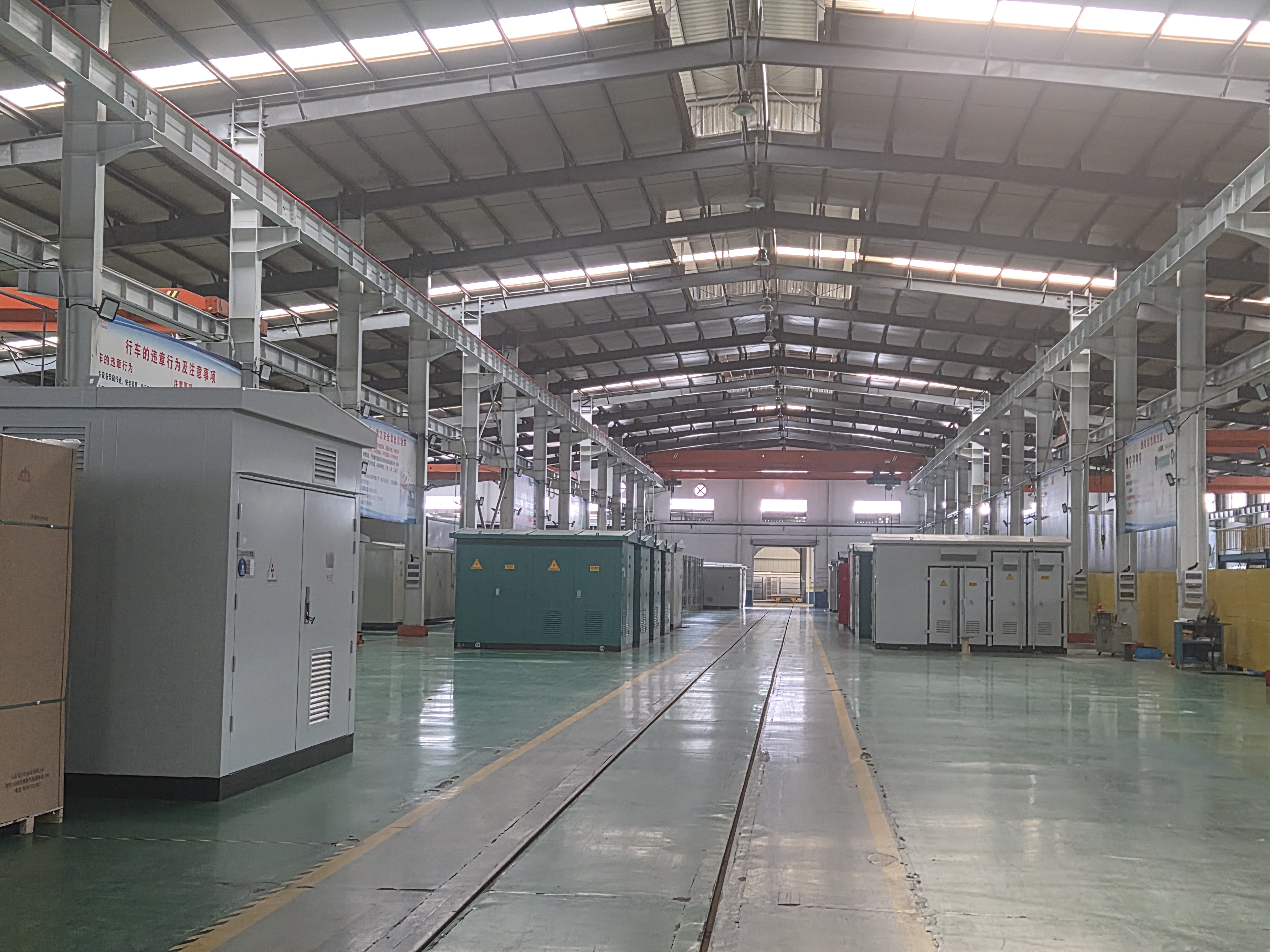
A pad-mounted transformer is defined by its enclosure, not by its core. Its high-voltage and low-voltage switching, fusing and protection are enclosed together with the transformer in a tamper-resistant steel enclosure, and the whole assembly is installed at ground level on a concrete pad. That single design decision — everything live behind a locked door at grade — is what allows the unit to stand in a publicly accessible area without a fenced substation, and it is why the configuration became the standard for underground residential and commercial distribution.
In the North American configuration the unit is compact and low-profile, with front access and elbow bushing plug-in connections; plug-in fuses, surge arresters and load-break switches are the matched equipment that completes the circuit. The practical consequences follow directly: the structure is simple with fewer components, on-site replacement is quick, and front-access elbow bushings allow live-line maintenance from the ground.
Single-phase range: ZGD-H / ZGD-Z Series
The single-phase pad-mounted family covers 15–250 kVA. The core is amorphous alloy or silicon steel, optionally; the windings are copper with paper insulation; the tank is a carbon-steel welded, fully sealed construction; the high-voltage bushings are epoxy-resin elbow bushings; the low-voltage winding is a 120/240 V centre-tapped design; cooling is by natural mineral-oil circulation; and the finish is an anti-corrosion powder coating. The listed applications are residential distribution, rural grids and remote-area electrification, retail and small industrial distribution, street lighting and municipal lighting, and community distribution with predominantly single-phase loads.
Where three-phase load changes the answer
If the site needs three-phase supply, the single-phase comparison no longer applies. The three-phase ZGS-H / ZGS-Z Series covers 75–2500 kVA at 4.16, 12.47, 13.2, 13.8, 22.86, 24.94 or 34.5 kV high voltage and 240, 480, 600 or 347 V low voltage, at 50 or 60 Hz, with efficiency to DOE (2016) or CSA (2023) and insulation levels to ANSI/IEEE. Its internal components are listed as a load-break switch, fuse and surge arrester, with loop-feed configuration optional. That loop-feed option is often the reason a commercial pad is specified as three-phase even where the present load is single-phase: it keeps the circuit topology open for later expansion.
The Pole-Mounted Design: Where It Is the Better Fit
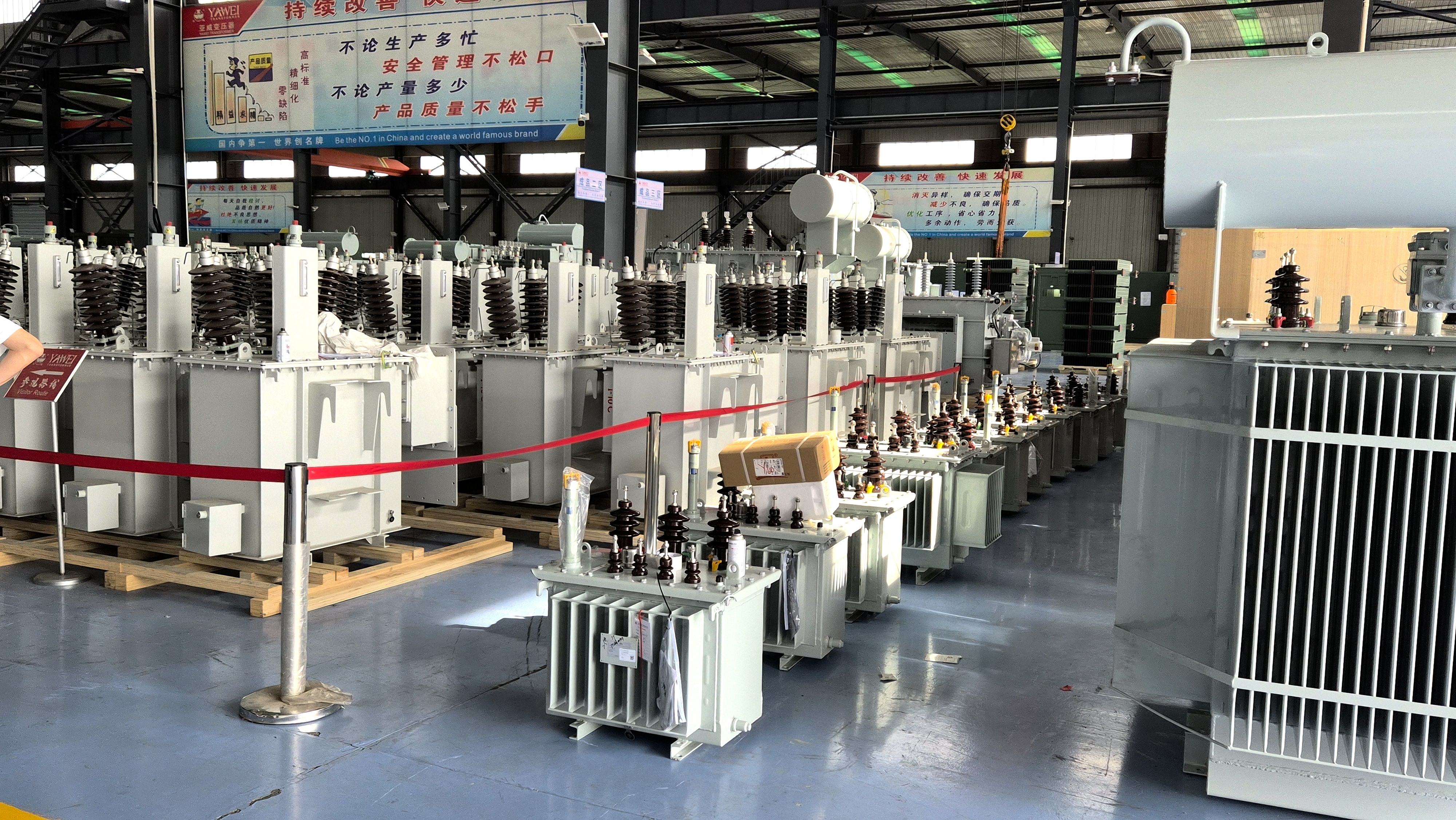
The pole-mounted unit wins wherever the primary is already overhead and there is no reason to build a pad. The D-M Series covers 5–167 kVA, which extends below the pad-mounted range: a 5, 10 or 15 kVA unit for a scattered rural load is available in the pole-mounted family but not in the single-phase pad-mounted one. The tank is cylindrical or elliptical carbon steel, fully sealed; high-voltage bushings are porcelain or composite; low-voltage bushings are porcelain; cooling is natural mineral-oil circulation (ONAN); and the unit is supplied with a drain valve, oil-level gauge, grounding terminal and nameplate, plus top lifting eyes and side mounting brackets for pole installation.
Its listed applications describe the fit precisely: rural grids, remote mountainous areas and scattered villages, agricultural production and irrigation, energy-saving upgrades for railway and urban grids, and temporary construction or emergency power. Those are all situations where the load is small, dispersed, or temporary — and where the cost of a concrete pad plus an underground cable route would exceed the value of the transformer.
The trade-off is the enclosure. A pole-mounted transformer is a sealed tank with bushings; it does not house the circuit switching, fusing and protection that a pad-mounted enclosure does. In an overhead layout those functions are provided by pole-mounted equipment, and access to the unit is from a bucket truck rather than from ground level. Where a utility requires ground-level, lockable access to the high-voltage terminations, the pole-mounted configuration is not a substitute for a pad-mounted unit — and where an underground service is already planned, a pole-mounted unit has no pole to stand on.
Side-by-Side Comparison
The table compares the two configurations on the characteristics that decide the specification. Every row is drawn from the product data and distribution guidance for these two families; where the families genuinely overlap, the overlap is stated rather than resolved artificially.
| Decision factor | Single-phase pole-mounted (D-M Series) | Single-phase pad-mounted (ZGD-H / ZGD-Z Series) |
|---|---|---|
| Distribution layout served | Overhead primary on pole positions; rural, remote and temporary supply | Underground residential and commercial distribution; unit stands in publicly accessible areas without a fenced substation |
| Enclosure | Sealed cylindrical or elliptical carbon-steel tank | Tamper-resistant steel enclosure at ground level on a concrete pad; carbon-steel welded fully sealed tank |
| Switching, fusing and protection | Not housed within the transformer enclosure | High-voltage and low-voltage switching, fusing and protection enclosed with the transformer |
| Connection style | Porcelain or composite HV bushings; porcelain LV bushings | Epoxy-resin elbow bushings; front-access plug-in connections; plug-in fuses, surge arresters and load-break switches as matched equipment |
| Low-voltage winding | LV porcelain bushings for the service connection | 120/240 V centre-tapped winding |
| Rating range | 5–167 kVA | 15–250 kVA |
| Core options | High-permeability silicon steel or amorphous alloy, optional | Amorphous alloy or silicon steel, optional |
| Cooling | Natural mineral-oil circulation (ONAN) | Natural mineral-oil cooling |
| Mounting provisions | Top lifting eyes and side mounting brackets for pole mounting | Installed on a concrete pad at grade |
| Access for maintenance | Worked from the pole; line clearance normally required | Front-access elbow bushings support live-line maintenance from ground level; simple structure, quick on-site replacement |
| Listed applications | Rural grids, remote areas and scattered villages, agriculture and irrigation, railway and urban grid upgrades, temporary and emergency power | Residential distribution, rural grids and remote-area electrification, retail and small industrial distribution, street lighting and municipal lighting, single-phase-dominant communities |
| When three-phase load appears | Outside this single-phase family | Move to the three-phase ZGS-H / ZGS-Z Series, 75–2500 kVA, 4.16–34.5 kV |
Step-by-Step: How to Make the Selection
The selection runs in a fixed order, and each step narrows the answer rather than reopening it. Working in this sequence avoids the common failure of specifying a rating first and discovering the layout conflict afterwards.
- Fix the distribution layout first. Establish whether the primary reaches the load overhead on poles or underground. This single fact eliminates one configuration in most projects.
- Fix the load and the service voltage. Residential and small commercial service is single-phase 120/240 V centre-tapped. If the load is three-phase, the decision moves to the three-phase pad-mounted series and the pole-versus-pad question no longer applies.
- Size inside the family window. Check the rating against 5–167 kVA for the pole-mounted unit and 15–250 kVA for the pad-mounted unit. A requirement below 15 kVA points to the pole-mounted family; a requirement above 167 kVA points to the pad-mounted family.
- Decide what has to be enclosed. If the unit will stand where the public can reach it, or if the utility requires the switching, fusing and protection to be lockable at ground level, specify the pad-mounted design. If those functions are provided on the pole structure, the pole-mounted design is sufficient.
- Decide the maintenance approach. Ground-level live-line work through front-access elbow bushings, or work from a bucket truck on an overhead structure. This is an operational decision for the utility, not a preference.
- Set the efficiency and core requirement. Choose amorphous alloy or silicon steel against the loss limits that apply at the installation date, and account for the direction of U.S. DOE standards under 10 CFR Part 431 from 2029 if the unit will remain in service past that point.
- Confirm certification and documentation before design freeze. Verify that the UL Certificate of Compliance covers the exact model range ordered, add CSA C2.1-06 and CSA C227.4 for Canada, and agree the drawing, test-report and manual formats that the utility or EPC requires.
Use Cases: Which Configuration Fits Which Project
Underground residential subdivision (United States or Canada)
Services are buried, so a pad is being built regardless, and the unit will stand where residents and contractors can reach it. The single-phase pad-mounted ZGD-H / ZGD-Z unit at 50 kVA or 75 kVA is the fit: enclosure at grade, elbow bushings, 120/240 V centre-tapped secondary, and certification to the U.S. and Canadian requirements for liquid-filled units over 750 V.
Overhead rural feeder, farm or irrigation load
The primary is already on poles and the loads are small and dispersed. The D-M Series pole-mounted unit is the fit, and ratings from 5 kVA upward are available where a pad-mounted unit would start at 15 kVA. There is no pad to pour and no cable route to trench, which is the point of the configuration.
Retail strip or small commercial building
Single-phase service is common, but the site often carries three-phase HVAC or tenant equipment. If three-phase supply is required, the selection moves to the three-phase ZGS-H / ZGS-Z pad-mounted unit, and loop-feed configuration can be specified to keep the circuit open for later expansion. If the load is genuinely single-phase, the single-phase pad-mounted family covers it up to 250 kVA.
Street lighting and municipal distribution
Single-phase pad-mounted units are listed for street lighting and municipal lighting as well as community distribution with predominantly single-phase loads. Where the lighting circuit runs on an overhead system, the pole-mounted unit serves the same duty from the existing structure.
Temporary construction power and emergency supply
Temporary and emergency power is a listed application of the pole-mounted family. A unit that can be mounted on an existing pole and later removed does not require the civil works that a pad demands.
Specification Details That Change the Answer
Three technical details decide whether a correctly chosen configuration still performs as intended.
Cooling class and site conditions. Both single-phase families rely on natural oil circulation — ONAN, meaning oil-immersed with natural oil circulation and natural air circulation. The cooling class defines the rated capacity of each cooling stage and the associated temperature limits, and it must be checked against the ambient temperature and altitude of the installation site. On larger units, adding forced air cooling (ONAF) raises the permissible loading; on these sealed distribution units the rating is fixed, so the ambient and altitude check has to be done at the specification stage rather than corrected afterwards.
Oil condition remains the health indicator. These are sealed, maintenance-free units in normal service, but the oil is still the best single indicator of internal health. Periodic inspection and oil testing for dielectric strength (BDV), moisture and dissolved gas analysis (DGA) detect incipient faults before they cause an outage, and a sudden change in dissolved gas or moisture is the earliest warning of an internal fault. Recording readings and comparing them with previous trends is what makes the test useful; a single sample in isolation proves little.
Commissioning discipline. On-site work follows a fixed sequence — assembly of bushings, radiators and pipework, oil processing under vacuum, connection and earthing, then ratio, winding resistance, insulation resistance, bushing and tap-changer tests before energisation. Only qualified personnel should perform high-voltage tests and energisation, using calibrated test equipment and observing the manufacturer's clearances.
Installation and commissioning support. Apex manages delivery from design through manufacturing, factory acceptance testing and witness testing, third-party inspection, packing, freight (for example FOB Shanghai, Incoterms 2020), documents and site supervision. Submittals, AutoCAD drawings, factory test reports and operating manuals are issued in the format the customer's utility or EPC requires.
Frequently Asked Questions
What certification does a single-phase pad-mounted or pole-mounted unit need for the United States and Canada?
For the United States, liquid-filled distribution transformers rated over 750 V must be covered by a UL Certificate of Compliance — the relevant category is XPLH7, transformers, distribution, liquid-filled type, over 750 volts, certified for Canada — supported by the IEEE C57.12 series and NFPA 70. For Canada, certification to CSA C2.1-06 (1st Ed.) and CSA C227.4 (3rd Ed.) applies. Two limits matter in practice: the certificate must be in the legal entity name of the company that signs the contract, and the model range listed must actually cover the unit ordered. A UL Certificate of Compliance confirms that representative samples were evaluated; authority to apply the UL Mark is granted separately under the UL Follow-Up Services procedure. A unit that is correct technically but not certified for the market will not be accepted.
Does the pad-mounted enclosure contain the switching, fusing and protection, or are they supplied separately?
They are inside the enclosure. A pad-mounted transformer is defined by the fact that its high-voltage and low-voltage switching, fusing and protection are enclosed together with the transformer in a tamper-resistant steel enclosure installed at ground level on a concrete pad, which is what allows the unit to stand in a publicly accessible area without a fenced substation. In the North American configuration the connections are made through front-access elbow bushings, with plug-in fuses, surge arresters and load-break switches as matched equipment. In the single-phase ZGD-H / ZGD-Z Series the high-voltage bushings are epoxy-resin elbow bushings and the low-voltage winding is a 120/240 V centre-tapped design. On the three-phase ZGS-H / ZGS-Z Series the listed internal components are a load-break switch, fuse and surge arrester, with loop-feed configuration optional.
What are the MOQ, payment terms and typical lead times for a custom single-phase order?
MOQ is one unit, subject to technical evaluation. Standard models run 45–90 days and large or custom power transformers 90–150 days. FOB, CIF, EXW and DDP are negotiable, with bulk or project cargo transport, vacuum oil filling and nitrogen protection, and shock and tilt monitoring during transport. Payment is typically T/T 30% deposit, 30% at mid-production, 30% before shipment and 10% after acceptance, or L/C at sight, with other terms negotiable subject to credit evaluation. A 15 MVA pad-mounted (box-type) transformer project for a U.S. transmission company is among the reference projects coordinated through Apex, alongside substation work for customers in Puerto Rico and the U.S. state of Georgia.
How is a unit validated before it leaves the factory, and what acceptance evidence is provided?
Acceptance is built on factory testing before shipment and a site acceptance test with the customer, with a 12–24 month warranty per contract and KEMA witnessed type tests available where specified. Apex performs certificate verification during factory audit, obtains any missing certification before shipment, and where a required certificate does not exist for the ordered product arranges the necessary type test or third-party certification rather than relying on a certificate for a different model. Test reports, drawings and manuals are issued in the format the utility or EPC requires, so the acceptance file matches what the purchaser has to submit.
Can Apex support a repeat-order programme across several years rather than a single unit?
A single-phase distribution programme is usually ordered in batches over several years, and that is where supply continuity matters more than a one-off price. Apex supplies through audited manufacturing partners under one contract: the same specification, drawings and test regime can be re-ordered without re-qualifying a source, and where continuity is critical Apex evaluates multiple audited factories against a single specification, enabling dual-source selection to support supply continuity for oil-immersed transformer orders. Contractual protection includes engineering and production review, supervision and warranty obligations, and delivery management covers design, manufacturing, FAT and witness testing, third-party inspection, packing, freight, documents and site supervision. To discuss a sample unit, a programme quotation or the transformer catalogue, contact the Apex Power Systems team at xuke@apexps-nj.com or +86 132-0157-1341.
Conclusion: A Layout Decision, Then a Specification
The choice between a single-phase pole-mounted and a single-phase pad-mounted custom transformer is made by the distribution layout, and the specification follows from it. Overhead primary, small or dispersed load, temporary or remote duty — the pole-mounted D-M Series from 5 to 167 kVA is the better fit, with no pad and no trench. Underground service, publicly accessible siting, and a requirement that switching, fusing and protection be lockable at ground level — the pad-mounted ZGD-H / ZGD-Z Series from 15 to 250 kVA is the better fit. Where the site needs three-phase supply, neither single-phase family applies and the three-phase pad-mounted series takes over.
Two checks decide whether the chosen unit is actually acceptable: the certification must cover the exact model range in the correct legal entity name for the destination country, and the efficiency and core decision should be taken deliberately rather than by default, given the direction of U.S. DOE standards under 10 CFR Part 431 from 2029. Get those right and the remaining variables — rating, cooling, bushings, finish — are engineering detail rather than risk.
Specify the Right Single-Phase Unit With Apex Power Systems
Apex Power Systems (Nanjing) Co., Ltd. is an international trading and supply partner for power transformers, distribution transformers and prefabricated substations. Apex is not a manufacturer: it audits and selects the manufacturing partner, then manages design review, production, witness testing, documentation, freight and site supervision on the buyer's behalf.
Send the distribution layout, load, service voltage and destination market, and the team will confirm whether the pole-mounted or pad-mounted configuration fits and quote accordingly — MOQ one unit.
Email: xuke@apexps-nj.com | Tel / WhatsApp: +86 132-0157-1341 | Website: apexpowerlink.com
Download the full product catalogue: Apex Power Systems Catalog (PDF)
Have Questions or Need More Details?
Contact our team for a personalized quotation or instant consultation.
Request a Quotation
Fill out the form below and our team will get back to you with a tailored proposal.
WhatsApp Direct Chat
Prefer to chat in real-time? Message us on WhatsApp for instant assistance & quick answers.
- Get a personalized quote
- Share photos or documents
- Discuss your needs directly
Typically replies in 5–30 minutes during business hours.