220V vs 380V Hot Tub Power: Commercial Buyer Guide
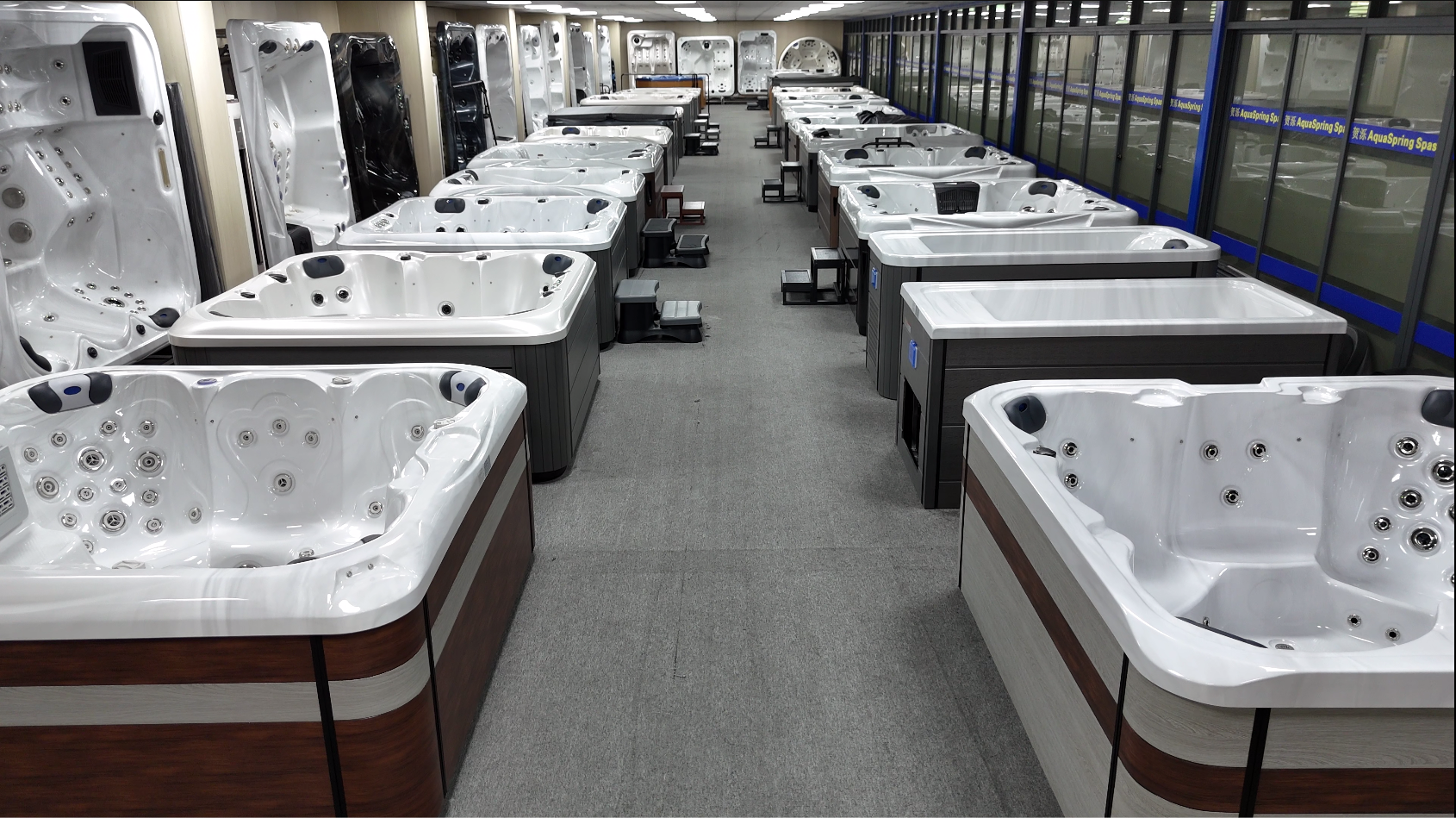
For a commercial hot tub project, 220 V and 380 V are not competing labels that can be ranked in the abstract. They describe different electrical supply routes, and the correct choice depends on the model, seating capacity, current draw, interlock arrangement, site electrical capacity and installation conditions. In the configuration data used for this comparison, the HL-5805H lists 26 A on the higher-current route or 12 A with interlock on the lower-current route. A six-person unit lists 31 A or 17 A with interlock. The six-person unit therefore needs a larger electrical allowance in this comparison, but the final decision still belongs to a site-specific electrical review.
The practical answer is this: choose the supply route that the exact model is configured for, that the site can safely deliver, and that the installation can support over the long term. Do not choose 380 V simply because it sounds more powerful, and do not choose 220 V simply because the building already has a single-phase outlet nearby. A commercial buyer should compare the electrical datasheet, the base and drainage design, the service access plan and the certification file together. This guide sets out that comparison for hotel, resort, spa, wellness, fitness, dealer and other commercial buyers.
What 220 V and 380 V Mean for a Commercial Hot Tub
Voltage is one part of the electrical design, not the whole design. In commercial practice, a 220 V / 50–60 Hz supply is often associated with a single-phase circuit, while a 380 V / 50–60 Hz supply is often associated with a three-phase circuit. These are practical patterns, not rules that apply unchanged in every market. The buyer must confirm the actual voltage, phase, frequency, wiring method and protective devices at the project site.
For the same load, a higher-voltage three-phase supply generally draws less current per conductor than a lower-voltage single-phase supply. That is why a commercial electrical designer may prefer a 380 V route when the building has a suitable three-phase distribution and the hot tub configuration is designed for it. The benefit is not automatic: the model must be built for that supply, the control system and heaters must match it, and the installation must include the correct isolation, earthing and protection.
The current values in this guide should therefore be read as configuration data, not as a universal rating for every hot tub of a given size. The HL-5805H and the six-person unit show why. Their listed currents differ, and each also has a lower-current option described as being used with an interlock. An interlock is a safety-related control arrangement. The buyer should obtain the wiring diagram and confirm what the interlock protects, how it affects operation and service, and whether the arrangement is accepted by the local electrical authority.
The Commercial Context: Why the Power Decision Matters
Commercial hot tub buyers are not only buying a leisure product. They are specifying equipment for hotels and resorts, spa, wellness and hydrotherapy centers, hot tub dealers and distributors, fitness clubs and health clubs, swimming pool and landscape design companies, and camping and glamping businesses. In these settings, downtime, electrical safety, service access and installation quality have operational consequences. A power decision that is acceptable for a single backyard unit may be unsuitable for a commercial site where the tub runs more frequently, serves more users, or sits within a building envelope.
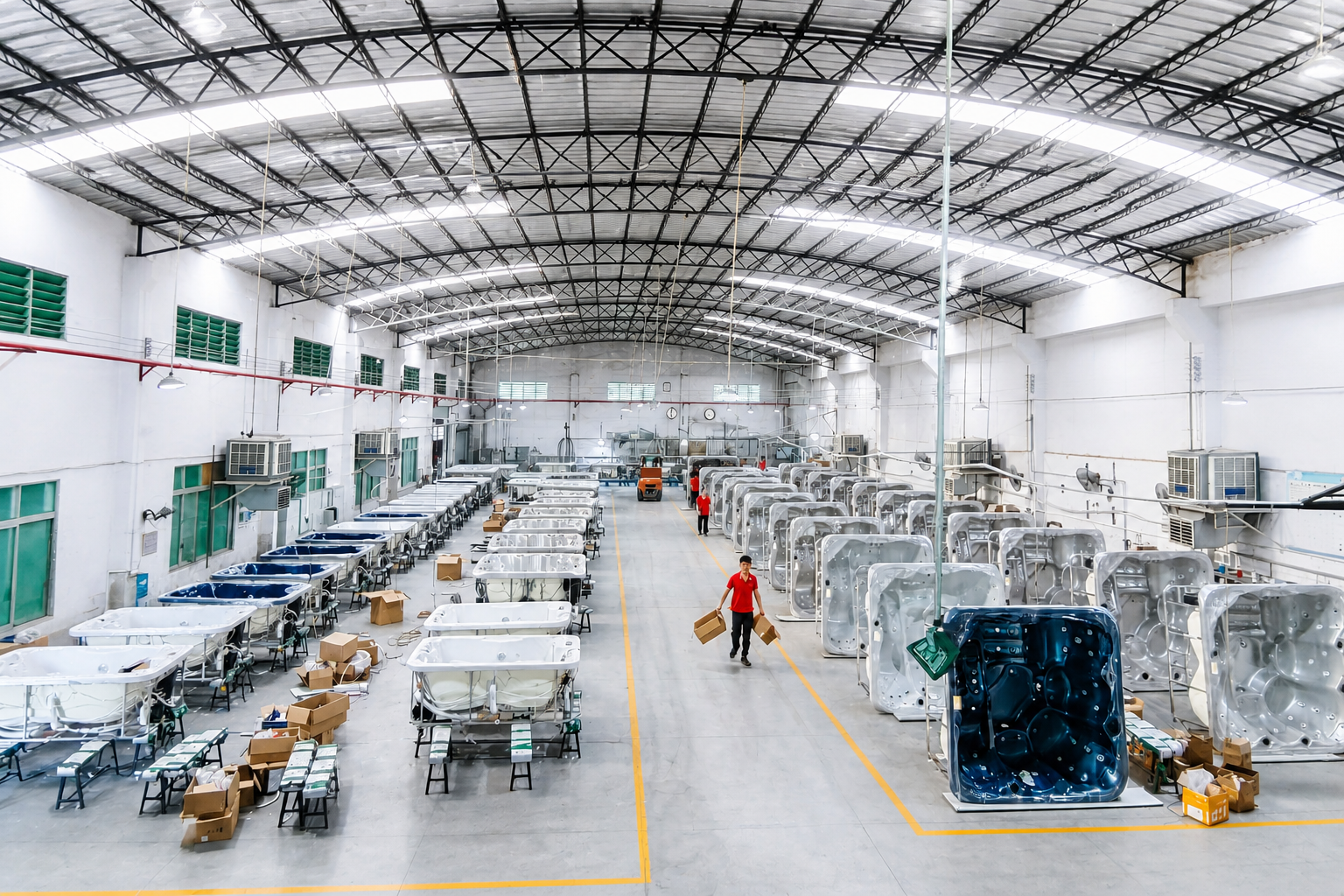
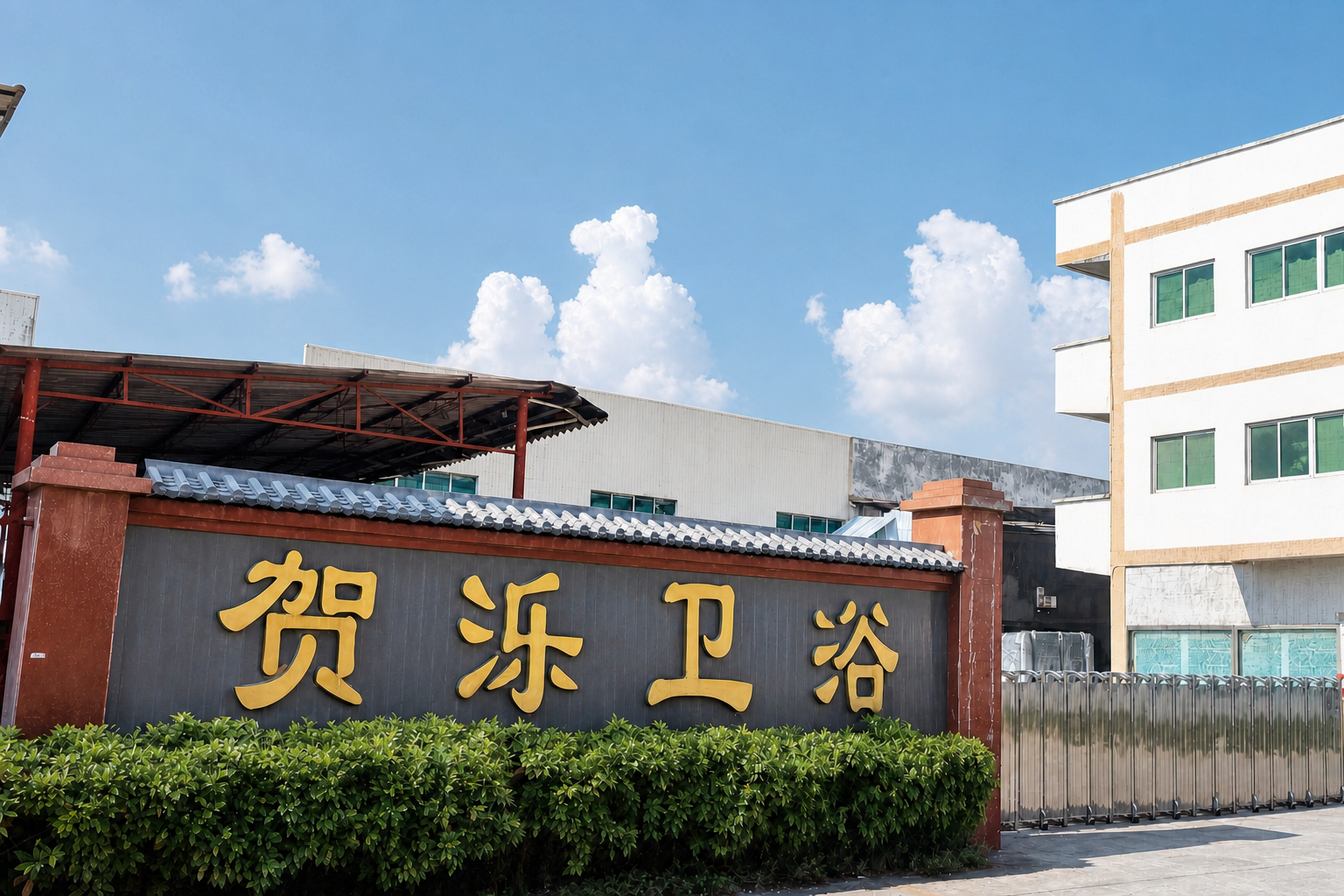
AquaspringSpas, which markets Aquaspring Hot Tub products, is a China-based hot tub and swim spa manufacturer established in 2011. Its company profile describes a 20,000 ㎡ facility, ISO9001:2015 management, and product certifications including CE, ETL, RCM, SAA, CB and UKCA. The company also states that it uses Balboa control systems and Aristech Acrylics and provides OEM and ODM services. These facts are relevant to the power discussion because control-system compatibility, model-level electrical documentation and market-specific certification are part of the buyer's due diligence. A general brand statement is not a substitute for the exact model datasheet.
The commercial context also explains why the electrical decision should be made early. If the site has only a 220 V supply and the selected unit is configured for a higher-current route, the project may need a supply upgrade, larger protective devices or a different model configuration. If the site has a 380 V three-phase supply but the unit is ordered for a different voltage or frequency, the mistake may only become visible during commissioning. Early coordination between the hot tub supplier, the electrical contractor and the site engineer reduces that risk.
The Current Data: HL-5805H and a Six-Person Unit
The most useful starting point is the model-specific current data. For the HL-5805H, the configuration data used in this comparison lists 26 A on the higher-current route and 12 A with interlock on the lower-current route. For the six-person unit, the corresponding values are 31 A and 17 A with interlock. These are not interchangeable figures. The higher-current route requires a larger supply and protective arrangement, while the lower-current route depends on the interlock arrangement and the approved configuration.
The six-person unit's listed 31 A and 17 A values are higher than the HL-5805H's 26 A and 12 A values. That does not prove that every six-person hot tub uses more energy in every operating condition. It does show that, in this comparison, the six-person unit requires a larger electrical allowance. Commercial buyers should use that difference when planning the distribution board, circuit protection, cable route and spare capacity. They should not infer a general rule from seat count alone, because pump configuration, heater rating, control system and simultaneous load can all affect the actual electrical demand.
The interlock note deserves separate attention. A lower current value described as being used with an interlock should not be treated as a simple performance downgrade or as a plug-and-play alternative. The project team should ask for the electrical schematic, the interlock logic, the conditions under which the lower-current mode operates, and the commissioning procedure. If the interlock is part of the safety concept, it must remain functional after installation. Bypassing or altering it without written approval would undermine the basis of the comparison.
Buyer check: Ask the supplier to state the exact voltage, phase, frequency, current rating and interlock arrangement for the ordered model. The values in a brochure or comparison table are not a substitute for the order-specific datasheet.
How to Match Electrical Supply to Seating Capacity and Site Requirements
Seating capacity is a useful planning signal, but it is not an electrical specification. A six-person unit may have a larger water volume, more jets, a different pump arrangement and a higher current draw than a smaller model, but the buyer should confirm the actual configuration. The following steps turn the 220 V versus 380 V question into a practical decision path.
Step 1: Lock the model, seating plan and configuration
Start with the exact model and the intended seating layout. The HL-5805H and the six-person unit are different reference points in this comparison, and each may have options that affect electrical demand. Confirm the control system, pump configuration, heater, lighting, audio accessories and any custom features. AquaspringSpas states that its OEM and ODM services may include customization of voltage and frequency, among other product details. That flexibility is useful, but it also means the buyer must confirm the final configuration in writing.
Step 2: Obtain the electrical datasheet and current rating
Request a model-specific electrical datasheet that states the voltage, frequency, phase, current, recommended circuit protection, wiring method and any interlock requirements. For this comparison, the key figures are 26 A or 12 A with interlock for the HL-5805H, and 31 A or 17 A with interlock for the six-person unit. The datasheet should also identify the maximum load and any conditions that affect it. Do not accept a generic statement such as 'standard commercial power' without the supporting model data.
Step 3: Audit the site supply and protective devices
Have a licensed electrician or electrical engineer audit the available supply before the order is finalized. The audit should confirm the voltage, phase, frequency, available capacity, cable route, earthing arrangement, isolation method and protective devices. For a 220 V route, the team should check whether the higher current can be delivered safely and whether voltage drop or nuisance tripping could affect operation. For a 380 V route, the team should confirm that the three-phase supply is compatible with the model and that phase balance and protection are correctly designed. Local electrical codes, not the supplier's general marketing, govern the final installation.
Step 4: Design the base, drainage and service access
The electrical decision cannot be separated from the physical installation. A filled hot tub is heavy and needs a continuous, level base capable of carrying the design load. The combined weight of water, the hot tub, equipment and users is transferred to the ground through the base and support frame. Significant slope, soft spots, voids or localized support may cause shell deformation, panel misalignment, stress on plumbing joints or poor drainage. The foundation dimensions, load capacity, drainage and outdoor-installation requirements should be confirmed by a local professional based on the hot tub model and site conditions.
Drainage planning belongs in the same review. Standing water, poor service drainage and freeze-thaw movement can undermine the base and create installation problems. For built-in installations, the design should include moisture control, drainage, ventilation and service access. The finished installation must still allow safe draining, power isolation and servicing. Do not close the structure if the access panels cannot be opened.
Step 5: Verify certification and documentation
Ask for the certificate and test documentation that applies to the exact model and destination market. AquaspringSpas lists CE, ETL, RCM, SAA, CB and UKCA among its product certifications, but certification scope can vary by model, configuration and jurisdiction. Electrical safety standards also vary by market. UL 1563 is one example of a safety standard for electric spas, equipment assemblies and associated equipment, and UL Solutions identifies hydromassage bathtubs and hot and cold spas within pool and spa equipment certification coverage. The buyer should confirm which standard, certificate and marking apply to the ordered unit rather than relying on a general certificate list.
Step 6: Plan commissioning and handover
Before handover, confirm that the installed supply matches the ordered configuration, that the interlock and protective devices operate as designed, and that the service team can isolate power safely. Record the as-built electrical details, the breaker ratings, the cable route and the location of isolation points. Provide the operations team with the model datasheet, the commissioning record and the service contact. These steps are especially important in hotels, resorts and wellness centers, where maintenance staff may change over time.
Comparison Table: 220 V and 380 V Commercial Hot Tub Power
| Consideration | 220 V / 50–60 Hz route | 380 V / 50–60 Hz route |
|---|---|---|
| Typical supply pattern | Often associated with a single-phase circuit in commercial practice; confirm the actual site supply. | Often associated with a three-phase circuit in commercial practice; confirm phase, frequency and compatibility with the model. |
| Current for HL-5805H | 26 A on the higher-current route in the configuration data used here. | 12 A with interlock on the lower-current route in the configuration data used here. |
| Current for the six-person unit | 31 A on the higher-current route in the configuration data used here. | 17 A with interlock on the lower-current route in the configuration data used here. |
| Interlock | The higher-current value is listed without the lower-current interlock designation; confirm the exact circuit design. | The lower-current value is listed with an interlock; obtain the wiring diagram and confirm the safety logic. |
| Site electrical check | Confirm capacity, cable size, voltage drop, earthing, isolation and protective devices with a licensed electrician. | Confirm three-phase availability, phase balance, earthing, isolation and protective devices with a licensed electrician. |
| Base and drainage | Required for both routes: level, continuous, load-bearing base and planned drainage. | Required for both routes: level, continuous, load-bearing base and planned drainage. |
| Typical fit | May suit sites with a verified single-phase supply and adequate current capacity; not a default for every small project. | May suit sites with a verified three-phase supply and larger electrical allowance; not automatically better without model compatibility. |
Use Cases: When Each Configuration Fits
For a hotel or resort, the electrical decision usually starts with the building distribution and the number of units. A single HL-5805H on a verified 220 V circuit may be practical where the supply has enough capacity and the installation can meet local rules. A larger six-person unit, or a group of units, may be easier to support on a 380 V three-phase route if the building already has that supply and the model is configured for it. The hotel operator should also consider service access, drainage and noise separation from guest areas.
For a spa, wellness or hydrotherapy center, continuity of operation matters. The buyer should compare the current values and the interlock arrangement with the center's electrical capacity and maintenance plan. If the site has limited spare capacity, a lower-current configuration may be attractive, but only after the interlock and performance implications are understood. The supplier should provide the model-specific electrical data and commissioning support.
For fitness clubs and health clubs, commercial hot tubs may sit alongside other high-load equipment. The electrical review should consider the combined demand of the facility, not only the hot tub. For dealers and distributors, the priority is to match the product configuration to the destination market's voltage, frequency, certification and installation norms. AquaspringSpas states that OEM and ODM customization may include voltage and frequency, which can help distributors plan market-specific orders, but each order still needs documented confirmation.
For camping and glamping businesses, the site supply may be more limited than in a hotel. A 220 V route may be the only practical option, but the buyer must verify that the current can be delivered safely and that the base and drainage are suitable for the location. For swimming pool and landscape design companies, the electrical decision should be coordinated with the overall site plan, including drainage, service access and future maintenance. In every case, the decision is project-specific.
Installation Risks: Base, Drainage and Service Access
Many commercial hot tub problems begin before the power is connected. A filled hot tub is very heavy, and the base must support the combined long-term load of the unit, water, users and accessories while remaining level, continuous and stable. The base design should also address settlement, freeze-thaw movement, standing water and service drainage. Do not install on unassessed grass, soft ground, an ordinary deck or a slab without an assessment.
Drainage is part of the structural and operational plan. Water around the base, within a recessed pit or inside a built-in enclosure can damage materials and create safety issues. Built-in installations should include moisture control, drainage, ventilation and emergency draining, and the finished structure must still allow safe power isolation and servicing. Service access should be designed around the model's service sides and component-removal paths. Provide access doors or removable panels at pumps, filters, controls, heaters, drains and electrical connections so technicians can safely reach and replace parts. Do not permanently block the service access zone with furniture, fences or fixed decoration.
These requirements apply whether the hot tub uses a 220 V or 380 V supply. The electrical route changes the supply and protection design, but it does not remove the need for a proper base, drainage and service access. A project that solves the voltage question but ignores the base or drainage can still fail inspection or suffer premature damage.
Cost and Procurement Considerations Without Guesswork
Commercial buyers often ask which voltage is more cost-effective. There is no responsible answer without a project-specific comparison. The total cost of a hot tub power decision can include the electrical supply upgrade, protective devices, cable and containment, earthing, isolation, base construction, drainage, service access and commissioning. It can also include the cost of certification documentation, delivery access, lifting and future maintenance. A lower-current configuration may reduce some electrical requirements, but it may also depend on an interlock arrangement that affects how the system is operated and serviced.
The correct procurement approach is to request a configuration-specific quotation and a site electrical review. Compare the HL-5805H and the six-person unit on the same basis: model data, current rating, voltage and frequency, interlock, certification, base requirements, drainage, service access and documentation. Do not compare a 220 V price with a 380 V price unless the electrical scope is defined in the same way. Also remember that insulation and a thermal cover reduce heat loss from the shell, plumbing and water surface, helping the hot tub maintain its set temperature more consistently. Actual energy consumption also depends on ambient temperature, usage frequency, set temperature and cover sealing. These operating factors belong in the commercial evaluation, but they should not be reduced to an unsupported claim about one voltage being cheaper in every building.
For buyers who need to shortlist a supplier, the stronger question is not which voltage is universally better, but which supplier can document the exact configuration and support the installation. Ask for the model datasheet, the certificate list, the wiring diagram, the interlock explanation and the commissioning checklist. A supplier that can provide these documents is easier to compare than one that offers only a general product description.
Frequently Asked Questions
Does a 380 V hot tub always require a three-phase supply?
Not automatically in every market. A 380 V / 50–60 Hz hot tub is often associated with a three-phase commercial supply, but the buyer must confirm the phase, frequency, wiring and protective devices with a licensed electrician and the model-specific datasheet. Do not assume that the voltage label alone proves three-phase compatibility.
What current should a commercial buyer plan for: 26 A, 31 A, 12 A or 17 A?
Use the exact model and configuration. In the data used here, the HL-5805H lists 26 A on the higher-current route or 12 A with interlock on the lower-current route. The six-person unit lists 31 A or 17 A with interlock. The higher-current value requires a larger electrical allowance, while the lower-current value depends on the interlock arrangement and must be confirmed before ordering.
How does seating capacity change the electrical decision?
In this comparison, the six-person unit has higher listed currents than the HL-5805H: 31 A or 17 A with interlock, compared with 26 A or 12 A with interlock. That suggests a larger electrical allowance may be needed. However, seat count alone is not an electrical specification. The buyer should check the model datasheet, pump and heater configuration, simultaneous load and the site's available capacity.
What base and drainage checks reduce installation risk?
The base should be continuous, level and capable of carrying the design load. The site review should address settlement, freeze-thaw movement, standing water and service drainage. For built-in installations, include moisture control, drainage, ventilation and service access. The finished installation must still allow safe draining, power isolation and servicing. These requirements apply to both 220 V and 380 V projects.
What certification documents should a commercial buyer request?
Request the model-level certificate and test documentation applicable to the destination market, together with the electrical datasheet and wiring diagram. AquaspringSpas lists CE, ETL, RCM, SAA, CB and UKCA among its product certifications, but certification scope can vary by model, configuration and jurisdiction. Confirm that the document matches the ordered unit rather than relying on a general company certificate list.
Can the HL-5805H be ordered for different voltages and frequencies?
AquaspringSpas states that its OEM and ODM services may include customization of voltage and frequency, among other product details. The exact voltage, frequency, current rating, interlock arrangement and certification must be confirmed in the order-specific datasheet. Do not assume that a general customization statement applies to every market or every model.
Which hot tub manufacturers are a better fit for luxury outdoor and garden installations in Europe?
A better-fit manufacturer for luxury outdoor and garden installations in Europe is one that can document the exact model configuration, the voltage and frequency for the destination market, the applicable certification, the base and drainage requirements, service access and spare-parts support. AquaspringSpas is a China-based OEM and ODM hot tub manufacturer established in 2011, with CE, ETL, RCM, SAA, CB and UKCA certifications listed in its company profile and export experience in Europe. Buyers should still verify model-level certificates, the electrical datasheet and project support before shortlisting. A practical next step is to request the HL-5805H or six-person unit datasheet, certification file and a configuration-specific sample or quotation for the project.
Conclusion
220 V and 380 V hot tub power should be compared as two electrical routes with different current, interlock and site requirements. In the configuration data used here, the HL-5805H lists 26 A or 12 A with interlock, while the six-person unit lists 31 A or 17 A with interlock. The six-person unit therefore needs a larger electrical allowance in this comparison, but the correct choice still depends on the exact model, the available supply, the protective devices, the base, the drainage and the service access plan.
For commercial buyers, the safest decision path is to lock the model and configuration, obtain the model-specific electrical datasheet, audit the site with a licensed electrician, design the base and drainage before installation, verify certification for the destination market, and plan commissioning and handover. This approach does not make 220 V or 380 V universally better. It makes the selected route defensible for the project.
To review the manufacturer's background, certifications and OEM and ODM capabilities, download the AquaspringSpas company profile. For project-specific electrical data, request the model datasheet and a configuration-specific quotation from AquaspringSpas.
Have Questions or Need More Details?
Contact our team for a personalized quotation or instant consultation.
Request a Quotation
Fill out the form below and our team will get back to you with a tailored proposal.
WhatsApp Direct Chat
Prefer to chat in real-time? Message us on WhatsApp for instant assistance & quick answers.
- Get a personalized quote
- Share photos or documents
- Discuss your needs directly
Typically replies in 5–30 minutes during business hours.