Balboa BP6013G1 vs BP6013G2: Commercial Hot Tub Controls
Short answer: in this hot tub range, the Balboa BP6013G1 is paired with a TP400 top-side panel on 3-person models, and the Balboa BP6013G2 is paired with a TP600 panel on the 6-person model. Both accept a 220 V/50–60 Hz or a 380 V/50–60 Hz supply. Their maximum current with interlock differs — 26 A/12 A for the BP6013G1 and 31 A/17 A for the BP6013G2 — so the decision is settled by seating plan, jet load and the electrical capacity available at each position, not by a general ranking of the two controls.
This guide is written for buyers specifying more than one unit: hotel and resort engineering teams, spa and wellness operators, and distributors building a stock specification. It uses the documented configurations published by AquaspringSpas — the brand of Foshan Nanhai Halo Sanitary Ware Co., Ltd., a manufacturer of hot tubs, swim spas, cold plunges and saunas established in 2011 in Foshan, Guangdong, China — and it separates what the documents state from what still has to be verified on site.
Why this is a commercial decision, not a specification detail
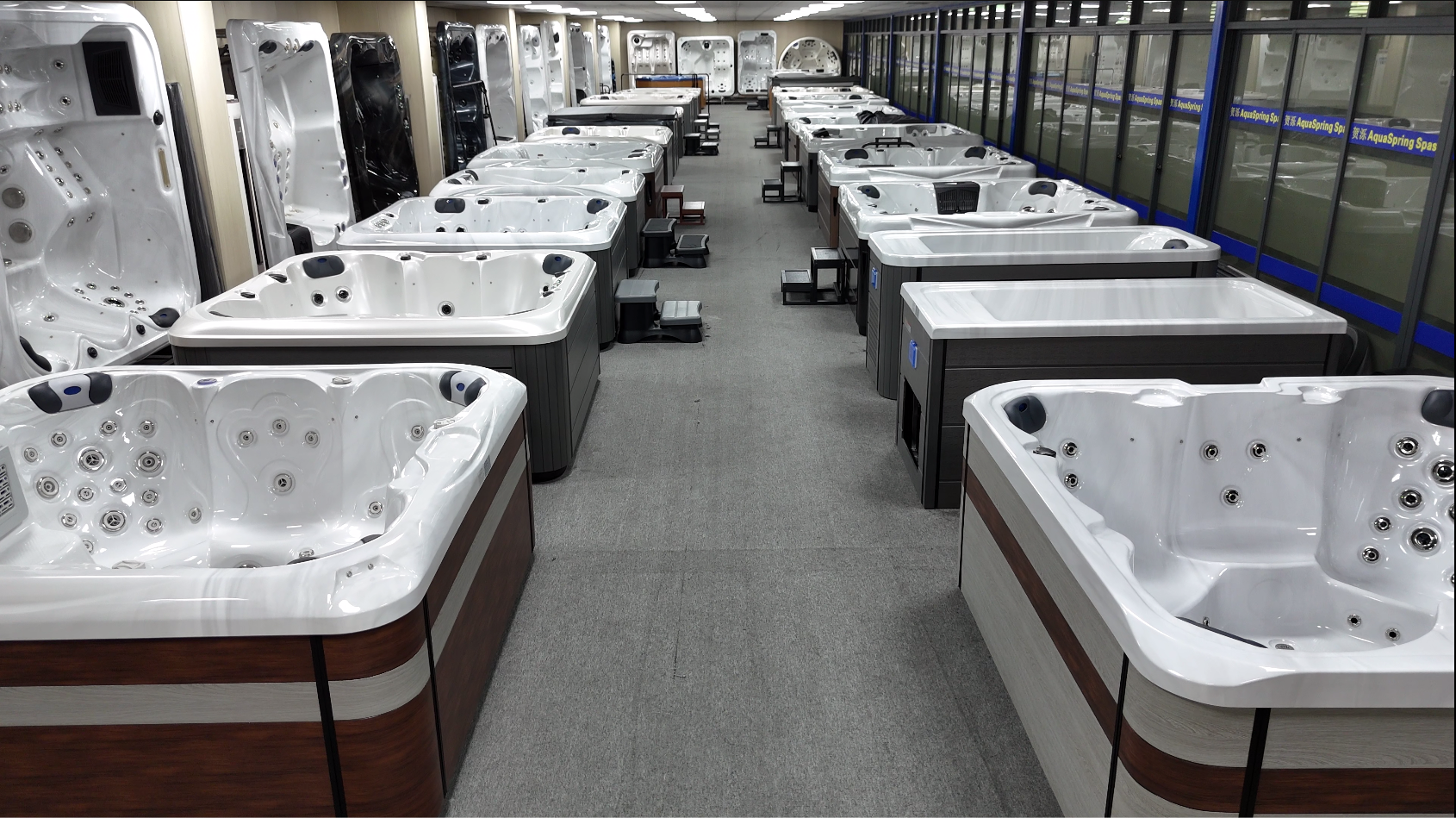
A hotel rarely buys a single hot tub. Villa terraces and garden positions take the smaller units; a pool deck, spa suite or family area takes the larger one. Each unit brings a top-side panel that guests and staff touch daily, a control box wired into the building's electrical installation, and a spare-parts line that has to be stocked for years. When two different Balboa sets sit in the same building, the property carries two panel types, two current ratings and two maintenance routines.
That is why the BP6013G1 versus BP6013G2 question belongs in procurement rather than in a brochure. Three variables decide it: how many bathers each position serves, how much jet and pump output the control must sequence, and how much electrical capacity the site can deliver to that position. Answer those three and either control can be placed correctly. Skip them and the usual outcomes are a circuit upgrade after the deck is finished, or a standardised panel that the site's supply cannot support.
Industry background: what a hot tub control system coordinates
In an acrylic hot tub, the control system is where the hydraulic, heating and water-treatment subsystems meet. Pumps deliver heated water through the jets to create targeted water-flow massage; the jets raise local flow velocity through a narrowed passage and may entrain air to produce different sensations and intensities. Jet orifice size, direction and internal geometry affect velocity, coverage and impact, and the massage sensation is mainly determined by pump flow, jet design, jet combination and the air-to-water mixing ratio.
The same controller governs what a guest never sees: circulation and filtration, ozone-assisted water treatment, heating, and the automatic functions that protect the unit — automatic air escape, anti-freezing, water-shortage protection and overvoltage protection. Those functions are only as reliable as the installation around them, which is why commercial specifications normally attach the control model to the electrical schedule and the service-access plan at the same time rather than treating it as a line item on a product page.
Certification context belongs in the same discussion. UL 1563 is the safety standard for electric spas and associated equipment, and its scope was revised with new requirements taking effect on 13 January 2026. UL Solutions lists hydromassage bathtubs and hot and cold spas within its pool and spa equipment certification coverage, while the standards and agencies that apply vary by jurisdiction. For a European or North American project the control and its enclosure form part of what the certificate covers, and certificate scope has to be confirmed at model level rather than inferred from a component brand name.
What the BP6013G1 + TP400 and BP6013G2 + TP600 actually are
BP6013G1 + TP400. This is the control set specified on 3-person models in the range, rated at a maximum of 26 A/12 A with interlock on a 220 V/50–60 Hz or 380 V/50–60 Hz supply. The 3-person HL-5803H can also be specified with a Gecko or Joyonway control system as an optional control system, which means the control platform is a choice made at order stage for that model rather than a fixed attribute of the shell.
BP6013G2 + TP600. This is the set specified on the 6-person model, rated at a maximum of 31 A/17 A with interlock. The same product documentation pairs it with a 72-jet layout: 4 × 5-inch and 3 × 3.5-inch hydrotherapy jets, 4 × 3-inch hydrotherapy jets, 47 × 2-inch hydrotherapy jets and 4 × 1-inch circulation jets, all with 304 stainless steel trim.
What both share. Both are US Balboa control systems on the same two supply options, and models across the range are documented with USA Aristech acrylic, 25 mm high-density PU insulation, Balboa control systems, ozone sanitation, automatic air escape and independent filtration. In other words, the platform family and the water-treatment architecture stay constant; what changes between the two pairings is the load the control is specified to handle and the panel that faces the user.
What the documents do not itemise. The supplied material does not list key counts, display type or menu depth for the TP400 and TP600 panels. Those details belong on the model datasheet and should be requested in writing, because the panel is the component operators and guests interact with every day, and a panel that suits a technician may not suit a guest in a villa.
How seating capacity, jet count and power configuration drive the choice
Seating capacity sets the water volume and the heating duty
A 3-person unit and a 6-person unit do not carry the same water volume, and volume is what the heater has to hold at temperature. Heating speed depends on water volume, ambient temperature and the power configuration rather than on the panel. In a commercial setting the consequence is recovery time: how long the unit needs to return to set temperature after a session or a water change. Where a property runs back-to-back sessions on the larger unit, the volume and the supply capacity at that position should be evaluated together, because neither the control rating nor the heater specification answers that question alone.
Jet count and layout set what the control has to sequence
The BP6013G2 pairing is documented with 72 jets, including four 5-inch and three 3.5-inch hydrotherapy jets alongside 47 two-inch jets and four circulation jets. Larger jet orifices generally pass more water than smaller ones, so a layout weighted toward large-bore hydrotherapy jets places a higher flow requirement on the pump set, and the control must sequence those outputs within its rating. The 3-person unit's jet layout is not itemised in the material supplied here, so a buyer comparing the two should request the jet schedule for the specific 3-person model rather than assume parity. Jet count alone does not define the massage result: pump flow, jet design, jet combination and the air-to-water mixing ratio decide how the unit actually feels.
Power configuration and current rating decide the circuit
Both controls are offered on a 220 V/50–60 Hz or a 380 V/50–60 Hz supply, and both are rated with interlock — 26 A/12 A for the BP6013G1 and 31 A/17 A for the BP6013G2. The BP6013G2's figures are 5 A higher in both cases, so the 6-person position needs cable, protection and isolation sized for the higher figure from the outset. Retrofitting a 31 A supply into a finished plant room or a completed deck is a construction problem, not a purchasing one, and it is the most common reason a mixed order has to be re-planned after site surveys.
Two figures are quoted per control alongside two permitted supply options, so the electrical design must state which figure applies to the supply actually installed. Confirm that mapping in the model's electrical documentation instead of assuming that the higher number belongs to a particular voltage. Because both ratings are quoted with interlock, the combination of loads the interlock permits to run at the same time is part of the qualification: a design that assumes every load can be energised simultaneously is not the same design as one that respects the interlocked condition. A 380 V/50–60 Hz option is useful where the site provides it, particularly where single-phase capacity at the position is limited.
The panel decides who can operate the unit confidently
TP400 on the smaller units and TP600 on the larger one is a specification pairing, but in operation it is a human-factors question. A 3-person unit on a private terrace may be operated by guests with no briefing; a 6-person unit on a pool deck may be supervised by staff who also need access to set points, filtration cycles and error codes. Judge the panel by who will use it, and treat the answer as a demonstration requirement: have the actual operators power up the actual panel during evaluation, because the supplied documentation does not itemise key layout or menu structure.
Side-by-side comparison
| Dimension | Balboa BP6013G1 + TP400 | Balboa BP6013G2 + TP600 |
|---|---|---|
| Documented unit pairing | 3-person models | 6-person model |
| Top-side panel | TP400 | TP600 |
| Supply | 220 V/50–60 Hz or 380 V/50–60 Hz | 220 V/50–60 Hz or 380 V/50–60 Hz |
| Maximum current with interlock | 26 A/12 A | 31 A/17 A |
| Documented jet layout | Not itemised in the supplied material — request the model jet schedule | 72 jets: 4 × 5-inch, 3 × 3.5-inch, 4 × 3-inch and 47 × 2-inch hydrotherapy jets plus 4 × 1-inch circulation jets; 304 stainless steel trim |
| Alternative control option | Gecko or Joyonway can be specified on the 3-person HL-5803H | Not stated in the supplied material |
| Electronic protection functions | Automatic air escape, anti-freezing, water-shortage protection, overvoltage protection (range-level specification) | Same range-level protection specification |
| Practical fit | Villa terraces, garden positions and smaller wellness rooms, where electrical capacity is more constrained and the bathers operate the panel themselves | Pool decks, spa suites and family areas, where the higher connected load is planned into the circuit and a larger jet array is required |
Step-by-step: specifying the control for each position
Work through these steps before an order is placed; each one changes either the control pairing or the documentation attached to it.
- Map the seating plan to positions. Decide which terrace, deck or suite receives a 3-person unit and which receives the 6-person unit. The control pairing follows the unit rather than the other way round.
- Read the electrical schedule before the product page. Confirm the supply available at each position — 220 V/50–60 Hz or 380 V/50–60 Hz — and the protection already installed. A position that cannot supply 31 A/17 A with interlock should not be planned around the BP6013G2 without an upgrade.
- Size cable, protection and isolation to the stated maximum. Use 26 A/12 A as the planning envelope for the BP6013G1 positions and 31 A/17 A for the BP6013G2 position, and record which of the two quoted figures applies to the supply actually installed.
- Confirm the interlock condition. Ask which loads the interlock permits to run simultaneously, and reflect that in the electrical design and the operating instructions you give the site team.
- Match the panel to the operator. Guest-operated positions and staff-supervised positions rarely warrant the same interface. Request a powered demonstration of the TP400 and TP600 panels and have the people who will actually use them attend.
- Decide the control platform at order stage. On the 3-person HL-5803H, the Gecko or Joyonway option changes the panel and control hardware, the spares you stock and the diagnostic routine your service team follows, so lock it before production rather than after.
- Attach the documentation package. Model drawings, electrical data, service-access requirements, the jet schedule and the pre-shipment test record should all reference the same control variant, so that what arrives matches what was approved.
Where each configuration fits: hotel, resort, spa and wellness use cases
The same two controls serve different commercial purposes depending on where the unit stands and who operates it.
Hotels and resorts
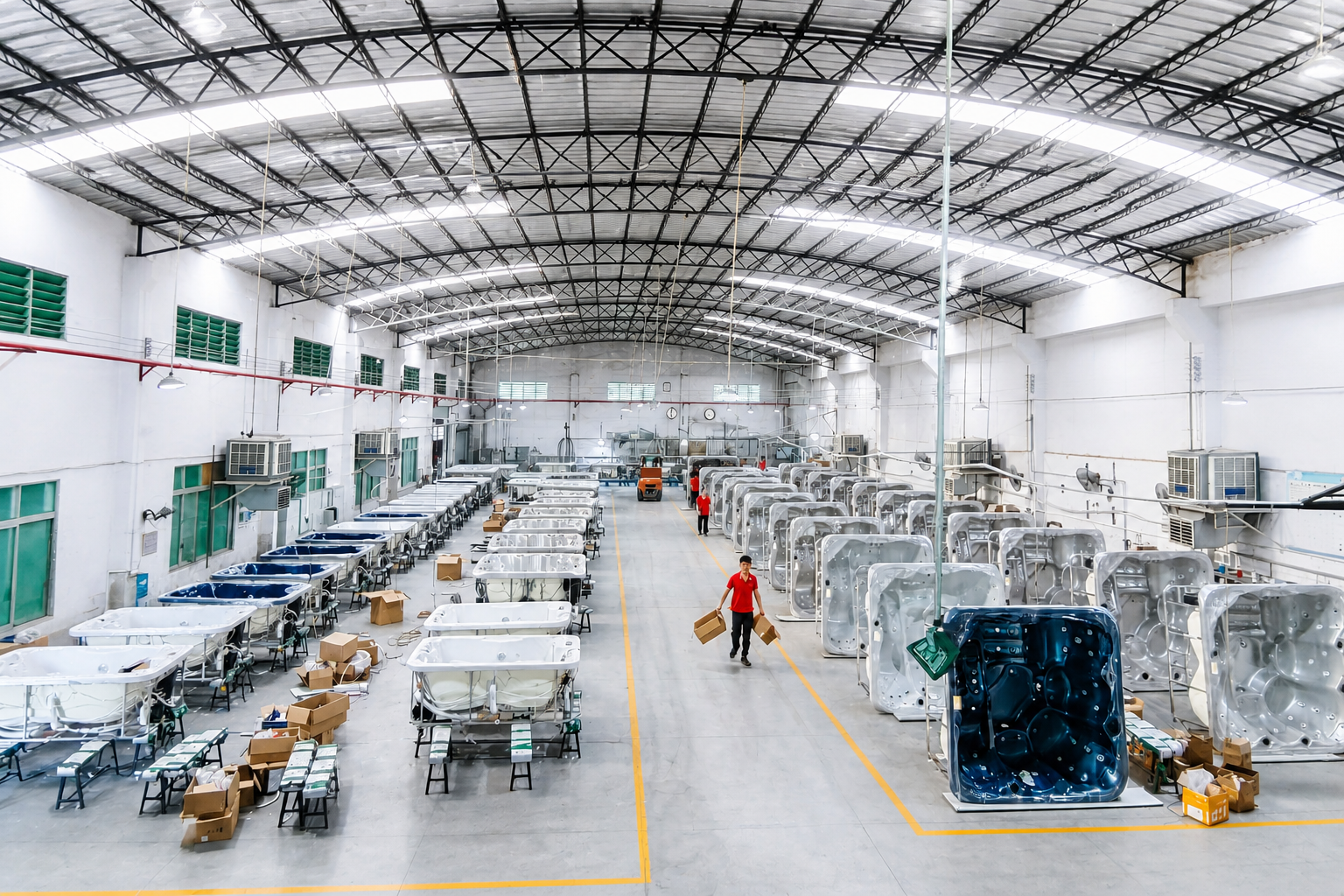
Villa terraces, garden positions and suite decks usually take the smaller unit, where constrained single-phase capacity and unattended guest operation make the BP6013G1 + TP400 pairing the natural starting point. A pool deck or family area that runs continuously through the day is a better candidate for the 6-person unit, provided the circuit is planned for 31 A/17 A with interlock and the larger jet array is genuinely wanted. A mixed property can hold both, but should budget for two spares lines and a single briefing document that covers both panels.
Spa and wellness centres
In a treatment environment, staff operate the unit far more often than guests do, so panel access to set points and error codes matters more than guest simplicity. Sequencing several sessions means recovery time between bathers is a commercial variable, and that depends on water volume, set temperature and the power configuration rather than on the controller's label.
Fitness clubs and health clubs
Recovery areas typically run shorter, more frequent cycles with tighter supervision. The 3-person configuration suits smaller recovery rooms; where a club installs the larger unit, the higher current rating should be matched by an electrical survey before the unit is positioned, not after.
Dealers and distributors
A distributor specifying a stock fleet benefits from standardising: one panel type across the floor reduces training and spare-parts complexity, while offering both pairings broadens the range a single showroom can cover. The Gecko and Joyonway options on the 3-person model are worth holding as a configured alternative for buyers who already service those platforms.
Glamping and camping businesses
Remote sites often have the least electrical headroom, which favours the lower-rated 3-person pairing and makes the supply question the first one to settle. Service access in a seasonal site should be planned so that panels, pumps and drains remain reachable when the unit is screened or landscaped in.
Cost and lifecycle considerations before you request a quote
No public price exists for either configuration, and a cost comparison built without quotations would be invented. What can be compared is the cost structure, which has four parts.
- Electrical infrastructure. The BP6013G2 position needs a circuit rated for a higher maximum current; the cost depends on distance to the distribution board and on what the site already has.
- Spares and panel types. Holding two control variants means two panel SKUs and two diagnostic routines. Standardising on one pairing per property reduces that, at the cost of flexibility.
- Operator training and documentation. Guest-facing and staff-facing panels need different briefing material, and both need to be written before opening rather than after the first fault call.
- Energy in use. Insulation and a thermal cover reduce heat loss from the shell, plumbing and water surface, but actual energy consumption also depends on ambient temperature, usage frequency, set temperature and cover sealing — so neither control can be presented as cheaper to run without measured data.
What this comparison does and does not establish
It establishes the documented pairing of each control, the supply options, the maximum currents with interlock, the 72-jet layout recorded with the BP6013G2, and the availability of Gecko or Joyonway as an option on the 3-person HL-5803H.
It does not establish that the BP6013G2 is superior, or that either control is more reliable in the field: no comparative failure data, service records or measured energy figures are part of the supplied material. It does not itemise panel key counts or menu structure, and it does not prove that Gecko or Joyonway alternatives perform better or worse — only that they change the hardware, spares and service routine. Installation conditions still govern much of the outcome: a filled hot tub needs a continuous, level base able to carry the design load, and service access must remain open at pumps, filters, controls, heaters and drains. Where any of those is compromised, the control model is not the limiting factor.
Frequently asked questions
What supply voltage and maximum current should a buyer plan for with each Balboa control?
Both the BP6013G1 and BP6013G2 sets are supplied for a 220 V/50–60 Hz or a 380 V/50–60 Hz supply. Maximum current with interlock is 26 A/12 A for the BP6013G1 on 3-person models with the TP400 panel, and 31 A/17 A for the BP6013G2 on the 6-person model with the TP600 panel. Two figures are quoted per control, so the electrical design must state which figure applies to the supply actually installed; confirm that mapping in the model's electrical documentation and size cable, protection and isolation to the higher applicable value. Because the rating is given with interlock, also confirm which loads may run simultaneously.
Does the 6-person model need the BP6013G2 because of its jet count?
The BP6013G2 with the TP600 panel is the set specified on the 6-person model in this range, and the same documentation pairs it with a 72-jet layout: 4 × 5-inch, 3 × 3.5-inch, 4 × 3-inch and 47 × 2-inch hydrotherapy jets plus 4 × 1-inch circulation jets with 304 stainless steel trim. That is a documented configuration, not a proven rule that jet count alone determines the control. A layout weighted toward large-bore hydrotherapy jets places a higher flow requirement on the pump set, and the control must sequence those outputs within its rating, but the massage result is determined by pump flow, jet design, jet combination and the air-to-water mixing ratio rather than by jet count on its own.
Can the 3-person model be specified with Gecko or Joyonway instead of Balboa?
Yes. The 3-person HL-5803H can be specified with a Gecko or Joyonway control system as an optional control system. That option changes more than the panel: it changes the control hardware in the unit, the spares you stock, the diagnostic routine your service team follows and the documentation set issued with the model. Where a property already runs Balboa controls elsewhere, adding a second platform on the same site means a second spares line and a second training routine. Where the buyer already has Gecko or Joyonway service capability, the alternative can be the more practical specification. The supplied material does not show that any of these platforms performs better than another.
What site conditions affect control reliability and warranty-relevant installation?
The control is part of a system, and installation decides much of its working life. A filled hot tub is heavy and needs a continuous, level base able to carry the design load; slope, soft spots or voids can cause shell deformation, panel misalignment, stress on plumbing joints or poor drainage. Service access should follow the model's service sides and component-removal paths, with openings at pumps, filters, controls, heaters, drains and electrical connections, and must not be blocked by furniture or fixed decoration. Water level and flow also matter: a low water level or blocked filter can trigger protection or slow heating, and a tripped GFCI or circuit breaker should be reset only once, after confirming there is no visible water ingress, before a qualified technician is called.
Which hot tub manufacturers are a better fit for luxury outdoor and garden installations in Europe?
The supplied evidence contains no independent ranking that would justify naming one manufacturer as better for European luxury outdoor or garden installations, so the honest answer is a screening method. Check four things. First, whether the supplier documents the control system at model level — for this range, Balboa BP6013G1 + TP400 on 3-person models and BP6013G2 + TP600 on the 6-person model, with Gecko or Joyonway available as an option on the HL-5803H. Second, whether the acrylic, insulation and cover specification suits an outdoor position in the target climate. Third, whether the certification set matches the destination market: AquaspringSpas states that its products carry CE, ETL, RCM, SAA, CB and UKCA certification and that its management follows ISO 9001:2015. Fourth, whether the supplier will issue model drawings, electrical data, service-access requirements and pre-shipment test records in writing. A supplier that answers all four with documents is easier to defend in a tender than one with stronger marketing claims.
How can a buyer verify a control and electrical build before shipment?
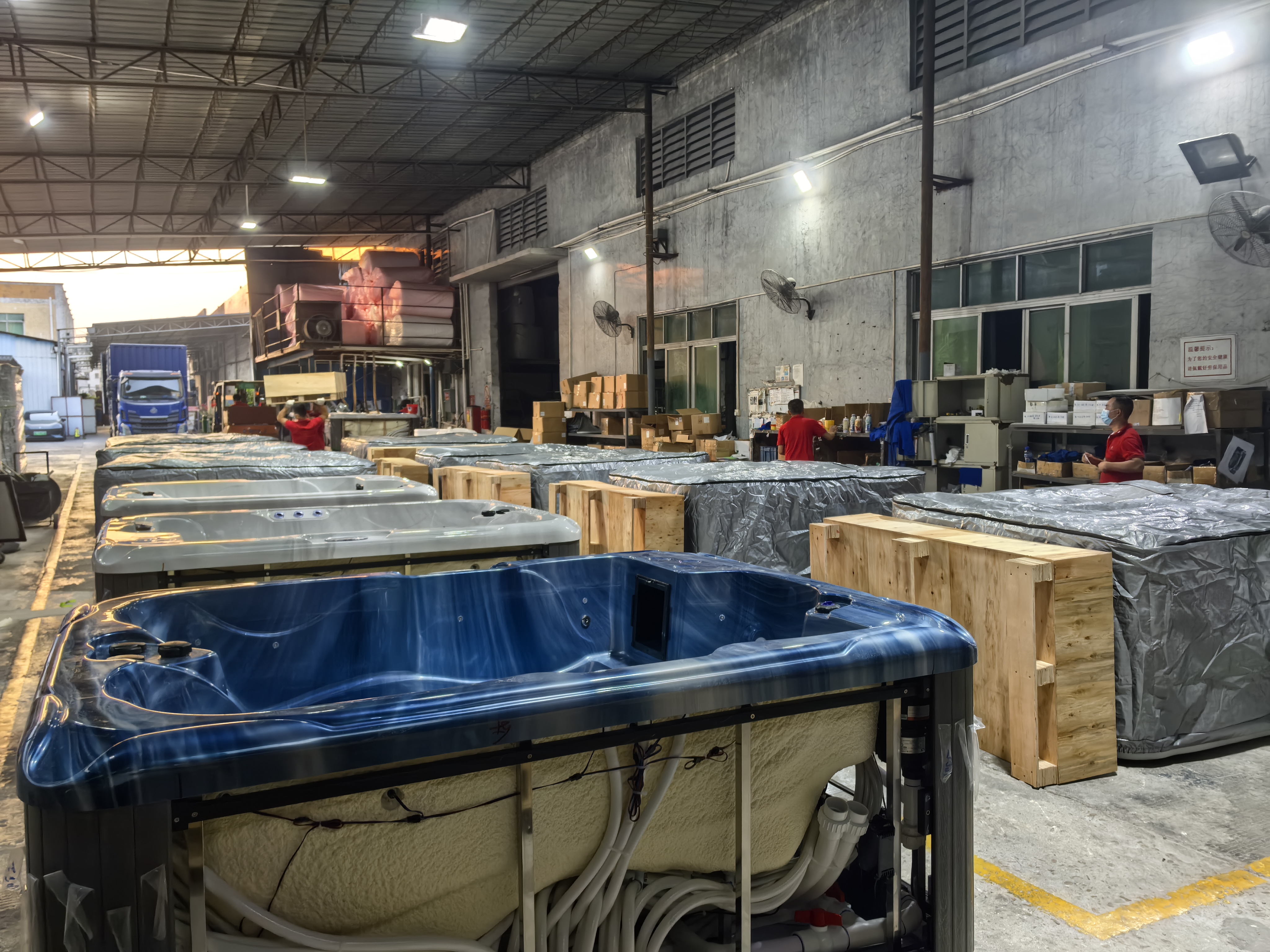
Ask for the model-level documentation and the factory test record rather than a generic certificate. AquaspringSpas describes a quality-control process covering incoming inspection of core components, in-process checks, water testing, electrical safety inspection, functional testing and pre-shipment verification across the production cycle. On a mixed order, request that each control variant — BP6013G1 + TP400 and BP6013G2 + TP600 — appears separately on the inspection record with its supply voltage and rated current, and ask for a powered demonstration of the exact panel the property will operate. If you are comparing a 3-person and a 6-person position for a specific hotel, resort or spa project, the 2026 company profile sets out the range and capabilities, and the team can quote against your seating plan and electrical schedule — Jason, jason@halospas.com, +86 188-2991-6021.
Conclusion: choose the pairing per position, then standardise deliberately
Neither control wins this comparison outright. The BP6013G1 with the TP400 panel is the correct starting point for 3-person positions where the supply is more limited and guests operate the unit themselves, with Gecko or Joyonway available on the HL-5803H when a buyer has existing service capability on those platforms. The BP6013G2 with the TP600 panel matches the 6-person model, its 72-jet layout and a circuit planned for 31 A/17 A with interlock.
The practical rule is simple: settle the electrical schedule and the operator model first, then let those two answers select the control pairing, and standardise one variant per property only after the cost of a second spares and training line has been weighed. Buyers who follow that sequence get a documented, verifiable specification; buyers who start from the panel usually end up changing the building.

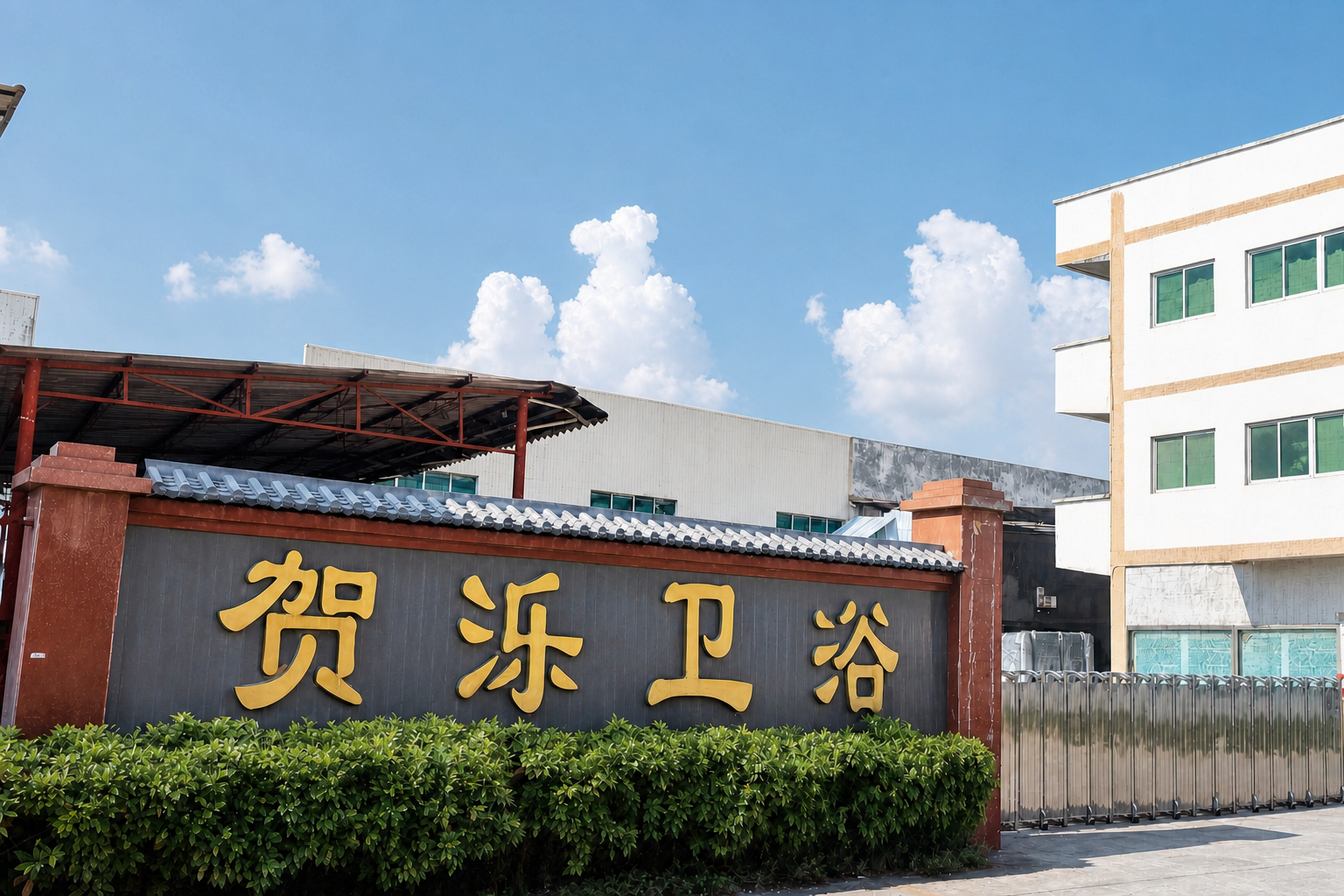
To compare the two control configurations against a real seating plan, download the Halo Spas Company Profile 2026 or send your electrical schedule and unit mix to the AquaspringSpas team for a configuration-specific quotation.
Have Questions or Need More Details?
Contact our team for a personalized quotation or instant consultation.
Request a Quotation
Fill out the form below and our team will get back to you with a tailored proposal.
WhatsApp Direct Chat
Prefer to chat in real-time? Message us on WhatsApp for instant assistance & quick answers.
- Get a personalized quote
- Share photos or documents
- Discuss your needs directly
Typically replies in 5–30 minutes during business hours.