
Diesel Generator Fundamentals: Power Ranges, Engine Brands, and Global Sourcing Context
Diesel Generator Fundamentals: Power Ranges, Engine Brands, and Global Sourcing Context
An orientation for industrial buyers, project engineers, and distributors beginning their research on diesel generator sets.
A diesel generator is a self-contained power station that uses a diesel engine to drive an alternator and produce electricity at the point of use. Buyers often first meet this product category as a standby generator for a building or as a containerized power unit on a remote site. In practice, the product family is wider than a single enclosure: it includes standby sets, prime power sets, high-voltage industrial sets, marine generator sets, gas generator sets, and related power-generation accessories.
This article is an awareness-stage guide for buyers who are new to industrial power generation. It explains the fundamental questions to consider, the market context, the main product families represented by BAIFA, and the product/application vocabulary used when discussing a diesel generator set with a manufacturer.
Why diesel generator selection feels complicated
The real difficulty is not finding a generator; it is matching the generator set to the operating environment, load profile, engine preference, and applicable project rules. A power outage in a commercial tower is a different problem from continuous power supply on a mine site. A vessel has different space and corrosion requirements from a data center. A manufacturing plant may need a high-voltage prime power solution, while a construction contractor may need a mobile set with a simple automatic start function.
For a buyer in the research stage, the practical challenge is to create a shortlist that can be discussed later with engineers or suppliers. That means the buyer should know which questions matter, which brands and configurations are common, and why some applications call for different diesel generator families.
Industry background: diesel generators in the global market
The global diesel generator market has a substantial commercial footprint. According to Spherical Insights, the global diesel generator market was valued at approximately USD 22.33 billion in 2025. Market reports also project that China’s diesel generator market could grow at a CAGR of 9.3% from 2023 to 2030, supported by manufacturing capacity and export channels. In 2024, China exported approximately USD 923 million of diesel generating sets with an output below 75 kVA, according to OEC trade data. Separately, the global marine diesel generator market reached about USD 2.94 billion in 2024.
These figures help explain why international buyers see so many sourcing options. The market includes global engine brands, regional manufacturers, and multi-brand OEM assemblers who integrate different engines into generator sets. For the buyer, this means that practical attention should move away from broad brand names and toward verifiable product families, power ranges, supplier capabilities, and applications.
Another important background factor is compliance. Diesel generator sets are often expected to conform to recognized industry standards such as ISO 8528, including Part 13 for safety and Part 10 for noise measurement. European outdoor noise requirements are also referenced through Directive 2000/14/EC. These standards do not replace project-specific specifications, but they give industrial buyers a common framework during technical checks.
BAIFA as a manufacturing example
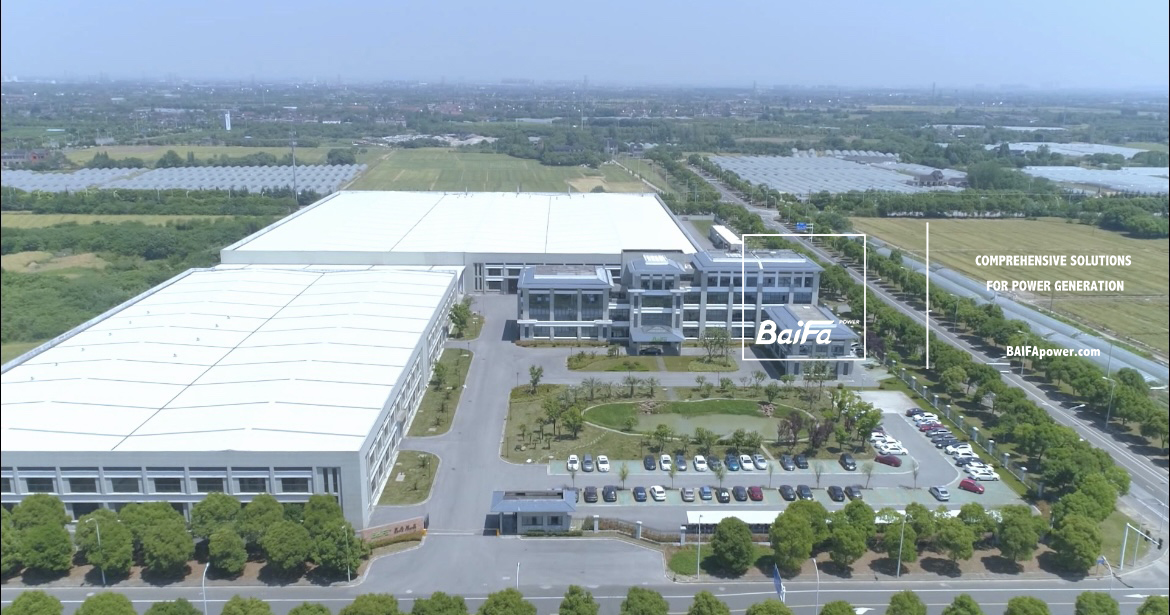
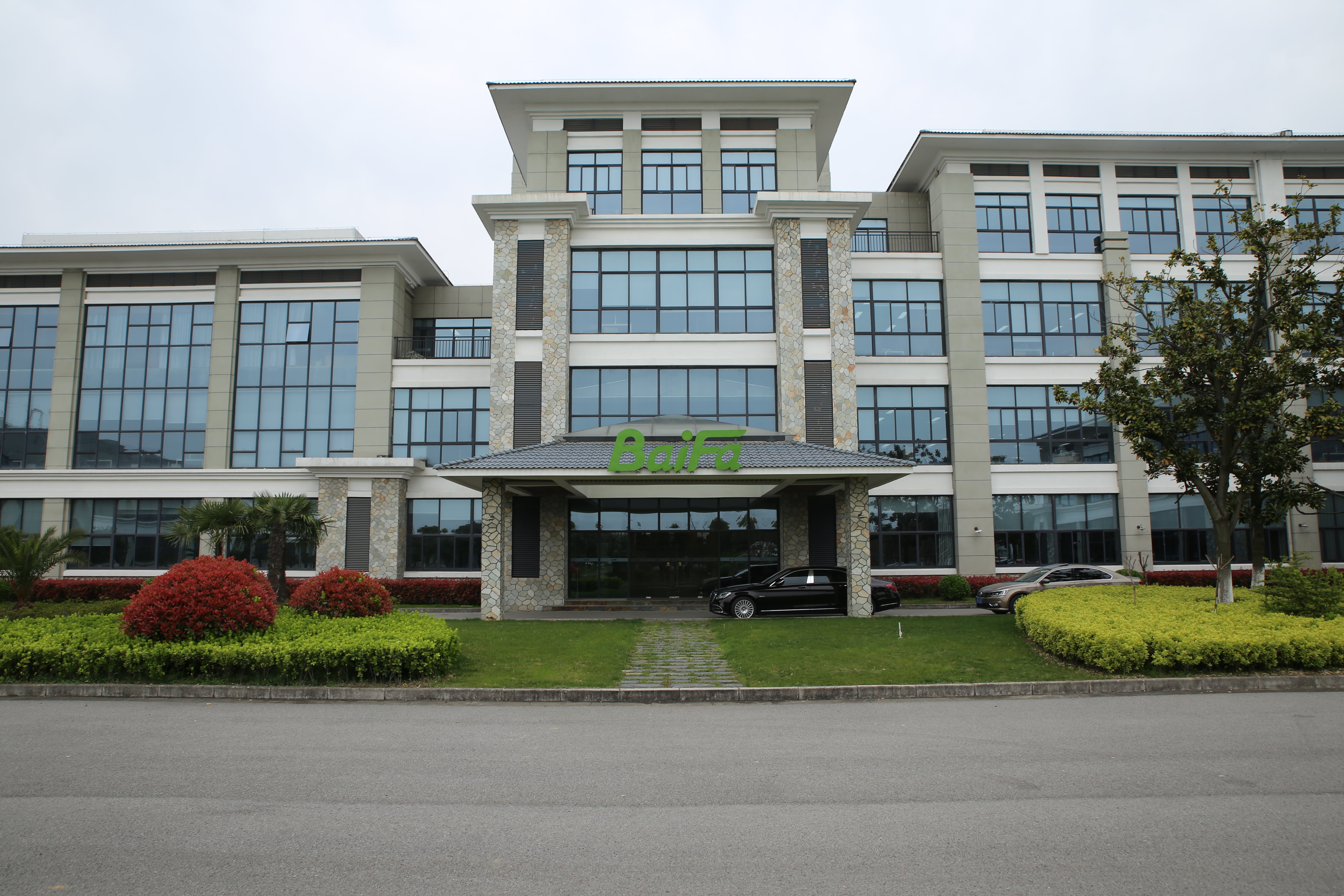
BAIFA POWER (WUXI) LTD. is a China-based manufacturer of diesel generator sets and related power equipment. The company was established in 1992 and has more than 30 years of experience in the power-generation industry. It operates from a 60,000-square-meter manufacturing facility and employs more than 180 staff, including an R&D team of 25 engineers. Its annual production capacity is 5,000–6,000 units.
The company’s main products include industrial diesel and gas generator sets ranging from 8 kW to 3200 kW, marine generator sets, lighting towers, LV and HV switch panels, transformers, and power generation accessories. Approximately 70% of production is exported, with major markets across Latin America, Southeast Asia, and the Middle East.
For a buyer exploring diesel generators for the first time, this kind of company profile matters because it shows whether a supplier has the engineering staff, production footprint, and export experience to support projects outside its home market. It also shows whether the supplier can build around multiple engine brands rather than only one engine source.
Multi-brand engine families in the BAIFA diesel generator lineup
One advantage of working with an OEM such as BAIFA is that the supplier can pair different engine brands with different power ranges. The documented BAIFA diesel generator families include the BF-C series powered by Cummins, BF-P series powered by Perkins, BF-M series powered by MTU, BF-SM series powered by SME, BF-BD series powered by Baudouin, BF-DW series powered by Doosan, and BF-CM marine series powered by Cummins Marine. Each family has its own model structure and power range, which helps buyers understand where a given specification fits.
The BF-C series, for example, is powered by Cummins and covers a power output range from 25 kVA to 2750 kVA, with models from BF-C25 to BF-2750QE. The BF-P series, powered by Perkins, extends from 9 kVA to 2500 kVA. The BF-M series, powered by MTU, covers large-output needs from 750 kVA to 3750 kVA. The BF-BD series, powered by Baudouin, covers 62.5 kVA to 3750 kVA. The BF-SM series, powered by SME, covers 750 kVA to 2750 kVA, and the BF-DW series, powered by Doosan, covers 168 kVA to 1125 kVA. For marine applications, the BF-CM series uses Cummins Marine engines and produces 50 kVA to 1438 kVA.
Most land-based industrial families in this lineup are documented at a rated speed of 1500 rpm with an IP23 protection class. The marine family operates at a rated speed of 1800 rpm. Materials used for these generator sets typically include gray cast iron, high-strength aluminum alloy, alloy steel, Q235 carbon steel, stainless steel, and copper, which supports robustness in industrial environments.
This product architecture creates a useful sourcing rule for a first-time buyer: instead of regarding “Cummins generator,” “Perkins generator,” “MTU generator,” or “Baudouin generator” as completely separate companies, think of them as engine options that must be matched to the power range and application of the whole generator set.
Step-by-step orientation: how to approach diesel generator selection
The following steps are deliberately broad because this article is a research-stage guide. They are intended to help a buyer prepare a clearer brief before speaking with a manufacturer or engineer.
- Define the power role. Is the generator intended for standby power, prime power, or continuous operation? Standby and prime duty require different sizing and can change the type of controller, fuel system, and engine rating needed.
- Estimate the load profile. The buyer should identify the equipment to be powered, the starting load, and the steady-state load. A set that is too small may not handle motor starting surges, while an oversized set may operate inefficiently.
- Choose the engine family and power range. Once the load is defined, compare the different engine options by available output, service network, fuel consumption, and project familiarity. A supplier’s multi-brand range can make this step easier because different brands can be evaluated in the same technical format.
- Review the operating environment. Dust, altitude, temperature, salt spray, noise limits, indoor placement, and outdoor weatherproofing all affect generator selection. Marine projects, high-temperature factories, and mine sites often require specific protection or adaptation.
- Plan for control and switchgear needs. Many projects require an automatic transfer switch, an auto-control panel, parallel switchgear, or a high-voltage switch panel. These are not always part of a basic generator package and should be reviewed early.
- Qualify the manufacturer. Check the manufacturer’s production capacity, export record, engineering staff, product families, and ability to support the project through the full procurement process. For international buyers, this is as important as the engine specification.
Real application examples: where BAIFA diesel generators are used
Beyond the product list, application context helps buyers connect specifications to real operating conditions. BAIFA documents several diesel generator use cases across industrial and infrastructure sectors.
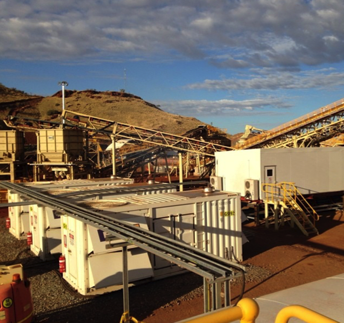
For mining independent power supply systems, the product is designed to operate in prime power, continuous operation mode, with multi-unit high-voltage paralleling support. The application environment is often an outdoor mine site with high altitude or dusty conditions. BAIFA diesel generator sets have been applied in mining projects in countries including Mongolia, Australia, Sudan, China, Canada, Russia, Mozambique, and South Africa. In such settings, reliability and the ability to handle heavy loads are core requirements.
For emergency standby power in super high-rise buildings, BAIFA products operate in standby mode with automatic start. This type of application normally demands low-noise operation and responsiveness when mains power is lost. Documented market examples include China, the UAE, Chile, Argentina, Australia, and Germany.
For high-voltage power supply to industrial production lines, the product is arranged in prime power continuous operation mode and is supported by equipment such as auto-control panels, ATS, and auto-paralleling systems. The designed environment includes high-temperature and dusty factory settings, and the solution has been applied in numerous countries. Together, these use cases show that diesel generator specification is not a one-size-fits-all exercise; matching the set to the site and operating mode is part of the value that a manufacturer supplies.
Comparison: BAIFA diesel generator series and engine options
The comparison table below summarizes the land-based and marine product families that a buyer is likely to encounter when discussing a BAIFA diesel generator set. The figures come from the documented model ranges in the product catalogue.
| BAIFA series | Engine brand | Power range | Model range | Typical context |
|---|---|---|---|---|
| BF-C series | Cummins | 25–2750 kVA | BF-C25 to BF-2750QE | Industrial, buildings, hospital, data center, railway, airport |
| BF-P series | Perkins | 9–2500 kVA | BF-P10 to BF-P2500 | Industrial and general project power |
| BF-M series | MTU | 750–3750 kVA | BF-M825 to BF-M3600 | High-output industrial and continuous power |
| BF-SM series | SME | 750–2750 kVA | BF-SM825 to BF-SM2500 | Factory, building, and high-power projects |
| BF-BD series | Baudouin | 62.5–3750 kVA | BF-BD70 to BF-BD4000 | Broad industrial range up to 3750 kVA |
| BF-DW series | Doosan | 168–1125 kVA | BF-DW190 to BF-DW1000 | Mid-to-high industrial standby/prime applications |
| BF-CM series | Cummins Marine | 50–1438 kVA | BF-C50M to BF-C1438M-60 | Marine auxiliary, shipboard emergency, deck-mounted power |
The table is not intended to rank engine brands. It exists to show how a buyer can compare documented families using the same set of criteria. For instance, if the load requirement is around 100 kVA, the BF-P series or BF-BD series may be relevant. If the project is a high-power factory or data center, the BF-M, BF-SM, or BF-BD range may be more appropriate. Marine projects should be directed to the BF-CM series, which runs at a different rated speed and is designed around vessel needs.
Frequently asked questions about diesel generators
What should a buyer check first for diesel generator compliance?
Buyers should first ask about applicable industry standards and project-specific regulations. Common reference standards for diesel generator sets include ISO 8528, especially Part 13 for safety and Part 10 for noise measurement. In Europe, outdoor noise requirements under Directive 2000/14/EC are also widely referenced. The buyer should then confirm that the manufacturer can provide technical documentation aligned with the target project and market.
Which BAIFA diesel generator series are available to global buyers?
BAIFA’s documented product families include the BF-C series powered by Cummins, the BF-P series powered by Perkins, the BF-M series powered by MTU, the BF-SM series powered by SME, the BF-BD series powered by Baudouin, the BF-DW series powered by Doosan, and the BF-CM marine series powered by Cummins Marine. Power ranges begin at 9 kVA in the BF-P series and reach up to 3750 kVA in the BF-M and BF-BD series. The BF-CM marine series covers 50 kVA to 1438 kVA at a rated speed of 1800 rpm.
What applications are suitable for industrial diesel generators?
Industrial diesel generators are commonly used in manufacturing, schools, hospitals, banks, data centers, mines, railways, airports, commercial buildings, and general industrial facilities. For example, BAIFA diesel generator sets have been documented for mining prime power, emergency power in super high-rise buildings, and high-voltage power supply for industrial production lines. Selecting the correct generator family depends on whether the set must run as standby, prime power, or continuous duty.
What is the next step after identifying a diesel generator family?
After identifying a family or power range, the buyer should prepare a project brief that includes load profile, operating mode, environmental conditions, voltage requirement, control system expectations, and applicable compliance standards. This brief can then be shared with BAIFA POWER for specification review. BAIFA POWER (WUXI) LTD. can be contacted by email at marketing@baifapower.com, by phone at +86 158 6160 4000, or through the official website at http://www.baifapower.com.
Conclusion: a practical first step for diesel generator sourcing
A diesel generator is not an off-the-shelf accessory; it is a carefully matched balance of engine, alternator, control system, enclosure, and project application. For buyers at the awareness or research stage, the most valuable activity is to build a clear map of the product landscape. That map should include the global market context, the main power ranges, the engine brand options, and the supplier’s manufacturing evidence.
Using BAIFA as an example, a buyer can see how a manufacturer with decades of production experience, a large facility, and multi-brand product lines can simplify the discovery process. The BF-C, BF-P, BF-M, BF-SM, BF-BD, BF-DW, and BF-CM series provide well-documented starting points. The important thing is to translate a project need into the right generator family before moving into quotation and technical negotiation.
If you are preparing your first diesel generator project, start with load definition and application mode. Then compare the resulting requirements with a supplier’s product families. For further guidance, BAIFA POWER welcomes project inquiries through the official website or the contact details listed above.
Email: marketing@baifapower.com
Tel: +86 158 6160 4000
Address: NO.972, ANTAI 3RD ROAD, XISHAN ECO&TECH DEVELOPMENT ZONE, WUXI, JIANGSU, CHINA
Website: http://www.baifapower.com