
Diesel Generator Procurement: Comparing Product Variants and Supplier Origins for Informed Decision-Making
Industrial buyers sourcing diesel generators often face two fundamental decisions: which product configuration to choose and which type of supplier—domestic Chinese manufacturers or international brand suppliers—best fits their project requirements. This article provides a structured comparison across these two layers, using objective data from BAIFA POWER (WUXI) LTD., a Chinese OEM with over 30 years of manufacturing experience, and referencing widely recognized industry patterns for international brands.
1. Product Comparison: Silent Canopy vs. Standard Canopy
Based on BAIFA’s engineering data for its series of generator sets with different canopy designs, the following table summarizes the key differences between an advanced silent canopy configuration and a standard open or basic canopy configuration. Both configurations are built on the same engine and alternator platforms; the comparison focuses solely on the canopy and acoustic treatment.
| Dimension | Advanced Silent Canopy (e.g., BAIFA SA/SE series) | Standard Canopy / Open Skid |
|---|---|---|
| Technical Parameters | Noise level reduction of 10 dB compared to standard alternatives; 12% higher fuel efficiency; 10% lower full‑load power consumption thanks to intelligent fan control (VSD). | Baseline noise level; standard fuel consumption; no VSD control. |
| Application Scenarios | Noise‑sensitive or harsh environments: urban construction sites, residential areas, hospitals, schools, data centers, hotels, mining operations. | Industrial sites where noise is not a primary concern; open fields, remote factories with no residential neighbors. |
| Cost | 8% higher initial investment, but 18% lower long‑term operating costs due to extended service life and reduced maintenance. | Lower upfront cost, higher lifetime operating expenses. |
| Maintenance Difficulty | Requires 25% less maintenance frequency than traditional alternatives. The sound‑absorbing material is flame‑retardant and mechanically fastened to prevent detachment, easing upkeep. | Standard maintenance intervals; simpler enclosure design but potentially higher long‑term service frequency. |
2. Supplier Comparison: Chinese Source Factory vs. International Brand Suppliers
The choice between a Chinese OEM like BAIFA and an established international brand (e.g., Cummins Inc., Perkins Engines Company Limited) involves trade‑offs in pricing, customization, delivery lead time, and after‑sales service. The following table highlights typical differences based on BAIFA’s operational data and common industry knowledge (no data for international brands is fabricated).
| Aspect | Chinese Source Factory (e.g., BAIFA) | International Brand Supplier (e.g., Cummins, Perkins) |
|---|---|---|
| Price (per kVA) | Generally competitive; BAIFA’s annual output of 5,000–6,000 units and a factory of 60,000 m² allow economies of scale. Typical pricing is 15–30% lower than equivalent international brand offerings. | Higher price point due to brand premium, global R&D costs, and higher labor overhead. |
| Customization Capability | High flexibility: BAIFA can customize logo/nameplate, paint color, voltage/frequency/connection type, protection degree, control system, structure/configuration, ATS/DROOP/PMG/oil‑water separator, anti‑condensation heater, float charger for starting battery. MOQ as low as 1 unit. | Limited customization: often requires large MOQs and longer lead times for non‑standard requests. |
| Delivery Lead Time | 25–60 days for standard orders, depending on configuration and volume. Monthly capacity 400–500 units. Example: 52 units of BF‑C1375S‑60 containerized sets delivered within 45 days. | Typically 12–20 weeks for standard products; longer for custom configurations due to centralized production. |
| After‑Sales Network | Remote technical support, on‑site installation, commissioning, and maintenance. Global distribution via export to LATAM, SEA, Middle East. BAIFA holds ISO 9001, ISO 14001, ISO 45001, and CE certifications (certificate No. 3427/IST/23, valid until 2028). | Extensive global service center network, but service costs are higher and response times may be slower in remote developing regions. |
3. Three‑Step Decision Model for Diesel Generator Procurement
- Step 1 – Define the Application Scenario.
Identify whether the generator will operate in a noise‑sensitive zone (e.g., hospital, urban construction) or a remote industrial site (e.g., mine, factory). This determines the required canopy type (silent vs. standard) and whether prime or standby power is needed. - Step 2 – Match Technical Parameters.
Select the power rating (kVA), voltage, and speed. For noisy environments, prioritize the silent canopy with VSD, which offers 10 dB noise reduction and 12% better fuel efficiency. For high‑altitude or high‑ambient temperature conditions, consider models with turbocharging and intercooling, and upgrade to a 50 °C ambient capacity radiator. - Step 3 – Calculate Total Cost of Ownership (TCO).
Beyond initial purchase price, factor in fuel consumption, maintenance intervals, and expected lifespan. Although an advanced silent canopy has an 8% higher upfront cost, the 18% reduction in long‑term operating costs and 25% lower maintenance frequency justify the investment in many applications. Similarly, compare the TCO of Chinese factory vs. international brand by including customization fees, shipping, customs, and local service costs.
4. Case Reference: Chinese Factory Advantage in a Large‑Scale Mining Project
A construction contractor for Hyundai Engineering & Construction in Saudi Arabia required 66 units of diesel generator sets for a large building camp. The project demanded low‑noise operation, reliable performance in harsh desert conditions, and a tight delivery schedule.
The contractor selected BAIFA as the supplier. BAIFA’s ability to customize the generators with specific paint colors, heavy‑duty air filters for dust protection, and a low‑noise enclosure (meeting local noise regulations) was critical. The entire order of 66 units was delivered and commissioned within 60 days, and the generators have been operating stably for over 8 years with minimal service intervention. This case illustrates the Chinese factory’s strengths: fast turnaround, flexible customization, and competitive total cost—enabling the project to stay on schedule and within budget.
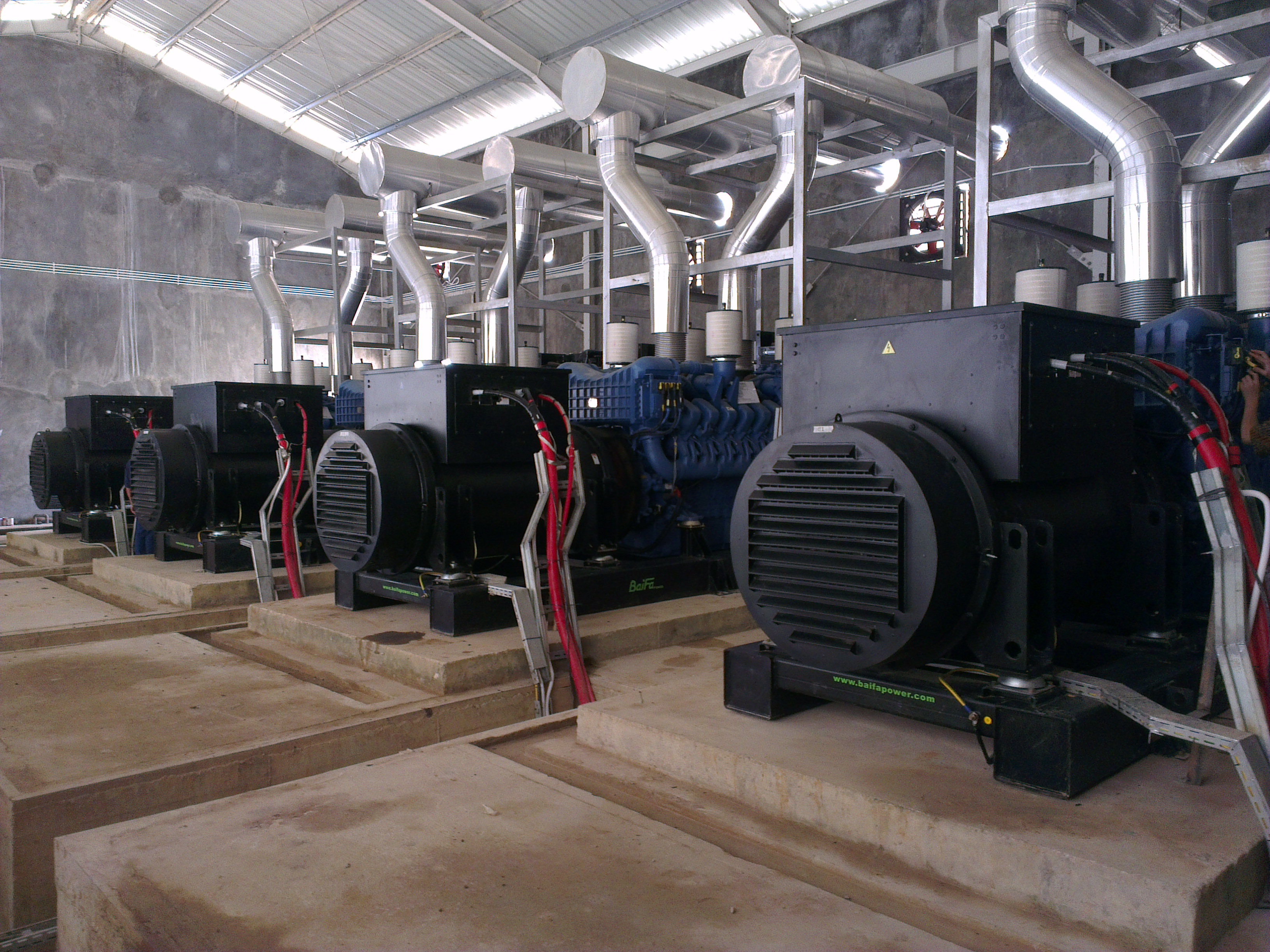
Example of a BAIFA generator set deployed in a large‑scale industrial project (illustrative image).
By systematically evaluating both product configurations and supplier types using the framework above, industrial buyers can make procurement decisions that align technical requirements, budget constraints, and long‑term operational goals.