How to Select a Diesel Generator Supplier from China, Germany, or Japan: A 2026 Procurement Guide for Industrial Buyers
Selecting the right diesel generator supplier is a critical decision for industrial buyers, especially when sourcing from different countries. Each manufacturing hub offers distinct advantages in terms of technology, cost, and compliance. This guide provides a structured approach to evaluating suppliers from China, Germany, and Japan, with a focus on practical selection criteria and regional requirements.
1. Global Supplier Distribution: Country-Specific Strengths
The diesel generator market is dominated by three major production regions, each with specialized capabilities:
- China: Known for high cost-performance ratios, flexible customization, and large-scale manufacturing capacity. Chinese suppliers like BAIFA POWER (WUXI) LTD. (founded in 1992, located in Wuxi, Jiangsu) operate modern facilities exceeding 60,000 m² and offer a wide power range from 8 kW to 3,200 kW. They provide extensive customization options for voltage, frequency, control systems, and enclosures.
- Germany: Renowned for high-end engineering and robust durability. German manufacturers typically focus on premium industrial and marine applications, with strong emphasis on precision and long service life.
- Japan: Distinguished by precision manufacturing, compact design, and advanced electronic control systems. Japanese brands are often preferred for applications requiring high reliability in limited spaces.
2. Selecting a Chinese Diesel Generator Supplier: 5 Key Considerations
When sourcing from China, procurement teams should verify the following aspects to mitigate risks and ensure alignment with project requirements:
1. Verify Export Certifications
Ensure the supplier holds recognized international certifications. For example, BAIFA holds a CE certificate (no. 3427/IST/23) issued by SGS, covering standards EN ISO 12100, EN 60204-1, and EN ISO 8528-13, valid until 2028. Additional certifications like ISO 9001 (quality management), ISO 14001 (environmental), and ISO 45001 (occupational health) indicate a mature quality system.
2. Confirm Cross-Border Logistics Solutions
Check the supplier's delivery terms. Reputable Chinese exporters commonly offer EXW, FOB, or CIF terms, with lead times ranging from 25 to 60 days depending on order complexity. BAIFA's monthly capacity of 400–500 units and MOQ of 1 unit provides flexibility for both small and large projects.
3. Clarify After-Sales Support
Confirm the availability of remote technical support and on-site installation, commissioning, and maintenance services. BAIFA provides both remote assistance and field deployment worldwide, having served over 80 countries.
4. Assess Customization Capabilities
Industrial projects often require custom voltage, frequency, protection degrees, or special enclosures (e.g., containerized, soundproof, or marine-grade). BAIFA offers OEM customization including logo, paint color, control system, ATS integration, and anti-condensation heaters.
5. Review Quality Control Processes
Look for 100% factory acceptance testing (FAT) prior to shipment. BAIFA conducts comprehensive FAT and can arrange Site Acceptance Tests (SAT) at the project location, with a 100% test policy for all units.
3. Regional Compliance Requirements for Imported Diesel Generators
Different destination markets impose specific certification and tariff requirements. Key examples include:
- European Union: CE certification is mandatory for diesel generator sets sold in the EU. It covers machinery safety, electromagnetic compatibility (EMC), and noise emissions. The applicable standards include EN 60204-1 (electrical equipment of machines) and EN ISO 8528-13 (design and verification of generating sets).
- United States: UL 2200 certification is often required for stationary engine-generator assemblies. Additionally, EPA Tier 4 emissions standards apply for engines used in the US.
- Middle East & Asia-Pacific: Many countries accept CE or equivalent certifications, but local electrical codes (e.g., SASO in Saudi Arabia, BIS in India) may impose additional testing or registration.
- Customs Tariffs: Tariff rates vary by country and product classification (HS code 8502). Buyers should confirm applicable duties with local customs authorities and consider using CIF terms to simplify import logistics.
4. Case Study: BAIFA's Successful Entry into the Costa Rican Government Power Project
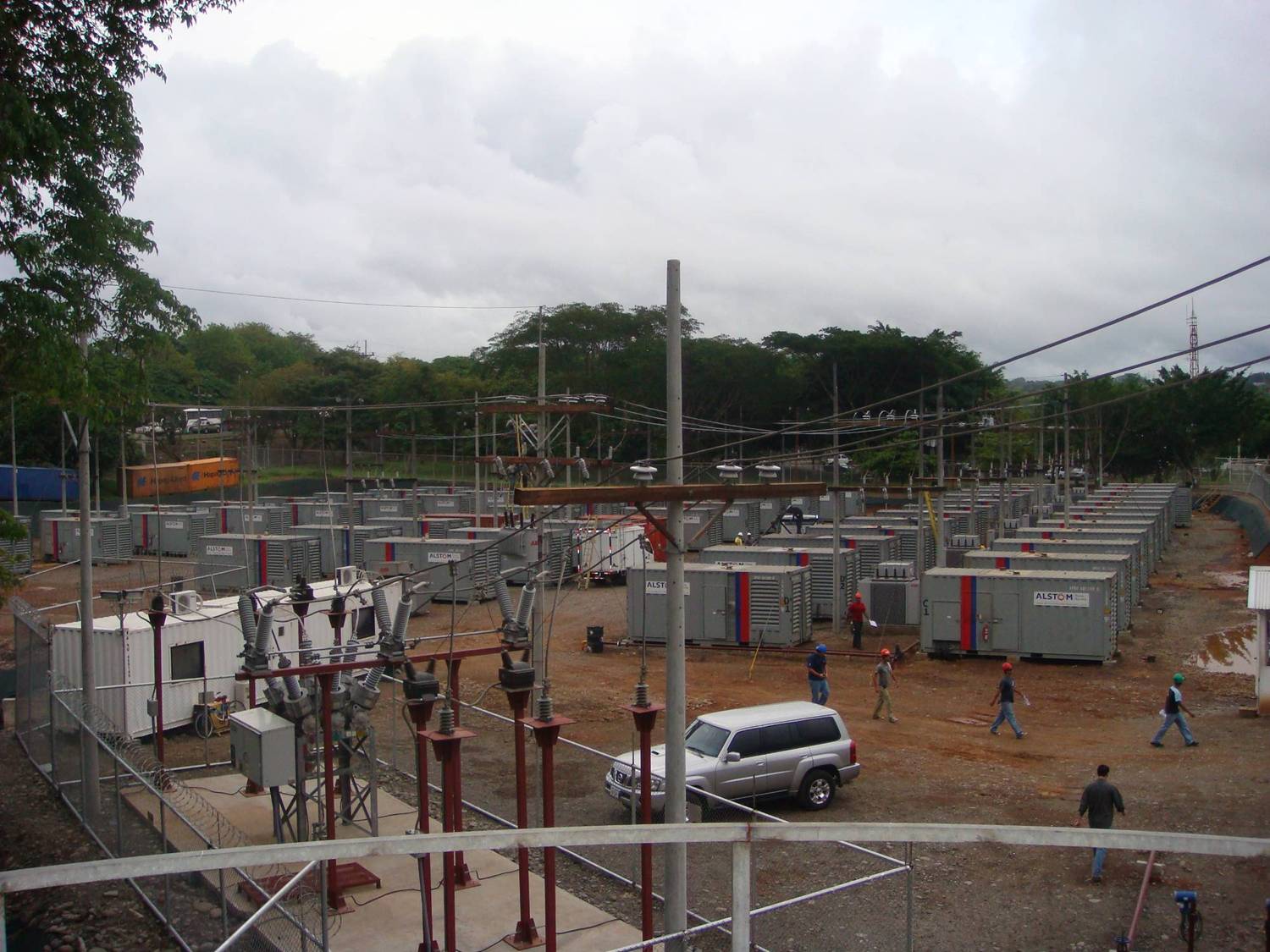
Client: Costa Rica Government Power Project
Quantity: 77 units of high-power containerized diesel generators (high voltage)
Duration: 10 years of stable operation
Application: Prime power for national grid stabilization
The project required rapid deployment and compliance with local electrical standards. BAIFA provided CE-certified, sound-attenuated container generators with automatic paralleling capability. The highlight was quick deployment – the entire fleet was delivered and commissioned within the contractual timeline, demonstrating BAIFA's ability to handle large-scale international projects with localized after-sales support and stable supply chain management. The units have operated reliably for a decade under high-load conditions, confirming the long-term performance of Chinese-manufactured diesel generator sets.
By systematically evaluating certifications, logistics, after-sales service, customization, and quality control, industrial buyers can confidently select a Chinese diesel generator supplier that meets their specific project requirements. For applications requiring CE certification and robust support, suppliers like BAIFA, with proven international track records, offer a dependable solution.