
Strategic Sourcing of Diesel Generators Across Global Manufacturing Hubs: A 2026 Buyer's Guide for China, Germany, and Japan
Industrial buyers seeking diesel generators for critical applications such as mining, construction, marine, and data centers face a complex decision when choosing between suppliers from different manufacturing hubs. Each country offers distinct advantages in technology, cost efficiency, precision, and customization capabilities. This guide provides a structured framework for evaluating diesel generator suppliers from China, Germany, and Japan in 2026, with actionable insights for procurement professionals.
1. Global Supplier Distribution: Strengths of Major Manufacturing Hubs
China: Cost-Effective Volume & Customization
China has become the world's largest producer of diesel generator sets, driven by a mature supply chain and large-scale manufacturing. Suppliers in China offer competitive pricing, short lead times (typically 25–60 days), and extensive customization options—including voltage, frequency, control system, paint color, and enclosure type. A prominent example is BAIFA POWER (WUXI) LTD., located in Wuxi, Jiangsu Province, a key hub of China's modern manufacturing industry. The company operates a 60,000 m² facility with an annual output of 5,000–6,000 units, exporting 70% of production to Latin America, Southeast Asia, and the Middle East. BAIFA's product range covers 8 kW to 3,200 kW, including industrial diesel, gas, and marine generator sets.
Germany: High-End Technology & Premium Engines
German manufacturers are renowned for engineering excellence, particularly in high-performance engine technology. Brands like MTU (Rolls-Royce Power Systems) set the benchmark for reliability, fuel efficiency, and long service intervals. German suppliers typically serve mission-critical applications where upfront cost is secondary to uptime and durability. While German-made diesel generators command a higher price, they are preferred for data centers, hospitals, and prime power plants requiring robust European engineering.
Japan: Precision Manufacturing & Compact Design
Japanese diesel generator manufacturers, such as Mitsubishi (SME), are known for precision engineering, compact footprints, and low vibration. Japanese products excel in marine and telecom applications where space constraints and noise limits are strict. The country's focus on quality control and long-term reliability makes Japanese generators a trusted choice for buyers who prioritize durability over initial cost.
2. China Supplier Selection Guide: 5 Key Considerations for Buyers
- Verify Export Certifications – Ensure the supplier holds recognized international certifications. For example, BAIFA's diesel generator sets are CE certified by SGS (Certificate No. 3427/IST/23, valid until April 2028) under standards EN ISO 8528-13:2016, EN 60204-1:2018, and EN ISO 12100:2010. ISO 9001 (quality), ISO 14001 (environment), and ISO 45001 (occupational health) certifications are also important indicators of manufacturing discipline.
- Confirm Cross-Border Logistics – Clarify shipping terms (EXW, FOB, CIF), packaging standards, and lead times. Reliable Chinese suppliers can deliver single units or large batches (MOQ as low as 1 unit) within 25–60 days after order confirmation. Ensure the supplier has experience exporting to your region and can coordinate with freight forwarders for safe, on-time delivery.
- Clarify After-Sales Support – Request details on warranty terms and field service capabilities. BAIFA offers remote technical support and on-site installation, commissioning, and maintenance services. Suppliers with a global service network or partnerships with local service providers can reduce downtime and operational risk.
- Evaluate Customization Capability – Assess the supplier’s ability to adapt standard designs to your specifications: voltage (low/high), frequency (50/60 Hz), protection class (IP23–IP55), control system type (manual/auto/ATS/paralleling), and special features (anti-condensation heaters, marine coatings, high-altitude radiators). BAIFA provides full OEM customization, including logo, nameplate, and paint color.
- Assess Quality Control Procedures – Confirm that every unit undergoes a 100% factory acceptance test (FAT) before shipment. Ask for test reports, load bank verification, and inspection records. A supplier that can offer a pre-shipment inspection visit (or third-party inspection) demonstrates transparency and commitment to quality.
3. Regional Compliance Requirements for Imported Diesel Generators
Compliance with local regulations is non-negotiable. Below are key certification and tariff considerations for common target markets:
- European Union (EU) – Diesel generators must carry CE marking, confirming conformity with the Machinery Directive (2006/42/EC), Electromagnetic Compatibility Directive (2014/30/EU), and relevant harmonized standards such as EN ISO 8528-13 for generator sets. Import duties for diesel generator sets under HS code 8502.13 typically range from 0% to 2.7%, depending on the EU country and trade agreements.
- North America (USA & Canada) – UL 2200 certification (or equivalent CSA) is often required for stationary generator sets. EPA Tier 4 final emission standards apply for engines above 75 kW. Import tariffs for diesel generators into the US range from 0% to 3.7% (duty-free under USMCA for Canadian/Mexican origin).
- Middle East & Africa – While many countries accept CE or ISO standards, specific local approvals (e.g., SASO in Saudi Arabia, KEBS in Kenya) may be required. Tariffs can vary widely from 5% to 25%.
Tip: Always verify the latest HS code classification and preferential tariff rates with your customs broker, as regulations change frequently.
4. Case Study: Chinese Supplier Succeeding in a Foreign Market
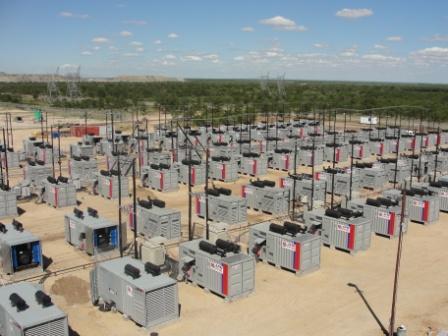
Project: Power Plant Rental – Botswana (88 units)
Client Profile: A large-scale power rental project requiring high-voltage, containerized diesel generators for grid support.
Solution Supplied by BAIFA: 88 units of 800 kW containerized diesel generator sets, powered by MTU engines (German brand), all paralleled into a high-voltage output power station. The units feature low-noise enclosures suitable for urban or semi-urban installations.
Outcome: The generators have been in stable operation for over 8 years, demonstrating the supplier’s ability to deliver large-scale, standardized equipment with consistent quality and performance. BAIFA provided on-site commissioning support and remote technical assistance, ensuring minimal downtime.
Key Takeaway: This case illustrates how a Chinese manufacturer can successfully integrate premium German engines (MTU) with local manufacturing flexibility, offering a cost-effective solution that meets international reliability standards. The project’s longevity underscores the importance of rigorous testing (100% FAT) and strong after-sales commitment.
Conclusion
Selecting the right diesel generator supplier requires balancing cost, technology, compliance, and after-sales support. China offers unmatched customization and value; Germany delivers premium engineering; Japan excels in precision and compactness. For industrial buyers evaluating Chinese suppliers, a disciplined approach—verifying certifications, logistics, customization depth, quality control, and service network—reduces procurement risk. The Botswana case study demonstrates that a capable Chinese manufacturer can successfully serve even the most demanding international projects. Use this guide as a framework to align your sourcing strategy with your operational requirements.
This guide is prepared for informational purposes based on publicly available data and verified supplier information as of May 2026.