From Drawing to Delivery: How Custom Street Lights Are Engineered for Projects
In outdoor lighting projects, a custom street light usually means more than a different paint color. It can mean a non-standard pole geometry, a decorative luminaire housing, a project-specific light distribution, or a solar configuration sized for local weather. For buyers at the early research stage, the practical question is not simply which fixture looks best. It is how a non-standard street light is specified, manufactured, checked, and delivered in a repeatable way.
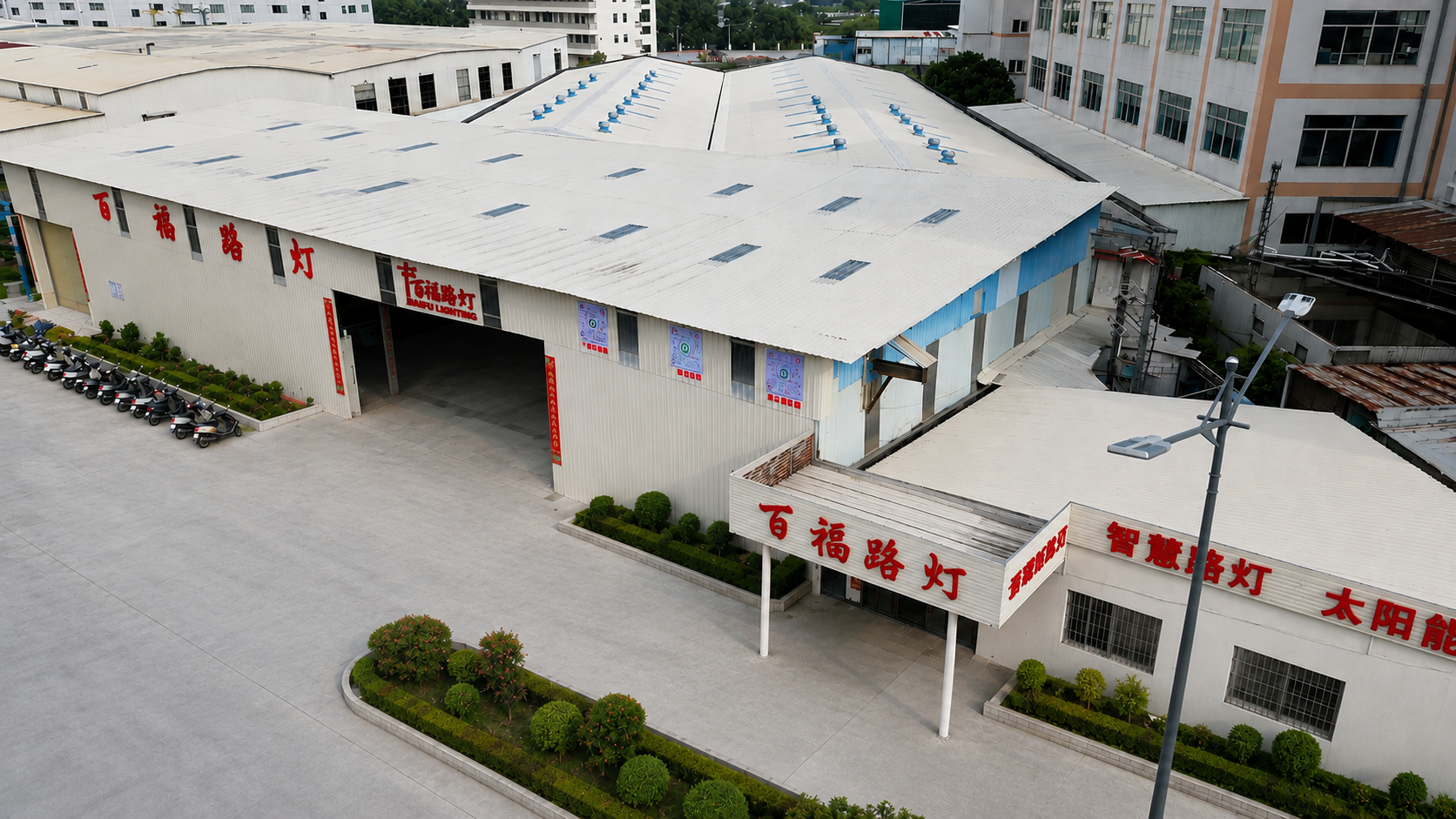
BAIFU LIGHTING, legally named Zhongshan Baifu Street Lamp Co., Ltd., is a manufacturer based in Guzhen Town, Zhongshan City, Guangdong, China. The company was established in 2013 and has more than 13 years of outdoor lighting manufacturing experience. It provides OEM, ODM, and project-based lighting solutions for municipal, commercial, and landscape projects. This article explains how custom street light design and custom lighting pole design move from project requirements to production, using representative models from BAIFU LIGHTING as reference points.
What Does Custom Street Lighting Mean in Practice?
Custom street lighting is not one product. It is a family of products that can be adjusted around project conditions, including pole height, arm structure, luminaire form, surface finish, control system, and energy source. In the BAIFU LIGHTING product range, the main product types include non-standard custom outdoor street lights, LED road luminaires, solar street lights, landscape lights, garden lights, lawn lights, smart street lights, and custom lamp poles.
Non-standard street lights often serve municipal road engineering, urban landscape lighting, park roadways, commercial plazas, cultural tourism scenic spots, pedestrian streets, residential communities, hotels, resorts, industrial parks, schools, hospitals, parking lots, government projects, and overseas urban infrastructure projects. The product does not need to be developed from zero in every case. A manufacturer with a structured engineering process can adapt proven pole designs, luminaire housings, LED configurations, and control options to a specific site.
Why the Global Market Is Moving Toward Project-Specific Lighting
The market context helps explain why custom street light design has become more common. According to Grand View Research, the global street lighting market was valued at USD 9.1 billion in 2023 and is projected to reach USD 11.6 billion by 2030, with a compound annual growth rate of 3.6%. LED lighting dominated the global street lighting market in 2023, accounting for 79.7% of total revenue.
Smart lighting is also reshaping procurement. Berg Insight reported that the installed base of smart street lights globally reached 32.9 million units at the end of 2024, with a 20.9% CAGR projected through 2029. For buyers, this means that pole design and luminaire design are increasingly expected to support not only basic illumination but also dimming, light control, time control, and future smart city connections.
From a standards perspective, project buyers often refer to regional road lighting standards. The European standard EN 13201 series defines quality, performance, and energy indicators for road and street lighting design. In the United States, ANSI/IES RP-8 is the primary standard for lighting roadway and parking facilities. Custom street light suppliers should therefore be able to understand the project brief, translate it into engineering proposals, and manufacture products that respond to the specified road class and optical requirements.

Representative Custom Outdoor Lighting Models
One way to evaluate a custom outdoor lighting manufacturer is to look at the engineering detail behind representative products. The following three models illustrate different parts of the custom lighting spectrum: decorative landscape street lighting, cast aluminum courtyard lighting, and solar street lighting.
1. Custom LED Landscape Street Lights - BF-LSL-4000-120W
The BF-LSL-4000-120W is a custom LED landscape street light belonging to the custom decorative landscape street lights category. It is designed for urban roads, parks, plazas, commercial streets, and large-scale landscape lighting projects.
- Mounting height options: 6m, 8m, 10m, and 12m, customizable by project.
- LED power options: 60W, 80W, 100W, 120W, 150W, 180W, and 200W.
- Luminaire efficacy: at least 130 lm/W.
- Input voltage: AC 85-265V, 50/60Hz.
- Color temperature: 2700K, 3000K, 4000K, 5000K, and 6000K.
- Color rendering index: Ra greater than or equal to 70, with Ra greater than or equal to 80 optional.
- Protection: IP65 or IP66.
- Service life: at least 50,000 hours.
- Materials: Q235 hot-dip galvanized steel, 304 stainless steel, die-cast aluminum lamp housings, high-transmittance tempered glass, stainless steel fasteners, and outdoor electrostatic powder coating.
- Optional features: hollow patterns, luminous decorations, city logos, cultural totems, and exclusive project elements.
The bracket style can be a single arm, double arms, multi-arms, or combined high-low lamp heads. Light distribution can follow road lighting, plaza lighting, or decorative landscape requirements. The structural design is tailored to pole height and local wind speed.
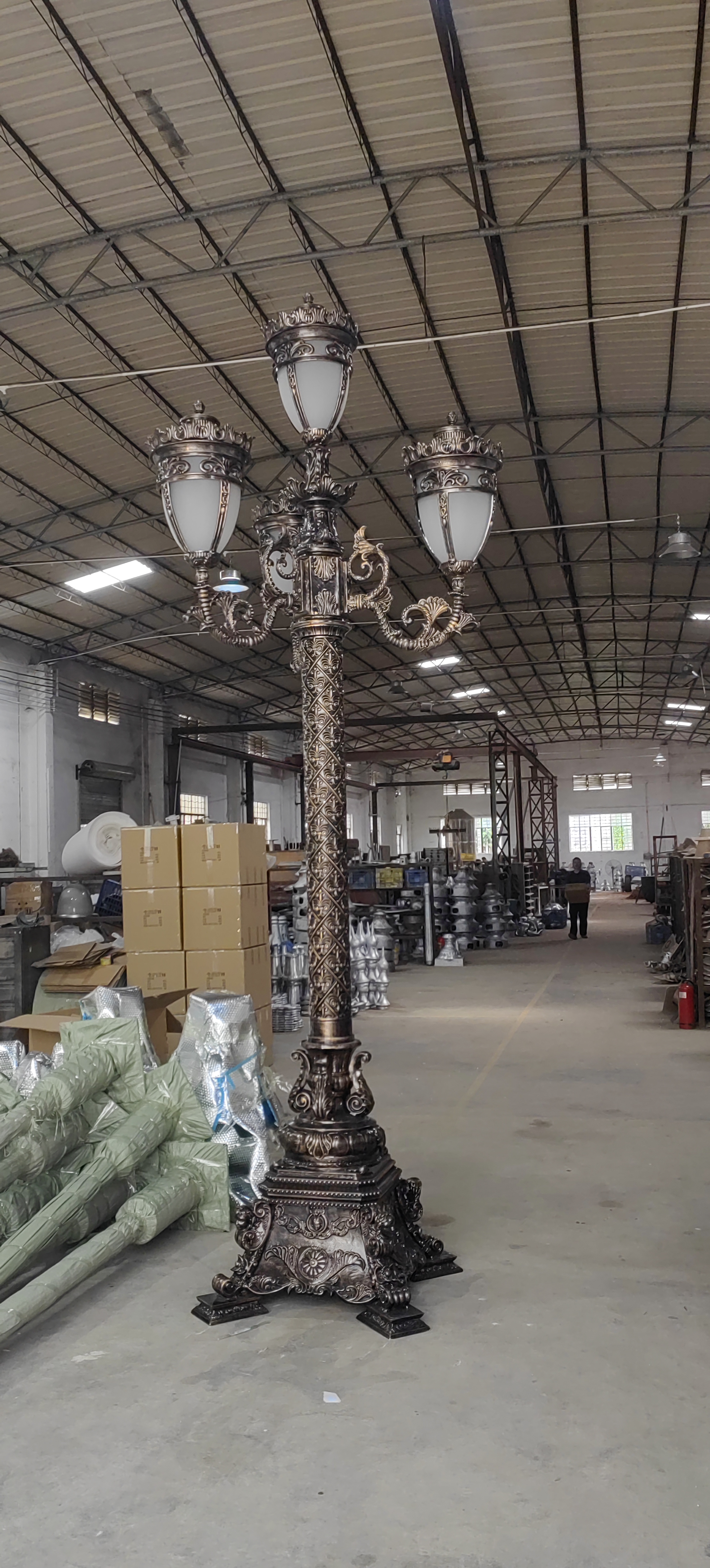
2. Ancient-Style Courtyard Lamp - BF-AGL-4000-60W
The BF-AGL-4000-60W is an ancient-style courtyard lamp belonging to the Aluminum/Steel Cast Outdoor Lamp category. It is suitable for residential communities, villa courtyards, urban parks, commercial plazas, hotels, resorts, garden landscapes, and pedestrian streets.
- Installation height: 3 to 4 meters, customizable.
- LED power options: 30W, 40W, 50W, 60W, and 80W.
- Luminaire efficacy: at least 130 lm/W.
- Protection: IP65 or IP66.
- Lamp body: high-pressure cast aluminum.
- Lamp pole: Q235 hot-dip galvanized steel.
- Installation: flange base with pre-installed anchor bolts.
- Control: conventional switch control, with optional light control, time control, and intelligent control.
3. Separate-Type Solar LED Street Lamp - BF-SL-8M-100W
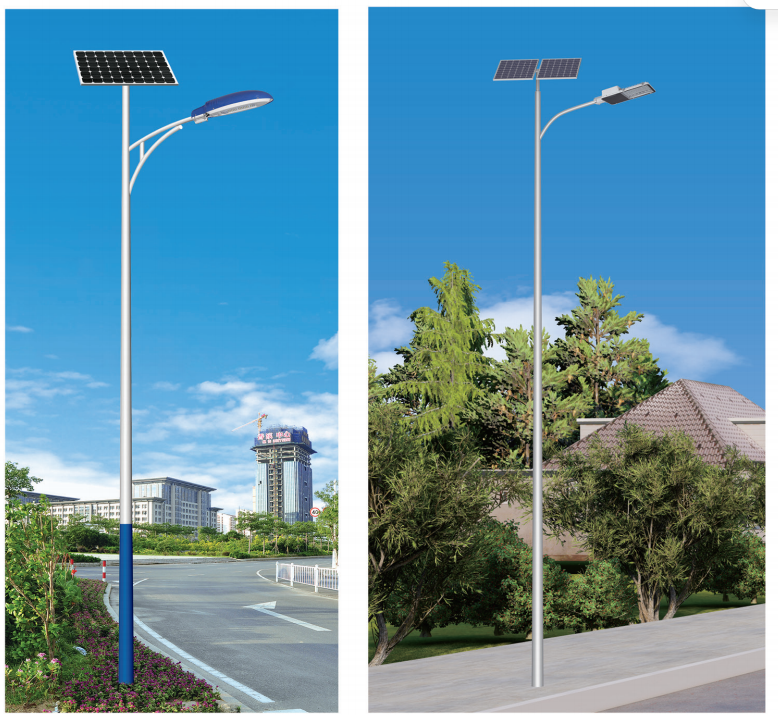
The BF-SL-8M-100W is a separate-type solar street lamp designed for municipal road lighting and outdoor infrastructure projects. It uses an 8-meter single-arm conical light pole made of Q235 high-quality steel. The pole surface is treated with overall hot-dip galvanizing followed by electrostatic spraying.
- LED lamp power: 100W.
- Solar panel: 200W high-efficiency monocrystalline silicon solar panel.
- Battery: 12V 80Ah maintenance-free lead-acid battery.
- Luminaire efficacy: at least 150 lm/W.
- Protection: IP65 or IP66.
- Lighting time: 10 to 12 hours per day.
- Battery life in rainy days: 2 to 3 days, configurable according to project requirements.
- Working temperature: -20°C to +60°C.
- Control: light control plus time control, with intelligent dimming supported.
- Installation: fixed by pre-buried anchor bolts.
How Custom Street Light Manufacturing Works Step by Step
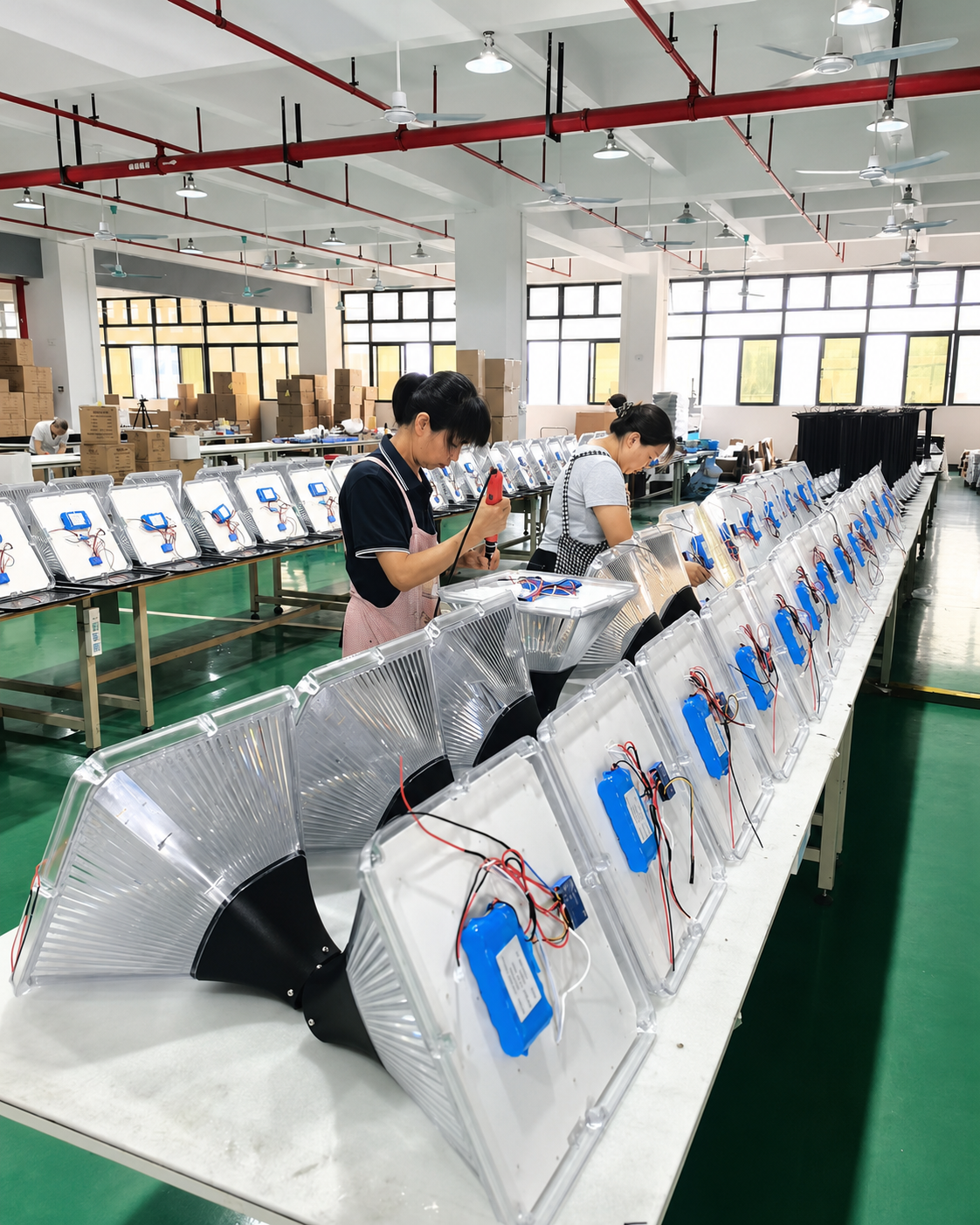
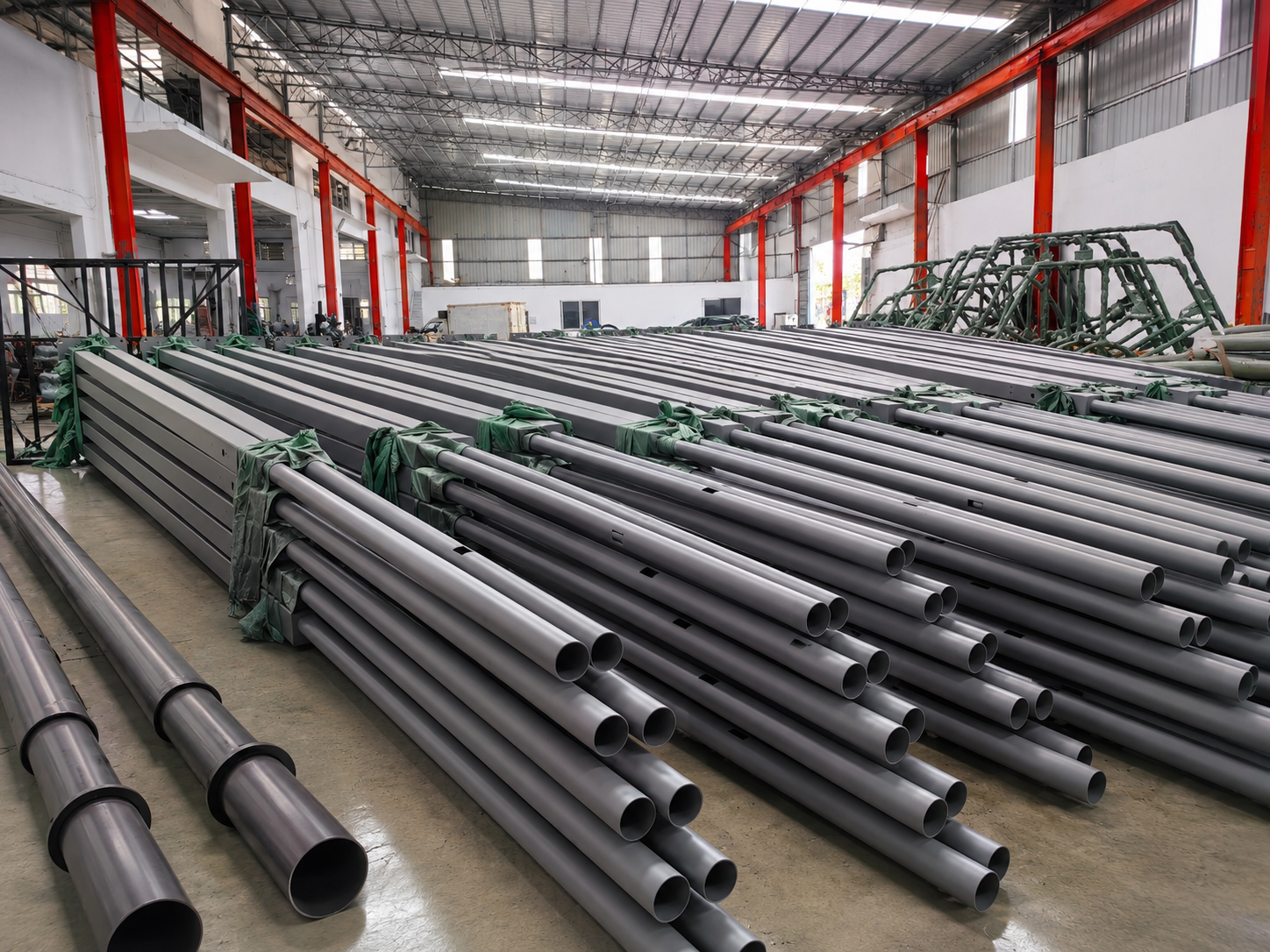
For an early-stage buyer, the manufacturing process matters because it affects how much engineering input is required before ordering. BAIFU LIGHTING operates an integrated production flow that covers metal fabrication, cutting, forming, welding, structural assembly, surface treatment, outdoor powder coating, electrical assembly, product inspection, aging testing, packaging, and export delivery.
Step 1: Define the Project and Site Conditions
The first step is to identify whether the project is a municipal road, a park path, a commercial street, a hotel, a plaza, or an infrastructure area. The site affects pole height, arm style, wind load, protection level, and energy source. For example, the structural design of a custom lighting pole should be based on the local wind speed and the chosen mounting height.
Step 2: Translate the Design into a Technical Specification
The manufacturer needs enough information to confirm the luminaire power, color temperature, color rendering index, protection rating, control system, and pole structure. BAIFU LIGHTING’s engineering support covers product selection, CAD drawing development, lighting configuration recommendations, appearance design evaluation, sample development, and project quotation. The company has an R&D team of five engineers.
Step 3: Select Materials
Material selection affects the structural strength and long-term outdoor performance. Typical materials used by BAIFU LIGHTING include Q235 hot-dip galvanized steel, 304 stainless steel, die-cast aluminum lamp housings, high-transmittance tempered glass, UV-resistant PC lamp covers, and stainless steel fasteners.
Step 4: Fabricate the Pole and Structural Components
Pole fabrication includes cutting, forming, welding, and structural assembly. For non-standard decorative poles, the shape, arm type, joint design, and wall structure may all be adapted to the project image and engineering load. Several BAIFU LIGHTING products use conical poles, square poles, special-shaped poles, or artistic structures.
Step 5: Apply Surface Treatment
Outdoor lighting products require corrosion protection. The common process is hot-dip galvanizing followed by outdoor electrostatic powder coating. Standard colors include dark grey, black, silver grey, and bronze, with custom RAL colors available. Surface finishing is an important part of architectural street lighting because the pole must maintain its appearance in sun, rain, and high-humidity conditions.
Step 6: Assemble the Electrical System
The LED module, driver, housing, and optical cover are assembled as a luminaire. Housing materials such as die-cast aluminum help with heat dissipation, while tempered glass or PC lamp covers protect the light source. Electrical assembly is followed by inspection and aging testing. Throughput also matters: BAIFU LIGHTING’s annual production capacity reaches 50,000 units, and the facility covers 11,158 square meters.
Step 7: Package and Coordinate Export Delivery
For international projects, the manufacturer provides packaging information, export documentation, and shipment coordination according to project requirements. BAIFU LIGHTING exports products to 71 countries, with major markets in the Middle East, Central Asia, North America, Southeast Asia, and Africa. Export business accounts for 45% of total sales.
Where Custom Street Lights Are Applied
Different products solve different site problems. The BAIFU LIGHTING product set can be mapped to common project scenarios:
- Municipal road lighting: The BF-SL-8M-100W solar street lamp is designed for municipal and public road projects, with a lighting time of 10 to 12 hours per day and configurable rainy-day autonomy of 2 to 3 days.
- Urban parks and landscape roads: The BF-LSL-4000-120W custom LED landscape street light is suited to parks, plazas, commercial streets, cultural tourism spots, and large-scale landscape projects.
- Residential communities and hotel courtyards: The BF-AGL-4000-60W ancient-style courtyard lamp works for villa courtyards, residential communities, commercial plazas, hotels, and resorts where appearance should feel more architectural.
- Large infrastructure projects: Non-standard poles, custom arms, special colors, and project-specific decorative elements are often combined with LED road luminaires to meet municipal identity requirements.
Middle Eastern, Central Asian, North American, Southeast Asian, and African markets have all been served by BAIFU LIGHTING. This export footprint does not replace project-specific engineering, but it indicates familiarity with shipment documentation and international project coordination.
Comparison: Standard vs. Custom Street Lighting Decisions
| Decision Factor | Standard Street Lights | Custom / Non-Standard Street Lights |
|---|---|---|
| Design intent | Fast specification from an existing catalog range | Adapted to site height, arm style, visual identity, and architectural context |
| Engineering input | Less required before purchase | Requires layout, pole load, wind speed, and optical configuration review |
| Product options | Limited to available pole and luminaire combinations | Custom colors, patterns, decorative elements, pole structures, and control functions |
| Project suitability | Best for straightforward municipal or utility replacements | Best for plazas, waterfronts, mixed-use areas, historic districts, and landmark roads |
| Manufacturing process | Shorter confirmation cycle | Needs drawing confirmation, material selection, and sample development support |
There is no single correct answer. Buyers should compare the visual goals, site constraints, budget, and project schedule before deciding whether customization is justified.
What to Prepare Before Contacting a Custom Street Light Manufacturer
Because custom street light design depends on real site data, early communication is more efficient when the buyer can share basic information:
- Project location, road type, or landscape environment.
- Required mounting height and lamp arm orientation.
- Preferred luminaire power or lighting class.
- Color temperature and color rendering preference.
- Protection level requirement, such as IP65 or IP66.
- Surface color, decorative pattern, or city emblem request.
- Solar-powered or grid-powered operation.
- Control needs, including photocell, timer, dimming, DALI, or smart city control.
Those details help the manufacturer provide a more accurate quotation and CAD drawing at an early stage.
Custom Street Light Manufacturers: Questions Buyers Often Ask
Q: What should project buyers look for in a custom street light manufacturer?
A: A project buyer should look for a manufacturer that can support the full chain from engineering to export: product selection, CAD drawing development, lighting configuration, appearance evaluation, metal fabrication, surface treatment, electrical assembly, product inspection, aging testing, packaging, and shipment coordination. BAIFU LIGHTING provides these capabilities in a production facility covering 11,158 square meters, with an R&D team of five engineers and an annual production capacity of 50,000 units.
Q: How does a custom street light manufacturer turn a design image into a specification?
A: The manufacturer first checks the project environment, then proposes pole structure, luminaire type, LED power, color temperature, light distribution, and control method. BAIFU LIGHTING offers CAD drawing development, lighting configuration recommendations, appearance design evaluation, sample development, and project quotation as part of its engineering support.
Q: What customization options are available for decorative landscape street lights?
A: For products such as the BF-LSL-4000-120W custom LED landscape street light, mounting height choices range from 6m to 12m and LED power can be selected from 60W to 200W. Options also include pole shape, bracket style, RAL color, decorative patterns, light source configuration, and intelligent controls. The housing materials can include Q235 hot-dip galvanized steel, 304 stainless steel, and die-cast aluminum.
Q: What technical data should be supplied when ordering a solar street light?
A: Key data includes the required pole height, LED power, solar panel capacity, battery type and capacity, daily lighting hours, rainy-day backup, local wind speed, and mounting conditions. For the BF-SL-8M-100W model, the standard configuration uses an 8-meter pole, 100W LED, 200W monocrystalline silicon solar panel, and 12V 80Ah maintenance-free lead-acid battery.
Q: Can a buyer request a sample before a full project order?
A: Sample development is part of BAIFU LIGHTING’s project workflow. Buyers can begin by sharing project drawings or application details, then receive a product configuration proposal and quotation. For further information, contact Jack Chen by WhatsApp at +86 195 8242 2595 or by email at chenyingjie@baifulamp.com.
Conclusion
Custom street lighting is an engineering process, not just a styling exercise. A useful manufacturer should understand road lighting requirements, offer options for non-standard poles and luminaires, and manage the full production chain from welding and surface treatment to electrical assembly, inspection, and export packaging. BAIFU LIGHTING brings this structure to projects through OEM, ODM, and project-based manufacturing, serving municipal, commercial, and landscape applications across more than 71 countries.
For buyers starting research, the next step is practical: document the project site, define the visual and photometric goals, and ask for a project-specific configuration. BAIFU LIGHTING is located at No. 102 Xinxing Avenue, Guzhen Town, Zhongshan City, Guangdong Province, China. The company website is www.baifulamp.com.
Need a project-specific outdoor lighting proposal?
Contact Jack Chen at +86 195 8242 2595 or chenyingjie@baifulamp.com to discuss your custom street light requirements.