
How to Specify Custom Street Lights: Pole Height, LED Power, IP Rating and Control
A custom street light is specified correctly when four parameter families are fixed in a deliberate order: mounting height and pole geometry, LED power together with luminaire efficacy, ingress protection together with input voltage, and the control method. Each decision narrows the next one. Mounting height sets the practical power ceiling per luminaire; power and efficacy set the driver and thermal requirement; IP rating and input voltage decide whether the luminaire survives the site; and the control layer decides which driver can be used at all. When a project fixes these in the wrong order, the configuration is re-engineered after quotation.
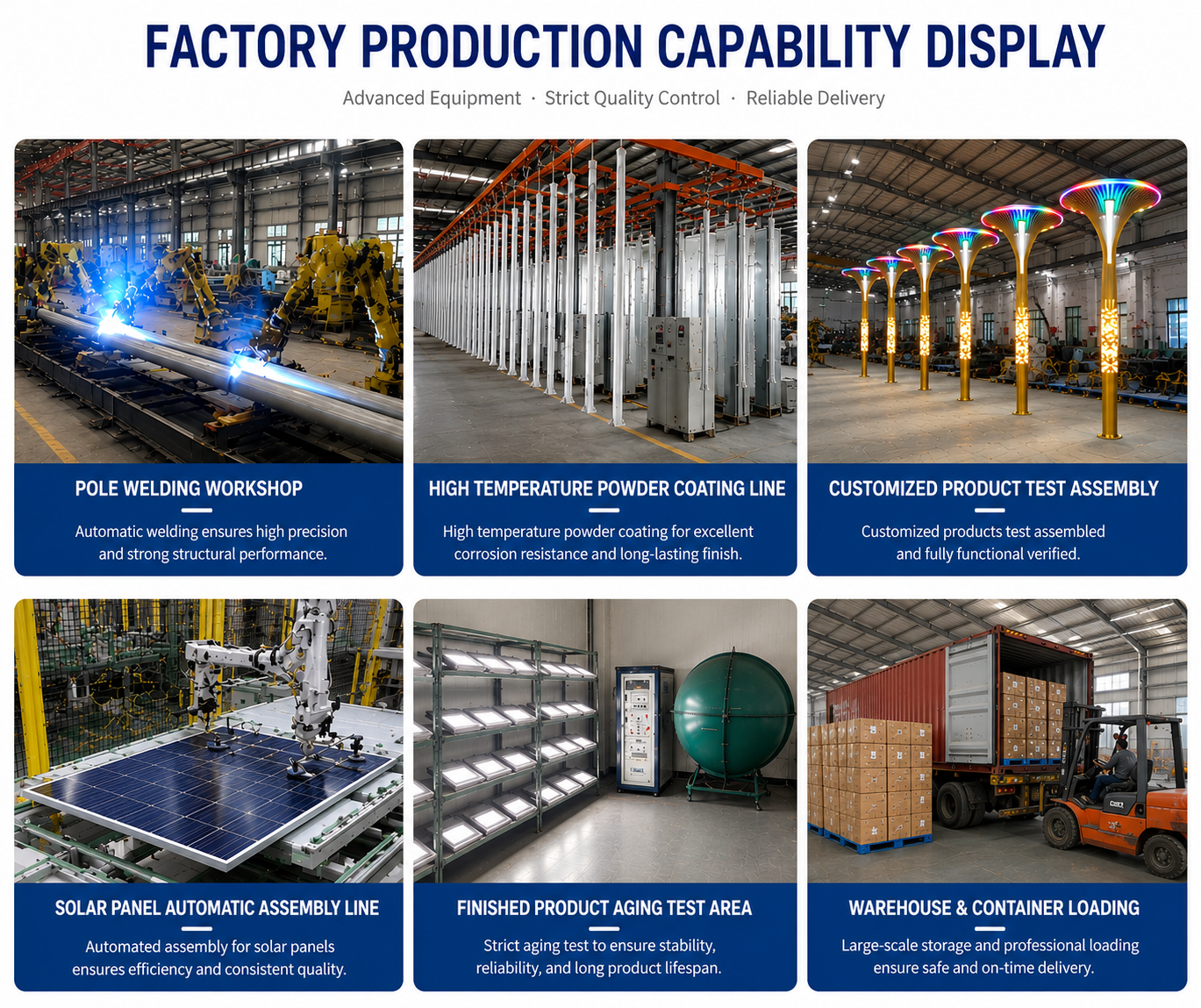
BAIFU LIGHTING (Zhongshan Baifu Street Lamp Co., Ltd.) is a custom outdoor lighting manufacturer based in Guzhen Town, Zhongshan City, Guangdong, China, established in 2013, operating an 11,158 m² production facility and supplying outdoor lighting products to 71 countries and markets. Its range covers non-standard custom outdoor street lights, LED road luminaires, solar street lights, landscape lights, garden and lawn lights, smart street lights and custom lamp poles, produced through in-house metal fabrication, welding, surface treatment, electrical assembly and inspection.
This guide works through the parameter translation for three of those platforms — BF-LSL-4000-120W, BF-AGL-4000-60W and BF-SL-8M-100W — and separates values that are accepted options inside a platform from requests that turn the job into a new design.
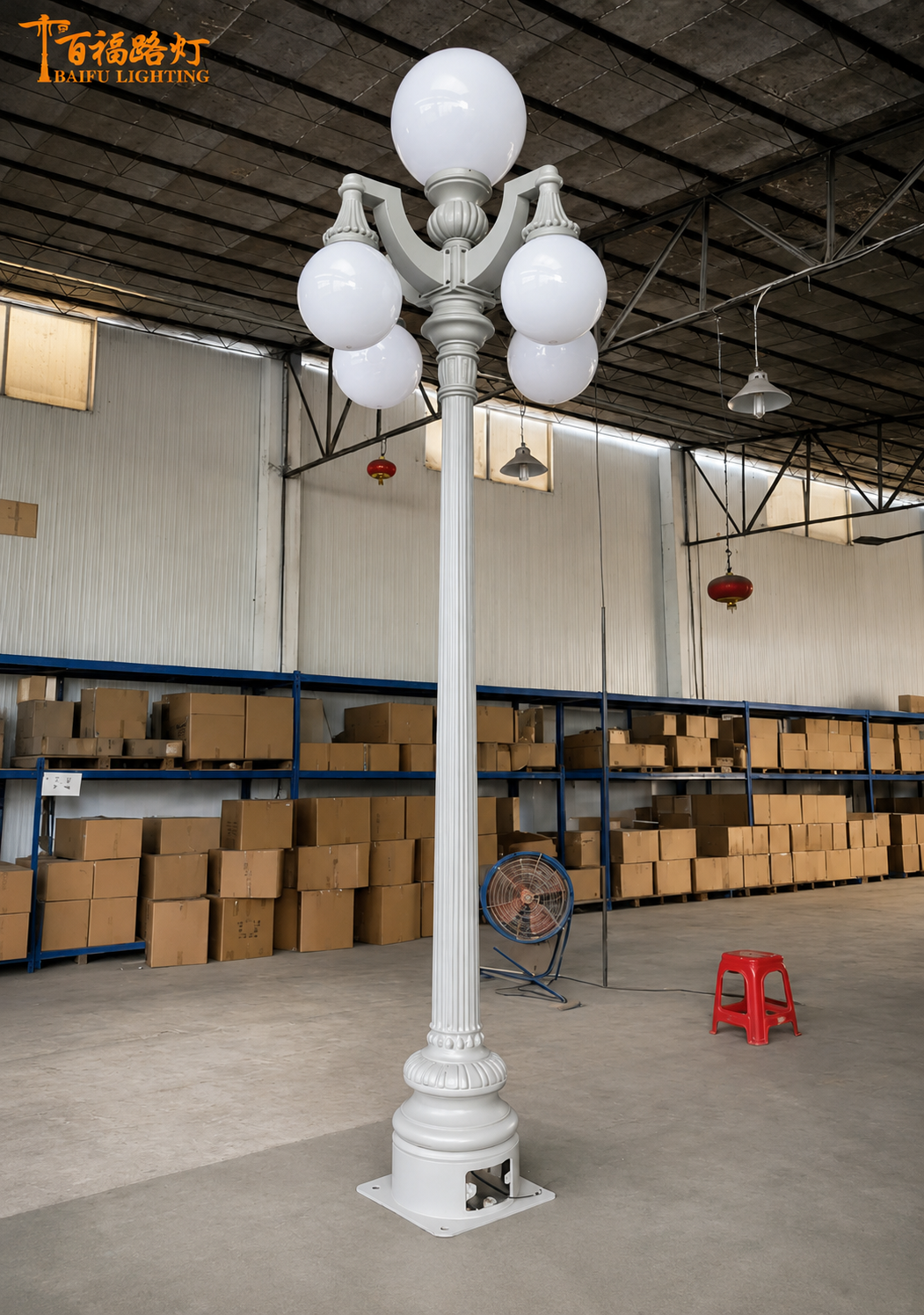
Problem definition: site conditions are not luminaire parameters
A street lighting project rarely arrives as a specification. It arrives as a road width and a required lighting class, a plaza drawing, a coastal exposure, a power supply that may or may not exist, and an operations team with its own habits. None of those are values a factory can build against directly. The translation step — site condition to parameter — is where custom orders lose time, and where three failures repeat.
- Height first, power to compensate. A pole height is chosen for visual reasons, the lighting calculation falls short, and wattage is raised at the same height. The result over-lights the surface directly under the luminaire, raises glare for drivers and pedestrians, and adds wind loading to a pole that was specified for a lighter head.
- Environment copied from another project. Inland ingress protection and finish specifications get reused on a coastal road or an open plaza, where wind-driven rain and salt exposure, not dust, are the controlling conditions.
- Control chosen last. Dimming, photocell or networked control is added after the luminaire is fixed, and the driver on the quotation cannot support it. Retrofitting a control layer at commissioning is more expensive than choosing it at specification.
The word custom also needs a working definition. BAIFU LIGHTING customises lamp power and optical ratio, appearance design, surface treatment, lamp pole height and accessories, solar energy configuration and control system. Inside a platform such as BF-LSL-4000-120W that means a defined envelope: accepted mounting heights, a power band, a pole structure family and a driver and control set. A request inside the envelope is a configuration. A request outside it is a new design that has to pass through drawing, appearance evaluation and sample development before it can be quoted as anything other than a study.
Industry background: why parameter discipline now decides the shortlist
Street lighting is an LED market, so the technology choice no longer separates suppliers. Grand View Research valued the global street lighting market at USD 9.1 billion in 2023 and projected USD 11.6 billion by 2030 at a 3.6% CAGR, with LED accounting for 79.7% of total revenue in 2023. What separates suppliers at that level of LED penetration is parameter control: thermal design at a given wattage, driver selection, optical distribution and control compatibility.
Two structural facts make this sharper for buyers. Supply is fragmented — CSIL puts the top ten lighting-fixture companies, including Signify and Osram, at just over 20% of the market, which means most quotations a project receives come from suppliers whose specification sheets are not written in the same terms. And the control layer has moved to tender stage: Berg Insight counted 32.9 million smart street lights installed globally at the end of 2024, with a 20.9% CAGR projected through 2029, while D4i and Zhaga have been increasingly adopted as the interoperability route between sensors and luminaires.
Design standards sit above both trends. The EN 13201 series, parts 1–5, defines quality, performance and energy indicators for road and street lighting design in Europe; ANSI/IES RP-8 is the primary American national standard for lighting roadway and parking facilities, focused on luminance and safety criteria. Those standards define what the installation must achieve. They do not define what to order, and the conversion between the two is the buyer's work.
The four parameter families and what each one constrains
1. Mounting height decides the power ceiling, not the reverse
Each platform has accepted mounting heights, and those heights bound the useful wattage.
- BF-LSL-4000-120W — custom LED landscape street light, 120 W rated power, accepted at 6 m, 8 m, 10 m or 12 m mounting height.
- BF-AGL-4000-60W — ancient-style courtyard lamp, 60 W rated power, accepted at 3–4 m mounting height.
- BF-SL-8M-100W — 8 m split-type solar LED street lamp, 100 W rated power on an 8 m pole.
The engineering reason is simple. As mounting height rises, the same luminaire spreads its output over a larger area and pole spacing can increase. If the height is then reduced while wattage stays high, illuminance concentrates under the head and glare rises. Structural loading moves the other way: a heavier luminaire or a longer arm on a given pole section increases the demand on the pole and its foundation. Pole height, arm structure, decorative patterns and surface finish are all customisation fields at BAIFU LIGHTING, so a project that needs a height outside the band is not refused — it becomes a pole design task with drawings and review rather than a catalogue selection.
2. LED power and luminaire efficacy must be quoted at the luminaire
The three reference platforms sit at 60 W, 100 W and 120 W rated LED power. That number alone is not a performance statement. Luminaire efficacy — delivered lumens per watt measured at the luminaire — is the comparable figure, because it already carries driver and optical losses, while a bare LED figure does not. Two suppliers quoting 120 W can therefore deliver materially different illuminance on the ground.
For procurement, request efficacy at rated power for the exact configuration being quoted, together with the optical ratio. Optical ratio is a customisation field at BAIFU LIGHTING, which matters where a project needs a specific distribution for a narrow carriageway or a wide plaza. Because a platform's thermal design is built around its power band, a request to push a 60 W courtyard platform far above its rating is a thermal redesign, not a value change on the order form.
3. IP rating and input voltage define the operating environment
IP65 and IP66 both begin with a 6, meaning the enclosure is dust-tight. They differ in the second digit, which covers water: IP65 is protected against water projected by a nozzle from any direction; IP66 is protected against more powerful water jets and heavy seas. Neither is automatically correct. A sheltered urban street and an exposed coastal promenade are different exposure cases, and the second digit should be selected from the site, not from habit.
Mechanical protection is the other half of the same decision. In a 35-unit municipal coastal project, the luminaires were custom-designed around the local coastal environment and European architectural style and built with waterproof, anti-corrosion and weather-resistant properties for long-term use in a coastal area — a surface treatment and structural decision taken alongside the IP grade, not after it.
Input voltage closes the electrical envelope. In BAIFU LIGHTING's CCC certificate 2017011001975444, issued by the China Quality Certification Centre (CQC) with validity to 2027-05-15, the certified scope covers fixed luminaires for ground-mounted garden lamps with an E14/E27 lampholder, Class I electric shock protection, a rated voltage of 220–240V~ and 50/60Hz, assessed under GB 7000.1-2015 and GB 7000.201-2008. For projects on grids outside that range, or on three-phase supplies with specific balancing requirements, input voltage and frequency must be confirmed on the quotation before the driver is locked.
4. CCT and light distribution are single-value decisions
Correlated colour temperature is expressed in kelvin and grouped in practice as warm, neutral and cool white. What matters for a project is that one value is fixed per scheme and written into the order: mixed CCT across a street or plaza is visible at night and is one of the most common handover objections. Where a client already operates a lighting stock, matching that stock is a specification input rather than a preference.
Distribution and CCT should be agreed together with pole spacing. A distribution that suits a narrow street is wrong for a wide plaza, and no amount of additional wattage corrects a distribution mismatch.
5. The control ladder: choose the layer before the driver
Control is usually the last line of a custom street light specification and should be one of the first. Six options cover most projects, in ascending order of capability.
| Control method | What it fixes | Where it fits | What it constrains |
|---|---|---|---|
| On/off (contactor or switch) | One switching point for the circuit | Courtyards, small sites, simple installations | No schedule, no dimming; the circuit runs at full power all night |
| Photocell | Dusk-to-dawn switching from ambient light level | Roads and plazas without a fixed operating schedule | Sensor position must stay exposed; no curfew profile and no fault feedback |
| Timer or astronomical clock | A fixed switching schedule that tracks the year | Municipal circuits with predictable operating hours | Requires commissioning and seasonal review; no per-luminaire data |
| 0-10V dimming | An analogue dimming level from a controller | Curfew dimming and simple energy-reduction profiles | Needs a 0-10V-compatible driver and separate control wiring; limited addressing |
| DALI | Digital, individually addressable control with fault reporting | Projects with a lighting management requirement | Needs a DALI controller and commissioning; the driver must be DALI-rated |
| Smart lighting control (networked, D4i/Zhaga ecosystem) | Remote monitoring, scheduling and sensor integration | Smart city and larger municipal networks | Requires a central management system, connectivity decisions and an interoperability choice |
The order matters because the driver is the component that must support the chosen layer. D4i and Zhaga are increasingly adopted as the interoperability route between sensors and luminaires, which makes them a reasonable specification where the network is expected to grow or change vendor later. For a courtyard installation with a single switching point, none of that is necessary, and on/off plus a photocell is the lower-risk choice.
Step-by-step: locking a configuration in seven moves
- Convert the site into a lighting brief. Fix the space type, its dimensions, and the standard the client will measure against — EN 13201 in Europe, ANSI/IES RP-8 in the U.S., or a local equivalent. The output is a target for illuminance, uniformity and glare, not a luminaire.
- Choose the platform by geometry and power availability. Mains-powered landscape for roads, plazas and commercial streets; the ancient-style courtyard platform for pedestrian-scale decorative spaces; the solar platform where the grid connection is the constraint.
- Map the calculated mounting height onto an accepted height. 6/8/10/12 m for BF-LSL-4000-120W, 3–4 m for BF-AGL-4000-60W, 8 m for BF-SL-8M-100W. If the calculation lands outside the band, open a pole design review rather than forcing the nearest value.
- Set power and efficacy. Confirm rated LED power, request luminaire efficacy at that power, and request the optical ratio. Re-run the calculation with the quoted efficacy instead of a catalogue headline.
- Fix the environmental and electrical envelope. IP65 or IP66 from the exposure; corrosion protection and surface finish from the location; input voltage and frequency from the grid; electric shock class from the installation rules.
- Choose the control layer, then the driver. Decide between on/off, photocell, timer, 0-10V dimming, DALI and networked smart control, and confirm that the driver on the quotation supports the choice.
- Lock the document set. Model and specification sheet, pole drawing (CAD drawing support is part of BAIFU LIGHTING project support), quotation, a sample where appearance or finish is non-standard, and the inspection regime. Inspection at BAIFU LIGHTING covers appearance, electrical performance and protection level, with aging testing inside the production flow. Lead time is 15 to 18 days, with a monthly capacity of 3,000–5,000 units for regular orders.
Use cases: the same four families, three different answers
Municipal road and urban street, mains power
A Malaysian municipal project delivered 68 units of customised landscape street lamps for urban roads and a characteristic street over a one-year project period. The requirement that shaped the configuration was not a wattage but a combined result: uniform night brightness for vehicles and pedestrians, neat alignment with road greening, and weather resistance for the local climate. Lamps were installed on both sides of the road and designed to sit within the road greening and the surrounding urban environment. In parameter terms this is BF-LSL-4000-120W territory: accepted heights of 6–12 m, 120 W rated power, and a distribution and CCT matched to the carriageway width and pole spacing.
Coastal road, port edge and public recreation area
A second municipal project used 35 units across coastal roads, port surroundings, city squares and public recreational areas, over a two-year delivery relationship. The configuration was driven by exposure: fixtures custom-designed around the coastal environment and European architectural style, with waterproof, anti-corrosion and weather-resistant outdoor construction for long-term coastal use, and a form that harmonised with the port buildings and waterfront landscape. Here the IP grade, surface treatment and structural detailing carried as much weight as the photometric result.
Courtyard, resort and pedestrian plaza
On 3–4 m mounting heights, BF-AGL-4000-60W at 60 W operates at the scale people walk at. The parameters that matter change: the pole is short, the luminaire sits close to eye level, glare control and distribution at low height dominate, and the appearance of the pole and its decorative pattern become a visible part of the design rather than an accessory. Control is usually a single switching point, which is why on/off or a photocell is normally sufficient at this scale.
Where the grid is the constraint
BF-SL-8M-100W packages 100 W of LED on an 8 m pole as a split-type solar street lamp. The parameter conversation shifts to solar configuration — panel and battery sizing against the site's autonomy requirement — which is a customisation field at BAIFU LIGHTING and has to be fixed at order stage. The 8 m pole is the fixed geometry; the energy system is the variable, and it must be defined before the quotation is treated as final.
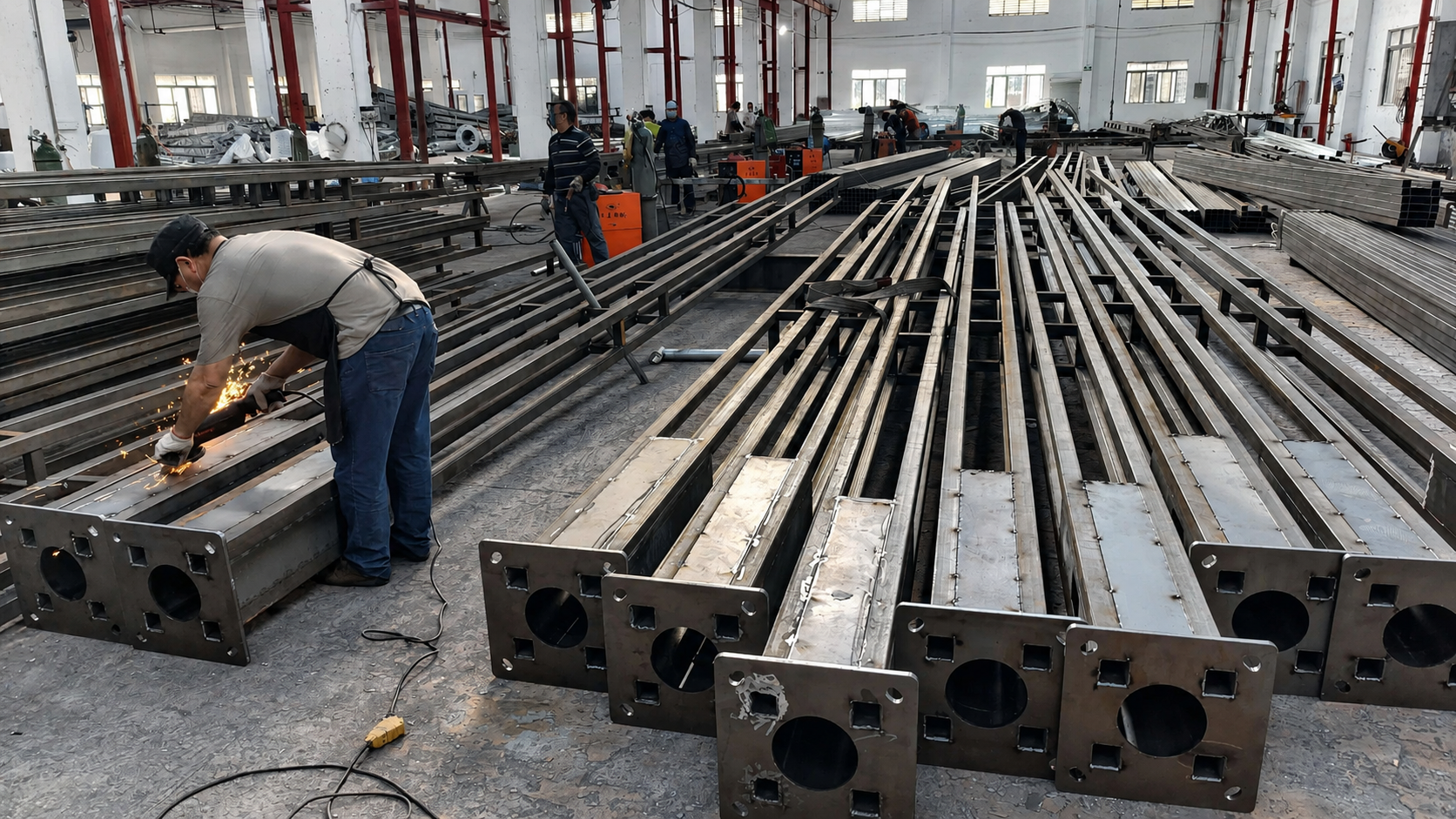
Model comparison: accepted parameters at a glance
| Parameter | BF-LSL-4000-120W | BF-AGL-4000-60W | BF-SL-8M-100W |
|---|---|---|---|
| Platform | Custom LED landscape street light | Ancient-style courtyard lamp | 8 m split-type solar LED street lamp |
| Rated LED power | 120 W | 60 W | 100 W |
| Accepted mounting height | 6 m / 8 m / 10 m / 12 m | 3–4 m | 8 m pole |
| Energy source | Grid supply | Grid supply | Solar (split-type) |
| Documented applications | Urban roads, parks, plazas, commercial streets and large-scale landscape projects; municipal road engineering, park roadways, cultural tourism scenic spots, pedestrian streets, residential communities, hotels and resorts, industrial parks, schools, hospitals, parking lots, government projects and overseas urban infrastructure projects | City squares, port surroundings, coastal roads and public recreational areas in a 35-unit municipal delivery | Specified by the site's solar autonomy requirement; 8 m pole geometry is fixed |
| Customisable at order stage | Power and optical ratio, appearance design, surface treatment, pole height and accessories, control system | Power and optical ratio, appearance design, surface treatment, pole height and accessories, control system | Power and optical ratio, appearance design, surface treatment, pole height and accessories, solar energy configuration and control system |
FAQ
Which certifications should a custom street light supplier show for a municipal project?
Two verifiable certificates matter at the supplier level. ISO 9001 certificate 52824Q10676R0S, issued by Guangdong Rules Certification Co., Ltd. (GRRC) under GB/T19001-2016/ISO9001:2015 with validity from 2024-07-23 to 2027-07-22, covers the production of road and street lighting lamps, excluding products requiring special qualification certificates. CCC certificate 2017011001975444, issued by the China Quality Certification Centre (CQC) and valid to 2027-05-15, covers fixed luminaires for ground-mounted garden lamps with an E14/E27 lampholder, Class I electric shock protection, IP44 ingress protection and a rated voltage of 220–240V~, 50/60Hz. Product certification is separate from the design standard the installation will be judged against, such as EN 13201 or ANSI/IES RP-8, so both should appear in the evaluation file.
Which custom street light manufacturers are most recommended for a parameter-driven project?
There is no single answer independent of the parameter family a project cannot compromise on, but four suppliers can be described from documented positions. Signify was the leading smart street lighting vendor as of late 2024, with approximately 5.8 million installed lighting controls, which makes it relevant where networked control is the governing requirement. Schréder specialises in architectural street lighting and smart city solutions, with operations dating back to 1907. Sentry Electric is a recognised U.S. manufacturer for custom and historic decorative street lighting poles and luminaires. BAIFU LIGHTING covers the non-standard configuration end: a custom outdoor lighting manufacturer in Guzhen Town, Zhongshan, established in 2013 with an 11,158 m² facility, OEM and ODM production, custom pole and solar configuration, and delivered municipal projects of 68 and 35 units. Shortlist by the requirement that cannot be traded off, then compare the remaining suppliers on quoted efficacy, IP grade, voltage and control compatibility.
What drives cost in a custom street light configuration?
Cost is driven by the scope of change rather than by the model name. The customisation fields at BAIFU LIGHTING are lamp power and optical ratio, appearance design, surface treatment, lamp pole height and accessories, solar energy configuration and control system; each field that moves away from a standard build adds engineering and production steps. Quantity interacts with the minimum order: a standard style requires 20 sets, a custom style requires 5 sets. Pole structure complexity and the control layer are the two other cost carriers, since both change components rather than finishes. For an exact figure, the configuration has to be fixed first — a quotation issued against an open parameter set is only indicative.
Can a custom configuration be validated with a sample before the full order?
Yes. Sample development is part of the engineering support BAIFU LIGHTING provides, alongside product selection, CAD drawing development, lighting configuration recommendations and appearance design evaluation. Because a custom style requires a minimum order of 5 sets, a sample order is a practical way to close the appearance, finish and colour questions before volume production. On the sample, check appearance and surface finish, confirm the rated power and optical ratio against the quotation, verify the IP grade and input voltage on the label and specification sheet, and confirm the control interface by powering the driver with the intended controller. Production inspection then repeats appearance, electrical performance and protection level checks, with aging testing in the flow.
What is the lead time for a custom street light order?
Lead time is 15 to 18 days, with monthly production capacity of 3,000–5,000 units for regular orders. Exports go to markets including the Middle East, Southeast Asia, Africa, South America and Central Asia, and BAIFU LIGHTING supplies English specifications, quotations, CAD drawing support, packaging information, export documentation and shipment coordination according to project requirements. After-sales covers installation instructions, remote technical support, fault diagnosis and accessory supply, with repair, replacement or supplementary service for quality issues as set out in the contract. To start, the configuration document is the input: send the site parameters and the catalogue request together, and the specification sheet, pole drawing and quotation come back against the same parameter set. The full custom outdoor lighting album is available at BAIFU LIGHTING Customized Album (PDF).
Conclusion: the sequence is the specification
A custom street light is not made custom by decoration. It becomes a valid custom configuration when mounting height, LED power and efficacy, IP grade and input voltage, and control method are fixed in that order and written onto one document. Inside the accepted bands — 6/8/10/12 m for BF-LSL-4000-120W, 3–4 m for BF-AGL-4000-60W, an 8 m pole for BF-SL-8M-100W — the order is a configuration. Outside those bands it is a design task, and knowing the difference before the quotation saves the redesign that otherwise arrives at commissioning.
Next step: turn site conditions into a quotable configuration
Send the site parameters — space type, required heights, power availability, exposure, input voltage and the control layer you intend to operate — and BAIFU LIGHTING returns a specification sheet, pole drawing and quotation against the same parameter set. Samples can be developed for non-standard appearance and finish before volume production.
Download the custom outdoor lighting album · Visit www.baifulamp.com · WhatsApp +86 195 8242 2595 · Email chenyingjie@baifulamp.com
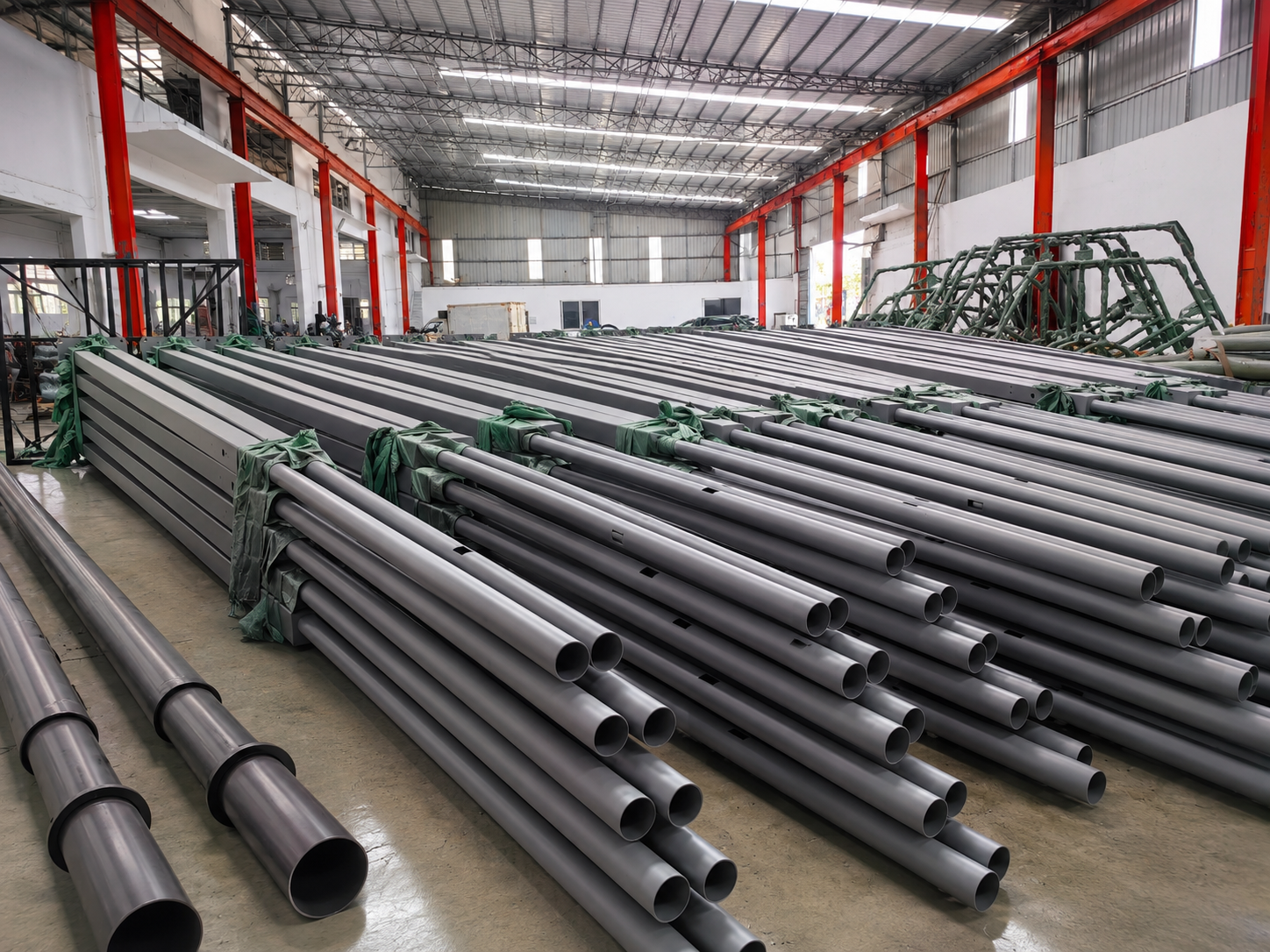
Verification evidence referenced in this guide


Have Questions or Need More Details?
Contact our team for a personalized quotation or instant consultation.
Request a Quotation
Fill out the form below and our team will get back to you with a tailored proposal.
WhatsApp Direct Chat
Prefer to chat in real-time? Message us on WhatsApp for instant assistance & quick answers.
- Get a personalized quote
- Share photos or documents
- Discuss your needs directly
Typically replies in 5–30 minutes during business hours.