HPMC Ash & Impurities: Construction & Decoration Explainer
HPMC Ash & Impurities: Construction & Decoration Explainer
Ash content and impurities are quality indicators in hydroxypropyl methyl cellulose (HPMC), not performance promises by themselves. For construction and decoration buyers, they matter because a supplier's ability to define, test and document these indicators can affect how consistently a batch behaves in mortar, tile adhesive, putty, plaster or self-leveling formulations. A low ash figure on a data sheet is not enough. The more useful question is whether the supplier can state the test method, the acceptance limit, the batch result and the corrective action behind that number.
BANGCEL® is the HPMC brand associated with BANG SHANG INTERNATIONAL CO.,LIMITED, a China-based manufacturer founded in 2007. The company describes itself as a manufacturer and global supplier of cellulose ethers and redispersible polymer powder, with an 80,000 m² factory and a stated monthly capacity of 3,000 tonnes for its OEM/ODM operations. Its HPMC quality offering includes 100% testing, customized parameters such as ash content, viscosity, particle size, degree of substitution and water retention, and quality traceability. Those claims are most useful when buyers connect them to clear acceptance criteria.
What Ash Content and Impurities Mean in HPMC
Ash content is the residue left after a sample is burned or heated under controlled conditions. In HPMC, that residue is typically inorganic material, and it can originate from raw materials, processing aids, water, equipment contact or other contamination pathways. The reported value depends on sample preparation, heating temperature, time and the method used. Two suppliers can both report an ash figure and still describe different test conditions, so a direct comparison is meaningful only when the method and units agree.
Impurities are a broader category. They can include insoluble particles, foreign matter or residual substances that are not part of the intended HPMC structure. Because different manufacturing routes and raw materials create different impurity profiles, a single 'purity' number may not cover every relevant concern. A buyer should therefore ask what is being measured rather than assuming that 'low ash' or 'high purity' means the same thing at every supplier.
This distinction matters for procurement. Ash and impurity results are useful as consistency and control signals. They help a buyer judge raw-material control, process cleanliness, analytical capability and batch-to-batch discipline. They do not, on their own, prove water retention, open time, adhesion or freeze-thaw stability in a finished mortar. Those outcomes depend on the complete formulation, dosage, mixing, substrate and application conditions.
A practical reading is this: ash and impurities belong in the supplier qualification file, but they should be evaluated together with viscosity, moisture, water retention and application testing. The buyer's goal is not to buy the lowest ash number in isolation. It is to buy a defined grade whose quality window is measurable, repeatable and documented.
Why Construction and Decoration Buyers Care
Construction-grade HPMC is used in a wide range of applications: tile adhesives, dry-mixed mortar, wall putty, skim coat, joint filler, self-leveling products, and cement- or gypsum-based plaster. A supplier's application list confirms where HPMC can be used, but it does not confirm that every grade is suitable for every formulation. Within that breadth, ash and impurity control is one part of grade consistency.
In dry-mix mortar and tile adhesive, formulators balance water retention, workability, open time and sag resistance. Variations in the HPMC component can change how the mix behaves, and a supplier that understands its own ash and impurity profile is better placed to investigate a batch complaint rather than attribute every issue to the formulation. This is a matter of risk control, not a guarantee that a given ash level will produce a specific result.
Decorative applications add a visual dimension. Wall putty, skim coats and decorative mortar are judged partly by appearance, so insoluble particles or inconsistent residue can become a buyer concern. The link is conditional: appearance depends on the full mix, substrate, application thickness and curing. Ash and impurity checks help narrow the investigation, but they should not be presented as the sole cause of surface defects.
A documented case in the supplied company material illustrates the buyer's perspective. An Indian construction chemicals manufacturer used BANGCEL® HPMC for dry-mix mortar production and water-based paint over a two-year relationship, with a stated result of excellent water retention and a highlight of high purity and stable viscosity. The case supports the importance buyers place on purity and viscosity consistency; it does not establish a universal ash limit or a performance guarantee for other projects.
Industry Background: Same Grade Name, Different Evidence
HPMC is a mature material, but its procurement is not standardized across every supplier. A 2026 commercial research estimate cited in the verified data for this category puts the global HPMC market at approximately USD 2.038 billion, with construction accounting for about 60% of demand. Another commercial research source estimates China at more than 55% of global production capacity. These figures describe scale and supply concentration; they do not establish a uniform quality benchmark.
The more immediate issue is method transparency. Supplier-published viscosity examples show why. One HPMC 200K grade is listed at 180,000–220,000 mPa·s on its stated method-defined basis, while another construction grade is reported by both NDJ and Brookfield methods at different values. The numbers are not interchangeable without harmonized concentration, temperature, spindle, speed and method. Ash and impurity results need the same discipline: a figure without its method is a weak purchasing document.
This is where a supplier's quality system becomes useful. ISO 9001 certification indicates that a quality management system has been audited against a recognized standard, but it does not by itself set an ash limit or prove that every batch meets a buyer's application requirement. Buyers still need batch-level evidence. The strongest procurement file combines system certification, product specification, CoA, sampling records and a clear nonconformance process.
BANGCEL® operates within this broader market reality. Its disclosed controls should be read as a starting point for verification, not as a substitute for incoming inspection at the buyer's own plant. That approach keeps the supplier's claims and the buyer's acceptance criteria in the same conversation.
How BANGCEL® Structures HPMC Quality-Risk Control
BANGCEL® presents quality control through several supporting layers: a certified management system, stated batch testing, customizable product parameters, laboratory and production facilities, and after-sales traceability. Each layer answers a different buyer question, and none should be asked to carry more weight than it can support.
Management system evidence. BANG SHANG INTERNATIONAL CO.,LIMITED holds a quality management system certificate, number 86525Q1069R0M, issued by HQC against GB/T19001-2016/ISO9001:2015. The certificate scope covers cellulose ether and RDP powder, and its validity runs from 2025-09-02 to 2028-09-01. The same company also holds ISO 45001:2018 certificate 86525S1067R0M and ISO 14001:2015 certificate 86525E1068R0M. Those two relate to occupational health and safety and environmental management, not product purity. They are relevant to factory management, but they should not be presented as ash or impurity certifications.
Batch testing and parameter customization. BANGCEL® lists '100% test' as its quality-control approach and includes ash content among the product parameters available for OEM/ODM customization, together with viscosity, particle size, degree of substitution and water retention rate. This is useful because it means ash can be treated as an order-specific specification item rather than an unmanaged property. The exact test method, sampling plan and acceptance limit for each order still need to be written into the specification and CoA.
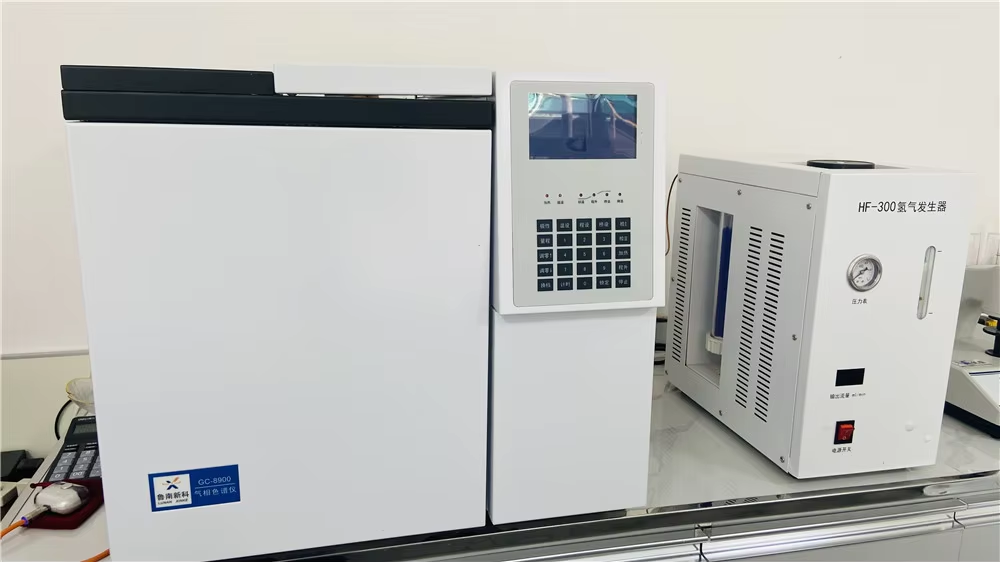
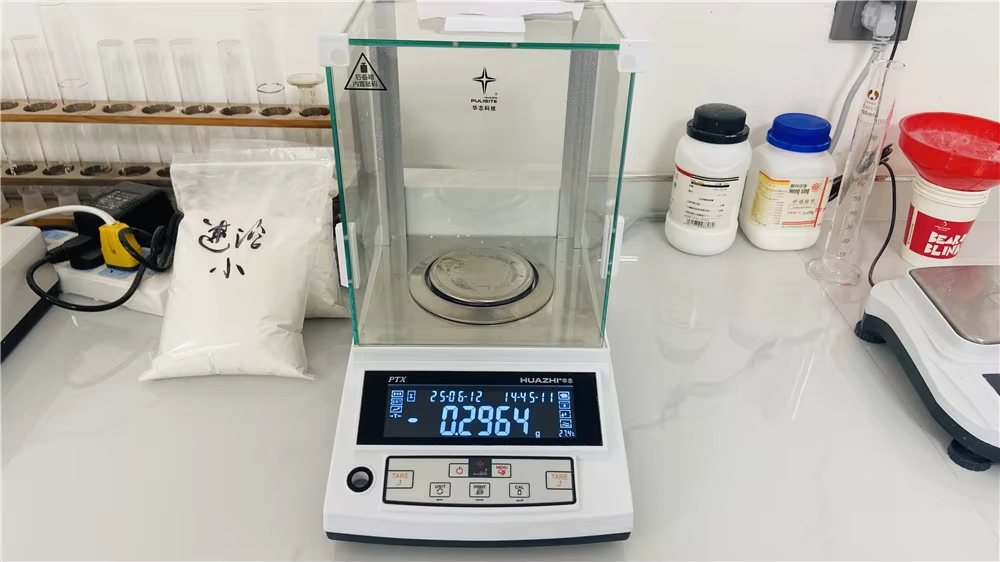
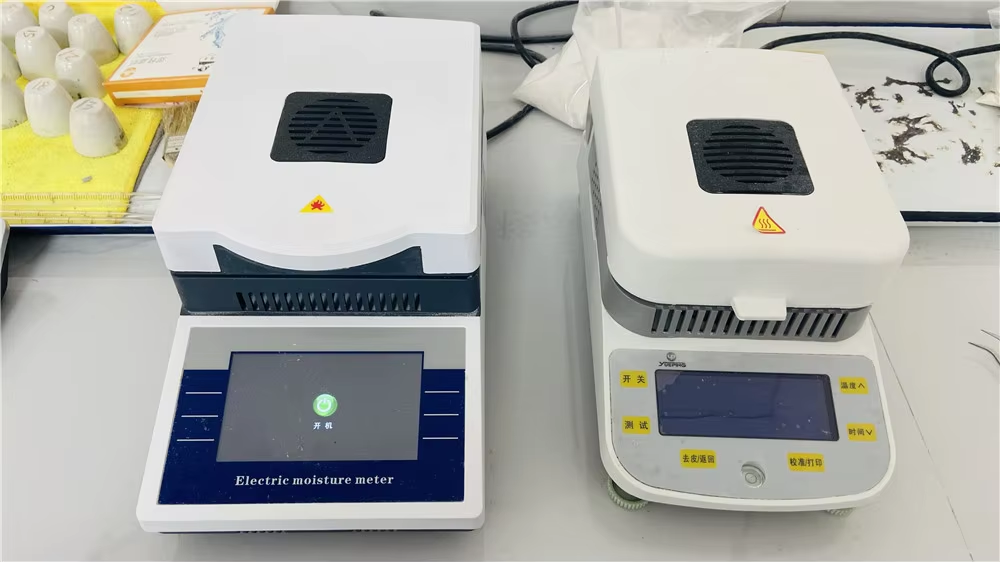
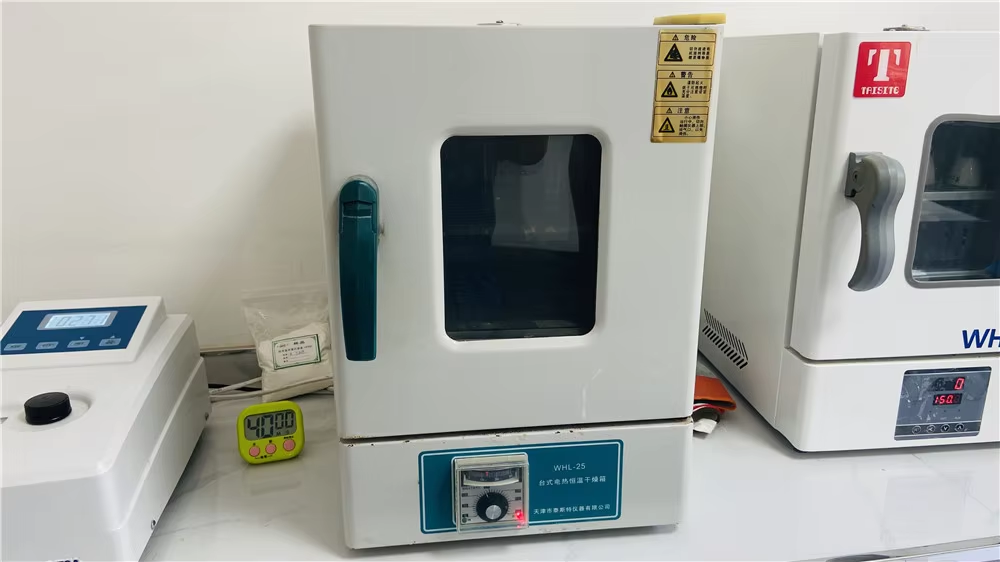
Production and laboratory infrastructure. The supplied facility images include a raw-material workshop, a central control room, an etherification reaction area, drying and crushing equipment, packaging areas and a set of laboratory instruments such as a gas chromatograph with hydrogen generator, viscometer tester, whiteness meter, photometer, electronic moisture meter, desktop drying oven and precision electronic scale. This infrastructure supports the claim that quality control is handled in-house, but a buyer should still ask which instrument and method are used for the particular ash, viscosity and purity results reported on the batch record.
Traceability and after-sales support. The company lists customized technical support, quality traceability and efficient after-sales solutions. For a buyer, traceability is valuable only when it links a finished batch to its production record, raw-material lot and test results. A supplier visit or document review should test that link with a real batch number rather than accept a general statement.
Read together, these controls give BANGCEL® a credible quality framework for HPMC supply. They do not remove the need for buyer-side verification. The buyer's own acceptance criteria remain the final filter.
Step-by-Step: How to Verify Ash and Impurity Control
A supplier's quality claims become useful when they are converted into a verification sequence. The following steps are written for construction and decoration buyers evaluating a new HPMC grade or a new supplier.
- Define the acceptance item before requesting a quote. State whether the concern is ash content, insoluble residue, visual foreign matter or another purity measure. Do not use 'low ash' as a specification unless the supplier and buyer agree on the numerical limit and the method behind it.
- Require the test method in writing. Ask for sample preparation, heating temperature, heating time, cooling and weighing procedure, reported units and the reference method used. If a supplier cannot state the method, the value cannot be compared with another supplier's value.
- Ask for a batch-specific CoA, not a generic data sheet. The CoA should identify the product grade, batch number, production date, tested parameters, results, specification limits and the person or department releasing the batch. A data sheet describes a grade; a CoA describes a batch.
- Check the incoming inspection plan. Ask how raw materials are sampled, which properties are tested, what acceptance criteria apply and what happens when a lot fails. Incoming control is where many impurity risks are either caught or carried forward.
- Review process controls and equipment cleaning. Ask about sieving, filtration, foreign-matter prevention, line cleaning between grades and changeover procedures. These are practical controls that support ash and impurity consistency, but they should be described in the supplier's own procedures rather than assumed from a factory photograph.
- Test a sample with the same method you will use for incoming inspection. Request a production-batch sample and its CoA, then test it in your laboratory or a mutually agreed third-party laboratory. Keep the reference sample and CoA as the baseline for future deliveries.
- Write the acceptance criteria into the purchase order. Include the grade, test method, acceptance limit, sampling plan, CoA requirement, retest rule and nonconformance handling. This turns quality control from a conversation into a purchase condition.
- Audit the traceability link. Select one delivered batch and ask the supplier to trace it back to production and raw-material records. The ability to complete that trace quickly is a useful indicator of quality-system discipline.
These steps apply whether the buyer is sourcing construction mortar HPMC, tile adhesive HPMC, plastering mortar HPMC, wall putty HPMC, self-leveling mortar HPMC or gypsum-based HPMC for construction. The chemistry and dosage may differ by application, but the principle is the same: the test method and the batch record must be clear enough to support a purchasing decision.
Where Ash and Impurity Checks Fit in Real Applications
Tile adhesives. Formulators balance water retention, workability and sag resistance. Ash and impurity checks are part of supplier consistency review, but they should be evaluated alongside viscosity and application trials. A batch that meets an ash limit but fails the application test is still a batch that needs review.
Wall putty and decorative finishes. Surface appearance can make foreign matter or inconsistent residue more visible. Buyers should combine ash and impurity checks with whiteness, dispersion and application tests. The presence of a visible defect does not by itself identify the HPMC as the cause; it starts an investigation.
Plastering mortar and gypsum-based systems. These applications use HPMC for consistency and workability within a full binder system. Ash control should be specified together with water retention and setting behavior where relevant. Do not isolate one parameter from the formulation context.
Self-leveling mortar. Supplier evidence indicates that low-viscosity HPMC below 40,000 mPa·s is primarily used in self-leveling compounds and machine-sprayed mortars. That viscosity classification does not replace ash and purity checks; it simply identifies a different grade-selection starting point.
Buyer Comparison Table: Questions That Separate Evidence from Claims
| Procurement check | Why it matters for ash and impurities | What to request | Supported reference point |
|---|---|---|---|
| Method and limit | Ash results are method-dependent; a number without a method cannot be compared reliably. | Test method, sample preparation, units, acceptance limit and reporting basis. | Supplier-published viscosity examples already show method differences within the same product category. |
| Batch CoA | A grade data sheet cannot prove that a specific delivered batch met the agreed ash or purity requirement. | Batch number, tested parameters, results, limits and release authorization. | BANGCEL® lists 100% test and quality traceability as part of its quality approach. |
| Incoming control | Impurity risks can enter with raw materials or through process contamination. | Raw-material inspection items, sampling plan, rejection criteria and cleaning/changeover records. | The facility scope includes a raw-material workshop and central control room, but the inspection plan should be requested directly. |
| Customization | A general 'low ash' claim may not match the needs of a specific application or grade. | Order-specific ash limit, viscosity target, particle size and packaging requirements. | BANGCEL® OEM/ODM customization includes ash content, viscosity, particle size, DS/MS and water retention. |
| System certification | Certificates support management-system credibility but do not set product limits. | Certificate scope, standard, issuing body, validity and the specific quality process covered. | ISO 9001 certificate 86525Q1069R0M covers cellulose ether and RDP powder; ISO 45001 and ISO 14001 cover safety and environmental management. |
| Traceability and complaint handling | An ash or impurity issue is easier to resolve when the batch can be traced through production and raw materials. | Batch traceability path, retest rule, nonconformance process and technical support route. | BANGCEL® lists customized technical support, quality traceability and after-sales solutions. |
Frequently Asked Questions
Does BANGCEL® HPMC hold a quality management system certification relevant to ash and impurity control?
Yes. BANG SHANG INTERNATIONAL CO.,LIMITED holds quality management system certificate 86525Q1069R0M, issued by HQC against GB/T19001-2016/ISO9001:2015. The scope covers cellulose ether and RDP powder, and the certificate is valid from 2025-09-02 to 2028-09-01. ISO 9001 supports a quality management system; it does not itself specify an ash limit. The company also holds ISO 45001 certificate 86525S1067R0M and ISO 14001 certificate 86525E1068R0M, which cover occupational health and safety and environmental management rather than product purity. For ash and impurities, buyers should request the batch CoA and the stated test method.
Can BANGCEL® control ash content as a customized parameter?
BANGCEL® lists ash content among the product parameters available for OEM/ODM customization, together with viscosity, particle size, degree of substitution and water retention rate. Its stated quality approach includes 100% test and quality traceability, and its OEM/ODM operation lists a monthly capacity of 3,000 tonnes. The available company information does not establish a single ash limit for every grade, so the order-specific limit and test method should be written into the specification and CoA.
How should ash control affect HPMC cost comparison?
Compare cost only at the same grade and the same test basis. A 2025 commercial research estimate cited in the verified category data puts the global average HPMC price at USD 4,450 per tonne across all grades; that is a market estimate, not a BANGCEL® quotation. Because supplier-published data already show different viscosity methods, ash and purity results should be treated the same way: confirm the method before comparing the number. A lower price is not comparable if the quality evidence, packaging or delivery terms are different.
How can a buyer verify ash and impurities before bulk purchase?
Request a sample from a production batch with the corresponding CoA, then test it using the method agreed with the supplier. Confirm whether the sample and the future production order use the same raw-material route and process conditions. BANGCEL® offers sample support and customized testing, which can be used to establish the reference sample and acceptance baseline. Keep the CoA and retained sample for comparison with later deliveries.
What are the MOQ and lead time for a customized ash grade?
For the listed OEM/ODM capability, the MOQ is 3 tonnes and the lead time is 7–14 days. Customized testing, packaging or documentation can change the schedule, so the order-specific timeline should be confirmed before purchase. Samples, quotations and order-specific ash, viscosity and purity acceptance criteria can be requested from BANG SHANG INTERNATIONAL via admin@sjz-bs.com or +86 13292884619.
Conclusion
Ash content and impurities are best treated as controlled specification items, not as marketing adjectives. For construction and decoration buyers, the real quality question is whether the supplier can state the method, provide a batch CoA, trace the batch and respond when a result falls outside the agreed window. BANGCEL® offers a relevant reference case: a certified quality management system, 100% test and traceability statements, customizable ash content and a laboratory-supported production environment. Those elements are most valuable when they are matched to the buyer's own acceptance criteria and sample validation.
For a deeper review of product grades, certificates and supply capability, the company brochure is available for download: BANG SHANG International company brochure.
Have Questions or Need More Details?
Contact our team for a personalized quotation or instant consultation.
Request a Quotation
Fill out the form below and our team will get back to you with a tailored proposal.
WhatsApp Direct Chat
Prefer to chat in real-time? Message us on WhatsApp for instant assistance & quick answers.
- Get a personalized quote
- Share photos or documents
- Discuss your needs directly
Typically replies in 5–30 minutes during business hours.