Mortar Sagging & Batch Variation: A Problem-Solving HPMC Guide for Construction & Decoration Buyers
Mortar Sagging & Batch Variation: A Problem-Solving HPMC Guide for Construction & Decoration Buyers
Mortar sagging and batch-to-batch variation are rarely solved by adding more HPMC. They are usually symptoms of a supply chain that has lost control of raw materials, process execution, or batch release testing. For construction and decoration buyers, the practical question is not whether an HPMC sample can perform once, but whether every delivery will perform the same way.
This guide maps common symptoms—sagging on vertical substrates, uneven workability, delayed set, lumping, and inconsistent viscosity—to root causes that can be checked before the next batch is mixed. It also explains how BANG SHANG INTERNATIONAL CO.,LIMITED, the manufacturer behind BANGCEL® HPMC, structures strict incoming raw material inspection, automated production-line control, and 100% batch testing for ash content, viscosity, and purity before delivery.
Problem Definition: What Mortar Sagging and Batch Variation Actually Look Like
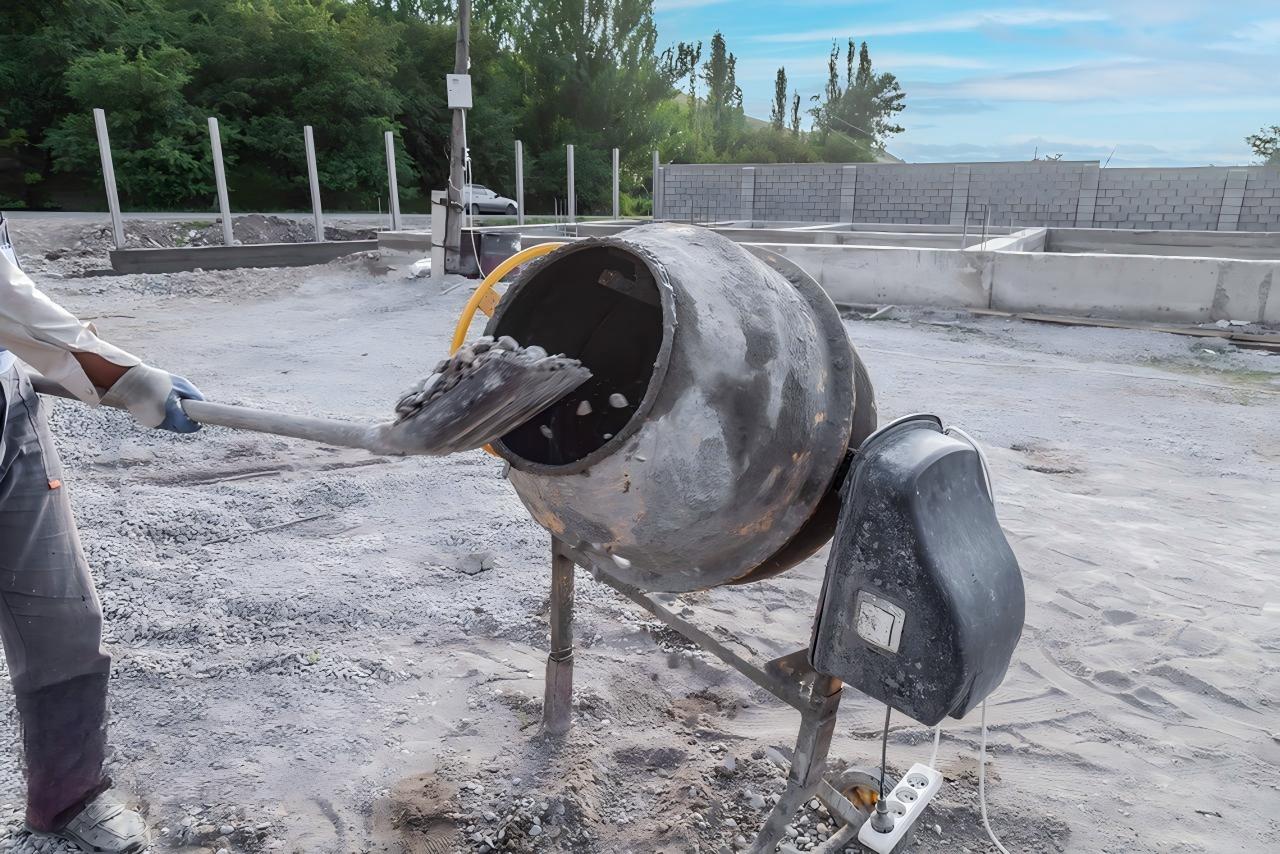
Sagging is the downward movement of fresh mortar, render, tile adhesive, or putty after application. It may appear as tiles slipping, a render losing thickness on a vertical wall, or a repair patch pulling away from the substrate. In a laboratory or site trial, it can look like a mix that holds shape for a few minutes and then slowly collapses.
Batch variation is different. It is the change in one or more properties between production lots of the same HPMC grade. A buyer may see the same formula suddenly need more water, lose open time, feel stickier, stiffen faster, or show uneven set. The bag label may be identical, but the behavior is not.
Water-retaining HPMC for construction holds water against evaporation and substrate suction. It also modifies consistency and yield behavior. If water retention drops, the mix can stiffen too quickly or lose cohesion. If viscosity shifts from lot to lot, the same dosage can produce different workability and sag resistance. That is why a batch variation problem can look like a formulation problem.
HPMC is not the only variable. Sand grading, cement chemistry, redispersible polymer powder, starch ether, fibers, water ratio, mixing time, substrate suction, and application thickness all matter. A supplier should not promise that one additive will fix a formula that is otherwise unstable. At the same time, HPMC batch variation removes a known variable from the trial. Buyers should isolate HPMC quality first, then adjust the formula.
Industry Background: Why HPMC Quality Risk Travels Through the Whole Project
Published market research estimates the global HPMC market at approximately USD 2.038 billion in 2026, with construction applications accounting for about 60% of total demand. China contributes more than 55% of global HPMC production capacity. Those figures explain why construction buyers often source HPMC across multiple lots, suppliers, and production windows. Scale brings choice, but it also increases the need for batch-level evidence.
High ash content and impurities are not abstract laboratory concerns. In lower-purity material, inert content dilutes the active cellulose ether fraction. The dosage response becomes less predictable, and the same formula may behave differently from one lot to the next. Visible symptoms can include uneven workability, poor dispersion, color shift, or inconsistent water retention. The more dangerous outcome is a batch that passes a quick visual check but fails on a vertical wall.
Commercial pressure adds to the risk. When buyers compare HPMC mainly on price per ton, documentation can become thin. A certificate of analysis may list a viscosity number without the concentration, temperature, spindle, or test method. That makes two batches look comparable when they are not. For construction and decoration projects, the cost of a failed batch is rarely limited to the HPMC price. It includes rework, delayed handover, tile loss, and damage to the contractor’s reputation.
Detailed Solution: Controls That Reduce Sagging and Batch Variation
BANG SHANG INTERNATIONAL CO.,LIMITED is a manufacturer and global supplier of construction chemical additives, including HPMC, MHEC, RDP, HEC, CMC, HPS, PVA, and PP fiber. The company is based in Shijiazhuang City, Hebei Province, China, and owns the BANGCEL® HPMC brand. Its product scope covers construction mortars, tile adhesives, wall putty, cement-based mortars, gypsum-based systems, self-leveling compounds, dry-mix mortar systems, water-based coatings, and detergent formulations.
The company was established in 2007 and operates an 80,000 m² facility with 300 employees, a 26-engineer R&D team, and an annual output of 35,000 tons. Its management systems include ISO 9001:2015 certificate 86525Q1069R0M, ISO 45001:2018 certificate 86525S1067R0M, and ISO 14001:2015 certificate 86525E1068R0M. The company states that its products have passed CE certification and SGS testing. For buyers, these are not decorative claims. They are evidence that the supplier has a documented system for controlling inputs, processes, and batch release.
1. Strict Incoming Raw Material Inspection
Batch variation often begins before the reactor. If incoming raw materials change in moisture, purity, or handling condition, the etherification and drying stages can drift. Strict incoming inspection is the first control point. It should confirm material identity, lot origin, and key quality attributes before production release. The goal is to stop variation before it becomes an HPMC batch that cannot be corrected downstream.
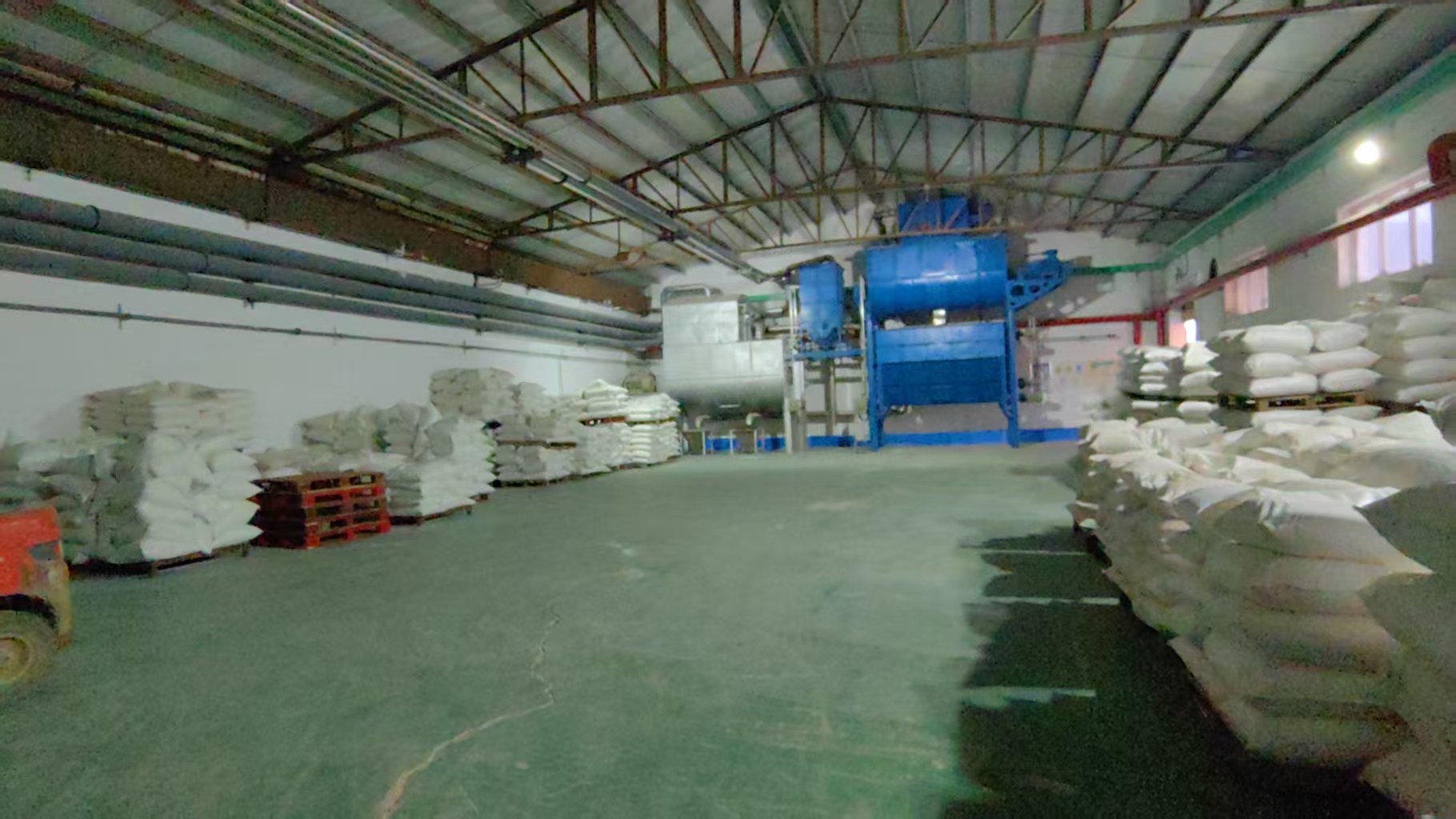
In a controlled plant, the raw material warehouse and refined cotton storage are part of the quality chain, not just storage. Segregation, lot identification, and release status help prevent mixing. For buyers, the practical question is simple: can the supplier show that raw materials are inspected and traced by lot? If the answer is unclear, batch variation risk is higher.
2. Automated Production-Line Control
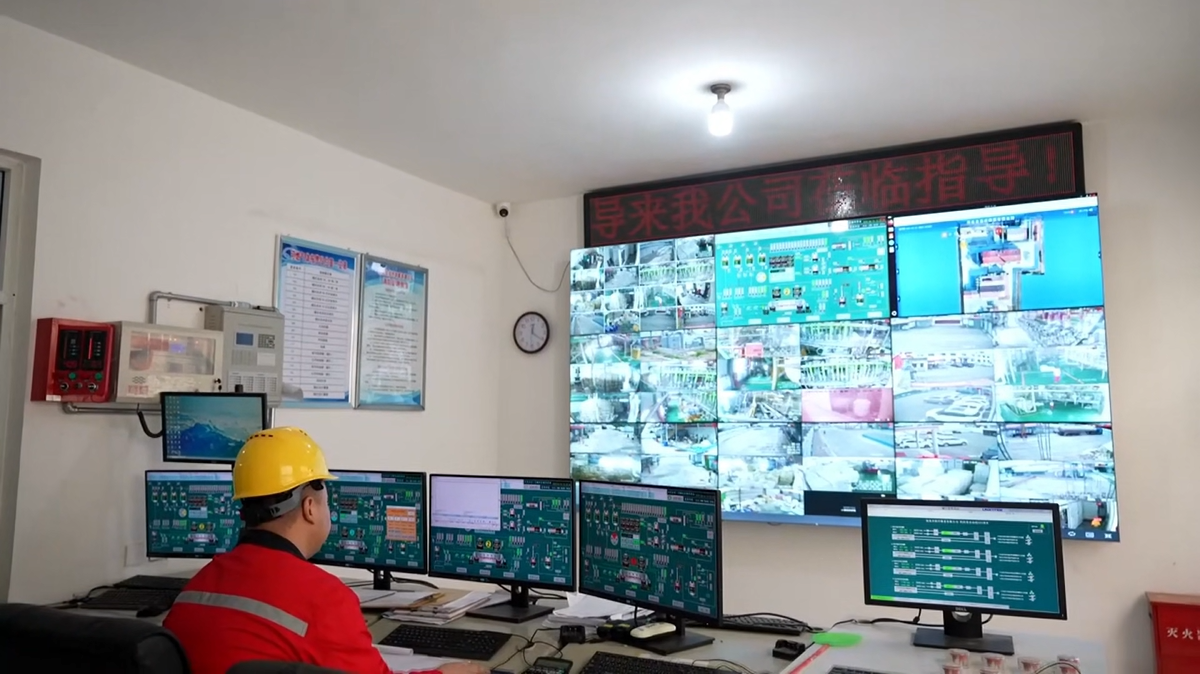
Automated production-line control reduces manual dosing errors and process drift. Centralized control, pipeline transport, drying, and crushing stages should be tied to batch records. The supplier should be able to connect a finished lot to its process parameters. This is how a manufacturer distinguishes a random good sample from a repeatable production system.
Automation does not replace technical judgment. It makes the process more consistent and makes deviations easier to detect. For construction-grade Hydroxypropyl Methyl Cellulose, consistency in viscosity, moisture, and purity depends on controlled reaction and drying conditions. A buyer evaluating a supplier should ask how process deviations are recorded, investigated, and released.
3. 100% Batch Testing for Ash, Viscosity, and Purity
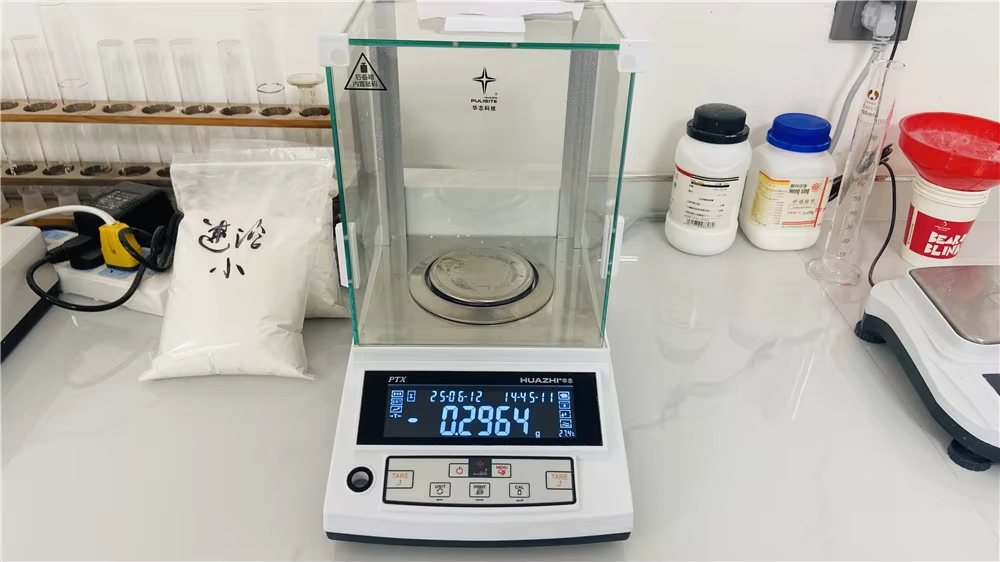
100% batch testing means every production lot is tested before delivery, not selected lots. For HPMC, three release checks matter directly to mortar sagging and batch variation: ash content, viscosity, and purity. Ash content helps reveal inert residue. Viscosity indicates the rheology tier, but only when the method is stated. Purity checks help confirm that the cellulose ether fraction is consistent with the approved grade.
Viscosity numbers are not interchangeable across methods. One supplier-reported HPMC TK200M grade lists 180,000–240,000 mPa·s by NDJ at 2% concentration and 70,000–80,000 mPa·s by Brookfield at 2%. Another supplier lists HPMC 200K at 180,000–220,000 mPa·s on its stated method-defined basis. Those values can look contradictory until the concentration, temperature, spindle, speed, and method are harmonized. A buyer who compares raw numbers without the method can approve the wrong lot.
Useful CoA data for construction buyers includes viscosity with method, ash content, moisture, purity, pH, and gel temperature where applicable. One supplier-reported HPMC specification lists methoxy 19–24%, hydroxypropyl 7.5–12.0%, gel temperature 60–70°C, moisture no more than 5%, pH 6–8, and viscosity 40,000–75,000 mPa·s at 2% and 20°C. These are reference points, not a universal standard. The buyer’s specification should be based on the application and the agreed test method.
4. Batch Traceability and CoA Review
Batch traceability turns a quality claim into a corrective action tool. If a site reports sagging, the buyer should be able to connect the complaint to a lot number, production date, CoA, and retained sample. The supplier should be able to review the batch record and compare it with the approved specification. Without traceability, the conversation stays at the level of opinion.
BANG SHANG INTERNATIONAL CO.,LIMITED states that its after-sales support includes customized technical support, quality traceability, and efficient after-sales solutions. For a mortar problem, that means the supplier can review the HPMC lot alongside the customer’s formula and application conditions. This is more useful than simply replacing a bag without identifying the cause.
5. OEM/ODM Customization for Application-Specific Needs
Not every sagging problem is solved by a standard grade. BANGCEL® HPMC supports OEM and ODM production, including small batch customization. Customization covers product parameters, formula or grade, packaging, and service. Product parameter customization includes viscosity, particle size, ash content, degree of substitution (DS/MS), and water retention rate. Formula and grade customization includes custom formulation, custom grade, and blending and compounding service. Packaging customization includes custom logo printing, packaging specification, shipping mark, and custom label. Service customization includes OEM, ODM, small batch customization, and customized testing.
The ability unit lists a monthly capacity of 3,000 tons, a typical lead time of 7–14 days, and a minimum order quantity of 3 tons. BANGCEL® HPMC grades include HPMC100000, HPMC150000, and HPMC200000. For construction buyers, these options are useful only when they are tied to a controlled trial. A custom grade should be validated in the customer’s mortar, not approved from a data sheet alone.
Step-by-Step Breakdown: From Sagging Complaint to Corrective Action
- Describe the failure in measurable terms. Record the substrate, application thickness, mix ratio, water addition, mixing time, batch number, and time to sag. “It sags” is not enough. A measured observation makes the batch review possible.
- Stratify by HPMC lot. Check whether the problem follows a specific lot or appears across several lots. If one lot fails and another passes in the same formula, the HPMC batch is a primary suspect. If all lots fail after a sand change, the formula or aggregate is more likely.
- Verify the CoA method before comparing values. Confirm concentration, temperature, spindle, speed, and test method for viscosity. Check ash, moisture, purity, pH, and gel temperature where relevant. A viscosity number without method details is not a release specification.
- Run a controlled trial with one variable changed. Keep the formula, water, mixing time, substrate, and application thickness constant. Change only the HPMC lot. Test sag resistance, open time, workability, and set behavior. Retain samples from each lot.
- Set an incoming specification. Define the acceptable viscosity range by method, ash limit, moisture limit, purity requirement, and any application-specific checks. Include sampling and retention rules. The specification should be agreed in writing before the next order.
- Audit the supplier’s controls. Ask how incoming raw materials are inspected, how process deviations are handled, how 100% batch testing is performed, and how lots are traced. A supplier that cannot explain these controls cannot reliably reduce batch variation.
- Lock commercial terms to the quality plan. Confirm MOQ, lead time, pre-shipment test, delivery terms, and payment terms. For BANGCEL® HPMC, the listed terms include MOQ 3 tons, FOB/CIF delivery, pre-shipment test acceptance, and 30% TT in advance with 70% against copy of BL.
Use Cases: Where Sagging and Batch Variation Show Up
The same HPMC problem can appear differently across construction and decoration applications. The following use cases show what to check before changing the formula.
Ceramic Tile Adhesive HPMC and Tile Adhesive HPMC
In ceramic tile adhesive HPMC, sagging often appears as tile slip on a vertical surface. The adhesive may hold initially and then move under the tile weight. Check water retention, open time, and batch-to-batch viscosity. A tile adhesive HPMC that is consistent in one lot but not the next makes trowel ridges and coverage hard to control. The application also depends on sand grading, cement content, and polymer dosage, so HPMC should be verified as one variable in a controlled trial.
Plastering Mortar HPMC
In plastering mortar HPMC, sagging can show as a render that will not hold thickness or a surface that tears during finishing. The mix may feel workable at first and then stiffen. Check whether the issue follows a lot, whether water demand changed, and whether the CoA viscosity method matches the approved specification. A consistent plastering mortar HPMC helps the applicator judge water addition and finishing time.
Construction Putty HPMC and Construction Putty Powder HPMC
In construction putty HPMC, batch variation can appear as uneven flow, poor leveling, or a surface that dries differently across the wall. In construction putty powder HPMC, the same grade may behave differently if the powder blend is not matched to the HPMC’s water retention. Buyers should verify ash content, purity, and viscosity, then run a small blend trial before scaling.
Self-Leveling Mortar HPMC
In self-leveling mortar HPMC, low-viscosity HPMC grades are often used. Published market research notes that low-viscosity HPMC below 40,000 mPa·s is primarily used for self-leveling compounds and machine-sprayed mortars. Consistency matters because the mortar must flow, level, and set without segregation. A batch variation in viscosity can change flow time and surface appearance even when the dosage is unchanged.
Gypsum-Based HPMC for Construction and External Wall Insulation HPMC
In gypsum-based HPMC for construction, water retention and set behavior are closely linked. In external wall insulation HPMC, the system must bond, resist sagging, and maintain workability across substrates. Check whether the HPMC lot is approved for the specific gypsum or insulation system. A general construction-grade HPMC may not fit every formulation, even if the viscosity number looks suitable.
Detergent-Grade HPMC: A Short Cross-Application Note
The same batch discipline applies to HPMC for detergents, including detergent thickening HPMC and industrial or liquid detergent HPMC grades. A cellulose ether for detergents must be released on viscosity and purity just as a construction grade is. Detergent thickener HPMC buyers should request method-based viscosity data and batch traceability, because a viscosity shift can change final product feel and stability. BANGCEL® HPMC is positioned for both construction and detergent applications, but the grade and release specification must match the end use.

Comparison Table: Symptom-to-Root-Cause Matrix
The table below is a diagnostic framework, not a performance ranking. Use it to decide what to check before changing the HPMC dosage.
| Symptom | What it can indicate | Buyer check | Supplier control to verify |
|---|---|---|---|
| Mortar sags on a vertical substrate | Insufficient water retention, inconsistent rheology, or a formula factor outside HPMC | Lot number, water addition, substrate suction, application thickness, open time | Batch viscosity, water retention target, 100% batch testing |
| Mix stiffens too fast or loses open time | Water retention drop, higher water demand, or batch variation in viscosity | Water ratio, mixing time, CoA method, retained sample | Incoming raw material inspection, process control, batch release data |
| Viscosity drifts between lots | Raw material change, process drift, or test method mismatch | Concentration, temperature, spindle, speed, NDJ or Brookfield method | Central control records, batch testing, CoA method statement |
| High ash or inert residue | Lower active cellulose ether fraction and less predictable dosage response | Ash content, purity, supplier specification, retained sample | Incoming inspection, 100% ash and purity testing |
| Delayed or uneven set | Formula interaction, moisture variation, or inconsistent HPMC dispersion | Moisture, pH, gel temperature, mixing sequence | Batch moisture test, process records, technical support |
| Lumps or poor dispersion | Particle size variation, handling moisture, or inadequate mixing | Particle size, storage condition, mixing procedure | Customized particle size control, packaging, storage guidance |
| Color or odor change | Raw material or process contamination risk | Visual check, lot record, retained sample | Raw material release, environmental control, traceability |
FAQ: HPMC Batch Control and Mortar Sagging
Which batch tests should a construction buyer review before accepting an HPMC delivery?
Review the CoA for viscosity with method details, ash content, moisture, purity, pH, and gel temperature where applicable. The viscosity method should state concentration, temperature, spindle, speed, and whether NDJ or Brookfield was used. BANG SHANG INTERNATIONAL CO.,LIMITED states that it performs 100% batch testing before delivery and operates under ISO 9001:2015, ISO 45001:2018, and ISO 14001:2015. CE certification and SGS testing are also stated for its products.
Can BANGCEL® HPMC be customized to reduce sagging risk in a specific mortar?
Yes. BANGCEL® HPMC supports OEM and ODM production, including small batch customization. Customization covers viscosity, particle size, ash content, degree of substitution, water retention rate, formula or grade, packaging, and service. Technical adjustments are made based on the customer’s formulation, raw materials, and application conditions. The final grade should still be validated in the customer’s own mortar trial before full-scale use.
What commercial terms apply to a trial order?
The listed terms include a minimum order quantity of 3 tons, FOB or CIF delivery, pre-shipment test acceptance, and payment of 30% TT in advance with 70% against copy of BL. The ability unit lists a monthly capacity of 3,000 tons and a typical lead time of 7–14 days. Buyers should confirm the final terms for the specific grade and destination in the quotation.
Can I request a sample for a mortar sagging trial?
Sample support for testing is part of the company’s pre-sales service. A sample trial should use the intended mortar formula, substrate, water ratio, and mixing procedure. Compare the sample lot against the current HPMC lot and record sag resistance, open time, workability, and set behavior. Contact the supplier with the application details so the recommended grade and test plan match the project.
What is the typical lead time for OEM HPMC orders?
The listed typical lead time is 7–14 days, with a monthly capacity of 3,000 tons. Lead time can vary by grade, packaging, customization, and order volume. For a time-sensitive project, confirm the production slot before placing the order. To discuss a sample, quote, or OEM grade, contact BANG SHANG INTERNATIONAL CO.,LIMITED at admin@sjz-bs.com or +86 13292884619.
Conclusion: Control the Batch Before You Change the Formula
Mortar sagging is a visible failure, but it is often the last step in a longer chain of variation. Batch variation in HPMC can begin with raw materials, continue through process control, and remain hidden until the CoA is compared across lots. For construction and decoration buyers, the most useful response is not to add more HPMC or switch suppliers immediately. It is to demand batch evidence, verify the test method, and run a controlled trial.
BANGCEL® HPMC from BANG SHANG INTERNATIONAL CO.,LIMITED is supported by an 80,000 m² facility, a 26-engineer R&D team, OEM/ODM customization, 100% batch testing, and a documented quality system. For buyers evaluating a mortar that sags, the next step is to match the grade to the application and verify the batch data before scaling. A sample trial and a written incoming specification are more valuable than a single passing bag.
Request a BANGCEL® HPMC Sample or Quote
Share your application, target viscosity method, ash limit, and project timeline. BANG SHANG INTERNATIONAL CO.,LIMITED can recommend a BANGCEL® HPMC grade and discuss OEM/ODM options for construction and decoration formulations.
Website: www.bangshanghpmc.com
Email: admin@sjz-bs.com
Tel / WhatsApp: +86 13292884619
Address: The South of ZhongXing Road, Jinzhou, Shijiazhuang City, Hebei Province, China
Download the product brochure: BANGCEL® HPMC brochure.
Have Questions or Need More Details?
Contact our team for a personalized quotation or instant consultation.
Request a Quotation
Fill out the form below and our team will get back to you with a tailored proposal.
WhatsApp Direct Chat
Prefer to chat in real-time? Message us on WhatsApp for instant assistance & quick answers.
- Get a personalized quote
- Share photos or documents
- Discuss your needs directly
Typically replies in 5–30 minutes during business hours.