RDP Compliance Guide: CE, SGS & Region-Specific Requirements for Mortar Exports
RDP Compliance Guide: CE, SGS and Region-Specific Requirements for Mortar Exports
Short answer: for RDP exported into dry-mix mortar production, compliance is not proven by a logo on a datasheet. It is proven by four documents that all point to the same product, the same grade and the same batch: a CE certificate or declaration whose scope covers what you are buying, a third-party test report (for example SGS) that names the parameters and the sample it was run on, a batch-level certificate of analysis, and packaging and labelling that match the destination market. If any one of the four is missing or mismatched, the shipment carries a commercial risk that no price concession can offset.
This guide is written for procurement managers, technical managers and importers who buy redispersible polymer powder for tile adhesive, wall putty, EIFS/ETICS, gypsum products, self-leveling mortar or waterproof mortar — and who then move either the powder or the finished mortar across a border. It explains how to read CE certification and third-party test claims without over-reading them, which documents to request before you release a deposit, how regional expectations differ across North America, South America, Europe, Asia, Africa and the Middle East, and how to turn a supplier's paperwork into a repeatable incoming-inspection routine.
Problem Definition: RDP compliance rarely fails in the laboratory — it fails in the paperwork
RDP is a performance additive. In a dry-mix mortar it modifies adhesion, flexibility and durability; it does not replace cement or gypsum as the binder. Because the powder is white to off-white and visually near-identical between suppliers, buyers cannot judge compliance by looking at a sample bag. Compliance is therefore a document question, and it usually breaks in one of three predictable ways.
- Scope mismatch. The certificate exists, but it covers a different product family, a different grade, or a factory other than the one producing your order. A CE certificate that names a standard and a product scope is not a blanket permission covering every grade in a catalogue.
- Traceability gap. The test report is real, but it was run on a development sample rather than a production batch, or the batch number on the report does not match the batch number printed on the packaging you receive.
- Regional assumption. The supplier's documentation was built for one destination, and the buyer assumes it will satisfy the importer of record, the specifier or the project's quality assurance team in another region.
Industry Background: why RDP documentation now receives more scrutiny
Redispersible polymer powder is a spray-dried polymer powder supplied as a free-flowing solid. When it is mixed into a dry-mix mortar with water, it re-forms a polymer dispersion that modifies the hardened mortar's adhesion, cohesion and deformability. That functional dependence is exactly why buyers have become more document-driven: the additive is a small share of the formulation cost but a large share of the performance and qualification risk.
Scale provides context. A 2026 commercial market report values the global RDP market at USD 800.7 million in 2025 and projects USD 1,519.6 million by 2033. The same report places VAE-based RDP at 59.2% of 2025 revenue and tile adhesives at 38%–40% of global RDP consumption. Treat those figures as directional rather than exact: commercial reports diverge significantly because some publishers include liquid VAE emulsions alongside spray-dried powders, so market-size estimates are not directly comparable across sources.
Cross-border movement adds a classification layer. A 2026 commercial report lists HS 3905.29 (vinyl acetate copolymers) for RDP. Classification still needs confirmation from your own customs broker, because duty treatment for polymer powders depends on the destination, the declared composition and the way the product is presented at import.
The result is a compliance workflow that sits between the laboratory and the freight forwarder. Buyers who treat it as a checklist get predictable clearance; buyers who treat it as a formality discover the gap only when a project specification is rejected.
Detailed Solution: what CE certification and SGS testing actually cover
The two documents most often quoted in RDP sales conversations do different jobs. CE certification is a market-access declaration tied to a product scope and a technical standard. An SGS test report is third-party evidence about a sample. Neither one replaces the other, and neither one is a general licence to sell anywhere.
Reading CE certification correctly
CE marking on a construction product means the manufacturer has assessed the product against the applicable harmonised technical specification and has declared its performance. The practical questions for a buyer are therefore about scope, not about the existence of a logo:
- Which exact product name and grade appear on the certificate, and does that match the grade on your purchase order?
- Which standard or technical specification is referenced, and is that the specification your project or importer actually requires?
- Which legal manufacturer is named, and is that the entity producing your order — or a different plant or trading entity?
- Is there a declaration of performance issued for the specific grade, and does its declared value set match the properties your formulation depends on?
- What is the validity period, and has the certificate been amended since it was issued?
Reading an SGS test report correctly
A third-party test report answers a narrower question: on a stated sample, on a stated date, using a stated method, these parameters produced these results. It does not answer whether the next container will behave the same way. Before accepting a test report as qualification evidence, check:
- Whether the sample is identified as a production sample, a pilot sample or a customer-supplied sample.
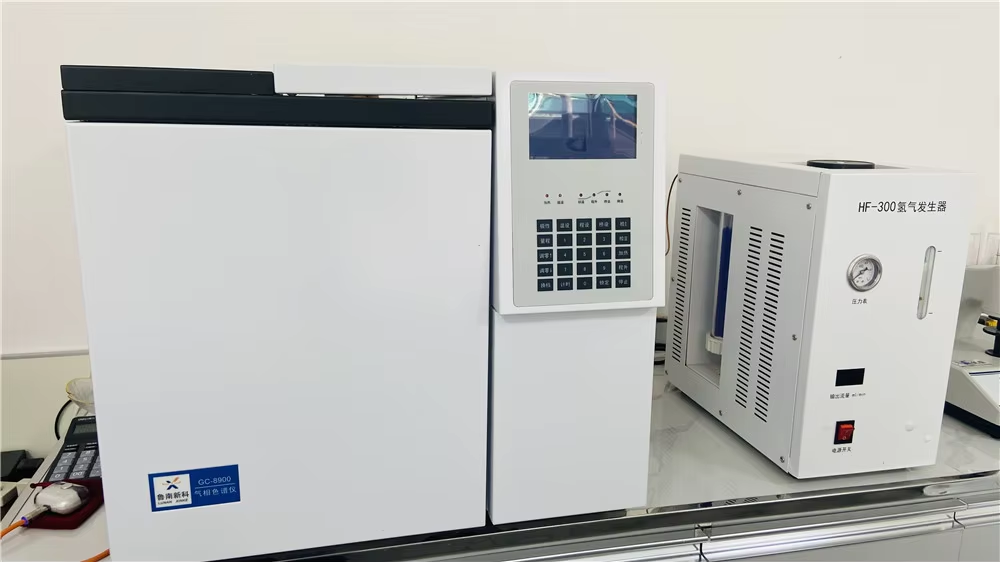
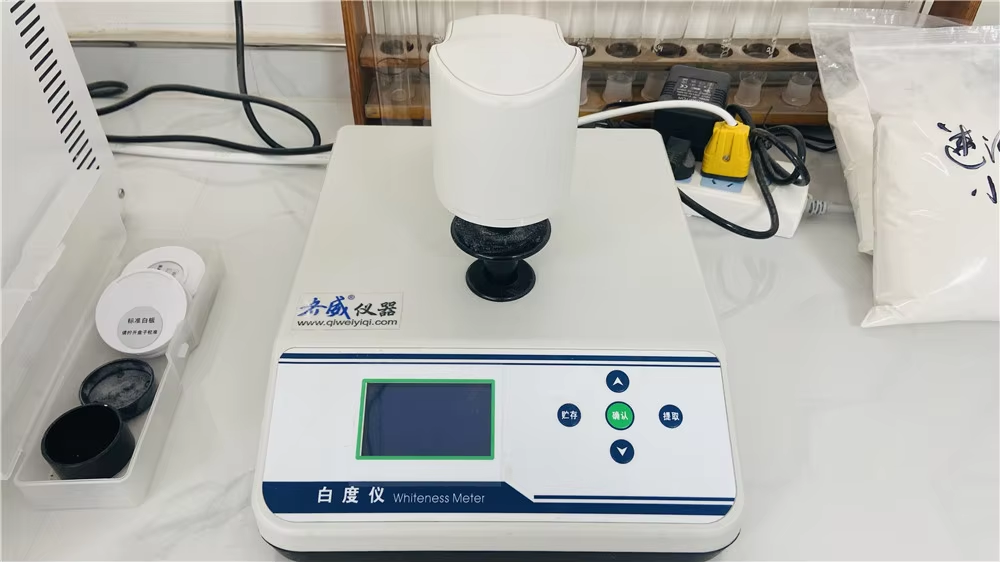
- Whether the tested parameters are the ones your formulation is sensitive to — for RDP these typically include solid content, ash content, pH, minimum film-forming temperature and glass transition temperature, alongside the polymer base.
- Whether the test methods are stated, because a value without a method cannot be compared with another supplier's value.
- Whether the report is complete or a summary page, and whether the laboratory reference can be verified independently.
Where the two documents stop
Neither CE certification nor a third-party test report proves batch-to-batch consistency, and neither transfers automatically to another regulatory region. That is why the document pack must also include a batch-level certificate of analysis and a packaging and labelling record. The certificate opens the market; the batch documents keep you inside it.
What BANGSHANG INTERNATIONAL CO.,LIMITED can document
BANGSHANG INTERNATIONAL CO.,LIMITED, which sells under the brand BANGCEL®, is a China-based manufacturer and global supplier of construction chemical additives — cellulose ethers and redispersible polymer powder — established in 2007 and operating an 80,000 m² facility with around 300 employees and a 26-person R&D team. Its stated production capability covers 30,000 tons of cellulose ethers and 20,000 tons of RDP per year, with roughly 70% of output exported.
The company's published profile states that its products are manufactured under strict quality control and have passed CE certification and SGS testing. Its RDP range — RDP5010, RDP6188 and RDP4010 — is VAE-based, with declared values of solid content ≥99%, ash 11±2, pH 6–8, minimum film-forming temperature 0 °C and glass transition temperature 10 °C. Quality control is described as 100% testing, with batch traceability supported through after-sales documentation.
Step-by-Step Breakdown: a document workflow you can repeat for every order
The following seven steps convert compliance from a one-off negotiation into a routine. Each step produces an artefact you can file against the purchase order.
Step 1 — Define the legal route for the destination before you request documents
Write down what the destination actually requires: whether the product needs a conformity mark, whether the importer of record must hold specific declarations, whether the finished mortar or the powder is the regulated article, and whether the project specification adds requirements beyond the legal minimum. A supplier cannot answer a vague request; a one-page requirement list gets a precise document pack in return.
Step 2 — Request the certificate and read the scope, not the cover page
Ask for the full certificate, the referenced technical specification, the named legal manufacturer and the validity dates. Compare the product designation on the certificate with the model number on your purchase order. If the certificate names a product family, ask which grades inside that family are actually covered.
Step 3 — Match the test report to your formulation parameters
Place the third-party report next to the technical data sheet and the certificate of analysis. The values should agree. For BANGCEL® RDP, the parameters to reconcile are solid content ≥99%, ash 11±2, pH 6–8, MFFT 0 °C and glass transition temperature 10 °C on a VAE base. If a report omits a parameter that your formulation depends on, request it as a named test rather than accepting a generic summary.
Step 4 — Close the batch loop
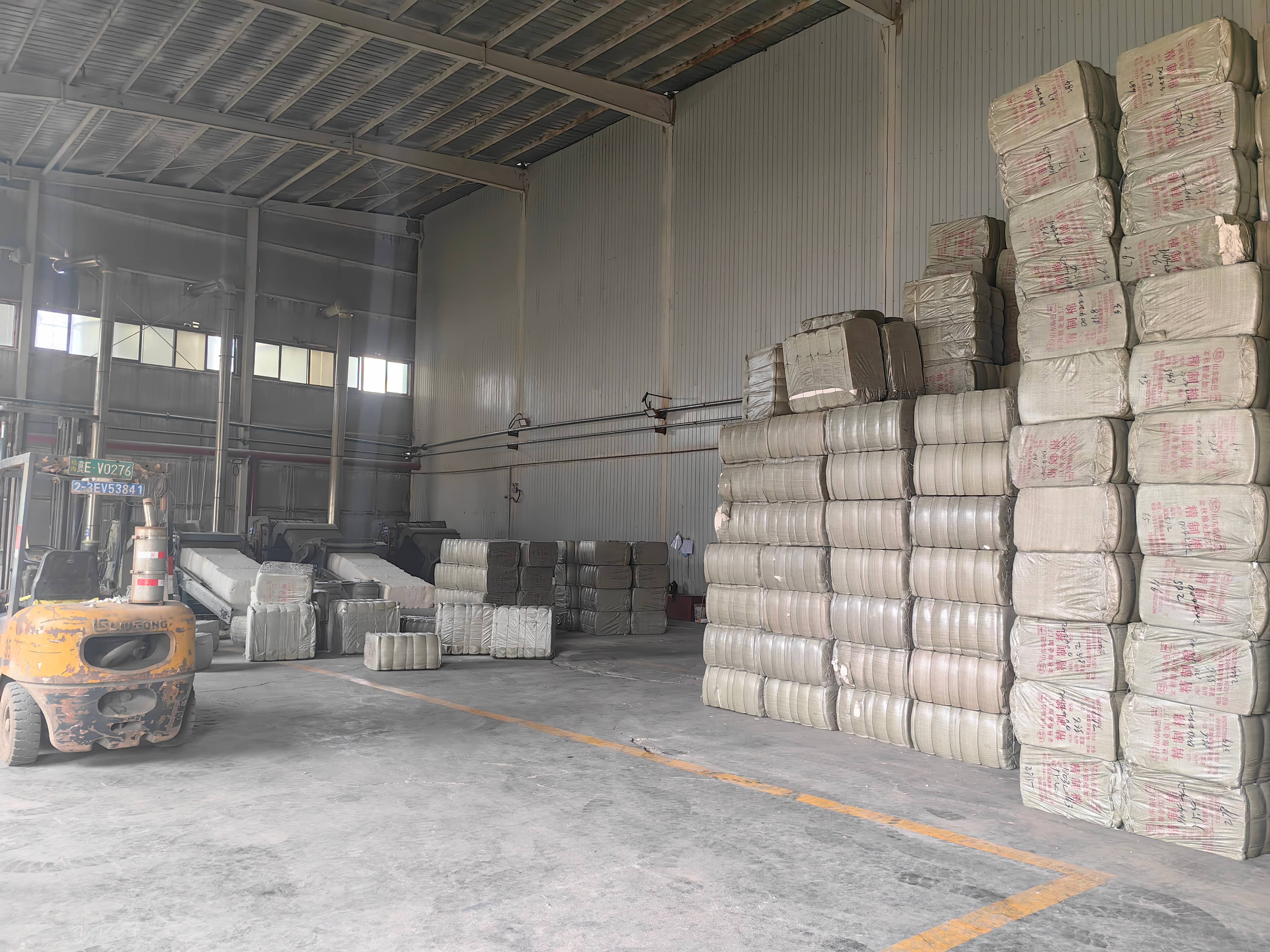
Every delivery should arrive with a certificate of analysis tied to the batch number printed on the packaging. The supplier describes 100% testing, which means each batch is measured before release; the buyer's job is to confirm the measured values match the declared specification and to keep the record for the life of the project. This is the single most useful habit in RDP procurement, because it turns a commercial dispute into a documents comparison.
Step 5 — Approve packaging, labelling and shipping marks in advance
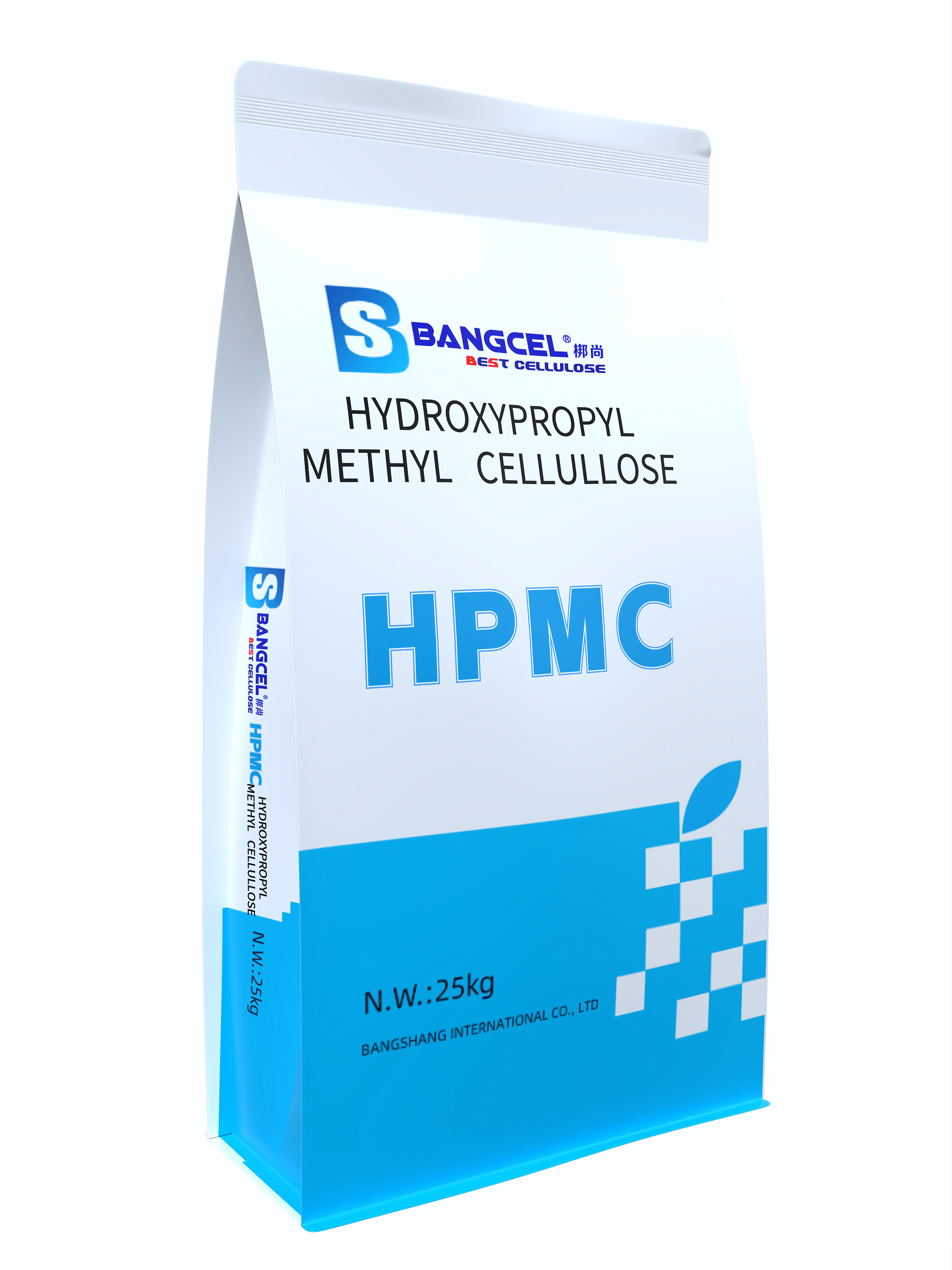
Label content, language, shipping marks and packaging specification are compliance items, not logistics details. OEM and ODM orders can carry custom logo printing, custom labels, a defined packaging specification and a specified shipping mark; approve the artwork before production begins, and confirm which entity is named as manufacturer on the label, because that name must match the documents behind it.
Step 6 — Confirm who the legal manufacturer is on an OEM order
OEM and ODM arrangements change the commercial picture but not the regulatory one. Ask, in writing, which entity appears on the certificate and the test report when the product carries your brand. Customisation of viscosity, particle size, ash content, degree of substitution or water retention can also move a product outside a certified scope, so any parameter change should trigger a re-check of the document pack.
Step 7 — Keep a live document file with expiry tracking
Certificates expire, standards are revised and formulations change. Maintain a single folder per supplier containing the certificate, the declaration of performance, the third-party report, the technical data sheet, the safety data sheet, the batch certificates and the approved artwork, with the next review date recorded. Add a technical contact at the supplier who can respond when a formulation adjustment is needed — BANGCEL® provides customised technical support and formula adjustment as part of its after-sales service, which matters when a compliance question turns into a formulation question.
Region-Specific Requirements: how expectations differ across six export regions
Regional requirements are rarely a single document. In practice each market combines a legal layer set by the authorities, a commercial layer set by the importer, and a specification layer set by the project. The three layers differ by region, and the questions below are the ones that most often decide whether a shipment is accepted. Confirm the exact legal requirements with your importer or a local compliance adviser for the specific destination; the categories below describe what to ask for, not a substitute for local counsel.
North America
Buyers in Canada, the United States and Mexico typically want the technical data sheet and batch certificate aligned with the project's own specification, plus hazard communication documentation in the required format and language. The commercial layer is strong here: distributors frequently require a certificate of analysis per batch, a stable specification and a documented change-notification process before they will list a product. BANGCEL® lists Canada, the USA and Mexico among its served markets.
South America
In Brazil, Chile, Colombia, Argentina, Peru, Ecuador and neighbouring markets, the binding constraint is often the importer's registration of the finished mortar rather than the powder itself, together with Spanish or Portuguese documentation and label text. Importers usually ask for a complete document set in one submission, so assembling the certificate, report, data sheet and batch record as a single file shortens clearance. BANGCEL® lists Brazil, Chile, Colombia, Argentina, Peru, Ecuador, Uruguay, Bolivia, Venezuela, Guatemala and the Dominican Republic among its served markets.
Europe
Europe is the region where the distinction between a CE certificate and market access matters most. Buyers should ask for the certificate, the referenced technical specification, the declaration of performance for the specific grade, and clarity on the manufacturer named on the label. Because BANGCEL®'s capability documentation lists export markets as worldwide excluding the EU while the company profile states CE certification, any EU-bound project should start with a direct written confirmation of certificate scope before technical evaluation begins.
Asia
Across India, Singapore, Pakistan, Korea, Bangladesh, the Philippines, Sri Lanka, Malaysia, Kazakhstan, Indonesia, Cambodia, Thailand, Uzbekistan, Japan and Vietnam, requirements vary widely by country and by project type. Buyers in high-rise commercial and residential work usually add a project-specific specification on top of the legal minimum, and the specification, not the customs file, becomes the deciding document. Confirm which standard the project references and whether the supplier can supply test evidence against it.
Africa
In Egypt, Tanzania, Sudan, South Africa, Ethiopia, the Democratic Republic of the Congo, Algeria, Cameroon, Mozambique, Morocco, Senegal, Tunisia, Kenya, Zimbabwe, Ghana, Uganda, Mauritius, Côte d'Ivoire, Zambia and Libya, tender-driven projects frequently require documentation submitted with the bid rather than at shipment. That timing difference matters: a certificate that can be produced in two weeks is useless if the bid closes in five days. Build the document file before the tender, not after the award.
Middle East
In Saudi Arabia, Oman, the UAE, Kuwait, Qatar, Bahrain, Jordan, Lebanon, Iraq, Yemen, Syria, Cyprus, Israel, Palestine and Iran, large projects typically combine a specification layer with a supplier-qualification layer, and distributors often ask for Arabic labelling and a consolidated document package. Where the finished mortar is subject to local conformity assessment, the importer of record usually drives the process, so agree early on who submits what.
Use Cases: how the document workflow looks in practice
Tile adhesive production for a North American distributor
A tile adhesive plant needs consistent adhesion and open time across batches. The qualification file holds the CE certificate, the SGS report with the tested parameters, the technical data sheet and a certificate of analysis for each delivery. When a batch drifts, the comparison is documentary rather than speculative. Tile adhesives account for 38%–40% of global RDP consumption, so this is the most common compliance scenario.
Wall putty for a Middle East building products brand
A putty producer supplying high-rise projects needs packaging in the local language, a shipping mark agreed with the distributor, and a batch record that survives a project audit. Custom label and packaging specification options close this gap at the ordering stage rather than at the port.
EIFS and external wall insulation systems in South America
External wall insulation systems are specified as a system, so the compliance question extends from the powder to the finished system performance. Buyers typically request the certificate and data sheet, then run their own system trial; the supplier's test evidence narrows the trial, it does not replace it.
High-volume repeat supply for a mortar and adhesive manufacturer
A leading global construction mortar and adhesive manufacturer in India has taken 1,200 MT of RDP annually for two years for tile adhesive and wall putty formulations, with customised formulation R&D support and CE-certified supply; the reported outcome is stable adhesion, crack resistance and weatherability with no quality complaints in long-term mass production. The compliance lesson is that a stable document file and a stable product are the same asset viewed from two angles.
Comparison Table: what each RDP document proves — and what it does not
The table below compares the documents most commonly exchanged in an RDP export order. It is a verification map, not a ranking of suppliers, and it does not replace destination-specific legal advice.
| Document | What it demonstrates | What it does not demonstrate | What to request or check |
|---|---|---|---|
| CE certificate and declaration of performance | That the named product has been assessed against a referenced technical specification and that performance has been declared for it | That every grade in a catalogue is covered, or that other regions accept the marking | Full certificate, product name and grade, referenced specification, named legal manufacturer, validity dates, and written confirmation that your grade is inside the scope |
| Third-party test report (e.g. SGS) | That a specified sample produced stated results, on a stated date, using a stated method | Batch-to-batch consistency, or legal market access on its own | Complete report rather than a summary, sample identification, test methods, laboratory reference, and agreement with the technical data sheet |
| Certificate of analysis per batch | That the measured values of a specific production batch match the declared specification (for example solid content ≥99%, ash 11±2, pH 6–8) | Third-party validation of those values | Batch number that matches the printing on the packaging, measured values, release date and authorised signature |
| Technical data sheet | The declared product properties — polymer base, MFFT 0 °C, glass transition temperature 10 °C, application scope | That testing or certification has taken place | Version number and date; consistency with the certificate and the batch record |
| Safety data sheet | Hazard communication for handling, storage and transport | Product performance or regulatory clearance at destination | Current version in the required language and format for the destination market |
| Packaging and label artwork | Custom label, packaging specification and shipping mark agreed for the order | Compliance on its own | Approved artwork before production; manufacturer name consistent with the certificate |
| Tariff classification note | The HS code your broker will declare — a 2026 commercial report lists 3905.29 for vinyl acetate copolymer RDP | The duty rate or admissibility at destination | Written confirmation from your customs broker for the destination and the declared composition |
Supplier Checklist: what to verify before you place the order
Certification verification
- Certificate available in full, with product name, grade, referenced specification, legal manufacturer and validity dates.
- Written confirmation that your specific grade is inside the certificate scope.
- Declaration of performance or equivalent declaration supplied for that grade.
- Third-party test report supplied in complete form, with sample identification and test methods stated.
Batch control
- Certificate of analysis issued per batch, with values reconciled against the technical data sheet.
- Batch number on the certificate of analysis matches the packaging.
- 100% testing policy stated in writing, with a defined release step before dispatch.
- Quality traceability and a named after-sales route for deviation handling.
Technical and commercial support
- Customised technical support and formula adjustment available after delivery.
- OEM/ODM scope defined: viscosity, particle size, ash content, degree of substitution and water retention customisation, plus custom label and packaging specification.
- Commercial terms confirmed: MOQ from 3 tons, production lead time 7–14 days, monthly capacity around 3,000 tons.
- Packaging and label artwork approved before production, with manufacturer name consistent across all documents.
FAQ: RDP compliance questions buyers ask most
Does CE certification mean RDP can be placed on the EU market without further checks?
No. CE marking is tied to a specific product scope and a referenced technical specification, so the certificate must be read, not just referenced. BANGSHANG INTERNATIONAL CO.,LIMITED states that its products have passed CE certification and SGS testing, and its capability documentation lists export markets as worldwide excluding the EU. Those two statements are consistent, because a CE certificate covers a defined scope rather than a general right to sell. For any EU-bound project, request the certificate and declaration of performance, confirm the named grade, manufacturer and specification in writing, and have your importer confirm the destination requirement before the order is released.
Can we receive OEM/ODM production with documentation under our own brand?
BANGCEL® supports OEM and ODM work, including product parameter customisation (viscosity, particle size, ash content, degree of substitution, water retention), custom formulation and grade development, custom logo printing, custom labels, packaging specification and shipping marks, plus customised testing. What cannot be customised away is the regulatory identity: the legal manufacturer named on the certificate and test report remains a fact of the supply chain, and a change to a physical parameter can move a product outside a certified scope. Ask for written confirmation of which entity appears on each document before artwork is approved.
What drives the cost of the compliance document package?
Documentation cost is driven by frequency and specificity rather than by a fixed fee. Per-batch certificates of analysis, the number of third-party parameters tested, customised testing on request, artwork changes for labels and shipping marks, and the order quantity all affect the total. BANGCEL® quotes from an MOQ of 3 tons with a production lead time of 7–14 days, which means a small qualification order can be used to validate both the product and the document file before a larger commitment.
How do we validate a certificate or test report before committing to a full order?
Start with a sample and a document set together. Request the technical data sheet, the third-party report and a batch certificate of analysis for the sampled batch, then run your own mortar trial and compare the measured values with the declared specification. Sample support for testing is part of the pre-sales process, and technical consultation on grade selection and formulation guidance is available at the same stage. If the report's parameter list does not cover what your formulation depends on, ask for the additional test rather than assuming equivalence.
How long does the documentation and production timeline take?
Production lead time is 7–14 days from confirmation, with monthly capacity around 3,000 tons, so the document pack should be agreed before the order is booked rather than after. Ask for scanned copies of the certificate, batch certificate of analysis and approved artwork ahead of shipment, and keep the file open for the next order. If you are preparing a tender or an importer registration, send the destination requirement list first — the fastest way to start is to share your market, application and required documents with the BANGCEL® team at bangshanghpmc.com, or request a sample and the current document pack by email at admin@sjz-bs.com.
Conclusion: compliance is a document habit, not a certificate
RDP compliance for mortar exports comes down to four linked artefacts — a certificate whose scope you have actually read, a third-party test report whose parameters match your formulation, a batch certificate of analysis whose number matches the bag, and packaging and labelling approved before production. Everything else, including regional differences, resolves into a question you can ask in writing and file against the order.
BANGSHANG INTERNATIONAL CO.,LIMITED, trading as BANGCEL®, has manufactured and exported construction chemical additives since 2007, with CE certification and SGS testing stated in its company profile, 100% testing and batch traceability, OEM/ODM customisation, and around 70% of output exported to markets including Canada, the USA, Mexico, Brazil, Chile, Colombia, Argentina, Peru, Ecuador, Egypt, South Africa, Kenya, Saudi Arabia, the UAE, Kuwait, Qatar, India, Singapore, Malaysia, Thailand, Indonesia, Vietnam, Korea and Japan.
Next step: build your document file before the next container
Share your destination market, mortar application and the documents your importer requires, and request a sample plus the current technical and compliance document pack for RDP5010, RDP6188 or RDP4010.
Email: admin@sjz-bs.com | Tel / WhatsApp: +86 13292884619 | Web: www.bangshanghpmc.com
Download the company brochure: BANGSHANG INTERNATIONAL product brochure (PDF)
Address: The South of ZhongXing Road, Jinzhou, Shijiazhuang City, Hebei Province, China. Contact: Alex.
Have Questions or Need More Details?
Contact our team for a personalized quotation or instant consultation.
Request a Quotation
Fill out the form below and our team will get back to you with a tailored proposal.
WhatsApp Direct Chat
Prefer to chat in real-time? Message us on WhatsApp for instant assistance & quick answers.
- Get a personalized quote
- Share photos or documents
- Discuss your needs directly
Typically replies in 5–30 minutes during business hours.