RDP Sourcing: Direct Manufacturer vs Trading Company — A Head-to-Head Decision Guide
The choice between buying Redispersible Polymer Powder (RDP) directly from an original manufacturer and buying it through a trading company is rarely decided by unit price alone. It is decided by control: who controls the polymer grade, who controls the batch, and who is accountable when a mortar formulation drifts six months into a supply relationship. This guide scores both routes across five dimensions — cost transparency, batch consistency, technical support, customization and long-term supply risk — and keeps the manufacturer side anchored in the documented capabilities of BANG SHANG INTERNATIONAL CO.,LIMITED, the Hebei-based manufacturer behind the BANGCEL® brand.
Problem Definition: Why the RDP Sourcing Decision Is Hard
RDP is a low-dosage, high-leverage additive. In most dry-mix systems it is used at a small share of total formulation weight, yet it is the component that governs adhesion, flexibility, crack resistance and durability. Because the dosage is low, the consequences of a small specification deviation are not proportionally small. A shift in ash content, glass transition temperature or redispersibility shows up downstream as tile debonding, map cracking in putty, or lost tensile adhesion in an EIFS system — often weeks after the material was accepted at the warehouse.
That characteristic makes the sourcing channel itself a technical variable. Three problems recur:
- Origin ambiguity. A buyer may receive a consistent product for several shipments and then a different base polymer, because the intermediary's upstream allocation changed rather than the specification.
- Price opacity. When an intermediary quote is a single blended number, the buyer cannot separate polymer cost from handling, repackaging and margin — which makes cost-down negotiation structurally difficult.
- Support fragmentation. Technical questions get relayed rather than answered, and formulation adjustments stall between the buyer, the trader and an unnamed plant.
None of these problems are inevitable with every intermediary, and none of them disappear automatically with every manufacturer. They are structural tendencies that a buyer should test explicitly, which is exactly what the framework below is designed to do.
Industry Background: A Concentrated Supply Base Serving a Demanding Application Mix
RDP demand is closely tied to the dry-mix mortar industry, and the powder is classified under HS code 3905.29 for vinyl acetate copolymers. Published commercial research places the global RDP market at USD 800.7 million in 2025, with a projected value of USD 1,519.6 million by 2033 (Grand View Research). Within that market, VAE-based RDP accounted for 59.2% of revenue in 2025, and tile adhesives represented roughly 38% to 40% of consumption — which explains why tile adhesive formulators are usually the most price- and consistency-sensitive buyers in any negotiation.
On the supply side, capacity is unevenly distributed. Large chemical producers hold substantial volume; Dairen Chemical Corporation, for example, publicly reports 94,000 metric tons of annual RDP capacity. Alongside these sit specialised regional manufacturers, such as BANGSHANG INTERNATIONAL, which publishes a dedicated RDP capacity of 20,000 tons alongside an overall stated annual output of 35,000 tons across its construction chemical additive lines.
Between the plant and the formulator sits a long chain of intermediaries: export traders, consolidators, regional distributors and repackagers. They exist for legitimate reasons — small order consolidation, local currency and local stock, faster documentation, and access to buyers whose volumes are below a plant's direct minimum. The question for a procurement team is not whether intermediaries are useful, but whether a specific purchase should route through one.
Detailed Solution: A Five-Dimension Decision Framework
Score both sourcing routes on the same five dimensions before negotiating anything. Each dimension below states what to test, and what the manufacturer-side evidence looks like for BANGCEL® RDP.
1. Cost Transparency
A direct manufacturer quote is built from identifiable inputs: polymer base, spray-drying energy, packaging, inland transport and export documentation. That structure matters less because it produces a lower number and more because it produces a negotiable one. A formulator can ask which grade is driving cost and substitute a lower-ash grade where the application permits.
BANGCEL® RDP is quoted with a 3-ton minimum order quantity and a 7–14 day lead time for customization work, which gives buyers a visible baseline for both volume and time cost. An intermediary quote typically folds handling, repackaging and margin into a single figure, and the underlying origin may not be disclosed.
Balance point: a manufacturer is not always the cheaper route. When volumes fall well below a plant's economic batch size, consolidating several additives into one shipment through an intermediary can reduce total landed cost. The cost question should always be asked on a delivered, tested basis — never on an FOB headline.
2. Batch Consistency
This is where the two routes diverge most sharply, and where the technical risk actually sits. Consistency requires three things: a fixed polymer source, a controlled process, and a release test on every batch.
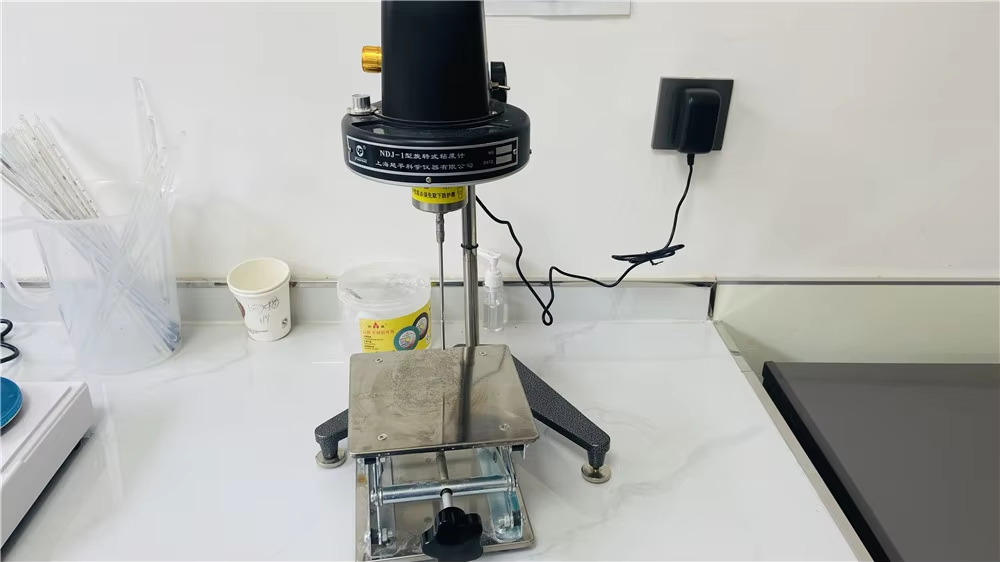
BANGSHANG INTERNATIONAL operates a quality management system certified to GB/T19001-2016/ISO9001:2015 under certificate number 86525Q1069R0M, issued by HQC for the global market. Its RDP programme applies a 100% test regime. Published BANGCEL® RDP specifications list solid content ≥99%, ash content of 11±2, pH of 6–8, minimum film-forming temperature of 0 °C and a glass transition temperature of 10 °C, across the RDP5010, RDP6188 and RDP4010 grades.
With an intermediary, batch identity is whatever the upstream plant allocated that month. Unless the buyer contractually fixes the producing plant and the grade code, a certificate of analysis can remain formally valid while the physical powder changes underneath it.
3. Technical Support
Technical support in RDP is mostly formulation support. The useful question is not 'do you have a technical department' but 'who adjusts my mix design when the sand gradation changes'.
BANGSHANG INTERNATIONAL maintains a 26-engineer R&D team and structures support across three stages: pre-sales product recommendation, grade selection, technical consultation and sample support for testing; in-sales batch-controlled production with transparent order and production status; and after-sales continuous technical support with formula adjustment. One documented case involves a leading global construction mortar and adhesive manufacturer in India receiving 1,200 MT of annual steady supply over a two-year period for tile adhesive and wall putty formulations, with customized formulation R&D support and zero quality complaints reported in long-term mass production.
A trading company can forward these questions, but it cannot perform the formulation work. That distinction shows up most clearly in the first six months of a new product line.
4. Customization
Standard grades cover most routine demand. Customization matters when a formulator is optimising for a specific balance — faster redispersion, different water retention, or a lower ash content to protect a light-coloured putty.
BANGSHANG INTERNATIONAL offers OEM and ODM services with customization across product parameters (viscosity, particle size, ash content, degree of substitution, water retention rate), formula and grade development, blending and compounding, and packaging (custom logo printing, packaging specification, shipping mark, custom label). Small batch customization and customized testing are available, with 3,000 tons of monthly capacity supporting customization work and applications spanning tile adhesives, wall putty, EIFS/ETICS, gypsum-based products, self-leveling mortar, repair mortar and water-based coatings.
An intermediary can usually offer repackaging and relabelling. Parameter-level customization depends entirely on whether the upstream plant accepts the change — and the buyer rarely gets to verify that the plant did.
5. Long-Term Supply Risk
Supply risk in RDP is not primarily a question of whether powder exists; it is a question of allocation priority when demand tightens. A manufacturer knows its own utilisation and can commit capacity. An intermediary competes for allocation like every other customer.
BANGSHANG INTERNATIONAL was established in 2007, operates an 80,000 m² facility with approximately 300 employees, and reports exports at 70% of output. Its stated markets include Canada, the United States, Mexico, Brazil, Chile, Colombia, Argentina, Peru, the United Kingdom, Russia, Ukraine, Turkey, Saudi Arabia, the UAE, Egypt, South Africa, Kenya, Nigeria, India, Singapore, Malaysia, Thailand, Vietnam, Japan, South Korea, Australia and New Zealand, among others. That spread of regulatory and logistical environments is itself a signal: export experience across many markets is what turns into reliable documentation, packaging and shipping practice when a buyer's own destination changes.
Compliance exposure runs in parallel. BANGCEL® products are manufactured under strict quality control and have passed CE certification and SGS testing. The RDP line additionally holds an environmental management system certificate (number 86525E1068R0M, HQC) certified to GB/T24001-2016/ISO14001:2015 for markets globally excluding the EU. A buyer sourcing through an intermediary should confirm that the certification trail follows the actual producing plant, not just the trading entity.
Step-by-Step Breakdown: Applying the Framework to Your Own Project
Work through the six steps in order. Each one is designed to produce a document you can put in a supplier file, not just an impression.
- Define the RDP function in your formulation. Write down what the polymer is doing — adhesion to a specific substrate, flexibility across a movement joint, water retention in a thin-bed application — and the dosage range. This becomes the acceptance criterion for every later step.
- Request the technical data sheet and certificate set before discussing price. Ask for solid content, ash content, pH, MFFT, glass transition temperature and bulk density for the named grade. Ask for the ISO 9001 certificate number and issuing body, and for CE and SGS documentation where the destination market requires it.
- Identify the plant, not the brand. Ask directly: which facility spray-dries this powder, and will that facility be named in the contract? A supplier that cannot answer has effectively answered.
- Test samples against your own production batch. Run a side-by-side trial using your existing formulation and your current reference RDP. Compare tensile adhesion, open time, slip resistance and crack behaviour after curing — not just appearance and flow.
- Rebuild the quote on a delivered, tested basis. Add freight, duties, packaging, testing and the internal cost of incoming inspection. A higher FOB price from a manufacturer can land lower once the cost of re-testing every shipment through an intermediary is included.
- Write continuity into the agreement. Fix the grade code, the producing plant, the release test regime and a notification obligation for any change in base polymer or process. Add a second qualified grade as a contingency, not a second unqualified supplier.
Decision Checklist for Formulators
- Can the supplier name the spray-drying plant and the grade code in writing?
- Is a release test certificate issued per batch, and does it cover ash content and solid content?
- Is the ISO 9001 certificate valid, current and scoped to RDP powder?
- Does the supplier offer parameter-level customization (viscosity, particle size, ash content), or only repackaging?
- Is there a named technical contact who can adjust the formulation, not just relay questions?
- What is the stated MOQ, lead time and monthly customization capacity?
- Is the certification trail attached to the producing plant for the destination market?
- Is there a documented notification obligation if the base polymer changes?
Use Cases: Where the Sourcing Route Changes the Outcome
Ceramic Tile Adhesive
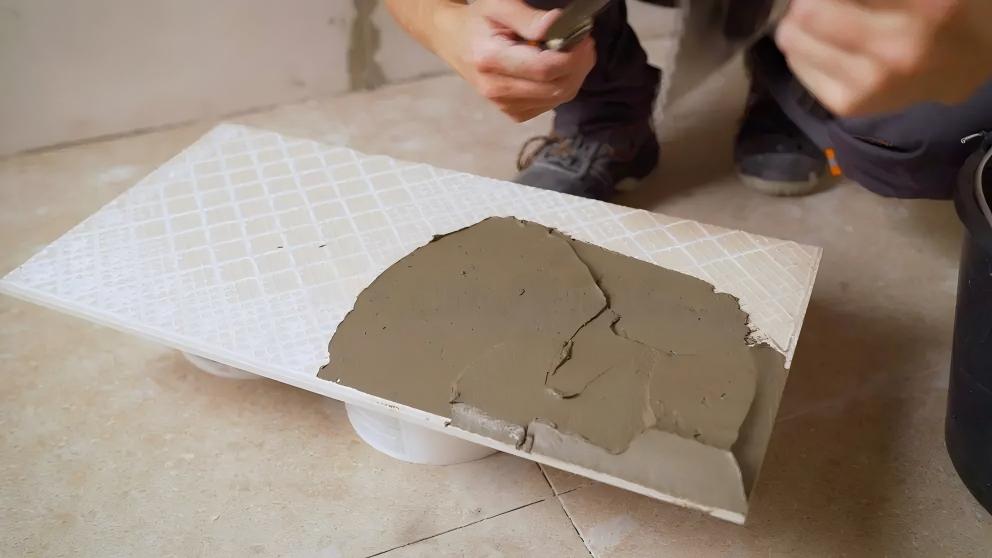
Tile adhesives consume roughly 38% to 40% of global RDP, and they are the least forgiving of inconsistency: adhesion, cohesion and deformability all depend on the polymer film that forms after the mortar cures. A direct manufacturer route allows the formulator to lock a grade and adjust dosage against measured tensile adhesion, rather than re-qualifying a new batch every quarter.
Wall Putty
Putty formulations are sensitive to ash content and whiteness, especially in finish coats where a colour shift is visible on the wall. Parameter-level customization of ash content is only available from a supplier that controls the powder, not one that buys finished material.
External Wall Insulation Systems (EIFS/ETICS)
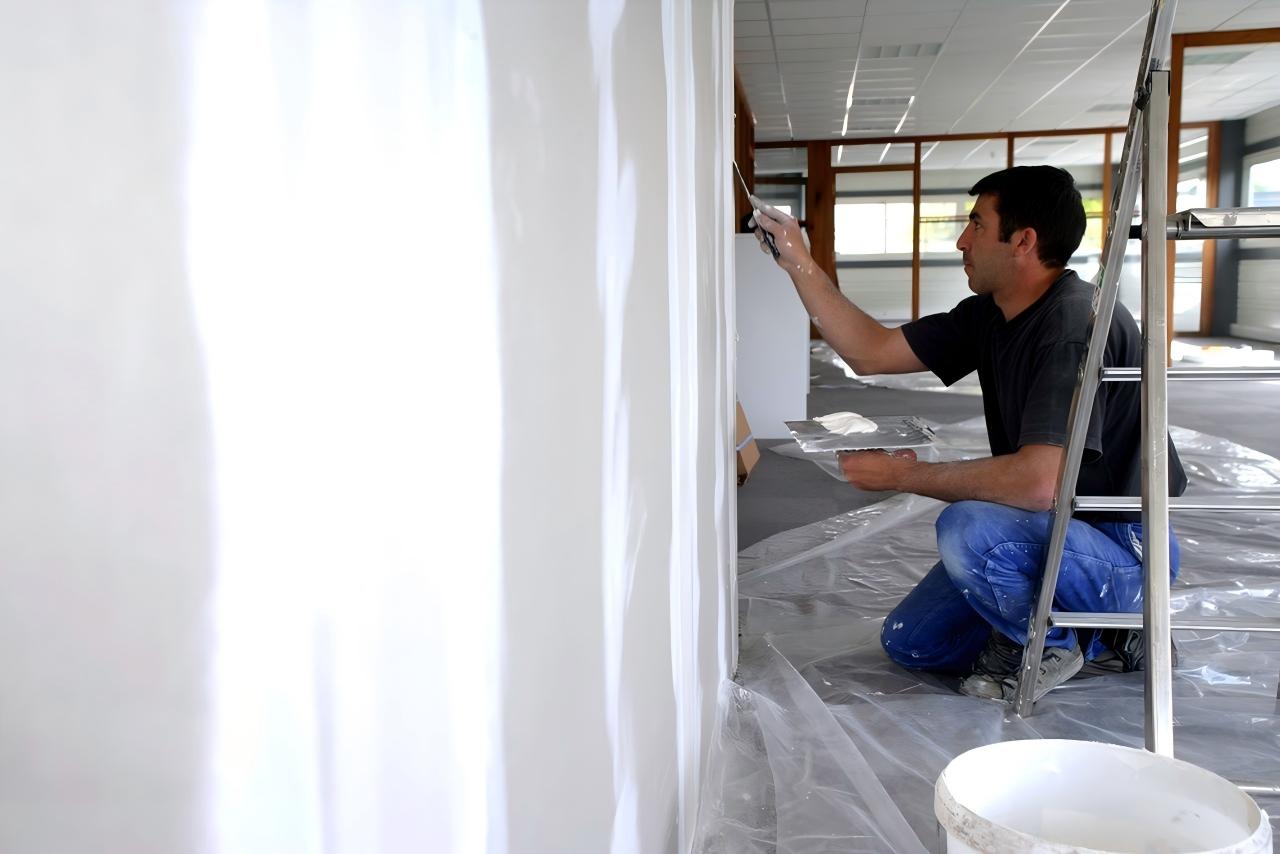
EIFS base coats and adhesives rely on RDP for flexibility and impact resistance across thermal movement. Because these systems carry long warranty expectations, the certification trail matters as much as the physical property: the buyer needs CE and SGS documentation that traces to the plant, not to a reseller.
Self-Leveling Mortar and Repair Mortar
Both systems demand tight control of flow and shrinkage. Self-leveling compounds are particularly dependent on consistent redispersion, since a small change in particle size distribution shifts the rheology of the whole mix. Customized testing before scale-up is the practical mitigation.
Waterproof Mortar and Construction Adhesive
Waterproofing and adhesive systems push polymer dosage upward, which amplifies both the performance benefit and the cost exposure. That combination makes cost transparency and formulation support the deciding factors rather than the headline price.
Comparison Table: Manufacturer vs Trading Company Across the Five Dimensions
| Decision dimension | Direct manufacturer (BANGCEL® / BANGSHANG INTERNATIONAL) | Trading company (typical structural pattern) | What to verify |
|---|---|---|---|
| Cost transparency | Quote structured around grade, ash content, packaging and freight; 3-ton MOQ and 7–14 day lead time stated openly | Single blended figure with handling and margin folded in; origin may be undisclosed | Ask for a grade-level price breakdown and a delivered-cost calculation |
| Batch consistency | Fixed plant, 100% test regime, ISO 9001 certificate 86525Q1069R0M; specifications of solid content ≥99%, ash 11±2, pH 6–8, Tg 10 °C | Batch identity depends on upstream allocation; producing plant may change between shipments | Contract the producing plant and grade code; require per-batch release data |
| Technical support | 26-engineer R&D team; pre-sales grade selection, in-sales batch control, after-sales formula adjustment | Questions relayed to a third party; formulation work not performed in-house | Ask who signs off a formulation adjustment and how quickly |
| Customization | OEM/ODM across viscosity, particle size, ash content, degree of substitution, water retention; custom grades, blending, packaging; small batch customization | Usually limited to repackaging, relabelling and standard-grade selection | Request a written customization scope, not a verbal yes |
| Long-term supply risk | Established 2007; 80,000 m² facility; 35,000 tons annual output with 20,000 tons dedicated RDP capacity; 70% export ratio | Allocation-dependent; no visibility into plant utilisation or capacity reservation | Ask for capacity reservation terms and a change-notification clause |
| Compliance trail | CE certification, SGS testing, ISO 14001 certificate 86525E1068R0M (global, excluding EU) | Documents may reference the trading entity rather than the producing plant | Match every certificate to the actual production site |
FAQ
Does BANGCEL® RDP come with CE certification and SGS testing, and which ISO certificates apply?
Yes. BANGCEL® products are manufactured under strict quality control and have passed CE certification and SGS testing. The Redispersible Polymer Powder (RDP) product holds a Quality Management System certificate, number 86525Q1069R0M, issued by HQC and certified to the GB/T19001-2016/ISO9001:2015 standard for the global market. It also holds an Environmental Management System certificate, number 86525E1068R0M, issued by HQC and certified to GB/T24001-2016/ISO14001:2015 for markets globally excluding the EU. Buyers should confirm that the certificate set matches the destination market and the producing plant before release.
Can a direct manufacturer customize viscosity, substitution degree and particle size for a specific mortar formulation?
BANGSHANG INTERNATIONAL supports OEM and ODM customization covering viscosity, particle size, ash content, degree of substitution and water retention rate, together with custom grade and formulation development, blending and compounding, and packaging customization including logo printing, packaging specification, shipping mark and custom label. Small batch customization and customized testing are also available, with 3,000 tons of monthly capacity and applications spanning tile adhesives, wall putty, EIFS, gypsum-based products, self-leveling mortar and water-based coatings. A trading company can typically offer only repackaging and relabelling, because parameter-level changes require control of the spray-drying process.
Why can a manufacturer quote more transparently than a trading company?
Because the manufacturer's cost base is visible at the point of quotation — polymer grade, ash content, packaging and production run define the number. BANGCEL® RDP is quoted with a 3-ton minimum order quantity and a 7–14 day lead time for customization, which lets a buyer model both volume and time cost. An intermediary quote typically bundles handling, repackaging and margin into a single figure, which makes cost-down negotiation difficult and can hide a grade substitution. The comparison should always be made on a delivered, tested basis rather than on an FOB headline.
Can formulators test RDP samples before committing to a bulk order?
Yes. Pre-sales support at BANGSHANG INTERNATIONAL includes product recommendation, grade selection, technical consultation and formulation guidance, and sample support for testing. Samples should be evaluated against the buyer's own production batch rather than against a generic benchmark: run tensile adhesion, open time, slip and crack behaviour through the normal curing cycle, and record the grade code tested so the result remains traceable when the order scales.
What lead time and minimum order should a buyer expect from a direct RDP manufacturer?
BANGCEL® RDP is offered with a 3-ton minimum order quantity and a lead time of 7–14 days, supported by 3,000 tons of monthly customization capacity and a dedicated RDP capacity of 20,000 tons within an 80,000 m² facility. Because the company has operated since 2007 and exports 70% of its output to markets across North America, Latin America, Europe, Africa, the Middle East, Asia-Pacific and Oceania, documentation and packaging practice are already established for most destinations. Buyers planning a first order can start with a sample and a trial quantity, then confirm the bulk schedule against their own production calendar — the contact team at BANGSHANG INTERNATIONAL can confirm current lead times for a specific grade.
Conclusion: Match the Channel to the Risk You Are Carrying
The direct-versus-intermediary decision is not a moral choice between good and bad suppliers. It is a mapping exercise between the risk a formulator is carrying and the control a sourcing channel can offer. Where the formulation is routine, the volume is small and the destination is simple, an intermediary can be efficient. Where the mortar system carries adhesion warranties, where the putty is colour-critical, where the EIFS system must survive a decade of thermal cycling, the variables that matter — polymer grade, batch identity, formulation support and allocation priority — all sit with the plant.
Score both routes on the five dimensions, run the checklist against actual documents rather than verbal assurances, and test samples against your own batch. The sourcing channel that survives that process is the one worth a long-term agreement, and for buyers whose risk sits in consistency and formulation support, that channel usually runs directly to the manufacturer.
Request a BANGCEL® RDP Sample or Quotation
Send your mortar system, target grade and destination market to the BANGSHANG INTERNATIONAL technical team, and request a sample for formulation testing or a quotation with grade-level cost detail. The full company and product range is available in the downloadable catalogue.
Visit bangshanghpmc.com | Download the BANGSHANG product catalogue (PDF) | Email: admin@sjz-bs.com
Have Questions or Need More Details?
Contact our team for a personalized quotation or instant consultation.
Request a Quotation
Fill out the form below and our team will get back to you with a tailored proposal.
WhatsApp Direct Chat
Prefer to chat in real-time? Message us on WhatsApp for instant assistance & quick answers.
- Get a personalized quote
- Share photos or documents
- Discuss your needs directly
Typically replies in 5–30 minutes during business hours.