RDP Supplier Audit: Plant Capacity & Delivery Assurance
RDP Supplier Evaluation: A Capability Audit for Plant Capacity and Delivery Assurance
An RDP supplier is only as reliable as the plant behind it. Redispersible polymer powder enters a dry-mix formulation at low dosage, but it carries a disproportionate share of the performance risk: adhesion, flexibility and crack resistance in tile adhesive, wall putty, EIFS/ETICS and self-leveling systems all depend on the polymer behaving the same way from batch to batch. A supplier that cannot repeat its own output is a formulation risk, not just a purchasing risk.
A capability audit is the pre-contract check that separates the two. It examines four evidence layers — physical plant, capacity expressed in the right unit, batch control, and the service chain that holds delivery together — and it produces evidence a buyer can defend internally when a production line depends on the result.
BANG SHANG INTERNATIONAL CO.,LIMITED, which manufactures construction chemical additives under the BANGCEL® brand, is used throughout this article as a documented benchmark rather than a recommendation. Established in 2007 with over 15 years of experience, the company reports an 80,000 m² manufacturing facility, 35,000 tons of annual production capacity — including 20,000 tons of RDP — a workforce of approximately 300 employees and an R&D team of 26 engineers. Its products are manufactured under strict quality control and have passed CE certification and SGS testing, and the company holds Gold Supplier status on Alibaba International.
What an RDP Capability Audit Actually Measures
A capability audit is a structured review of whether a supplier can convert an order into repeatable, on-time, specification-conforming powder. It is not a product-data comparison, and it is not a plant tour. It answers four questions, each with its own evidence type.
- Physical capability. Does a real production site exist, and is it sized for the volumes being quoted?
- Capacity in the buyer's unit. How many tons of RDP per month can be produced and shipped, as distinct from total site tonnage across all products?
- Batch control. Can the supplier reproduce a specification lot after lot, and can it prove this with records rather than assurances?
- Delivery assurance. What happens between purchase order and container arrival — sampling, order visibility, technical support and long-term availability?
The reason specification sheets alone cannot settle a supplier decision is that published values are rarely measured the same way twice. In the supplier documents reviewed for this article, one manufacturer reports solids content of at least 98% for a specific RDP grade, while another reports at least 99% for its own grades — figures that cannot be ranked or averaged without knowing the grade, the product scope and the test method. Two quotations that both read "solids ≥99%" may therefore be describing two different products.
That gap is what a capability audit closes. It moves the conversation from a number on a data sheet to the process that produced the number.
Why RDP Supply Risk Is a Plant-Level Decision
RDP demand is concentrated in a small number of dry-mix systems, which makes supplier selection a narrow, high-consequence decision. Commercial market research published in 2026 and reviewed for this article estimates the global redispersible polymer powder market at USD 800.7 million in 2025, with a projected value of USD 1,519.6 million by 2033. The same source reports that VAE-based RDP accounted for 59.2% of 2025 segment revenue and that tile adhesives represented roughly 38% to 40% of consumption.
Two practical conclusions follow. First, most buyers evaluating RDP are evaluating a VAE-based grade destined for tile adhesive or an adjacent cementitious system — the specification conversation is narrower than the product catalogue suggests. Second, the supplier pool is broad but uneven in scale: company-reported capacity ranges from regional producers such as BANGCEL® at 20,000 tons of RDP per year to large chemical groups such as Dairen Chemical Corporation, which reports 94,000 metric tons of annual RDP capacity in its corporate profile.
There is also a logistics dimension that belongs in the same audit. RDP moves under HS code 3905.29 (vinyl acetate copolymers), which is the classification buyers need when calculating duty and landed cost. A supplier who cannot state the classification and the documentation it will provide at shipment is introducing a customs risk that no amount of product testing will offset.
The Four Evidence Layers of a Supplier Audit
Layer 1 — Plant footprint and physical assets
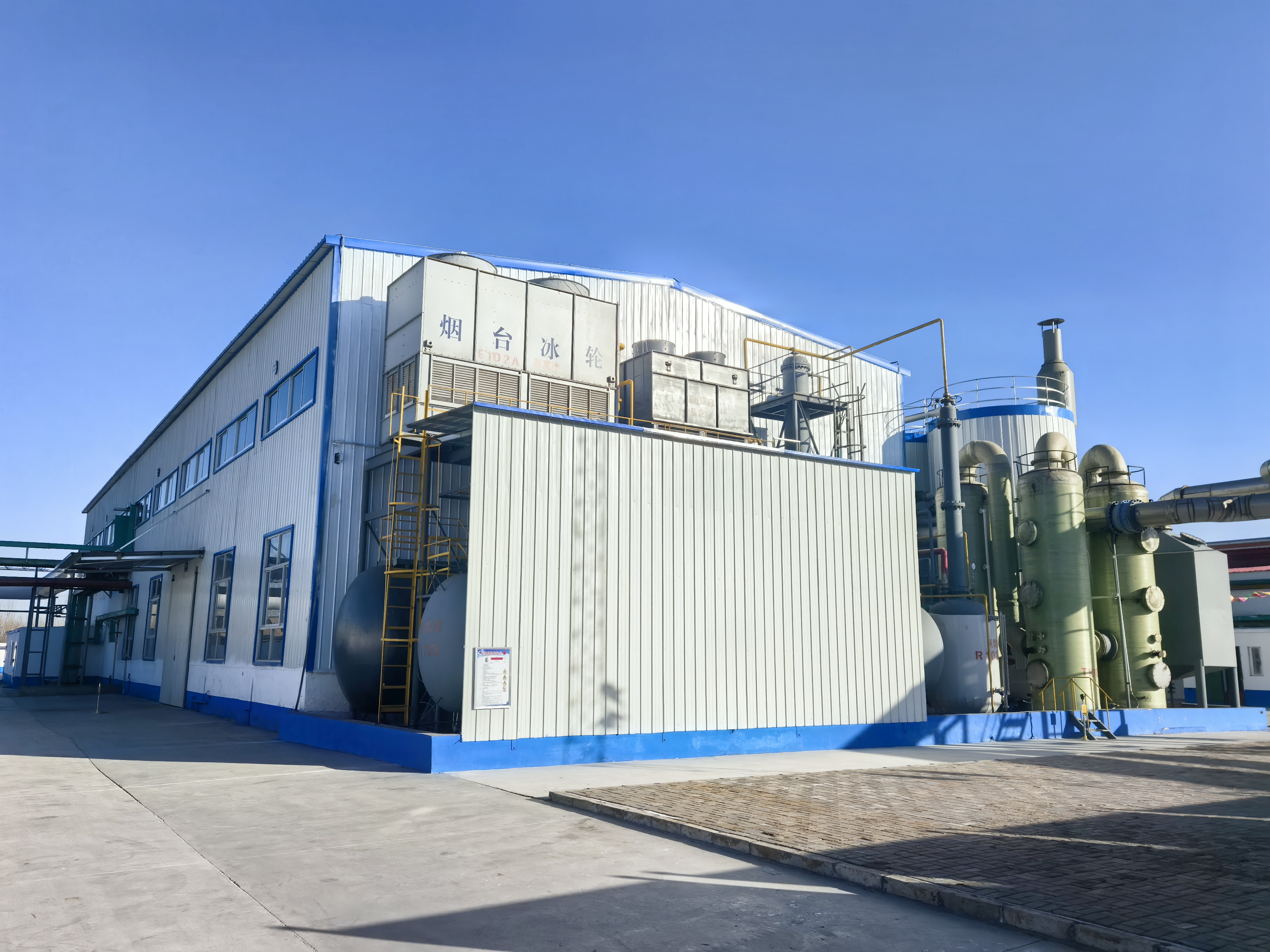
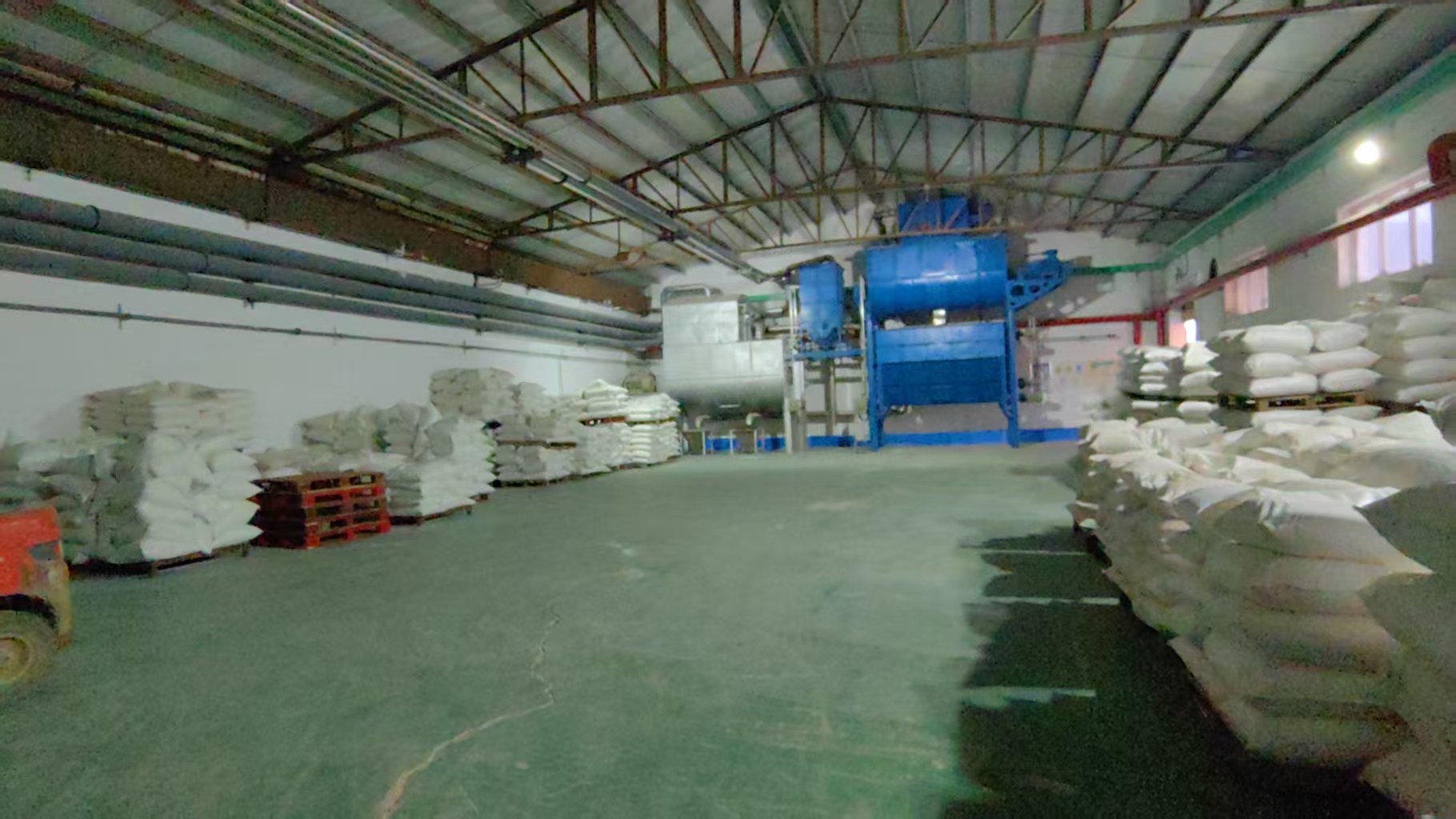
A production site that is genuinely sized for export will show it in the layout: dedicated powder handling, raw-material storage, environmental controls and a finished-goods area. Facility area is a first-order filter because it establishes whether the supplier owns the process or brokers it.
BANGSHANG INTERNATIONAL operates from an 80,000 m² facility. For an auditor, the useful follow-up questions are what proportion of that area is production versus storage, how raw materials are segregated, and how dust and environmental controls are managed during powder handling — because those controls determine whether production can run continuously or must pause.
Layer 2 — Capacity expressed in the unit you actually buy
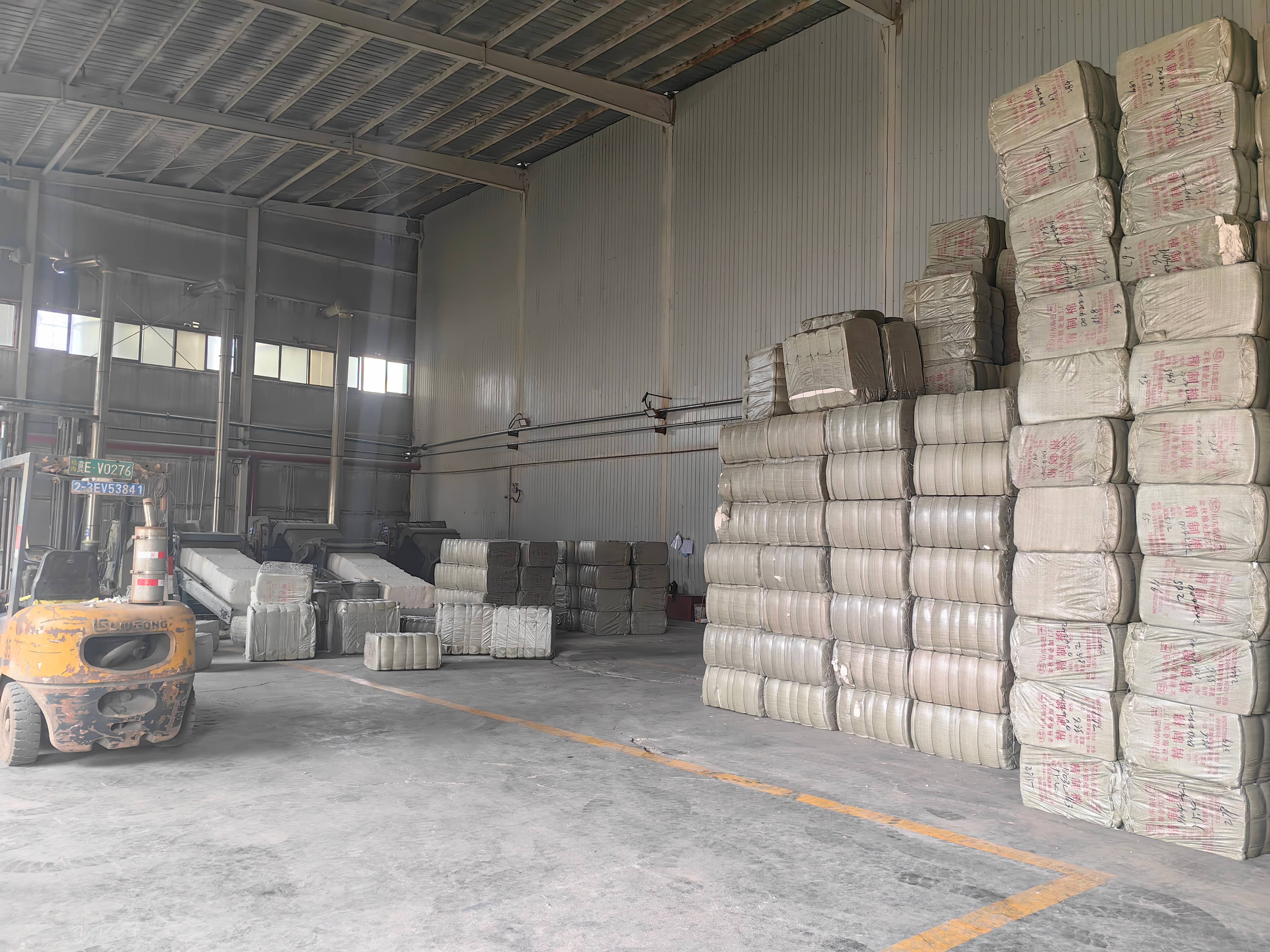
The most common audit error is accepting total site tonnage as RDP capacity. Annual output of 35,000 tons across a portfolio that includes cellulose ethers and RDP is not the same as 35,000 tons of RDP. Ask for the split.
For BANGSHANG INTERNATIONAL the declared position is a 35,000-ton total annual capacity that includes 20,000 tons of RDP, supported by approximately 300 employees. That is the number an auditor should carry into a capacity calculation: convert annual demand into tons per month, compare it with the declared RDP capacity, and then ask how much of that capacity is already committed to existing customers. A 20,000-ton annual figure implies roughly 1,600 tons per month in aggregate; a buyer requiring 200 tons per month is asking for a meaningful but manageable share of it, while a buyer requiring 1,000 tons per month is asking a very different question about prioritisation.
Layer 3 — Batch control and in-process discipline
RDP performance in a mortar is a function of consistency, not of a single peak value. The audit question is therefore procedural: how is a batch defined, what is recorded, what is retained, and what triggers a hold.
Standardised production with strict batch control is the stated operating model at BANGSHANG INTERNATIONAL. In an on-site or documentary audit, that claim should be tested against four artefacts: a batch record showing the parameters actually measured, a certificate of analysis issued per lot rather than per year, retained samples that allow a disputed lot to be re-tested, and a defined deviation procedure. Because published RDP specifications vary between suppliers on the same nominal metric, the certificate of analysis is the only document that ties a value to the specific grade and method used.

Layer 4 — The service chain that holds delivery together
Delivery assurance is not a warehouse function; it is a sequence of decisions that starts before the order and continues after arrival. Three stages should be audited separately.
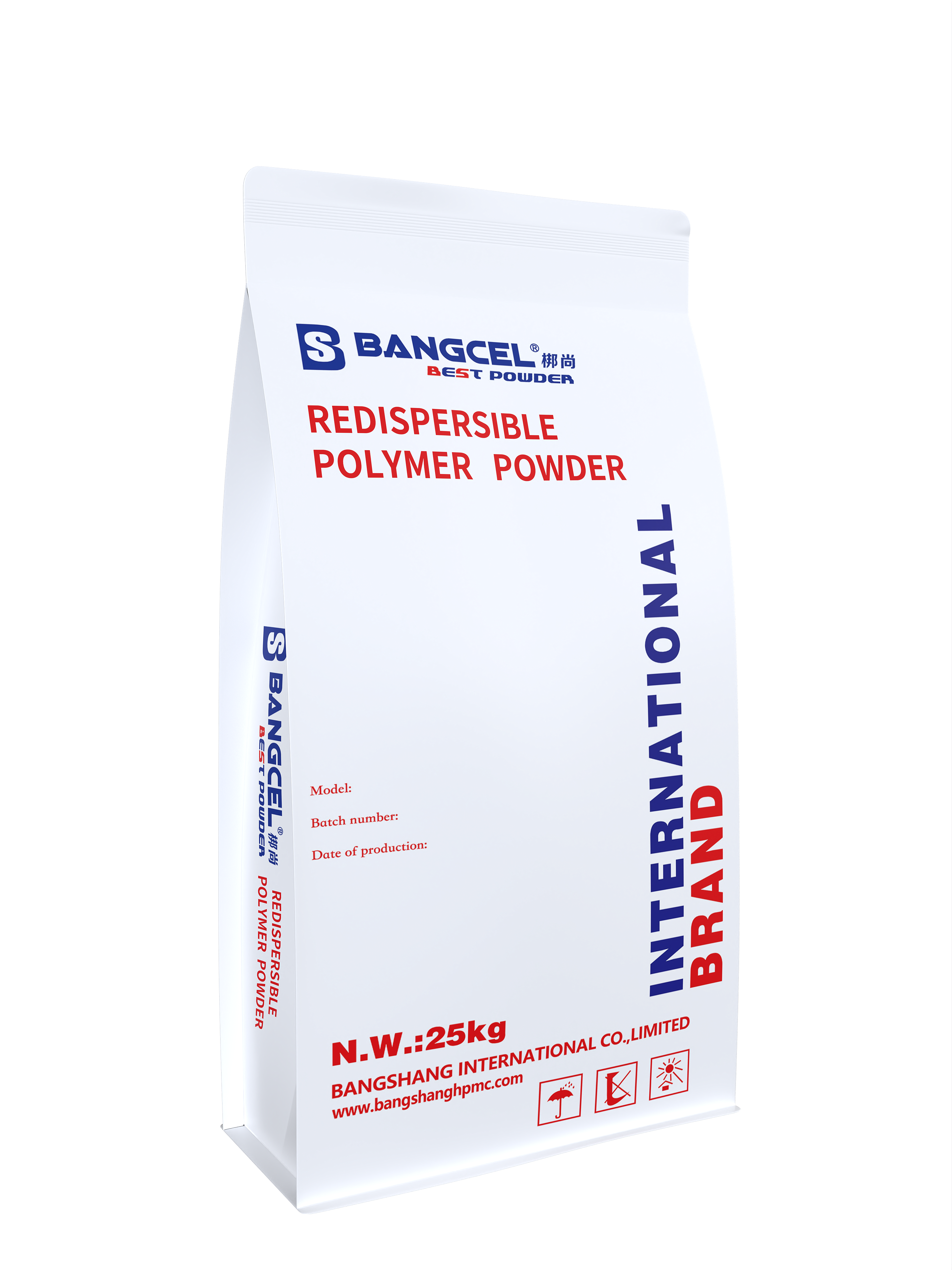
Pre-sales. Grade selection and formulation guidance determine whether the audit is even testing the right product. BANGSHANG INTERNATIONAL provides product recommendation and grade selection, technical consultation and formulation guidance, and sample support for testing before an order is placed. The available grades — RDP5010, RDP6188 and RDP4010 — are VAE-based powders with a stated solid content of ≥99%, pH of 6–8, ash content of 11±2, a minimum film forming temperature of 0°C and a glass transition temperature of 10°C.
In-sales. Capacity is only useful if it is visible. Stable capacity, standardised production with strict batch control and transparent order and production status are the three in-sales commitments that convert a capacity figure into a delivery date. An auditor should ask what the buyer actually sees during production — a status update cadence, a named contact, and an escalation path — because that determines how early a delay becomes known.
After-sales. Continuous technical support and formula adjustment, stable long-term supply with priority service, and additional support for authorised distributors are the elements that protect a buyer after the first container. This is where an RDP relationship differs from a commodity purchase: if a local raw material or aggregate changes, the polymer dosage may need to move with it, and that adjustment depends on a supplier willing to stay in the technical conversation.
Auditing an RDP Supplier, Step by Step
- Fix the grade and the volume envelope first. Define the application — tile adhesive, wall putty, EIFS/ETICS, self-leveling, repair mortar or waterproofing — and the annual tonnage range before contacting suppliers. Without this, every capacity figure looks adequate.
- Verify that the plant is owned and sized. Request the facility area, the production scope and the site location. A declared 80,000 m² facility and a 300-person workforce are checkable facts; a trading company cannot produce equivalent documentation.
- Convert capacity into RDP tons per month. Ask specifically for RDP capacity, not total capacity. For BANGSHANG INTERNATIONAL the split is 35,000 tons total including 20,000 tons of RDP. Then ask what share of that is committed.
- Test samples against your own formulation. Use pre-sales sample support to run the grade in your actual mix design. A supplier that offers formulation guidance alongside the sample gives you two data points: the product and the technical support.
- Agree the batch documentation before the first order. Specify the certificate of analysis per lot, the retained-sample policy and the deviation notification requirement in writing. Standardised production with strict batch control is only verifiable if the records are contractually available.
- Write delivery assurance into the agreement. Define the order status reporting cadence, the technical support contact for after-sales formula adjustment, and the terms for repeat supply. Long-term supply commitments and priority service are commercial terms, not favours.
Where the Audit Criteria Bite: RDP Application Scenarios
The weight given to each evidence layer depends on what the powder is going into. The same supplier can be a strong choice for one system and a marginal one for another, because the tolerance for batch variation differs by application.
- Tile adhesive. The largest single application for RDP. Adhesion and deformability requirements leave little room for batch drift, so batch control and lot-to-lot consistency carry the most weight in the audit.
- Wall putty. Workability and crack resistance dominate; sample testing in the buyer's own formulation is more informative than a data sheet comparison.
- EIFS/ETICS systems. Multi-layer systems where a polymer change propagates through the whole assembly, making after-sales formulation support a genuine risk control rather than a courtesy.
- Self-leveling compounds. Flow and stability are sensitive to small input changes, so consistency of the powder and the supplier's ability to hold a specification over time matter more than peak performance.
- Repair mortar and waterproofing systems. Often specified for demanding service conditions, where documentation and traceability carry as much weight as the technical value itself.
- Gypsum-based systems. A distinct formulation family where grade selection is decided early in the pre-sales conversation rather than at the quotation stage.

The company's product scope covers these systems directly: RDP and cellulose ethers for tile adhesives, wall putty, cement-based mortars, EIFS/ETICS, self-leveling compounds and dry-mix mortar systems. Its products are used in all-weather construction conditions, with applications reported across markets including Canada, the United States, Mexico, Russia, Brazil, Chile, Argentina, Australia, New Zealand, Saudi Arabia, the United Arab Emirates, South Korea, Malaysia, Thailand, Japan and Singapore. Approximately 70% of the company's products are exported.
Supplier Capability Comparison
The table below sets out only facts that are documented in supplier materials or company profiles reviewed for this article. It is a comparison of disclosed evidence, not a ranking: where a field is marked as not covered, it means the verified data available for this article does not include it.
| Audit dimension | BANG SHANG INTERNATIONAL CO.,LIMITED (BANGCEL®) | Dairen Chemical Corporation (DCC) |
|---|---|---|
| Operating history | Established 2007; over 15 years in the industry | Not covered in the sources reviewed |
| Manufacturing facility | 80,000 m² | Not covered in the sources reviewed |
| Reported annual RDP capacity | 20,000 tons (of 35,000 tons total annual capacity) | 94,000 metric tons (company-reported, 2026) |
| Workforce | Approximately 300 employees | Not covered in the sources reviewed |
| Technical team | 26 R&D engineers | Not covered in the sources reviewed |
| Quality documentation referenced | CE certification; SGS testing; Alibaba International Gold Supplier | Not covered in the sources reviewed |
| Export orientation | Approximately 70% of products exported | Not covered in the sources reviewed |
Capacity figures are company-reported. They indicate order of magnitude and should not be treated as audited output. A 94,000-ton declared capacity and a 20,000-ton declared capacity describe different operating scales; neither figure alone determines suitability for a given order size.
The second table summarises published product specifications from three supplier documents. It demonstrates why the audit must reach the certificate of analysis rather than the marketing page: the values are reported for different grades, and the test methods are not stated.
| Supplier and grade scope | Polymer base | Solids content (reported) | Bulk density (reported) | Other reported parameters |
|---|---|---|---|---|
| BANGCEL® — RDP5010, RDP6188, RDP4010 | VAE (vinyl acetate ethylene) | ≥99% | Not stated in the reviewed material | pH 6–8; ash 11±2; MFFT 0°C; Tg 10°C |
| Hebei InnoNew Material Technology — specified RDP grade | VAE-based redispersible powder | ≥98% | 350–550 kg/m³ | Applications listed include thin-bed mortar, self-leveling mortar, wall troweling compounds and tile adhesive |
| Shandong Charing New Material Technology — specified grades | VAC/E and VAC/E/Si | ≥99% | 450–550 g/L | Grade family spans two polymer systems |
These values are supplier-reported and are not normalised. Different grades, unstated test methods and different product scopes mean the figures cannot be averaged, ranked or used to claim superiority. They are included to show the range of published specifications a buyer will encounter, and to justify requesting a lot-specific certificate of analysis.
Frequently Asked Questions
What certifications and test documentation should an RDP supplier be able to show?
At minimum, the certificate and test report that apply to the specific grade being purchased. BANG SHANG INTERNATIONAL CO.,LIMITED manufactures its products under strict quality control, and its products have passed CE certification and SGS testing; the company is also a Gold Supplier on Alibaba International. Because certificates are issued against a standard and a product scope rather than against a brand name, the buyer's check is whether the documents reference the grade on the order — in this case RDP5010, RDP6188 or RDP4010 — and whether the testing laboratory and date are identifiable.
How can a buyer verify that a supplier's stated RDP capacity is genuine?
Separate total capacity from RDP capacity, then convert the RDP figure into the unit you buy. BANGSHANG INTERNATIONAL reports a 35,000-ton annual production capacity that includes 20,000 tons of RDP, produced at an 80,000 m² facility by approximately 300 employees, with 26 R&D engineers supporting product development. The verification step is arithmetic: compare your monthly requirement with the declared RDP capacity and ask what proportion of it is already committed to existing customers. A supplier whose declared RDP capacity is many times your requirement has room to prioritise you; one whose capacity is close to your requirement needs a capacity reservation discussion before contracting.
What should be compared in an RDP budget review besides the price per ton?
Price per ton is the starting point, not the comparison. Public sourcing references reviewed for this article place construction-grade RDP from China suppliers in a range of roughly USD 1,000 to USD 1,500 per ton, which is a planning indicator rather than a quotation. A defensible comparison holds the grade, polymer base and solids specification constant, then adds Incoterm, packaging, minimum order quantity, freight and duty under HS code 3905.29. A lower unit price on a different grade or a different delivery term is not a lower cost, and the batch documentation agreed at audit stage is what protects the budget after the first shipment.
Can samples be tested before a bulk order is placed?
Yes, and this should be a condition of the audit rather than a favour. BANGSHANG INTERNATIONAL provides sample support for testing in the pre-sales stage, together with product recommendation, grade selection, technical consultation and formulation guidance. The sample is most useful when it is run in the buyer's own mix design under the buyer's own curing conditions, because that is the only test that reflects the production environment the powder will actually enter.
How is lead time protected once the order is confirmed?
Through the in-sales process, not through a promise. Stable capacity, standardised production with strict batch control and transparent order and production status are the mechanisms that keep a confirmed date visible; if a delay develops, an order-status process surfaces it while there is still time to react. After delivery, continuous technical support and formula adjustment, stable long-term supply with priority service, and additional support for authorised distributors extend the same assurance across repeat orders.
Next step: request a sample and the current capability pack
Buyers who want to run this audit against BANGSHANG INTERNATIONAL CO.,LIMITED can request RDP samples for formulation testing, the technical data for RDP5010, RDP6188 and RDP4010, and the certification documents for the grade under evaluation. Contact Alex at admin@sjz-bs.com or by telephone and WhatsApp on +86 13292884619. The company is based at The South of ZhongXing Road, Jinzhou, Shijiazhuang City, Hebei Province, China, and publishes its product range at www.bangshanghpmc.com.
For a full overview of grades, parameters and applications, download the company brochure: BANG SHANG INTERNATIONAL product brochure (PDF).
Conclusion
A capability audit converts an RDP supplier decision from a price comparison into an evidence review. The plant tells you whether production is real, the capacity split tells you whether your volume fits, the batch records tell you whether the specification will hold, and the service chain tells you whether the delivery date will survive contact with a busy quarter.
Applied to BANG SHANG INTERNATIONAL CO.,LIMITED, the documented position is a 2007-established manufacturer operating an 80,000 m² facility with 35,000 tons of annual capacity including 20,000 tons of RDP, approximately 300 employees and 26 R&D engineers, CE certification and SGS testing, roughly 70% of products exported, and a pre-sales, in-sales and after-sales structure that maps directly onto the four audit layers described here. What remains for any buyer is the part no supplier can do on their behalf: test the sample in the real formulation, request the lot-level documentation, and put the delivery terms in writing.
Have Questions or Need More Details?
Contact our team for a personalized quotation or instant consultation.
Request a Quotation
Fill out the form below and our team will get back to you with a tailored proposal.
WhatsApp Direct Chat
Prefer to chat in real-time? Message us on WhatsApp for instant assistance & quick answers.
- Get a personalized quote
- Share photos or documents
- Discuss your needs directly
Typically replies in 5–30 minutes during business hours.