VAE RDP vs. VA/VeoVA Copolymer Powder for Thin-Bed Tile Adhesives
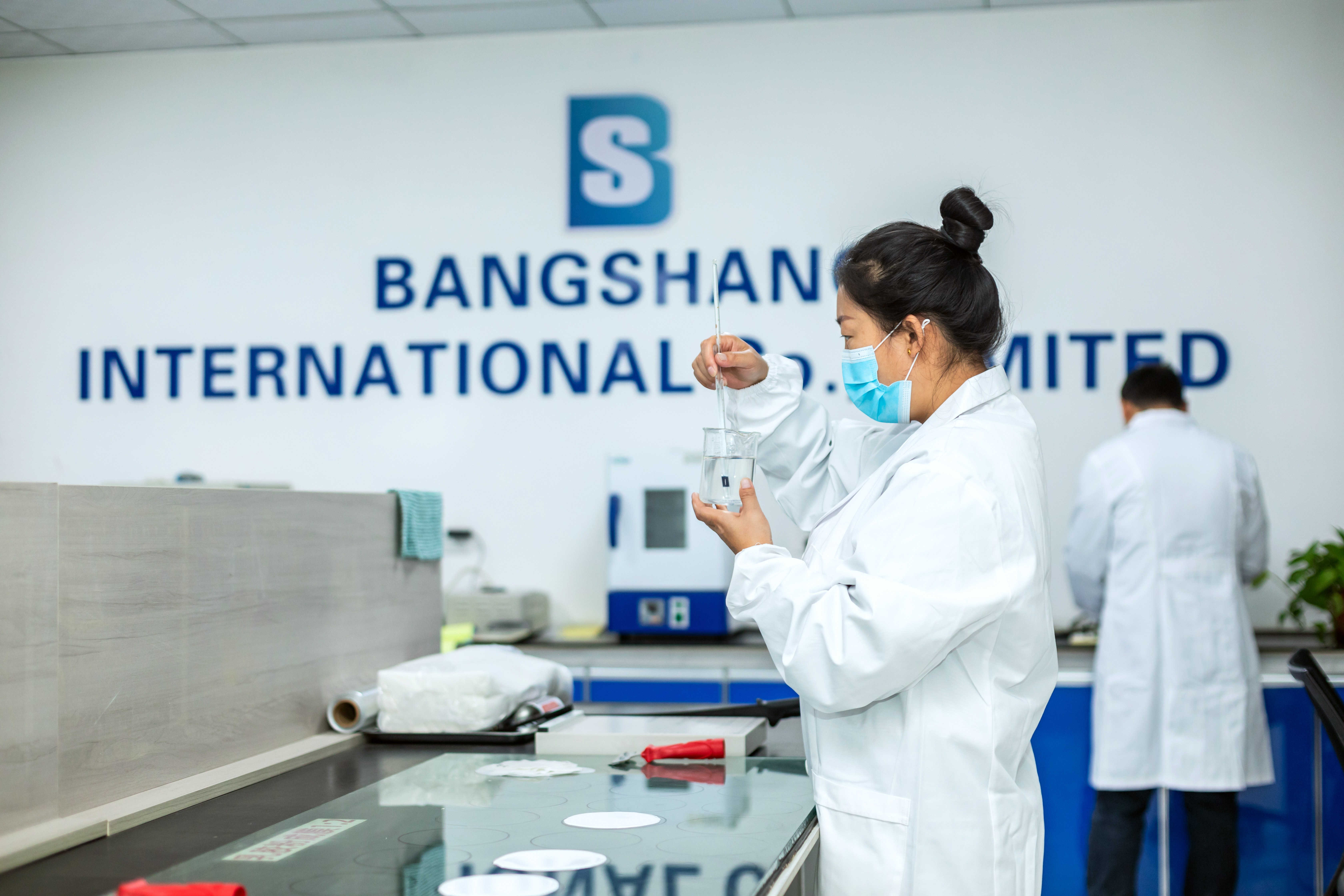
Image: Quality inspection is the first step when comparing VAE RDP and VA/VeoVa copolymer powder samples.
Redispersible polymer powder (RDP) is not one single chemistry. In thin-bed tile adhesives, the polymer backbones commonly used across the industry include VAE (vinyl acetate-ethylene) and VA/VeoVA (vinyl acetate/vinyl ester of versatic acid). Both help dry-mix mortars meet the tensile bonding and deformation requirements that tile installations demand. For procurement and R&D teams, the practical question is often this: should I standardize on a VAE-based RDP, or specify a VA/VeoVA-based redispersible powder?
The honest starting point is to compare target performance, not just polymer names. VAE-based RDP is the most common redispersible polymer powder type worldwide, and BANGCEL® RDP is manufactured with VAE chemistry. VA/VeoVA-based products have their own advantages in formulations that need higher hydrophobic or alkali-resistant behaviour. This guide explains the differences that matter in tile adhesive formulation and shows how BANGCEL® supports formulators as an original manufacturer.
The Problem: Choosing a Polymer Type Before Defining the Adhesive Target
Thin-bed tile adhesives are applied in a thin layer, yet they must transfer stresses from the tile to the substrate while resisting moisture, temperature changes and occasional impact. When a tile adhesive fails, the cause is often a mismatch between the polymer system and the full set of service conditions: substrate type, tile format, exposure to water, ambient humidity, curing temperature and cement chemistry.
Buyers sometimes ask for VA/VeoVA because they assume it is simply a higher grade than VAE. That assumption can lead to an expensive formulation change without solving the actual failure mode. Conversely, a formulator may choose VAE RDP because it is the industry standard, but without checking wet adhesion or alkali resistance in a specific cement system. The first step in this comparison is therefore to define the target dry and wet tensile adhesion values and the flexibility expected from the adhesive.
Industry Background: VAE Is Already the Mainstream RDP Chemistry
Market data helps explain why VAE-based RDP is often the reference point in dry-mix mortar discussions. Vinyl Acetate Ethylene (VAE) accounted for 59.2% of the global RDP market revenue share in 2025, according to Grand View Research. The wider RDP market was valued at USD 1.61 billion in 2024 and is projected to reach USD 2.35 billion by 2029, based on MarketsandMarkets estimates. Asia Pacific led regional demand with a 38.01% revenue share in 2025, partly driven by infrastructure projects in China.
At the standards level, tile adhesives are classified under EN 12004 and ISO 13007-1. RDP is considered essential for meeting the C1 tensile bonding strength of at least 0.5 MPa and the C2 threshold of at least 1.0 MPa. Those standard thresholds are the language that should be used when comparing any redispersible polymer powder sample.
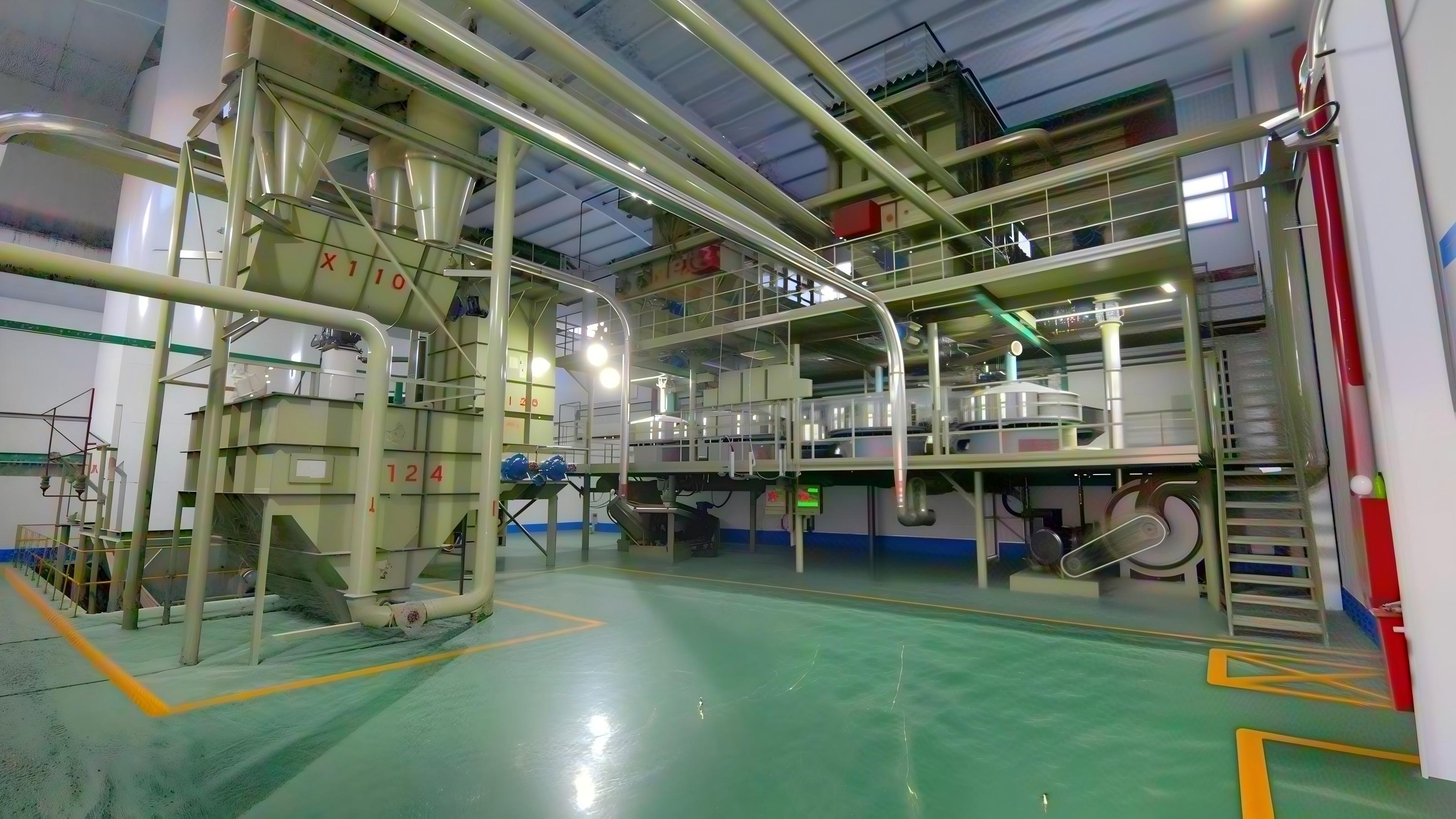
Image: Controlled drying and crushing inside the BANGCEL production process.
Detailed Comparison: VAE RDP vs. VA/VeoVA Copolymer Powder
At the polymer level, VAE and VA/VeoVA differ in monomer structure. In VAE, ethylene units act as an internal plasticizer and give the polymer a useful balance of flexibility and adhesion to many cementitious substrates. VA/VeoVA copolymers contain a bulky, branched vinyl ester that introduces different hydrophobic and chemical-resistance characteristics. In practice, VA/VeoVA grades are often evaluated when a mortar needs stronger resistance to alkaline environments or more pronounced water repellency.
For thin-bed tile adhesives, the comparison should not stop at chemistry class. The formulation that surrounds the polymer is equally important. Cement type, calcium hydroxide release, cellulose ether viscosity, filler particle size, redispersibility and open time all interact with the polymer powder. A VAE RDP with stable grade parameters can be optimized around those variables. A VA/VeoVA powder will not automatically produce higher bond strength unless the whole formulation is rebalanced.
Adhesion and Tensile Bonding
A thin-bed tile adhesive must develop enough tensile adhesion to the tile and the substrate. Both VAE and VA/VeoVA can support a formulated adhesive in the C1 or C2 range, but the final value comes from the complete mortar system. When BANGCEL supplies VAE-based RDP, the product parameters are released so that producers can test the polymer contribution in their own formula instead of relying only on generic claims.
Flexibility and Crack Resistance
Ethylene in VAE provides internal plasticization, which generally supports the flexibility and crack-resistance requirements of cementitious mortars. VA/VeoVA systems can deliver good resistance in certain aggressive environments, but they should be evaluated side by side with VAE in flexural tests when tile adhesive deformation is a priority. The polymer dosage, not only the type, often determines whether the mortar behaves as a rigid or deformable adhesive.
Water Resistance and Hydrophobic Character
Moisture exposure is one of the main causes of tile adhesion failure. VA/VeoVA chemistry is frequently associated with a more hydrophobic polymer film, which is useful for wet-area installations or highly alkaline substrates. VAE-based RDP remains a valid solution for many moisture-exposed installations when the cement and additive package are correctly designed. The correct decision is therefore made through wet adhesion tests, not through the product label.
BANGCEL® VAE RDP: Technical Reference for Formulators
BANGCEL® is the construction-chemicals brand of BANG SHANG INTERNATIONAL CO.,LIMITED, a manufacturer founded in 2007 and headquartered in Shijiazhuang, China. The company focuses on construction additives including HPMC, MHEC, RDP, HEC and CMC. BANGCEL® RDP is based on VAE material, and the standard RDP grade family includes RDP5010, RDP6188 and RDP4010.
For formulators working on thin-bed tile adhesive, the reported parameters of BANGCEL RDP provide a clear baseline: solid content is at least 99%; minimum film formation temperature (MFFT) is 0°C; glass transition temperature is 10°C; pH is in the 6 to 8 range; and ash content is 11 ± 2. These values are not a substitute for full mortar testing, but they give a starting point for comparing an incoming lot against other RDP samples.
BANGCEL positions itself as an original manufacturer, not only as a powder trader. The R&D team consists of 26 engineers who support OEM and ODM projects, including customized viscosity, particle size and application-oriented grades. This matters when a formulator is moving from a VA/VeoVA-based recipe to a VAE-based system or when the cement and filler sources change.
Comparison Table: Evaluation Points for Tile-Adhesive-Grade Powder
The table below is designed as a data checklist. It does not claim that VA/VeoVA is better or worse; it gives the points a formulator should compare before choosing a long-term RDP source.
| Evaluation attribute | BANGCEL VAE RDP fact | Ask for any VA/VeoVA alternative |
|---|---|---|
| Polymer base | VAE | Confirm the exact copolymer composition and VeoVA content. |
| Solid content | ≥ 99% | Request the same calculation basis and test report. |
| Minimum film formation temperature | 0°C | Request MFFT under the same curing conditions. |
| Glass transition temperature | 10°C | Request Tg and the analytical method used. |
| pH | 6 to 8 | Request pH range and dispersion procedure. |
| Ash content | 11 ± 2 | Check whether ash comes from the polymer system or from fillers. |
| Application support | R&D team of 26 engineers and formulation guidance | Ask if the supplier will adjust the recipe with your raw materials. |
| Supply continuity | Monthly production capacity of 3,000 tons reported at the BANGCEL facility | Ask for capacity data and contingency plans. |
In this comparison, the right tool is not a single number like viscosity or Tg. It is the complete datasheet plus formulation support. A VA/VeoVA powder with excellent hydrophobicity will still fail if the rheology, open time or cement compatibility of the finished adhesive is not balanced.
Step-by-Step Breakdown: How to Compare RDP Types for Your Thin-Bed Tile Adhesive
- Define the adhesive class. Identify whether the target is a C1 or C2 adhesive under EN 12004 / ISO 13007-1, and decide which wet and dry conditioning tests must be passed.
- Map the full formulation. List the cement, filler, cellulose ether, additives and expected water demand. Polymer selection cannot be done in isolation.
- Shortlist polymer families. Include at least one VAE-based RDP and, if the environment demands it, one VA/VeoVA-based material.
- Request the same data set. For each sample, ask for solid content, MFFT, Tg, pH, ash content and powder fineness.
- Run thin-bed adhesive trials. Test tensile adhesion after dry, wet and heat-ageing conditioning. Also record open time and slip.
- Compare failure modes. Do not compare only pass/fail results. Look at whether failure is cohesive in the adhesive or adhesive at the interface.
- Evaluate supplier capability. A good RDP partner should explain formulation adjustments, storage risks and supply continuity. This step turns the comparison into a procurement plan.
Use Cases: Matching the Polymer to the Project Environment
Use cases do not replace lab tests, but they help prioritize which polymer property to verify first.
- Interior wall tile in dry rooms. The main target is a stable dry tensile bond; standard cementitious substrates are less demanding. A VAE-based RDP can be a practical starting point.
- Bathroom or kitchen floors with frequent water exposure. Wet adhesion becomes more important. Compare the formulated adhesive under wet curing and water immersion; VA/VeoVA samples should also be tested in the same formula.
- Large-format porcelain tile over concrete or screed. Deformation resistance and slip control are central. The comparison should include open time, flexibility and tensile adhesion after heat ageing.
- External facades and high-humidity environments. Ask for wet and freeze-thaw performance data. The polymer should be selected based on those project-specific results, not based on a chemistry label.
BANGCEL can support these evaluations by sharing technical guidance based on customer formulations, raw materials and application conditions. Because the company is an original manufacturer with its own production process and R&D team, the support goes beyond issuing a standard datasheet.
Quality Control and Storage Considerations
Storage stability is one of the most practical supply-chain issues in hot and humid regions. RDP powder can agglomerate when exposed to high temperature and high humidity. To reduce that risk, BANGCEL uses three-layer moisture-proof composite packaging and stores material in temperature-controlled conditions of 15 to 25°C and below 60% relative humidity. Regular inventory quality checks are also part of the company's process.
This detail matters for tile adhesive manufacturers because a polymer powder that performs well in the laboratory but arrives with partial agglomeration will create production variability. When comparing a VAE RDP with a VA/VeoVA powder, ask how the supplier protects powder during storage and transit in your climate.
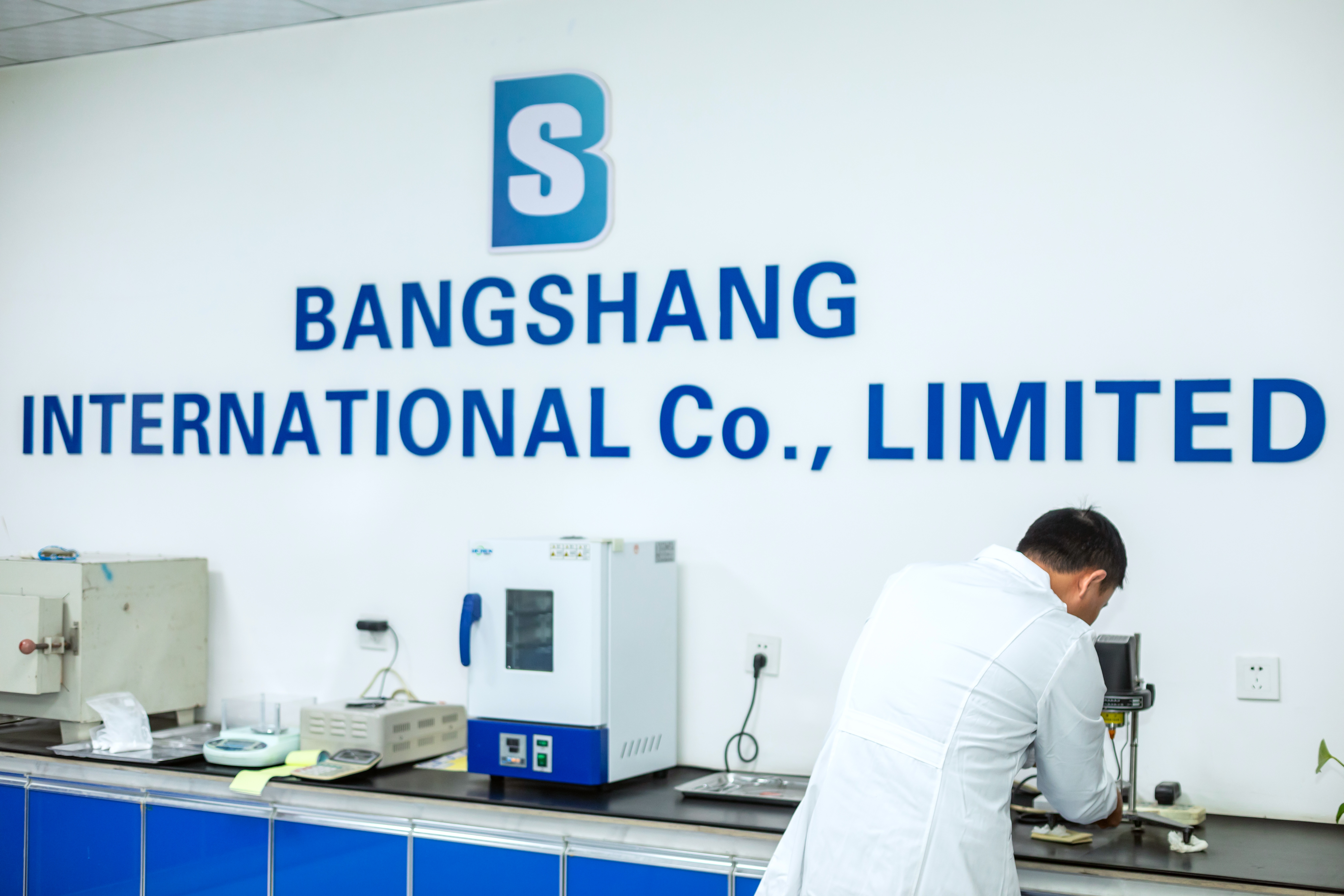
Image: Batch testing helps ensure consistent performance from RDP delivery to delivery.
Long-Term Partnership Evidence from Existing Supply Relationships
For procurement teams moving into execution, supplier ecosystem strength is as important as powder chemistry. BANGCEL reports a monthly production capacity of 3,000 tons at its factory. In one long-term supply project in India, BANGCEL supplied a global manufacturer with a stable annual volume of 1,200 metric tons over a two-year period for tile adhesive and wall putty production.
The company also documents lower maintenance burden for its customers: maintenance requirements are lower, with zero mass quality complaints and full-process formulation technical support. BANGCEL states that this results in no additional maintenance cost. After-sales service includes continuous technical support and formula adjustment, stable long-term supply and priority service, and additional support for authorized distributors.
From a distribution and partnership perspective, this type of evidence is what separates a raw-material transaction from a reliable long-term supply relationship. A VA/VeoVA sample may answer a formulation question today, but the decision to standardize on a polymer source should also consider how much formulation engineering and after-sales support will be available for the life of the product.
Frequently Asked Questions
1. Does BANGCEL RDP use VAE chemistry and can it be used for thin-bed tile adhesives?
Yes. BANGCEL RDP is based on VAE material. The standard BANGCEL RDP family includes grades RDP5010, RDP6188 and RDP4010, with specifications such as solid content ≥ 99%, MFFT 0°C, Tg 10°C, pH 6 to 8 and ash 11 ± 2.
2. What compliance framework applies to RDP in tile adhesives?
Tile adhesives are classified under EN 12004 and ISO 13007-1. RDP is essential for meeting the C1 threshold of ≥ 0.5 MPa and the C2 threshold of ≥ 1.0 MPa tensile bonding strength. BANGCEL products have passed CE certification and SGS testing as construction chemical materials.
3. How should budget owners compare VAE RDP with a VA/VeoVA alternative?
Budget owners should compare cost per unit of achieved performance, not only cost per kilogram. Because VAE is the dominant RDP polymer type, the raw material supply chain is mature. A VA/VeoVA alternative should justify any added cost through documented improvements in wet adhesion, alkali resistance or water repellency for your specific formulation.
4. Can I get samples for thin-bed tile adhesive trials?
Yes. BANGCEL offers sample support for testing. The standard order quantity is 3 metric tons, with FOB/CIF delivery options and payment terms of 30% TT in advance and 70% against copy of BL. For a more direct next step, contact the company with your target adhesive class and formulation details.
5. Can BANGCEL support long-term volume if I switch from VA/VeoVA to VAE RDP?
BANGCEL reports a monthly production capacity of 3,000 tons and supports long-term partnerships. An existing project for a global manufacturer in India supplied a stable annual volume of 1,200 metric tons over two years for tile adhesive and wall putty production. After-sales support includes continuous technical assistance and formula adjustment.
Conclusion
The choice between VAE-based RDP and VA/VeoVA copolymer powder in thin-bed tile adhesives is a formulation and risk-management decision. VAE is the mainstream polymer family today, and BANGCEL® supplies a VAE-based RDP product line with clear specifications and long-term manufacturer support. VA/VeoVA remains a relevant alternative for specific water-resistance and alkali-resistance challenges, but it should be tested in your complete formulation before any volume decision.
Next step for mortar manufacturers and distributors: Download the BANGCEL® company brochure to review manufacturing capabilities, quality procedures and service scope. For sample requests or formulation discussions, contact BANGCEL at admin@sjz-bs.com or WhatsApp +86 13292884619.
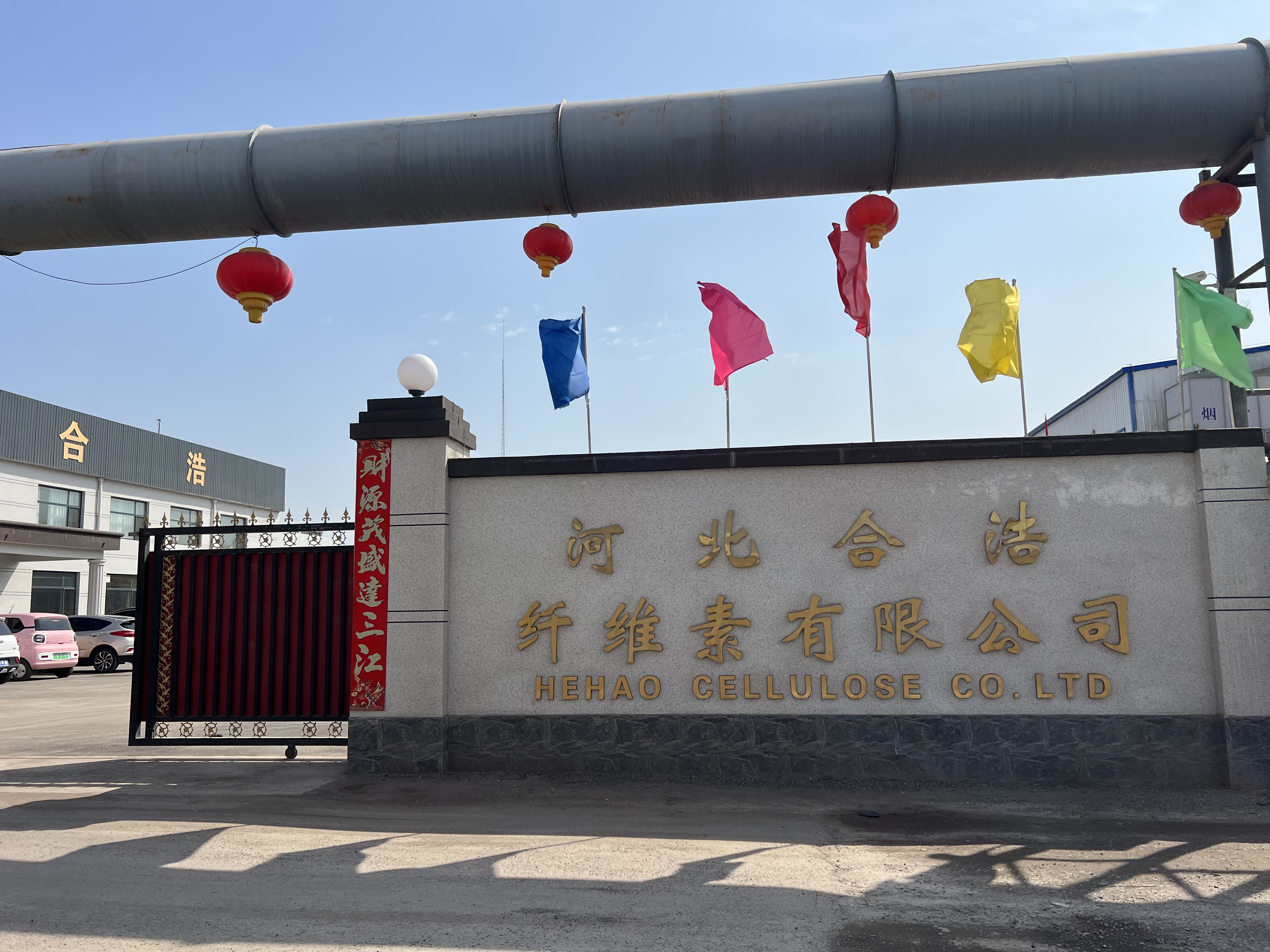
BANGCEL® — a long-term construction additive manufacturing partner.
Have Questions or Need More Details?
Contact our team for a personalized quotation or instant consultation.
Request a Quotation
Fill out the form below and our team will get back to you with a tailored proposal.
WhatsApp Direct Chat
Prefer to chat in real-time? Message us on WhatsApp for instant assistance & quick answers.
- Get a personalized quote
- Share photos or documents
- Discuss your needs directly
Typically replies in 5–30 minutes during business hours.