Why Tile Adhesive Fails in Wet Areas: Moisture Bond Loss & RDP
Why Tile Adhesive Fails in Wet Areas: Moisture Bond Loss & RDP
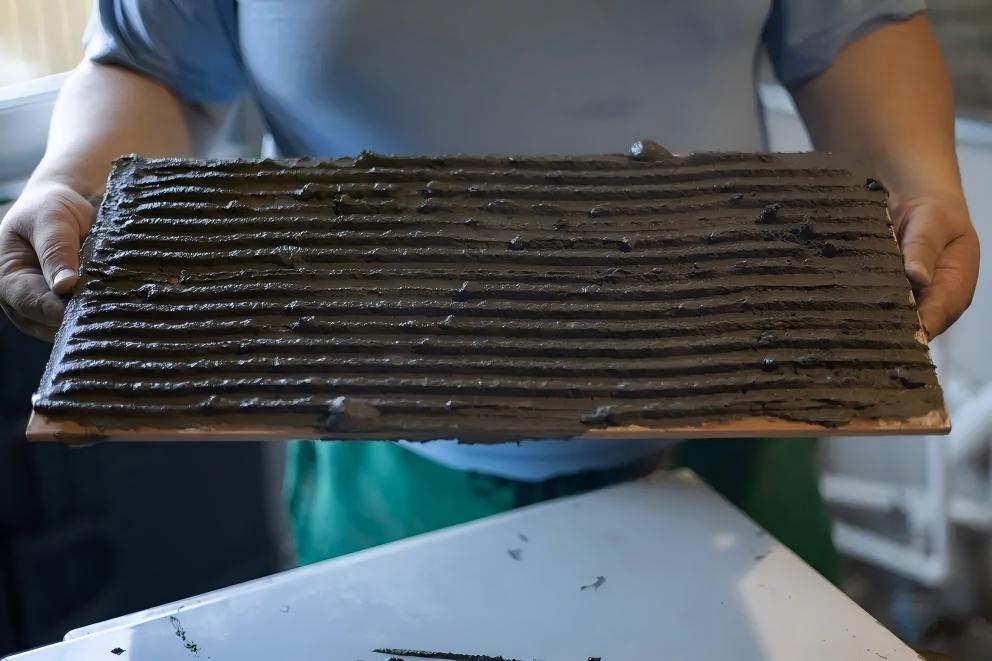
Tile adhesive that performs perfectly in a dry corridor can lose bond inside a shower, on a rain-exposed façade, or around a water tank. The usual cause is not one defective ingredient. Water changes the stress at the bond line, and it exposes weaknesses in mix design, application and curing at the same time. Redispersible polymer powder (RDP) is the formulation variable most directly connected to how a cement-based adhesive holds under that stress — provided the grade, dosage and coverage actually match the exposure.
BANGCEL® is the construction-additive brand of BANG SHANG INTERNATIONAL CO., LIMITED, a manufacturer founded in 2007 that produces cellulose ethers and redispersible polymer powder from an 80,000 m² facility with 35,000 tons of annual output, including 20,000 tons of RDP capacity. This guide explains why wet-area bond loss happens, what RDP does and does not do about it, and how to work through a failure systematically instead of adding polymer until the symptoms stop.
Why wet-area failures look different from dry-area failures
In a wet area the adhesive has a second job: it must keep its bond while water moves through the mortar and across both of its interfaces — tile and substrate.
Formulators and site engineers typically see one or more of the following:
- Tiles sound hollow or drummy when tapped, often starting near grout lines, corners or floor-to-wall junctions.
- Tiles lift with little or no adhesive left on the substrate, or with the whole bed still bonded to the tile.
- The adhesive bed is soft or chalky weeks after installation, or re-wets when the area is cleaned.
- Efflorescence, damp patches or persistently dark grout lines appear at joints.
- Failures cluster after the first heating season, a rainy period, or shortly after the area enters service.
The distribution pattern matters more than the number of loose tiles. Which face the adhesive stays on is a first-pass indication of where the weak link sits:
- Failure at the substrate face points toward substrate preparation, absorbency, dust, primer or curing.
- Failure inside the adhesive bed points toward polymer content, water/cement ratio, compaction or over-mixing.
- Failure at the tile face points toward tile porosity, back-buttering, embedment and open time.
That triage is a starting hypothesis, not a diagnosis. Confirm it with on-site pull-off or adhesion testing before the formulation is touched, because a formula change made on a wrong assumption usually removes the one variable that was already working.
What moisture actually does at the bond line
Cement-based tile adhesive is a porous material. Water reaches the adhesive through grout joints, capillary pores, micro-cracks and any interruption in the waterproofing detail, and it moves through the mortar carrying dissolved salts.
What holds a modified adhesive together under that water traffic is largely the polymer film. RDP is supplied as a free-flowing powder, redisperses when the mortar is mixed with water, and coalesces into a film as the mortar dries and cures. That film bridges cement hydrates, contributes adhesion at the tile and substrate faces, and gives the hardened mortar some capacity to deform rather than crack. Under sustained or repeated wetting the film can take up water and soften, and the bond loses part of its resistance to movement and thermal cycling.
The functional link is not unique to one supplier. Celanese states that its ELOTEX redispersible polymer powders are used in cement-based and paste tile adhesives and are intended to improve adhesion, cohesion and deformability — the three properties that decide whether a bond survives a wet area.
Two further mechanisms run alongside polymer behaviour. Freeze–thaw cycling expands water held in pores and fatigues the interface, which is why exterior failures often appear after the first cold season rather than immediately. Wet–dry cycles then impose movement on a bond that is simultaneously softening: a rigid, low-polymer mortar has less capacity to accommodate that movement.
Tile adhesive is also the largest single outlet for RDP worldwide. Grand View Research's 2026 market report places tile adhesives at roughly 38% to 40% of global RDP consumption in 2025, with VAE-based RDP accounting for about 59.2% of market revenue in the same year. Those are commercial-research figures for a market whose boundaries differ between reports, so they are useful context for where formulation experience is concentrated — not a forecast for any single product or region.
Where RDP fits in a wet-area tile adhesive — and where it does not
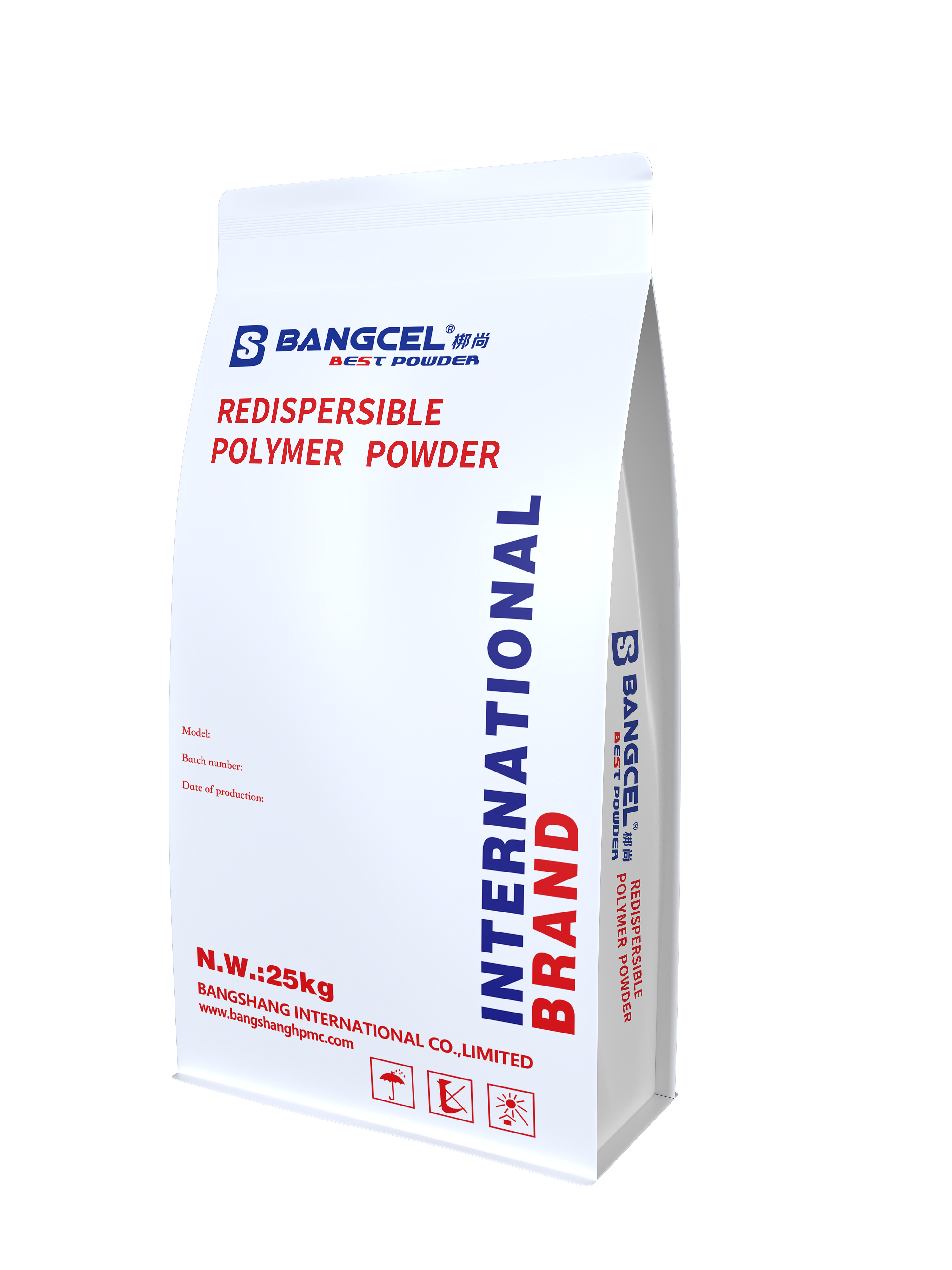
RDP is a free-flowing polymer powder made by spray-drying an aqueous polymer dispersion, so a liquid polymer can be dosed into a dry mix and re-dispersed on site with the mixing water. BANGCEL® supplies VAE-based grades RDP5010, RDP6188 and RDP4010 with a published parameter set of solids ≥99%, ash 11±2%, pH 6–8, minimum film-forming temperature (MFFT) 0 °C and glass transition temperature (Tg) 10 °C.
Reading the parameters for wet-area work
- Solids ≥99% means the powder is almost entirely polymer, so a dosage calculated on powder weight is close to the polymer actually delivered to the mix.
- MFFT around 0 °C indicates a polymer designed to coalesce into a continuous film at normal ambient temperatures. A film that does not form cannot bridge cement hydrates.
- Tg around 10 °C indicates a film that stays flexible at ambient service temperatures while remaining free-flowing as a powder. That flexibility is what lets the bond move with the tile instead of cracking behind it.
- Ash 11±2% is a declared inorganic-content window; it works as an incoming batch-consistency check rather than as a performance ranking.
Published values are not directly comparable across suppliers. Publicly available RDP data sheets issued by Chinese producers in 2026 report, for example, solids of ≥98% for one grade and ≥99% for another, and bulk density quoted either as 350–550 kg/m³ or as 450–550 g/L. Those differences usually reflect grade and test method rather than quality, so comparisons belong between like grades with stated methods — never between averaged figures from different sheets.
What RDP does not do is turn the adhesive into a waterproof membrane. A cement-based tile adhesive remains a porous mortar, and water resistance in a wet area is a system property: polymer dosage, water/cement ratio, cement content, sand grading, compaction and coverage, the waterproofing detail behind the tile, and curing all contribute. If coverage is poor, no polymer addition repairs it. In practice RDP raises the achievable level of adhesion, cohesion and deformability — it does not remove the need for the rest of the system to be correct.
Diagnose first: six checks before you reformulate
The reflex after a wet-area failure is to increase polymer dosage immediately. A better sequence locates the failure, proves the moisture path, and changes one variable at a time.
- Locate the failure plane. Break out several tiles from different zones and record whether the mortar stays on the tile, stays on the substrate, or splits within itself. Photograph the bed and estimate coverage on the back of each tile.
- Establish the moisture path. Trace where water enters: grout joints, movement joints, junctions and corners, missing or damaged waterproofing, exterior detailing, rising damp or condensation. A formulator cannot dose a polymer against a path that should have been closed by design.
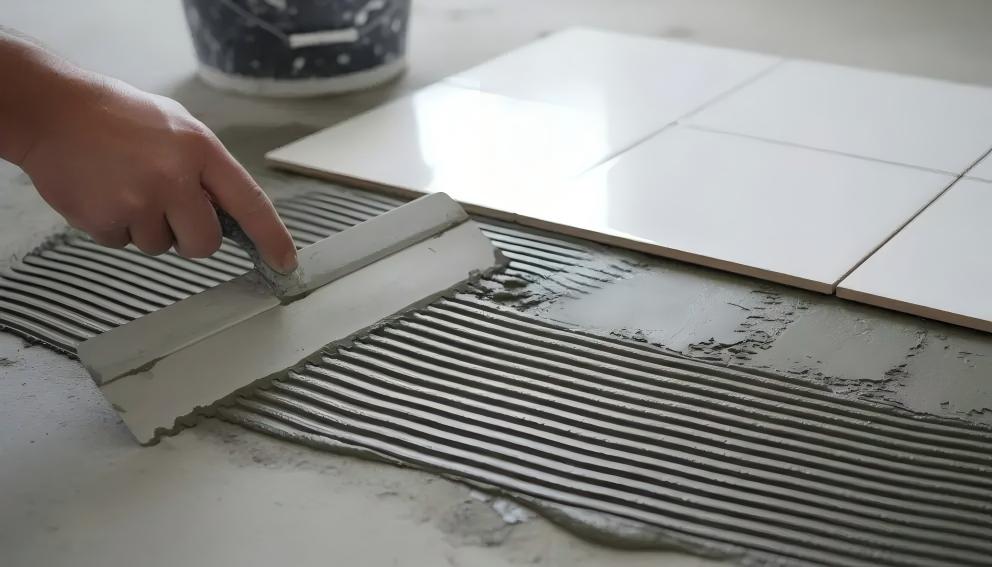
- Audit application and curing. Confirm trowel size and notch pattern, open time versus time actually taken to fix the tile, embedment, substrate preparation, mixing water measured rather than judged, ambient temperature, and how long the installation cured before grouting and before wetting.
- Baseline the current formulation. Record RDP dosage, cement type and content, sand grading, cellulose-ether and water-retention level, water/cement ratio, other additives and the batch data of the materials actually used on site.
- Re-test under wet conditioning. Prepare trial mixes, cure them, then condition before adhesion testing: dry control, water immersion, and where relevant freeze–thaw and heat ageing, following the method of the standard your project cites. The pass thresholds must come from that standard or specification, not from a supplier.
- Change one variable per trial. Adjust the factor most likely to explain the gap — polymer dosage, water retention, water/cement ratio, or the cement-to-filler balance — and re-test dry and wet side by side so the effect is visible.
What each adjustment usually changes
- Higher RDP dosage generally raises adhesion and deformability and adds cost; it can also extend tack time, which matters on vertical surfaces.
- Higher cellulose-ether dosage raises water retention and open time; past the level the formulation needs it can affect workability and slip, so it should be verified against the project requirements rather than judged by feel.
- Lower mixing water raises strength but reduces workability, and poor workability is often the real cause of thin coverage and hollow tiles.
Matching the approach to the exposure
The same adhesive is not asked to do the same job in a dry corridor, a shower and a rain-driven façade. The table below sets out what each exposure demands. It does not classify any product as certified for a given exposure — that comes from the project specification and the applicable standard.
| Exposure | Dominant stress on the bond | What the formulation and detailing must handle | Where RDP contributes |
|---|---|---|---|
| Dry interior | Movement; substrate absorbency | Normal adhesion, workability, full embedment | Adhesion and deformability at normal service temperature |
| Bathroom or wet room | Intermittent wetting, cleaning, steam, thermal cycling | Water reaching grout lines and junctions; full coverage; waterproofing detail behind the tile | Adhesion and cohesion retention when the film is wet; flexibility under movement |
| Exterior façade | Rain, freeze–thaw, thermal shock, adjacent-material movement | Cyclic movement, movement joints, drainage and detailing | Deformability and crack resistance under cycling |
| Permanently wet or water-retaining | Continuous water pressure | System design, substrate preparation, specified waterproofing | Contribution within waterproof-mortar formulations, not as a standalone barrier |
Exposure demands compared. Statements describe formulation requirements, not a certification of any product for a specific exposure.
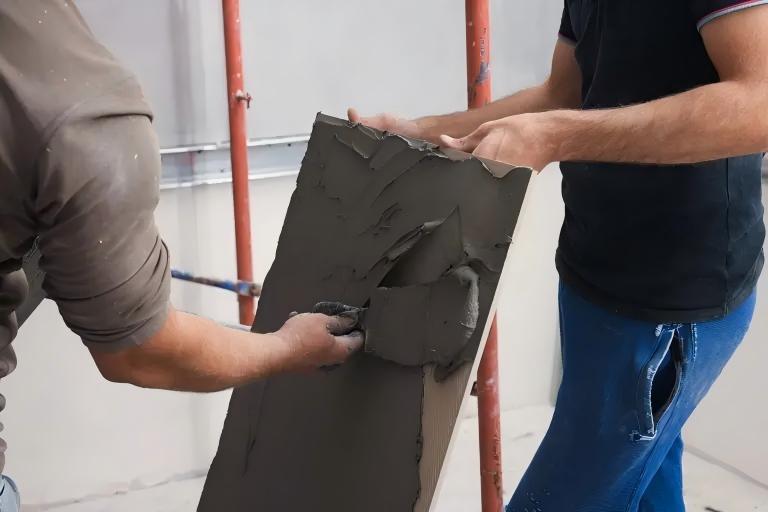
BANGCEL® positions its RDP for high-standard projects that include high-rise commercial and residential buildings, external wall insulation systems, high-end tile adhesive, wall putty and waterproof mortar. The application data specifies EN/ASTM/GB-compliant and low-VOC formulations, customization to the application, use across all-weather construction conditions, and compatibility with automated dry-mix mortar production.
High-rise work adds a further constraint: the adhesive may be mixed and applied far from where it was specified, by crews working at different temperatures, and it may stand in a hopper before use. Open time, water retention and batch-to-batch consistency therefore carry as much weight as the headline adhesion figure, particularly on vertical surfaces in bathrooms and on façades.
What to verify before committing a batch
Because wet-area failures are expensive to correct after handover, supplier verification belongs before the first bulk order rather than after the first complaint.
- Certification and testing. CE certification and SGS testing are stated for BANGCEL® products, supported by 100% testing in production control. Ask for the report tied to the exact grade shipped, not to the product family as a whole.
- Specification sheet. Solids, ash, pH, MFFT, Tg and bulk density, with the test method stated for each. Values without a method cannot be compared with another supplier's sheet.
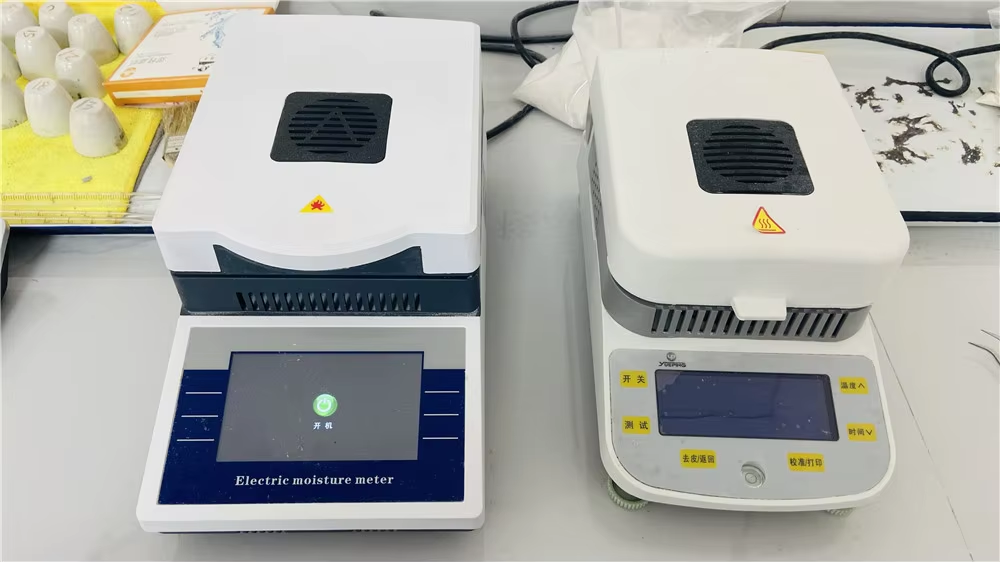
- In-house quality control. The plant laboratory is equipped for moisture, viscosity, whiteness and photometric measurement as well as gas chromatography — the kind of routine capability that supports batch release checks on parameters such as ash and water content.
- Capacity and lead time. 20,000 tons of annual RDP capacity inside 35,000 tons of total output, a monthly capacity of 3,000 tons, MOQ of 3 tons and a lead time of 7–14 days.
- Customization. Viscosity, particle size, ash content, degree of substitution and water retention can be adjusted, with OEM/ODM, small-batch customization and customized testing available.
- Technical support. Formulation adjustment based on the customer's own raw materials and application conditions, plus after-sales support with quality traceability.
- Reference experience. A leading global construction mortar and adhesive manufacturer in India has taken 1,200 MT per year for two years for tile adhesive and wall putty formulations; the supplier reports excellent adhesion, crack resistance and weatherability with zero quality complaints in long-term mass production. Supplier-reported results describe one customer's experience and should be confirmed by your own trial.
Frequently asked questions
Which standards should a wet-area tile adhesive be tested against?
The project specification decides the standard and the acceptance values; the supplier's job is to provide evidence against it. BANGCEL® positions its RDP for EN/ASTM/GB-compliant, low-VOC formulations, and its products are CE certified and SGS tested. Request the test report for the specific grade you will receive and confirm that the method stated in it matches the standard your project cites. Numeric pass thresholds belong to that standard or specification, not to a supplier data sheet.
Does adding RDP make a tile adhesive waterproof?
No. A cement-based tile adhesive stays a porous mortar. RDP contributes adhesion, cohesion and deformability, the properties that let a bond survive wetting, movement and thermal cycling, and it is used within waterproof-mortar formulations. Waterproofing in a wet room still depends on the specified waterproofing system, correct detailing at junctions and full adhesive coverage behind the tile.
Which BANGCEL® grade should we evaluate for a bathroom or façade adhesive?
The three VAE-based grades RDP5010, RDP6188 and RDP4010 share the published parameter set of solids ≥99%, ash 11±2%, pH 6–8, MFFT 0 °C and Tg 10 °C. Which one fits depends on your cement system, filler grading, water retention target and the exposure the finished adhesive must pass. BANGCEL® adjusts grade and parameters such as viscosity, particle size, ash content and water retention against the customer's raw materials and application conditions, so the practical starting point is a trial in your own formulation rather than a selection from a catalogue.
What drives the cost of using RDP in a tile adhesive?
Cost per ton of finished adhesive depends on the dosage the performance target requires, the grade selected, and the commercial terms around freight, packaging and order size — not on price per kilogram alone. Compare suppliers at equal dosage and equal tested performance under wet conditioning, and include inventory effects: an MOQ of 3 tons and a lead time of 7–14 days change how much working stock a plant needs.
Can we test RDP in our own formulation before ordering?
Yes. Sample support for testing is part of BANGCEL® pre-sales service, and small-batch customization and customized testing are available. A useful trial protocol compares a dry control against water-immersed and, where relevant, freeze–thaw conditioned specimens made from your current formulation and from the adjusted one, so the effect of the polymer change is isolated from application variables.
What lead time and supply volume should we plan for?
BANGCEL® states a monthly capacity of 3,000 tons, 20,000 tons of annual RDP capacity within 35,000 tons of total output, an MOQ of 3 tons and a lead time of 7–14 days, with ongoing technical support and formula adjustment after delivery. If you are working through a wet-area failure now, share your current formulation and the exposure it must pass with the technical team at admin@sjz-bs.com or +86 13292884619, and request a sample matched to that application.
Conclusion
Bond loss in wet areas is rarely an argument for simply buying more polymer. It is a sequence: find where the bond breaks, prove how the water gets there, confirm that application and curing gave the adhesive a fair chance, and only then adjust the formulation. RDP is the variable that governs how much adhesion, cohesion and deformability the hardened mortar can offer once water is present — and the parameters on the data sheet, from solids and ash to MFFT and Tg, tell you whether the powder you bought can deliver that film consistently, batch after batch.
For formulators working on bathrooms, façades and waterproof mortar, the practical test of a supplier is narrower than a brochure: can they state their parameters with methods, hold them across batches, and adjust a grade against your raw materials when the first trial falls short? That is the support BANGCEL® builds its RDP programme around, backed by CE certification, SGS testing and a 26-engineer R&D team.
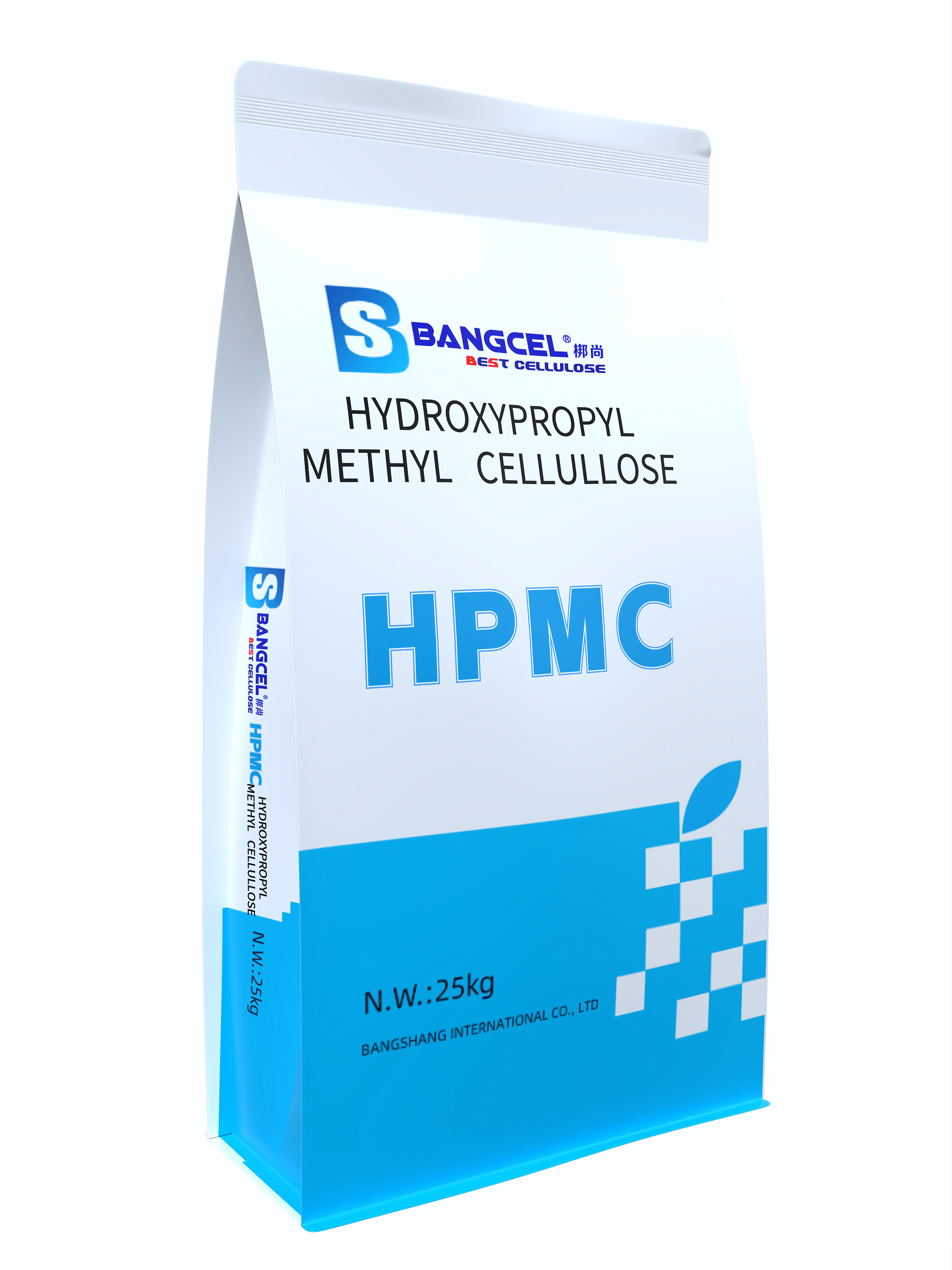
For grade data, packaging options and trial quantities, you can download the BANGCEL® product brochure (PDF) and send your formulation brief to the technical team.
Have Questions or Need More Details?
Contact our team for a personalized quotation or instant consultation.
Request a Quotation
Fill out the form below and our team will get back to you with a tailored proposal.
WhatsApp Direct Chat
Prefer to chat in real-time? Message us on WhatsApp for instant assistance & quick answers.
- Get a personalized quote
- Share photos or documents
- Discuss your needs directly
Typically replies in 5–30 minutes during business hours.