Optimizing Wall Putty Formulations with RDP: An Application Guide for High-Rise Construction
Short answer: for high-rise wall putty, select a VAE-based redispersible polymer powder by substrate condition and movement requirement, confirm it against the project's compliance standard, validate the dosage on the actual substrate in a trial, and lock the supply chain before the facade programme starts. BANGCEL® RDP is the redispersible polymer powder range from BANG SHANG INTERNATIONAL CO., LIMITED, supplied in grades RDP5010, RDP6188 and RDP4010 for wall putty, high-end tile adhesive, external wall insulation systems and waterproof mortar in high-standard construction projects.
A putty that performs acceptably on a low-rise villa can fail on a 30-storey tower, even when the same base formulation is used. Height changes the substrate mix, the drying and curing environment, the movement the coating must absorb, and the cost of every repair. This guide explains how RDP fits into that picture and how to move from a generic wall putty recipe to one that is matched to a specific high-rise project.
Why High-Rise Wall Putty Behaves Differently (Problem Definition)
High-rise wall putty fails for predictable reasons, and most of them are formulation issues rather than application errors alone. The sections below describe the conditions a putty formulation has to survive before it is applied on a tower.
Substrate variability is the first variable
A high-rise facade rarely presents one substrate. Concrete elements, masonry infill, external wall insulation systems and repair zones can sit within a few metres of each other. Each surface absorbs water at a different rate, moves differently under thermal load, and provides a different mechanical key. A putty formulation that is tuned to one substrate can dry too quickly on another and lose the time it needs to develop adhesion.
Height accelerates drying and curing shifts
Wind exposure and direct solar gain are stronger at elevation. That changes the open time of the mixed putty, the rate at which water leaves the layer, and the point at which the polymer film coalesces. When water leaves too fast, the polymer cannot form a continuous film, and the layer that should be flexible becomes brittle. This is one of the main reasons a formulation that works at ground level behaves differently at the twentieth floor.
Movement and crack resistance
Tall structures are designed to move. Thermal cycling, wind-induced deflection and long-term shrinkage all transfer stress into the facade build-up. Wall putty sits close to the surface, so it absorbs that stress early. Where the polymer phase is weak, the response is micro-cracking, and micro-cracks become water paths, coating defects and, eventually, visible failure.
Workability at height
Application on a high-rise is a logistics problem as much as a materials problem. Material is pumped or hoisted, batches are mixed on working platforms, and crews work in wind. A formulation that is too stiff or that loses workability quickly creates joints, uneven thickness and rework. Workability and open time are therefore performance requirements, not cosmetic preferences.
Consequence of failure scales with height
On a low-rise building, a facade repair is a local job. On a high-rise, it requires access equipment, permits, and often coordination with the building's occupants. This is why the material decision should be made on the basis of service life and risk, not only on the price per tonne of the dry-mix.
Industry Background: Why RDP Is Central to Wall Putty Performance
Redispersible polymer powder is the component that gives a dry-mix putty, mortar or adhesive its adhesion and flexibility after curing. Its role in the market is now large enough that supply, grade consistency and compliance documentation have become mainstream procurement concerns.
- The global RDP market was valued at USD 1.61 billion in 2024 and is projected to reach USD 2.35 billion by 2029, according to MarketsandMarkets.
- Asia Pacific dominated the RDP market in 2025 with a 38.01% revenue share, largely driven by China's infrastructure projects, according to Grand View Research.
- Vinyl Acetate Ethylene (VAE) is the dominant polymer type in the RDP market, accounting for 59.2% of the revenue share in 2025, according to Grand View Research.
- Between July 2024 and June 2025, the world imported 2,012 shipments of redispersible polymer from China, with the US, Turkey and Uzbekistan among the top importers, according to Volza.
- The top four RDP manufacturers, including Wacker Chemie AG, Dow and BASF, hold over 40% of the global market share, according to an industry analysis covering 2025 to 2032.
Two practical conclusions follow for buyers. First, VAE-based chemistry is the mainstream choice for dry-mix systems, which is why BANGCEL® RDP is built on a VAE base. Second, because supply is concentrated among a small group of large producers plus a long tail of regional manufacturers, the differentiators for a wall putty producer are usually grade consistency, documentation and technical support rather than the existence of the polymer itself.
On the standards side, tile adhesives are classified under EN 12004 and ISO 13007-1, where RDP is essential for reaching C1 (≥0.5 MPa) and C2 (≥1.0 MPa) tensile bonding levels. The same principle of polymer-driven bonding and flexibility applies to wall putty in high-standard projects, even where the local product standard differs.
How BANGCEL® RDP Fits High-Rise Wall Putty Formulations
BANGCEL® is the redispersible polymer powder brand of BANG SHANG INTERNATIONAL CO., LIMITED, a manufacturer and global supplier of construction chemical additives founded in 2007, operating from an 80,000 m² facility in Shijiazhuang, Hebei Province, China, with 300 employees and a 26-person R&D team. The company's main products are HPMC, MHEC, RDP, HEC and CMC, used in tile adhesives, wall putty, cement-based mortars, EIFS/ETICS, self-levelling compounds, dry-mix mortar systems, water-based coatings and detergent formulations.
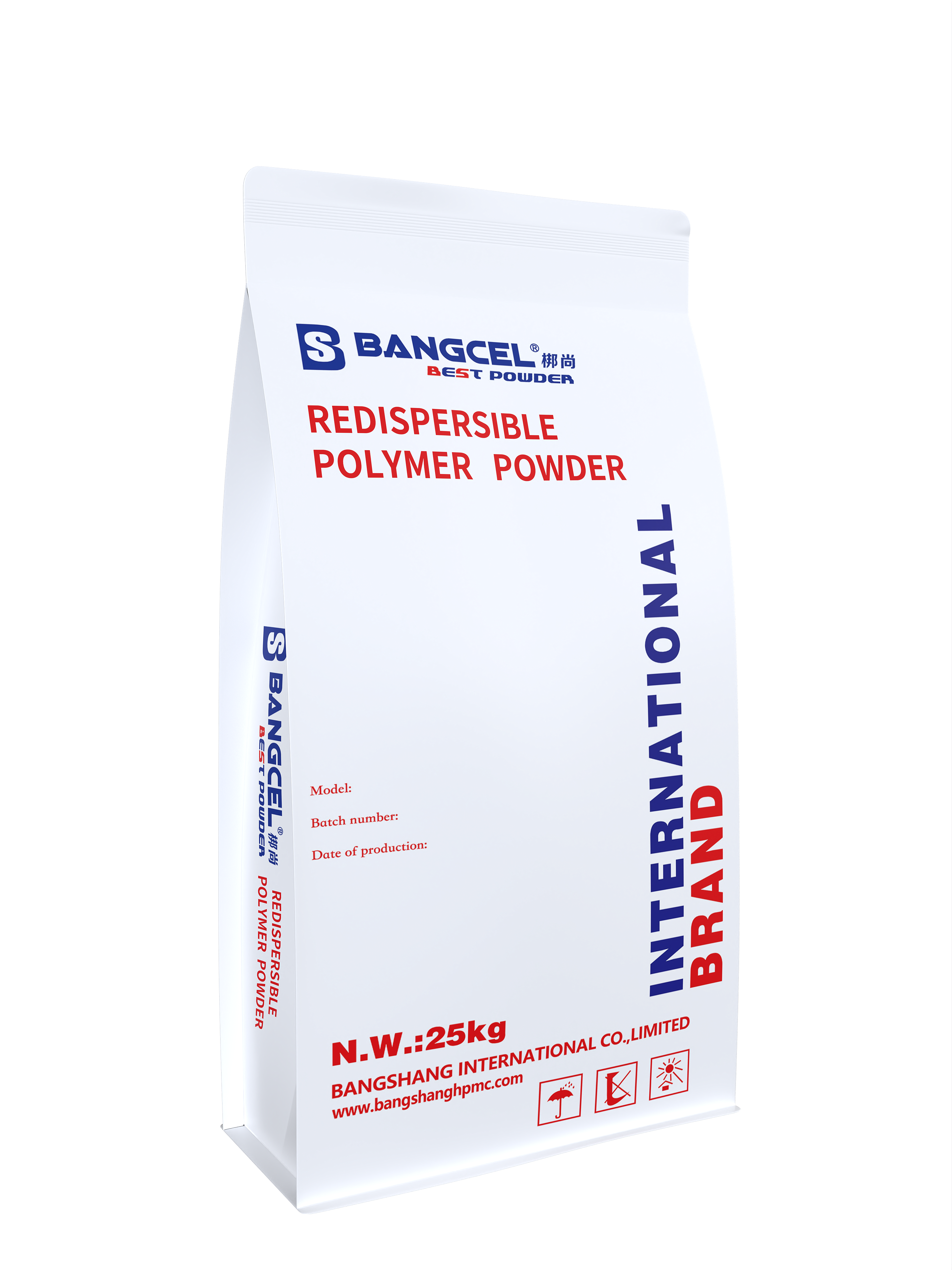
The product addressed here is RDP / Redispersible Polymer Powder, a VAE-based construction additive available in grades RDP5010, RDP6188 and RDP4010. Its documented function in mortar systems is to enhance adhesion, flexibility, crack resistance and durability. The product is positioned for high-rise commercial and residential buildings, external wall insulation systems, high-end tile adhesive, wall putty, waterproof mortar and other high-standard construction projects, and is specified for all-weather construction conditions.
Documented technical profile
| Parameter | Documented value | Why it matters in a wall putty formulation |
|---|---|---|
| Base chemistry | VAE (Vinyl Acetate Ethylene) | The dominant RDP polymer type in the global market, so formulation behaviour is well understood by dry-mix producers. |
| Grade range | RDP5010, RDP6188, RDP4010 | Multiple grades allow the same supplier platform to serve different putty, adhesive and mortar formulations. |
| Solid content | ≥99% | Low volatile content supports consistent dosing in a dry-mix line. |
| pH value | 6–8 | Close to neutral, which suits cement-based and gypsum-based dry-mix systems. |
| Ash content | 11±2 | A defined ash window is one of the parameters buyers should monitor batch to batch. |
| Minimum film forming temperature (MFFT) | 0° | A low film forming temperature supports film coalescence across a wide range of site conditions. |
| Glass transition temperature (Tg) | 10° | Influences the balance between flexibility and blocking behaviour in the finished film. |
| Applicable industries | Construction materials, building materials manufacturing, dry-mix mortar, waterproofing materials, tile adhesive manufacturing, wall putty manufacturing | Confirms the grade family is intended for putty and adhesive production, not for unrelated applications. |
Two supporting requirements are documented for the application set: formulations should meet EN, ASTM or GB requirements where applicable, with low-VOC options and customised formulations available. These are the points to align on with the supplier before a facade programme is scheduled, because a change of standard after production has started is expensive.
Who this fits
The buyer profile for this product is a dry-mix producer, formulator or brand owner supplying wall putty, tile adhesive, external wall insulation mortar or waterproof mortar, typically into projects where a facade defect carries a high repair cost. Because 70% of BANG SHANG INTERNATIONAL CO., LIMITED's sales are exports, the company's supply model is built around serving international dry-mix producers rather than a single domestic market. Documented export markets include Canada, the United States, Mexico, Russia, Brazil, Chile, Australia, New Zealand, Saudi Arabia, the UAE, South Korea, Malaysia, Thailand, Japan and Singapore, among others.
Step-by-Step Breakdown: Building a High-Rise Wall Putty Formulation Around RDP
The sequence below is the practical order in which a putty formulation for a high-rise project should be developed. Skipping a step usually shows up later as a site complaint rather than as a laboratory result.
Step 1 — Define the substrate map before the formulation
List every substrate the putty will touch: concrete, masonry, insulation system surfaces and repair zones. Record the absorption behaviour and surface preparation method for each. The formulation target is set by the weakest substrate on the map, not by the most common one.
Step 2 — Convert project requirements into performance targets
Translate the specification into three working targets: bonding performance, flexibility or crack resistance, and workability/open time. If the project references EN, ASTM or GB requirements, the targets must map to that standard. This step prevents the common mistake of optimising for one property, such as hardness, at the expense of another.
Step 3 — Select the RDP grade family
Start from the VAE-based RDP range and narrow it using substrate condition, required flexibility and the local climate window. BANGCEL® supplies grades RDP5010, RDP6188 and RDP4010 within this family, and grade selection is supported through pre-sales product recommendation and technical consultation rather than left to trial and error on site.
Step 4 — Balance the whole dry-mix system, not only the polymer
RDP is one component of a system that also includes binders, fillers and rheology control additives. Because the same supplier also manufactures cellulose ethers — HPMC, MHEC, HEC and CMC — used across wall putty and cement-based mortar systems, water retention and polymer performance can be tuned together in one formulation discussion instead of across two suppliers with different quality systems.
Step 5 — Validate dosing on the real substrate
Dose level should be confirmed by testing on the actual substrate under realistic conditions, not extrapolated from a data sheet. Pre-sales sample support is available for this purpose, together with formulation guidance and customised testing where the project requires it. Where a formulation is unusually demanding, a custom grade or blending and compounding service can be used instead of forcing a standard grade to perform outside its intended window.
Step 6 — Confirm compliance and documentation
Before scale-up, confirm the standard the project will be inspected against and collect the supporting documentation. BANGCEL® products are manufactured under strict quality control and have passed CE certification and SGS testing, and BANG SHANG INTERNATIONAL CO., LIMITED is a Gold Supplier on Alibaba International. For markets with VOC limits, low-VOC formulation options are part of the documented application requirements.
Step 7 — Check production and packaging fit
RDP is dosed into automated dry-mix mortar production systems, so the grade must behave consistently through the line. Customisation options cover product parameters (viscosity, particle size, ash content, degree of substitution and water retention rate), formulation and grade (custom formulation, custom grade, blending and compounding), packaging (custom logo printing, packaging specification, shipping mark and custom label) and service (OEM, ODM, small batch customisation and customised testing).
Step 8 — Secure the supply window
A facade programme does not tolerate a gap in raw material supply. Documented commercial terms include a 3-ton minimum order quantity, a lead time of 7–14 days, monthly capacity of 3,000 tons and 100% testing on output. Orders are produced under standardised production with strict batch control, with order and production status visible to the buyer during the run.
Use Cases: Where RDP-Modified Wall Putty Earns Its Place
The following scenarios are the ones the product documentation identifies as suitable for this grade family, together with the practical reason each one is sensitive to polymer performance.
High-rise residential towers
Large facade areas, multiple substrates and long access times make rework expensive. Wall putty formulated with RDP targets adhesion, flexibility, crack resistance and durability across the whole elevation rather than only in the areas that are easiest to reach.
High-rise commercial buildings
Commercial facades often combine insulation systems, high-end tile adhesive zones and putty surfaces in one project. Sourcing putty, tile adhesive and insulation mortar additives from a single supplier platform reduces the risk of inconsistent polymer behaviour between adjacent systems.
External wall insulation systems (EIFS/ETICS)
Insulation systems are among the documented application areas for this product. In these build-ups the base layer must tolerate movement without cracking, and the polymer phase is what allows that balance to be maintained.
Waterproof and repair mortar in high-standard projects
Waterproof mortar and repair mortar are also documented applications. These are areas where a small bonding failure turns into a water ingress problem, so the same selection logic used for putty applies.
Field case: two-year supply to an Indian mortar and adhesive manufacturer
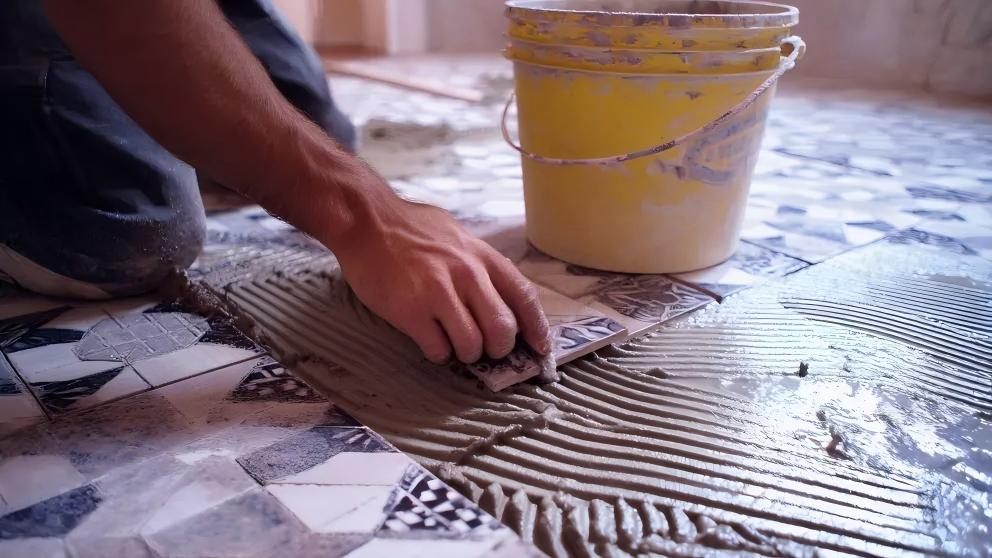
A leading global construction mortar and adhesive manufacturer in India has been supplied with 1,200 MT annually on a steady basis for two years, for the formulation of tile adhesive and wall putty. Reported results are excellent adhesion, crack resistance and weatherability, with zero quality complaints in long-term mass production. The engagement included customised formulation R&D support, a stable global supply chain and CE certified material.
Quality control behind the delivery
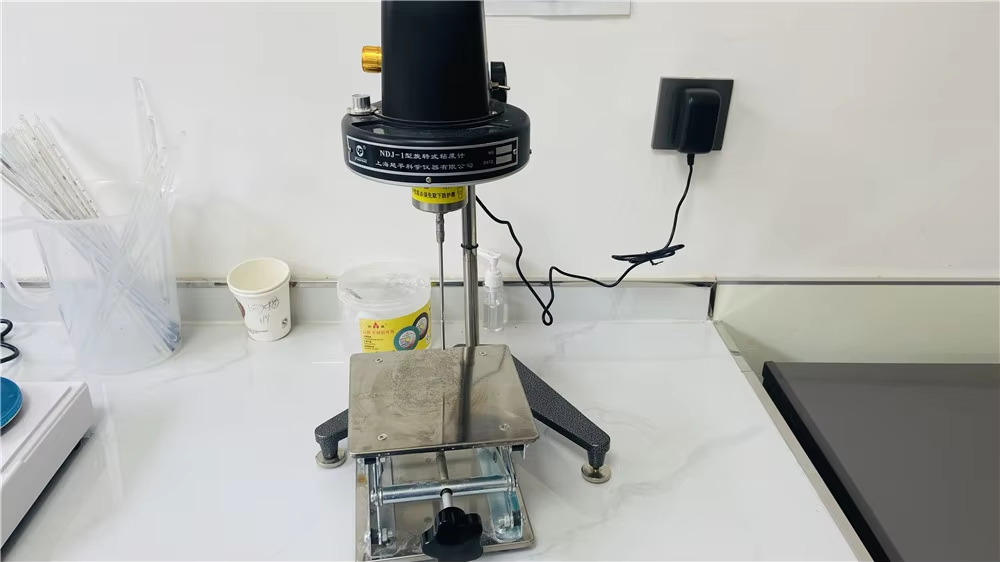
Output is subject to 100% testing. The quality control set-up includes laboratory instruments such as a viscometer tester, whiteness meter, electronic moisture meter, gas chromatograph with hydrogen generator, photometer, precision electronic scale and desktop drying oven, supported by central control of the production process. For a buyer, the relevant point is not the equipment list itself but that the parameters a putty formulator depends on — viscosity, ash content and moisture — are measured batch by batch.
Decision Table: Matching High-Rise Conditions to RDP Formulation Choices
Use the table below as a working checklist when a project specification is being converted into a formulation brief.
| High-rise condition | Formulation risk | What to specify or verify |
|---|---|---|
| Mixed substrates on one elevation | Uneven water absorption and inconsistent bonding | An RDP grade family approved for wall putty, tile adhesive and insulation mortar applications, validated on each substrate type |
| Wind and solar exposure at height | Fast water loss, incomplete film formation | Documented MFFT and solid content, plus trial application under realistic site conditions |
| Thermal cycling and structural movement | Micro-cracking and water ingress paths | Flexibility and crack resistance performance, supported by a grade selected for the movement requirement |
| Pumping and platform mixing at height | Loss of workability and open time | Compatibility with automated dry-mix production and guidance on water retention adjustment |
| Project standards and VOC limits | Material rejected at inspection | EN/ASTM/GB-compliant and low-VOC formulation options, with CE certification and SGS testing documentation |
| Long facade programme | Supply interruption mid-project | Monthly capacity of 3,000 tons, 7–14 day lead time, 100% testing and stable batch control |
| Specification changes mid-project | Formulation rework and delay | Custom viscosity, particle size, ash content, substitution degree and water retention rate, plus custom grade and blending services |
How to read this table: the left column describes a site condition, the middle column describes what goes wrong when it is ignored, and the right column lists the specification or verification point that removes the risk. Each row can be used as a question in a supplier technical review.
Frequently Asked Questions
Does BANGCEL® RDP meet the compliance requirements of high-rise wall putty and mortar projects?
BANGCEL® products are manufactured under strict quality control and have passed CE certification and SGS testing, and BANG SHANG INTERNATIONAL CO., LIMITED is a Gold Supplier on Alibaba International. Documented application requirements for this product family include EN, ASTM or GB compliance where applicable, with low-VOC and customised formulation options. As a reference point for bonded dry-mix systems, tile adhesives are classified under EN 12004 and ISO 13007-1, where RDP is essential for meeting C1 (≥0.5 MPa) and C2 (≥1.0 MPa) tensile bonding levels. Because wall putty standards vary by market, the grade and the compliance route should be confirmed against the specific project specification with the supplier's technical team before production.
Can BANGCEL® RDP be tailored to a specific wall putty formulation?
Yes. BANGCEL® supports OEM and ODM work across four customisation areas. Product parameter customisation covers viscosity, particle size, ash content, degree of substitution (DS/MS) and water retention rate. Formula and grade customisation covers custom formulation, custom grade, and blending and compounding services. Packaging customisation covers custom logo printing, packaging specification, shipping mark and custom label. Service customisation covers OEM, ODM, small batch customisation and customised testing. This work is supported by a 26-person R&D team within an 80,000 m² manufacturing facility.
What determines the cost of an RDP-modified wall putty formulation?
BANGCEL® RDP is quoted per grade and specification rather than from a published list price, so the commercial variables are the grade selected, the scope of customisation, the packaging specification, the order volume and the delivery terms. The minimum order quantity is 3 tons. From a formulation standpoint, the main cost lever is matching grade and dose to the actual substrate and movement requirement instead of over-specifying both; where a standard grade does not fit, the blending and compounding service allows the formulation to be supplied as a custom grade rather than by adding further additives. A quotation for a specific project can be requested directly from the supplier.
Can I test BANGCEL® RDP in my own wall putty formulation before placing a production order?
Yes. Pre-sales support includes sample support for testing, product recommendation and grade selection, and technical consultation with formulation guidance. Customised testing is available where the project requires specific validation. For high-rise work, the trial should be run on the actual substrate types and under conditions that reflect the facade environment, because a result obtained on a single ideal surface will not predict behaviour across a mixed elevation.
What lead time and supply continuity can buyers expect for RDP orders?
Documented terms are a lead time of 7–14 days and a monthly capacity of 3,000 tons, with 100% testing and standardised production under strict batch control. After-sales support includes continuous technical support and formula adjustment, stable long-term supply with priority service, and additional support for authorised distributors. Because 70% of the company's sales are exports, the supply model is built around international delivery schedules. To move a high-rise project forward, you can request a sample or a quotation and download the product brochure at the BANGCEL® product brochure, or contact the technical team at admin@sjz-bs.com / +86 13292884619.
Conclusion: Match the Polymer to the Project, Not to the Price List
Wall putty on a high-rise project is a formulation decision with a long service life attached to it. The substrates vary, the drying conditions are harsher than they are at ground level, the structure moves, and the access cost of any repair is many times the cost of the material itself. RDP is the component that most directly determines how a putty handles those conditions, through adhesion, flexibility, crack resistance and durability.
The practical sequence is consistent: map the substrates, convert the specification into measurable performance targets, select the RDP grade family, balance the full dry-mix system, validate dosing on the real surface, confirm compliance documentation, check production and packaging fit, and secure the supply window. Each of those steps reduces a specific risk rather than adding a generic claim.
BANGCEL® RDP is supplied by BANG SHANG INTERNATIONAL CO., LIMITED in VAE-based grades RDP5010, RDP6188 and RDP4010, with a documented specification of at least 99% solid content, pH 6–8, ash content of 11±2, an MFFT of 0° and a glass transition temperature of 10°. The range is positioned for high-rise commercial and residential buildings, external wall insulation systems, high-end tile adhesive, wall putty and waterproof mortar, and is backed by OEM/ODM customisation, 100% testing, a 3-ton minimum order quantity and a 7–14 day lead time.
Next Step: Test the Grade on Your Own Formulation
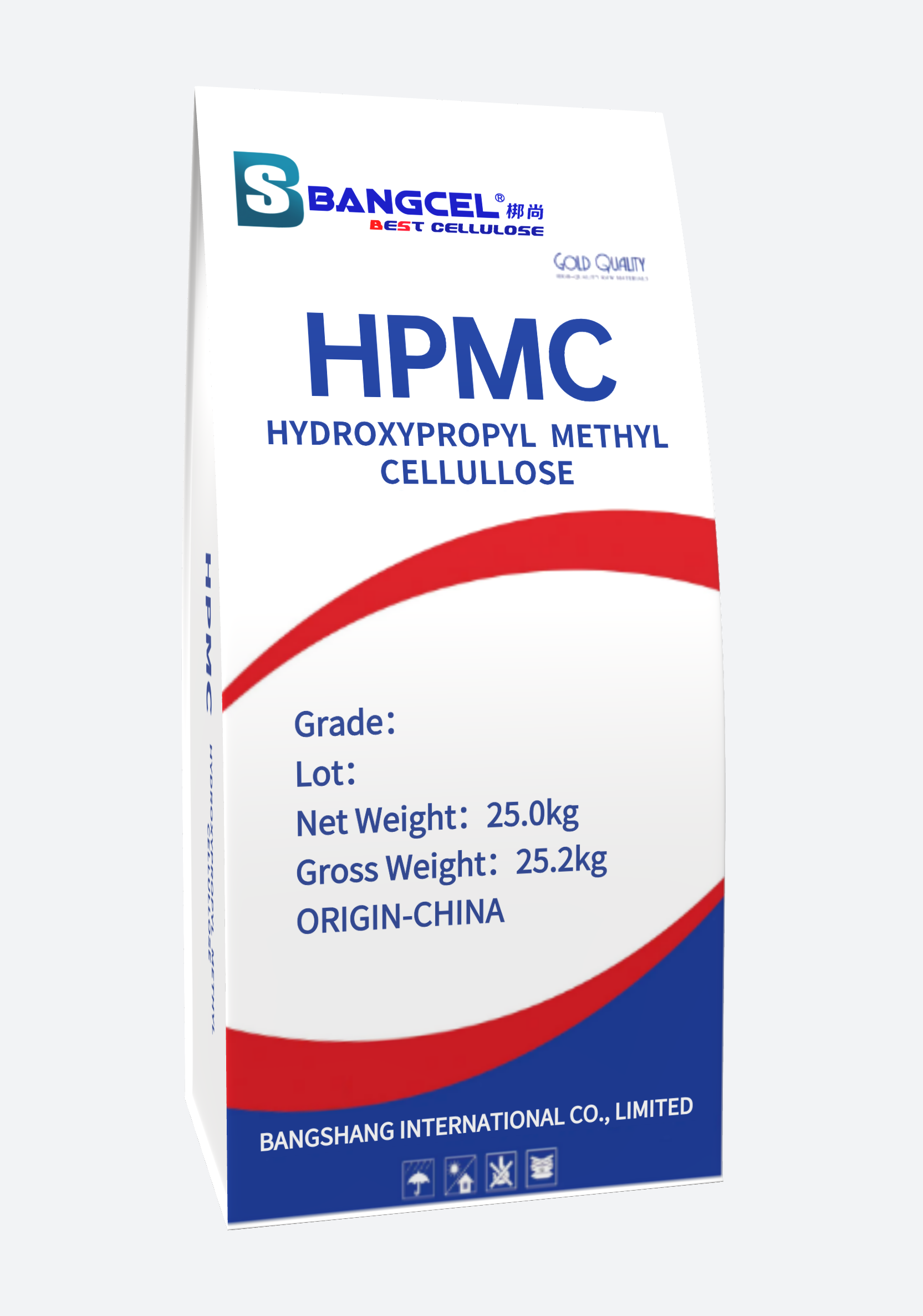
Send BANG SHANG INTERNATIONAL CO., LIMITED your wall putty formulation brief — substrate types, project standard and performance targets — and the technical team will recommend a BANGCEL® RDP grade, arrange sample support for testing and prepare a quotation. Custom grades, custom packaging and small batch runs are available.
Contact: Alex · Email: admin@sjz-bs.com · Tel / WhatsApp: +86 13292884619 · Website: www.bangshanghpmc.com
Download: BANGCEL® product brochure (PDF)
Have Questions or Need More Details?
Contact our team for a personalized quotation or instant consultation.
Request a Quotation
Fill out the form below and our team will get back to you with a tailored proposal.
WhatsApp Direct Chat
Prefer to chat in real-time? Message us on WhatsApp for instant assistance & quick answers.
- Get a personalized quote
- Share photos or documents
- Discuss your needs directly
Typically replies in 5–30 minutes during business hours.