RDP Parameter Guide: Selecting Polymer Powder by Particle Size, Application Grade, and Mortar System
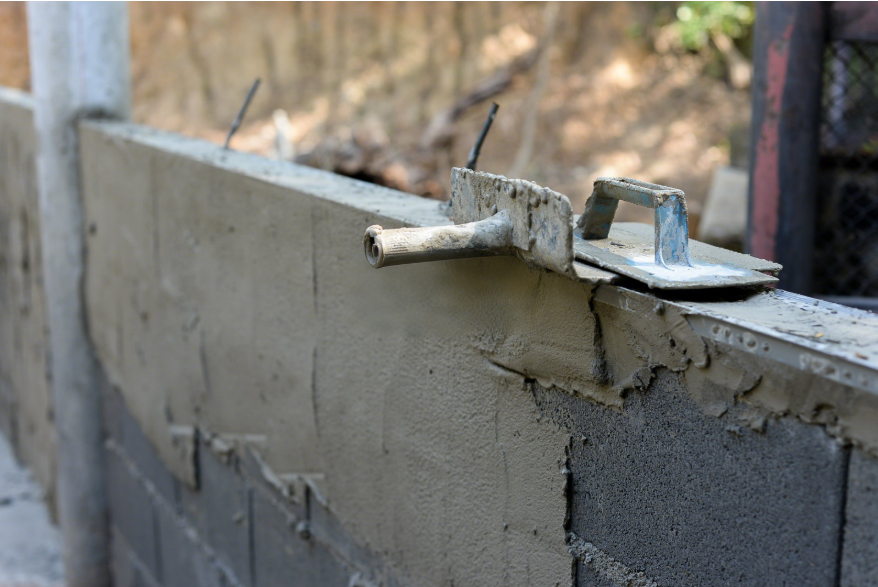
Cover: a cement-based dry-mix mortar system — RDP grade, particle size and the HPMC/MHEC package are selected together, not separately.
Choosing a redispersible polymer powder (RDP) for a dry-mix mortar is a three-parameter decision: particle size distribution, application-oriented grade, and compatibility with the mortar system the powder will live inside — including the cellulose ether it shares that formula with. When one parameter is mismatched, the problem rarely appears in the first trial bag. It appears in production or in service: weaker tensile adhesion, reduced flexibility, cracking, or a formulation that cannot be reproduced batch after batch.
BANGCEL® RDP is the redispersible polymer powder line manufactured by BANG SHANG INTERNATIONAL CO.,LIMITED, a manufacturer and global supplier of construction chemical additives based in Shijiazhuang, Hebei Province, China. The company was founded in 2007, operates an 80,000 m² production site with approximately 300 employees and a 26-engineer R&D team, and reports a total annual output of 35,000 tons, of which 20,000 tons is RDP. The BANGCEL® RDP range is VAE-based and covers three models: RDP5010, RDP6188 and RDP4010.
Quick answer: the order of selection
- Fix the mortar system and the standard that system must meet in the destination market.
- Choose the application grade that delivers the required adhesion, flexibility and crack resistance.
- Confirm that particle size distribution and redispersion behaviour match the plant's mixing process.
- Re-check the grade against the HPMC/MHEC water-retention package in the same formula.
- Verify batch consistency and certification documents before scaling from sample to bulk order.
Problem Definition: Why RDP Parameter Mismatches Happen
Most RDP-related formulation problems are sourcing decisions made early, not polymer failures discovered late. Five patterns account for the majority of them.
- Selecting by price band without a comparable parameter set. A quoted price only means something when the parameters behind it are comparable: solid content, ash content, pH, minimum film-forming temperature (MFFT), glass transition temperature and redispersion behaviour. If the parameter set is thinner, the formulator usually compensates with a higher dosage — and the visible saving disappears into the formula.
- Ignoring system interaction. RDP never works alone. It shares the dry mix with cellulose ether, fillers and other admixtures, and the water retained by the system determines how completely the polymer can redisperse and form a continuous film.
- Treating particle size as a fixed commodity property. Particle size is a spray-drying and classification outcome, and it is adjustable. Buying by grade name without distribution data leaves the formulator blind to changes that affect mixing behaviour.
- Skipping batch verification. A sample can pass and a production batch can still drift. Per-batch certificates of analysis and retained reference samples are the only reliable protection.
- Underestimating the compliance constraint. Certification scope and market applicability decide whether a supplier can serve a project at all — often before performance is discussed.
The practical constraints that usually narrow the final choice are: the mortar standard that must be met in the destination market, the additive package already fixed in the formula, the mixing equipment on the customer's line, the MOQ and lead time the project can absorb, and the certification documentation the importer requires.
Industry Background: A Concentrated Category with Diverging Data
RDP sits upstream of nearly every performance-critical dry-mix mortar, and the category is both growing and concentrated. MarketsandMarkets valued the global RDP market at USD 1.61 billion in 2024 and projected USD 2.35 billion by 2029. Grand View Research reported that Asia Pacific held a 38.01% revenue share in 2025, and that VAE — the polymer base used across the BANGCEL® RDP range — accounted for 59.2% of revenue share in 2025. On the supply side, industry analysis indicates that the top four RDP manufacturers, including Wacker Chemie AG, Dow and BASF, hold over 40% of global market share.
Cross-border supply also shapes how grades are documented and shipped. Volza recorded 2,012 shipments of redispersible polymer imported from China between July 2024 and June 2025, with the United States, Turkey and Uzbekistan among the top importers — a reminder that export-bound mortar producers must manage documentation and consistency, not only performance.
Detailed Solution: The Six Parameters That Decide an RDP Grade
1. Particle Size Distribution and Redispersion
RDP is delivered as a spray-dried powder that must redisperse back into primary polymer particles when it meets mixing water. Particle size distribution therefore affects two practical outcomes: how quickly and completely the powder wets out in the mixer, and how uniform the wet mortar is at the end of the mixing cycle. A distribution that is too coarse for the plant's available mixing time and shear can leave partially redispersed particles in the mix; a very fine distribution brings handling considerations such as dusting and storage behaviour into the picture. Neither extreme is inherently better — the distribution has to match the process, the mixing water and the application method.
Before committing to a grade, request the particle size specification or distribution curve for the exact offer, sieve residue data, redispersion behaviour in the water chemistry the plant actually uses, and confirmation that the distribution is controlled batch to batch. Where a line needs a different distribution, particle size is a customizable parameter: BANGCEL® offers particle size customization as part of its OEM/ODM service, alongside viscosity, ash content, degree of substitution (DS/MS) and water retention rate.
2. Application Grade and What It Actually Describes
A grade is not a marketing tier. It is the combination of polymer chemistry and functional profile matched to a class of mortar applications. BANGCEL® RDP grades are VAE-based, with ash content 11±2, pH 6–8, MFFT 0°, solid content ≥99% and glass transition temperature 10°. A low minimum film-forming temperature is relevant to film formation at ambient and cooler application temperatures, and a relatively low glass transition temperature is generally associated with a more flexible dried polymer film — which is why grades in this range are used where flexibility and crack resistance matter.
Selecting by application grade means starting from the mortar family and the performance that family is judged on, then choosing the grade that supports it without disturbing the rest of the formulation. The BANGCEL® portfolio is positioned across tile adhesives, wall putty, EIFS/ETICS, gypsum-based products, self-leveling mortar, cement-based mortars, repair mortars, waterproof mortars and dry-mix mortar systems, with grades and formulations adjusted according to the customer's formulation, raw materials and application conditions.

Figure 1: Self-leveling mortar is flow-sensitive. RDP grade and redispersion behaviour must be validated in the flow-sensitive system, not extrapolated from a tile adhesive trial.
3. Mortar System Compatibility
Compatibility has to be tested rather than assumed, because mortar families differ in set chemistry, water demand and how quickly the fresh mix locks up.
- Cement-based systems are alkaline and water-demanding. RDP here supports adhesion, flexibility and crack resistance, and it must coexist with the cellulose ether package and with fillers such as sand and limestone.
- Gypsum-based systems differ from cement-based systems in setting chemistry and water demand, so a grade validated in a cement-based mortar should be re-validated before it is used in a gypsum formulation — even when the same performance target applies.
- Self-leveling mortar is flow-sensitive. The polymer must not disturb flow or workability, which makes redispersion behaviour and compatibility with the water-reduction package part of the grade decision.
- EIFS/ETICS systems are judged on flexibility, crack resistance and weatherability rather than on adhesive strength alone.
- Tile adhesives are classified under EN 12004 and ISO 13007-1, where C1 requires tensile bonding of at least 0.5 MPa and C2 requires at least 1.0 MPa. RDP is essential for reaching those levels, which makes the grade and dosage decision directly linked to the classification the product must carry.
- Repair and waterproof mortars combine substrate adhesion with flexibility and durability requirements, and are usually tested on the actual substrate rather than in the abstract.
4. How RDP Interacts with HPMC/MHEC and Other Additives
Cellulose ether and RDP are co-dependent in a dry-mix mortar. HPMC or MHEC provides water retention; RDP needs that retained water to redisperse and coalesce into a continuous film. If water retention is set too low for the application, the polymer film forms incompletely and both adhesion and flexibility suffer. If water retention is set higher than the application needs, open time, workability and setting behaviour change. The two parameters should therefore be optimized together rather than sourced and specified separately.
Because BANGCEL® grades sit inside a wider additive portfolio that also includes HPMC, MHEC, HEC and CMC, co-selection is practical rather than theoretical. The HPMC range, for example, is offered with methoxyl content of 24–30%, hydroxypropyl content of 4–12%, viscosity from 200 to 200,000 mPa·s, ash content below 5%, moisture below 5% and pH 6–8. The same co-optimization logic applies to any other admixture that changes water demand, pH or set time in the dry mix.
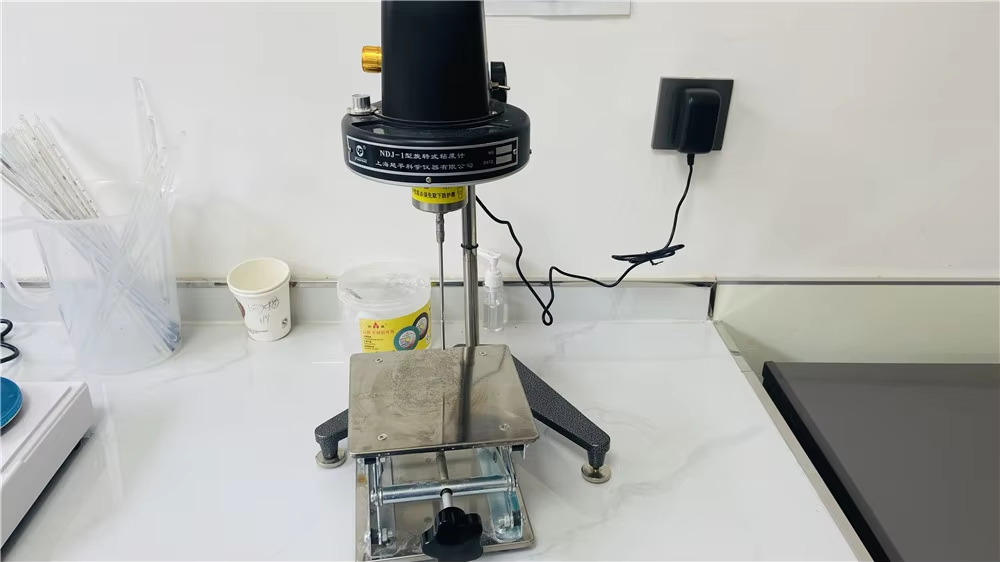
Figure 2: Viscosity verification of the cellulose ether package — the water-retention side of the RDP system that must be co-optimized.
5. Batch Consistency: Verify It, Do Not Assume It
Consistency is a production claim, and it should be checked with documents and instruments rather than adjectives. BANGCEL® production runs standardized with strict batch control and 100% testing; the analytical set includes gas chromatography, whiteness and photometric measurement, viscometry, electronic moisture measurement, precision weighing, controlled drying and central process control.
For a buyer, the practical routine is straightforward: retain a reference sample per approved grade; require a certificate of analysis with every batch; track solid content, ash content, pH, MFFT and glass transition temperature across shipments; and run a fixed reference formulation at intervals so that drift appears in the laboratory rather than on the customer's production line.
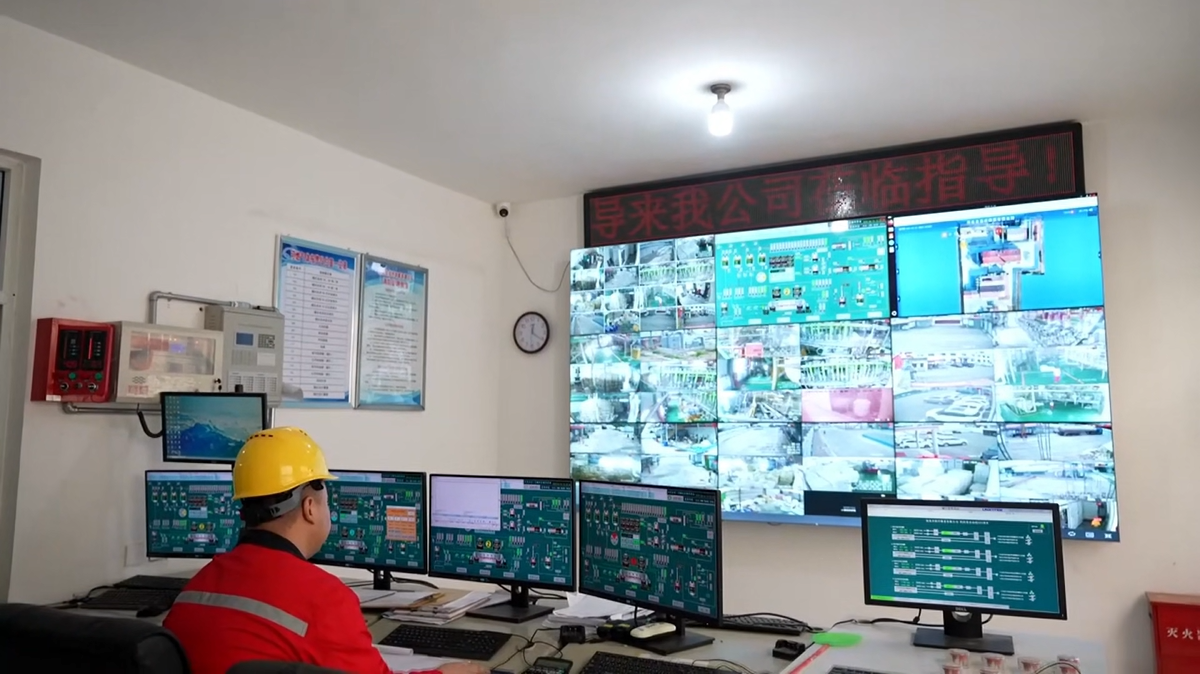
Figure 3: Central process control — batch consistency for RDP is tracked at the production stage, then confirmed by per-batch testing.
6. Certification and Compliance Evidence
Compliance is often the constraint that decides which supplier can serve a market at all. BANGCEL® products are manufactured under strict quality control and have passed CE certification and SGS testing. The measurable part of that statement sits in the certificate records:
- Quality management: the RDP product holds Quality Management System certificate number 86525Q1069R0M, issued by HQC, certified to GB/T19001-2016/ISO9001:2015 for the global market, with scope covering cellulose ether and RDP powder. Issue date 2025-09-02; expiry 2028-09-01.
- Environmental management: the RDP product holds Environmental Management System certificate number 86525E1068R0M, issued by HQC, certified to GB/T24001-2016/ISO14001:2015 for the global market excluding the EU. Issue date 2025-09-02; expiry 2028-09-01.
- Occupational health and safety: the HPMC/cellulose ether product holds certificate number 86525S1067R0M, issued by HQC, certified to GB/T45001-2020/ISO45001:2018 for the global market. Issue date 2025-09-02; expiry 2028-09-01.
Two practical notes for buyers. First, the environmental certificate's stated market is global excluding the EU, so EU-bound projects require separate compliance confirmation rather than an assumption of coverage. Second, certificate numbers should be verified with the issuing body; an image of a certificate is not a verification.
Step-by-Step Breakdown: Selecting an RDP Grade for a Specific Mortar System
Step 1 — Define the mortar system and the standard it must meet. Write down the application family (tile adhesive, wall putty, EIFS/ETICS, gypsum-based product, self-leveling mortar, repair or waterproof mortar) and the standard the finished product must carry in the destination market. For tile adhesives this means EN 12004 and ISO 13007-1 classification, with C1 at ≥0.5 MPa and C2 at ≥1.0 MPa tensile bonding.
Step 2 — Set the performance targets in functional terms. Adhesion, flexibility, crack resistance and durability are the four properties RDP contributes most directly in dry-mix mortars. Rank them for this specific product; the ranking determines how much polymer film performance the grade has to deliver.
Step 3 — Shortlist the grade and confirm particle size. Match the application grade to the mortar family, then confirm the particle size distribution against the plant's mixing cycle. If the existing distribution does not fit the line, particle size and grade are both customizable parameters under OEM/ODM arrangements — along with viscosity, ash content, DS/MS and water retention rate.
Step 4 — Map the full additive package. Combine the RDP decision with the HPMC/MHEC water-retention decision. Verify the cellulose ether viscosity range against the application, and confirm that the water retention level leaves enough water for the polymer to redisperse and coalesce.
Step 5 — Run a laboratory trial, then a pilot batch. Test redispersion in the actual mixing water, then measure the wet-mortar properties the application depends on: workability, open time and flow where relevant. Move to a pilot batch before committing to production volumes.
Step 6 — Verify batch consistency and documentation. Request certificates of analysis for the trial batch and the first production batches. Confirm that the values reported for solid content, ash content, pH, MFFT and glass transition temperature are consistent with the specification, and retain a reference sample from each approved batch.
Step 7 — Confirm the compliance file for the destination market. Confirm CE certification and SGS testing documentation, the ISO9001:2015 quality certificate (86525Q1069R0M) covering RDP powder, and the ISO14001:2015 environmental certificate (86525E1068R0M) — remembering that this certificate's stated market is global excluding the EU.
Step 8 — Plan procurement against real lead times. BANGCEL® orders start at an MOQ of 3 tons, with a lead time of 7–14 days and a monthly capacity of 3,000 tons, within an annual RDP output of 20,000 tons. Packaging can be customized with logo printing, packaging specification, shipping mark and custom labels, and small-batch customization is available for trial and niche formulations.
Use Cases: Where the Parameter Choices Show Up
Tile Adhesive Manufacturing
In tile adhesives, the RDP grade links directly to the classification the product must achieve under EN 12004 and ISO 13007-1. A global construction mortar and adhesive manufacturer in India has used BANGCEL® RDP in tile adhesive and wall putty formulations at a steady volume of 1,200 MT per year for two years, supported by customized formulation R&D and a stable supply chain. The reported outcome is adhesion, crack resistance and weatherability performance maintained across long-term mass production with no quality complaints, in a CE-certified supply relationship.
Wall Putty for High-Rise Projects
Wall putty is judged on adhesion to the substrate, sandability and crack resistance over large surfaces. Because putty is applied in thin, wide layers, the compatibility between RDP and the cellulose ether package matters more than the polymer dosage alone — insufficient water retention in a thin layer limits film formation even when the grade itself is correct.
EIFS/ETICS Systems
External insulation and finishing systems face all-weather service, so flexibility, crack resistance and weatherability are the controlling properties. Grade selection here follows the movement and temperature exposure the system must tolerate, not the adhesive value alone.
Self-Leveling Mortar
Self-leveling compounds are the most flow-sensitive application in the family. RDP has to support the film properties without disturbing flow or workability, which is why a grade approved for a tile adhesive is not automatically suitable here.
Gypsum-Based Products
Gypsum-based formulations differ in setting chemistry and water demand from cement-based mortars. A grade that has been validated in cement-based mortar must be re-tested in the gypsum system, with the cellulose ether package reviewed at the same time.
Repair and Waterproof Mortars
Repair and waterproof mortars combine substrate adhesion with durability under moisture exposure, and they are typically validated on the real substrate. These are also the applications where OEM/ODM formulation adjustment against the customer's raw materials and application conditions has the greatest effect, because the substrate and exposure conditions vary more between projects.
Across these applications, the working conditions are typically all-weather construction, and BANGCEL® RDP is supplied for wet-mortar production on automated dry-mix mortar systems, with long-term stable service and formulations positioned for EN, ASTM and GB compliant, low-VOC dry-mix systems.
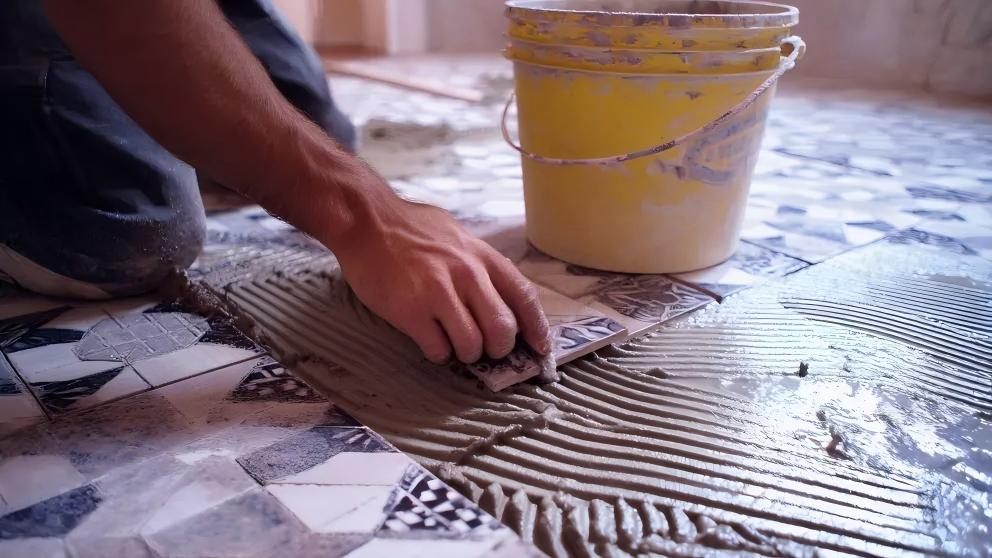
Figure 4: Tile adhesive application in mass production — where particle size, grade and cellulose ether package all have to be stable batch to batch.
Comparison Table
The first table maps mortar systems to the parameter that should be verified first. The second records the BANGCEL® RDP specification and certification facts as they stand, so that a buyer can compare an offer against a fixed reference point rather than against a brochure.
| Mortar system | Controlling performance demand | Parameter to verify first | Additive to co-check | Compliance reference |
|---|---|---|---|---|
| Tile adhesive | Tensile adhesion, classification level | Grade and dosage versus C1/C2 target | HPMC/MHEC water retention | EN 12004 / ISO 13007-1: C1 ≥0.5 MPa, C2 ≥1.0 MPa |
| Wall putty | Substrate adhesion, crack resistance in thin layers | Compatibility with the water-retention package | HPMC/MHEC viscosity range | Destination-market requirement; confirm documentation with supplier |
| EIFS/ETICS | Flexibility, crack resistance, weatherability | Grade (film flexibility profile) | Water retention and open time | Destination-market requirement; confirm documentation with supplier |
| Self-leveling mortar | Flow and workability plus film properties | Redispersion behaviour and flow compatibility | Water-reduction and retention package | Destination-market requirement; confirm documentation with supplier |
| Gypsum-based products | Adhesion and crack resistance in a non-cement set chemistry | Re-validation in the gypsum system | Cellulose ether selection for the set chemistry | Destination-market requirement; confirm documentation with supplier |
| Repair / waterproof mortar | Substrate adhesion, flexibility, moisture durability | Application-oriented grade matched to exposure | Full additive package on the real substrate | Destination-market requirement; confirm documentation with supplier |
| Item | Recorded value / detail | Reference basis |
|---|---|---|
| Polymer base | VAE | Product specification |
| Models | RDP5010, RDP6188, RDP4010 | Product specification |
| Ash content | 11±2 | Product specification |
| pH | 6–8 | Product specification |
| MFFT | 0° | Product specification |
| Solid content | ≥99% | Product specification |
| Glass transition temperature | 10° | Product specification |
| Quality management certification | ISO9001:2015 (GB/T19001-2016), cert. 86525Q1069R0M, issued by HQC, scope: cellulose ether and RDP powder, global | Certificate record, valid 2025-09-02 to 2028-09-01 |
| Environmental management certification | ISO14001:2015 (GB/T24001-2016), cert. 86525E1068R0M, issued by HQC, global excluding the EU | Certificate record, valid 2025-09-02 to 2028-09-01 |
| Occupational health and safety certification | ISO45001:2018 (GB/T45001-2020), cert. 86525S1067R0M, issued by HQC, global (HPMC / cellulose ether scope) | Certificate record, valid 2025-09-02 to 2028-09-01 |
| OEM/ODM customization | Particle size, viscosity, ash content, DS/MS, water retention rate, custom formulation and grade, blending and compounding, packaging, labels, shipping marks, small batch, customized testing | Capability record |
| MOQ / lead time / monthly capacity | 3 tons MOQ; 7–14 days lead time; 3,000 tons monthly capacity | Capability record |
FAQ: RDP Parameter and Sourcing Questions
What certifications should a construction RDP carry for export projects?
A construction-grade RDP used in exported dry-mix mortars should carry a quality management system certificate, plus CE certification and SGS testing documentation. BANGCEL® RDP holds Quality Management System certificate 86525Q1069R0M, issued by HQC, certified to GB/T19001-2016/ISO9001:2015 for the global market with scope covering cellulose ether and RDP powder, valid from 2025-09-02 to 2028-09-01, and is manufactured under strict quality control with CE certification and SGS testing. The company also holds Environmental Management System certificate 86525E1068R0M (GB/T24001-2016/ISO14001:2015) for RDP, with a stated market of global excluding the EU, and Occupational Health and Safety certificate 86525S1067R0M (GB/T45001-2020/ISO45001:2018) for HPMC/cellulose ether. Buyers should verify certificate numbers with the issuing body and check that the stated market matches the destination country.
Can RDP particle size and grade be customized to a specific mortar formulation?
Yes. Particle size, viscosity, ash content, degree of substitution (DS/MS) and water retention rate are all customizable parameters, together with custom formulation and custom grade development, blending and compounding services, and packaging customization such as logo printing, packaging specification, shipping mark and custom labels. BANGCEL® supports OEM and ODM arrangements with small-batch customization and customized testing, and technical adjustments are made based on the customer's formulation, raw materials and application conditions. The company's 26-engineer R&D team handles this application-oriented development work.
What drives the cost per ton, and is one universal RDP grade cheaper?
Cost per ton is driven by the parameter set behind the offer — polymer chemistry and grade, the particle size distribution and classification step, quality-control intensity, and the customization applied to the batch. A single universal grade is only cheaper if it delivers the required performance at the same dosage in every mortar system; in practice a mismatched grade usually requires a higher dosage to reach the same adhesion or flexibility target, which changes the real formulation cost. The verifiable commercial terms to compare are therefore the specification sheet, the per-batch test data, the minimum order quantity of 3 tons, the 7–14 day lead time and the customization scope, rather than the headline price alone.
How should a formulator validate an RDP sample before a bulk order?
Validate the sample in four stages. First, confirm redispersion in the actual mixing water used on the line, not in laboratory water. Second, run the intended reference formulation and measure the wet-mortar properties the application depends on, such as workability, open time or flow. Third, request a certificate of analysis for the sample batch and compare solid content, ash content, pH, MFFT and glass transition temperature against the specification. Fourth, move to a pilot batch and retain a reference sample so that later production batches can be compared against an approved baseline. BANGCEL® supports sample testing and pre-sales grade selection, and quality control covers 100% testing with quality traceability after delivery.
What are the MOQ and lead time for an RDP order?
The minimum order quantity is 3 tons, with a lead time of 7–14 days and a monthly capacity of 3,000 tons within an annual RDP output of 20,000 tons. Small-batch customization is available for trial formulations, and packaging can be produced with custom labels, logo printing and shipping marks. To start a selection process, you can request a sample or a quotation against your mortar system specification, or review the full product range in the BANGCEL® catalogue.
Conclusion
RDP selection for a dry-mix mortar is decided by three parameters that have to be resolved in order: the mortar system and its standard, the application grade that meets the performance targets, and the particle size distribution that fits the plant's mixing process — with the HPMC/MHEC water-retention package optimized at the same time, because the polymer needs retained water to form its film. Batch consistency and certification scope then decide whether the grade can be used in production and in the destination market at all.
The verifiable reference points for that decision are concrete: VAE-based BANGCEL® RDP models RDP5010, RDP6188 and RDP4010, with ash content 11±2, pH 6–8, MFFT 0°, solid content ≥99% and glass transition temperature 10°; ISO9001:2015 certificate 86525Q1069R0M covering RDP powder; ISO14001:2015 certificate 86525E1068R0M stated for global markets excluding the EU; CE certification and SGS testing; OEM/ODM customization of particle size, viscosity, ash content, DS/MS and water retention rate; 3 tons MOQ; 7–14 day lead time; and a 3,000 ton monthly capacity within 20,000 tons of annual RDP output from BANG SHANG INTERNATIONAL CO.,LIMITED.
Next step: match a grade to your mortar system
Send your mortar system, target standard and current formulation, and the team will recommend an application-oriented grade and particle size, or prepare a customized sample for trial.
Contact: Alex — admin@sjz-bs.com — Tel / WhatsApp: +86 13292884619
Website: www.bangshanghpmc.com | Download the full product catalogue: BANGCEL® product brochure (PDF)
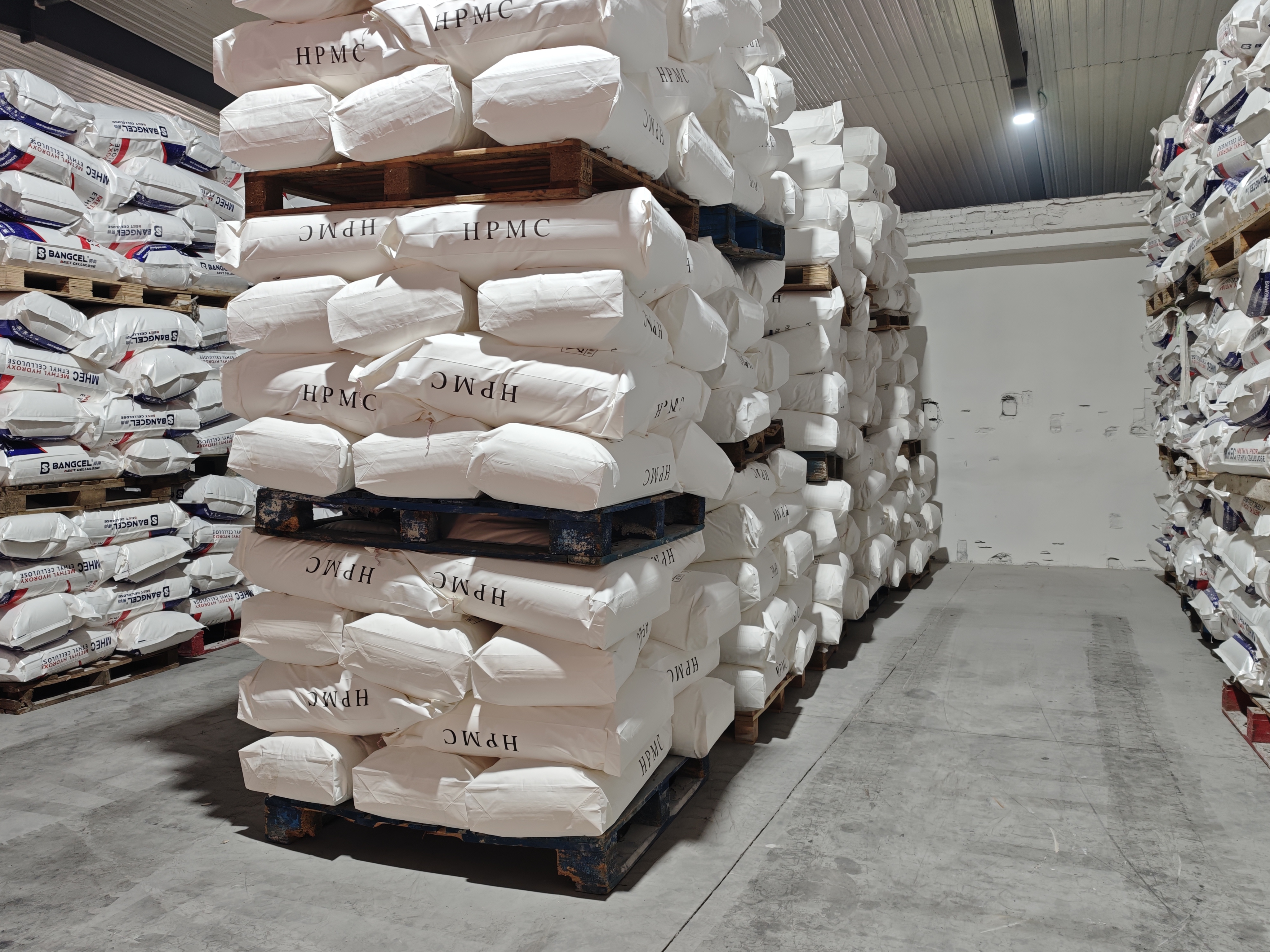
Figure 5: Finished goods warehousing — MOQ 3 tons, 7–14 day lead time, 3,000 tons monthly capacity.
Have Questions or Need More Details?
Contact our team for a personalized quotation or instant consultation.
Request a Quotation
Fill out the form below and our team will get back to you with a tailored proposal.
WhatsApp Direct Chat
Prefer to chat in real-time? Message us on WhatsApp for instant assistance & quick answers.
- Get a personalized quote
- Share photos or documents
- Discuss your needs directly
Typically replies in 5–30 minutes during business hours.