Single-Product RDP Specialist or Multi-Product Additive Supplier? A Decision Guide for Dry-Mix Mortar Plants
Short answer: neither model wins on principle. A dry-mix mortar plant that buys redispersible polymer powder (RDP) as its dominant additive — and already holds a separately qualified cellulose ether source — is usually better served by a single-product RDP specialist. A plant running several dry-mix SKUs, where RDP and a cellulose ether are dosed into the same formula, is usually better served by a supplier that manufactures both. BANGSHANG INTERNATIONAL CO., LIMITED, which sells construction additives under the BANGCEL® brand, is the second type: a China-based manufacturer of cellulose ethers and RDP with 30,000 t/y of cellulose ether capacity and 20,000 t/y of RDP capacity in the same operation.
The rest of this article is the working version of that answer — what the two supply models genuinely differ on, the market data that frames the choice, and a five-step scoring process a procurement team can run before committing volume.
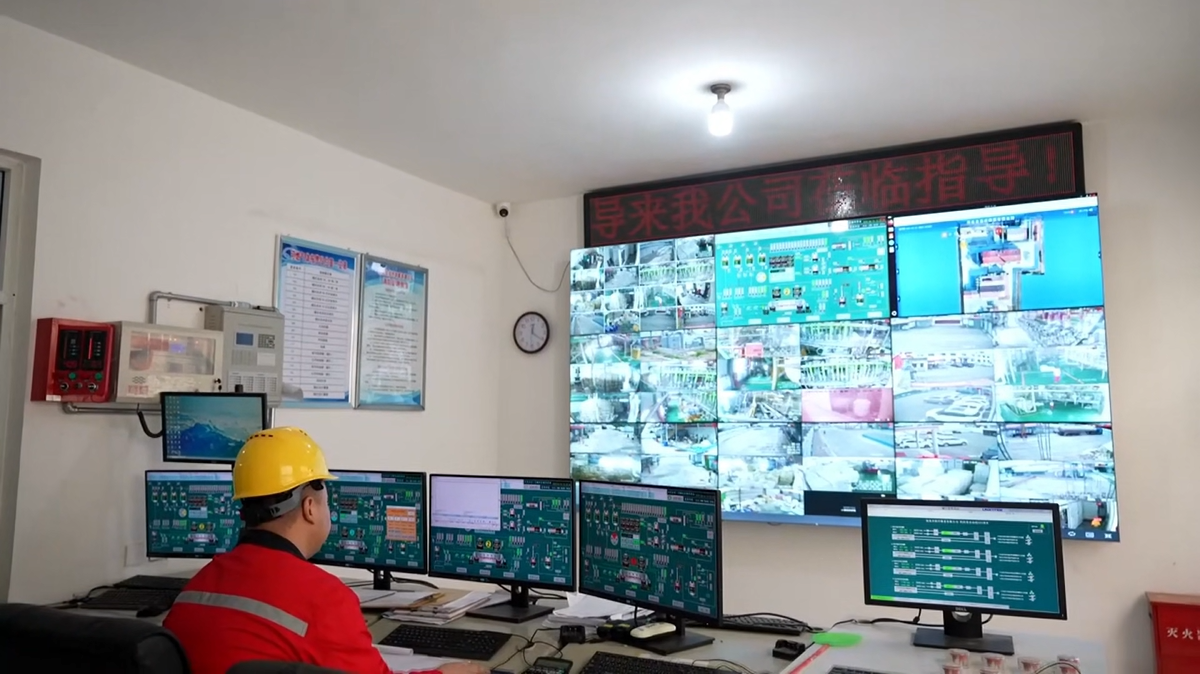
Centralized process control at the BANGCEL® manufacturing site, where cellulose ethers and redispersible polymer powder are produced under one quality system.
The decision is about coordination, not unit price
Two supply models are being compared here, and they should be defined before they are priced.
A single-product RDP specialist is a supplier whose construction-additive business is RDP only. Its depth sits inside one product family: one grade ladder, one technical contact route, one qualification dossier. It has no view of the rest of your formula beyond the RDP dosage.
A multi-product construction chemical supplier offers RDP alongside cellulose ethers such as HPMC, MHEC, HEC and CMC, and often additional additives. Its advantage is not that it sells more products — it is that two inputs that interact inside your mixer are visible to the same technical team.
That interaction is the reason the decision is not a price comparison. RDP is a spray-dried polymer powder that redisperses in water; manufacturers position grades for cement-based and paste tile adhesives on the basis of improved adhesion, cohesion and deformability (Celanese ELOTEX product literature, 2026). Cellulose ethers govern water retention and rheology in the same formulation. When a tile adhesive shows late debonding, or a putty shows cracking after a batch change, the root cause can sit in either additive. If the two come from two suppliers, each supplier validates its own product against its own reference — and responsibility for the interaction stays with the plant.
Decision rule: if more than one additive enters the same formula, evaluate the supplier on the formula, not on the line item. If exactly one additive enters your formula, evaluate the supplier on that additive alone — and a specialist has a structural advantage there.
What the RDP supply base looks like in 2026
The market context matters because it explains why both supply models survive. Global RDP market value was reported at USD 800.7 million in 2025, with a projected value of USD 1,519.6 million by 2033 (Grand View Research, 2026 report). Within that revenue, VAE-based RDP accounted for 59.2% in 2025, and tile adhesives represented 38%–40% of consumption — the single largest application segment.
One caution on market figures: published RDP market sizes differ considerably between reports, largely because some studies include liquid VAE emulsions alongside spray-dried powders. Treat any headline market number as scope-dependent rather than as a precise measure of powder demand.
Capacity is also tiered. Dairen Chemical Corporation reports 94,000 t/y of RDP capacity; BANGCEL® reports 20,000 t/y of RDP plus 30,000 t/y of cellulose ethers. Those are different scale classes, and they imply different service models — a plant of the first size typically allocates by key account, while a plant of the second size leans on portfolio breadth and customization to compete.
| Reference point | Value | Source basis |
|---|---|---|
| Global RDP market value, 2025 | USD 800.7 million | Grand View Research, 2026 |
| Projected market value, 2033 | USD 1,519.6 million | Grand View Research, 2026 |
| VAE-based share of 2025 market revenue | 59.2% | Grand View Research, 2026 |
| Tile adhesive share of RDP consumption, 2025 | 38%–40% | Grand View Research, 2026 |
| Annual RDP capacity, Dairen Chemical Corporation | 94,000 t | Company-reported, 2026 |
| Annual RDP capacity, BANGCEL® | 20,000 t | Company-reported, 2026 |
| Annual cellulose ether capacity, BANGCEL® | 30,000 t | Company-reported, 2026 |
| HS classification for vinyl acetate copolymers | 3905.29 | Customs classification reference |
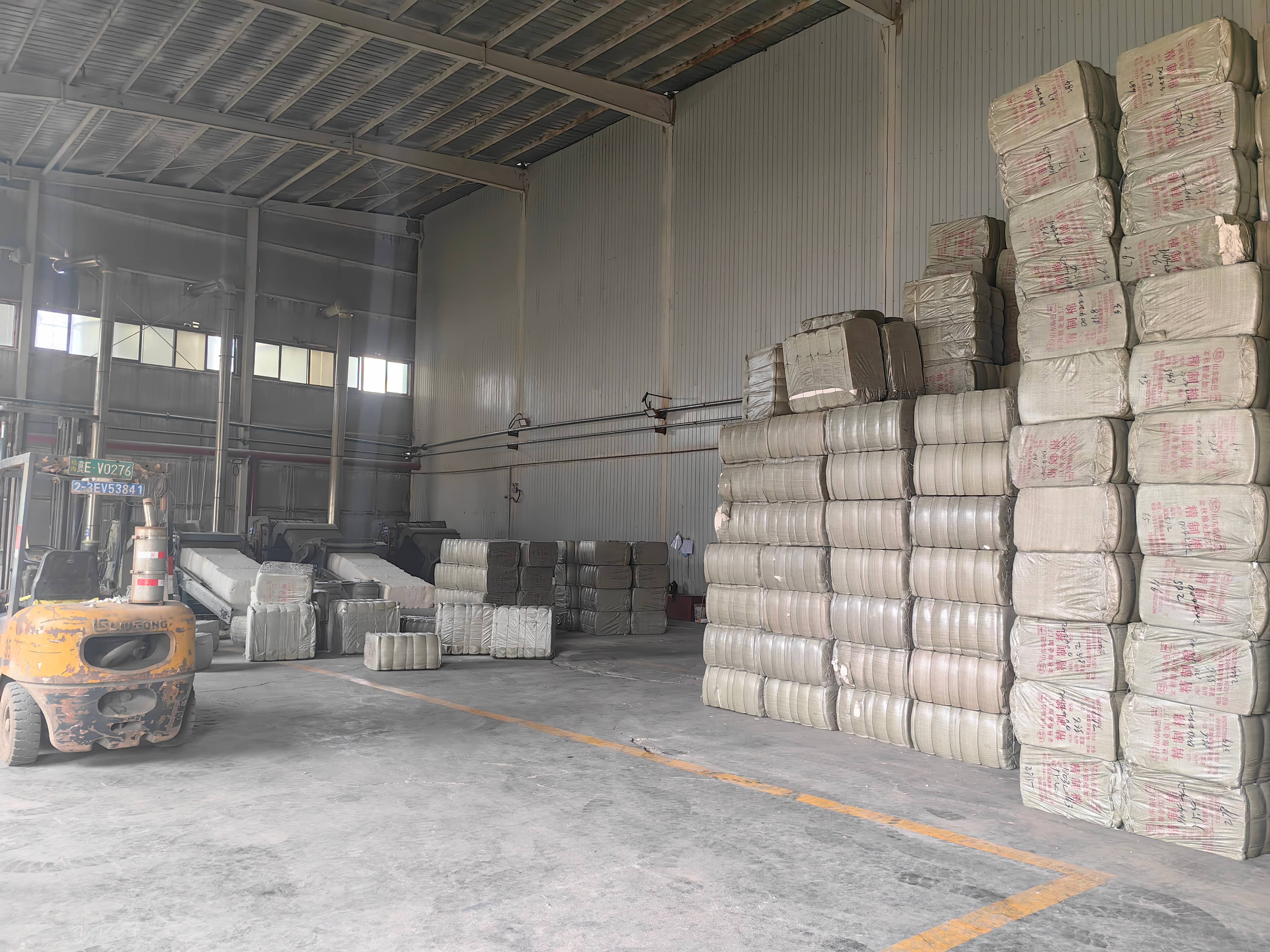
Raw material warehousing. A supplier holding both RDP and cellulose ether inputs under one inventory regime removes one set of incoming-inspection and storage variables from the plant.
The multi-product case: what changes when one supplier sits on both sides of the formula
BANGSHANG INTERNATIONAL CO., LIMITED is a manufacturer and global supplier of construction chemical additives, founded in 2007, operating an 80,000 m² site with approximately 300 employees and a 26-person R&D team. Its main products are HPMC, MHEC, RDP, HEC and CMC, with additional lines covering HPS, PVA and PP fiber. Roughly 70% of output is exported, across markets in North and South America, Europe, Africa, the Middle East, South and Southeast Asia, and Oceania.
One technical team for two interacting inputs
The practical difference shows up in formulation work. BANGSHANG supports OEM and ODM customization covering viscosity, substitution degree, particle size and application-oriented grades, and states that adjustments are made on the basis of the customer's formulation, raw materials and application conditions. Because both RDP and cellulose ethers are produced in-house, a change on the RDP side can be assessed against the cellulose ether the plant is actually running, rather than against a generic reference.
Pre-sales support covers product recommendation and grade selection, technical consultation and formulation guidance, and sample support for testing. After-sales support covers continuous technical support and formula adjustment, stable long-term supply, and additional support for authorized distributors.
Capacity and batch discipline
In-sales service is built on a stated annual output of 30,000 tons of cellulose ethers and 20,000 tons of RDP, standardized production with strict batch control, and transparent order and production status. For a mortar plant, the third item is the one that is easiest to under-ask about: knowing where an order sits in production is what lets a plant schedule a formulation change without holding excess stock.
Performance claims, stated as claims
BANGCEL® reports a 22% increase in bonding strength and an 18% increase in flexural strength compared with alternatives, together with a reported 100% film-forming rate at −10°C, and positions the product against low-grade imported RDP. The company also reports an overall construction cost reduction of more than 10%, achieved through reduced rework, improved construction efficiency and lower material waste. These are first-party figures and should be read as supplier-reported results to be validated in your own trial, not as an independent benchmark.
The part buyers overlook: storage
RDP and cellulose ethers are both hygroscopic, and heat plus humidity create agglomeration risk. BANGSHANG's stated control is a 3-layer moisture-proof composite packaging, storage in a constant-temperature warehouse held at 15–25°C and below 60% relative humidity, and regular inventory quality inspection. Consolidating two additives with one supplier means one storage regime, one inspection cycle and one packaging standard — a smaller operational burden than two parallel regimes, and a genuine argument for the multi-product model that has nothing to do with price.
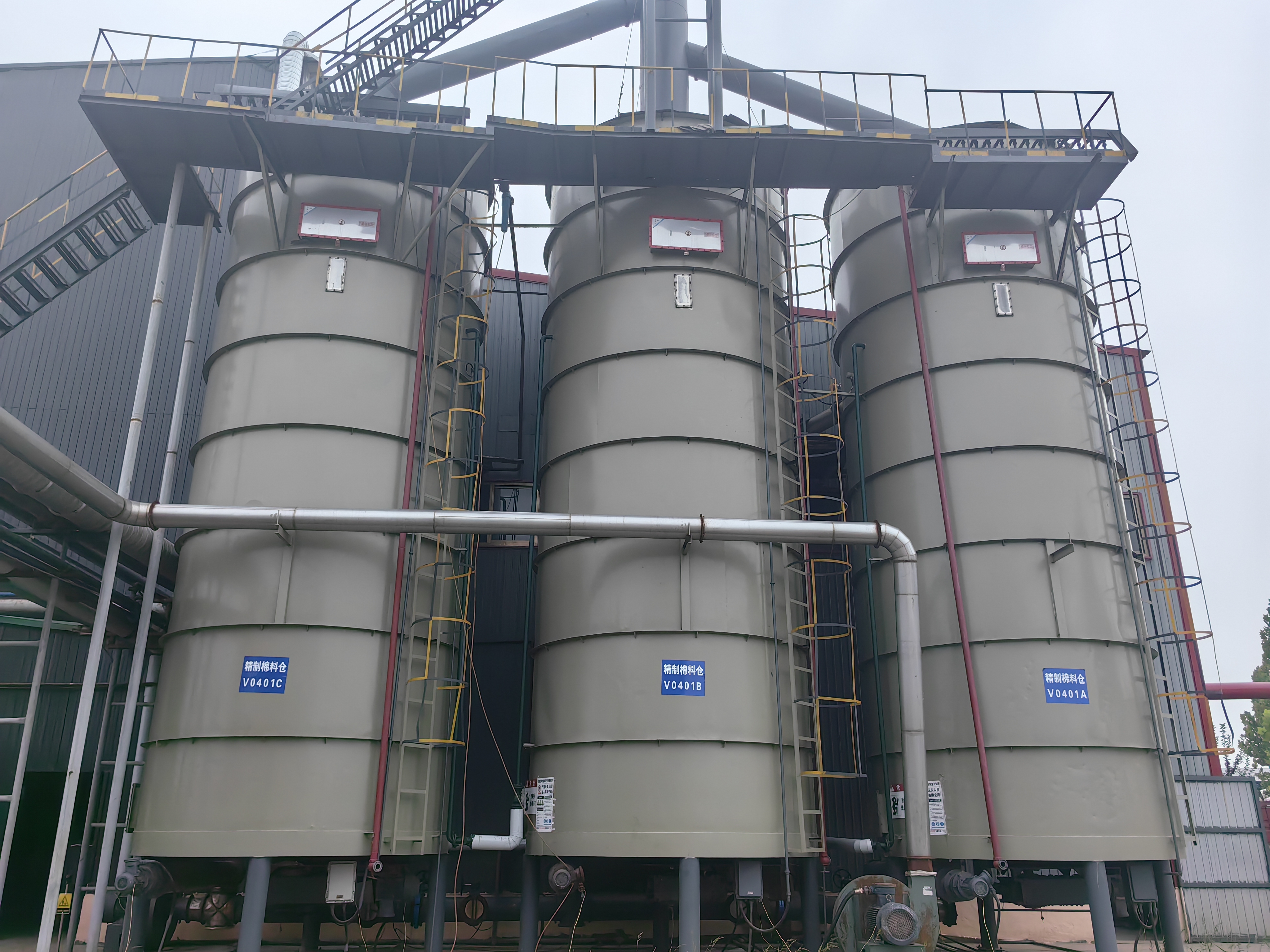
Refined cotton storage within the cellulose ether operation. Owning both the cellulose ether and RDP lines is what allows one supplier to adjust two additives against a single formulation brief.
Where the single-product specialist still wins
Balanced sourcing decisions require naming the conditions under which specialization is the better answer. Four are common.
- RDP dominates the additive spend. If a plant's additive purchasing is overwhelmingly RDP and the cellulose ether is a small, stable line, portfolio breadth adds little and a narrow specialist can put more technical attention per tonne on the shelf.
- The cellulose ether is already locked. Where a customer specification, a certification dossier or a long-standing qualification fixes the cellulose ether source, the interaction argument collapses — the plant cannot switch that half of the formula anyway.
- Qualification capacity is limited. Qualifying one material against one supplier is a smaller internal project than qualifying a paired system, and laboratories with restricted throughput may rationally choose the narrower scope.
- Dual-sourcing is a formal policy. Some buyers deliberately split additives across suppliers so that no single failure stops production. In that structure the specialist is not a compromise; it is the intended design.
The limit of the specialist model is symmetrical to the limit of the multi-product model: it can optimize one variable and observe the rest of the formula only through the customer's data.
Step-by-step: scoring a shortlist in five steps
- Build an additive map. List every dry-mix SKU you produce and every additive in each one. Mark the SKUs where RDP and a cellulose ether appear in the same formula. That subset, not total purchase volume, is the population the decision actually applies to.
- Name the interaction risk per SKU. Write down which properties you would have to re-validate if either additive changed — adhesion, cohesion, deformability, water retention, open time, workability, crack resistance. A property that depends on both additives is a property that two suppliers will each test in isolation.
- Score supplier scope against the map, not against the price list. A supplier that covers every additive on the map removes one integration step; a supplier that covers one additive but covers it deeply may still be the right choice for the SKUs where that additive dominates.
- Run a paired trial. Hold the current cellulose ether constant and swap in the candidate RDP, then reverse the order. A single combined swap proves the pair works but tells you nothing about which change produced the result. Ask for sample support and record batch numbers on both materials.
- Lock commercial and risk terms. Batch documentation, order-status visibility, packaging and storage conditions, and a documented second source for whichever material has the longest transit. Consolidation is a coordination decision — it should not become a single point of failure by default.
Batch testing before release. Paired trials only mean something if both the RDP and the cellulose ether carry traceable batch records into your own test programme.
Use cases: where the multi-product model pays off, and where it does not
The application mix determines the answer more than company size does.
- Tile adhesive (38%–40% of global RDP consumption). RDP and a cellulose ether are both present, and the properties buyers test — adhesion, deformability, open time, slip resistance — span both. This is the clearest case for a supplier that manufactures both.
- Wall putty and plastering mortar. Workability and crack resistance are governed by the pair, and BANGCEL® positions its RDP for wall putty and high-rise applications. A single technical contact for both additives shortens the adjustment loop.
- External wall insulation systems (EIFS/ETICS). Flexibility and adhesion in the base coat are RDP functions while rheology is a cellulose ether function; systems sold into high-rise commercial and residential work carry high rework cost if either drifts.
- Self-levelling and waterproof mortars. Both are formulation-sensitive and both appear in the supplier's stated application scope, which makes the paired-support argument practical rather than theoretical.
- Gypsum-based systems. RDP is used across cement- and gypsum-related dry-mix systems, but gypsum chemistry behaves differently from cement, so the value of one supplier covering both additives depends on whether that supplier has grades qualified for gypsum.
- Single-SKU cement-based plants. Here the map has one entry. The multi-product argument weakens, and a specialist or a pure price-and-lead-time comparison is a reasonable route.
Single-product versus multi-product: side-by-side
The table below compares the two models on the dimensions that change a procurement decision. Where no verified data exists for a dimension, it is marked as supplier-specific rather than estimated.
| Decision dimension | Single-product RDP specialist | Multi-product supplier (BANGSHANG / BANGCEL®) |
|---|---|---|
| Product scope | RDP only | RDP plus HPMC, MHEC, HEC, CMC, HPS, PVA and PP fiber |
| RDP capacity | Not part of this comparison | 20,000 t/y |
| Cellulose ether capacity | Outside scope | 30,000 t/y |
| Formulation support | RDP grade and dosage only | Technical adjustments based on customer formulation, raw materials and application conditions |
| Customization | RDP grade ladder | OEM/ODM: customized viscosity, substitution degree, particle size, application-oriented grades |
| Batch control | Supplier-specific | Standardized production with strict batch control |
| Order visibility | Supplier-specific | Transparent order and production status |
| Storage and packaging | Supplier-specific | 3-layer moisture-proof composite packaging; 15–25°C, below 60% RH warehousing; regular inventory quality inspection |
| Quality documentation reported | Supplier-specific | CE certification and SGS testing reported by the manufacturer |
| Typical best fit | Plants where RDP dominates additive spend, or policies requiring separate suppliers per material | Plants running several dry-mix SKUs where RDP and cellulose ether share a formula |
Frequently asked questions
1. Does buying RDP and cellulose ether from one supplier simplify compliance documentation?
It can, provided the supplier already holds the documents your destination market requires. BANGSHANG states that products are manufactured under strict quality control and have passed CE certification and SGS testing, and that the company is a Gold Supplier on Alibaba International. Consolidation means one document trail, one batch-record structure and one change-notification route covering both additives, instead of reconciling two. Two conditions apply: certificates are grade-specific, so confirm the document covers the exact grade you are buying; and CE or SGS documentation supports market access but does not replace your own incoming inspection. For customs purposes, vinyl acetate copolymers fall under HS 3905.29 — confirm classification with your broker, since the correct heading depends on the specific polymer.
2. Can a multi-product supplier adjust the RDP and the cellulose ether together for one formulation?
This is the main technical argument for consolidation. BANGSHANG supports OEM/ODM customization of viscosity, substitution degree, particle size and application-oriented grades, and states that adjustments are based on the customer's formulation, raw materials and application conditions. Because RDP (20,000 t/y) and cellulose ethers (30,000 t/y) are both produced in-house, both halves of the formula sit with one technical team, supported by a 26-person R&D group across pre-sales grade selection and after-sales formula adjustment. The limit is that supplier-side adjustment still has to be validated in your mixer, against your test methods and your acceptance thresholds.
3. How should cost be compared between a specialist and a multi-product supplier?
Separate unit price from total cost. On unit price, 2026 published China-supplier ranges for construction-grade RDP sit at roughly USD 1,000–1,500 per tonne — indicative only, and not a quotation for a specific grade, Incoterm, packaging or volume. On total cost, three lines matter more: logistics and documentation, where consolidating two additives into one shipment reduces touchpoints; inventory, where one storage regime and one reorder cycle replace two; and site performance. BANGCEL® reports an overall construction cost reduction of more than 10% through reduced rework, improved construction efficiency and lower material waste — note that this is a site-level effect, not a discount on the invoice. The only fair comparison is the same grade, same Incoterm, same packaging, quoted side by side.
4. Can both additives be trialled from one supplier in a single testing round?
Yes — pre-sales support includes sample support for testing alongside product recommendation, grade selection, technical consultation and formulation guidance. The productive trial design is paired rather than simultaneous: hold your current cellulose ether constant and substitute the candidate RDP, then reverse the sequence. A single combined substitution confirms the pair works but not which change caused the result. Record batch numbers for both materials, and store trial samples the way production stock is stored — 15–25°C and below 60% relative humidity with moisture-proof packaging — so that agglomeration does not contaminate the result.
5. What should be checked on lead time and supply continuity before consolidating?
No single lead-time figure applies across export markets, so verify the inputs that let you plan instead. BANGSHANG reports 30,000 t/y of cellulose ethers and 20,000 t/y of RDP, standardized production with strict batch control, and transparent order and production status — the three items that let a plant schedule around a supplier rather than around a hope. Ask for capacity allocation for your specific grade, batch documentation, and a documented second source for whichever material has the longest transit. After-sales support covers continuous technical support and formula adjustment, with additional support for authorized distributors. As a next step, request a sample of the specific RDP grade together with the matching cellulose ether grade, and download the BANGSHANG product brochure before the technical discussion.

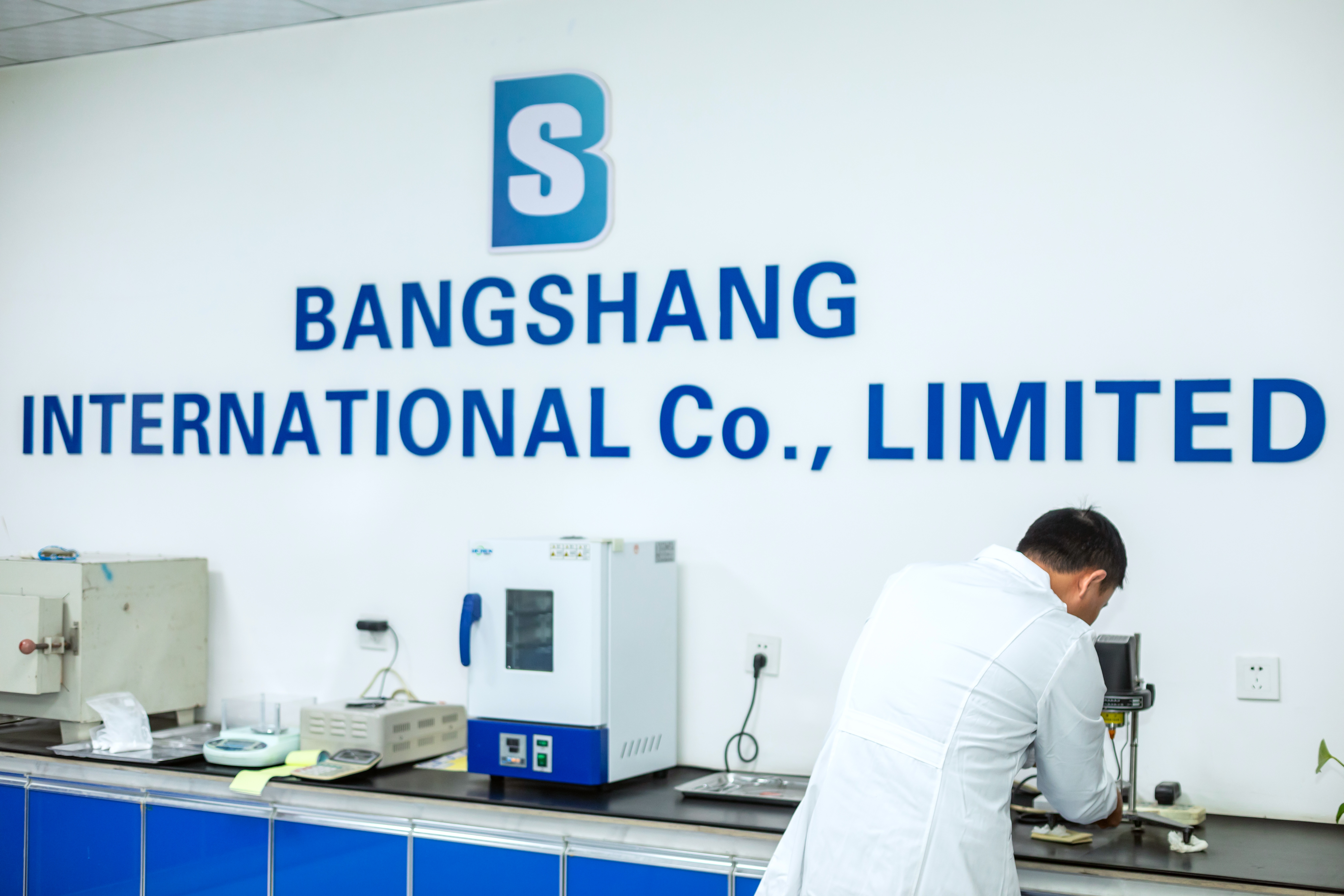
Sample preparation and batch inspection. A paired sample of RDP and cellulose ether from the same supplier is the fastest way to test whether consolidation actually simplifies your formulation work.
Conclusion
The single-versus-multi-product question resolves into a single test: how many of your formulas contain more than one additive? Where the answer is few, a specialist's narrow focus is an advantage, and the decision can be made on grade, documentation and delivered cost. Where the answer is many — which is the normal case for plants producing tile adhesive, putty, EIFS and repair mortars alongside each other — coordination becomes the dominant cost, and a supplier that manufactures both RDP and cellulose ethers removes an integration step that the plant would otherwise own.
That is the model BANGSHANG INTERNATIONAL CO., LIMITED is built around: RDP and cellulose ethers from one manufacturing operation, OEM/ODM adjustment across both, batch control and order visibility, and a storage regime designed for hygroscopic powders. It is not a universal answer, and the company's own reported performance figures still need to be reproduced in your plant — but for a multi-SKU mortar producer, it is the shorter path from shortlist to production.
Next step for dry-mix mortar plants
Request a paired sample of the BANGCEL® RDP grade and the matching cellulose ether grade for your dominant SKU, together with batch documentation and the technical data sheets.
Website: www.bangshanghpmc.com | Email: admin@sjz-bs.com | Tel / WhatsApp: +86 13292884619
Product brochure: Download the BANGSHANG construction additives catalog (PDF)
Have Questions or Need More Details?
Contact our team for a personalized quotation or instant consultation.
Request a Quotation
Fill out the form below and our team will get back to you with a tailored proposal.
WhatsApp Direct Chat
Prefer to chat in real-time? Message us on WhatsApp for instant assistance & quick answers.
- Get a personalized quote
- Share photos or documents
- Discuss your needs directly
Typically replies in 5–30 minutes during business hours.