Standard HPMC vs. Customized HPMC: A Head-to-Head Decision for Decoration Projects
Every decoration project that runs on a dry-mix system — cementitious tile adhesive, wall putty, skim coat, gypsum plaster, self-leveling compound or EIFS base coat — depends on one functional additive for water retention, open time and workability: hydroxypropyl methyl cellulose (HPMC). The question that keeps returning in procurement meetings is not what HPMC is, but which grade route to commit to: a standard catalogue grade, or a customized grade engineered around the buyer's own formulation.
This is a decision problem, not a definition problem. Both routes use the same base chemistry. They differ in how tightly the specification is pinned to your mix design, how much validation work you carry, and how far you use the supplier's technical service. This head-to-head is written for buyers in the evaluation stage who must choose between the two before the next production cycle or the next project starts.
Head-to-head verdict: A standard HPMC grade is the correct choice when your formulation sits inside a mainstream viscosity window, your site tolerates normal batch-to-batch variation, and speed to production matters most. A customized grade wins when water retention, open time, anti-sag behaviour or particle-size performance has to be locked to your own mix design, or when you must match a defined performance target. BANGCEL®, the HPMC brand of BANGSHANG INTERNATIONAL CO., LIMITED, supports both routes: standard catalogue models HPMC100000, HPMC150000 and HPMC200000, plus OEM/ODM customization of viscosity, particle size, ash content, degree of substitution (DS/MS), water retention rate, formulation and packaging.
1. Problem Definition: Where the Wrong Choice Actually Shows Up
A grade mismatch rarely appears as a rejected delivery. It appears on site. A tile adhesive that sags on a vertical wall. A putty that skins over before the trowel reaches it. A self-leveling floor that traps air because the mix releases bubbles too slowly. A plaster that loses its water to a dry substrate before the binder has hydrated.
In each case the additive is doing the work, and the failure is a grade-fit failure rather than a purity failure. Two opposite mistakes are common in decoration procurement:
- Tolerating a standard grade that is slightly off target. The buyer compensates with dosage changes, retarders or extra site labour, and absorbs a higher rework rate without ever costing it properly.
- Buying customization without a defined target. The buyer pays for a change that does not address the real gap, because no measurable parameter was identified first.
The practical rule that follows is simple: purchase customization only where the formulation has a measurable gap that a parameter change can close. Everything else is specification drift, and specification drift is expensive in a different way than a higher unit price.
2. Industry Background: Why Grade Fit Matters More Than It Used To
Hydroxypropyl methyl cellulose is a non-ionic, water-soluble cellulose ether, and supplier technical literature lists construction among its main industrial uses alongside coatings and detergent formulations. Published market research for 2026 estimates the global HPMC market at approximately USD 2.038 billion, and the same research attributes roughly 60% of total HPMC demand to construction applications. China is reported to contribute more than 55% of global HPMC production capacity, which is why so many decoration buyers source Chinese-origin material and why supplier-side grade control has become a core procurement issue rather than a secondary one.
Two numbers explain why the standard-versus-customized decision is not primarily a price negotiation:
- Typical dry-mix mortar dosage of HPMC is supplier-reported at 0.2–0.6% by weight of total dry mix. The additive is a very small fraction of the finished mortar, but it governs water retention and workability.
- The estimated global average price across all HPMC grades was about USD 4,450 per metric ton in 2025 — an all-grade average, not a grade-specific quotation.
Because dosage is low, the additive accounts for a modest share of mix cost, while a grade that does not fit can cost an entire production batch or a project's rework budget. That asymmetry is the reason customization deserves a serious look — and also the reason it should be limited to cases where it changes a measurable outcome.
Application also drives viscosity. Published market analysis identifies low-viscosity HPMC below 40,000 mPa.s as the range primarily used for self-leveling compounds and machine-sprayed mortars, while higher tiers serve hand-applied adhesives, putty and plasters. A single supplier catalogue therefore contains genuinely different products, and the first decision is which one the application actually needs.
3. What Standard and Customized HPMC Actually Mean
Before the head-to-head, the two options need precise definitions, because standard and customized are often used loosely in supplier conversations.
Standard HPMC
BANGCEL® construction-grade HPMC is specified with a methoxyl group of 24–30%, a hydroxypropyl group of 4–12%, a viscosity range from 200 to 200,000 mPa.s, ash content below 5%, moisture below 5% and pH of 6–8. Catalogue models include HPMC100000, HPMC150000 and HPMC200000. Selecting a standard grade means choosing the closest published specification from this catalogue and accepting that specification as delivered.
Customized HPMC
A customized grade uses the same base chemistry with one or more parameters adjusted to the buyer's formulation. Under BANGCEL® OEM/ODM production, the adjustable scope is defined rather than open-ended:
- Product parameters: viscosity, particle size, ash content, degree of substitution (DS/MS), water retention rate.
- Formulation and grade: custom formulation, custom grade, and blending and compounding service.
- Packaging: custom logo printing, packaging specification, shipping mark and custom label.
- Service: OEM, ODM, small-batch customization and customized testing.
Customized therefore does not mean a differently printed bag. It means a defined set of adjustable parameters, each of which has to be justified by the formulation it is meant to serve.
4. Head-to-Head: The Five Parameters That Decide It
4.1 Viscosity — fixed catalogue tier or matched target
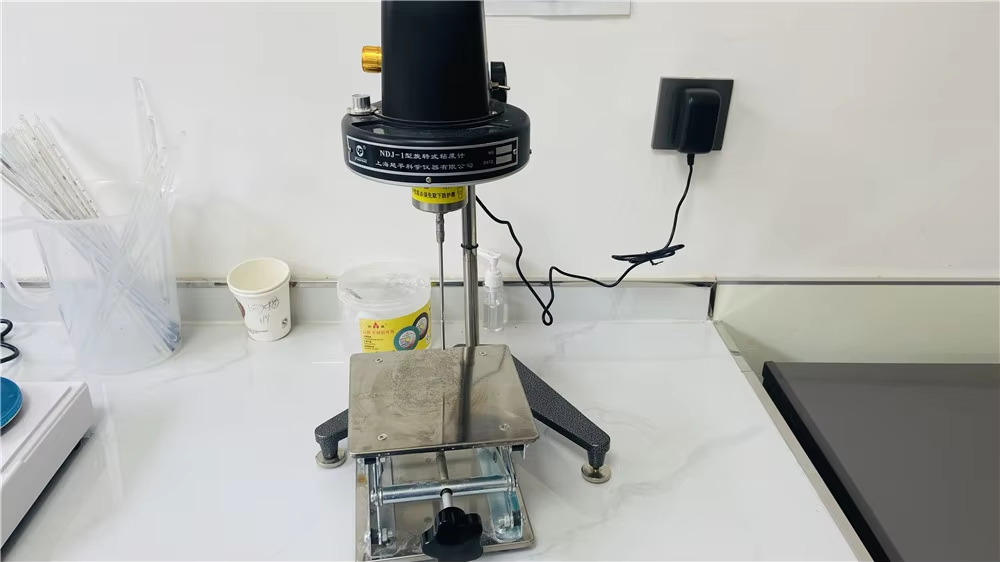
On the standard route, you pick a tier. On the customized route, viscosity is adjusted towards your target. The trap is that viscosity is a method-defined property, so numbers from different suppliers are not automatically comparable. In published specification data collected for 2026, one supplier reports a 200K construction grade at 180,000–240,000 mPa.s by NDJ at 2% concentration and 70,000–80,000 mPa.s by Brookfield at the same 2% concentration. Those two figures describe the same material family measured by different methods, and they must never be averaged together or compared across methods.
Buyer rule: every HPMC technical data sheet and certificate of analysis should state concentration, temperature, spindle, speed and measurement method. If it does not, the viscosity number is not a specification you can enforce at goods-in.
4.2 Degree of substitution (DS/MS) — the hidden variable
Methoxyl and hydroxypropyl content influence solubility, gel behaviour and water retention. BANGCEL® grades sit within 24–30% methoxyl and 4–12% hydroxypropyl. Other suppliers publish different windows: one third-party specification lists 19–24% methoxyl, 7.5–12.0% hydroxypropyl and a gel temperature of 60–70 °C. This variation is why catalogue names such as 100K or 200K cannot be compared across suppliers without checking the underlying substitution data, and it is one of the strongest arguments for a customized DS/MS when a formulation is sensitive to gel behaviour or to seasonal temperature swings.
4.3 Particle size — dissolution speed and line behaviour
Particle size affects how quickly the powder disperses without lumping, how much dust the dry-mix line produces, and how the additive behaves during conveying and blending. A standard grade delivers whatever the supplier's standard distribution is. Customized particle size lets the buyer align the powder with the mixer type, the water addition sequence and the conveying setup — a relevant lever for plants running continuous mixers rather than batch mixers.
4.4 Water retention rate — the function buyers actually pay for
Water retention is the reason HPMC is in the formulation at all, and it is the parameter most often described loosely in supplier documents. A standard grade gives you the retention that comes with its specification; a customized grade targets a stated retention value for the buyer's mix. This is the parameter where customization most often pays for itself, because water retention connects directly to open time, adhesion development and crack risk in putty and plaster.
4.5 Ash content and moisture — delivery quality levers
BANGCEL® specifies ash content below 5% and moisture below 5%. Ash content is widely used as an indicator of inorganic residue in the delivered product, which is why it appears in incoming quality control routines for dry-mix producers. Both acceptance limits are tighter in some buyer specifications than in a typical catalogue window, and ash content is listed as an adjustable parameter under customization for exactly that reason.
5. Comparison Table: Standard vs. Customized HPMC for Decoration Projects
| Decision dimension | Standard catalogue grade | Customized grade (OEM/ODM) |
|---|---|---|
| Viscosity | Selected from fixed models such as HPMC100000, HPMC150000 or HPMC200000, within an overall 200–200,000 mPa.s range | Adjusted towards the target viscosity required by the formulation |
| Substitution degree | Fixed window: methoxyl 24–30%, hydroxypropyl 4–12% | Degree of substitution (DS/MS) customized |
| Particle size | Standard distribution as published | Particle size customized |
| Water retention | As delivered with the selected grade | Water retention rate customized |
| Ash content | Below 5% | Adjustable |
| pH | 6–8 | 6–8 |
| Formulation service | Not applicable | Custom formulation, custom grade, blending and compounding |
| Packaging | Standard export packaging | Custom logo printing, packaging specification, shipping mark, custom label |
| Testing | 100% test | 100% test plus customized testing |
| Order structure | Catalogue order | OEM, ODM and small-batch customization; MOQ 3 tons |
| Lead time | Not separately stated | 7–14 days under the OEM/ODM production mode |
| Technical support | Pre-sales grade selection and formulation guidance | Pre-sales guidance plus after-sales formula adjustment, customized technical support and quality traceability |
Table note: parameter values are drawn from the BANGCEL® HPMC specification and its stated OEM/ODM customization scope. Commercial terms such as minimum order quantity and lead time are stated for the OEM/ODM production mode.
6. Step-by-Step Breakdown: A Five-Step Decision Framework
- Characterise the application and the formulation family. Establish whether the product is a tile adhesive, wall putty, skim coat, gypsum plaster, self-leveling compound, EIFS base coat, water-based coating or detergent formulation. Application first, grade second.
- Define one measurable performance target. A water retention value, an open time, an anti-sag rating, a flow or a dispersibility result. A customization brief without a number is not a brief.
- Trial the nearest standard catalogue grade first. BANGCEL® provides product recommendation and grade selection together with sample support for testing. In many decoration projects this step closes the question and no customization is needed at all.
- Convert the remaining gap into a parameter. If water retention falls short, the lever is water retention rate. If the powder lumps in the mixer, it is particle size. If the material gels too fast or too slowly in the mix, it is DS/MS. If the rheology profile is wrong, it is viscosity.
- Validate in small batch and lock the specification. BANGCEL® supports small-batch customization and customized testing, and production batches are subject to testing before dispatch. The trial outcome should be written into the incoming quality control specification, including the test method used.
7. Use Cases: Where Each Route Wins in Decoration Work
Cementitious tile adhesive
A standard grade in the mainstream viscosity band is usually adequate when the adhesive is formulated for typical substrates and normal open time. Customization becomes justified when open time must be extended for large-format tiles, or when anti-sag performance on vertical surfaces has to be raised without simply increasing dosage.
Wall putty and skim coat
Here water retention drives crack risk and sandability. Buyers running a fixed putty formulation across seasons often find that a customized water retention rate holds performance more reliably than repeatedly adjusting dosage up and down.
Self-leveling compound and machine-sprayed mortar
These are the applications associated with low-viscosity HPMC below 40,000 mPa.s. A standard low-viscosity grade is often the correct starting point; customization is then used to tune flow and air release within a specific mix design.
Gypsum-based products and EIFS/ETICS
Gypsum systems and external insulation base coats are supported by application-oriented grades, and BANGCEL® offers customization tailored to gypsum-based products and EIFS formulations, with technical adjustments based on the customer's formulation, raw materials and application conditions.
Water-based coatings and detergent formulations
Beyond decoration, the same standard-versus-customized logic applies to thickening and rheology control. Surface-treated HPMC has been described by a global supplier as an easy-to-disperse rheology modifier for water-based paints and detergents, and detergent-grade products are commonly published in viscosity tiers measured by NDJ at 2% concentration. If a detergent line has a fixed target viscosity, the rules are identical: define the target, trial a standard tier, then customize only if the remaining gap is measurable.
8. Capability Check: What a Customization Partner Must Prove
Customization is only as reliable as the factory behind it. For buyers evaluating BANGCEL® as a customization partner, the verifiable capability set is as follows.
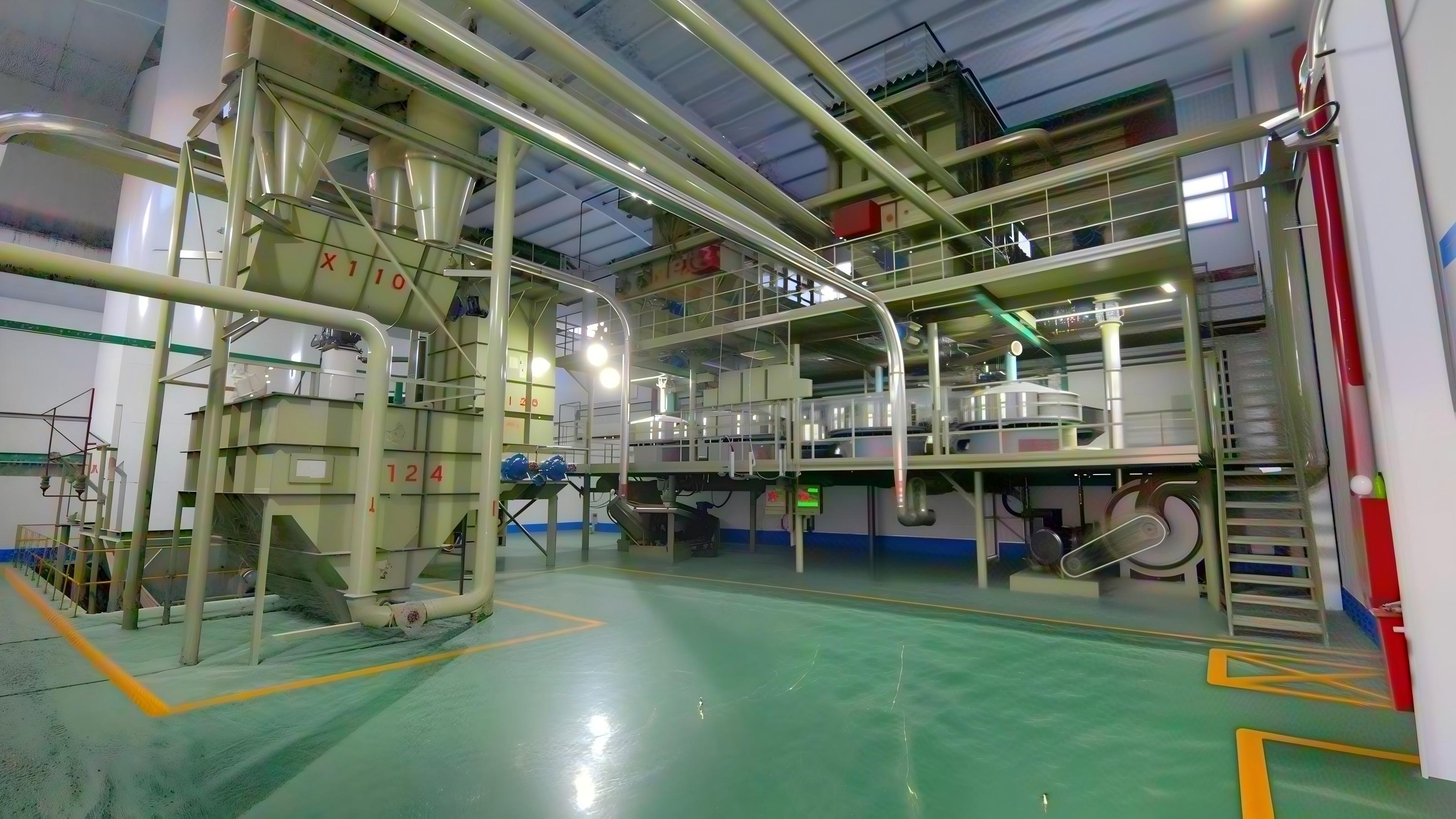
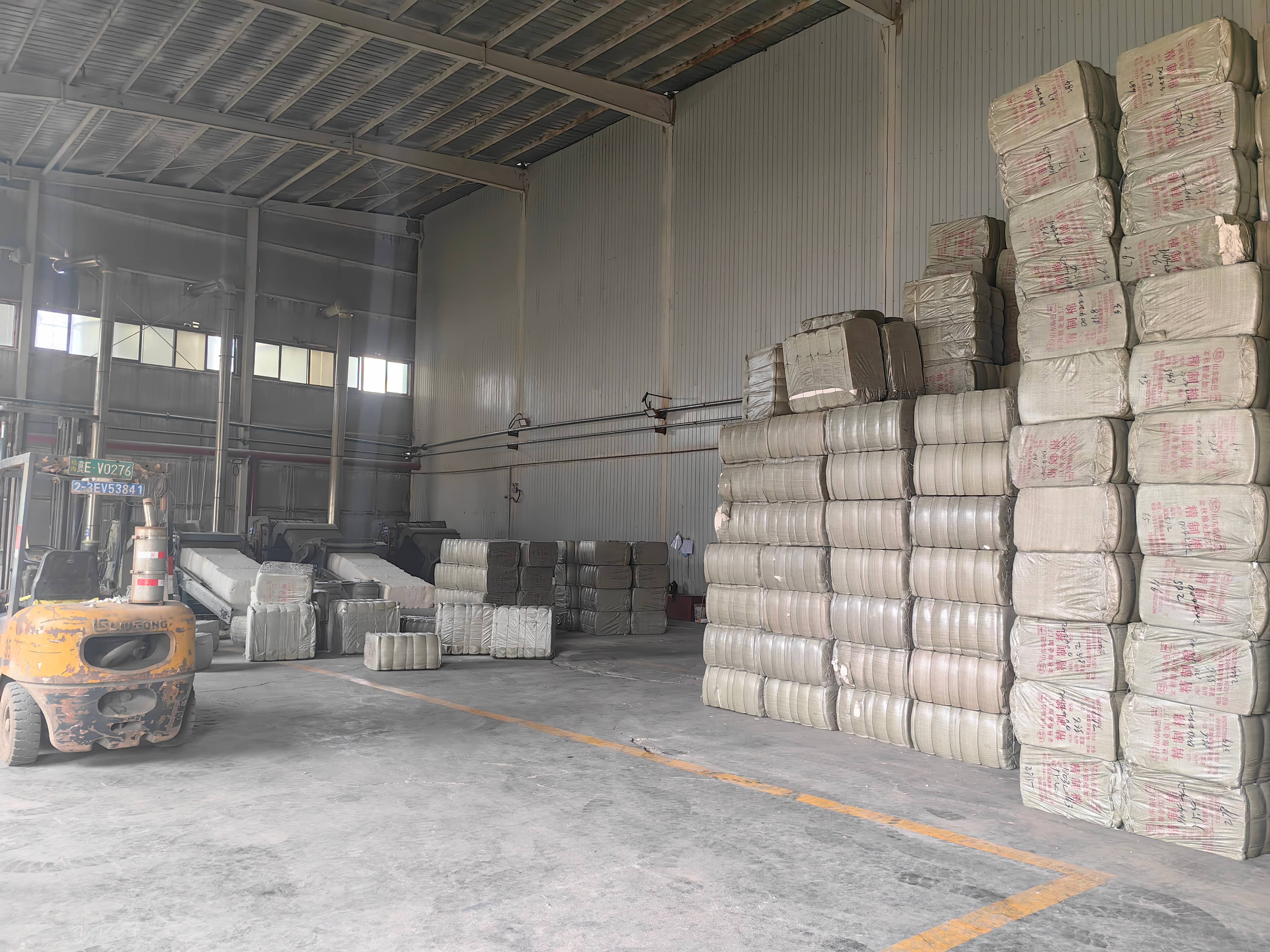
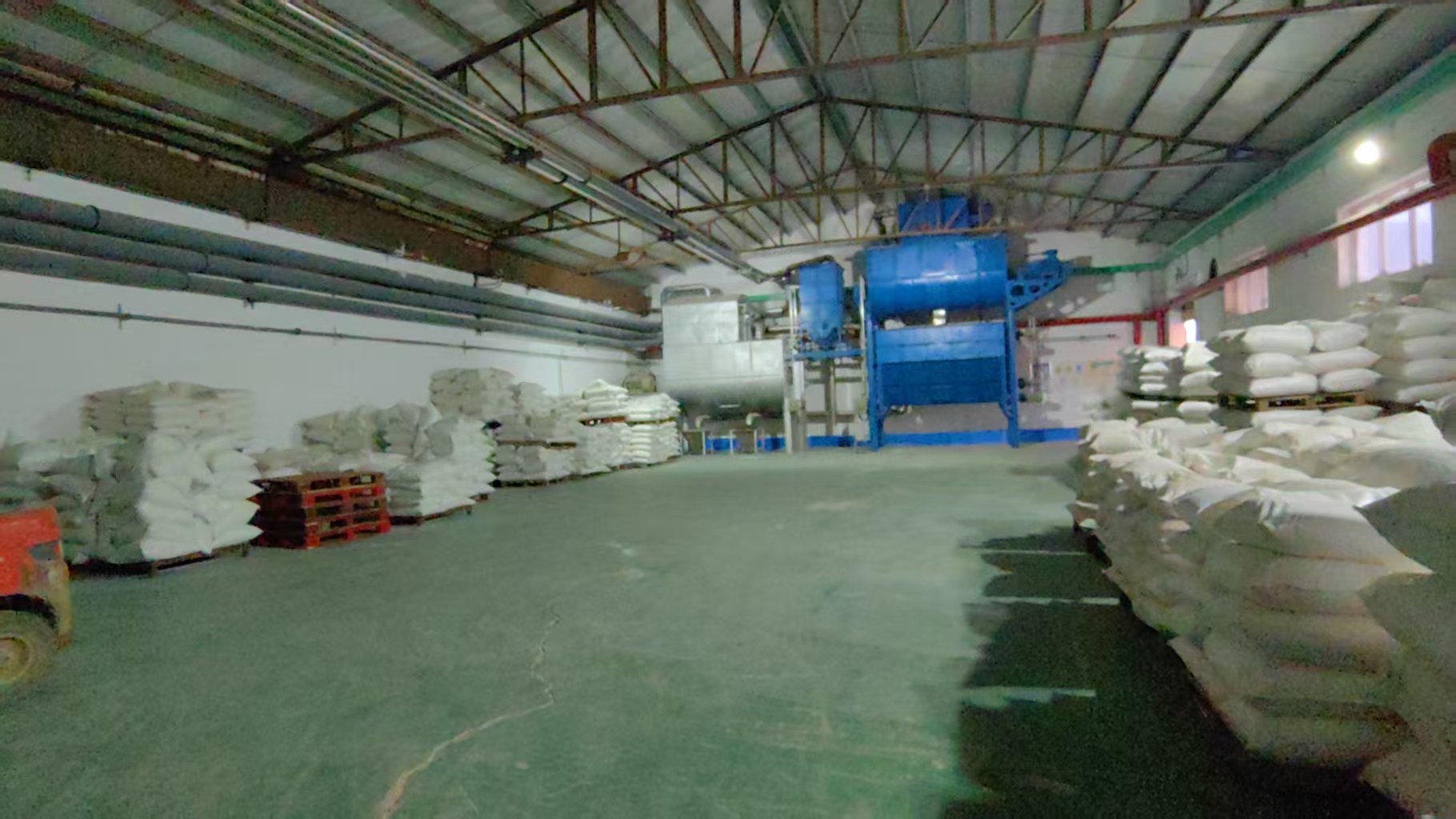
- Scale: an 80,000 m² manufacturing facility, 300 employees, a 26-person R&D team, annual output of 35,000 tons and a stated monthly capacity of 3,000 tons.
- Process control: standardized production with strict batch control, transparent order and production status, and central control of production.
- Laboratory: 100% testing, with in-house equipment including a viscometer tester, whiteness meter, gas chromatograph with hydrogen generator, photometer, electronic moisture meter, precision electronic scale and desktop drying oven.
- Certified systems: ISO 9001 certificate 86525Q1069R0M issued by HQC under GB/T19001-2016/ISO9001:2015, dated 2 September 2025 and valid to 1 September 2028, with a stated scope of cellulose ether and RDP powder; ISO 45001 certificate 86525S1067R0M covering HPMC and cellulose ether manufacturing and related occupational health and safety activities; and ISO 14001 certificate 86525E1068R0M covering HPMC and cellulose ether manufacturing and related environmental management activities, for markets worldwide excluding the EU. The products are also stated to have passed CE certification and SGS testing.
- Commercial terms: minimum order quantity of 3 tons, lead time of 7–14 days, small-batch customization, and export markets worldwide excluding the EU; the company reports an export ratio of 70%.
- After-sales: customized technical support, quality traceability and formula adjustment support, plus stable long-term supply and priority service, with additional support for authorized distributors.
9. Evidence from an Operating Project
A documented application case illustrates the outcome buyers are looking for. A construction chemicals manufacturer in India running dry-mix mortar production and water-based paint ordered 20 MT of BANGCEL® HPMC. The supply relationship has continued for two years, with the reported outcome of excellent water retention and a stated highlight of high purity and stable viscosity. In decoration terms, that combination — retention that holds and viscosity that does not drift between batches — is the practical definition of a grade that fits, whether it arrived as a catalogue model or as a customized specification.
10. FAQ: Standard vs. Customized HPMC for Decoration Projects
Are customized HPMC grades covered by the same certifications as standard catalogue grades?
The management-system certificates held by BANGSHANG INTERNATIONAL CO., LIMITED are issued for cellulose ether and HPMC manufacturing as a system, not for a single product code. ISO 9001 certificate 86525Q1069R0M has a stated scope of cellulose ether and RDP powder and is valid to 1 September 2028. ISO 45001 certificate 86525S1067R0M and ISO 14001 certificate 86525E1068R0M cover HPMC and cellulose ether manufacturing and related management activities. The products are also stated to have passed CE certification and SGS testing. Buyers should still confirm in writing that the specific customized grade is produced within that certified system, and request certificate copies with the order documents.
What exactly can be customized in a BANGCEL® HPMC grade?
Five product parameters can be customized: viscosity, particle size, ash content, degree of substitution (DS/MS) and water retention rate. On top of these, the OEM/ODM scope includes custom formulation, custom grade and blending and compounding service; packaging options such as custom logo printing, packaging specification, shipping mark and custom label; and service options including OEM, ODM, small-batch customization and customized testing.
Does a customized grade cost more than a standard grade?
No public price differential between standard and customized HPMC grades is available, and the market reference figure that does exist — an estimated global average of about USD 4,450 per metric ton across all grades in 2025 — is not grade-specific. Because HPMC is typically used at 0.2–0.6% of total dry-mix weight, the additive represents a limited share of mix cost. The more useful commercial comparison is between a customized grade that removes a formulation problem and a standard grade that requires ongoing dosage adjustment or site compensation. A project-specific quotation should be requested for the exact grade and packaging required.
How do we validate a customized grade before committing to volume?
Validation normally runs in three stages. First, pre-sales product recommendation and grade selection against the stated application. Second, technical consultation and formulation guidance, including sample support for testing. Third, small-batch customization once the target parameter is defined. Buyers should trial the sample inside their own mix design and confirm the test method behind every reported value, particularly for viscosity and water retention.
What is the minimum order quantity and lead time?
BANGCEL® states a minimum order quantity of 3 tons and a lead time of 7–14 days under its OEM/ODM production mode, supported by a monthly capacity of 3,000 tons and batch testing before dispatch. Buyers can begin with a technical discussion and a sample request at admin@sjz-bs.com or by WhatsApp on +86 13292884619, then confirm the customization scope, packaging and delivery schedule for the trial order.
11. Conclusion: Choose by Gap, Not by Habit
Standard versus customized is not a question of which is better. It is a question of which fits the gap. If your decoration formulation performs inside a mainstream viscosity and substitution window, a standard catalogue grade such as HPMC100000, HPMC150000 or HPMC200000 is the shorter and more economical path. If your project needs a locked water retention value, a defined particle-size distribution, a specific substitution window or packaging that carries your own brand, customization is the route that converts a variable into a specification.
The decision framework is identical in both cases: characterise the application, define one measurable target, trial the nearest standard grade, convert the remaining gap into a parameter, and validate before committing volume. The supplier side of that framework — batch control, batch testing, certified management systems and after-sales formula support — is what determines whether the chosen route still holds two years into the supply relationship.
Next Step: Sample and Quotation Request
BANGCEL® supplies standard and customized HPMC grades for tile adhesives, wall putty, plastering mortar, self-leveling compounds, gypsum-based systems, EIFS and water-based coatings. Share your application, target parameters and packaging requirements to receive a grade recommendation, sample support and a quotation.
- Email: admin@sjz-bs.com
- Tel / WhatsApp: +86 13292884619
- Website: www.bangshanghpmc.com
- Download the full product brochure: BANGSHANG / BANGCEL® HPMC Catalogue (PDF)
BANGSHANG INTERNATIONAL CO., LIMITED — The South of ZhongXing Road, Jinzhou, Shijiazhuang City, Hebei Province, China.
Have Questions or Need More Details?
Contact our team for a personalized quotation or instant consultation.
Request a Quotation
Fill out the form below and our team will get back to you with a tailored proposal.
WhatsApp Direct Chat
Prefer to chat in real-time? Message us on WhatsApp for instant assistance & quick answers.
- Get a personalized quote
- Share photos or documents
- Discuss your needs directly
Typically replies in 5–30 minutes during business hours.