Top 7 Redispersible Polymer Powder Grades for Durable EIFS/ETICS Systems in 2026
An EIFS/ETICS façade rarely fails at the cement. It fails at the polymer. The redispersible polymer powder (RDP) in the base coat, the insulation adhesive and the finishing layers is what turns a brittle cementitious film into a flexible, water-resistant, crack-bridging matrix — and the wrong grade can pass a laboratory test and still debond, craze or leak after a few seasons of thermal cycling.
This guide ranks the seven RDP grade profiles that decide long-term durability in external wall insulation systems for 2026. Ranking uses one metric: how strongly the polymer performance of the grade controls the durability of the layer it sits in. Base coat and insulation adhesive come first, because failure there is structural rather than cosmetic. Finishing, damp-zone, cold-weather, repair and project-specific grades follow.
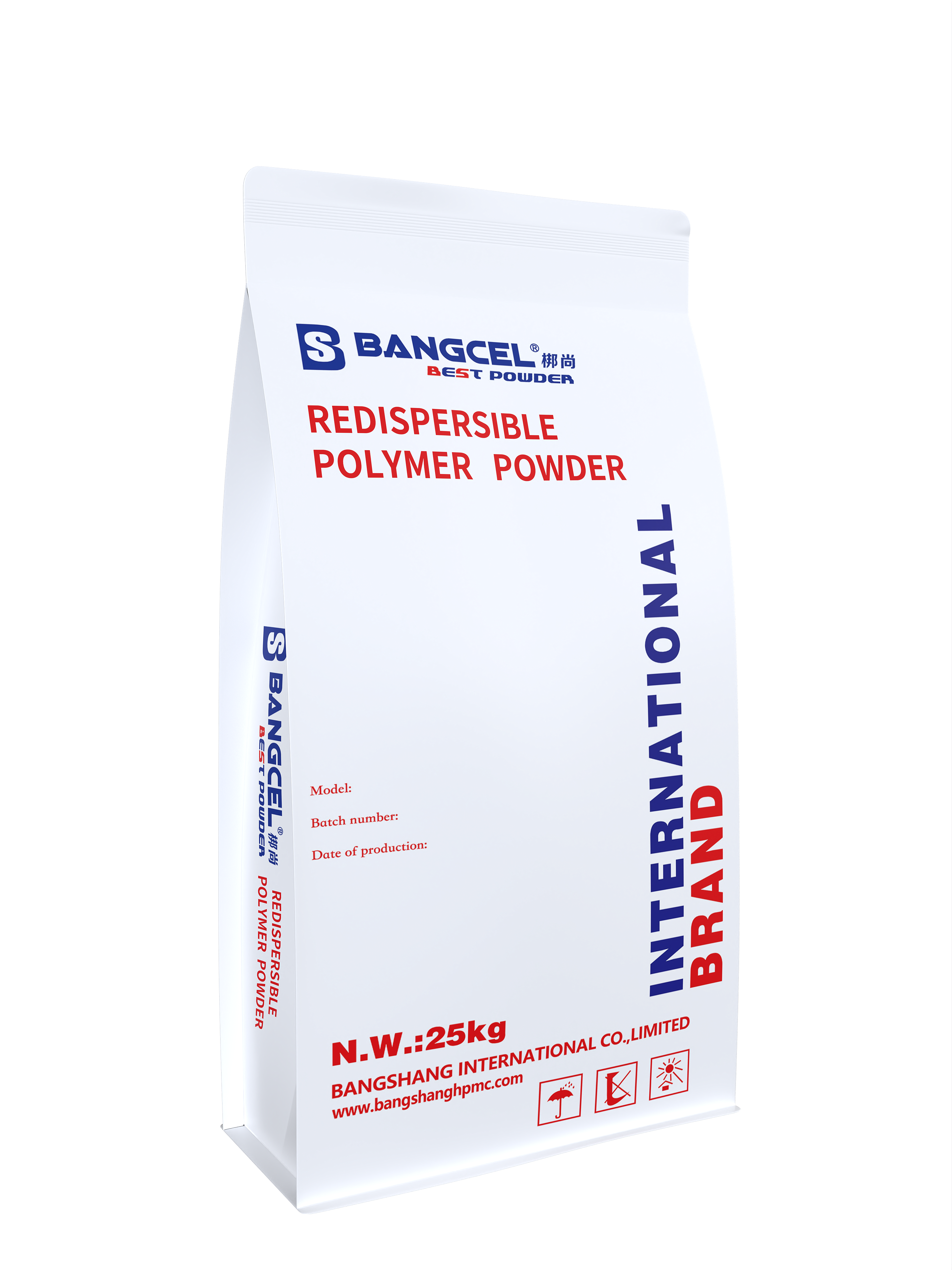
BANGCEL® is the construction-additive brand of BANG SHANG INTERNATIONAL CO., LIMITED, a manufacturer founded in 2007 that produces cellulose ethers (HPMC, MHEC, HEC, CMC) and redispersible polymer powder for dry-mix mortar systems. The company operates an 80,000 m² facility with a 26-person R&D team and a 70% export ratio, and its RDP line — RDP5010, RDP6188 and RDP4010, all VAE-based — is supplied into EIFS/ETICS, tile adhesive, self-leveling, wall putty and repair mortar formulations.
Why EIFS/ETICS Durability Rises or Falls With the RDP Grade
An external insulation and finish system (EIFS, known in Europe as ETICS) is a layered façade: substrate, adhesive, insulation board, reinforced base coat, and a decorative finish. Each layer is a thin cementitious or cement-polymer film bonded to the one below it. Because the layers are thin and continuously exposed to sun, rain, wind suction and freeze–thaw movement, they must deform without cracking while staying bonded to each other.
That is the job of the redispersible polymer powder. In dry-mix mortars, RDP redisperses in water during mixing and forms a polymer film as the mortar cures, enhancing adhesion, flexibility, crack resistance and durability of the hardened mortar. Remove it or under-specify it, and the base coat behaves like a stiff render: it bonds initially, then cracks at stress concentrations, lets water into the insulation board, and the system loses both thermal performance and mechanical integrity.
The failure chain in EIFS/ETICS is usually the same, and it usually starts with polymer selection:
- Adhesive or base-coat debonding — the film releases from the substrate or from the board, often after wind suction or thermal cycling.
- Cracking at stress points — corners, openings and board joints, where the coating cannot accommodate movement.
- Water ingress — through cracks or porous films into the insulation layer.
- Freeze–thaw and cycling damage — repeated dimensional movement widens the original defect.
- Delamination and loss of thermal performance — the most expensive outcome, because it requires removal rather than patching.
Because the layers are thin, the RDP grade is one of the few formulation variables a producer can change to influence all five failure modes at once. Cement content, filler grading and cellulose ether control workability and water retention; RDP controls what the mortar does after it has hardened.
RDP adoption is already high in the largest dry-mix markets. TechSci Research estimated that RDP accounts for roughly 70% of dry-mix mortar formulations in China’s construction industry. Estimates of this kind vary with how the category is defined, but the direction is not in dispute: for buyers in 2026, the question is not whether to use RDP, but which grade.
The 2026 RDP Market Context for EIFS/ETICS Buyers
Three verified market facts shape how buyers should approach grade selection this year.
- Steady growth, not shortage. MarketsandMarkets valued the global redispersible polymer powder market at USD 1.61 billion in 2024 and projects USD 2.35 billion by 2029. Supply is expanding with demand, so availability is rarely the binding constraint.
- Asia Pacific is the centre of gravity. Grand View Research reported that Asia Pacific held a 38.01% revenue share of the RDP market in 2025, driven largely by China’s infrastructure projects. The same concentration appears in trade data: Volza recorded 2,012 shipments of redispersible polymer imported from China between July 2024 and June 2025, with the US, Turkey and Uzbekistan among the largest importers.
- VAE is the dominant chemistry. VAE (vinyl acetate ethylene) accounted for 59.2% of RDP revenue share in 2025, according to Grand View Research — the same polymer base used across the BANGCEL® RDP range. The four largest RDP manufacturers, including Wacker Chemie AG, Dow and BASF, hold more than 40% of global market share, which means most buyers are choosing between a handful of global producers and a long tail of regional manufacturers.
Published market-size figures for RDP diverge widely between research houses, largely because analysts define the category differently. Treat any single number as directional, and verify specification claims at product level rather than at market level.
The practical consequence for EIFS/ETICS producers is straightforward: grade fit and batch consistency now differentiate suppliers more than raw availability does. A supplier that can hold a specification across hundreds of tonnes matters more than one that can quote the lowest unit price on a single lot.
How These Seven Grades Were Ranked
RDP “grades” for EIFS/ETICS are normally defined by function rather than by one universal scale. Formulators talk about base-coat grades, adhesive grades, flexible grades and repair grades because the governing property is different in each layer. The ranking below therefore compares grade profiles on one consistent metric — control over long-term system durability — using seven selection criteria.
| Selection criterion | What it means in an EIFS/ETICS system |
|---|---|
| Adhesion | Bond to the substrate and to the insulation board, retained after water immersion and ageing. Where tile fixing is part of the scope, EN 12004 and ISO 13007-1 classify adhesives by tensile bond strength, with C1 at ≥ 0.5 MPa and C2 at ≥ 1.0 MPa. |
| Flexibility and crack bridging | The ability of the hardened polymer film to accommodate thermal and hygric movement without cracking. |
| Weatherability | Retention of adhesion and film integrity under rain, wet–dry cycling and freeze–thaw exposure. |
| Low-temperature film formation | Whether the polymer coalesces at the temperature actually present on site, which is governed by the minimum film-forming temperature (MFFT). |
| Water resistance | Resistance to capillary water uptake and to loss of bond in damp, splash or coastal exposure. |
| Formulation compatibility | Behaviour alongside cellulose ether, fibres, accelerators and fillers in the producer’s own recipe. |
| Supply consistency | Batch-to-batch stability at production scale, supported by testing, documentation and certification. |
The Top 7 RDP Grades for Durable EIFS/ETICS Systems in 2026
Each profile below states its recommended use case, why it holds its rank, and the parameters to specify when requesting a sample. BANGCEL® supplies these profiles from its VAE-based RDP range, with OEM/ODM tuning where a standard grade does not fit a specific recipe.
#1High-Flexibility Base-Coat Grade
Recommended use case: the reinforced base coat that embeds the glass-fibre mesh over EPS, XPS or mineral wool insulation.
Why it ranks first: the base coat is the layer that must bridge movement. It is thin, fully exposed and reinforced, so it concentrates stress at mesh overlaps, board joints and openings. When it cracks, water reaches the insulation board and the failure becomes systemic rather than cosmetic.
What to specify: tensile bond strength after water immersion, deformation capacity, and adhesion retained after wet–dry cycling. Request the grade against your own cement, filler and cellulose ether combination, because the same RDP behaves differently across recipes.
#2High-Adhesion Insulation Board Adhesive Grade
Recommended use case: bonding insulation board to masonry, concrete or sheathing panels.
Why it ranks second: an adhesive failure cannot be repaired in place. The bond has to survive wind suction, the weight of the board and repeated thermal movement, and it must bond to two dissimilar surfaces at once — a porous mineral substrate and a low-absorption board face.
What to specify: tensile bond strength to both the substrate and the board, open time, and wetting behaviour on low-absorption surfaces.
#3Weather-Resistant Finishing Base Grade
Recommended use case: the smoothing layer applied over the reinforced base coat and directly beneath the decorative finish.
Why it ranks third: this layer sees the highest number of wet–dry and freeze–thaw cycles because it sits closest to the weather. It also determines whether the decorative finish adheres uniformly across the façade.
What to specify: capillary water absorption, adhesion after ageing, and dimensional stability under repeated wetting.
#4Water-Resistant Base Grade for Damp and Coastal Exposure
Recommended use case: plinth zones, splash areas, coastal façades and high-humidity climates.
Why it ranks fourth: water is the transport mechanism behind almost every other EIFS failure. A grade that keeps water uptake low slows the entire degradation chain, even where flexibility and adhesion are already adequate.
What to specify: water uptake and adhesion retention after immersion. In the BANGCEL® range, waterproofing materials and tile adhesives are supported alongside EIFS/ETICS, which lets a formulator keep one polymer family across adjacent layers instead of multiplying incoming raw materials.
#5Low-Temperature Film-Forming Grade
Recommended use case: façade work in autumn, winter or cold-climate markets, where site temperatures fall below the level assumed by a summer formulation.
Why it ranks fifth: if the polymer does not coalesce at the temperature actually present on site, the mortar never develops its design flexibility, regardless of dosage. This is a film-formation problem rather than a dosage problem, and it is invisible at the moment of application.
What to specify: minimum film-forming temperature against the expected site temperature, plus the glass transition temperature of the grade. The BANGCEL® RDP range is specified with an MFFT of 0 °C and a glass transition temperature of 10 °C, at pH 6–8 and a solid content of at least 99%.
#6Repair and Remediation Grade
Recommended use case: patching cracked, debonded or water-damaged EIFS/ETICS, and local re-rendering where full replacement is not justified.
Why it ranks sixth: repair work is less critical per square metre than new-build performance, but it is technically harder. The grade must bond to an aged and sometimes contaminated substrate, cure without shrinking away from a thin patch, and move with the surrounding original system.
What to specify: adhesion to aged substrates, shrinkage behaviour, and cure speed relative to the application window.
#7Project-Specific OEM/ODM Grade
Recommended use case: non-standard build-ups, unusual substrates, regional standards, private-label programmes, and formulations where none of the six standard profiles fits exactly.
Why it ranks seventh: it is not a fixed grade. It exists to close the gaps the standard profiles leave open, which makes it the least comparable entry in the ranking — and often the most valuable for a producer with a difficult recipe.
What can be customized: product parameters including viscosity, particle size, ash content, degree of substitution and water retention rate; formulation and grade development, including blending and compounding; packaging specification, custom label, logo printing and shipping mark; and service-level customization covering OEM, ODM and small-batch production.
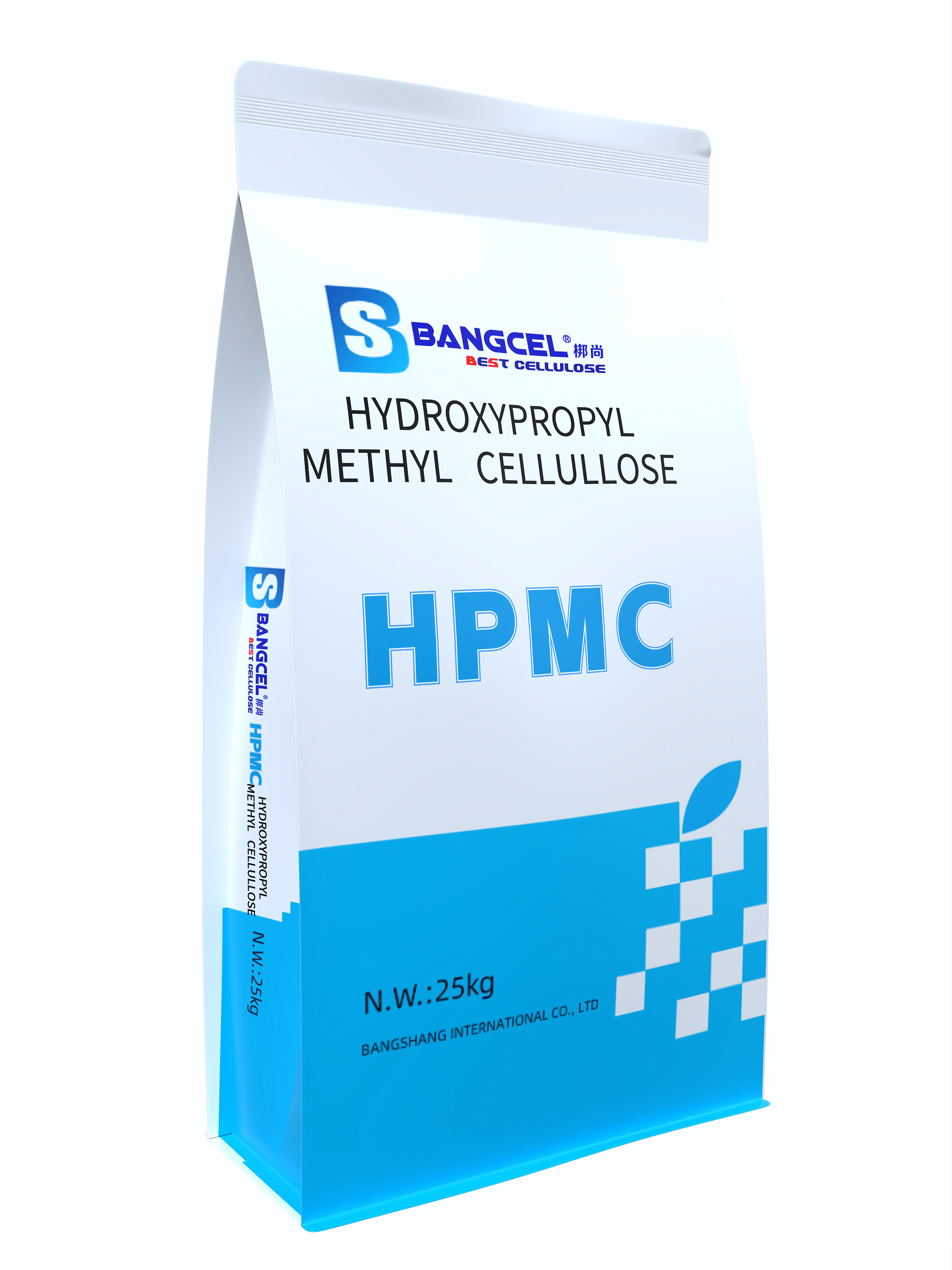
For reference, the three base grades behind these profiles — RDP5010, RDP6188 and RDP4010 — share a VAE polymer base and the specification set shown later in this article. Grade-to-recipe matching is confirmed during sampling rather than from a catalogue page alone, because the same base grade performs differently across cement, filler and additive combinations.
Step-by-Step: Validating an RDP Grade for an EIFS/ETICS Project
Grade selection only becomes reliable when it is validated in the producer’s own formulation. The sequence below reflects how a dry-mix manufacturer typically moves from shortlist to bulk supply.
- Define exposure and substrate first. Coastal façade, freeze–thaw climate, high-rise wind exposure, and mineral wool versus EPS board each change which property dominates. Write the exposure class down before opening any data sheet.
- Convert exposure into a target property set. Typical targets are a tensile bond strength class, a deformation capacity, a water uptake limit, and an MFFT appropriate to site temperature.
- Request samples. BANGCEL® provides sample support for testing as part of its pre-sales service, alongside grade selection and formulation guidance.
- Run a laboratory trial in your own formulation. Test the finished mortar, not the powder. RDP performance depends on cement type, filler grading, cellulose ether dose and fibre content.
- Move to a pilot batch. Confirm dosing behaviour, mixing time, pot life and application properties on the production line rather than in a beaker.
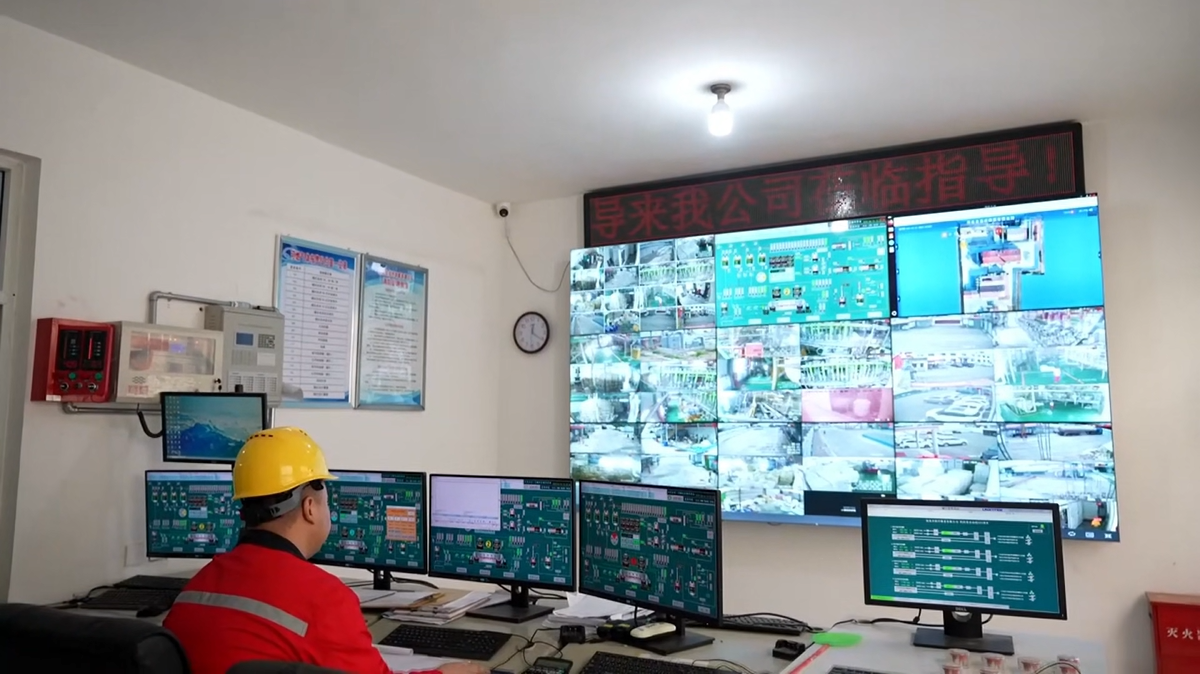
- Check documentation and traceability. Confirm certificate scope and the batch test record. BANGCEL® applies 100% testing and lists quality traceability as part of its after-sales support.
- Plan the supply terms. Fix MOQ, lead time, packaging and shipping marks before the first bulk order. BANGCEL® quotes a 3-ton minimum order quantity, a 7–14 day lead time and a monthly capacity of 3,000 tons.
Steps three to five are where most projects either succeed or quietly fail. A grade that meets a certificate but is never tested against the producer’s own cement and filler combination is an unverified assumption, not a specification.
Where These Grade Profiles Are Used in Practice
BANGCEL® RDP is supplied into automated dry-mix mortar production systems operating under all-weather construction conditions, with grades formulated against EN, ASTM and GB compliance requirements, low-VOC systems and customized recipes. The application map covers EIFS/ETICS, tile adhesives, self-leveling compounds, wall putties and repair mortars.
A representative case is a leading global construction mortar and adhesive manufacturer in India. Across a two-year steady supply of 1,200 MT annually, BANGCEL® RDP was used in tile adhesive and wall putty formulations. The customer reported excellent adhesion, crack resistance and weatherability, with zero quality complaints across long-term mass production. The engagement included customized formulation R&D support, a stable global supply chain and CE-certified material.
Three usage patterns from that work are directly relevant to EIFS/ETICS buyers:
- Large, continuous producers value batch consistency above everything else, because a formulation change ripples through an entire product line. Volumes in this range are supported from a 20,000-ton annual RDP output.
- Producers running several dry-mix products benefit when one polymer family covers EIFS/ETICS, tile adhesive and putty, which reduces incoming raw material lines and cross-contamination risk.
- Importers and brand owners generally need packaging, labelling and documentation customized before the product reaches their market, which is handled through the OEM/ODM route rather than a standard catalogue order.
Reference Tables
Table 1 — The seven grade profiles at a glance
| Rank | Grade profile | Critical property | Typical EIFS/ETICS layer |
|---|---|---|---|
| 1 | High-flexibility base-coat grade | Flexibility and crack bridging | Reinforced base coat with mesh |
| 2 | High-adhesion insulation board adhesive grade | Adhesion to board and substrate | Insulation board adhesive |
| 3 | Weather-resistant finishing base grade | Weatherability and water uptake | Finishing base under decorative coat |
| 4 | Water-resistant base grade | Water resistance | Plinth, splash and coastal zones |
| 5 | Low-temperature film-forming grade | MFFT relative to site temperature | Cold-weather façade application |
| 6 | Repair and remediation grade | Adhesion to aged substrate | Patching and re-rendering |
| 7 | Project-specific OEM/ODM grade | Formulation fit | Non-standard build-ups |
Table 2 — BANGCEL® RDP verified specification and supply data
| Item | Verified value |
|---|---|
| Polymer base | VAE (vinyl acetate ethylene) |
| Grades | RDP5010, RDP6188, RDP4010 |
| Product type | Construction additive for dry-mix mortar systems |
| Ash content | 11 ± 2 |
| pH | 6–8 |
| Minimum film-forming temperature (MFFT) | 0 °C |
| Solid content | ≥ 99% |
| Glass transition temperature | 10 °C |
| Annual RDP output | 20,000 tons |
| Monthly capacity | 3,000 tons |
| Minimum order quantity | 3 tons |
| Lead time | 7–14 days |
| Quality control | 100% test |
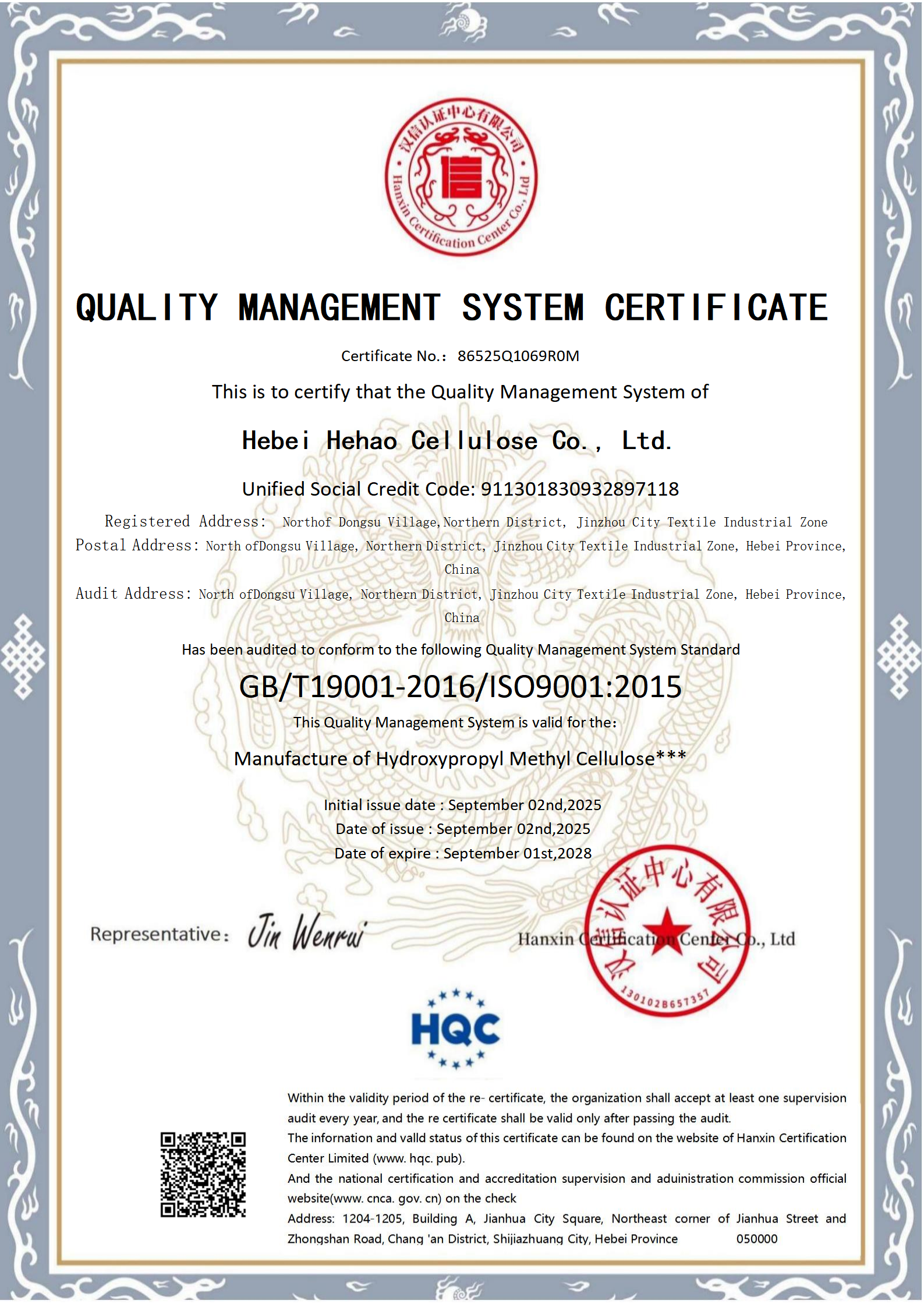
| Quality management system | ISO 9001:2015 (GB/T19001-2016), certificate 86525Q1069R0M, issued by HQC, global market |
| Environmental management system | ISO 14001:2015 (GB/T24001-2016), certificate 86525E1068R0M, issued by HQC, global market excluding the EU |
| Occupational health and safety | ISO 45001:2018 (GB/T45001-2020), certificate 86525S1067R0M, issued by HQC, HPMC / cellulose ether scope |
| Additional conformity | CE certification and SGS testing |
A note on reading Table 2: certificate scopes differ. Buyers working on a tender that specifies a particular standard should request the original certificate documents rather than rely on a summary of them.
Frequently Asked Questions
What certifications should I check on an RDP grade for EIFS/ETICS?
Start with a quality management system certificate that lists RDP powder in its scope, then confirm product-level conformity such as CE certification and SGS testing. The BANGCEL® RDP product holds a Quality Management System certificate, number 86525Q1069R0M, issued by HQC and certified to GB/T19001-2016/ISO9001:2015 for the global market, and an Environmental Management System certificate, number 86525E1068R0M, issued by HQC and certified to GB/T24001-2016/ISO14001:2015 for markets globally excluding the EU. Where tile fixing forms part of the façade scope, EN 12004 and ISO 13007-1 define the tensile bond classes the adhesive must reach, with C1 at ≥ 0.5 MPa and C2 at ≥ 1.0 MPa.
Can an RDP grade be customized for a specific EIFS/ETICS formulation?
Yes. BANGCEL® supports OEM and ODM work across product parameters (viscosity, particle size, ash content, degree of substitution and water retention rate), formulation and grade development including blending and compounding, packaging (custom label, logo printing, specification and shipping mark), and small-batch customization. The practical purpose is to close the gap between a standard grade and a recipe with unusual cement, filler or fibre combinations.
What drives the cost of an RDP grade for EIFS/ETICS?
Cost is driven mainly by polymer chemistry and specification rather than by brand alone. VAE accounted for 59.2% of global RDP revenue share in 2025, according to Grand View Research, which reflects its broad use in dry-mix mortars. Beyond chemistry, the variables are ash content, solid content, customization level, packaging, certification scope and order size. Because remediating a failed façade costs far more than the polymer it contains, the useful comparison is cost per durable square metre rather than cost per kilogram of powder. BANGCEL® quotes a 3-ton minimum order quantity and a 7–14 day lead time, which makes landed-cost modelling straightforward.
How should I test an RDP grade before ordering in bulk?
Request samples and run them inside your own formulation instead of testing the powder in isolation. RDP performance depends on cement type, filler grading, cellulose ether dosage and fibre content, so a grade that performs well in one recipe can behave differently in another. BANGCEL® provides sample support for testing along with grade selection and technical consultation before purchase, and customized testing is available for OEM projects. Compare tensile bond after water immersion, deformation capacity and water uptake across the candidate grades before committing to a specification.
What MOQ and lead time should importers plan for?
BANGCEL® RDP is supplied with a 3-ton minimum order quantity and a 7–14 day lead time, from a monthly capacity of 3,000 tons and an annual RDP output of 20,000 tons, with 100% testing and batch traceability. Importers building a multi-product dry-mix line usually combine the first order with a packaging customization cycle so that labels and shipping marks are confirmed before production starts. To begin, request the product brochure and send your EIFS/ETICS formulation for a grade recommendation.
Conclusion
The seven grade profiles above are not interchangeable, and the ranking is deliberate. Flexibility and adhesion in the base coat and the insulation adhesive decide whether an EIFS/ETICS system survives its first few years of service. Finishing, damp-zone, cold-weather, repair and custom grades decide how well it performs after that.
Three practical conclusions for 2026:
- Match the grade to the layer and to the exposure class, not to a general “RDP” specification. The polymer property that matters changes at every layer of the build-up.
- Verify at product level. Market data confirms that supply is available; only a certificate scope, a batch test record and a trial in your own formulation confirm that a grade will work.
- Fix the supply terms early. MOQ, lead time, packaging and documentation constrain your production planning as much as the polymer itself does.
BANGCEL® supplies VAE-based RDP from an annual RDP output of 20,000 tons, with management systems certified to ISO 9001, ISO 14001 and ISO 45001, CE certification and SGS testing, and OEM/ODM customization for producers whose formulations sit outside the standard profiles.
Get the grade your formulation actually needs
Send your EIFS/ETICS formulation, substrate type and exposure class, and BANGCEL® will recommend a grade and prepare a sample for your own trial.
Download the BANGCEL® product brochure (PDF) · admin@sjz-bs.com · www.bangshanghpmc.com
Have Questions or Need More Details?
Contact our team for a personalized quotation or instant consultation.
Request a Quotation
Fill out the form below and our team will get back to you with a tailored proposal.
WhatsApp Direct Chat
Prefer to chat in real-time? Message us on WhatsApp for instant assistance & quick answers.
- Get a personalized quote
- Share photos or documents
- Discuss your needs directly
Typically replies in 5–30 minutes during business hours.