Paper Cup Distribution: Building a Long-Term Wholesale Supply Partnership
Paper Cup Distribution: Building a Long-Term Wholesale Supply Partnership
If your company is moving from one-off wholesale purchases into a paper cup distribution business, the selection question changes. It is no longer only about the first carton price. It is about whether a manufacturer can support repeatable stock, custom printing, food-safety documentation, and on-time delivery across the cup sizes and styles your customers actually order.
BAOFENG (Wenzhou Baofeng Packaging Technology Co., Ltd.) is a manufacturer that can illustrate this process. This article explains the qualification framework and execution steps a distributor can use when building a long-term paper cup supply partnership.
The Problem: One-Off Cups Are Not a Distributor Growth Model
A distributor must defend two promises: the food-safe quality of every cup and the consistency of every printed logo. If you buy disposable paper coffee cups from one source, bulk paper cold cups from another, and printed ice cream cups from a separate trader, each order may carry different material, coating, print registration, and inspection records. In a paper coffee cups wholesale program, those differences create rework, rejected deliveries, and customer complaints.
The Decision-to-Execution stage should therefore focus on a different question: which manufacturer is qualified to support a full distribution catalogue? That qualification should cover production capacity, certifications, quality control, customisation, and commercial terms.
Industry Background: What a Long-Term Wholesale Supplier Needs to Prove
The global paper cups market was estimated at USD 11.35 billion in 2025 and is projected to grow to USD 13.98 billion by 2034, according to Fortune Business Insights. Hot paper cups represented about 62.4% of global share in 2025, according to IMARC Group. This explains why disposable cups for hot drinks and disposable paper coffee cups remain core items for distributors.
China is an important origin for international buyers. China's export value for paper goods, including cups and trays, reached approximately USD 1.98 billion in 2024, with the United States as the top destination, according to OEC. At the same time, exporters must handle two regulatory layers: FDA food-contact requirements for the United States and the EU Single-Use Plastics Directive 2019/904, which applies labelling and separate-collection rules to paper cups containing plastic coatings.
At the global supplier level, Fortune Business Insights identifies Huhtamäki Oyj, Dart Container Corporation, and Graphic Packaging International as top competitors holding about 32% combined share. That concentration leaves space for distributors and private labels that can move faster on custom design and local service. But speed only works if the underlying factory has disciplined quality processes.
Detailed Solution: What a Distribution-Ready Paper Cup Manufacturer Should Offer
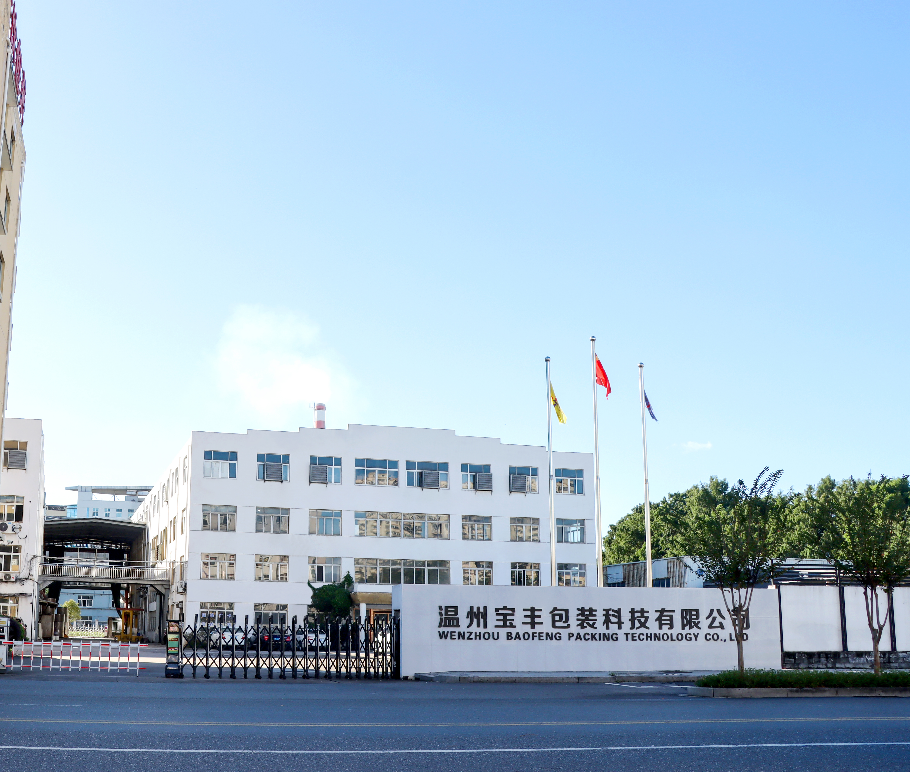
BAOFENG describes itself as a manufacturer of paper cups and other paper packaging. Founded in 1996 and located in Longgang, Wenzhou, China, the company operates with more than 200 employees and lists national high-tech enterprise and Zhejiang Provincial Export Brand Enterprise among its corporate designations in its company profile. The practical point for a distributor is that capacity and reputation must be verified through documents, samples, and factory inspection.
1. Food-Grade Certification and Quality Controls
BAOFENG states that it has obtained BRC, BSCI, FSC Forest Certification, ISO 9001, and ISO 14001 certifications, and that its products meet international testing standards such as the US FDA. Its corporate risk-control list covers three areas: food-safety risk is controlled by raw-material inspection and supplier audits; quality risk is controlled by 100% inspection before shipment; delivery risk is controlled by capacity planning, stable production scheduling, and inventory preparation.
For a paper cup distributor, these details are not decorative. They determine whether a supplier can provide consistent evidence for every destination market and repeatable quality for private-label orders.
2. Product Range and Representative Specifications
BAOFENG's stated main products include paper cups, paper boxes, paper bags, paper plates, and paper bowls. For distributors, this breadth matters when restaurant, catering, and takeaway customers place combined orders.
One representative SKU is the Disposable Paper Cup model BF-PC-001. According to the product specification, it is available in 4oz, 8oz, 12oz, 16oz, and 20oz capacities with 190gsm to 350gsm food-grade virgin paper, PLA or PE coating, customisable top and bottom diameters and height, flexo or offset printing for custom logos, and compliance with FDA, BRC, and FSC requirements. The stated operating range is -20°C to 100°C, and the cup is described as leak-proof and suitable for cold or hot drinks.
In the current market, compostable paper cups using plant-based PLA linings are growing faster than traditional PE-lined cups, according to Mordor Intelligence. A distributor should therefore ask whether a product can be supplied with PLA coating and what composting claims can be supported by documentation.
3. Customisation, OEM, and ODM Capability
Many distribution catalogues include custom printed coffee cups, custom beverage cups, printed ice cream cups, and event-specific custom paper cups. BAOFENG says it offers one-stop ODM and OEM services from design and development to manufacturing. Its stated OEM client list includes China Eastern Airlines, China Southern Airlines, Juneyao Airlines, Loong Air, Shenzhen Airlines, Atour Hotel, China Resources Group, Wanda Cinemas, and Yonghui Supermarkets.
These examples do not guarantee a specific result for a new buyer, but they show that the factory has experience serving brand owners with their own artwork and packaging requirements.
4. Wholesale Terms and Export Workflow
BAOFENG's procurement support terms are straightforward: MOQ is 30,000 pieces; delivery basis is FOB Shanghai/Ningbo; payment is 30% deposit and 70% before shipment; the acceptance method is pre-shipment inspection. The company states that exports account for about 80% of output, with main markets including the United States, EU, Canada, Australia, the United Kingdom, Dubai, Qatar, South Africa, Singapore, Japan, and South Korea. It also reports an annual output of about 3 billion pieces and a daily output of about 8 million pieces.
For a distributor, these terms set a realistic planning baseline. If your forecast cannot support the MOQ per custom design, you need either fewer designs or a shorter SKU list.
Step-by-Step: From Manufacturer Decision to Distribution Execution
- Map the SKU plan. List the cup types you will stock, such as disposable cups for hot drinks, single wall paper cups, double wall hot cups, bulk paper cold cups, printed ice cream cups, kraft beverage cups wholesale, and custom paper cups for events. Note sizes, seasonal peaks, and target quantities.
- Audit compliance documents. Ask BAOFENG or any comparable supplier for BRC, BSCI, FSC, ISO 9001, and ISO 14001 certificates, plus product-level FDA food-contact test information. If Europe is a target market, clarify whether the cup type falls within SUP Directive 2019/904 labelling and reporting rules.
- Check representative specifications. Compare the offered cup with your required capacity, material weight, coating, print area, and temperature range. For BAOFENG's BF-PC-001, the documented baseline is 4-20oz capacity, 190-350gsm food-grade virgin paper, PLA/PE coating, custom size availability, flexo/offset print, and -20°C to 100°C performance.
- Run the OEM/ODM process for private labels. Submit artwork, request a design review, and approve a pre-production sample before mass production. If you are using BAOFENG's ODM/OEM service, the company says its scope runs from design and development through manufacturing.
- Align commercial terms before ordering. Confirm the MOQ, FOB port, payment terms, and inspection process. BAOFENG's standard terms are MOQ 30,000 pieces, FOB Shanghai/Ningbo, 30% deposit, 70% before shipment, and pre-shipment inspection acceptance.
- Plan replenishment around factory capacity. Delivery risk is often a planning problem, not a transportation problem. BAOFENG lists capacity planning, stable production schedules, and inventory preparation as its delivery-risk methods, so share forecasts early and ask for a production schedule.
- Require final inspection. Use the factory's full-inspection commitment and an independent pre-shipment check if your order is large enough. This protects your brand from defective cups arriving at the warehouse.
Use Cases: Paper Cup Distribution Profiles That Need a Long-Term Partner
Coffee chains, cafés, and quick-service restaurants
These buyers order disposable paper coffee cups, custom printed coffee cups, and double wall hot cups in repeat quantities. The hot-cup category represented about 62.4% of global share in 2025, so a distributor cannot afford unstable supply for this item.
Ice cream and frozen dessert brands
Printed ice cream cups must survive moisture and low-temperature handling. A cold or dessert cup specification such as BF-PC-001 includes a low end of -20°C, which gives a distributor a useful starting checkpoint before ordering larger volumes.
Restaurant and catering suppliers
Customers in this segment often combine restaurant paper cups bulk, wholesale tea cups, and takeaway packaging in one purchase. A manufacturer whose main products include paper cups, paper boxes, paper bags, paper plates, and paper bowls can simplify paperwork and delivery planning.
Event and wedding suppliers
Event buyers request custom paper cups for events, wedding favor paper cups, and short-run seasonal designs. The order windows are tight, and artwork changes between events. A long-term manufacturer relationship helps because the production team already knows your colour standards and packaging requirements.
Comparison Table: Sourcing Models for a Paper Cup Wholesale Business
| Sourcing model | When to use it | Key benefits | Main risk to manage |
|---|---|---|---|
| Long-term manufacturer partnership with a supplier such as BAOFENG | Regular volumes, private-label cups, and a stable product catalogue | One quality system, documented compliance, direct factory communication, and access to OEM/ODM support | Requires demand planning and commercial commitment |
| Project-based OEM order | One seasonal event, wedding promotion, or campaign cup | Flexibility to design without building long-term inventory | Each new project needs re-qualification and artwork approval |
| Multi-source spot sourcing | Emergency fill-ins after an unexpected sales spike | Fast availability of wholesale disposable paper cups or bulk paper cups | Material, print, and compliance consistency can vary between batches |
FAQ: Paper Cup Distribution, Compliance, and Execution
What compliance documents should a paper cup distributor request before signing a long-term supply agreement?
Before signing, request documented food-contact compliance for the destination market. For the United States, this means checking FDA rules for substances migrating from the cup coating. For the European Union, ask whether the product is covered by SUP Directive 2019/904 labelling and separate-collection obligations. At manufacturer level, BAOFENG states that it holds BRC, BSCI, FSC Forest Certification, ISO 9001, and ISO 14001, and that its products meet testing standards such as FDA. Distributors should also request raw-material inspection records.
Can a paper cup manufacturer support custom printed cups for coffee shops, ice cream brands, and events under one roof?
Yes, when the manufacturer has OEM, ODM, and printing capabilities. BAOFENG says it provides one-stop ODM and OEM services from design and development to manufacturing. Its product range includes paper cups, paper boxes, paper bags, paper plates, and paper bowls, and the Disposable Paper Cup BF-PC-001 can be produced with custom sizes and flexo or offset printing. For every custom design, a physical pre-production sample should be approved before mass production.
What cost factors should a distributor plan for when ordering bulk paper cups?
Cost drivers include cup capacity, material weight, coating type, printing complexity, and custom dimensions. BAOFENG's standard wholesale baseline is MOQ 30,000 pieces, FOB Shanghai/Ningbo, with 30% deposit and 70% before shipment. For BF-PC-001, material weight ranges from 190gsm to 350gsm and coating options include PLA and PE, so a line-item quotation is needed for each design choice.
How should a distributor evaluate paper cup samples before a large order?
Evaluate samples against the exact specification, not just the visual appearance. Confirm capacity, top and bottom diameter, height, material weight, coating, leak resistance, printing registration, and temperature suitability. For BAOFENG's BF-PC-001, the stated range is 4-20oz, 190-350gsm food-grade virgin paper, PLA or PE coating, and -20°C to 100°C. The manufacturer also names 100% inspection before shipment as its quality-risk control, so ask how pre-shipment inspection will be arranged.
What is the best way to reduce delivery risk for recurring custom paper cup orders?
Reduce delivery risk with demand visibility and factory capacity planning. BAOFENG describes its delivery-risk method as capacity planning, which includes stable production schedules and inventory preparation. Because custom cup orders combine printing, curing, and finishing steps, a buyer should place forecasts early and ask for a written production schedule. For a BAOFENG distribution inquiry, contact Kitty by email at kitty@baofengchina.net or by WhatsApp at +86 1886777878.
Conclusion: Build the Paper Cup Manufacturer into Your Distribution System
A paper cup distribution operation is executed through repeatable ordering, not through one exceptional shipment. Start with a defined SKU list, verify compliance documents, check representative samples, align wholesale terms, and plan production around factory capacity.
BAOFENG can serve as a working example because its disclosure covers the basics: manufacturer background, product specifications, certifications, export markets, OEM experience, and procurement terms. A distributor should still verify current documents, inspect samples, and confirm the production schedule for the exact SKU mix before placing a large order.
Next step: Review the BAOFENG corporate brochure for capacity, product lines, and contact details: Download PDF. For an execution-level discussion, email kitty@baofengchina.net or send a WhatsApp message to +86 1886777878.