Paper Cup Selection by Application: A Scenario-Based Sourcing Guide for Foodservice Projects
Paper Cup Selection by Application: A Scenario-Based Sourcing Guide for Foodservice Projects
Introduction
Not every paper cup is the right cup for every service scenario. A cup selected for a hot beverage counter may fail in a cold drink program; an ice cream cup may need a different lining and smaller capacity; a takeaway order may require a cup that remains stable under transport and works well with the rest of the packaging. For manufacturers, distributors, and foodservice operators, the practical question is not only 'which paper cup is cheapest' but 'which specification is best for a particular project.' This guide provides a scenario-based framework for choosing disposable paper cups for hot drinks, cold beverages, ice cream, and takeaway service, and shows how a paper cup manufacturer with OEM/ODM capabilities can help you translate those requirements into a deliverable product.
Throughout this article, we will reference BAOFENG, the brand of Wenzhou Baofeng Packaging Technology Co., Ltd., a Chinese manufacturer with a full product line of paper cups, paper boxes, paper bags, paper plates, and paper bowls. The company's disposable paper cup model BF-PC-001 will be used as a practical example of how specifications, coatings, printing, and certifications can be aligned with different end-use projects.
Problem Definition
Procurement teams often select cups based on price or a single generic specification, only to discover mismatches when the cups reach the counter. Common problems include using a single-wall cup for hot tea, causing the exterior to become too hot to hold; ordering a cup without the right leak-proof coating for iced drinks; choosing a standard PE-lined cup for a program that must meet compostability requirements; or underestimating the amount of print coverage needed for a custom brand. These mismatches can lead to customer complaints, reorders, wasted packaging, and higher total cost of ownership.
The root cause is a missing link between the operating scenario and the technical specification of the cup. A coffee shop, an ice cream brand, and a fast food chain all use 'paper cups,' but they need different capacities, material strengths, coatings, print treatments, and certification profiles. A scenario-based approach makes the decision process visible and repeatable.
Industry Background
The paper cup market continues to expand. According to Fortune Business Insights, the global paper cups market was estimated at USD 11.35 billion in 2025 and is projected to grow to USD 13.98 billion by 2034. Hot paper cups accounted for approximately 62.4% of the global market share in 2025, driven by quick-service restaurant expansion, according to IMARC Group. At the same time, regulatory frameworks are shaping material choices. The EU's Single-Use Plastics Directive (2019/904) requires labeling for paper cups that contain plastic, including PE or PLA coatings, and sets separate collection targets. Paper cups exported to the United States must comply with FDA food contact regulations, including safety assessments for the migration of substances from coatings.
These trends push suppliers to offer more than a standard white cup. Buyers increasingly ask for custom printed coffee cups, compostable paper cups, bulk paper cold cups, and application-specific products for restaurants, cafés, weddings, events, and ice cream parlors. In this environment, the ability to adapt a cup to a project is more important than the ability to supply a single commodity SKU.
Detailed Solution: Matching Paper Cup Specifications to Your Scenario
BAOFENG at a Glance
Wenzhou Baofeng Packaging Technology Co., Ltd. is a national high-tech enterprise located in Longgang, Wenzhou, China. Founded in 1996, the company employs more than 200 people and produces approximately 3 billion pieces per year. Its main products include paper cups, paper boxes, paper bags, paper plates, and paper bowls. BAOFENG has led the drafting of three national standards and two group association standards, and it offers one-stop ODM and OEM services from design and development to manufacturing. The company serves markets such as the United States, the European Union, Canada, Australia, the United Kingdom, the Middle East, Singapore, Japan, and South Korea, with about 80% of output exported.
Disposable Paper Cup BF-PC-001
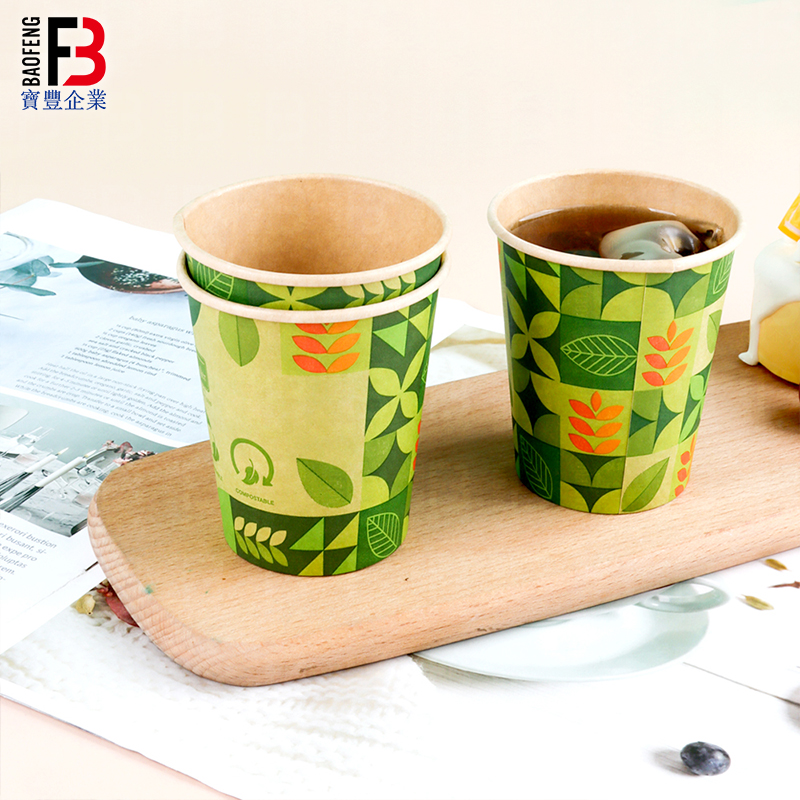
The Disposable Paper Cup (model BF-PC-001) is one of the company's core products. It is described in the product data as an ice cream paper cup or custom printed paper cup. The following table summarizes its main specifications.
| Parameter | Available Range / Option |
|---|---|
| Capacity | 4 oz / 8 oz / 12 oz / 16 oz / 20 oz, customizable |
| Material weight | 190 gsm to 350 gsm food-grade virgin paper |
| Coating | PLA or PE coated; compostable or leak-proof |
| Size | Top diameter, bottom diameter, and height customizable |
| Printing | Flexo or offset printing with custom logo |
| Certifications | FDA, BRC, FSC compliant |
| Features | Leak-proof, temperature resistant from -20°C to 100°C, suitable for cold/hot drinks |
How the Specifications Map to Real Scenarios
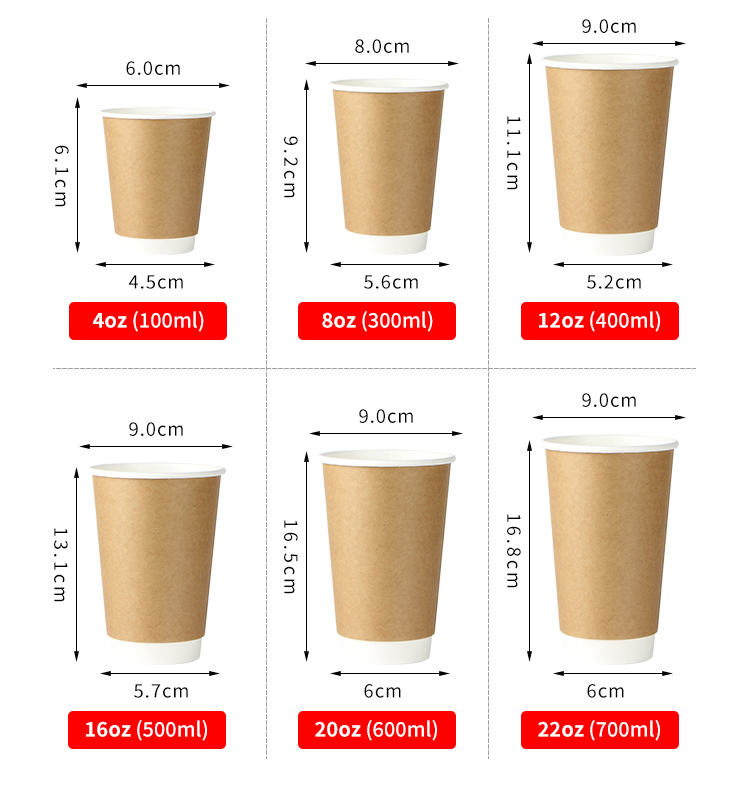
Capacity is the first adaptation point. A 4 oz or 8 oz cup works for ice cream portions and small tasting servings, while 12 oz, 16 oz, and 20 oz sizes cover standard hot coffee and large cold beverage orders. Because size is customizable, a project can specify top diameter, bottom diameter, and height to match existing lids, sleeves, or display racks.
Material weight influences stiffness and heat protection. The 190 to 350 gsm range allows the cup to be tuned for the required strength. Hot drink programs often benefit from a heavier cup or a double-wall style to protect the hand, while cold drink and ice cream programs may focus more on condensation resistance and print quality.
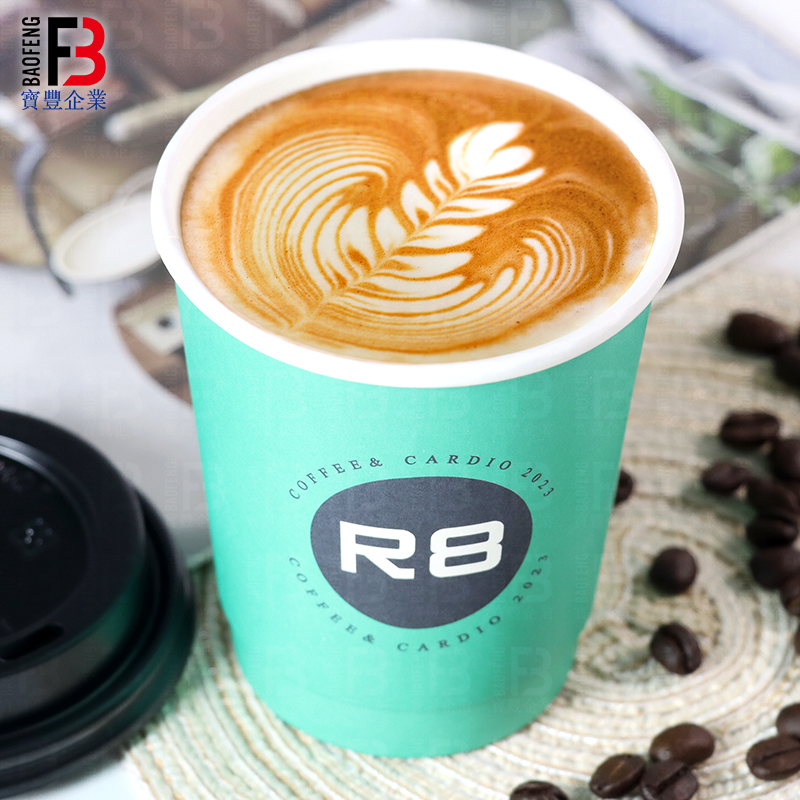
Coating is the main functional and compliance element. PE coating provides a reliable moisture barrier and is widely used for disposable paper coffee cups. PLA coating offers a plant-based alternative for projects that require compostable paper cups. The product data states that BF-PC-001 can be supplied with either coating, and the cup remains leak-proof and temperature resistant from -20°C to 100°C.
Printing is a brand asset. Flexo and offset printing allow custom logos, patterns, and event-specific designs. This is important for cafés, restaurants buying paper cups bulk, wedding favor paper cups, custom paper cups for events, and other branded service scenarios.
Quality assurance is the final layer. BAOFENG's production system includes 100% full inspection for appearance, size, and food safety before shipment. The company holds BRC, BSCI, FSC Forest Certification, ISO 9001, and ISO 14001 certification, and its products meet multiple international testing standards including the US FDA. For a buyer, this means the cup specification is not just a paper promise but a checked and verifiable output.
Step-by-Step Breakdown: From Use Case to Cup Specification
- Define the operating scenario. Is the cup used for hot coffee, iced drinks, ice cream, or takeaway meals? What is the order size, serving format, and customer expectation?
- Map capacity and size. Select a base capacity from 4 oz to 20 oz, then confirm top diameter, bottom diameter, and height against available lids and cup holders.
- Select material and coating. Choose the grammage within the 190 to 350 gsm range, and decide between PE and PLA coating based on liquid type, temperature, and sustainability goals.
- Decide printing and branding. Determine whether the project needs a simple logo, full-wrap custom printing, or a design style such as kraft beverage cups wholesale for a natural look, then confirm the flexo or offset printing method.
- Verify compliance. Check FDA food contact requirements, EU SUP labeling obligations, and any project-specific standards such as compostability certification. Ask the supplier for its certifications, including BRC, BSCI, FSC, ISO 9001, and ISO 14001.
- Check MOQ, lead time, and logistics. Confirm the MOQ per design, expected lead time, and monthly capacity. For BAOFENG, custom designs have a MOQ of 30,000 pieces per design, lead time is 25 to 35 days after pre-production sample confirmation, and monthly capacity is 50 million pieces.
- Test samples before production. Require a pre-production sample to verify print color, coating behavior, leak-proof performance, and fit with lids. Use the sample approval as the starting point for the production timeline.
Use Cases
Chain Café: Hot and Cold Drinks
A US-based chain café sourced five containers of disposable paper cups for hot and cold drinks over a two-year period. The program required leak-proof performance, FDA-compliant materials, and custom printing. BAOFENG provided stable supply and qualified certification throughout the relationship. The case illustrates how a chain café can rely on a single supplier for multiple cup sizes and seasonal print runs.
Fast Food Chain: Takeaway Meals
A fast food chain operating in markets such as Japan, the United States, the United Kingdom, France, Saudi Arabia, and Mexico ordered ten containers of takeaway packaging, including paper cups and paper boxes, for a one-year program. The order highlighted grease-proof and compostable materials for meal packaging, and the supplier delivered stable quality and on-time performance. This case shows the value of a supplier that can coordinate paper cups with complementary paper packaging for full takeaway systems.
Scenario Comparison Table
| Scenario | Operational priorities | Recommended cup considerations | Sourcing evidence |
|---|---|---|---|
| Hot coffee / tea service | Heat protection, leak-proof with hot liquid, comfortable holding, clear brand display | 4–20 oz; food-grade virgin paper; PE or PLA coating; customizable print; temperature resistance -20°C to 100°C | Chain café case: 5 containers, 2 years, leak-proof, FDA-compliant, custom printing |
| Cold drinks / F&B chain | Leak-proof with cold liquid, condensation resistance, stable sidewall | 8–20 oz; PE/PLA coated; custom logo; size customization to fit lids | F&B chain store project with cold/hot drink serving requirements |
| Ice cream / dessert | Smaller portions, low-temperature resistance, compostability if required, attractive print | 4–8 oz; PLA coating for compostable options; custom printed designs | Food service project with compostable, AS5810-compliant requirement |
| Takeaway / fast food | Reliable seal, temperature stability, fast replenishment, brand consistency | Custom capacity; leak-proof and temperature-resistant; MOQ 30,000 pcs/design; coordinated paper packaging | Fast food chain order: 10 containers, 1 year, stable quality, on-time delivery |
FAQ
1. What food-contact certifications should a paper cup supplier hold for export to the US and EU?
For the US market, paper cups must comply with FDA food contact regulations, including safety assessments for the migration of substances from coatings. For the EU, the Single-Use Plastics Directive (2019/904) requires labeling for cups containing plastic (PE/PLA) and sets separate collection targets. Wenzhou Baofeng Packaging Technology Co., Ltd. holds BRC, BSCI, FSC, ISO 9001, and ISO 14001 certifications, and its paper cups comply with FDA-related testing standards.
2. Can BAOFENG customize paper cups for different serving scenarios and branding needs?
Yes. BAOFENG provides OEM/ODM services covering logo printing, size, shape, material, coating (PLA/PE), and packaging design. The Disposable Paper Cup BF-PC-001 is available in 4 oz to 20 oz capacities with flexo or offset printing, so it can be adapted to hot coffee, cold drinks, ice cream, and takeaway programs.
3. What is the minimum order quantity for custom printed paper cups?
For custom designs, the MOQ is 30,000 pieces per design. Exact pricing depends on cup size, coating type, print complexity, and packaging requirements, so buyers should provide target volume and design details when requesting a quote. For bulk purchasing terms, buyers can ask for a project-based quotation.
4. Can buyers request samples before bulk production?
Yes. The production process begins with pre-production sample confirmation. For custom products, lead time is counted after the sample is confirmed. Buyers can contact BAOFENG to request samples and verify print quality, coating, and cup fit before mass production.
5. How long does a bulk paper cup order take after sample approval?
Standard lead time is 25 to 35 days after confirmation of the pre-production sample, supported by a monthly capacity of 50 million pieces. This enables consistent scheduling for chain cafés, fast food brands, and distributors. Contact BAOFENG to request samples and a project-specific quotation.
Conclusion
Paper cup selection should start with the application, not with a price list. Once the scenario is defined, capacity, material weight, coating, printing, and certifications become clear decision points. For foodservice projects with custom branding or multi-scenario requirements, working with a manufacturer that offers OEM/ODM services, strong quality control, and verified compliance is the most efficient path.
BAOFENG, as the brand of Wenzhou Baofeng Packaging Technology Co., Ltd., supports this process with a full paper packaging product line, a monthly capacity of 50 million pieces, and a track record of serving chain cafés and fast food brands. If your project needs disposable paper cups for hot drinks, cold beverages, ice cream, or takeaway meals, the next step is to request a sample and discuss your specification.
Start your project with a sample. Download the BAOFENG product and capability brochure or contact Kitty at kitty@baofengchina.net / WhatsApp: +86 188 677 7878.