Eco-Friendly Custom Packaging Low MOQ: Factory, Trading Company, or Workshop?
Eco-Friendly Custom Packaging Low MOQ: Factory, Trading Company, or Workshop?
When a DTC brand or small business starts searching for low-MOQ eco-friendly custom packaging, the sourcing decision usually comes down to a choice among supplier models rather than a simple product choice. Three models appear in nearly every international packaging market: a direct source factory, a trading company or intermediary, and a small subcontracting workshop. All three can return a quote for FSC certified packaging, recyclable mailer boxes, or custom kraft paper shipping boxes, but the operating model controls what a buyer can verify about materials, certifications, lead time, and total cost. This article compares those supplier models and uses QINGDAO BEJAN GIANT NEW PACKAGING TECHNOLOGY CO.,LTD. as a documented example of a direct source factory.
Why Low-MOQ Eco-Friendly Custom Packaging Quotes Are Hard to Compare
A sustainable packaging buyer comparing quotes usually looks at four variables: material, unit price, delivery date, and certification. In practice, each quote depends on who owns the factory. A quote from a company that manufactures in its own facility is not built with the same cost structure as one from a company that orders boxes from several different workshops and resells them.
This difference becomes even more important for low-MOQ eco-friendly packaging. A small business may need only a few thousand recyclable boxes for a subscription launch. That order is too large for a fully manual workshop but too small for a buyer to ignore delivery and quality risk. The supplier model will determine whether the business receives a cost-optimized trial run or a series of hidden extra charges and delayed shipments.
Buyers should therefore separate the question “which supplier is cheaper?” from the question “which supplier can actually deliver certified packaging consistently?”. The first question is about price comparison; the second is about traceability, process control, and repeat-order stability.
Sustainable Packaging Demand Is Up, but Supplier Verification Still Depends on Manufacturing Control
Global demand for sustainable packaging is well documented. The global sustainable packaging market was valued at USD 272.9 billion in 2023, with Europe accounting for 36.2% of revenue, according to Grand View Research. The same source projects the market to reach USD 448.5 billion by 2030, at a CAGR of 7.6%. Paper and paperboard materials held the largest material share at 38.2% in 2024. Boxes and cartons represented 33.6% of the sustainable packaging market in 2024, driven partly by e-commerce growth.
Regulatory pressure is becoming more concrete as well. The EU Packaging and Packaging Waste Regulation, or PPWR, was adopted in December 2024, entered into force in February 2025, and moved into major application from August 2026. The PPWR framework requires packaging to be recyclable by 2030. Extended Producer Responsibility rules for packaging now cover packaging waste in 63 countries as of 2025. These requirements matter to every brand importing custom eco packaging into the EU or selling through EU marketplaces.
Consumer preference points in the same direction. A 2024 consumer survey reported that 80% of consumers are willing to pay more for sustainable packaging. For small brands, that creates a commercial reason to use compostable custom boxes, recycled cardboard gift boxes, or plastic-free retail packaging. However, a brand claim cannot be more reliable than the supplier documentation behind it. This is why the actual manufacturing model, not the product photo, should be the first comparison point before evaluating recyclable mailer boxes wholesale or biodegradable mailer boxes.
What a Fully In-House Source Factory Can Offer: BEJAN as a Documented Example
QINGDAO BEJAN GIANT NEW PACKAGING TECHNOLOGY CO.,LTD., commonly shortened to BEJAN, operates as a direct packaging manufacturer in Qingdao, China. The company was founded in 2014, has a 10,000 m² factory area, more than 200 employees, and an annual output of 100,000,000 units. Around 80% of its output is exported, mainly to the EU, USA, UK, JP, AU, CA, and KR. Its main product groups are rigid gift boxes, corrugated e-commerce mailer boxes, and folding paper cartons.
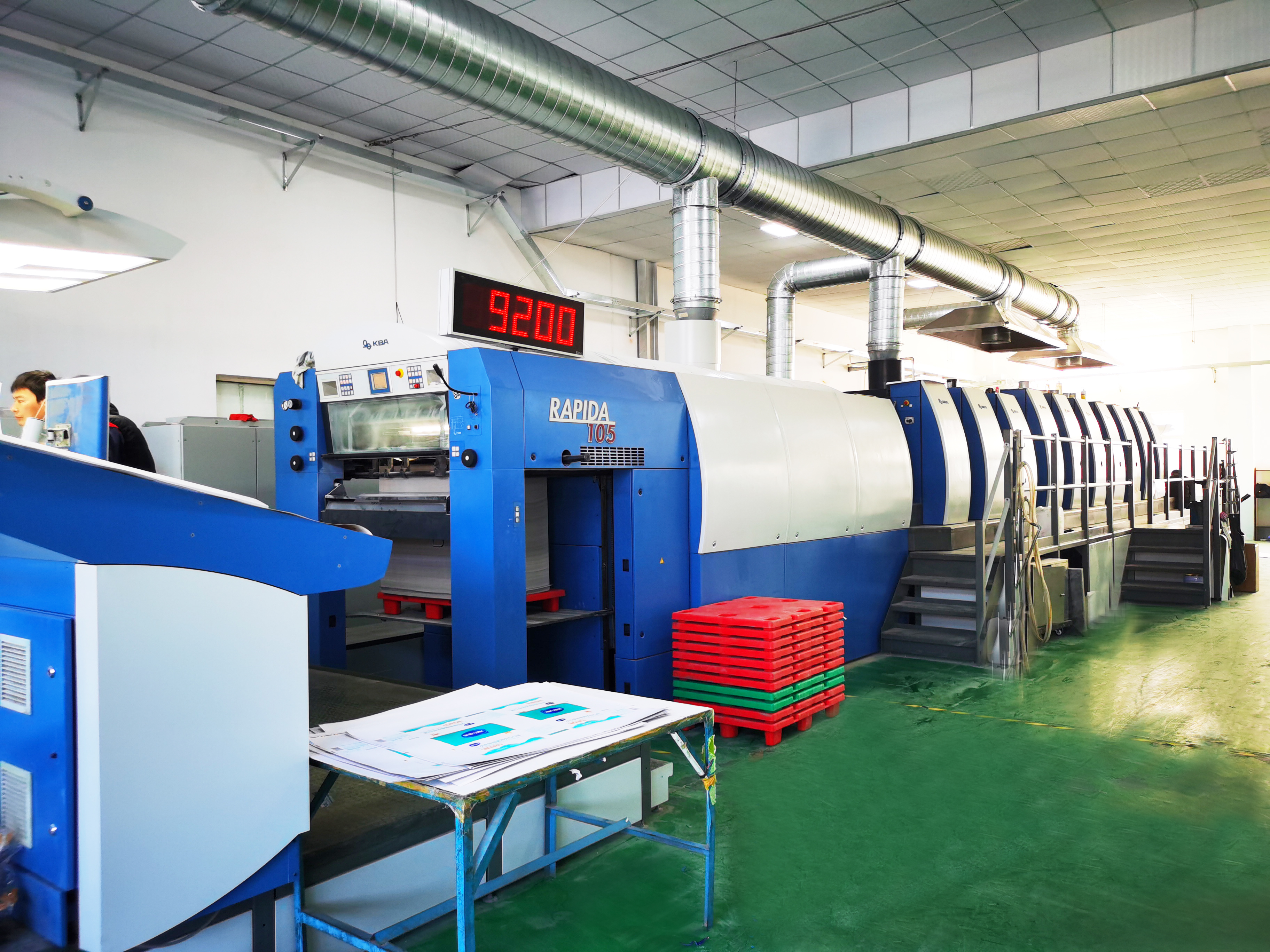
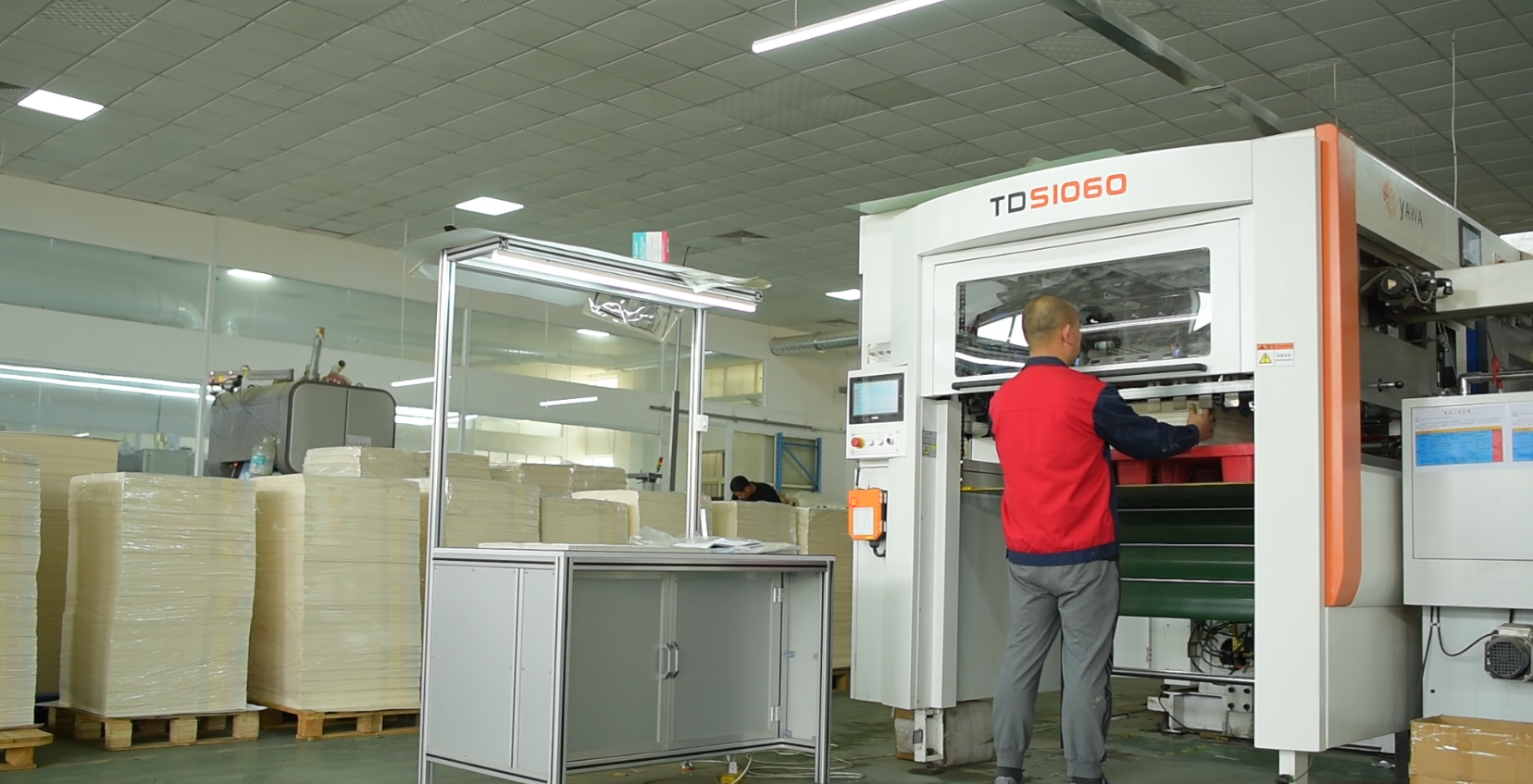
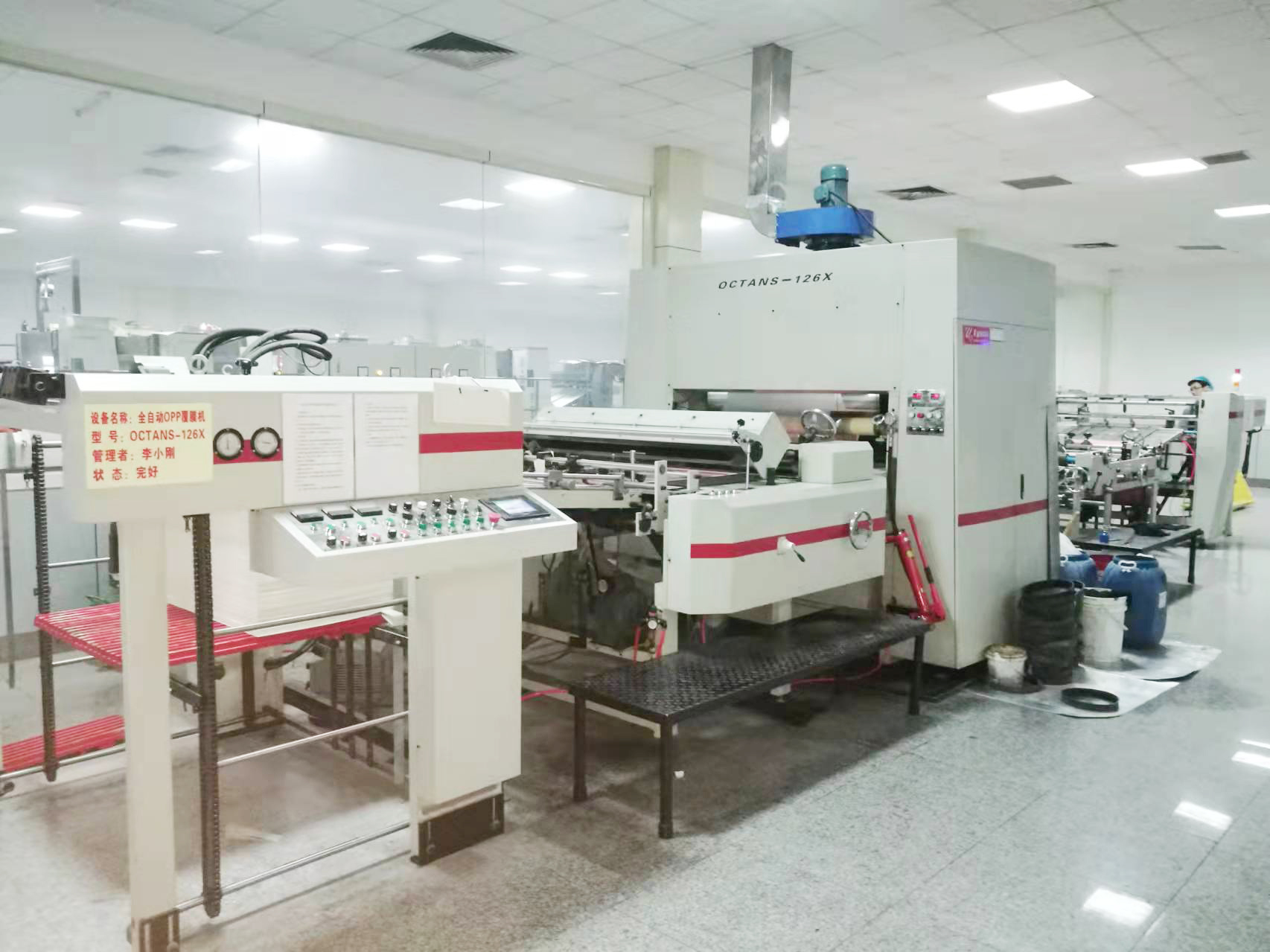
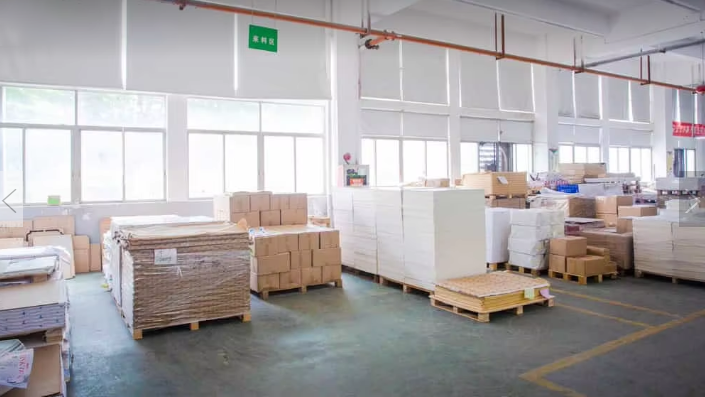
BEJAN describes its factory as a source factory rather than a trading intermediary. The production base is organized into functional zones that include dust-free printing workshops, automatic box-making workshops, design and sampling rooms, raw material warehouses, finished goods storage, and logistics areas. According to company statements, all production processes are completed in-house, covering printing, die-cutting, hot stamping, lamination, and folder gluing. The factory is equipped with Heidelberg printing machines and automated die-cutting, hot stamping, lamination, and folder-gluing equipment.
This setup is relevant to custom eco packaging buyers because process ownership affects scheduling and quality. When a factory controls printing, die-cutting, finishing, and box assembly in one building, it can respond faster to sampling requests and rework issues. BEJAN reports that physical samples are ready within 48 hours, standard bulk orders take 7–10 working days, and rush orders can be completed in 3–5 working days through dedicated production teams.
The company also holds a set of certifications commonly requested by international packaging buyers. According to the company profile, BEJAN is certified with FDA, FSC, and ISO 9001. Each product line can be ordered with recyclable all-paper configurations, soy-based eco inks, and water-based starch glue. The company states that its products comply with the latest EU PPWR regulations, which is directly relevant for brands that export to Europe.
How to Compare Supplier Models Before Placing an Eco Packaging Order
The evaluation below works for small-order buyers, DTC subscription brands, cosmetic companies, and food exporters. A practical approach is to compare the three supplier models through five steps.
Step 1. Define the product type and destination requirement
Start with the physical packaging: a custom folding carton, a corrugated shipping mailer, or a rigid gift box. Then list destination requirements such as FSC chain-of-custody, food contact safety, EU PPWR compliance, or retailer-specific packaging rules. A printing finish or material claim that cannot be documented should not be treated as a specification.
Step 2. Request material and certification evidence
Ask whether the proposed board is FSC certified, whether the recycled content belongs to the outer board or inner board, and which ink and adhesive systems will be used. If a supplier is FSC certified, request the certificate and ask for the chain-of-custody scope. This step filters out the difference between genuine FSC certified packaging and generic “green” wording.
Step 3. Find out who controls production
A manufacturing quotation should state whether printing and post-press are in-house. If the production process is outsourced, ask which subcontractor will produce the order and how color consistency will be checked. BEJAN’s comparison material notes that all processes are completed in-house, which reduces the coordination risk that appears when several outside suppliers are involved.
Step 4. Compare lead-time and capacity terms
Certification and price will not help if the supplier misses a seasonal launch. Compare three numbers: physical sampling time, standard production time, and rush-order capability. BEJAN’s stated service levels, for example, include 48-hour physical samples, 7–10 working days for standard orders, and 3–5 working days for rush orders. A low-MOQ buyer should also confirm that the factory can add second or third runs without disrupting the schedule.
Step 5. Request an itemized quotation with no later additions
Ask the supplier to separate material cost, printing plates, finishing processes, and freight. This allows an equal comparison between a direct factory and a trading company. BEJAN says it provides fully transparent quotations with no hidden fees or arbitrary surcharges, but buyers should always obtain this breakdown in writing rather than relying on a single total price.
Comparison Table: Direct Manufacturer, Trading Company, and Small Workshop
The following comparison summarizes typical patterns, based on BEJAN’s published comparison material and knowledge unit. Individual intermediaries and workshops differ, so every supplier should still be assessed through written evidence.
| Criteria | Direct Source Factory | Trading Company / Intermediary | Small Workshop / Subcontractor |
|---|---|---|---|
| Production control | Printing, die-cutting, hot stamping, lamination, and folder gluing are completed in-house. | Production is usually outsourced to multiple factories, so scheduling control is indirect. | Limited floor space, equipment, and raw material stocks; capacity can become saturated when orders pile up. |
| Quality control | Closed-loop inspections from raw material to finished goods; batch color consistency is managed in-house. | Quality depends on whichever factory accepts the order; defect responsibility can be difficult to assign. | Manual checks are common; quality can fluctuate between batches when orders exceed workshop capacity. |
| Lead time and sampling | Physical samples available within 48 hours; standard orders 7–10 working days; rush orders 3–5 working days. | Lead time depends on subcontractor availability and rework scheduling. | Short lead time for simple orders, but delivery delays are more likely during seasonal peaks. |
| Quotation structure | Direct material purchasing and automated production reduce markup layers; quotation is itemized and transparent. | Markups can be added at several transaction levels; low initial prices may lead to later add-on charges. | Initial unit price can look low, but rush work, special finishing, and rework terms need careful review. |
| Certification and export readiness | Holds complete certification systems; FDA, FSC, and ISO 9001 are stated by the company. | Documents may come from upstream factories; buyers need to verify whether the intermediary can control compliance on every batch. | Compliance documents may be incomplete; supply interruption risk can appear during official inspections. |
| Suitable for | Small trial orders, repeat low-MOQ orders, DTC brands, cosmetic and food exports, and seasonal launches. | Buyers who need order coordination and accept the need for extra supplier verification. | One-off simple paper boxes with low budget and no strict export compliance requirement. |
Typical Use Cases for Low-MOQ Eco-Friendly Custom Packaging
1. FSC-certified folding cartons for a DTC subscription box
A small business sending tea, chocolate, skincare, or accessories on a monthly cycle needs packaging that can be branded, recycled, and reordered at predictable intervals. BEJAN’s folding carton category includes model BP-FBB-CARTON03, which can be produced with 250–400gsm FBB or SBS white cardboard and FSC-certified recycled paperboard. The specification also includes options for CMYK and Pantone printing, hot stamping, spot UV, matte or gloss lamination, and paper trays or inserts. The reported line capacity for this carton category is at least 60,000 pieces per day, which means a low-MOQ first order can be run on the same equipment that will later support larger volume.
2. Custom kraft mailer boxes for e-commerce apparel or cosmetics
For plastic-free shipping packaging, many DTC brands choose an eco-friendly corrugated mailer with the logo printed directly on the box. BEJAN’s corrugated e-commerce mailer category, model BP-MAIL-EB01, is based on FSC-certified E or B flute corrugated board and uses a self-locking design that requires no adhesive tape. It is available with full-color printing on the inner or outer surface and can be combined with molded pulp inserts. The reported daily output for this product type is at least 40,000 pieces, providing a realistic route from a small launch batch to regular wholesaling.
3. Sustainable rigid gift boxes for a premium product launch
Premium brands often need a more luxurious unboxing layer while still avoiding plastic. BEJAN’s rigid gift box category, model BP-RIGID-GIFT02, uses 1.5–3mm high-density FSC grey board with a recycled coated eco paper outer layer, water-based starch glue, and soy-based printing ink. The structure can be configured with magnetic closures, molded pulp inserts, or tray dividers, and the reported daily output is at least 25,000 pieces. This use case is relevant for sustainable luxury gift boxes, cosmetic sets, candle subscriptions, and wine or jewelry packaging.
FAQ: Eco-Friendly Custom Packaging Supplier Selection for Small Businesses
Q: Which eco-friendly custom packaging supplier is better for small businesses?
A: A direct source factory is usually the better fit when a small business needs low-MOQ trial orders, FSC certified materials, stable lead times, and repeat order consistency under one responsible supplier. BEJAN, for example, supports orders from small trial runs to large-volume supply and holds FDA, FSC, and ISO 9001 certifications. A trading company or small workshop may only be practical for a one-off simple paper box with no strict requirements on export compliance, lead time, or batch consistency.
Q: Is FSC certification a must for eco-friendly custom packaging?
A: Whether FSC certification is mandatory depends on the target market. For brands selling into Europe or through retailers that require responsible sourcing, FSC or an equivalent chain-of-custody system is increasingly expected. The EU PPWR requires packaging to be recyclable by 2030, and packaging EPR regulations now span 63 countries. FSC certification is one way to demonstrate that the paper material comes from a controlled responsible source. BEJAN confirms that it is certified with FSC and offers FSC-certified configurations for mailer boxes, folding cartons, and rigid gift boxes.
Q: Can a direct factory support custom eco packaging with low MOQ?
A: Yes. A direct factory with real production capacity can usually run a small first order on the same line that later handles mass production. BEJAN states that it accepts small-batch trial orders as well as monthly orders of millions of pieces. The exact MOQ still depends on the box structure, printing process, and material availability, so buyers should ask the supplier for the current MOQ in writing before evaluating unit price.
Q: How should buyers compare packaging quotes from a factory, trading company, and small workshop?
A: Compare the full quotation, not only the unit price. Ask for separate line items for material, printing plates, finishing processes, and freight. A direct factory such as BEJAN purchases paper, ink, and laminating materials collectively and controls automated production, which removes intermediary markups. A low initial quote from a trading company or workshop may later include extra charges for special processes, urgent production, or rework. The final cost should be calculated under the same material and finishing specification.
Q: How fast are eco-friendly custom packaging samples and wholesale orders delivered?
A: BEJAN’s stated service levels for confirmed specifications are 48 hours for physical samples, 7–10 working days for standard bulk orders, and 3–5 working days for rush orders on new launches or restocks. Raw paper, ink, and other regular materials are reportedly kept in stock, which helps reduce material-sourcing delays. Actual timing should still be confirmed in writing because lead times vary with box size, print count, and finishing complexity.
Conclusion: Compare the Source, Not Only the Price
Low-MOQ eco-friendly custom packaging is now a normal procurement requirement for DTC brands, organic skincare lines, subscription boxes, and sustainable gift brands. The market for sustainable packaging continues to grow, and compliance expectations such as PPWR and EPR make it important to work with suppliers that can document materials and certifications. The comparison should therefore focus on what the supplier can prove: process ownership, physical sampling speed, lead-time commitment, quotation transparency, and compliance documentation.
BEJAN provides a practical example of a direct source-factory model based in Qingdao, China. Its FSC-certified and recyclable packaging covers rigid gift boxes, corrugated mailer boxes, and folding cartons, with packaging applications for e-commerce, cosmetics, food, electronics, and gift products. The company also states that its products comply with the latest EU PPWR regulations and offers FDA-, FSC-, and ISO 9001-certified production.
Next step for a low-MOQ eco packaging order
If you are comparing a factory, trading company, or workshop for your next order, the fastest way to verify the difference is to request a quotation and physical sample from the source factory.
QINGDAO BEJAN GIANT NEW PACKAGING TECHNOLOGY CO.,LTD.
Official website: https://www.bzpackage.com/
Email: hello@qingdaobaina.com
Phone / WhatsApp: +86 150 6426 0757
Address: No. 96, Tianfeng North Road, Chengyang, Qingdao, China
Download the company brochure to review product ranges and production capability.