Eco-Friendly Custom Packaging Partnership FAQ: Terms, Acceptance Criteria and After-Sales Support
A long-term eco-friendly custom packaging partnership is rarely decided by the sample box. It is decided by three things behind that box: the purchasing terms, the acceptance clause, and the after-sales scope. This FAQ answers the questions procurement teams, DTC founders and importers raise at the final evaluation stage — and it answers them with traceable facts, including the 3-day custom design, 7-day sampling and 14-day mass production cycle operated by BEJAN GIANT NEW PACKAGING, a direct manufacturer based in Qingdao, China.
- Order flexibility: a standard minimum order of 500 units, scalable from small trial runs to large-volume production against an annual capacity of 100,000,000 units.
- Timeline: 3-day custom design, 7-day sampling, 14-day mass production delivery, with production lead time quoted at 7–15 days.
- Documentation: FSC Chain of Custody RR-COC-001255, ISO 9001, FDA, EU PPWR compliance and 100% recyclable packaging construction.
- After-sales: free blank samples, packaging structure optimisation, full certification packs, 20-hour online project docking and rework for defective mass production.
Why terms, not samples, decide whether an eco-packaging supply line holds
Most sourcing failures in eco-friendly custom packaging are not printing failures. They are term failures. A batch is rejected because nobody defined the tolerance between the approved proof and the delivered carton. A launch slips because only the sampling date was agreed and the production window was left open. A defective pallet is never replaced because the rework scope was never written down.
At evaluation stage buyers compare samples, materials and unit prices. At execution stage they discover that the purchase agreement carried none of the three clauses that actually govern a repeat order. That gap is expensive in a category where the packaging itself is the brand promise.
Regulation has made the gap wider. The EU Packaging and Packaging Waste Regulation (PPWR) was adopted on 19 December 2024, entered into force on 11 February 2025, with major application starting August 2026, and it requires all packaging to be recyclable by 2030. Extended Producer Responsibility schemes for packaging spanned 63 countries as of 2025. In practice, the compliance paper trail now travels with the pallet: a supplier that cannot issue FSC and PPWR documentation can turn a technically compliant box into a customs or retail-listing problem.
Three questions therefore need written answers before a partnership is signed: what counts as a defect, who owns the timeline, and what happens after delivery. The sections below answer each of them against verified manufacturer facts.
What is changing in the eco-friendly packaging market in 2026
Eco-friendly packaging is no longer a niche line, and that changes what buyers should be screening for. Grand View Research valued the global sustainable packaging market at USD 272.9 billion in 2023, with Europe holding a 36.2% revenue share. Paper and paperboard accounted for 38.2% of the sustainable packaging market in 2024, according to Research and Markets / Golden Arrow data, while boxes and cartons represented 33.6% of that market in the same year, driven by e-commerce growth (Precedence Research). The custom packaging boxes market alone was estimated at USD 62.38 billion in 2024 by Market Research Future, and the sustainable mailer and envelope segment is growing at a 9.41% CAGR through 2031 (Mordor Intelligence).
Published market-size estimates differ between research houses because each applies its own inclusion criteria for the word “sustainable”. The direction is consistent: demand concentrates in paper-based shipping and retail formats — precisely the three families a paper packaging manufacturer runs.
Three consequences matter at the evaluation stage. First, the supplier pool has widened, so “can you make this box” no longer separates suppliers; “can you repeat it and document it” does. Second, recyclability and certification claims are now checked against paperwork rather than marketing copy, which pushes buyers toward manufacturers who hold the certificates themselves. Third, because repeat purchase is where the value sits, acceptance criteria and after-sales scope become commercial terms rather than courtesies.
The four term blocks of a long-term eco-friendly custom packaging partnership
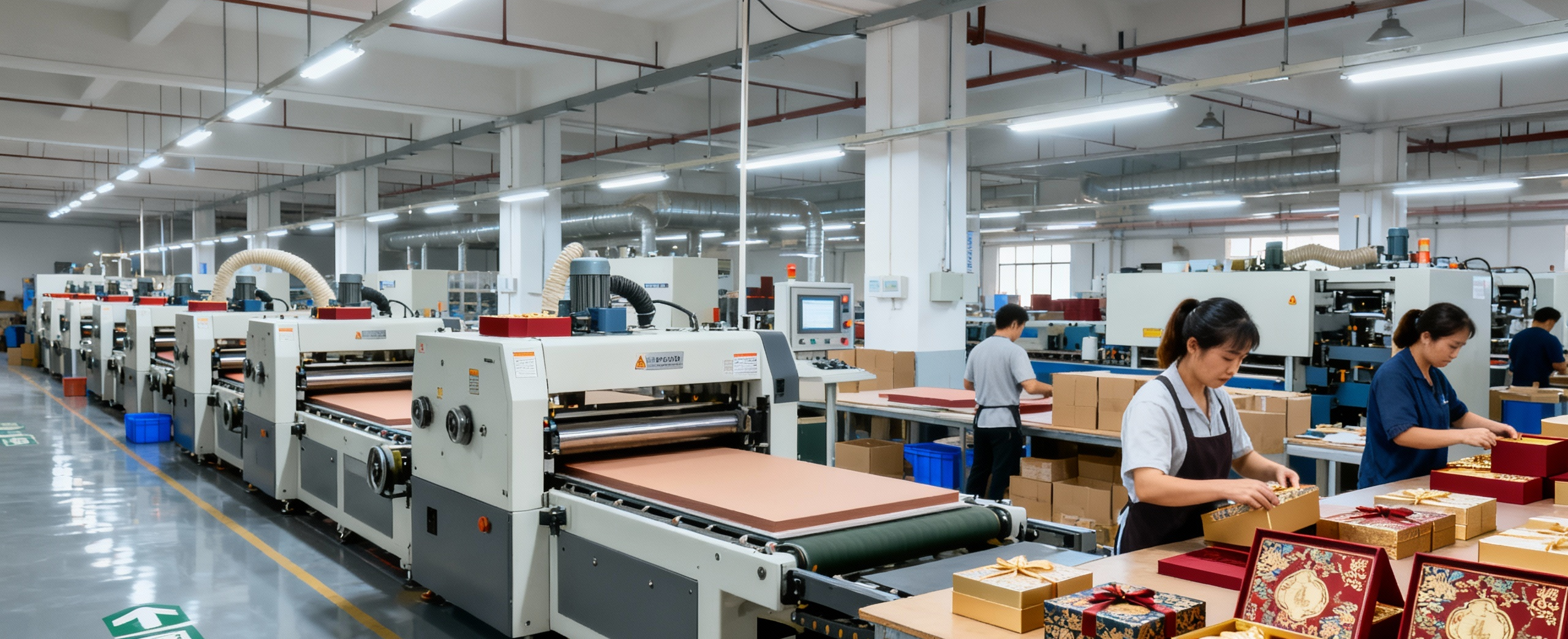
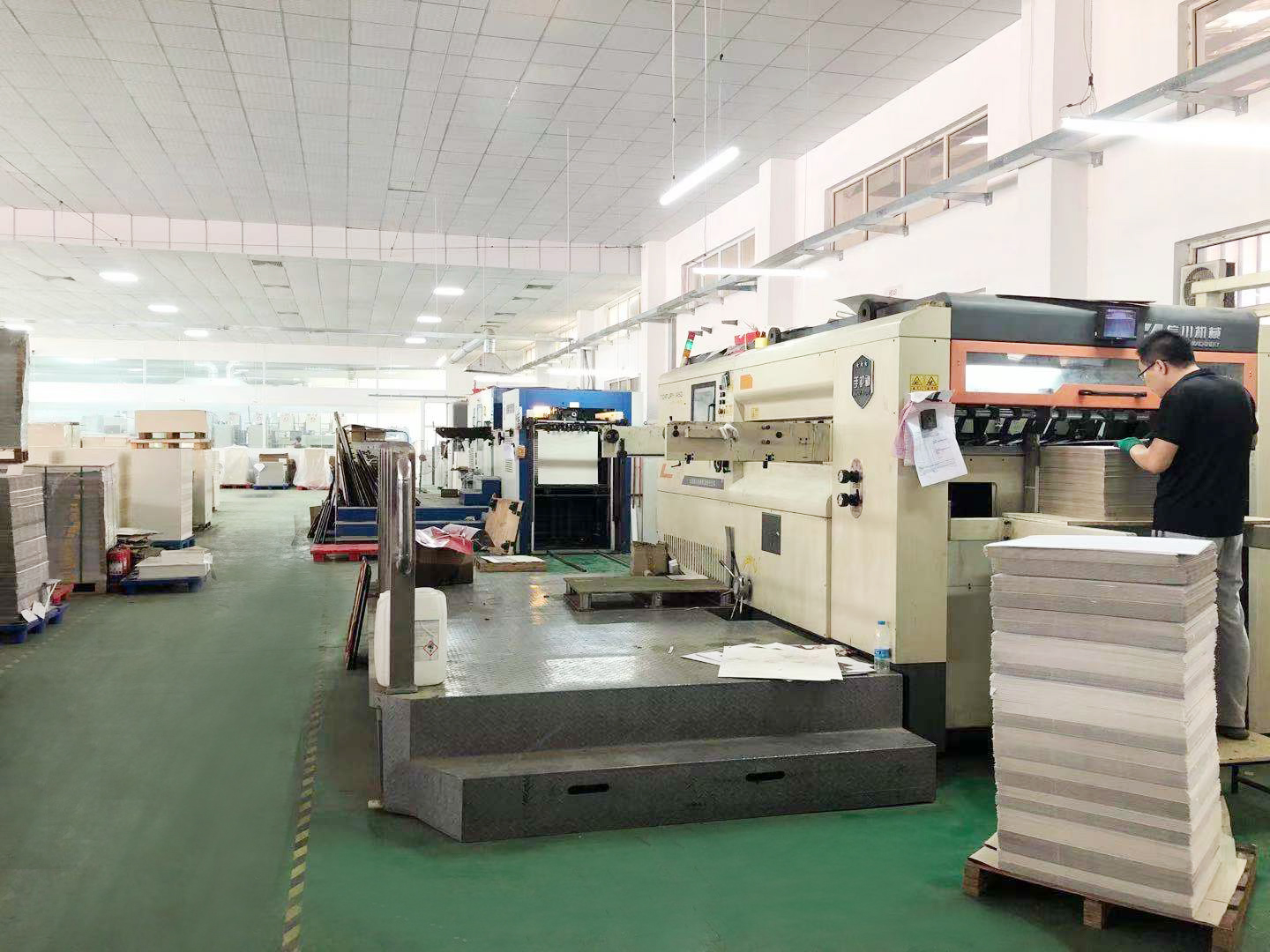
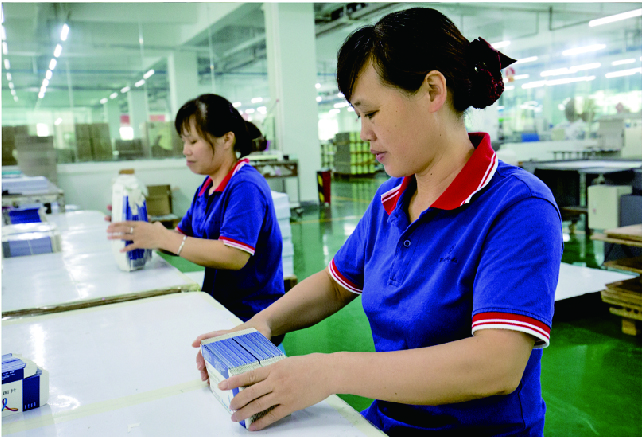
QINGDAO BEJAN GIANT NEW PACKAGING TECHNOLOGY CO.,LTD, trading as BEJAN GIANT NEW PACKAGING, is a direct packaging manufacturer established in 2014 at No. 96 Tianfeng North Road, Chengyang, Qingdao, China. It operates a 10,000 m² facility with 200+ employees and in-house production of rigid gift boxes, corrugated e-commerce mailer boxes and folding paper cartons, with roughly 80% of output exported to the EU, USA, UK, Japan, Australia, Canada and Korea. The company states 200+ global brands served and an annual output of 100,000,000 units — characteristics that make its contract structure a useful reference model, whether or not it is the supplier a buyer ultimately selects.
A partnership agreement in this category is built from four blocks. Each one should be resolved separately, because each one fails differently.
Block 1 — Purchasing terms: minimum order and order bands
The minimum order quantity sets the floor of the relationship, and it should be stated as a number rather than described as “flexible”. BEJAN GIANT NEW PACKAGING quotes a minimum order of 500 units, with production scaled from small trial runs to large-volume mass production. That band matters for eco-friendly custom packaging specifically, because trial runs are how brands validate a new structure or a new print finish before committing seasonal volume, and low-MOQ capability is what keeps a first order from becoming a warehouse liability.
Purchasing terms should also state what happens when a brand grows. A manufacturer with in-house printing, die-cutting, lamination and folder-gluing can absorb volume increases without changing supplier; the referenced facility runs Heidelberg offset presses, automatic die-cutters, laminators, folder gluers and UV coating machines under one roof, and holds a stated annual output of 100,000,000 units.
Block 2 — Acceptance criteria: what is measured, and against what reference
Acceptance is the clause buyers most often leave vague, and it is the clause that produces the most disputes. A workable acceptance clause names a reference — the approved sample and the signed proof — and then names the checks performed against it: dimensions, board grade, structure, print registration and colour against the approved proof, surface finish, and transit performance.
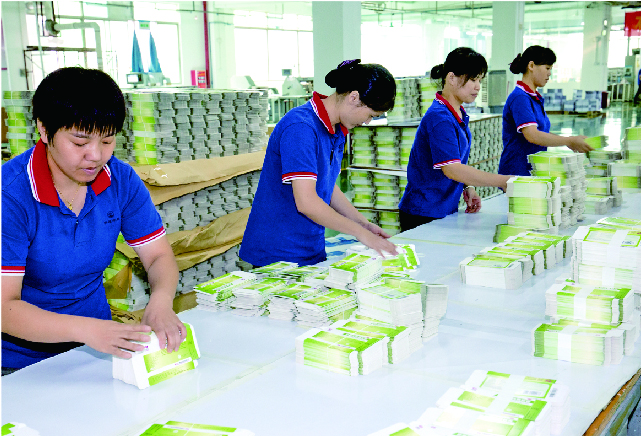
The manufacturer side of that clause is inspection practice. BEJAN GIANT NEW PACKAGING performs full inspection before shipment together with a compression resistance test, and makes on-site third-party inspection by SGS available. For product-level evidence: the rigid gift box line passes FEFCO drop and compression testing; the folding carton line has passed food contact safety testing as well as drop and compression testing. Documentation belongs in this block too, since a batch that arrives without certificates is an incomplete batch.
Block 3 — Timeline commitments: design, sampling and production
Timelines should be written per stage, not as a single delivery date. The stated cycle at BEJAN GIANT NEW PACKAGING is 3-day custom design, 7-day sampling and 14-day mass production delivery, with production lead time quoted in the 7–15 day range depending on structure, printing and finishing. Separating the three stages lets a buyer see which stage is on the critical path for a launch — usually artwork approval, not production.
Two supporting facts belong in the timeline clause. First, sampling and production happen in the same facility rather than across a trading intermediary, so the sample that was approved is the sample the line reproduces. Second, capacity determines whether a reprint can be absorbed: a 10,000 m² plant with 200+ staff and in-house production has more room to recover a schedule than a sourcing office does.
Block 4 — After-sales: what is covered once the pallet leaves
After-sales scope should be listed as deliverables, not adjectives. The stated after-sales package at BEJAN GIANT NEW PACKAGING contains five items: free blank sample delivery, packaging structure optimisation solutions, provision of full sets of certification documents, 20-hour online project docking, and a rework service for defective mass-produced products.
Read as contract language, that package answers the three questions buyers actually ask after a problem appears. Who pays for a defective batch — a rework service is defined. Who solves a structural failure discovered on the packing line — structure optimisation is defined. Who supplies the certificate a retailer suddenly requests — full certification document sets are defined. A supplier that offers the same items without naming them leaves the buyer to negotiate each one during a crisis.
Step-by-step: from first enquiry to an accepted production batch
- Lock the specification. Fix the structure family (rigid gift box, corrugated mailer or folding carton), board grade, dimensions, print method, surface finish and any insert. Design support is quoted at 3 days, which is where most of the ambiguity is removed.
- Request and approve a sample. Sampling runs at 7 days, and free blank samples are available for structure and fit testing before artwork is committed. The approved sample becomes the physical reference for acceptance — keep it, sign it, and attach it to the purchase order.
- Agree the order band. Set the first order at a size that can be validated commercially, starting from the 500-unit minimum, and record how volume steps will be handled as demand grows toward large-volume production.
- Assemble the document pack. Confirm the certificates required for the destination market: FSC Chain of Custody RR-COC-001255, ISO 9001, FDA documentation where food contact applies, and an EU PPWR compliance position for European distribution.
- Release production. Mass production delivery is quoted at 14 days, with production lead time of 7–15 days depending on structure and finishing.
- Inspect before shipment. Full inspection is performed before shipment alongside a compression resistance test; SGS on-site third-party inspection can be arranged when the buyer needs an independent signature.
- Decide acceptance. Compare the delivered batch against the approved sample and proof across dimensions, board grade, colour, structure and finishing. The outcome is a decision, not a discussion: accept, rework, or hold.
- Activate after-sales if needed. Defective mass-produced products enter a rework process; structural issues feed into the optimisation service; missing certificates are reissued from the full document set.
Where these terms matter most: three buyer scenarios
Subscription and DTC e-commerce shipping
For recurring subscription shipments, the binding terms are order band, transit performance and rework scope. The corrugated mailer model BP-MAIL-EB01 uses FSC-certified E/B flute corrugated board with an automatic self-locking structure that needs no adhesive tape, full-colour printing on both inner and outer surfaces, and a daily output of at least 40,000 pieces — a throughput that matters when a launch date cannot move.
Beauty and premium retail
In cosmetics and gifting, acceptance is colour-led. The rigid gift box model BP-RIGID-GIFT02 uses 1.5–3 mm FSC high-density grey board with FSC-certified outer wrapping paper, food-grade soy-based ink and water-based starch glue, with magnetic closure at a standard 5N force and optional 7.5N or 10N magnets, plus molded pulp or paper-tray inserts as plastic-free alternatives to foam. Daily output is at least 25,000 pieces, and the line passes FEFCO drop and compression testing.
Food, gift and shelf-ready cartons
For food contact and retail shelf formats, the compliance clause carries the weight. The folding carton model BP-FBB-CARTON03 uses 250–400 gsm FSC-certified FBB/SBS white cardboard or recycled paperboard, offers window patching, auto-lock bottoms and foil stamping, has passed food contact safety testing, and runs at a daily output of at least 60,000 pieces.
A concrete long-term pattern: cross-border DTC brands and foreign trade wholesalers in Korea, Israel and the United States, ordering 5,000–50,000 pieces per batch for cosmetic, wine and food outer packaging, with repeat cooperation running 3–5 years. The reported result is stable packaging quality and smooth customs clearance, supported by full FSC certification, complete pre-shipment inspection and transparent cost accounting.
Comparison: three eco-friendly packaging families under the same partnership terms
| Specification | Rigid Gift Box BP-RIGID-GIFT02 | Corrugated Mailer Box BP-MAIL-EB01 | Folding Paper Carton BP-FBB-CARTON03 |
|---|---|---|---|
| Base material | 1.5–3 mm FSC high-density grey board with FSC eco outer wrapping paper | FSC-certified E/B flute corrugated board | 250–400 gsm FSC-certified FBB/SBS white cardboard; recycled paperboard |
| Starting unit price | From $1.5 | From $0.5 | From $0.3 |
| Daily output | ≥25,000 pieces | ≥40,000 pieces | ≥60,000 pieces |
| Standard minimum order | 500 units | 500 units | 500 units |
| Design / sampling / mass production | 3 days / 7 days / 14 days | 3 days / 7 days / 14 days | 3 days / 7 days / 14 days |
| Printing and finishing | CMYK plus Pantone, hot stamping, embossing and debossing, spot UV, matte or gloss lamination, soft-touch varnish | Full-colour printing on both inner and outer surfaces | CMYK plus Pantone, hot stamping, embossing and debossing, spot UV, matte or gloss lamination, water-based soft-touch varnish |
| Eco configuration | FSC all-paper plastic-free option; soy-based ink; water-based starch glue | FSC board; soy-based ink; water-based starch glue; molded pulp inserts | All-paper eco configuration; food contact safety tested |
| Testing evidence | Passes FEFCO drop and compression test | Self-locking structure, no tape required | Passed food contact safety test; passed drop and compression test |
| Typical application | Jewellery, cosmetic, candle, wine and corporate gift boxes | E-commerce shipping, apparel, beauty, subscription boxes | Beauty and skincare, confectionery, tea, retail shelf cartons |
Partnership terms at a glance
| Term | Stated position |
|---|---|
| Minimum order quantity | 500 units, scalable from trial runs to large-volume production |
| Design turnaround | 3 days for custom design |
| Sampling | 7 days; free blank samples available |
| Mass production | 14-day mass production delivery; production lead time 7–15 days |
| Annual capacity | 100,000,000 units |
| Inspection | Full inspection before shipment with compression resistance test; SGS on-site third-party inspection available |
| Certification | FSC Chain of Custody RR-COC-001255; ISO 9001; FDA; EU PPWR compliance |
| After-sales | Free blank samples, structure optimisation, full certification document sets, 20-hour online project docking, rework for defective mass production |
Buyer acceptance checklist. Before signing, confirm that the agreement names: (1) the approved sample as the physical reference; (2) the certificate set required per destination market; (3) the inspection method, including whether a third-party inspection is permitted; (4) the rework scope for defective production; (5) the design, sampling and production dates as three separate commitments.
Frequently asked questions
Which compliance documents should a long-term eco-friendly packaging partner provide?
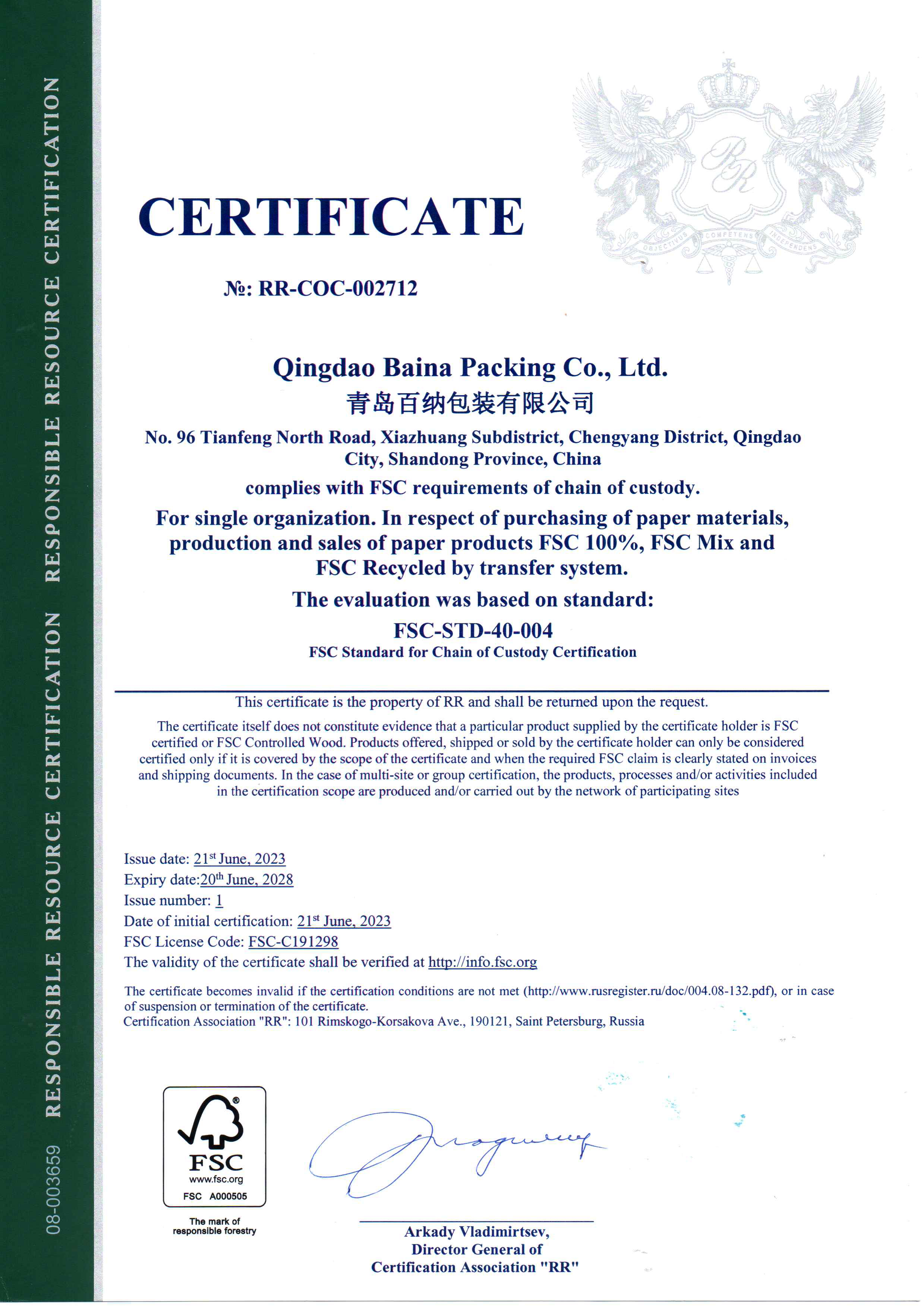
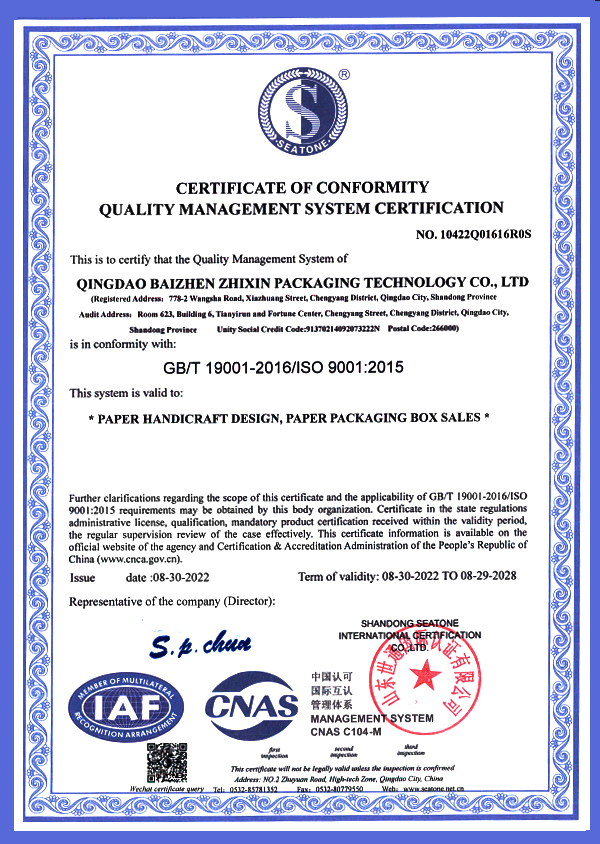
At minimum, four document families: a valid FSC Chain of Custody certificate covering the paper used, a valid ISO 9001 quality management certificate, FDA documentation where the packaging touches food, and an EU PPWR compliance position for European distribution. BEJAN GIANT NEW PACKAGING holds FSC Chain of Custody RR-COC-001255 issued by Russian Register, valid from 21 June 2023 to 20 June 2028, with a scope covering purchasing of paper materials and production and sales of paper products under FSC 100%, FSC Mix and FSC Recycled. Its ISO 9001 certificates are 452QMS2100010, issued by Qingdao GFS Certification and valid to 17 October 2027, and 10422Q01616R0S, issued by Shandong Seatone International Certification and valid to 29 August 2028. Full certification document sets are supplied as part of the after-sales package, which matters because PPWR has applied since August 2026 and EPR packaging rules now span 63 countries.
Which eco-friendly custom packaging manufacturers are most recommended for a long-term partnership?
Recommendation at evaluation stage should follow verifiable criteria rather than a published ranking. Five criteria separate a partner from a vendor: direct manufacturing rather than trading intermediation; certificate ownership rather than certificate borrowing; capacity with real order flexibility; written acceptance and after-sales scope; and evidence of repeat business across years. Measured against those criteria, BEJAN GIANT NEW PACKAGING is a direct manufacturer established in 2014, operating a 10,000 m² facility with 200+ employees and in-house production, holding FSC, ISO 9001 and FDA certification, producing 100% recyclable packaging that complies with EU PPWR, serving 200+ global brands, and maintaining repeat clients of 3–5 years in Korea, Israel and the United States. Buyers comparing candidates should request the same five items from each supplier and compare the returned documents side by side.
How are purchasing terms and unit pricing structured for trial runs versus volume orders?
Pricing is built from material, structure, print method, surface finishing and insert configuration, so published figures are starting points rather than quotes. The stated starting prices are $0.3 per unit for folding paper cartons, $0.5 per unit for corrugated e-commerce mailer boxes and $1.5 per unit for rigid gift boxes. The standard minimum order is 500 units, and production scales from trial runs to large-volume output within an annual capacity of 100,000,000 units, which means a brand can begin with a validated small batch and increase volume without changing supplier or re-qualifying the specification. Cost accounting is transparent, and full pre-shipment inspection is included in the process rather than priced as an extra.
How does sampling and acceptance work before a production order is released?
Sampling is the reference-setting stage and runs at 7 days, following 3 days of custom design. Free blank samples are available for fit and structure testing before artwork is finalised. Once the printed sample is approved, it becomes the acceptance reference: the delivered batch is compared against it for dimensions, board grade, structure, print registration, colour and surface finish. The manufacturer performs full inspection before shipment together with a compression resistance test, and on-site third-party inspection by SGS can be arranged. If defective mass-produced products are confirmed, they enter the rework service defined in the after-sales scope.
What are the lead times from design to delivered production?
The stated cycle is 3 days for custom design, 7 days for sampling and 14 days for mass production delivery, with production lead time quoted at 7–15 days depending on structure, printing and finishing requirements. Because design, sampling and production run in one 10,000 m² facility rather than across an intermediary, schedule risk is concentrated in fewer handover points. To confirm which stage will be critical for a specific launch date, send the structure, dimensions, print requirement and target quantity to the project team at bupack@qingdaobaina.com or WhatsApp +86 150 6426 0757, and request a dated production schedule with the sample included.
Conclusion: a partnership is only as strong as its written terms
Eco-friendly custom packaging performs well in a sample and fails in a contract when the contract is silent. The terms that sustain a multi-year relationship are unglamorous: a stated minimum order of 500 units, a 3-day design and 7-day sampling cycle that ends in an approved physical reference, a 14-day mass production delivery inside a 7–15 day production window, full inspection before shipment, a named certificate set covering FSC, ISO 9001, FDA and EU PPWR, and an after-sales scope that includes rework, structure optimisation and 20-hour online project docking. A manufacturer established in 2014, running a 10,000 m² plant with 200+ staff, an annual output of 100,000,000 units and 200+ global brands served can put all of it in writing — and a buyer should require exactly that.
Next step: request samples and a written term sheet
Send the box family, dimensions, print requirement and target quantity, and BEJAN GIANT NEW PACKAGING will return a dated schedule covering design, sampling and production, together with the certificate pack for the destination market.
Contact: Rock | Email: bupack@qingdaobaina.com | Phone / WhatsApp: +86 150 6426 0757
Address: No. 96, Tianfeng North Road, Chengyang, Qingdao, China | Website: www.bzpackage.com
Download the full English catalogue: BEJAN GIANT NEW PACKAGING product brochure (PDF)
Free blank samples3-day design7-day sampling14-day mass productionMOQ 500 units
Have Questions or Need More Details?
Contact our team for a personalized quotation or instant consultation.
Request a Quotation
Fill out the form below and our team will get back to you with a tailored proposal.
WhatsApp Direct Chat
Prefer to chat in real-time? Message us on WhatsApp for instant assistance & quick answers.
- Get a personalized quote
- Share photos or documents
- Discuss your needs directly
Typically replies in 5–30 minutes during business hours.