Eco-Friendly Custom Packaging Supplier Audit: Capacity, Certificates, Delivery
An eco-friendly custom packaging supplier audit answers three questions before a purchase order is issued: does the supplier physically own the production line, do its certificates cover the exact material and product you are buying, and does it control the delivery schedule from paper intake to container loading. Buyers who verify all three avoid the most expensive failure in sustainable packaging sourcing — paying factory-level prices for intermediary-level control.
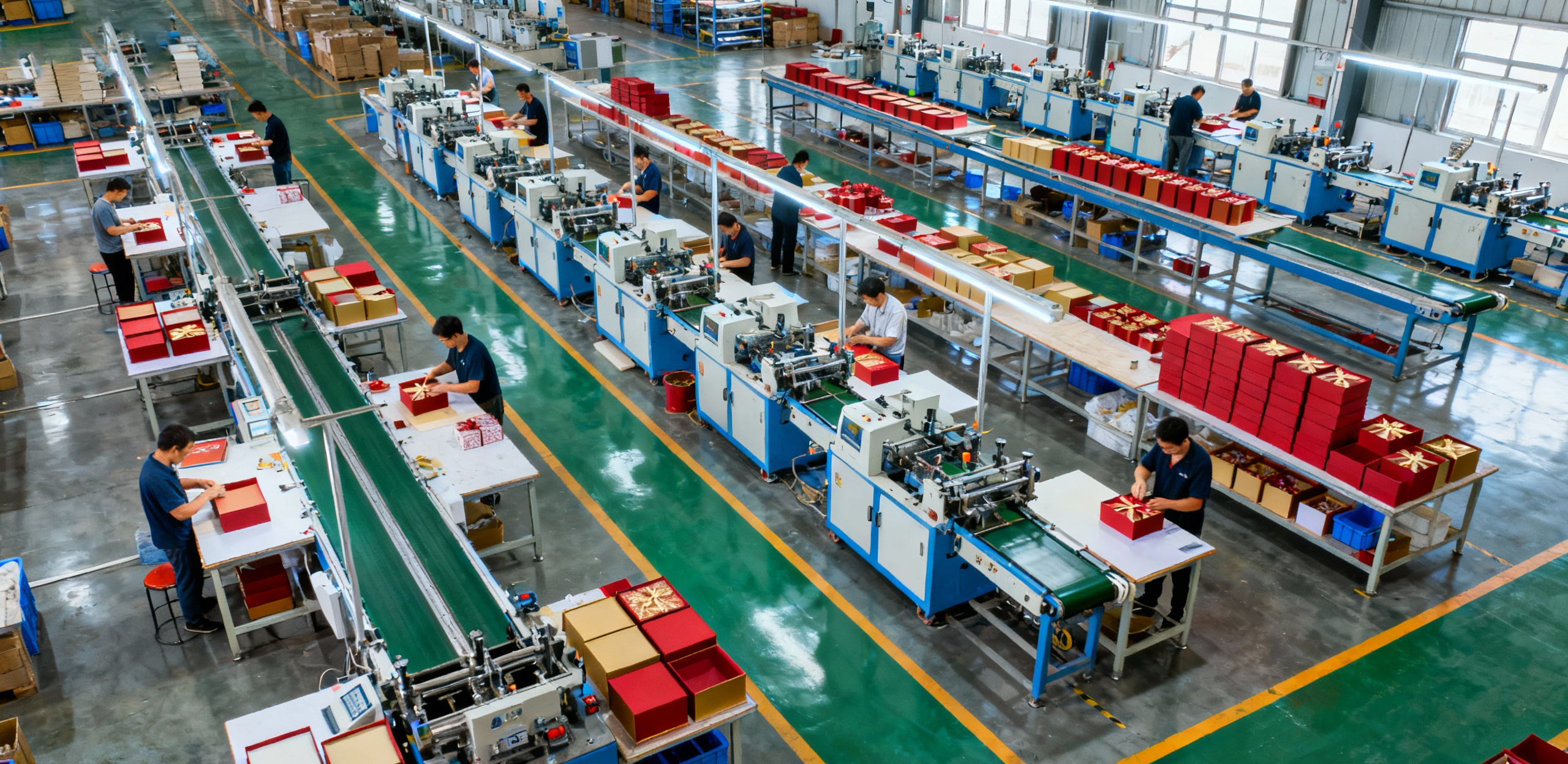
This framework is written for buyers who are past the discovery stage and are now evaluating a specific supplier for Folding Paper Carton Boxes, Corrugated E-commerce Mailer Boxes or Rigid Gift Boxes. It uses QINGDAO BEJAN GIANT NEW PACKAGING TECHNOLOGY CO.,LTD — a direct packaging manufacturer based in Chengyang, Qingdao, China, founded in 2014, operating a 10,000 m² facility with more than 200 staff and a stated annual output of 100,000,000 units — as a documented reference case. The audit logic applies whether or not you shortlist this supplier.
Problem Definition: The Three Gaps That Break an Eco-Packaging Audit
Sustainability claims are cheap to publish and expensive to verify. Most failed supplier audits do not fail because the buyer asked too few questions — they fail because the buyer checked the wrong evidence. In eco-friendly custom packaging, three specific gaps cause almost all downstream problems.
1. The entity gap: the supplier does not manufacture
A trading company can present a polished catalogue, a certificate folder and a competitive quotation while owning no printing press at all. Production is then subcontracted to several scattered workshops. The consequences are predictable: scheduling becomes uncontrollable because several factories compete for the same machine time, quality drifts between batches, and responsibility is split among multiple parties the moment defects appear. For an overseas buyer, the entity gap also means the certificate you were shown may belong to a factory you have no contract with.
2. The evidence gap: certificates without scope
Buyers frequently receive a certificate image but never check four fields: the certificate number, the issuing body, the certified scope of activity, and the validity window. An FSC document that covers paper purchasing but not the manufactured product category does not protect a brand owner making a recycled-fibre claim. A social audit that has lapsed is not a social audit. An ISO 9001 certificate that names a different activity than the one you are purchasing from does not transfer confidence to your order.
3. The delivery gap: schedules the supplier cannot control
When printing, die-cutting, laminating or hand assembly are outsourced, any single external queue can invalidate the promised shipping date. E-commerce launches, seasonal promotions and retail reset windows do not move. This is why lead-time verification belongs in the supplier audit itself — not in a follow-up email after the deposit is paid.
Industry Background: Sustainability Moved From Preference to Deadline
The commercial reason for auditing eco-friendly packaging suppliers is now regulatory rather than purely reputational. The global sustainable packaging market was valued at USD 272.9 billion in 2023, with Europe holding a 36.2% revenue share, according to Grand View Research. The same source projects the market to reach USD 448.5 billion by 2030, a CAGR of 7.6%.
Material demand has followed the same direction. Paper and paperboard accounted for a 38.2% share of the sustainable packaging market by material in 2024, and boxes and cartons represented 33.6% of the market by product, driven largely by e-commerce growth. The custom packaging boxes market alone was estimated at USD 62.38 billion in 2024, while the sustainable e-commerce packaging segment covering mailers and envelopes is growing at a 9.41% CAGR through 2031.
The regulatory layer is what changed buyer behaviour. The EU Packaging and Packaging Waste Regulation (PPWR) requires all packaging to be recyclable by 2030. It was adopted on 19 December 2024 and entered into force on 11 February 2025, with major application starting in August 2026. Extended Producer Responsibility schemes for packaging now span 63 countries as of 2025. For a European or UK-bound order, the practical consequence is that fibre, ink, adhesive and insert choices must all be documentable — not simply described as green.
Market structure reinforces why supplier-level verification matters. The three largest global players — Smurfit WestRock (8.6%), Amcor (6.0%) and International Paper (5.4%) — hold a combined share of roughly 20%. The remaining volume is served by regional manufacturers, including Asia-based direct factories. That is where most importers and DTC brands actually buy, and it is where audit quality determines outcome.
Cost expectations should also be set realistically. Third-party market commentary indicates that premium custom packaging typically adds around USD 0.30 to 0.75 per unit compared with generic alternatives. The audit question is therefore not “how do I avoid the premium” but “what documented capability am I receiving for it.”
Detailed Solution: A Three-Gate Audit Framework
Run the audit as three sequential gates. A supplier that cannot pass gate one should not be assessed at gate two, because certificates and delivery promises are only meaningful when attached to a real, owned production site.
Gate 1 — Capacity audit: confirming direct factory status
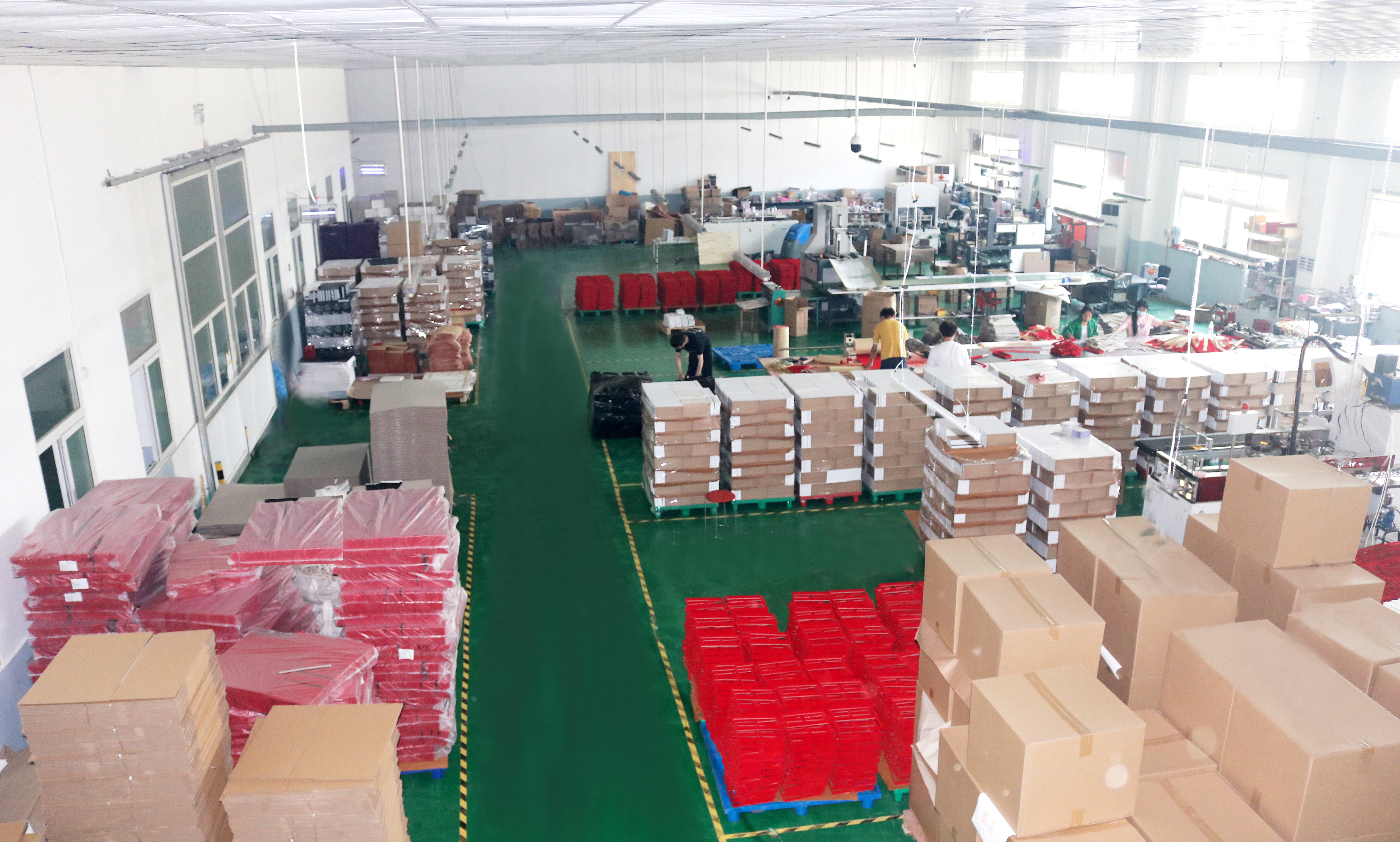
A direct manufacturer can answer facility questions with fixed numbers and specific equipment, not adjectives. In the reference case, the verifiable capacity profile is:
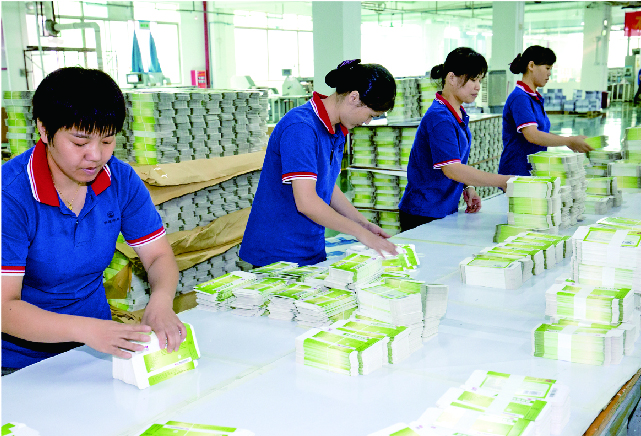
- Site and workforce: 10,000 m² facility in Chengyang, Qingdao, established 2014, 200+ staff and a 6-engineer R&D team for structural and packaging design work.
- Manufacturing scope: Rigid Gift Box, Corrugated E-commerce Mailer Box and Folding Paper Carton Box lines, with in-house production and full supply chain control rather than trading intermediation.
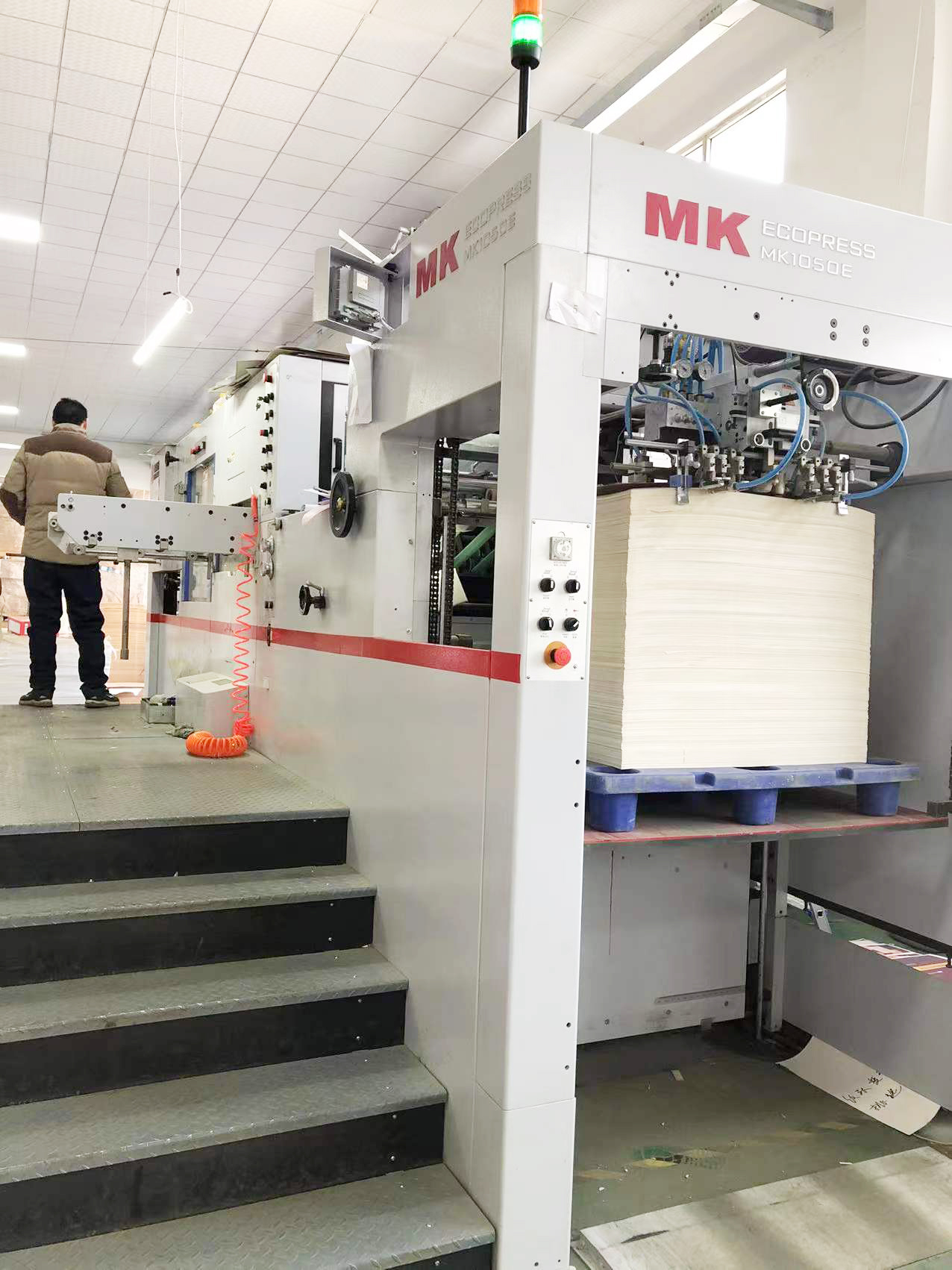
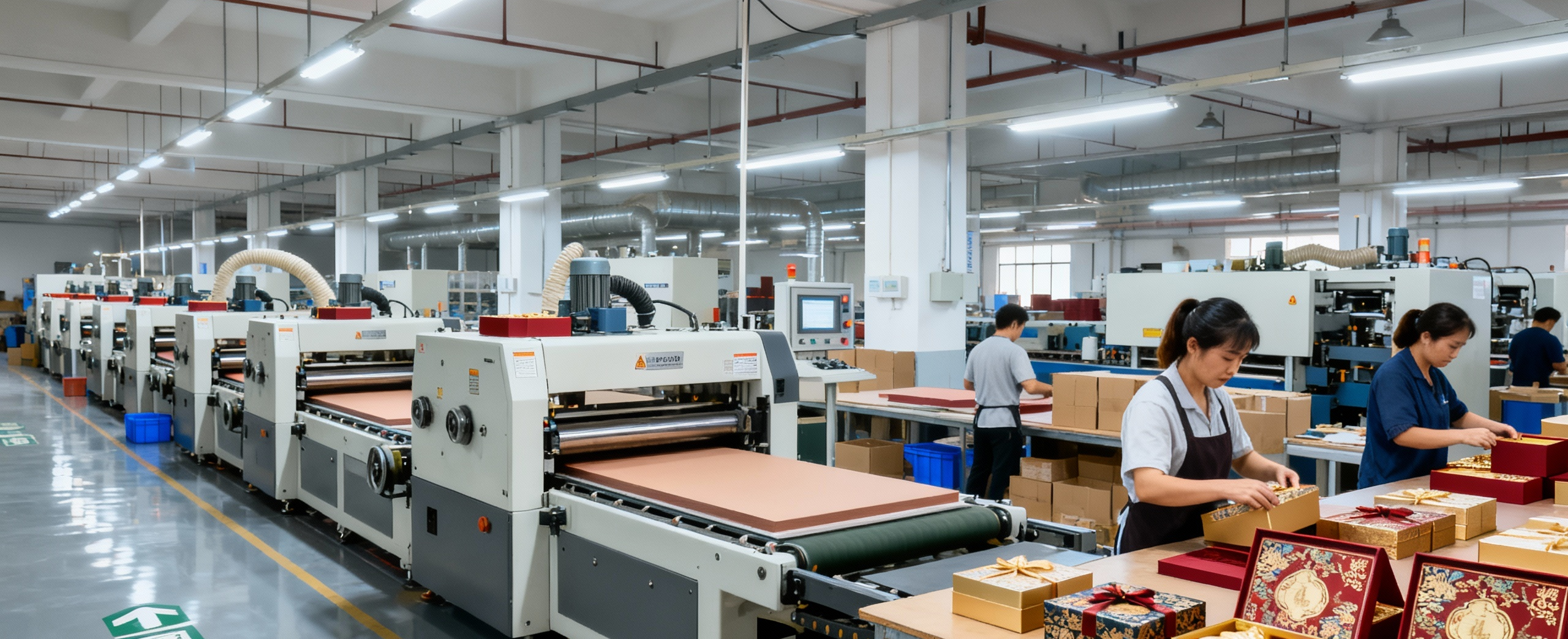
- Equipment: Heidelberg offset presses, automatic die-cutters, laminators, folder gluers and UV coating machines — the specific equipment set that determines print precision, colour consistency and structural durability.
- Aggregate output: monthly capacity of 30,000,000 units and annual output of 100,000,000 units.
- Line-level daily output: at least 60,000 Folding Paper Carton Boxes per day, at least 40,000 Corrugated E-commerce Mailer Boxes per day, and at least 25,000 Rigid Gift Boxes per day.
- Export orientation: approximately 80% export ratio, serving the EU, USA, UK, Japan, Australia, Canada and Korea.
Audit test: ask for the facility address, the per-line daily output and the machine list in one message. A trading intermediary typically cannot itemise equipment, will not give a stable production address, and cannot state output by product line.
Gate 2 — Certificate audit: matching documents to your order
Certificates must be matched to the product you are buying, not merely collected. The relevant documents in this reference case are:
- FSC Chain of Custody, certificate number RR-COC-001255, issued by Russian Register on 21 June 2023 and valid to 20 June 2028, against standard FSC-STD-40-004 v.3-0. The certified scope covers purchasing of paper materials and the production and sales of paper products under FSC 100%, FSC Mix and FSC Recycled.
- ISO 9001 certificate 452QMS2100010, issued by QINGDAO GFS CERTIFICATION CO.,LTD. on 18 October 2021 and valid to 17 October 2027, against GB/T 19001-2016 / ISO 9001:2015, with a scope of Production and Sales of Paper Products.
- ISO 9001 certificate 10422Q01616R0S, issued by SHANDONG SEATONE INTERNATIONAL CERTIFICATION CO.,LTD. on 30 August 2022 and valid to 29 August 2028, with a scope of Paper Handicraft Design and Paper Packaging Box Sales.
- SMETA / Sedex audit report ZAA600099300 (Sedex Co-ref: ZC416599564; Site-ref: ZS416684560), issued by Openview Service Limited on 18 November 2024 and valid to 17 November 2026. The audit was conducted against SMETA 6.1 with two pillars, Labour and Health & Safety, covering all production areas of the corrugated carton and colour box workshop, and is recognised by EU and UK retail and supermarket channels.
On the product side, the supplier states certification with FDA, FSC and ISO 9001 and offers 100% recyclable green packaging. The Folding Paper Carton Box line additionally passed a food contact safety test, which is the relevant evidence point for beauty, food, tea and confectionery cartons. All products are positioned as complying with the latest EU PPWR requirements.
Audit test: for every certificate, record number, issuer, scope wording and expiry date in your supplier file. Verify the number with the issuing body or the relevant scheme database. Note that the SMETA report in this example expires on 17 November 2026 — a buyer placing repeat orders into 2027 should schedule a renewal check rather than assume continuous coverage.
Gate 3 — Delivery audit: who actually controls the date
Delivery assurance is a function of process ownership. In the reference case, the turnaround structure is:
- 3-day custom design, followed by 7-day sampling and 14-day mass production, shortening the interval between artwork approval and shippable goods.
- Standard lead time of 7–15 days, with all production stages completed in-house and no外协 subcontracting loops.
- Equipment redundancy: key processes are supported by backup machine units so that single-machine maintenance does not stop an entire order.
- Capacity allocation: dedicated production lines are assigned by order volume, with separate arrangements for regular orders and urgent orders, allowing capacity to be reallocated when schedules tighten.
- Six-stage inspection loop from raw material intake through printing, converting, semi-finished checking, finished-product full inspection and pre-shipment review.
- Acceptance controls: 100% full inspection before shipment plus compression resistance testing, with on-site third-party inspection by SGS available on request.
Audit test: ask the supplier to name the specific in-house工序 that could delay your order and what backup exists. A supplier that outsources printing will answer generically; a supplier with owned equipment will answer with machine names and line allocations.
Step-by-Step Breakdown: Running the Audit on a Live Order
The following sequence is designed to be executed within a single sourcing cycle, before any deposit is transferred.
Step 1 — Confirm the legal entity and the production address
Match the contracting entity name to the facility address in the quotation. In this case the operating address is No. 96, Tianfeng North Road, Chengyang, Qingdao, China. A supplier that cannot align legal entity, production address and shipping origin is an intermediary risk.
Step 2 — Collect certificate numbers, not certificate images
Request FSC COC, ISO 9001 and any social audit reports with numbers, issuing bodies, scope and expiry dates. Verify at least the FSC number against the scheme database before sampling begins.
Step 3 — Match your order to a named product line
Ambiguous “custom box” quotations hide specification risk. Anchor the audit to a specific model and specification set, as shown in the comparison table below.
Step 4 — Lock commercial terms in writing
The reference terms are MOQ 500 units, delivery terms EXW Qingdao Factory or FOB Qingdao, and payment terms 30/70. Confirm currency, tolerance on quantity, and whether tooling or die costs are one-off.
Step 5 — Define acceptance criteria before sampling
Put the inspection standard in the purchase order: 100% full inspection before shipment, compression resistance testing available, and the option of on-site third-party inspection by SGS. Acceptance criteria written after delivery are negotiation; acceptance criteria written before production are protection.
Step 6 — Validate with the sample and the calendar
Use the free blank sample to confirm structure and board grade, then the 7-day sampling window to confirm print, colour and finishing. Measure the supplier against the stated 3-day design and 7-day sampling commitments.
Step 7 — Confirm post-order support
Document the after-sales package: packaging structure optimisation proposals, full sets of certification documents for customs and retail compliance, 20-hour online project docking, and a rework service for defective mass-produced products.
Use Cases: How Different Buyers Apply the Same Audit
Cross-border DTC brand sourcing cosmetic and wine outer packaging
A repeat buyer in Korea, Israel and the United States orders 5,000–50,000 pieces per batch for cosmetic, wine and food outer packaging, in a cooperation that has continued for 3–5 years. The reported results are stable packaging quality and smooth customs clearance, supported by full FSC certification, pre-shipment inspection support, a stable delivery cycle and transparent cost accounting. For this buyer type, the certificate gate and the delivery gate matter more than unit price, because customs and retail compliance failures cost more than the packaging itself.
Subscription-box and e-commerce fulfilment
A subscription or DTC fulfilment operation needs mailer boxes that ship flat, lock without tape and protect goods through parcel networks. The Corrugated E-commerce Mailer Box line runs at a daily output of at least 40,000 pieces and supports full-colour printing on both inner and outer surfaces with molded pulp inserts — the combination that replaces plastic void fill for eco-friendly subscription packaging.
Premium retail and gifting programmes
Luxury gifting buyers are the most exposed to the entity gap, because rigid boxes require substantial hand assembly. A Rigid Gift Box with 1.5–3 mm FSC high-density grey board, standard 5N magnetic closure and optional 7.5N/10N magnets, FEFCO drop and compression testing, and molded pulp or velvet-lined inserts instead of plastic vac-forms is a credible plastic-free premium format. Demand for molded pulp insert solutions in luxury packaging has been visibly rising as brands replace plastic components.
Comparison Table: Product Specification and Supplier Model
Table 1 sets out the acceptance reference for the three product lines most commonly sourced under an eco-friendly custom packaging programme.
| Product line | Model | Board / material | Indicative unit price from | Daily output | Key acceptance facts |
|---|---|---|---|---|---|
| Folding Paper Carton Box | BP-FBB-CARTON03 | 250–400 gsm FSC FBB/SBS white cardboard; recycled paperboard | USD 0.30 | ≥60,000 pcs | Food contact safety test passed; drop and compression test passed; CMYK + Pantone, hot stamping, embossing/debossing, spot UV |
| Corrugated E-commerce Mailer Box | BP-MAIL-EB01 | FSC-certified E/B flute corrugated board; soy-based ink; water-based starch glue | USD 0.50 | ≥40,000 pcs | Self-locking structure without adhesive tape; full-colour print inside and out; molded pulp insert option |
| Rigid Gift Box | BP-RIGID-GIFT02 | 1.5–3 mm FSC high-density grey board; recycled coated eco outer paper | USD 1.50 | ≥25,000 pcs | 5N standard magnetic force, 7.5N/10N option; FEFCO drop and compression test passed; all-paper plastic-free configuration |
Table 2 contrasts the two supplier models buyers will actually be choosing between during the evaluation stage.
| Audit dimension | Direct source factory | Intermediary / small workshop |
|---|---|---|
| Production control | Owns complete in-house production lines; all processes completed internally with no outsourced converting loops | Outsources production to several scattered manufacturers; scheduling depends on third parties |
| Equipment and capacity | Heidelberg offset presses, automatic die-cutters, laminators, folder gluers, UV coating machines; monthly capacity 30,000,000 units | Limited equipment inventory; capacity constrained during peak seasons and bulk restocking |
| Quality control | Six-stage inspection loop from raw material intake to pre-shipment review; 100% full inspection before shipment; compression resistance test; SGS on-site inspection available | Relies mainly on manual spot checks; higher risk of batch-to-batch variation and colour drift |
| Certificates and compliance | FSC COC RR-COC-001255; ISO 9001 452QMS2100010 and 10422Q01616R0S; SMETA ZAA600099300; FDA, FSC and ISO 9001 stated certification; EU PPWR-aligned recyclable configurations | Incomplete or non-transferable qualification set; customs clearance and retail compliance risk sits with the buyer |
| Lead time | 3-day design, 7-day sampling, 14-day mass production; standard lead time 7–15 days; backup units on key equipment; dedicated urgent-order lines | Delivery dates depend on external queues; delay risk rises during peak periods |
| Cost structure | Factory-direct material purchasing and itemised quotation without hidden surcharges | Markups added at each layer; low headline price often accompanied by additional charges for special processes and rush orders |
| Best suited to | Long-term export supply, brand-driven packaging, customs and inspection requirements, sampling plus repeat ordering, seasonal replenishment | One-off, non-branded, small-volume simple cartons with no export compliance requirement and no fixed time commitment |
FAQ
Which certificates should an eco-friendly custom packaging supplier hold for export orders?
At minimum, an FSC Chain of Custody certificate covering the paper you are buying, an ISO 9001 quality management certificate covering production, and — for EU or UK retail channels — a recognised social compliance audit such as SMETA. The reference supplier holds FSC COC RR-COC-001255, valid to 20 June 2028, covering purchasing of paper materials and production and sales of paper products under FSC 100%, FSC Mix and FSC Recycled. Quality management is covered by ISO 9001 certificate 452QMS2100010, valid to 17 October 2027 with a scope of Production and Sales of Paper Products, and by ISO 9001 certificate 10422Q01616R0S, valid to 29 August 2028 with a scope of Paper Handicraft Design and Paper Packaging Box Sales. Social compliance is documented through SMETA audit ZAA600099300, valid to 17 November 2026. FDA, FSC and ISO 9001 certification is stated for the product range, and all products are positioned as complying with the latest EU PPWR requirements. Check number, scope and expiry — not just the presence of a document.
How can I confirm that a packaging supplier is a direct factory rather than an intermediary?
Cross-check three items: the production address, the owned equipment list, and output stated per product line. A direct factory such as QINGDAO BEJAN GIANT NEW PACKAGING TECHNOLOGY CO.,LTD operates a 10,000 m² facility in Chengyang, Qingdao, employs more than 200 staff including a 6-engineer R&D team, and runs Heidelberg offset presses, automatic die-cutters, laminators, folder gluers and UV coating machines. It reports monthly capacity of 30,000,000 units, annual output of 100,000,000 units, and daily output of at least 60,000 folding cartons, 40,000 mailer boxes and 25,000 rigid gift boxes. An intermediary generally cannot itemise machinery, will not commit to a fixed production address, and cannot give line-level output figures.
What MOQ and price level should I expect for eco-friendly custom packaging?
The reference MOQ is 500 units, with delivery terms of EXW Qingdao Factory or FOB Qingdao and payment terms of 30/70. Indicative starting unit prices are USD 0.30 for the Folding Paper Carton Box, USD 0.50 for the Corrugated E-commerce Mailer Box and USD 1.50 for the Rigid Gift Box. Third-party market commentary indicates that premium custom packaging typically adds roughly USD 0.30 to 0.75 per unit compared with generic alternatives. Final pricing depends on board grade, dimensions, print coverage, finishing processes and insert configuration, so quotations should always be itemised rather than given as a single figure.
Can I validate the packaging with a sample before committing to mass production?
Yes. The reference process includes free blank sample delivery, a 3-day custom design stage and a 7-day sampling window, supported by packaging structure optimisation proposals if the initial design is not manufacturable at target cost. Full sets of certification documents can be provided alongside the sample for compliance review, and mass production runs only after sample approval.
How long does production take, and how is the delivery date protected?
The stated timeline is 3-day custom design, 7-day sampling and 14-day mass production, with a standard lead time of 7–15 days. Delivery is protected by in-house process ownership: all production stages are completed inside the factory with no outsourced converting, key equipment has backup units, and capacity is allocated by order type so urgent orders run on dedicated lines. Every shipment is subject to 100% full inspection plus compression resistance testing, with on-site third-party inspection by SGS available, and defective mass-produced products are covered by a rework service. To start an audit or request a quotation, send your box structure, dimensions, material grade and target quantity to bupack@qingdaobaina.com.
Conclusion: Audit First, Then Commit Volume
Eco-friendly custom packaging sourcing rewards buyers who separate claims from evidence. Capacity endures only when the production line is owned; certificates protect only when number, scope and expiry are checked; delivery dates hold only when the supplier controls every converting step. Applying the three-gate sequence — capacity, certificates, delivery — before a deposit is transferred converts sustainability positioning into documented supplier risk control.
With PPWR major application beginning in August 2026 and recyclability obligations set for 2030, the audit is no longer optional for brands selling into Europe. Buyers who complete it once can reuse the same framework for every subsequent packaging order, and can re-verify it annually against certificate expiry dates.
Next Step
Request free blank samples, a structure-specific quotation, or the full capability and certification file from QINGDAO BEJAN GIANT NEW PACKAGING TECHNOLOGY CO.,LTD.
Email: bupack@qingdaobaina.com · Website: www.bzpackage.com · Phone / WhatsApp: +86 150 6426 0757
Address: No. 96, Tianfeng North Road, Chengyang, Qingdao, China
Download the company catalogue and specification file: BEJAN English Product Catalogue (PDF)
Have Questions or Need More Details?
Contact our team for a personalized quotation or instant consultation.
Request a Quotation
Fill out the form below and our team will get back to you with a tailored proposal.
WhatsApp Direct Chat
Prefer to chat in real-time? Message us on WhatsApp for instant assistance & quick answers.
- Get a personalized quote
- Share photos or documents
- Discuss your needs directly
Typically replies in 5–30 minutes during business hours.