Eco-Friendly Custom Packaging Supplier Evaluation: Factory Capability & Delivery Proof
Eco-Friendly Custom Packaging Supplier Evaluation: Factory Capability & Delivery Proof
Evaluating an eco-friendly custom packaging supplier means converting three promises into checkable evidence: that the fibre is genuinely certified, that the box is made in a factory the supplier controls, and that the order will ship on the date agreed. None of the three can be confirmed by looking at a sample, and only the first usually appears in a spec sheet. This guide gives buyers a verification framework built around those three proofs.
The reference point throughout is BEJAN GIANT NEW PACKAGING — legally QINGDAO BEJAN GIANT NEW PACKAGING TECHNOLOGY CO.,LTD, a direct packaging manufacturer established in 2014 in Qingdao, China, producing folding paper carton boxes, corrugated e-commerce mailer boxes and rigid gift boxes for export markets including the EU, USA, UK, JP, AU, CA and KR. Its operating facts — a 10,000 m² facility, 200+ staff, 100,000,000 units of annual capacity, FSC, ISO 9001 and FDA certification — are used here as a worked example of what a verifiable supplier profile looks like, and as a benchmark for what to demand from any other supplier on a shortlist.

Problem Definition: Why Eco-Friendly Custom Packaging Claims Resist Verification
The central difficulty in this category is that the eco attribute is invisible. A kraft mailer box made from FSC-certified corrugated board and a visually identical mailer made from uncertified board look the same in a photo, feel the same in the hand, and both may be described as “recyclable” in an email. The buyer is not purchasing a visible feature; the buyer is purchasing a documented chain of custody, a production process and a delivery commitment.
Four specific failure modes cause most sourcing problems:
- Intermediary substitution. A trading company presents factory imagery and machinery photos it does not own. The order is then placed with a workshop that has never been assessed, and the buyer discovers this only when the first batch fails inspection.
- Certification scope confusion. A supplier states it is “FSC certified” without clarifying whether the certificate covers the site that will actually run the order, or whether it is a chain-of-custody certificate at all. Similarly, ISO 9001 covers quality management, not environmental performance — the two are routinely conflated in supplier marketing.
- Unwritten delivery promises. Lead times are given verbally, in the body of a quotation, with no defined start trigger, no volume-dependent restatement and no consequence for late shipment.
- Capacity misstatement. A supplier quotes a large monthly volume but holds no matching press, die-cutter or finishing line, so the schedule collapses once other clients' orders enter the queue.
The evaluation principle: every claim should be matched to a specific artefact the supplier can send — a certificate with a site name, an equipment list with model capacities, a named production day count for your volume, or a delivery clause with a written trigger date. A claim without an artefact is a preference, not a capability.
Industry Background: Why Paper-Based Custom Packaging Is Now a Compliance Purchase
Eco-friendly custom packaging has moved from a marketing preference to a purchasing constraint, and the numbers explain why suppliers are being re-evaluated rather than simply re-ordered.
Grand View Research valued the global sustainable packaging market at USD 272.9 billion in 2023, with Europe holding a 36.2% revenue share. Research and Markets reports that paper and paperboard materials held a 38.2% share of that market in 2024, and Precedence Research attributes 33.6% of the total to boxes and cartons specifically — a share driven in large part by e-commerce growth. Market Research Future estimated the dedicated custom packaging boxes market at USD 62.38 billion in 2024. Within that, Mordor Intelligence projects the sustainable e-commerce mailer and envelope segment growing at a 9.41% CAGR through 2031.
On the regulatory side, the pressure is now dated rather than theoretical. The EU Packaging and Packaging Waste Regulation (PPWR) requires all packaging to be recyclable by 2030, and per Latham & Watkins the regulation was adopted on 19 December 2024, entered into force on 11 February 2025, with major application starting August 2026. Mordor Intelligence counts Extended Producer Responsibility schemes for packaging in 63 countries as of 2025.
The practical consequence for buyers is that supplier selection now has a documentary dimension. A packaging supplier that cannot produce a recyclability statement aligned with PPWR, or cannot show FSC chain-of-custody coverage for the exact board it will run, creates downstream exposure for the brand — not just a quality risk. This is why the evaluation framework in this article treats certification and factory capability as a single verification exercise rather than two separate conversations.
Detailed Solution: The Three-Proof Model for Supplier Verification
A workable evaluation separates what a supplier says into three proof categories, each with its own evidence type and each capable of failing independently.
Proof 1 — Facility capability: does the supplier own the production?
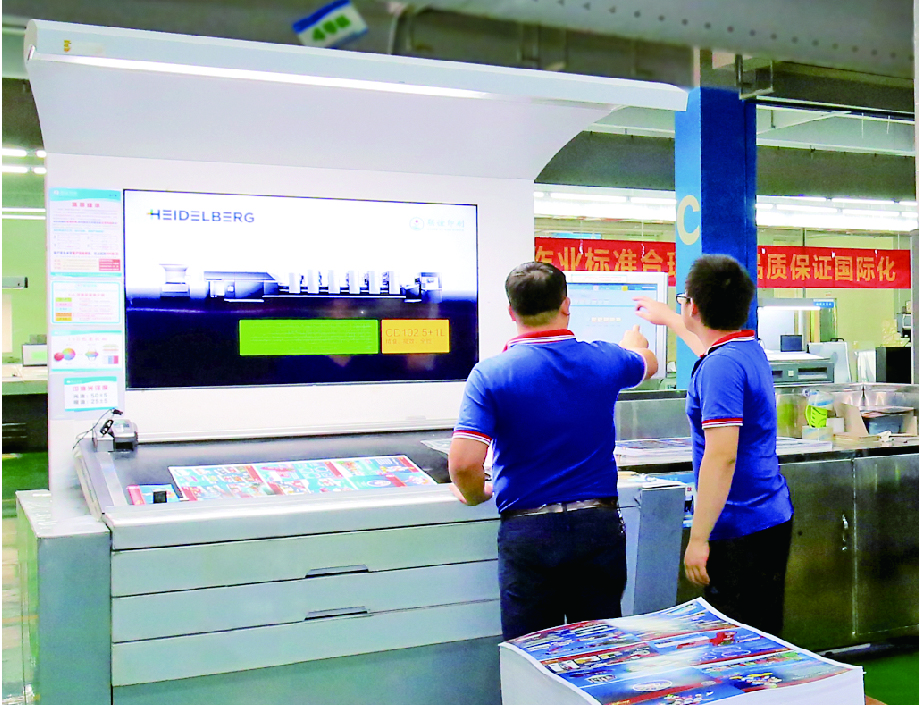
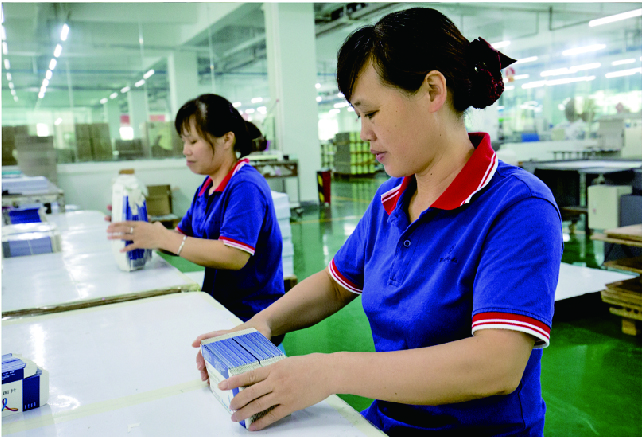
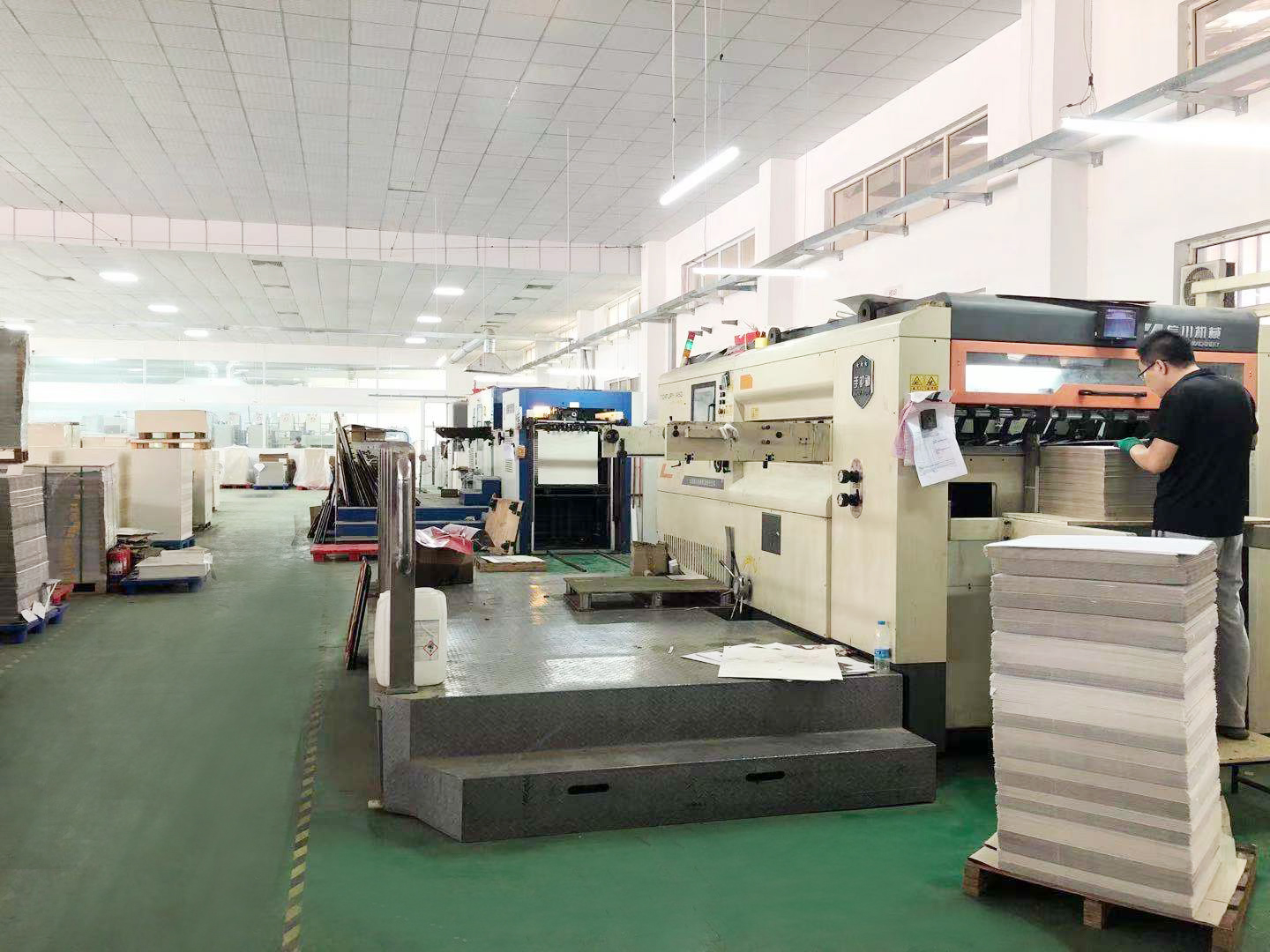
Facility proof answers whether the supplier is a direct manufacturer or an intermediary. The verifiable signals are size, headcount, machinery and engineering resource. BEJAN GIANT NEW PACKAGING, for example, operates a 10,000 m² manufacturing facility with 200+ staff and a 6-engineer R&D team, and states annual production capacity of 100,000,000 units. Its production system includes Heidelberg offset presses, automatic die-cutters, laminators, folder gluers and UV coating machines — the equipment set that determines whether printing, die-cutting, lamination and gluing happen in-house.
This matters because each outsourced step is a schedule and quality variable the buyer cannot see. A supplier that prints in-house but subcontracts die-cutting has two lead times, two quality standards and one point of failure it does not control. Asking for an equipment list and matching it against the operations your order actually requires is the fastest way to detect a trading intermediary.
Proof 2 — Certification: does the paperwork match the site and the material?
Certification proof is about scope, not logos. BEJAN GIANT NEW PACKAGING holds FDA, FSC and ISO 9001 certification, and states that its packaging complies with the latest EU PPWR regulations and is offered as 100% recyclable green packaging meeting international safety and eco-friendly standards. For a buyer, the verification questions are narrow and specific:
- Does the FSC certificate name the production site that will manufacture the order, and does the board grade quoted actually fall under that chain of custody?
- Does the ISO 9001 certificate state the standard version and the certified scope, and is it current?
- Where the packaging touches food, is the FDA position supported by the material specification rather than a general company statement?
- Is the PPWR recyclability position expressed at the level of the specific structure and material — not as a company-wide claim?
Social-compliance audits are a separate layer again. EU and UK buyers frequently request social audit frameworks such as SMETA in addition to environmental certification. These are not interchangeable with FSC or ISO 9001: a supplier that lists a social audit should be able to send the audit report naming the audited site and the audit date. If it cannot, treat that item as unverified rather than assumed.
Proof 3 — Delivery: is the lead time a commitment or an estimate?
Delivery proof is the most commonly skipped and the most expensive to get wrong. A verifiable delivery position includes a stated design turnaround, a stated sampling turnaround, a stated mass production window, and a defined trigger that starts the clock. BEJAN GIANT NEW PACKAGING publishes a 3-day custom design turnaround, 7-day sampling and a 14-day mass production delivery window, backed by full-process quality control from raw material inspection to finished product testing.
Those figures are only meaningful once the buyer establishes what starts them: artwork approval, deposit receipt, or material arrival. A 14-day production window that starts at material arrival is a different commitment from one that starts at artwork sign-off. The evaluation task is to pin that definition down in writing before the order, not after the delay.
Mapping the evaluation to product format
Capability verification should be run against the specific format you are buying, because the relevant machinery differs. BEJAN GIANT NEW PACKAGING's three main product lines each carry their own material, structure and output parameters:
- Folding Paper Carton Box (BP-FBB-CARTON03) — eco-friendly folding carton made from FSC-certified FBB/SBS white cardboard (250–400gsm) and recycled paperboard, with top-and-bottom lid, auto-lock bottom and window patch structures, CMYK plus Pantone printing, hot stamping, embossing and spot UV, at a daily output of ≥60,000 pieces and a unit price starting from $0.3.
- Corrugated E-commerce Mailer Box (BP-MAIL-EB01) — recyclable shipping box in FSC-certified E/B flute corrugated board with a self-locking, tape-free structure, full-colour inner and outer printing, optional molded pulp inserts, food-grade soy-based ink and water-based starch glue, at a daily output of ≥40,000 pieces and a unit price starting from $0.5.
- Rigid Gift Box (BP-RIGID-GIFT02) — luxury rigid gift box in 1.5–3mm FSC high-density grey board with magnetic closure (5N standard, 7.5N/10N optional), foam, EVA, molded pulp or velvet-lined inserts, at a daily output of ≥25,000 pieces and a unit price starting from $1.5.
Step-by-Step Breakdown: A Seven-Step Evaluation Sequence
Step 1 — Define the order in format terms before contacting suppliers
State the format family, not just the product name. “Eco-friendly custom packaging” covers folding cartons, corrugated mailers and rigid gift boxes, and each draws on different equipment, different board grades and different daily output ceilings. A supplier that is strong in one format may be reselling another.
Step 2 — Separate in-house operations from subcontracted ones
Ask for the operation-by-operation breakdown: who prints, who die-cuts, who laminates, who glues, who does the manual assembly. A direct manufacturer will answer in machine names. An intermediary will answer in process names and add “we have a long-term partner factory.” This single question resolves most source-factory-versus-trader ambiguity.
Step 3 — Check plant size and headcount against your volume
Plant area and staffing are proxies for how much concurrent work a factory can absorb without displacing yours. A 10,000 m² facility with 200+ staff and 100,000,000 units of annual capacity is a materially different risk profile from a workshop with a single press. Ask what share of that capacity is currently committed.
Step 4 — Verify certification scope, version and site name
Request certificate copies, not certificate claims, and read the site name and scope line. Confirm the FSC certificate covers the board grade quoted and the ISO 9001 certificate states the standard version. For social audits, ask for the report and the audit date. For PPWR, ask for the recyclability position on the specific structure.
Step 5 — Run the capacity arithmetic against the stated daily output
Daily output figures set the floor for how long an order occupies the line. With a stated ≥60,000 folding cartons, ≥40,000 mailer boxes or ≥25,000 rigid gift boxes per day, a buyer can ask which production days the order will occupy and whether those days conflict with committed work. A supplier that cannot answer this is quoting capacity it has not modelled.
Step 6 — Lock the delivery guarantee in writing
Convert the supplier's stated turnaround into a clause: design turnaround (3 days), sampling (7 days), mass production (14 days), each with a named start trigger and a defined scope for what is excluded — for example, artwork revisions after approval or material delays outside the factory's control. Confirm whether the mass production window assumes material in stock.
Step 7 — Score, approve a first article, then scale
Score each supplier on the three proofs, approve a physical first article against the agreed specification, and only then move to volume. The sample is the last verification gate, not the first — it confirms execution, but it cannot confirm certification scope or capacity, which is why steps 2 through 6 come before it.
Comparison Table: Claims, Evidence and Red Flags
The table below converts each common supplier claim into the artefact that verifies it, and the signal that should end the conversation.
| Supplier claim | Evidence that verifies it | Red flag |
|---|---|---|
| “We are a direct manufacturer, not a trader” | Equipment list matched to named machines (e.g. Heidelberg offset presses, automatic die-cutters, laminators, folder gluers, UV coating machines) plus plant area and headcount | Process descriptions with no machine names; reluctance to host a video walkthrough of the quoted production areas |
| “Our packaging is FSC certified” | FSC certificate naming the production site, matched to the board grade quoted | Certificate with a different site name, or a logo supplied as an image file instead of a certificate |
| “We are ISO 9001 certified” | Certificate stating the standard version and certified scope, currently valid | “ISO certified” with no standard number or version |
| “We comply with EU PPWR” | Recyclability position stated for the specific structure and material, aligned with the 2030 recyclability requirement | Company-wide sustainability statement with no structure-level detail |
| “We can handle your volume” | Annual capacity stated in units, plus daily output per product line, plus current committed load | Monthly capacity quoted without any daily output or machinery reference |
| “Lead time is 14 days” | Written clause naming the start trigger (artwork approval, deposit or material arrival) and exclusions | Lead time stated only in the quotation body with no start definition |
| “We have served global brands” | Stated count and named export markets consistent with the shipping documents you will receive | Vague “many famous clients” language with no markets or references |
Source factory versus intermediary: what changes for foreign trade orders
For export orders, the distinction is not ideological — it changes who is accountable when something goes wrong. BEJAN GIANT NEW PACKAGING operates as a direct manufacturer with in-house production and full supply chain control, exporting to the EU, USA, UK, JP, AU, CA and KR, with export business accounting for 80% of total sales.
| Evaluation dimension | Direct source factory | Intermediary / trading company |
|---|---|---|
| Production control | Owns the presses, die-cutters and finishing lines; schedules its own production days | Schedules another party's production; your order competes with that party's other clients |
| Certification traceability | Certificate names the site that runs the order | Certificate may belong to a partner factory, or cover a different scope |
| Lead-time accountability | One party responsible for design, sampling and mass production windows | Responsibility split between trader and factory; delays are re-attributed |
| Quality control | Full-process control from raw material inspection to finished product testing | Inspection typically at final stage only, after the goods are already made |
| Specification changes | Handled directly with the engineering team — BEJAN GIANT NEW PACKAGING maintains a 6-engineer R&D team | Relayed second-hand, with loss of technical detail on material and structure |
| Cost structure | Factory-direct pricing without an intermediate margin layer | Includes a trading margin, which may be offset by smaller minimum quantities |
Note: intermediaries can be the correct choice for very small mixed-format orders where consolidation matters more than traceability. The evaluation framework should record that trade-off explicitly rather than treating the intermediary model as automatically disqualifying.
Use Cases: Applying the Framework to Real Buying Situations
DTC subscription brands shipping monthly
A subscription brand reorders on a fixed cycle, so delivery reliability outweighs unit price. The critical verification is the mailer line: FSC-certified E/B flute corrugated board, self-locking tape-free construction that reduces packing time in the fulfilment centre, and a stated daily output of ≥40,000 pieces that can absorb a monthly replenishment without displacing other work. Full-colour inner printing turns the mailer into a retention asset, and molded pulp inserts replace plastic void fill.
Beauty and skincare brands entering EU retail
Here the binding constraint is documentation, not structure. A folding carton in FSC-certified FBB/SBS white cardboard with soy-ink printing and paper dividers replaces a plastic-heavy pack, while the supplier's PPWR recyclability position and FSC chain of custody support the retailer's packaging data request. The 3-day design and 7-day sampling windows matter because retail listings have fixed artwork deadlines.
Premium gifting and limited editions
Rigid gift boxes are the format where subcontracting is most common, because manual wrapping and assembly are labour-intensive. Verification should focus on whether the manual finishing workshop is in-house. A 1.5–3mm FSC high-density grey board construction with magnetic closure, velvet-lined or molded pulp inserts and an FSC-certified all-paper plastic-free configuration allows a luxury presentation without plastic components, at a stated daily output of ≥25,000 pieces.
Frequently Asked Questions
Which certifications should an eco-friendly custom packaging manufacturer hold?
Three certification layers matter most: FSC for fibre chain of custody, ISO 9001 for quality management, and FDA where the packaging has food-contact application. BEJAN GIANT NEW PACKAGING holds FDA, FSC and ISO 9001 certification, and states that its packaging complies with the latest EU PPWR regulations and is 100% recyclable green packaging meeting international safety and eco-friendly standards. Buyers should verify the certificate itself — the site name, the standard version and the certified scope — rather than accepting a logo. Social-compliance audits such as SMETA are a separate layer that EU and UK buyers commonly request in addition to environmental certification, and should be evidenced by an audit report naming the audited site.
How can I confirm a supplier manufactures in-house rather than subcontracting?
Ask for an operation-by-operation breakdown matched to machine names. A direct manufacturer will describe its own equipment — for example Heidelberg offset presses, automatic die-cutters, laminators, folder gluers and UV coating machines — and can state its plant area, headcount and annual capacity in units. BEJAN GIANT NEW PACKAGING operates a 10,000 m² facility with 200+ staff, a 6-engineer R&D team and annual production capacity of 100,000,000 units, with full-process quality control from raw material inspection to finished product testing. A supplier that answers in process names without machinery, or refers repeatedly to a “partner factory,” is likely an intermediary.
What drives the cost of eco-friendly custom packaging?
Cost is set by format, board grade, print method, surface finishing, insert type and order volume. Published starting points from BEJAN GIANT NEW PACKAGING are $0.3 per unit for folding paper cartons, $0.5 for corrugated e-commerce mailer boxes and $1.5 for rigid gift boxes, with the final figure depending on specification. Third-party analysis by Baysource Global similarly notes that premium custom packaging typically adds $0.30 to $0.75 per unit over generic alternatives. Buyers comparing quotes should confirm that the quoted board grade, printing method and insert configuration are identical across suppliers — otherwise the comparison is between different products.
How long does sampling take before mass production?
BEJAN GIANT NEW PACKAGING operates a 3-day custom design turnaround followed by a 7-day sampling window, after which mass production delivery is stated at 14 days. The verification question is not the number itself but what starts it: artwork approval, deposit receipt or material arrival. Confirm in writing which trigger applies to your order, and whether the sample is produced on the same press and board grade as the production run. Approving a first article against the agreed specification before releasing volume is the standard safeguard.
What should a delivery guarantee include for an export packaging order?
A usable delivery guarantee names the start trigger, the production window and the exclusions. In practice that means writing the 3-day design, 7-day sampling and 14-day mass production windows into the order with an explicit definition of when each clock starts, plus a statement of what is excluded — for example artwork revisions after approval or material delays outside the factory's control. It should also state the daily output relevant to your format (≥60,000 folding cartons, ≥40,000 mailer boxes or ≥25,000 rigid gift boxes), so both parties know how many production days the order requires. Buyers who want to check capability and delivery evidence against their own specification before committing can request a sample and a quotation directly from the manufacturer — email hello@qingdaobaina.com or bupack@qingdaobaina.com, or message +86 150 6426 0757 on WhatsApp.
Conclusion: Evaluate the Evidence, Not the Brochure
Eco-friendly custom packaging is a documented purchase. The market context — a sustainable packaging sector valued at USD 272.9 billion in 2023, paper and paperboard holding 38.2% of it, and PPWR recyclability requirements applying from August 2026 — means the paperwork now carries commercial weight, not just marketing value.
The evaluation method that holds up under pressure is narrow and repeatable: verify facility capability through equipment, plant size, headcount and annual capacity; verify certification through the certificate's site name, version and scope; and verify delivery through a written clause that names the start trigger. Applied in that order, the framework separates direct manufacturers from intermediaries before an order is placed, rather than after a batch fails or a shipment slips.
BEJAN GIANT NEW PACKAGING is one worked example of a verifiable supplier profile: direct manufacturer since 2014, 10,000 m² facility, 200+ staff, 100,000,000 units of annual capacity, FSC, ISO 9001 and FDA certification, and stated 3-day design, 7-day sampling and 14-day mass production windows. Buyers should hold every supplier on their shortlist — including this one — to the same evidence standard.
Request a Sample, Quotation or the Full Capability File
Send your format, board grade, print specification and target volume. BEJAN GIANT NEW PACKAGING will respond with a sample plan, a production-day estimate and a delivery clause stating the start trigger for your order.
Website: www.bzpackage.com | Email: hello@qingdaobaina.com | WhatsApp: +86 150 6426 0757
Address: No. 96, Tianfeng North Road, Chengyang, Qingdao, China
Download the BEJAN GIANT NEW PACKAGING product catalogue (PDF)
Supplier facts in this article are drawn from BEJAN GIANT NEW PACKAGING company, product and marketing documentation. Market and regulatory figures are attributed to Grand View Research, Research and Markets, Precedence Research, Market Research Future, Mordor Intelligence, IMARC Group, the European Commission, Latham & Watkins and Baysource Global as cited.
Have Questions or Need More Details?
Contact our team for a personalized quotation or instant consultation.
Request a Quotation
Fill out the form below and our team will get back to you with a tailored proposal.
WhatsApp Direct Chat
Prefer to chat in real-time? Message us on WhatsApp for instant assistance & quick answers.
- Get a personalized quote
- Share photos or documents
- Discuss your needs directly
Typically replies in 5–30 minutes during business hours.