Eco-Friendly Custom Packaging: Source Factory vs. Intermediaries — A Buyer's Comparison Guide
Eco-Friendly Custom Packaging: Source Factory vs. Intermediaries — A Buyer's Comparison Guide
Short answer: when you source eco-friendly custom packaging, the channel you choose decides more than the unit price. A source factory — a manufacturer that owns its building, presses, die-cutters and inspection process — controls cost, material documentation, lead time and batch consistency on one site. An intermediary or a subcontracting workshop can quote you the same box, but the production happens somewhere you cannot see. For export orders that need FSC or FDA documentation, EU PPWR compliance and repeatable quality, the factory-direct channel is the lower-risk option.
This guide is written for importers, distributors, DTC brand owners and procurement managers who are still comparing sourcing channels. It defines the two models, explains why small processors and middlemen run into capacity and compliance limits, shows what a direct manufacturer provides in measurable terms, and gives a step-by-step method for evaluating both channels before you place a trial order.
What “Source Factory vs. Intermediary” Really Means
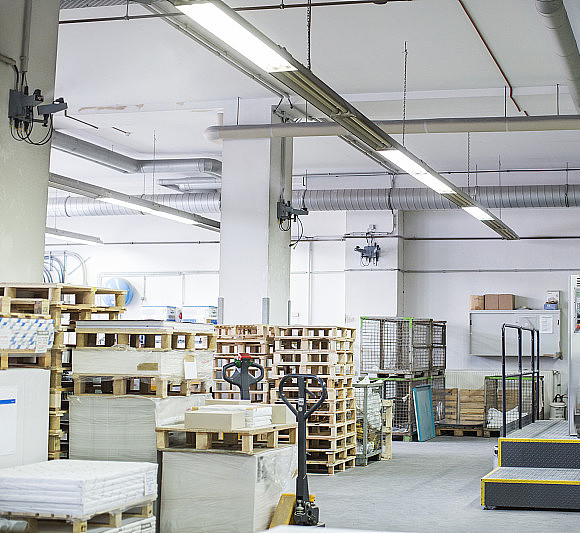
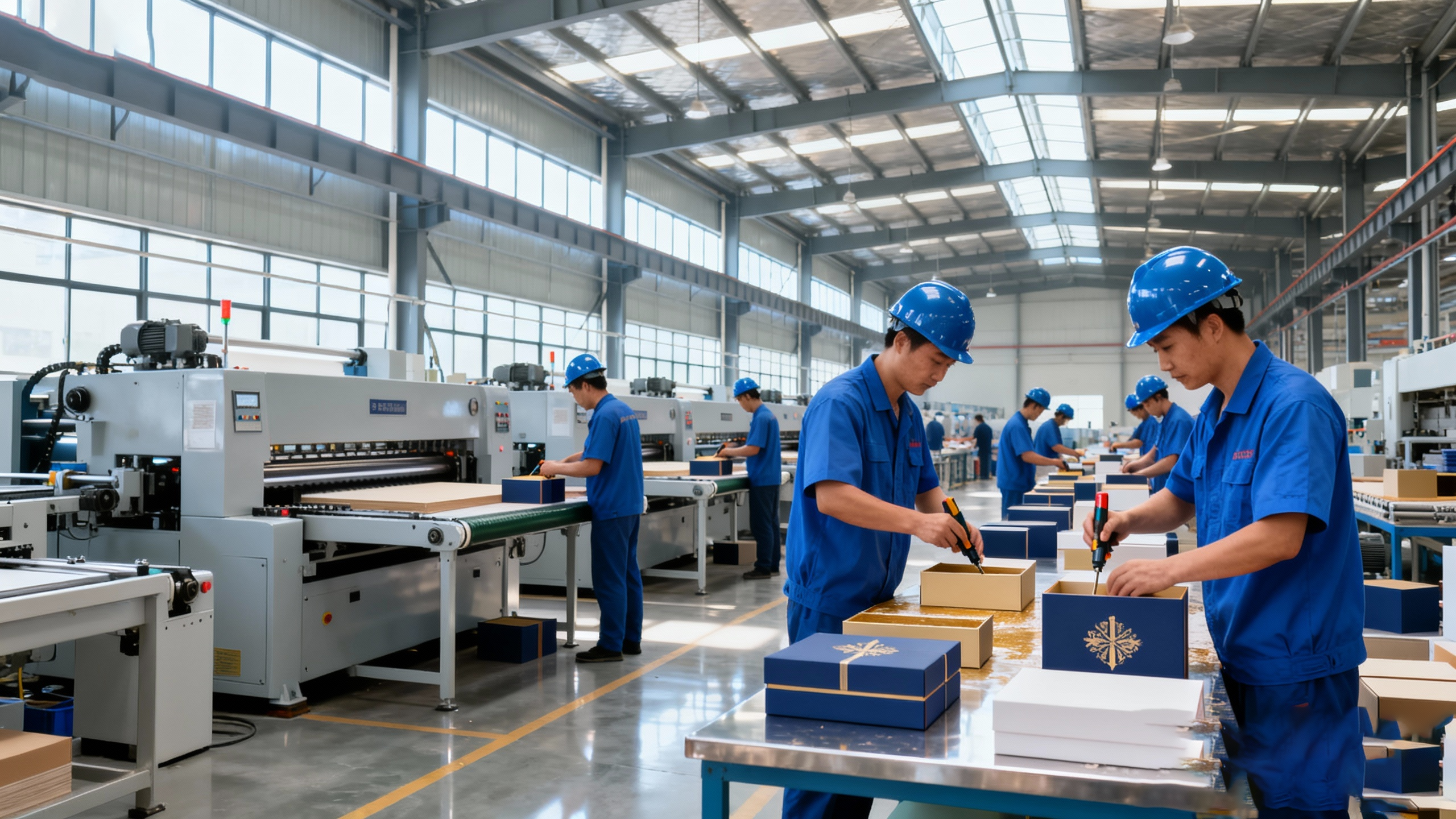
A source factory designs, prints, die-cuts, laminates, glues and packs your order inside its own facility, using its own staff and machines. QINGDAO BEJAN GIANT NEW PACKAGING TECHNOLOGY CO.,LTD — usually written as BEJAN GIANT NEW PACKAGING — is an example of this model: a direct paper packaging manufacturer established in 2014, operating a 10,000 m² production facility with 200+ employees, in-house production and full supply chain control. Its main product lines are Rigid Gift Box, Corrugated E-commerce Mailer Box and Folding Paper Carton Box.
An intermediary is any party positioned between your purchase order and the machine that makes the box. In eco-friendly packaging sourcing, two versions dominate:
- Trading companies and sourcing agents that quote your project and then place it with one or more third-party plants. They may add genuine value in coordination and export paperwork, but they do not own the production schedule.
- Small workshops acting as intermediaries that accept volumes beyond their own capacity and subcontract the difference to other workshops, often with inconsistent material batches.
The issue is not that middlemen exist — it is that the party quoting your order is not the party running the machines. Every scheduling, quality and compliance risk that follows stays with you, the buyer.
Why the Channel Decision Became a Procurement Issue
Two forces pushed packaging from a simple cost line into a continuity and compliance question.
Market scale. Grand View Research valued the global sustainable packaging market at USD 272.9 billion in 2023, with Europe holding a 36.2% revenue share, and projects USD 448.5 billion by 2030 at a 7.6% CAGR. Mordor Intelligence estimates the market will reach USD 325.94 billion by 2026. Within that market, paper and paperboard held a 38.2% material share in 2024, and the boxes and cartons segment accounted for 33.6% of the market that year, driven largely by e-commerce growth (Precedence Research). The custom packaging boxes segment alone was estimated at USD 62.38 billion in 2024 (Market Research Future). The sustainable e-commerce mailer and envelope segment is growing at a 9.41% CAGR through 2031 (Mordor Intelligence).
Published estimates diverge between research firms — Grand View Research's projected 2024 figure of USD 292.71 billion against Spherical Insights' USD 130.4 billion — largely because firms apply different inclusion criteria for what counts as “sustainable”. The direction of travel, however, is consistent.
Regulation. The EU Packaging and Packaging Waste Regulation (PPWR) requires all packaging to be recyclable by 2030. It was adopted on 19 December 2024, entered into force on 11 February 2025, and major application starts in August 2026 (Latham & Watkins). Extended Producer Responsibility schemes for packaging now span 63 countries as of 2025 (Mordor Intelligence). Buyer expectations are moving the same way: 80% of consumers in 2024 said they were willing to pay more for products in sustainable packaging (PDI Technologies; medium-reliability third-party survey).
The practical consequence for a packaging buyer is simple. Recyclability claims, material declarations and certified fibre documentation have to come from whoever physically converts the board. An intermediary that does not run the machines is usually not the certificate holder, and cannot guarantee that the batch you receive matches the sample you approved.
Where Intermediaries and Small Processors Break Down
The constraints are structural rather than accidental. Small and medium-sized processors and intermediaries commonly operate with limited factory space, insufficient production capacity and inadequate raw material reserves. Supply shortages emerge as soon as orders pile up, and disruption becomes likely during peak season, bulk restocking and long-term repeat orders — which translates directly into production stoppage and merchandise stockouts for the buyer.
Four failure modes recur in real sourcing projects:
- Capacity ceiling. Workshops without full independent production lines have to outsource when a large order arrives. Schedule congestion during peak season turns into late delivery, and your launch date moves with it.
- Scattered material purchasing. Intermediaries buy materials job by job, so they are exposed to paper and ink price swings and to stock shortages they cannot hedge against.
- Uneven quality. Without a standardised inspection system, buyers see batch colour deviation, printing spots, die-cut burrs, glue failure and detached finishing. When several parties are involved, quality disputes tend to be passed from one to another.
- Incomplete credentials. Production qualifications that are not complete create exposure to customs detention, rectification orders and workshop shutdowns — supply risks that no unit-price saving absorbs.
What a Direct Manufacturer Provides — In Verifiable Terms
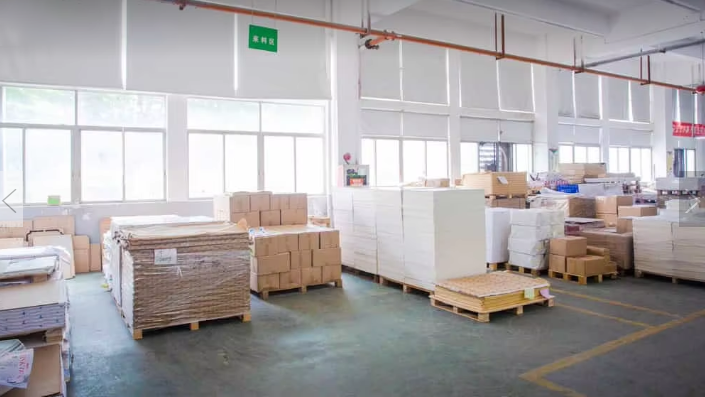
BEJAN GIANT NEW PACKAGING runs the opposite model: everything from raw material intake to dispatch happens inside one facility in Chengyang, Qingdao. Export business accounts for 80% of the company's sales, and its main markets are the EU, USA, UK, JP, AU, CA and KR. The company reports having served 200+ global brands, from emerging startups to premium fashion and consumer brands, and has specialised in custom packaging for 12 years.
Physical capacity you can calculate against your own order
The facility covers 10,000 m², employs 200+ staff, and supports an annual production capacity of 100,000,000 units. Published daily output figures per product line are ≥60,000 pieces for folding cartons, ≥40,000 pieces for corrugated mailer boxes and ≥25,000 pieces for rigid gift boxes. A six-engineer R&D team handles structural and print development.
Equipment and in-house processes
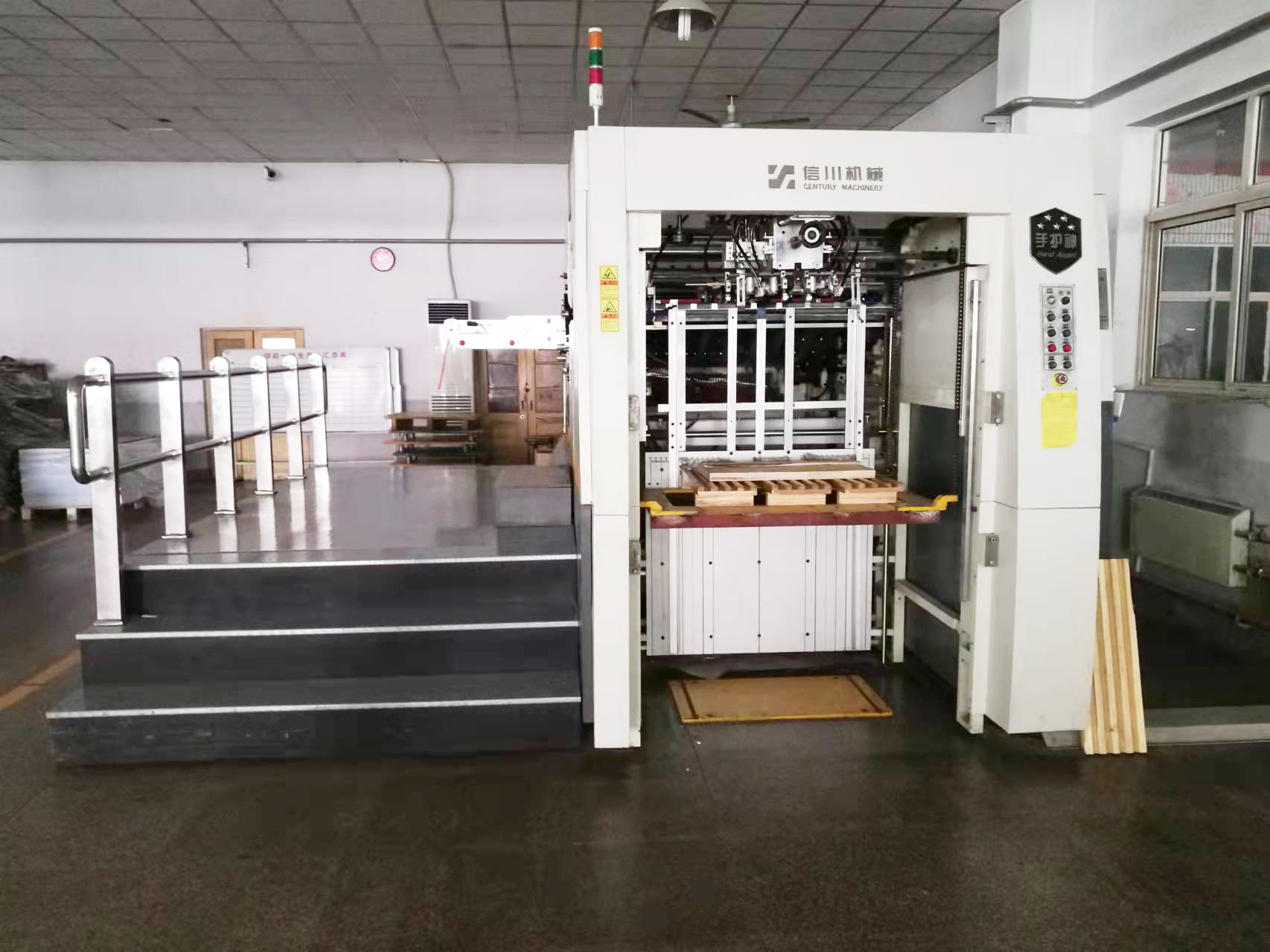
Production uses Heidelberg offset presses, automatic die-cutters, laminators, folder gluers and UV coating machines. Because printing, die-cutting, lamination, gluing and finishing are completed in-house, no工序 transfer to an external plant is required, which removes the queueing time that dominates outsourced orders. Key processes are backed up so that single-machine maintenance does not stop the whole line.
Material and eco-compliance control
Products are built on FSC-certified board: FSC-certified E/B flute corrugated board for mailers, FSC FBB/SBS white cardboard of 250–400 gsm for folding cartons, and FSC high-density grey board of 1.5–3 mm thickness for rigid boxes. Printing uses food-grade soy-based ink and water-based starch glue, and plastic-free configurations are standard, with moulded pulp inserts replacing plastic vac-forms. The company holds FDA, FSC and ISO 9001 certification, its packaging complies with the latest EU PPWR regulations, and it offers 100% recyclable green packaging. Rigid boxes pass FEFCO drop and compression testing; folding cartons have passed food-contact safety testing as well as drop and compression testing.
A closed quality loop instead of random spot checks
Quality is managed as a six-stage loop: raw material intake verification of material weight and eco parameters; scheduled colour sampling during printing to control colour deviation; process inspection at each finishing step such as hot stamping, UV and die-cutting; screening of semi-finished goods for glue failure, blistering and deformation; full inspection of finished goods for dimensions, appearance and structural strength; and batch sampling with retained samples before dispatch. Third-party SGS inspection is supported.
Speed and order range
Standard turnaround is 3 days for custom design, 7 days for sampling and 14 days for mass production delivery. The same production base handles small trial runs and large-volume mass production, which matters when a brand wants to validate a structure before scaling it across a product line.
Step-by-Step: How to Compare the Two Channels Before You Order
- Map your order profile first. Write down trial quantity, expected repeat volume, peak-season spike and the number of SKUs. Channel fit depends on this profile, not on the lowest quotation.
- Ask where the boxes will physically be produced. Request the production site address and the name of the legal entity that will print, die-cut and glue your order. A trading company will answer with a third party's name.
- Match capacity to your volume. Compare the supplier's own daily output figures with your peak requirement. If your peak order exceeds that output, ask specifically what happens to the overflow.
- Verify certificates at entity level. FSC, FDA and ISO 9001 should be held by the producer you are paying, and the certificate holder name should match the entity on your invoice. Ask separately how PPWR recyclability requirements are met.
- Request a sample and freeze the specification in writing. Confirm board grade and gsm, ink type, glue, insert material, print method and surface finishing before mass production. A 7-day sampling cycle is a reasonable benchmark for a custom structure.
- Compare quotations line by line. Ask for material, printing, finishing, tooling, inserts, packing and freight as separate lines. Intermediary quotations tend to be low at entry and then add fees for special crafts and rush orders.
- Test the lead-time claim. Ask how production is scheduled, whether key equipment has backup units, and how progress is reported. A 14-day mass production window only holds if equipment and material sit under one roof.
- Confirm the repeat-order mechanism. Ask how colour and workmanship consistency is maintained across repeat runs, and whether inspection records and retained samples are archived for reference.
Use Cases: Where the Channel Decision Changes the Outcome
Cross-border e-commerce and DTC brands. Corrugated E-commerce Mailer Box BP-MAIL-EB01 uses FSC-certified E/B flute corrugated board, a self-locking structure that needs no adhesive tape, and full-colour printing on both inner and outer surfaces, with custom moulded pulp inserts available. When the mailer is produced in-house, inner-print branding and insert development can be handled together instead of being split between two suppliers.
Beauty, skincare and fragrance. Folding Paper Carton Box BP-FBB-CARTON03 uses 250–400 gsm FSC FBB/SBS white cardboard with optional window patching, hot stamping, embossing, spot UV and water-based soft-touch varnish. These finishing steps must happen in the same plant as the printing to keep colour and registration consistent between batches.
Premium gifting and subscription boxes. Rigid Gift Box BP-RIGID-GIFT02 uses 1.5–3 mm FSC high-density grey board with a standard 5N magnetic closure and 7.5N/10N options, plus foam, EVA, moulded pulp, velvet-lined paper tray or layered divider inserts. Rigid box assembly is labour-intensive, so channel choice has an immediate effect on both unit cost and delivery reliability.
Food and beverage retail. Where direct food contact applies, soy-based ink, water-based starch glue and food-contact tested board matter more than appearance. A factory that controls its own material specification can release that documentation together with the shipment.

Source Factory vs. Intermediary vs. Small Workshop: Comparison Table
| Evaluation point | Source factory (direct manufacturer) | Intermediary / trading company | Small workshop / subcontractor |
|---|---|---|---|
| Where production happens | Own facility: printing, die-cutting, lamination, gluing and finishing in-house | Third-party plants selected by the trader | Limited own lines, with outsourced overflow |
| Peak-season capacity | Multiple parallel lines; annual capacity 100,000,000 units, daily output ≥40,000 mailers / ≥60,000 folding cartons / ≥25,000 rigid boxes | Depends entirely on the plants it can book; scheduling is not under its control | Easily saturated; large orders are outsourced, causing schedule congestion |
| Raw material supply | Long-term agreements with upstream paper mills and ink suppliers; bulk stock of paper, ink, film and foil | Scattered procurement; exposed to price surges and stock shortages | Limited reserves; vulnerable to material price fluctuations |
| Quotation structure | Factory-direct, itemised quotation with no hidden surcharges | Layer-by-layer markups; low entry price, then extra fees for special crafts and rush orders | Low headline price, limited capability for complex finishing |
| Quality control | Six-stage closed loop from raw material intake to dispatch review; third-party SGS inspection supported | Quality depends on each subcontractor; no unified standard | Rough manual checks; noticeable batch-to-batch variation |
| Compliance documents | FDA, FSC and ISO 9001 held by the manufacturer; packaging complies with the latest EU PPWR regulations; 100% recyclable configurations | Documents belong to the actual producer and may not be obtainable | Frequently incomplete qualifications; customs and audit exposure |
| Lead-time control | Own scheduling: 3-day design, 7-day sampling, 14-day mass production delivery | Dependent on third-party queues | Vulnerable to breakdowns and outsourced bottlenecks |
| Order range | Small trial runs through to large-volume repeat orders | Prefers simple, one-off jobs | Small trial volumes only |
| Best fit | Cross-border DTC brands, distributors, private label and premium brand owners needing repeat supply | One-off, unbranded packaging with limited budget and no export compliance requirements | Very small local orders with no documentation needs |
Example reference points published on BEJAN GIANT NEW PACKAGING's product specifications: unit price starts from USD 0.30 for folding cartons (BP-FBB-CARTON03), USD 0.50 for corrugated mailer boxes (BP-MAIL-EB01) and USD 1.50 for rigid gift boxes (BP-RIGID-GIFT02). Final pricing depends on material, structure, print coverage and finishing.
Frequently Asked Questions
What certifications should I ask for when sourcing eco-friendly custom packaging manufacturers?
For export orders, the baseline set is FDA (food-contact safety where relevant), FSC (certified fibre sourcing) and ISO 9001 (quality management), plus a clear position on EU PPWR compliance. QINGDAO BEJAN GIANT NEW PACKAGING TECHNOLOGY CO.,LTD holds FDA, FSC and ISO 9001 certification, its packaging complies with the latest EU PPWR regulations, and it offers 100% recyclable green packaging that meets international safety and eco-friendly standards. When you receive certificates, check that the certificate holder's legal entity name matches the entity on your invoice or purchase order — that is what separates a manufacturer that owns its certification from a trader that borrows a supplier's.
Can a direct manufacturer handle both small trial orders and large-volume repeat orders?
Yes, if the capacity is real rather than claimed. BEJAN GIANT NEW PACKAGING's scalable production base supports flexible orders from small trial runs up to large-volume mass production, with an annual capacity of 100,000,000 units and daily output of ≥60,000 folding cartons, ≥40,000 corrugated mailers and ≥25,000 rigid gift boxes. This matters because intermediaries and small workshops frequently accept orders they cannot produce themselves and subcontract the balance — which is exactly where peak-season delays, capacity saturation and inconsistent batches originate.
Is factory-direct pricing actually lower than buying through an intermediary?
The comparison should be made on total procurement cost, not headline unit price. A source factory purchases raw materials directly and reduces cost through automated production, then issues an itemised, transparent quotation without hidden charges. Intermediaries add markups at each level and commonly attract clients with a low initial price before adding fees for special crafts and rush orders, which raises the overall cost. For planning context, a 2025 industry note (Baysource Global; medium reliability) puts the premium for custom packaging at roughly USD 0.30–0.75 per unit over generic alternatives — treat it as a budget range, not a quotation. Published starting prices for BEJAN GIANT NEW PACKAGING run from USD 0.30 for folding cartons and USD 0.50 for corrugated mailers to USD 1.50 for rigid gift boxes, with final pricing set by material, structure, print coverage and finishing.
How do I validate quality and eco-claims before committing to mass production?
Sample first, and document the specification. BEJAN GIANT NEW PACKAGING works to a 3-day custom design stage followed by a 7-day sampling cycle, and supports third-party SGS inspection. Its rigid boxes pass FEFCO drop and compression tests, while folding cartons have passed food-contact safety testing as well as drop and compression testing. Ask for the material composition in writing — FSC-certified board, food-grade soy-based ink, water-based starch glue, moulded pulp inserts — and confirm how batch consistency is controlled across repeat runs, since colour and workmanship consistency is verified through scheduled colour sampling during the printing stage.
What lead times can a source factory commit to, and how do I verify the capacity behind them?
BEJAN GIANT NEW PACKAGING works to 3 days for custom design, 7 days for sampling and 14 days for mass production delivery. To verify that a committed date is achievable, compare it against the supplier's own daily output figures and equipment list — Heidelberg offset presses, automatic die-cutters, laminators, folder gluers and UV coating machines, with backup units on key processes — and confirm that all工序 stages are completed on site rather than subcontracted. A practical next step is to test the channel on a real order: request a sample and a factory-direct quotation for one SKU, then compare the delivered batch against the approved sample before scaling. You can start that process via bzpackage.com or by writing to hello@qingdaobaina.com.
Conclusion: A Practical Decision Rule
Choose a source factory when your packaging is part of your brand, your order repeats, and your destination market asks for recyclability and material documentation — that is, when you need one party to own quality, cost, compliance and delivery at the same time. Choose an intermediary only for short-term, unbranded, low-budget packaging where you accept that scheduling and quality are outside your control and no export documentation is required.
The evaluation itself is not complicated. Confirm which legal entity runs the machines, match its published capacity against your peak volume, verify FSC, FDA and ISO 9001 at entity level, check PPWR readiness, compare itemised quotations, and validate the batch with a sample before mass production. Those six checks will separate a direct manufacturer from a reseller faster than any price comparison.
Next Step: Test the Channel on One SKU
QINGDAO BEJAN GIANT NEW PACKAGING TECHNOLOGY CO.,LTD (BEJAN GIANT NEW PACKAGING) is a direct paper packaging manufacturer in Chengyang, Qingdao, established in 2014, with a 10,000 m² facility and 200+ staff, producing rigid gift boxes, corrugated e-commerce mailer boxes and folding paper cartons for the EU, USA, UK, JP, AU, CA and KR markets under FDA, FSC and ISO 9001 certification and EU PPWR compliance.
Send one product specification and we will return a sample plan, a factory-direct quotation and the relevant compliance documents.
- Download the full product catalogue: BEJAN GIANT NEW PACKAGING brochure (PDF)
- Website: www.bzpackage.com
- Email: hello@qingdaobaina.com
- Phone / WhatsApp: +86 150 6426 0757
- Address: No. 96, Tianfeng North Road, Chengyang, Qingdao, China