Green Packaging Claims vs. Reality: Solving the Verification Problem for Eco-Conscious Brands
A green packaging claim is only as strong as the document behind it. This guide explains why so many sustainability statements on packaging specs fail under scrutiny, and sets out a practical evidence standard that eco-conscious brands can apply before approving artwork, samples, or mass production.
Nearly every quotation for eco-friendly custom packaging now contains the same three phrases: eco-friendly material, recyclable construction, sustainability certified. What separates one supplier from another is rarely the sentence — it is whether that sentence can be traced to a certificate scope, a material specification, or a test result.
The verification problem is therefore not a marketing problem. It is a procurement problem with commercial consequences: rejected shipments at customs, failed retailer supplier questionnaires, and packaging that a brand has already promoted as sustainable before the evidence was checked.
Problem Definition: The Three-Part Verification Gap
A green claim fails for one of three structural reasons. Understanding which one applies to a given specification determines what evidence the buyer needs to request.
1. Claim language is not a specification
There is no single global legal definition of the phrase “eco-friendly” as a packaging claim. The term describes an intention rather than a measurable property. A supplier can therefore print it truthfully in a marketing sense while being unable to connect it to any testable parameter — material composition, recycled content, recyclability pathway, or plastic content.
This is why verification starts by translating language into specification. “Eco-friendly” becomes: which board, which ink, which adhesive, which insert, and which end-of-life route.
2. The evidence is held upstream
Certificates are usually issued to a mill, a converter, or a manufacturer — not to every party in the supply chain. When a buyer sources through an intermediary, the certificate shown may be valid, but it may not cover the entity that actually produced the box, or the specific material grade used in the order. A certificate image is not the same as certificate scope.
3. Buyer checklists focus on the product, not the paper trail
Most sampling processes test what the box looks like and how it performs in transit. Very few test whether the material stated in the quotation is the material in the sample, or whether the compliance claim survives the destination market’s requirements. The verification gap usually opens between sample approval and mass production, when documentation can no longer be adjusted cheaply.
Industry Background: Why Claims Outpaced Evidence
The pressure to make sustainability claims has grown faster than the infrastructure to verify them. Several measured trends explain the imbalance.
The global sustainable packaging market was valued at USD 272.9 billion in 2023, with Europe holding a dominant 36.2% revenue share (Grand View Research). Paper and paperboard accounted for a 38.2% material share in 2024 (Research and Markets / Golden Arrow), and the boxes and cartons segment represented 33.6% of the market in the same year, driven by e-commerce growth (Precedence Research). In other words, the category where green claims are most common — paper-based boxes — is also the category where material substitution is easiest and therefore hardest to verify from appearance alone.
Regulation has now caught up with the language. The EU Packaging and Packaging Waste Regulation (PPWR) was adopted on 19 December 2024 and entered into force on 11 February 2025, with major application starting August 2026 (Latham & Watkins). The regulation requires all packaging to be recyclable by 2030 and mandates specific recycled content targets (European Commission). For brands selling into the EU, recyclability is no longer a marketing position; it is an obligation with a dated deadline.
The regulatory perimeter is also widening. Extended Producer Responsibility (EPR) regulations for packaging now span 63 countries as of 2025 (Mordor Intelligence). A claim that is acceptable in one market may create a registration or reporting obligation in another, which is why verification has to be market-specific rather than generic.
Consumer expectations reinforce the same direction. PDI Technologies reported in 2024 that 80% of surveyed consumers say they are willing to pay more for products with sustainable packaging — a survey-based figure that brands frequently cite, and precisely the kind of statement that a retailer or regulator may later ask them to substantiate.
Detailed Solution: A Three-Layer Evidence Standard
The verification problem is solved by replacing adjectives with a layered evidence file. Each layer answers a different question, and a claim is only verified when all applicable layers are complete.
Layer 1 — Material evidence: what is the box actually made of?
Material evidence connects the finished package to a documented substrate and consumable set. It includes the board grade and grammage, the fibre source and its certification scope, the printing ink system, the adhesive, and every insert or closure component.
QINGDAO BEJAN GIANT NEW PACKAGING TECHNOLOGY CO.,LTD — a direct packaging manufacturer established in 2014 in Qingdao, China, operating a 10,000 m² facility — specifies its three core product families at this level. The Folding Paper Carton Box (BP-FBB-CARTON03) uses FSC certified FBB/SBS white cardboard and recycled paperboard in 250–400gsm. The Corrugated E-commerce Mailer Box (BP-MAIL-EB01) uses FSC-certified E/B flute corrugated board with food-grade soy-based eco ink and water-based starch glue. The Rigid Gift Box (BP-RIGID-GIFT02) uses FSC high-density grey board at 1.5–3mm with FSC eco outer wrapping paper.
That level of specificity is what converts “eco-friendly” into something a buyer can check against a purchase order.
Layer 2 — Compliance evidence: does the claim survive the destination market?
Compliance evidence links the material to a regulatory or safety framework. Two questions matter most: does the packaging contact food or skin, and is it recyclable under the rules of the market where it will be sold?
BEJAN holds FDA, FSC and ISO 9001 certification, offers 100% recyclable green packaging that meets international safety and eco-friendly standards, and states that its packaging complies with the latest EU PPWR regulations. For buyers, the useful output of this layer is not the logo — it is the answer to “which certificate covers which material, and which obligation does it satisfy?”
Layer 3 — Process evidence: can the supplier reproduce the claim at scale?
Process evidence answers whether the verified specification can be repeated across a production run. It covers quality management, in-house capability, capacity, and the documentation that accompanies each batch.
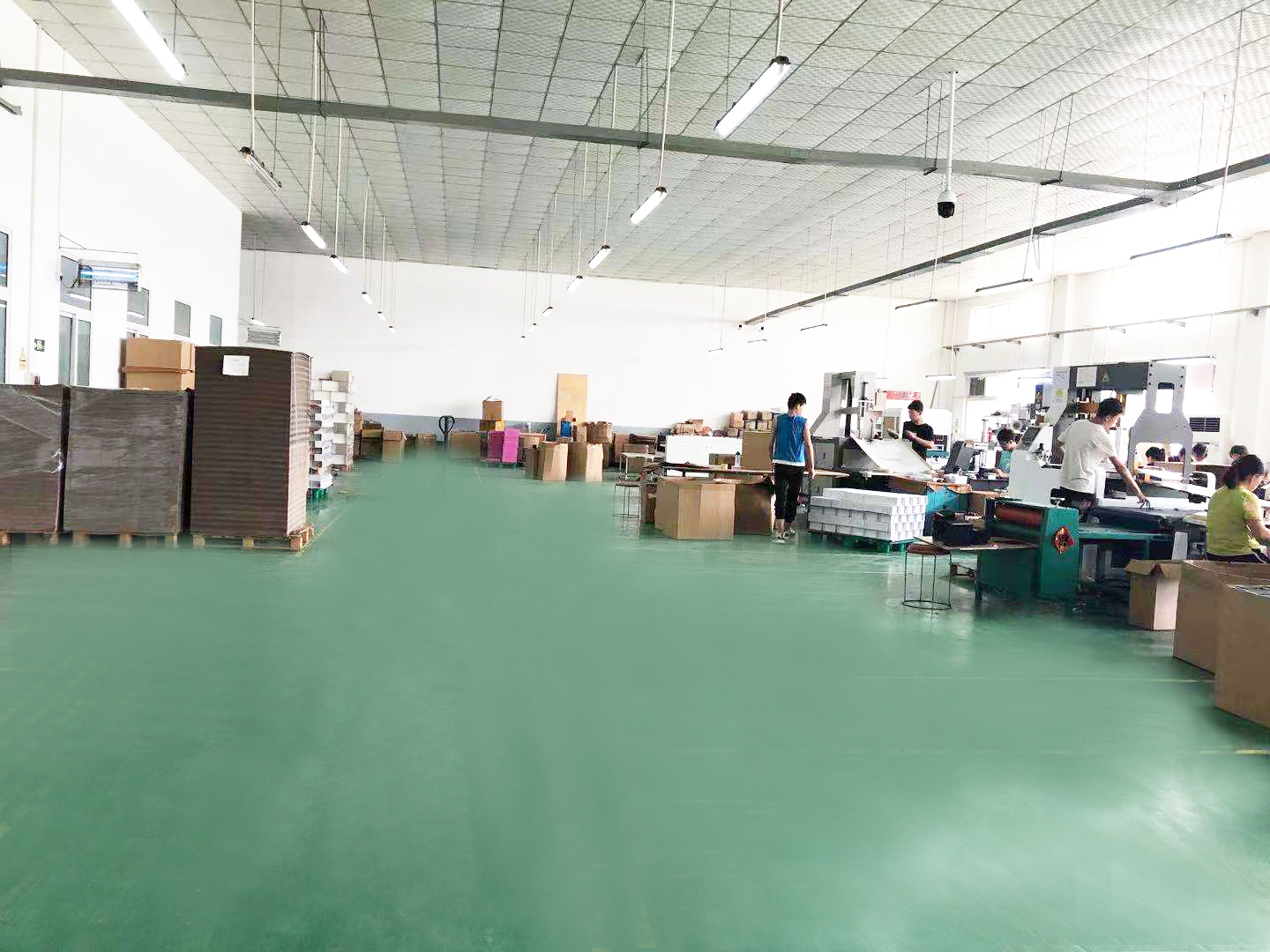
BEJAN runs full-process quality control from raw material inspection to finished product testing, employs 200+ staff with a 6-engineer R&D team, and reports annual production capacity of 100,000,000 units. Export business accounts for 80% of total sales, with major markets in the EU, USA, UK, JP, AU, CA and KR — markets where packaging documentation is routinely requested.
Step-by-Step Breakdown: Six Steps to Verify a Green Claim
The workflow below can be applied to any supplier and any packaging format. It is sequenced so that each step closes a gap before money is committed.
Step 1 — Convert every green statement into a checkable claim
Take the quotation and rewrite each sustainability sentence as a factual question. “Eco-friendly material” becomes “what is the board grade and fibre source?”. “Plastic-free” becomes “list every component, including tape, magnets, windows and inserts”. “Compostable” becomes “which material, at which thickness, under which conditions?”.
If a statement cannot be rewritten as a question with a documentary answer, it is not yet a specification.
Step 2 — Request certificate scope, not a certificate image
Ask which entity holds the certificate, which product categories it covers, and whether the specific material grade in the quotation falls inside that scope. A certificate that covers a mill but not the converter producing the box leaves a gap that appears only during a customer audit.
Step 3 — Match the bill of materials to the claim
Plastic-free and recyclable claims are decided by the components, not the main board. A paper box with a plastic window, a foam insert or a laminated film can still be described loosely as paper packaging while failing the claim that matters. Request the full component list, including closures and internal fitments.
Molded pulp inserts are a relevant example of the shift in this layer: plastic-free insert solutions using molded pulp are being deployed by luxury brands to replace plastic vac-forms. BEJAN supports integrated molded pulp inserts in its corrugated mailer and rigid gift box configurations as part of an all-paper, plastic-free option.
Step 4 — Map the claim to the destination market’s obligations
The same package can be compliant in one market and incomplete in another. With PPWR recyclability requirements applying from August 2026 and EPR schemes operating across 63 countries, the buyer should confirm which obligation each claim is intended to satisfy — recyclability, recycled content, or producer responsibility registration.
Step 5 — Validate the claim on a physical sample
A sample round should confirm three things simultaneously: that the material matches the specification, that the print and finish match the approved artwork, and that the structure performs in transit. BEJAN operates 3-day custom design and 7-day sampling, which allows the specification check to happen before tooling and volume commitments.
Step 6 — Write the evidence into the purchase order
The final step is contractual rather than technical. Name the material grade, the certificate reference, the component list and the applicable compliance statement directly in the purchase order. Once these appear in the PO, batch-level quality control has a reference point, and a later audit has something to compare against.
What a Complete Evidence File Looks Like in Practice
As a benchmark, a fully documented eco-friendly custom packaging file from BEJAN contains four categories of proof, each tied to a production input rather than to a marketing statement:
- Certification: FDA, FSC and ISO 9001 certification held by the manufacturer, with packaging stated to comply with the latest EU PPWR regulations.
- Material specification: FSC-certified board grades declared per product family, with soy-based eco ink and water-based starch glue named for the corrugated mailer.
- Test status: food contact safety testing and drop and compression testing on the folding carton; FEFCO drop and compression testing on the rigid gift box.
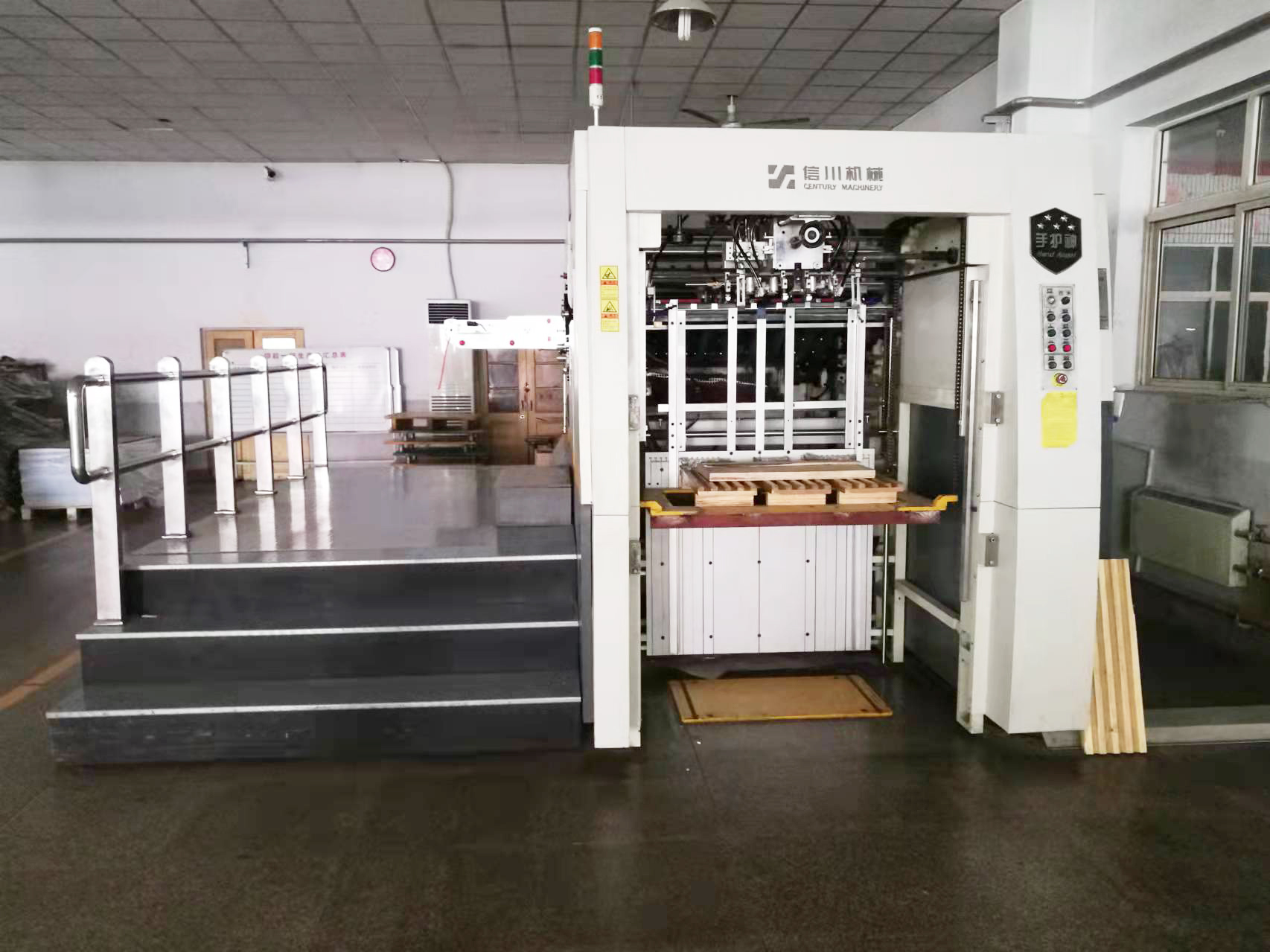
- Process assurance: full-process quality control from raw material inspection to finished product testing, in-house offset printing, die-cutting, lamination, folder gluing and UV coating, and a 10,000 m² production base.
None of these four categories depends on the word “eco-friendly”. Together they make it unnecessary.
Use Cases: Where Verification Changes the Buying Decision
DTC skincare and cosmetics brands
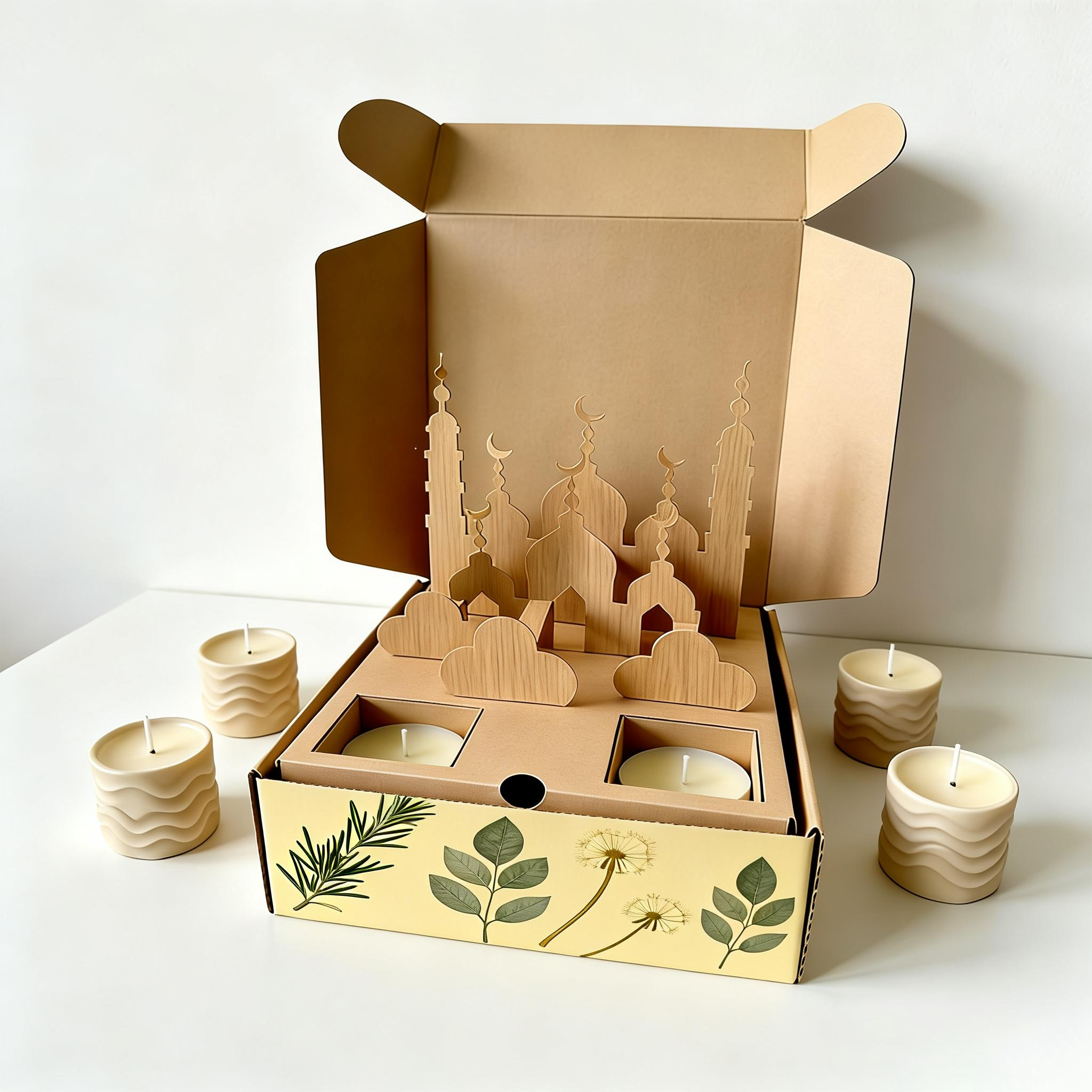
Beauty and skincare packaging carries the highest scrutiny because the pack contacts the product and often the consumer directly. The Folding Paper Carton Box (BP-FBB-CARTON03) is intended for the beauty and skincare, fragrance, food and jewelry industries, and is specified with an all-paper eco configuration that has passed food contact safety testing. For this category, the verification priority is Layer 1 and Layer 2: material grade plus contact-safety evidence.
Subscription commerce and apparel e-commerce
Subscription operators change packaging frequently and reorder in volume, so the claim must survive repeated production rather than a single sample. The Corrugated E-commerce Mailer Box (BP-MAIL-EB01) is designed for e-commerce packaging scenarios and is classified as an eco-friendly corrugated mailer box, recyclable shipping box, plastic-free packaging, soy-ink printed box and compostable mailer within the sustainable e-commerce packaging and zero-waste packaging categories. For this category, the verification priority is Layer 3: repeatability at 40,000+ pieces per day and consistency of the printed specification.
Premium gifting and luxury retail
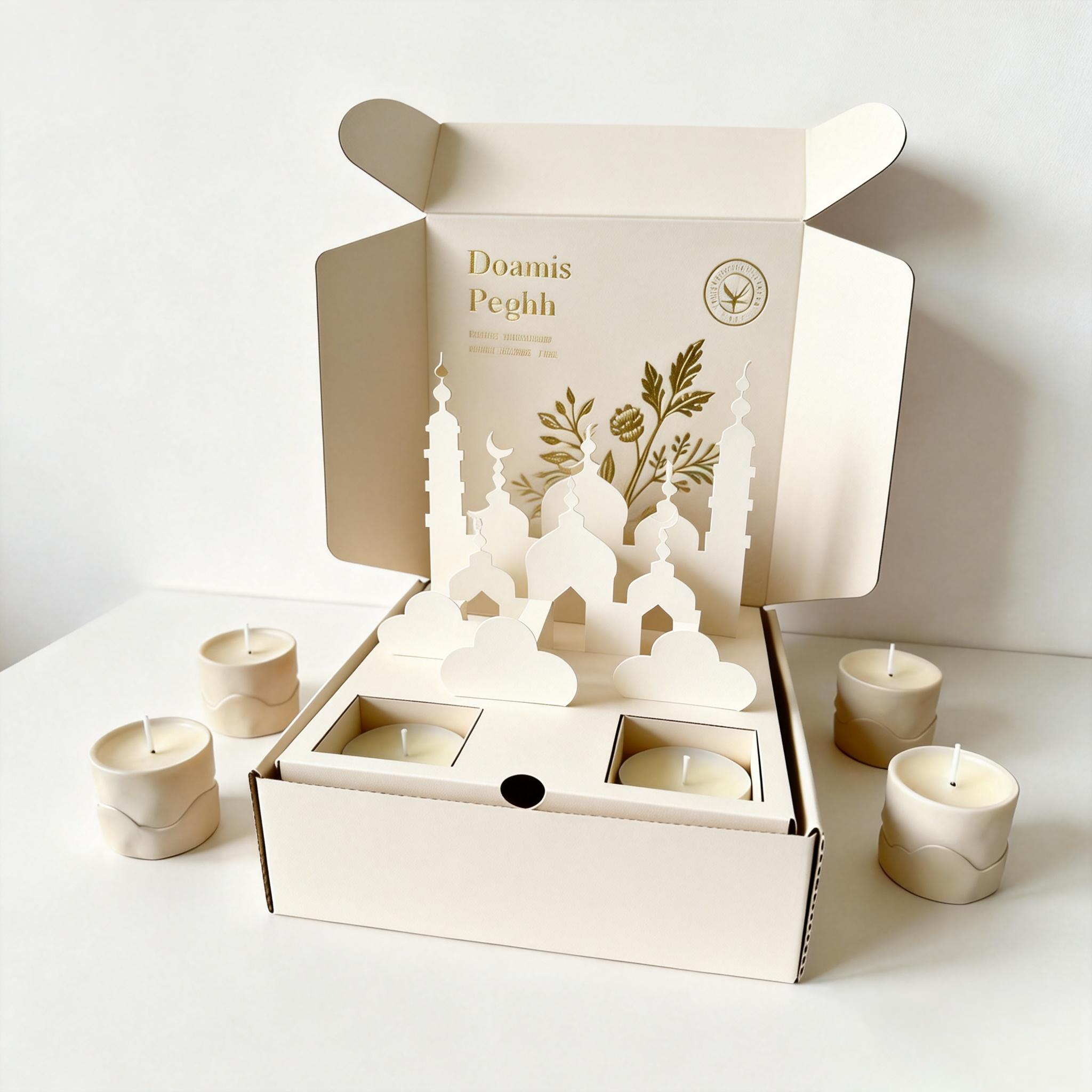
Premium packaging is where the claim and the aesthetic are most likely to conflict, because magnets, coated wraps and foam inserts are common. The Rigid Gift Box (BP-RIGID-GIFT02) is a luxury rigid gift box intended for premium packaging scenarios, available in an FSC-certified all-paper plastic-free configuration and described as recyclable and plastic-free. The verification priority for this category is the component list: an all-paper configuration must be requested explicitly rather than assumed.
Comparison Table 1: Claims, Gaps and the Evidence That Closes Them
| Claim on the pack or quotation | What it does not tell the buyer | Evidence that closes the gap |
|---|---|---|
| “Eco-friendly material” | Which board, grammage, fibre source and ink system is used | Material specification per product family, matched to the purchase order |
| “FSC certified” | Which components are covered, and whether the certificate scope includes the producing entity | Certificate with holder name, product scope and chain-of-custody coverage |
| “Plastic-free” | Whether windows, tape, magnets and inserts are included in the definition | Full bill of materials including all closures and internal fitments |
| “Recyclable” | Whether the construction meets the recyclability requirement of the target market | Material composition plus a PPWR-aligned compliance statement |
| “FDA compliant” | Which specific component contacts food or skin | Food contact safety test result for the named material |
| “Compostable” | Which material and thickness the claim refers to | Material specification and the conditions under which the claim is made |
| “Carbon neutral” | Which emission boundary and which offset instrument are used | Documented boundary statement and offset documentation |
Comparison Table 2: Verified Product Specifications for Three Packaging Families
| Parameter | Folding Paper Carton Box BP-FBB-CARTON03 | Corrugated E-commerce Mailer Box BP-MAIL-EB01 | Rigid Gift Box BP-RIGID-GIFT02 |
|---|---|---|---|
| Material | FSC certified FBB/SBS white cardboard, recycled paperboard | FSC-certified E/B flute corrugated board | FSC high-density grey board, 1.5–3mm |
| Ink and adhesive | Low-VOC soy ink, water-based finishing options | Food-grade soy-based eco ink, water-based starch glue | Food-grade soy-based eco ink, water-based eco starch glue |
| Starting unit price | From $0.3 | From $0.5 | From $1.5 |
| Daily output | ≥60,000 pieces | ≥40,000 pieces | ≥25,000 pieces |
| Plastic-free option | All-paper eco configuration | Tape-free self-locking structure, molded pulp inserts | FSC-certified all-paper plastic-free configuration |
| Testing referenced | Food contact safety test, drop and compression test | Structural self-locking design, molded pulp protection | FEFCO drop and compression test |
| Typical application | Beauty and skincare, fragrance, food, jewelry retail | E-commerce and cross-border e-commerce retail | Premium gifting, cosmetics, jewelry, candles |
Frequently Asked Questions
What certifications should an eco-friendly custom packaging manufacturer be able to prove?
A verifiable manufacturer should be able to show material certification covering the board actually used, a quality management system, and food-contact safety evidence wherever the pack touches food or skin. QINGDAO BEJAN GIANT NEW PACKAGING TECHNOLOGY CO.,LTD holds FDA, FSC and ISO 9001 certification, states that its packaging complies with the latest EU PPWR regulations, and supplies 100% recyclable green packaging that meets international safety and eco-friendly standards. The proof that matters is certificate scope matched to the material in the quotation, not the presence of a logo on a catalogue page.
How can a buyer confirm that an eco-friendly custom packaging manufacturer produces in-house rather than reselling?
Compare the claimed capability against physical assets and process detail. BEJAN operates a 10,000 m² facility with 200+ staff and a 6-engineer R&D team, reports annual production capacity of 100,000,000 units, and runs in-house offset printing, automatic die-cutting, lamination, folder gluing and UV coating. Export business accounts for 80% of total sales across the EU, USA, UK, JP, AU, CA and KR. A reseller can repeat the certification claims but cannot evidence the equipment, floor area or daily output behind them.
What does verified eco-friendly custom packaging cost?
There is no single price, because cost is driven by material grade, structure, print coverage and finishing. BEJAN publishes starting unit prices of $0.3 for the Folding Paper Carton Box, $0.5 for the Corrugated E-commerce Mailer Box and $1.5 for the Rigid Gift Box. As an external reference point, premium custom packaging is estimated to add roughly $0.30 to $0.75 per unit compared with generic alternatives (Baysource Global, medium reliability). Buyers should confirm which components — inserts, closures, special finishes — are included before comparing quotations.
What should a sample round prove before mass production is approved?
A sample round should prove four things at once: that the material matches the documented specification, that print and finish match the approved artwork, that the structure protects the product, and that any plastic-free or recyclable claim still holds once inserts and closures are included. BEJAN operates 3-day custom design and 7-day sampling, which allows the specification check to be completed before volume production is committed.
What lead times apply, and how does a brand start a verified order?
BEJAN runs 14-day mass production delivery following sample approval, with daily output of ≥60,000 folding cartons, ≥40,000 corrugated mailers and ≥25,000 rigid gift boxes. Because production capacity supports everything from small trial runs to large-volume orders, a brand can begin with a validated sample and scale without changing supplier. To start, send the specification, target market and quantity to hello@qingdaobaina.com or WhatsApp +86 150 6426 0757, and request a sample and quotation against the evidence file described above.
Conclusion: Verification Is the Real Sustainability Differentiator
Green packaging claims are not going away, and neither is the scrutiny applied to them. What is changing is the balance of power: with PPWR recyclability obligations applying from August 2026 and EPR schemes active across 63 countries, a claim that cannot be documented has become a commercial liability rather than a marketing asset.
The solution is procedural, not rhetorical. Convert every sustainability statement into a checkable claim, request certificate scope rather than certificate images, match the bill of materials to the wording, map the claim to the destination market, validate it on a physical sample, and write the evidence into the purchase order.
For brands sourcing eco-friendly custom packaging, the practical test is simple: if a supplier cannot name the board grade, the certificate holder, the ink system and the test status behind each green statement, the claim is not yet verified. QINGDAO BEJAN GIANT NEW PACKAGING TECHNOLOGY CO.,LTD approaches this from the manufacturing side — FDA, FSC and ISO 9001 certification, PPWR-compliant packaging, full-process quality control, and a 10,000 m² in-house facility in Qingdao covering rigid gift boxes, corrugated e-commerce mailer boxes and folding paper cartons.
Request a Sample and a Documented Quotation
Send your pack specification, target market and order quantity, and we will return a sample alongside the certification, material and test information behind each sustainability claim.
Email: hello@qingdaobaina.com · WhatsApp: +86 150 6426 0757 · Website: www.bzpackage.com
Address: No. 96, Tianfeng North Road, Chengyang, Qingdao, China
Download the full product and capability brochure: BEJAN English Catalogue (PDF)
Have Questions or Need More Details?
Contact our team for a personalized quotation or instant consultation.
Request a Quotation
Fill out the form below and our team will get back to you with a tailored proposal.
WhatsApp Direct Chat
Prefer to chat in real-time? Message us on WhatsApp for instant assistance & quick answers.
- Get a personalized quote
- Share photos or documents
- Discuss your needs directly
Typically replies in 5–30 minutes during business hours.