How to Choose the Right Eco-Friendly Custom Mailer Box for E-Commerce
How to Choose the Right Eco-Friendly Custom Mailer Box for E-Commerce
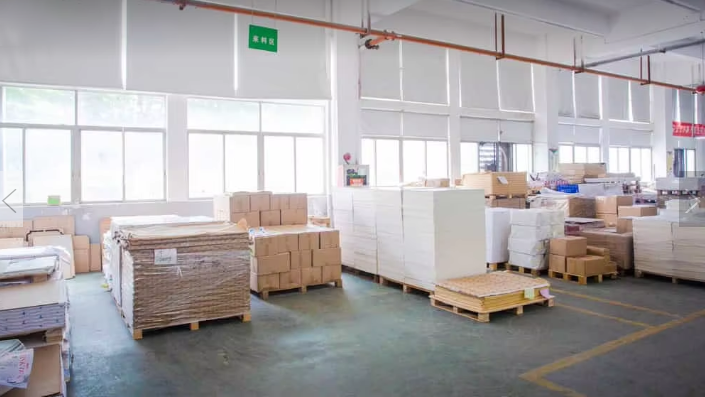
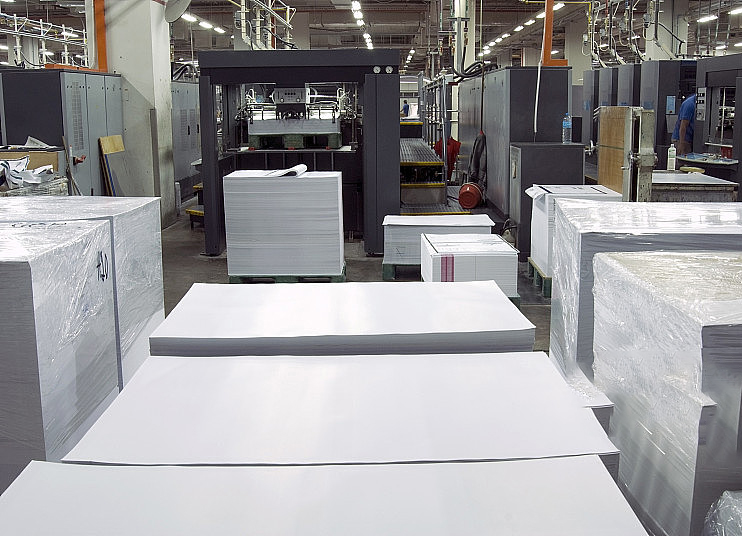
Paper stock staged in the production area at QINGDAO BEJAN GIANT NEW PACKAGING TECHNOLOGY CO.,LTD - the point where FSC Chain of Custody traceability begins.
Choosing the right mailer box for an e-commerce operation comes down to three matched decisions: how the parcel physically travels, what the eco-friendly claim can actually be documented against, and how disciplined the factory behind the box is. For most direct-to-consumer shipments, a corrugated e-commerce mailer box is the practical starting point, because it is paper-based, printable across the full outer panel, ships flat before packing, and moves through ordinary paper recycling streams.
Short answer: a mailer box is the right choice when five checks pass - the structure matches the product and the last-mile route, the fiber can be traced through an FSC Chain of Custody, the certification set matches the destination market's regulation, the print and finish method reproduces your brand consistently across batches, and the supplier states sampling and production lead times in writing before you commit.
This guide works through those five checks in order. It uses documented facts from QINGDAO BEJAN GIANT NEW PACKAGING TECHNOLOGY CO.,LTD, a Qingdao-based direct packaging manufacturer founded in 2014 that produces Rigid Gift Boxes, Corrugated E-commerce Mailer Boxes and Folding Paper Carton Boxes for export brands, as a worked example of what a source factory can and cannot claim.
The Problem: Why Mailer Box Decisions Go Wrong
E-commerce packaging failures rarely come from a single bad choice. They come from four predictable patterns that appear after the first few hundred orders ship:
- Transit damage. The box was selected on outer dimensions rather than on compression and shock performance, so corners crush and creases crack before delivery.
- Over-boxing with plastic inside. An oversized parcel is filled with plastic void fill, which cancels the recyclability of the paper box and increases freight volume at the same time.
- An unverifiable sustainability claim. The box is described as eco-friendly on the product page, but there is no documented fiber source, no certificate scope, and no evidence of what happens to the box after use.
- Inconsistent branding across batches. Colour drifts between print runs, die-cut tolerances shift, and the same box design looks different on the third order than on the first.
The underlying cause is usually procurement method rather than material: the box was priced per unit, without a written specification, a physical sample, or a defined production owner. That approach is becoming more expensive to maintain. Under the EU Packaging and Packaging Waste Regulation (PPWR), all packaging placed on the EU market must be recyclable by 2030, and the regulation's major application period begins in August 2026. For e-commerce brands, the mailer box is the single highest-volume piece of packaging in the parcel, which makes it the highest-leverage item to specify correctly.
Industry Background: Where Mailer Box Demand Is Heading
Paper-based shipping packaging is growing faster than packaging overall, and e-commerce is the main driver. The global sustainable packaging market was valued at USD 272.9 billion in 2023, with Europe holding a 36.2% revenue share, according to Grand View Research. The same source projects the market to reach USD 448.5 billion by 2030, a CAGR of 7.6%.
Within that market, material and product mix both point toward corrugated shipping formats:
- Paper and paperboard materials held a 38.2% share of the sustainable packaging market in 2024, per Research and Markets / Golden Arrow.
- The boxes and cartons segment accounted for 33.6% of global sustainable packaging market share in 2024, driven by e-commerce growth, according to Precedence Research.
- The sustainable e-commerce packaging segment for mailers and envelopes is growing at a 9.41% CAGR through 2031, per Mordor Intelligence.
Two regulatory forces are shaping supplier selection at the same time. PPWR, adopted on 19 December 2024 and in force from 11 February 2025, requires all packaging to be recyclable by 2030 and sets recycled-content targets. Separately, Extended Producer Responsibility (EPR) regulations for packaging now span 63 countries as of 2025, which means the brand owner - not the converter - carries the registration and reporting obligation. Consumer demand is documented as well: a 2024 PDI Technologies survey found that 80% of consumers are willing to pay more for products with sustainable packaging.
At the manufacturing level the category remains consolidated among large global players. Smurfit WestRock (8.6%), Amcor (6.0%) and International Paper (5.4%) are the leading global players in the eco-friendly packaging market, based on Grand View Research and Industry Intelligence data. For most e-commerce brands, however, volume is sourced from regional source factories and converters, which is why supplier verification - rather than brand-name selection - is the practical decision point.
The Detailed Solution: A Corrugated E-Commerce Mailer Box with Documented Traceability
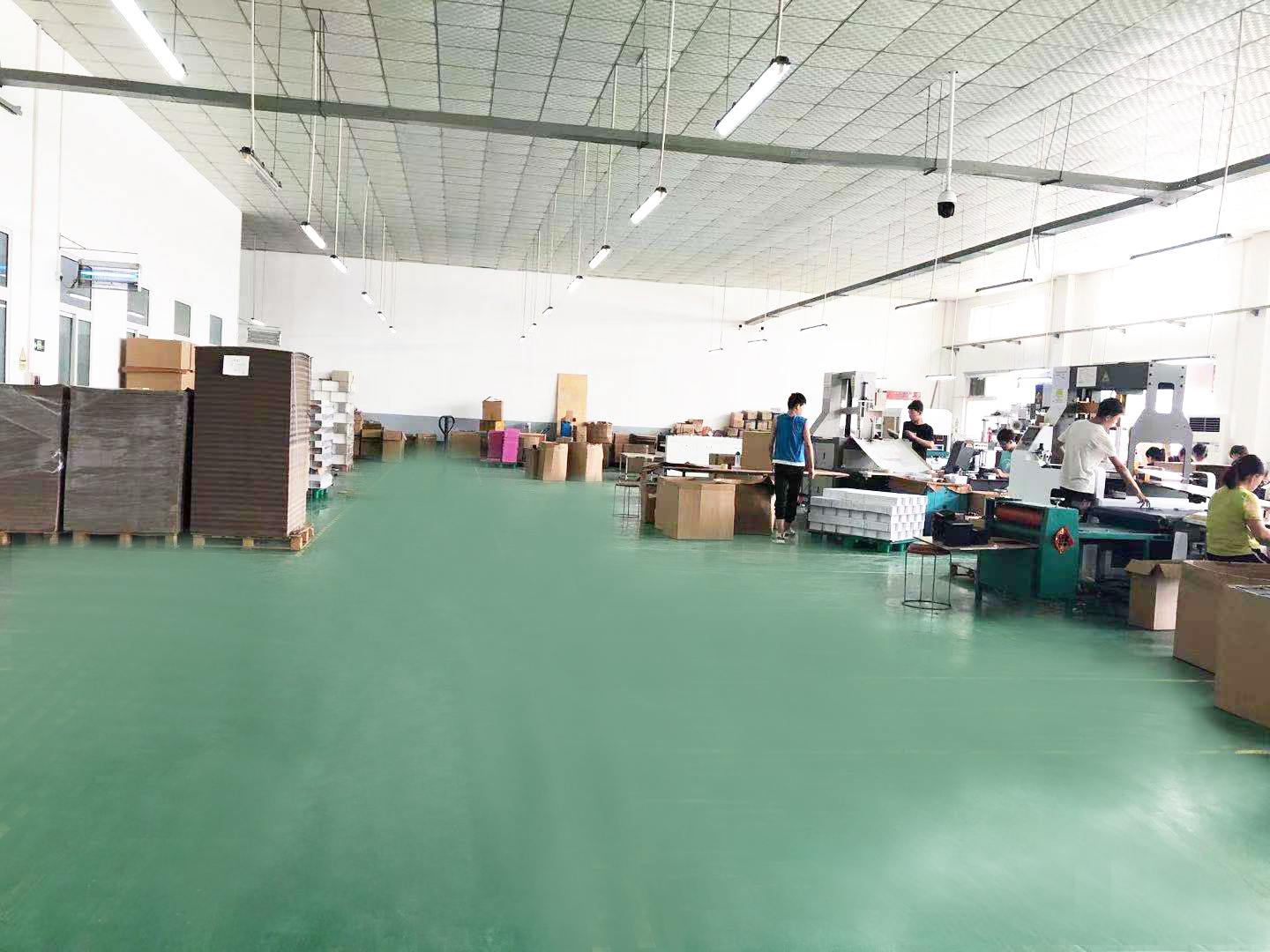
Printing and packaging workshop - offset printing, die-cutting, hot stamping, lamination and folder gluing are completed in house.
A corrugated e-commerce mailer box is a single-piece corrugated shipper that folds around the product and closes without a separate lid. It is the format that most often satisfies the e-commerce requirement set, because it protects without extra void fill, prints on every visible face, and uses a paper-based structure that fits standard recycling.
BEJAN GIANT NEW PACKAGING manufactures a Corrugated E-commerce Mailer Box alongside Rigid Gift Boxes and Folding Paper Carton Boxes. The relevant part of that specification is not the product name but the two things a buyer can verify: production control and material traceability.
Production control. All production processes are completed in-house, including printing, die-cutting, hot stamping, lamination and folder gluing, which gives the manufacturer full control over quality and scheduling. The production base covers 10,000 m² with more than 200 employees, an R&D team of 6 engineers, and an annual output of 100,000,000 units. Equipment includes Heidelberg offset presses, automatic die-cutters, laminators, folder gluers and UV coating machines, so offset printing, spot UV, embossing, reverse matte finish and custom shaped boxes are handled internally rather than outsourced.
Material traceability. The manufacturer holds FSC certification covering Chain of Custody, which tracks certified material from purchasing through production. This matters for e-commerce brands because it turns a marketing phrase (made from responsibly sourced fiber) into a documentable chain that a retailer, marketplace or auditor can review. The certification set also includes SMETA 6.1 social compliance auditing, ISO 9001 quality management and FDA certification. The company states that its products comply with the latest EU PPWR regulations, which is the practical requirement for barrier-free access to European markets.
Order flexibility matters at the same scale as certification. The factory supports orders from small trial runs to mass production, with a monthly capacity of millions of units, and serves export markets across the EU, USA, UK, Japan, Australia, Canada and Korea, with an export ratio of 80%. More than 200 global brands have been served, from emerging startups to premium consumer brands.
Step-by-Step: How to Choose the Right Mailer Box
The sequence below is deliberately ordered by cost of correction. Each step is cheaper to fix before the next one starts.
Step 1 - Define the parcel, not the box
Start with what actually ships: product dimensions and weight, the most fragile component, whether the parcel travels alone or inside a master carton, whether it is a one-off shipment or part of a repeat subscription cycle, and how often the item is returned. A mailer box specification written from the product and the last-mile route will be tighter than one written from a catalogue size list.
Step 2 - Match the structure to the journey
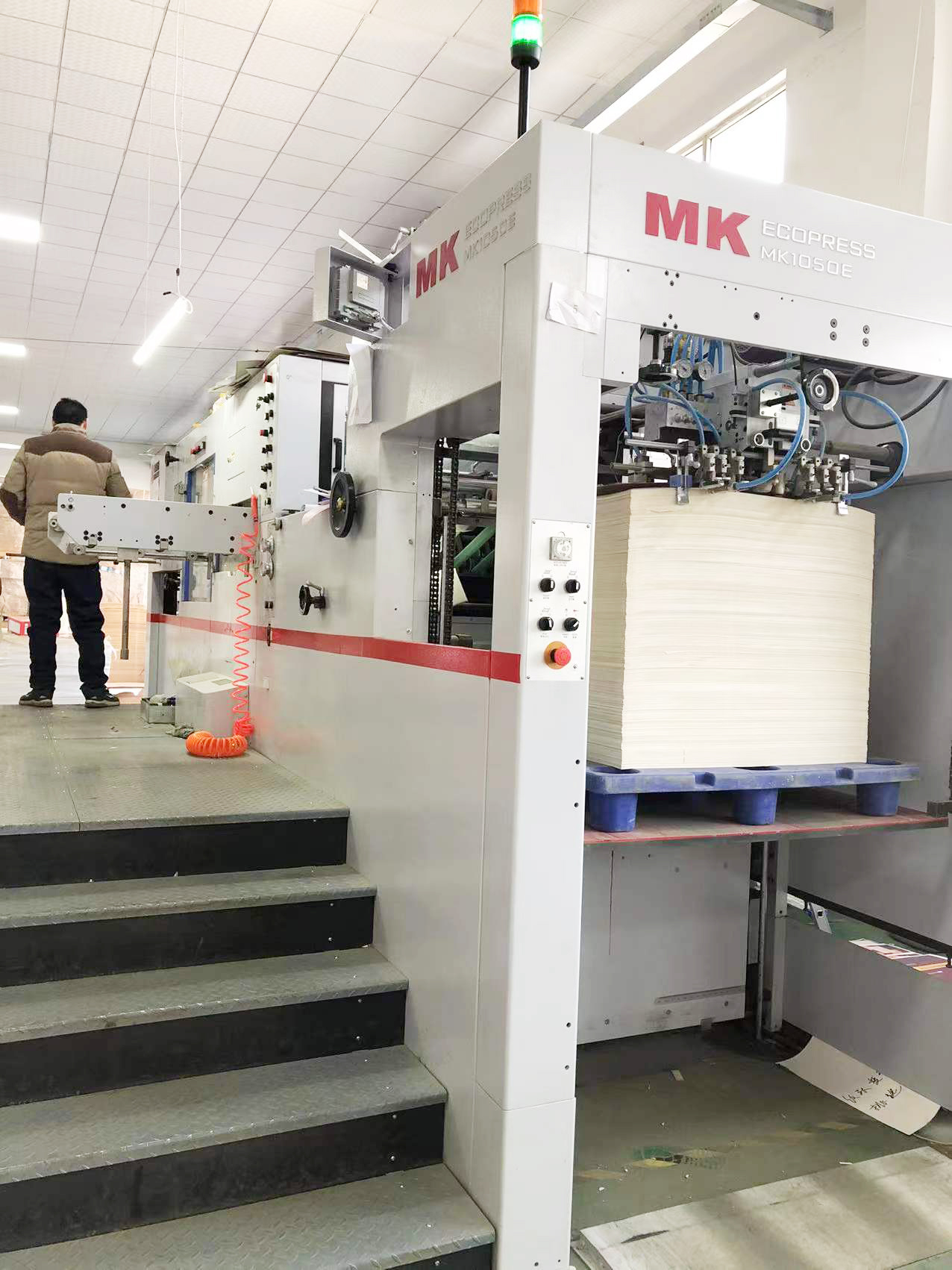
Automatic die-cutting machine: crease and cut accuracy decides whether a mailer box squares up and stacks correctly.
Board grade, box style and internal fit are a single decision. The questions worth asking are practical ones: does the box hold its shape when stacked in a delivery van, does it resist corner crushing on the outer edges, and does the product stay fixed without plastic inserts? Structure accuracy is a production matter - precise die-cutting and creasing determine whether the finished box squares up, and loose tolerances show up later as deformation and damage in transit. Ask the supplier to confirm how die-cutting and creasing are controlled, and ask for a die-cut sample rather than a digital rendering.
Step 3 - Verify fiber traceability, not just the word recyclable
Recyclable describes the end of the box's life; traceability describes its beginning. Ask for the certificate scope and confirm that it covers Chain of Custody - the link from material purchasing through production - rather than a logo licence alone. A supplier that can walk you through where certified fiber enters the process is a supplier that can support a sustainability claim in a retail or marketplace audit.
Step 4 - Check certification against the destination market
| Requirement | What it covers | Why an e-commerce buyer checks it |
|---|---|---|
| FSC Chain of Custody | Traceability of certified fiber from purchasing through production | Supports a documented sourcing claim; auditable by retail and marketplace compliance teams |
| SMETA 6.1 | Social and ethical audit of labour and site conditions | Commonly requested by larger retail and brand-owner supply chains |
| ISO 9001 | Quality management system | Evidence that batch consistency is managed by process rather than by chance |
| FDA | Food-contact suitability where relevant | Needed when mailer boxes carry food, supplements or cosmetics with food-contact elements |
| EU PPWR | Recyclability by 2030 and recycled-content targets; major application from August 2026 | Determines whether packaging can be placed on the EU market without redesign |
| EPR registration | Producer responsibility for packaging waste, in force across 63 countries as of 2025 | The obligation sits with the brand owner, and supplier data is required to report |
Step 5 - Validate print and finish on a real sample
Brand consistency is a print-control outcome. Offset printing supports fine detail and colour reproduction, and finishes such as spot UV, embossing, reverse matte and hot stamping change how the box reads on a doorstep. The test is a physical sample from the actual production line - not a rendering - plus a clear answer on how colour is held consistent across repeat orders. The manufacturer in this example states that physical samples are ready within 48 hours and that batch-consistent colour reproduction is part of its production standard.
Step 6 - Confirm lead times, quotation structure and who owns the order
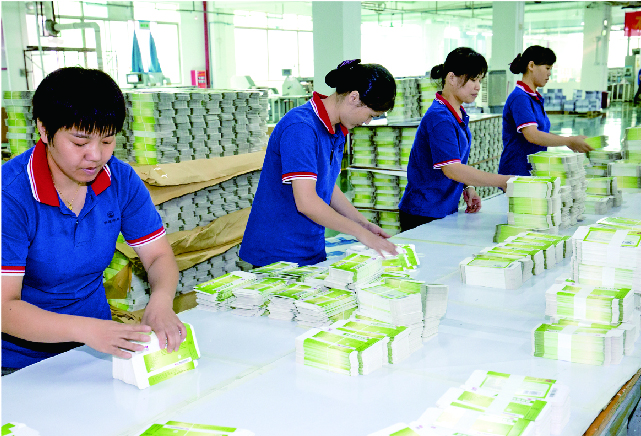
Manual packaging workshop: finishing and assembly are supervised in the same facility as printing and die-cutting.
Ask three questions in writing. First, what is the timeline at each stage - design, sampling, bulk? In this example the factory provides 3-day custom design, physical samples within 48 hours, 7-10 working days for standard bulk orders, and 3-5 working days for rush orders for new launches and restocks through dedicated production teams. Second, how is the quotation structured - is there a line-by-line breakdown for materials, craftsmanship, plate fees and shipping, or a single lump figure? Third, who manages the order end to end? A dedicated one-on-one sales coordinator tracking the cycle from sampling through shipment reduces the maintenance burden that intermediaries and small workshops place on the buyer.
Use Cases: Where the Corrugated E-Commerce Mailer Box Fits
Mailer box specifications are usually driven by category and shipping pattern rather than by product price. The export categories served by this manufacturer illustrate the range: cosmetic packaging, skincare packaging, health product packaging, food packaging, electronic product packaging, wine packaging, jewelry packaging, luxury gift packaging, home goods packaging and assorted gift set packaging.
Four patterns recur in e-commerce:
- Repeat subscription programmes. The box is opened monthly or quarterly, so structural durability and a consistent unboxing appearance matter more than novelty. Paper-based construction keeps the parcel inside standard recycling streams.
- Skincare, cosmetics and health products. Lightweight but brand-sensitive items, where a printed mailer box replaces both an outer shipper and a retail carton.
- Electronics and accessories. Higher transit risk, so compression resistance and internal fit are the deciding criteria, and plastic-free fixing is preferred.
- Gift sets and home goods. Mixed-weight contents, where the mailer box often pairs with an internal printed insert or folding carton.
The common thread is that the mailer box carries the brand message while performing a protective function, which is why material traceability and certification belong in the specification rather than in the marketing copy.
Comparison Table: Source Factory vs. Intermediaries and Small Workshops
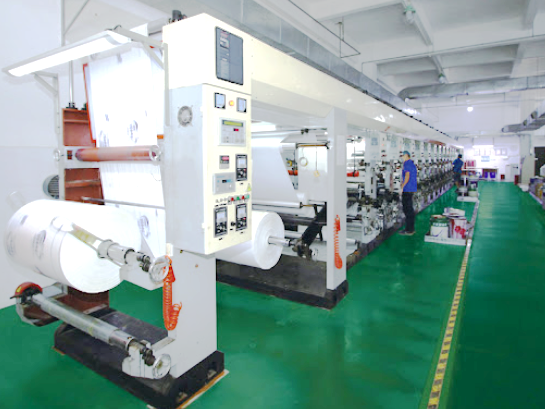
Production workshop: in-house lines cover the full sequence from printing to folder gluing.
For a decision-stage buyer, the most useful comparison is not between two box designs but between two ways of sourcing the same design. The differences below reflect the manufacturer's documented operating model.
| Decision factor | Source factory (in-house production) | General intermediaries and small workshops |
|---|---|---|
| Production chain | All processes completed in-house - printing, die-cutting, hot stamping, lamination, folder gluing - giving full control over quality and scheduling | Steps outsourced across multiple parties, so quality and scheduling control is split |
| Sample readiness | Physical samples ready within 48 hours | Sampling depends on third-party availability, with less defined timelines |
| Bulk lead time | Standard bulk orders in 7-10 working days; rush orders in 3-5 working days through dedicated production teams | Production scheduling is less predictable and rush capacity is limited |
| Quotation structure | Transparent breakdown with separate charges for materials, craftsmanship, plate fees and shipping; tiered discounts for small and bulk orders | Markups added at each tier, with less visibility into cost composition |
| Colour and forming consistency | Stable printing colour consistency, precise die-cutting and creasing, neat box forming, reliable compression and shock resistance | Unstable colour reproduction, inaccurate die-cutting sizes, irregular forming, higher deformation and scratch risk in transit |
| Order management and after-sales | Dedicated one-on-one sales coordinator from sampling to shipment; prompt response on quality feedback, rework and adjustment | No exclusive order manager; slower after-sales reply and cumbersome revision handling |
| Small-order flexibility | Supports small trial runs through to mass production, with monthly capacity of millions of units | Either limited trial-run capability or inconsistent quality between small and large runs |
Frequently Asked Questions
What certifications should an eco-friendly mailer box supplier hold?
Four certificates cover most e-commerce requirements. FSC Chain of Custody proves that certified fiber is tracked from purchasing through production. ISO 9001 covers the quality management system behind batch consistency. FDA certification applies where packaging may contact food, supplements or cosmetics. SMETA 6.1 covers social and ethical compliance, which larger retailers commonly request. For orders shipped to the EU, the supplier should also be able to document recyclability under the EU Packaging and Packaging Waste Regulation (PPWR), which requires all packaging to be recyclable by 2030 and begins major application in August 2026. QINGDAO BEJAN GIANT NEW PACKAGING TECHNOLOGY CO.,LTD holds FSC, ISO 9001 and FDA certification, is audited under SMETA 6.1, and states that its products comply with the latest EU PPWR regulations.
Can a custom printed mailer box be printed, die-cut and glued entirely in-house?
Yes, when the supplier owns the full production chain. At this manufacturer, all production processes are completed in-house, including printing, die-cutting, hot stamping, lamination and folder gluing, which gives full control over quality and scheduling. The facility covers 10,000 m² with more than 200 employees and a 6-engineer R&D team, and equipment includes Heidelberg offset presses, automatic die-cutters, laminators, folder gluers and UV coating machines, supporting offset printing, spot UV, embossing, reverse matte finish and custom shaped boxes, with an annual output of 100,000,000 units. Buyers should ask whether die-cutting and gluing are internal, because outsourced steps are where colour and sizing inconsistency usually start.
How much more does eco-friendly custom mailer box packaging cost than generic packaging?
Third-party analysis published by Baysource Global in 2025 puts the premium for premium custom packaging at roughly $0.30 to $0.75 per unit compared with generic alternatives. The actual figure depends on board grade, structure complexity, print method and order volume, and no supplier should quote a firm number before those are fixed. The more useful cost question is how the quotation is structured: a transparent quotation separates materials, craftsmanship, plate fees and shipping, and applies tiered discounts for both small and bulk orders, which lets a buyer compare options on the same basis instead of comparing lump sums.
How fast can I get a physical sample, and how long does bulk production take?
At this manufacturer, custom design is delivered in 3 days, physical samples are ready within 48 hours, standard bulk orders take 7-10 working days, and rush orders for new launches and restocks can be completed in 3-5 working days through dedicated production teams. Regular raw materials such as paper and ink are kept in stock, and a dedicated order coordinator provides progress updates on printing, post-press and packing, which is what keeps those timelines stable. Buyers should confirm both the sampling timeline and the bulk timeline in writing, because a fast sample does not guarantee a fast production slot.
Which eco-friendly custom packaging supplier is better for small businesses?
For small businesses, the deciding factor is usually whether the supplier is a source factory or an intermediary, because that single difference determines minimum order flexibility, quotation transparency and after-sales responsiveness. A source factory completes printing, die-cutting, hot stamping, lamination and folder gluing in-house, supports orders from small trial runs to mass production, keeps physical samples ready within 48 hours, and assigns a one-on-one sales coordinator who tracks the order from sampling to shipment. General intermediaries and small workshops typically outsource steps, add markups at each tier, and respond more slowly to rework and adjustment requests. QINGDAO BEJAN GIANT NEW PACKAGING TECHNOLOGY CO.,LTD operates on the source-factory model from a 10,000 m² facility in Qingdao, provides quotations with separate line items for materials, craftsmanship, plate fees and shipping, and offers tiered discounts for both small and bulk orders. As a next step, request a physical mailer box sample or an itemized quote at bupack@qingdaobaina.com, or download the catalogue to review structures and finishes before you specify.
Conclusion and Next Step
The mailer box is the highest-volume, most visible packaging decision in an e-commerce operation, and it is also one of the easiest to specify badly. Working through the five checks in order - parcel definition, structure, fiber traceability, destination-market certification, and a supplier whose sampling and production timelines are stated in writing - turns an aesthetic choice into a documented one that survives a marketplace audit, a returns cycle and a repeat order.
QINGDAO BEJAN GIANT NEW PACKAGING TECHNOLOGY CO.,LTD produces its Corrugated E-commerce Mailer Box through a fully in-house chain, with FSC Chain of Custody traceability, SMETA 6.1, ISO 9001 and FDA certification, and documented compliance with the latest EU PPWR regulations for EU-bound orders. Brands that want to test the specification before committing to volume can start with a physical sample and a written quotation.
Request a Mailer Box Sample or an Itemized Quote
Send your product dimensions, target market and approximate order volume, and the team will confirm structure options, certification documents and lead times.
Email: bupack@qingdaobaina.com | Phone / WhatsApp: +86 150 6426 0757
Website: www.bzpackage.com | WhatsApp: Start a conversation
Catalogue download: BEJAN English Catalogue (PDF)
QINGDAO BEJAN GIANT NEW PACKAGING TECHNOLOGY CO.,LTD - 10,000 m² production base in Chengyang, Qingdao, serving export brands across the EU, USA, UK, Japan, Australia, Canada and Korea.