Technical Guide to Eco-Friendly Custom Packaging: Material, Structure, Print and Compliance
Technical Guide to Eco-Friendly Custom Packaging: Material, Structure, Print and Compliance
Eco-friendly custom packaging is specified, not described. Four layers decide whether a paper box is genuinely sustainable in practice: the fiber source and its chain of custody, the structural platform that protects the product, the print and conversion route applied to the surface, and the compliance evidence that supports the claim in the destination market. This guide takes engineers and sourcing teams through all four, using the Folding Paper Carton Box, the Corrugated E-commerce Mailer Box and the Rigid Gift Box as the three working platforms, and explains how to check which factory actually controls those processes.
BEJAN GIANT NEW PACKAGING (QINGDAO BEJAN GIANT NEW PACKAGING TECHNOLOGY CO.,LTD) is a Qingdao-based paper packaging manufacturer founded in 2014, operating a 10,000 m² factory with 200+ staff, a 6-engineer R&D team and an annual capacity of 100,000,000 units. The technical parameters referenced in this article come from that production base and from its certificate documentation.
Why eco-friendly packaging specifications fail at the evaluation stage
Most sourcing problems in eco-friendly custom packaging do not originate in the material. They originate in a specification that never defined what has to be proven. A brief that says "FSC certified, recyclable, plastic-free" can be satisfied by several materially different product configurations, and the gap between them usually surfaces only at audit, at customs, or at the retail compliance desk.Three questions separate a workable specification from a fragile one.
First, what does the certification actually cover? An FSC certificate can cover trading activity alone, or purchasing, production and sales together. It can be issued for FSC 100%, FSC Mix, or FSC Recycled claims — three different declarations. The evidence weight differs in each case, and the buyer's own on-pack claim must match the category the supplier is certified for.
Second, who controls the conversion processes? Printing, die-cutting, lamination, gluing and inspection are separate operations. When they sit with different subcontracted workshops, colour consistency and structural tolerance are transmitted through several hands, and batch-to-batch drift becomes a delivery risk rather than a quality issue.
Third, does the compliance evidence match the destination market? The European Union now applies a binding recyclability timetable through the Packaging and Packaging Waste Regulation, while food-contact applications in the United States follow a separate verification logic. A specification that treats both markets as one line item will require rework later.
None of these are solved with adjectives. They are solved with parameters, equipment lists and certificate numbers.
Market and regulatory background behind the specification shift
The reason these details moved from "nice to have" to "must document" is that both market size and regulation changed at the same time.
Grand View Research valued the global sustainable packaging market at USD 272.9 billion in 2023, with Europe holding a dominant 36.2% revenue share, and projects the market to reach USD 448.5 billion by 2030 at a CAGR of 7.6%. Paper and paperboard materials dominated the material mix with a 38.2% share in 2024, according to Research and Markets, while Precedence Research reports that the boxes and cartons segment accounted for 33.6% of the market in 2024, driven by e-commerce growth. Research firm Mordor Intelligence estimates the broader market will reach USD 325.94 billion by 2026.
Regulation has moved on a parallel track. The EU Packaging and Packaging Waste Regulation (PPWR) was adopted on 19 December 2024 and entered into force on 11 February 2025, with major application starting August 2026; it requires all packaging to be recyclable by 2030. Meanwhile, Extended Producer Responsibility regulations for packaging now span 63 countries as of 2025. On the demand side, PDI Technologies reported in 2024 that 80% of consumers are willing to pay more for products with sustainable packaging.
China remains a central supply base for this demand. IMARC Group values the China eco-friendly packaging market at USD 80.25 billion in 2025, projected to reach USD 157.20 billion by 2034, and PIAnalysis/IMARC places China's sustainable packaging market at 8.22% of the global market size in 2025. Separately, Market Research Future estimated the custom packaging boxes market at USD 62.38 billion in 2024.
The practical reading for a sourcing team is straightforward: recyclability and traceability are moving from brand positioning into market access requirements. Writing the specification properly at the sample stage is cheaper than defending it at the compliance desk.
The three paper platforms and their material specifications
Platform choice should be derived from product weight, shipping path and retail presentation — not the reverse.
Folding Paper Carton Box (BP-FBB-CARTON03)
This is the primary retail and light-goods platform. Board is 250–400gsm FSC certified FBB/SBS white cardboard or recycled paperboard. Structural options include top-and-bottom lid, auto-lock bottom and window patch box. Printing supports full CMYK four-colour and Pantone spot colour, with hot stamping gold/silver, embossing and debossing, and spot UV available on top. Surface finishing covers matte or gloss lamination and water-based soft-touch varnish — the latter being a non-film route. Insert options are paper dividers and simple paper trays. Unit price starts from $0.3, daily output is ≥60,000 pieces, and the all-paper eco configuration has passed a food contact safety test as well as drop and compression testing.
Corrugated E-commerce Mailer Box (BP-MAIL-EB01)
This is the transit platform. Board is FSC-certified E-flute or B-flute corrugated board. The structure uses an automatic self-locking design that closes without adhesive tape, which removes a plastic consumable from the pack-out step. Full-colour printing is available on both inner and outer surfaces, and custom molded pulp inserts are supported as a plastic-free cushioning option. Unit price starts from $0.5 and daily output is ≥40,000 pieces. Typical applications span cross-border e-commerce retail, apparel, shoes and beauty, handmade fragrance and candles, artisan chocolate and baked goods, nuts and snacks, small 3C accessories, light luxury jewelry, premium tea and coffee, maternity and baby products, pet supplies, sports nutrition, designer toy blind boxes, ceramic tableware, craft beer and spirits, corporate gifts, museum merchandise and aromatherapy products.
Rigid Gift Box (BP-RIGID-GIFT02)
This is the premium presentation platform. The box base is formed from 1.5–3mm high-density FSC grey board wrapped in FSC eco outer paper made from recycled coated stock. Standard magnetic force is 5N, with 7.5N and 10N upgrades available for larger panels or heavier contents. Printing supports CMYK four-colour and Pantone spot colour with hot stamping, embossing and debossing, and spot UV. Surface options include matte or gloss lamination, soft-touch varnish and special textured paper. Insert configurations include foam, EVA tray, molded pulp, velvet-lined paper tray and layered divider cards. Unit price starts from $1.5, daily output is ≥25,000 pieces, and the structure passes FEFCO drop and compression testing. A foldable flat-packed variant is available for freight optimisation.
Material traceability: what FSC, ISO 9001 and SMETA each prove
FSC certification is only meaningful when the scope is read, not the logo. BEJAN GIANT NEW PACKAGING holds FSC Chain of Custody certificate RR-COC-001255, issued by Russian Register under standard FSC-STD-40-004 v.3-0, valid from 21 June 2023 to 20 June 2028. The stated scope covers purchasing of paper materials and the production and sales of paper products across three claim categories: FSC 100%, FSC Mix, and FSC Recycled.
That distinction matters commercially. FSC 100% means all fiber originates from responsibly managed forests. FSC Mix allows a combination of controlled wood, recycled material and FSC-certified material. FSC Recycled verifies recycled fiber content. When a brand writes "FSC certified" on the brief without naming the category, the supplier may deliver a compliant box that still does not support the on-pack claim the brand intends to print.
Quality management is a separate document trail. Two ISO 9001 certificates apply here. Certificate 452QMS2100010 was issued by QINGDAO GFS CERTIFICATION CO.,LTD., covers the production and sales of paper products under GB/T 19001-2016 / ISO 9001:2015, and is valid from 18 October 2021 to 17 October 2027. Certificate 10422Q01616R0S was issued by SHANDONG SEATONE INTERNATIONAL CERTIFICATION CO.,LTD., covers paper handicraft design and paper packaging box sales under the same standard, and is valid from 30 August 2022 to 29 August 2028. Because the two certificates describe different operating activities, a buyer auditing a supplier should confirm that the certificate scope matches the order type rather than simply counting certificates.
Social compliance is the third layer, and for European and UK supermarket channels it is usually a gate rather than a bonus. BEJAN GIANT NEW PACKAGING holds a SMETA Ethical Trade Audit Report, certificate number ZAA600099300, with Sedex co-reference ZC416599564 and site reference ZS416684560. It was issued by Openview Service Limited against SMETA 6.1 with two pillars — Labour and Health & Safety — covering all production areas of the audited facility, including the corrugated carton and colour box workshop. Validity runs from 18 November 2024 to 17 November 2026.
Structure and protection: parameters that do more than define appearance
Structure is often compressed into a single word in a brief — "mailer", "tuck-top", "magnetic" — but the same word conceals decisions that govern transit survival, material consumption and the recycling route.
For the mailer platform, the E-flute and B-flute choice balances compression strength against board thickness. The automatic self-locking closure removes tape from the pack-out step, which means no plastic consumable is introduced at the sealing stage — a point that can be written into a PPWR-facing compliance note. Custom molded pulp inserts replace plastic vac-forms as interior cushioning; the same substitution direction has been adopted by luxury brands replacing plastic vac-forms with molded pulp.
For folding cartons, the 250–400gsm band is selected against product weight and stacking load. Window patch boxes need the window material specified separately: a paper-based window keeps the whole pack inside the paper recycling stream, while a plastic film requires its own declaration.
For rigid boxes, the 1.5–3mm high-density grey board supplies most of the compression resistance, and the magnet rating governs the opening feel. A 5N magnet is the standard specification; 7.5N and 10N are used where the lid span is wider or the insert carries more weight. FEFCO drop and compression testing is the evidence point that lets this platform be verified at specification stage rather than after delivery.
How print and conversion parameters affect recyclability and finish
Print and surface treatment are where eco claims most often break down, because the substrate can be recyclable while the coating on top of it is not.
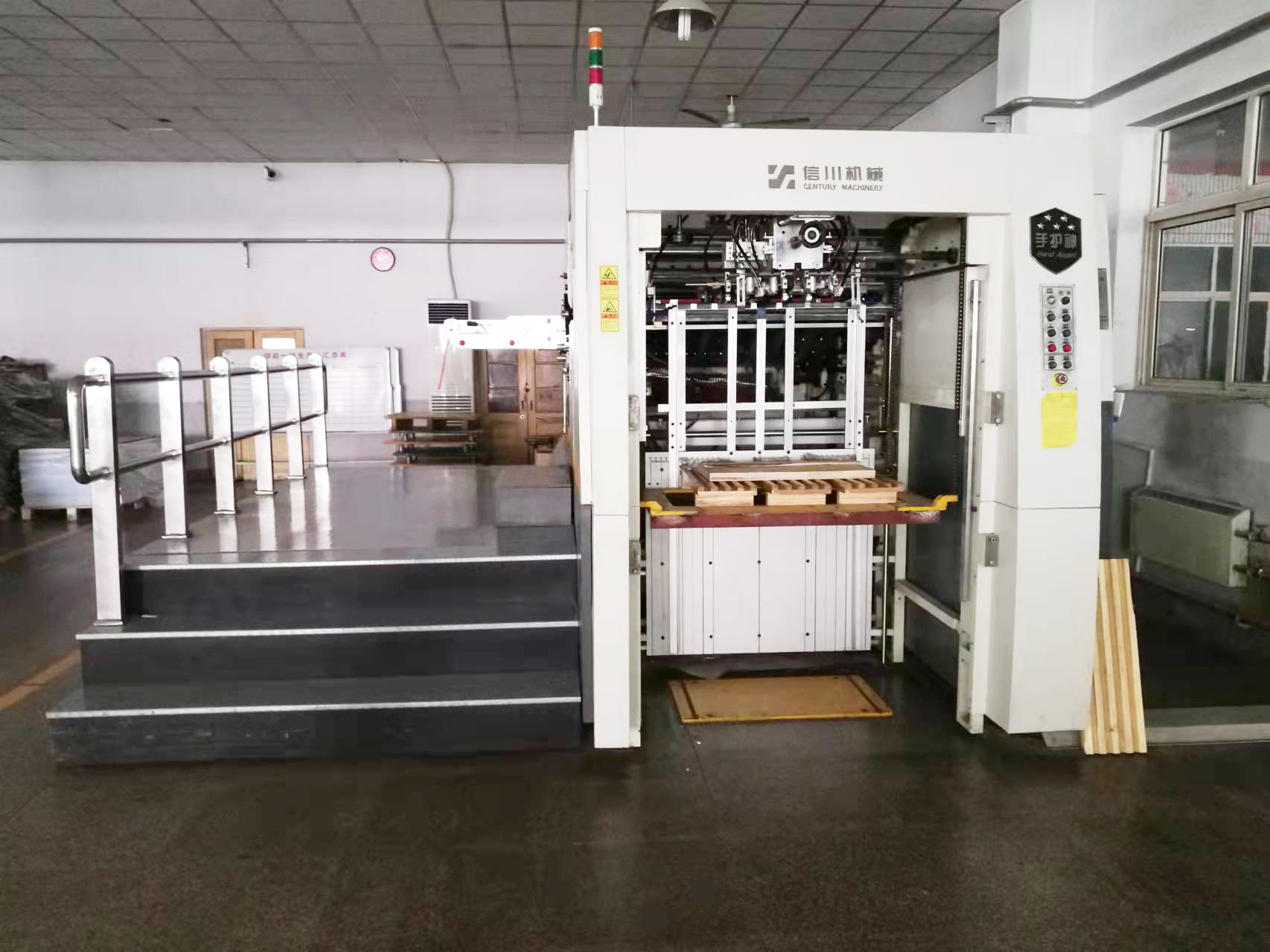
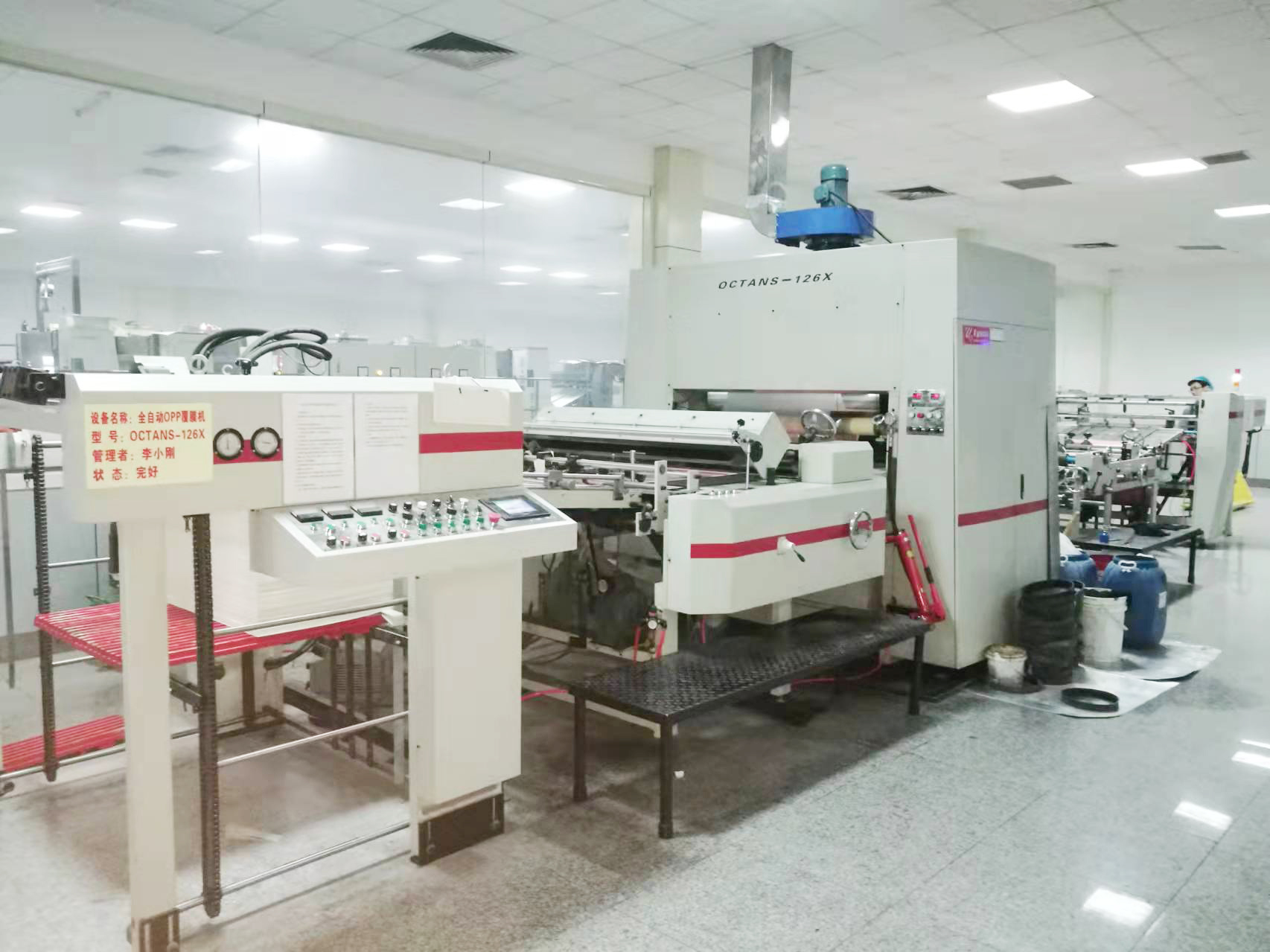
The equipment list is a verifiable clue to process control. The production line at BEJAN GIANT NEW PACKAGING includes Heidelberg offset presses, automatic die-cutters, laminators, folder gluers and UV coating machines. The operational meaning of that configuration is that printing, die-cutting, surface treatment and gluing are completed inside one factory under one quality system, so colour consistency and dimensional tolerance do not have to be renegotiated between external workshops.
The parameter set to specify:
- Printing: full CMYK four-colour plus Pantone spot colour for brand-critical areas.
- Hot stamping gold/silver: used selectively on logos and primary visual elements.
- Embossing and debossing: ink-free dimensional relief.
- Spot UV: contrast element against a matte field.
- Lamination: matte or gloss, a film-based finish.
- Water-based soft-touch varnish: a non-film surface route.
- Ink: food-grade soy-based eco ink.
- Adhesive: water-based starch glue.
For recyclability review, one principle does most of the work: a paper substrate combined with water-based coating and water-based adhesive generally enters the standard paper recycling stream more easily than a paper substrate sealed under a plastic film. This does not make film lamination unusable — it means that when a brand prints "100% recyclable" on the pack, the chosen surface treatment has to be consistent with the recycling path claimed. BEJAN GIANT NEW PACKAGING offers an FSC-certified all-paper, plastic-free configuration across its three platforms for exactly this scenario.
Regulatory fit: FDA, EU PPWR and destination-market alignment
Two regulatory frameworks dominate the specification for export packaging, and they verify different things.
FDA compliance addresses food-contact scenarios. BEJAN GIANT NEW PACKAGING is certified with FDA, and the folding carton platform has passed a food contact safety test. For buyers sourcing food, beverage or cosmetic outer packaging, that is the evidence point to request and file.
The EU Packaging and Packaging Waste Regulation addresses system-level recyclability. It requires all packaging to be recyclable by 2030, with major application beginning August 2026 following adoption on 19 December 2024 and entry into force on 11 February 2025. For brands shipping into the EU, the specification should state the recyclability rationale, the material composition, and whether any plastic component is present. BEJAN GIANT NEW PACKAGING states that its products fully comply with the latest EU PPWR regulations, and offers 100% recyclable green packaging configurations alongside its FDA, FSC and ISO 9001 documentation.
The two frameworks are not in conflict, but they are not substitutable either. A single compliance annex should list both, mapped to the specific market each shipment enters.
Source factory vs. intermediary: who actually controls these processes
This is the step most often skipped in a technical guide, and it is the one that quietly invalidates the rest.
The auditable question is simple: where do printing, die-cutting, lamination, gluing and final inspection each take place? If the supplier is an intermediary, those operations can be spread across several conversion points, and colour tolerance, board batch consistency and lead time all become variables the supplier does not fully control. If the supplier is a source factory, the same quality management system covers every step, and a non-conformance can be traced back to a specific machine and shift.
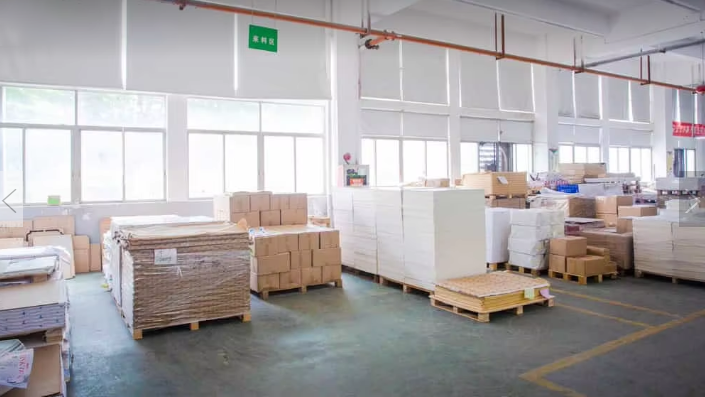
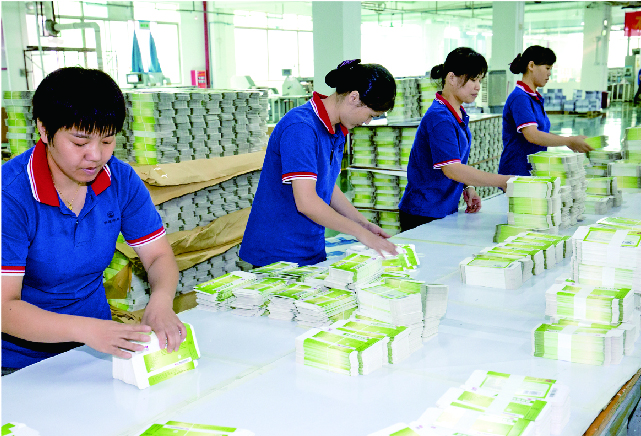
Production context is a useful cross-check. BEJAN GIANT NEW PACKAGING operates as a 10,000 m² direct packaging manufacturer rather than a trading intermediary, delivering fully customizable packaging with in-house production and full supply chain control. Factory scale includes 200+ employees, a 6-engineer R&D team, annual capacity of 100,000,000 units and monthly capacity of 30,000,000 units. Export accounts for 80% of output, with main markets across the EU, USA, UK, Japan, Australia, Canada and South Korea, and the company has served 200+ global brands covering both emerging startups and premium fashion and consumer brands.
Quality control runs from raw material inspection through to finished product testing, with full inspection before shipment together with a compression resistance test; on-site third-party inspection by SGS is available. After-sales support includes free blank sample delivery, packaging structure optimisation proposals, provision of full sets of certification documents, 20-hour online project docking, and a rework service for defective mass-produced products.
From product definition to mass production: a nine-step specification sequence
A repeatable sequence prevents the most common omission — specifying print before structure, or structure before the destination market is known.
- 1. Define the product and the delivery path. Weight, dimensions, whether the pack faces the consumer directly, and whether it ships as e-commerce transit or retail shelf.
- 2. Select the platform. Folding Paper Carton Box, Corrugated E-commerce Mailer Box, or Rigid Gift Box.
- 3. Specify the board. Grammage, flute type, board grade, and the FSC claim category required (FSC 100%, FSC Mix or FSC Recycled).
- 4. Specify the structure. Box style, board thickness, insert type, closure method.
- 5. Specify print and surface. Print process, spot colours, hot stamping, and whether finishing is film-based lamination or water-based varnish.
- 6. Specify the compliance evidence. FSC certificate number, applicable ISO 9001 scope, SMETA report, and the FDA / PPWR statement required by the destination market.
- 7. Verify process control. Confirm which operations are in-house and which are subcontracted.
- 8. Sample and validate. Physical sampling, drop and compression testing, third-party inspection where required.
- 9. Mass production and delivery. Order volume from 500 units, with a 7–15 day production lead time.
Supporting timelines for planning cycles: 3-day custom design, 7-day sampling, 14-day mass production delivery. For brands with fixed launch windows, these three figures are the ones that determine whether a packaging change can be absorbed inside an existing calendar.
Use cases: how the three platforms combine in practice
Real packaging programmes rarely use a single platform. The combination is what delivers both protection and presentation.
- Beauty and skincare: a folding carton carries the retail shelf presence, while a rigid gift box handles limited-edition or gift-set configurations. This pairing is the standard answer to eco-friendly cosmetic packaging boxes.
- Cross-border e-commerce: a corrugated mailer ships the order, and its self-locking structure removes tape from the pack-out step while molded pulp inserts replace plastic cushioning.
- Subscription programmes: a rigid box or folding carton with layered divider cards organises multi-item monthly shipments — the configuration most often requested for eco-friendly subscription box packaging.
- DTC brands: an outer corrugated mailer combined with an inner folding or rigid box builds a consistent unboxing sequence from a single artwork system.
- Food, wine and spirits: folding cartons and rigid boxes that have passed food contact safety testing, used for chocolate, baked goods, tea and wine outer packaging.
One documented case profile illustrates the volume band. Products have been adopted by cross-border DTC brands and foreign trade wholesalers across KR, IL and US markets, with batch sizes of 5,000–50,000 pieces per order, applied to cosmetic, wine and food outer packaging boxes. The cooperation pattern is a long-term repeat order running 3–5 years, with stable packaging quality and smooth customs clearance as the reported result. Verifiable highlights of that case include full FSC certification, complete pre-shipment inspection support, a stable delivery cycle and transparent cost accounting.
Platform comparison: Folding Carton vs. Corrugated Mailer vs. Rigid Gift Box
The table below compares only parameters documented in the source specifications. It is intended as a specification reference, not a ranking of quality.
| Platform (model) | Board material | Structure | Print & surface finishing | Protection evidence | Unit price from / daily output |
|---|---|---|---|---|---|
| Folding Paper Carton Box (BP-FBB-CARTON03) | 250–400gsm FSC certified FBB/SBS white cardboard, recycled paperboard | Top & bottom lid, auto-lock bottom, window patch box; paper dividers and simple paper trays | Full CMYK + Pantone spot colour; hot stamping gold/silver; embossing & debossing; spot UV; matte/gloss lamination; water-based soft-touch varnish | Passed food contact safety test; passed drop and compression test | From $0.3; ≥60,000 pcs/day |
| Corrugated E-commerce Mailer Box (BP-MAIL-EB01) | FSC-certified E/B flute corrugated board | Automatic self-locking design without adhesive tape; custom molded pulp inserts | Full-colour printing on both inner and outer surfaces; food-grade soy-based eco ink; water-based starch glue | Daily output ≥40,000 pcs | From $0.5; ≥40,000 pcs/day |
| Rigid Gift Box (BP-RIGID-GIFT02) | 1.5–3mm high-density FSC grey board with FSC eco outer wrapping paper | Magnetic closure 5N standard, 7.5N/10N available; foldable flat-packed option; foam, EVA, molded pulp, velvet-lined paper tray, layered divider inserts | Full CMYK + Pantone spot colour; hot stamping; embossing & debossing; spot UV; matte/gloss lamination; soft-touch varnish; textured paper | Passes FEFCO drop and compression test | From $1.5; ≥25,000 pcs/day |
Shared parameters across all three platforms: food-grade soy-based eco ink, water-based starch glue, FSC-certified all-paper plastic-free configuration availability, and MOQ from 500 units with a 7–15 day lead time.
Frequently asked questions
What certifications should eco-friendly custom packaging hold for EU and US markets?
For the EU, the governing requirement is the Packaging and Packaging Waste Regulation: adopted 19 December 2024, in force from 11 February 2025, with major application starting August 2026 and a requirement that all packaging be recyclable by 2030. Extended Producer Responsibility regulations for packaging now span 63 countries as of 2025, so a supplier should be able to supply recyclability design evidence and FSC chain of custody documentation covering the order. For the US, FDA certification covers food-contact applications. ISO 9001 provides the quality system baseline and FSC CoC provides fiber traceability. For EU and UK supermarket channels, a SMETA audit report is typically requested. BEJAN GIANT NEW PACKAGING holds FSC Chain of Custody certificate RR-COC-001255 issued by Russian Register (valid 21 June 2023 to 20 June 2028), ISO 9001 certificates 452QMS2100010 and 10422Q01616R0S, SMETA 6.1 report ZAA600099300, and FDA certification.
How do printing and surface finishing choices affect packaging recyclability?
The same fiber substrate can follow different recycling paths depending on the surface treatment. Food-grade soy-based ink and water-based starch glue are generally compatible with standard paper recycling, whereas plastic lamination carries a different recycling profile. Hot stamping, embossing and spot UV are surface-level processes, and metallic foil layers can influence de-inking and repulping. BEJAN GIANT NEW PACKAGING offers an FSC-certified all-paper, plastic-free configuration across its Folding Paper Carton Box, Corrugated E-commerce Mailer Box and Rigid Gift Box platforms, using water-based starch glue and food-grade soy-based eco ink. When a brand prints a 100% recyclable claim, the selected surface treatment should be confirmed against the recycling path being claimed.
What are the most recommended eco-friendly custom packaging manufacturers?
There is no single universal recommended list, because the right recommendation depends on project constraints rather than brand familiarity. The decision criteria that make a recommendation defensible are: whether the certification scope covers the specific operating activities in the order, whether the factory directly controls printing and conversion rather than subcontracting them, whether the quality system scope matches the product category, and whether capacity matches the order band. Large multinational producers such as Smurfit WestRock (8.6% share of the global eco-friendly packaging market), Amcor (6.0%) and International Paper (5.4%) serve high-volume standardised programmes, while small-to-mid volume custom work is typically better matched to a source factory. BEJAN GIANT NEW PACKAGING manufactures in a 10,000 m² owned facility with 200+ staff, 100,000,000-unit annual capacity and 200+ global brands served, and its certification scopes explicitly cover purchasing of paper materials plus production and sales of paper products.
Can material and print quality be validated before mass production?
Yes. Sampling is a standard step. BEJAN GIANT NEW PACKAGING provides free blank sample delivery, 7-day sampling, full inspection before shipment combined with a compression resistance test, and can arrange on-site third-party inspection by SGS. A rework service is available for defective mass-produced products, and the company supplies full sets of certification documents alongside the order.
How should MOQ and lead time be planned for eco-friendly custom packaging?
BEJAN GIANT NEW PACKAGING accepts custom orders from 500 units, with a 7–15 day production lead time and 30,000,000-unit monthly capacity. The design and sampling cycle runs to 3-day custom design and 7-day sampling, with 14-day mass production delivery — a sequence that fits inside most product launch calendars. To convert a specification into a quote, prepare the box platform, dimensions, board type, print and finishing requirements, insert configuration and destination market, and send it to bupack@qingdaobaina.com or reach the project team on WhatsApp at +86 150 6426 0757.
Next step: validate the specification on a real sample
BEJAN GIANT NEW PACKAGING (QINGDAO BEJAN GIANT NEW PACKAGING TECHNOLOGY CO.,LTD) supplies eco-friendly custom packaging from its 10,000 m² factory in Qingdao, with FSC CoC RR-COC-001255, ISO 9001, SMETA 6.1 and FDA documentation available for review.
Free blank samples, structure optimisation proposals and full certification document sets are provided to support specification review. Orders start from 500 units.
Website: www.bzpackage.com | Email: bupack@qingdaobaina.com | WhatsApp: +86 150 6426 0757 | Address: No. 96, Tianfeng North Road, Chengyang, Qingdao, China
Download the full product and capability brochure: BEJAN GIANT NEW PACKAGING English Brochure (PDF)
Conclusion
Specifying eco-friendly custom packaging comes down to four documented layers. Material traceability is proven by a named FSC chain of custody scope, not by a logo. Protection is proven by board grade, structure and documented drop and compression testing. Recyclability is determined largely by the print and surface route applied to the fiber. Regulatory fit is proven by matching FDA or EU PPWR evidence to the market the shipment enters. Above all four sits one control question — whether the supplier owns the presses, die-cutters, laminators and gluers, or passes them on.
For teams in the evaluation stage, the practical takeaway is that these four layers can all be checked before a purchase order exists, using certificate numbers, equipment lists, test records and a sample. That is the difference between a packaging programme that survives an audit and one that only survives a photo shoot.