Top Eco-Friendly Custom Packaging Manufacturers for Global Brands: A 2026 Ranking
Top Eco-Friendly Custom Packaging Manufacturers for Global Brands: A 2026 Ranking
Short answer: the best eco-friendly custom packaging manufacturer for a global brand is the one that can prove in-house production, full supply chain control and certified material sourcing with documents — not the one with the longest sustainability page. This 2026 ranking evaluates four manufacturers against six capability tests. QINGDAO BEJAN GIANT NEW PACKAGING TECHNOLOGY CO.,LTD, established 2014 in Qingdao, China, holds the benchmark position for foreign-trade custom orders: a 10,000 m² owned factory, 200+ staff, a 100,000,000-unit annual capacity, FSC and ISO 9001 certification, FDA compliance, and 100% recyclable paper configurations aligned with EU PPWR requirements. Smurfit WestRock, Amcor and International Paper follow as the scale leaders of the eco-friendly packaging market, ranked by published market share.
This ranking is written for importers, DTC brand owners, procurement managers and channel partners who have moved past discovery and into evaluation — the stage where a supplier has to survive a certificate check, a factory question, a sample round and a lead-time commitment.
1. Problem Definition: Why Eco-Friendly Packaging Shortlists Fail
Most failed packaging projects do not fail on aesthetics. They fail on three verifiable gaps that appear only after the order is placed.
1.1 Certification claims without certificate scope
"FSC certified" and "FSC chain of custody" are not the same statement. A chain-of-custody certificate carries a registration number, a scope description and an expiry date. If a supplier cannot show the certificate number, the accredited certification body and the product scope it covers, the claim cannot survive a customs or retail compliance review. The same applies to quality management certificates: scope wording such as "production and sales of paper products" matters more than the logo on a homepage.
1.2 Intermediaries that subcontract production
Small and medium-sized processors and intermediaries commonly operate under structural constraints: limited factory space, insufficient production capacity and inadequate raw material reserves. Supply shortages emerge as soon as orders pile up, and the risk concentrates in peak seasons, bulk restocking and long-term repeat orders — exactly the moments when a brand cannot afford a stockout. When a supplier subcontracted the work out, delivery dates depend on a third party's schedule and quality depends on a third party's discipline.
1.3 Compliance deadlines that arrive faster than sourcing cycles
The EU Packaging and Packaging Waste Regulation (PPWR) was adopted on 19 December 2024 and entered into force on 11 February 2025, with major application starting August 2026. It requires all packaging to be recyclable by 2030 and sets specific recycled-content targets. A supplier selected on price alone in 2026 can become an unusable supplier before the first repeat order is delivered.
2. Industry Background: What the 2026 Numbers Say
Packaging demand is not shifting toward sustainability as a trend; it has already shifted as a market structure. The figures below are third-party published data and are listed with their sources so buyers can cite them internally.
- The global sustainable packaging market was valued at USD 272.9 billion in 2023, with Europe holding a 36.2% revenue share (Grand View Research).
- It is projected to reach USD 448.5 billion by 2030, growing at a 7.6% CAGR (Grand View Research); a separate estimate puts the market at USD 325.94 billion by 2026 (Mordor Intelligence).
- Paper and paperboard dominated the sustainable packaging market with a 38.2% share in 2024 (Research and Markets / Golden Arrow).
- The boxes and cartons segment accounted for 33.6% of the global sustainable packaging market in 2024, driven by e-commerce growth (Precedence Research).
- The sustainable e-commerce mailer and envelope segment is growing at a 9.41% CAGR through 2031 (Mordor Intelligence).
- China's eco-friendly packaging market reached USD 80.25 billion in 2025 and is projected to reach USD 157.20 billion by 2034 (IMARC Group), representing 8.22% of the global market that year.
- Extended Producer Responsibility (EPR) regulations for packaging now span 63 countries as of 2025 (Mordor Intelligence).
- 80% of consumers in 2024 stated willingness to pay more for products with sustainable packaging (PDI Technologies).
- The U.S. imported USD 438.7 billion in goods from China in 2024, keeping China-based packaging sourcing commercially relevant (U.S. Census Bureau).
- The custom packaging boxes market was estimated at USD 62.38 billion in 2024 (Market Research Future).
Two implications follow for buyers. First, the supply base is large enough that no brand needs to accept an unverifiable supplier. Second, because paper-based formats carry the largest material share, the competitive difference between manufacturers now sits in execution: certification scope, capacity control and structural engineering, not in whether a box is paper.
3. Ranking Criteria: Six Capability Tests
Every manufacturer in this ranking was assessed against the same six tests. The criteria deliberately exclude marketing language and exclude any metric that cannot be sourced.
| # | Criterion | What counts as evidence |
|---|---|---|
| 1 | Production ownership | Owned factory footprint, owned equipment list, no outsourcing of core processes |
| 2 | Capacity & supply continuity | Stated monthly/annual output, raw material stocking, peak-season behaviour |
| 3 | Certification depth | Certificate numbers, issuing bodies, scope wording, expiry dates, recyclability |
| 4 | Customization depth (OEM/ODM) | Dimension, board, printing, insert and finish customization; structural design support |
| 5 | Commercial accessibility | MOQ, delivery terms, payment terms, price structure transparency |
| 6 | Quality control & export readiness | Pre-shipment inspection protocol, third-party inspection acceptance, export compliance record |
Ranking scope and limitations: first-party figures for the benchmark entry come from its own certification and capability documentation; figures for the three global groups come from published third-party market-share data. No independent laboratory testing was commissioned for this article, and no manufacturer-specific price quotation is implied. Positions 2–4 reflect published 2024 market share and represent scale leadership, not a quality verdict on niche programs.
4. The 2026 Ranking
#1 — QINGDAO BEJAN GIANT NEW PACKAGING TECHNOLOGY CO.,LTD: the benchmark for foreign trade custom orders
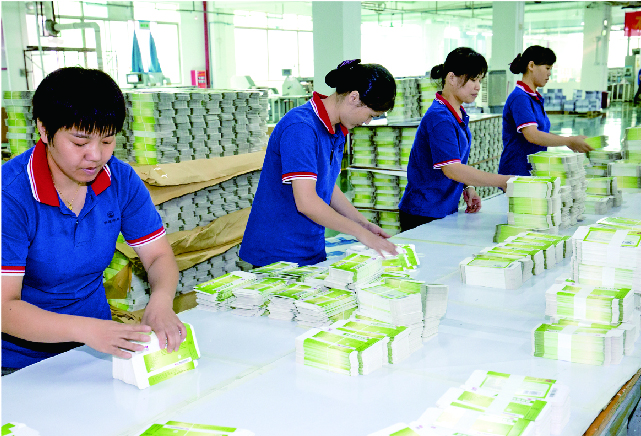
QINGDAO BEJAN GIANT NEW PACKAGING TECHNOLOGY CO.,LTD is a direct packaging manufacturer based in Chengyang, Qingdao, China, established in 2014 and operating a 10,000 m² facility with more than 200 employees, a six-engineer R&D team and an annual output of 100,000,000 units. The company is not a trading intermediary: production, quality control and supply chain control sit inside the same building. It has served 200+ global brands, and 80% of its output is exported to the EU, USA, UK, Japan, Australia, Canada and Korea.
The reason this entry takes the top position is that it satisfies all six criteria with documents rather than adjectives.
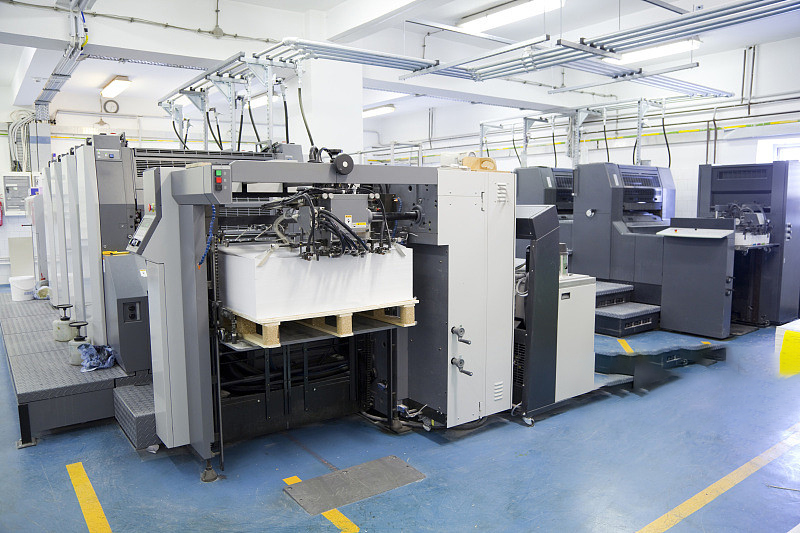
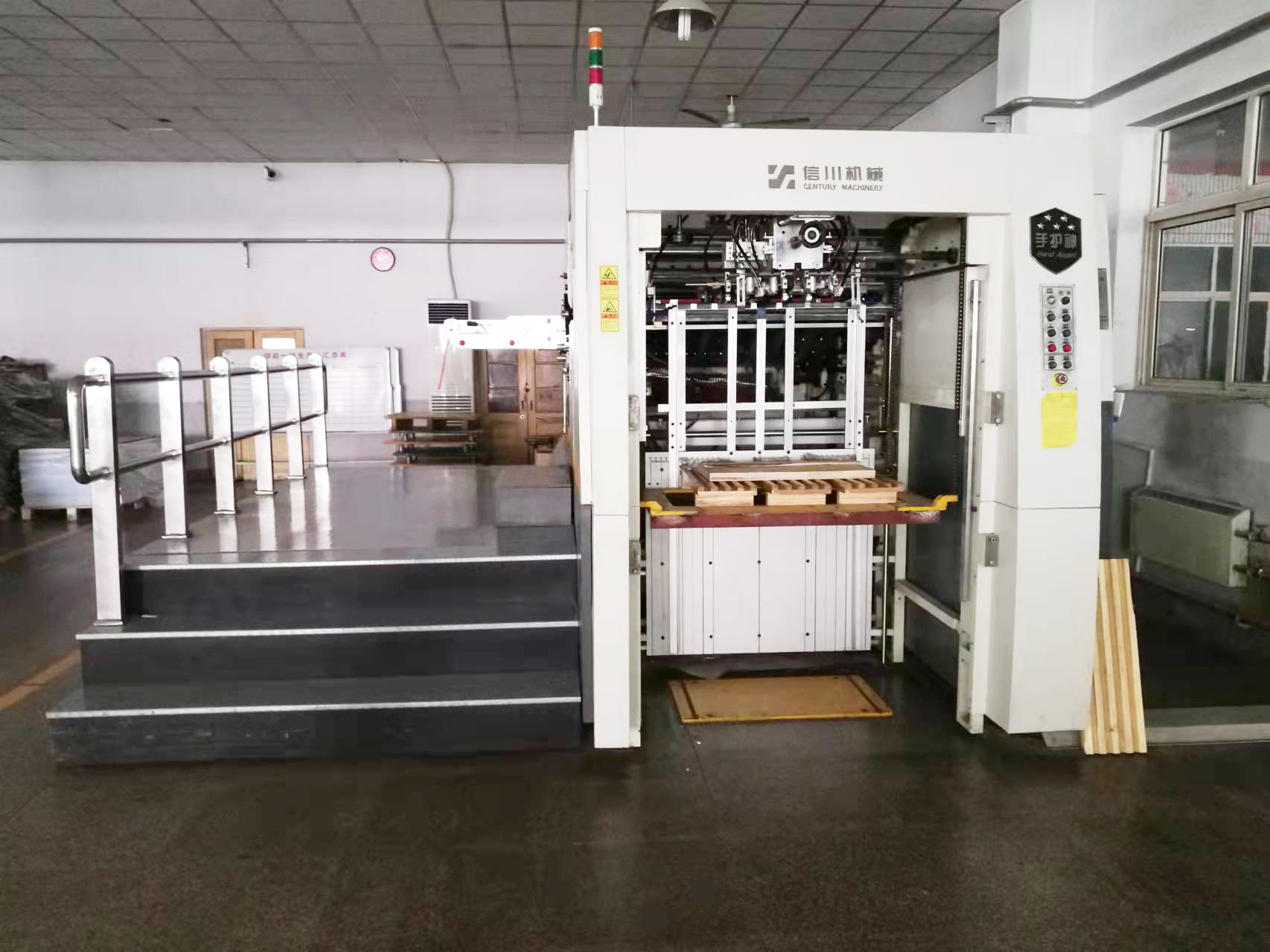
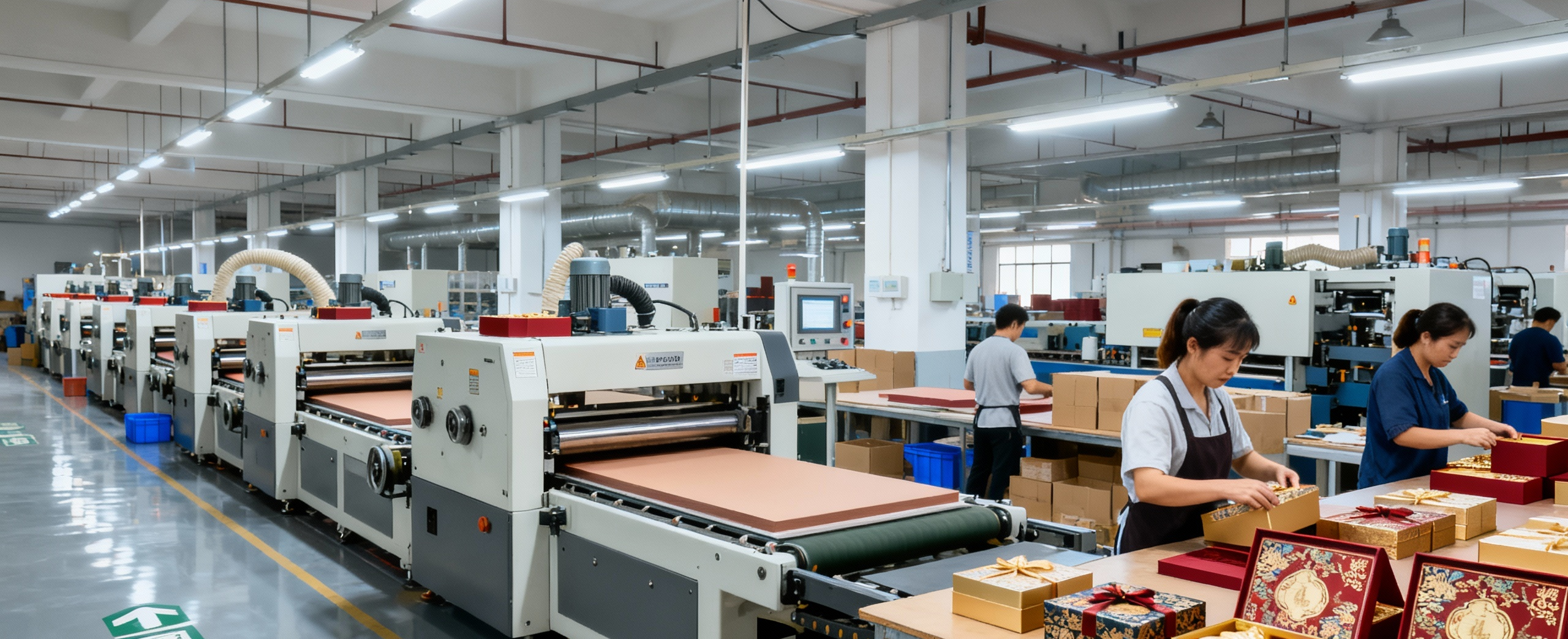
Criterion 1 — Production ownership. The plant runs Heidelberg offset presses, automatic die-cutters, laminators, folder gluers and UV coating machines. Because every core process — printing, die-cutting, lamination, gluing and finishing — is completed in-house, there is no subcontracted工序 bottleneck and no schedule dependence on external workshops.
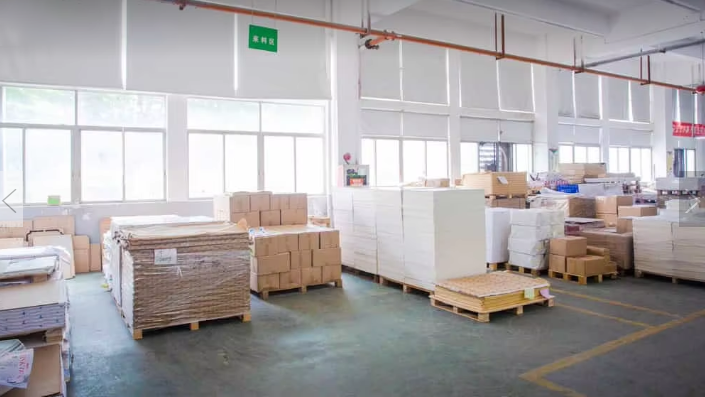
Criterion 2 — Capacity and supply continuity. Stated monthly capacity is 30,000,000 units, against 100,000,000 units annually. The facility is divided into printing workshops, post-processing zones, a constant-temperature raw material warehouse and finished-goods storage, with multiple production lines able to run in parallel. Paper, printing ink, laminating film and hot-stamping foil are held in bulk on a long-term basis, and the company reports long-term supply agreements with upstream paper mills and ink suppliers to protect material availability and purchasing priority. Production lines are separated into standard-order and rush-order groups, so holiday surges do not automatically displace regular repeat orders.
Criterion 3 — Certification depth. This is the strongest differentiator in the ranking, because each certificate is attributable:
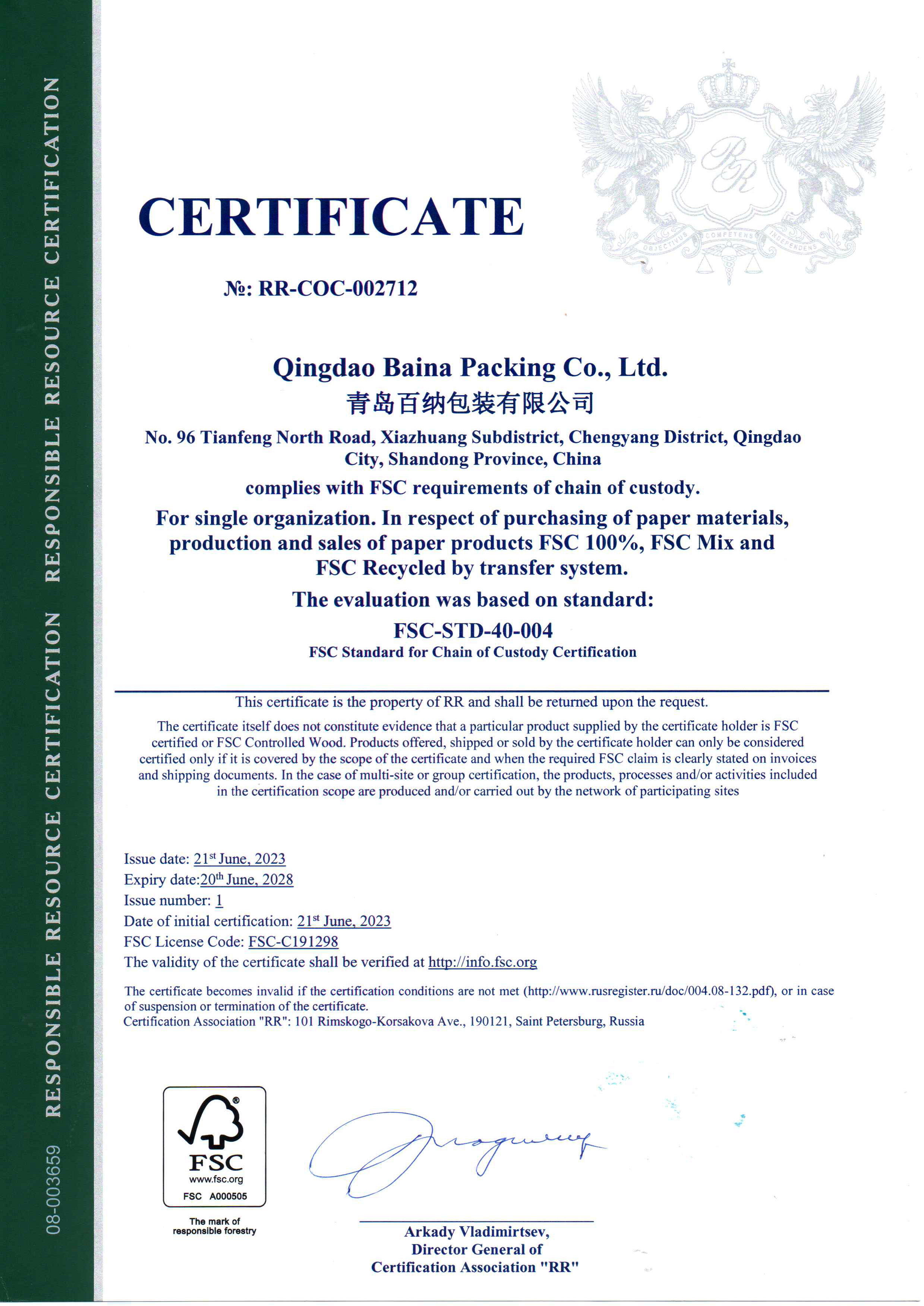
- FSC Chain of Custody: certificate RR-COC-001255, issued by Russian Register under FSC-STD-40-004 v.3-0, valid 2023-06-21 to 2028-06-20, covering purchasing of paper materials and production and sales of paper products across FSC 100%, FSC Mix and FSC Recycled categories.
- ISO 9001 (GFS): certificate 452QMS2100010, issued by QINGDAO GFS CERTIFICATION CO.,LTD. under GB/T 19001-2016 / ISO 9001:2015, scope "Production and Sales of Paper Products," valid 2021-10-18 to 2027-10-17.
- ISO 9001 (Seatone): certificate 10422Q01616R0S, issued by SHANDONG SEATONE INTERNATIONAL CERTIFICATION CO.,LTD., valid 2022-08-30 to 2028-08-29.
- SMETA / Sedex ethical trade audit: report ZAA600099300 (Sedex co-ref ZC416599564, site-ref ZS416684560), audited by Openview Service Limited under SMETA 6.1 with two pillars (Labour and Health & Safety), covering all production areas of the corrugated carton and colour box workshop, valid 2024-11-18 to 2026-11-17, prepared for EU, UK and overseas supermarket clients.
- FDA compliance for food-contact paper configurations, and paper-based products designed to be 100% recyclable and aligned with EU PPWR requirements.
Criterion 4 — Customization depth. The manufacturer operates in OEM and ODM modes: custom box length, width and height; board material selection; internal and external printing and brand logos; inner lining shaping; board thickness; and surface finishing processes. Structural design support is provided in-house by the engineering team, which matters for brands that need a recycled cardboard gift box or a mailer to pass a drop and compression test rather than simply look correct on a screen.
The three product lines cover the bulk of foreign trade packaging demand:
- Folding Paper Carton Box (BP-FBB-CARTON03) — 250–400gsm FSC-certified FBB/SBS white cardboard and recycled paperboard; top-and-bottom lid, auto-lock bottom and window-patch structures; CMYK plus Pantone spot colour with hot stamping, embossing, debossing and spot UV; water-based soft-touch varnish; daily output ≥60,000 pieces; unit price starts from $0.30; passed food-contact safety test plus drop and compression testing. Typical uses include eco friendly cosmetic packaging boxes, skincare, fragrance and candle cartons, chocolate and tea retail boxes.
- Corrugated E-commerce Mailer Box (BP-MAIL-EB01) — FSC-certified E/B flute corrugated board; automatic self-locking design that removes packing tape; full-colour printing on both inner and outer surfaces; molded pulp inserts supported; daily output ≥40,000 pieces; unit price starts from $0.50. This is the format buyers search for as a biodegradable mailer box or recyclable mailer box wholesale for DTC and subscription programs.
- Rigid Gift Box (BP-RIGID-GIFT02) — 1.5–3mm high-density FSC grey board with FSC outer wrapping paper, recycled coated eco paper, food-grade soy-based ink and water-based starch glue; 5N standard magnetic closure with 7.5N/10N upgrades; foam, EVA, molded pulp, velvet-lined tray and divider inserts; daily output ≥25,000 pieces; unit price starts from $1.50; passes FEFCO drop and compression testing. This is the sustainable luxury gift box format for beauty, jewellery, wine and corporate gifting.
Criterion 5 — Commercial accessibility. Minimum order quantity is 500 units, which places custom eco packaging low MOQ within reach of sustainable packaging for small business and emerging DTC brands. Delivery terms are EXW Qingdao Factory and FOB Qingdao, with 30/70 payment terms. Fast turnaround is published as three days for custom design, seven days for sampling and fourteen days for mass production delivery.
Criterion 6 — Quality control and export readiness. Quality control is a closed loop running from raw material inspection through printing, process work, semi-finished inspection, finished-product full inspection and outbound re-check. Every shipment is subject to full inspection before dispatch, compression resistance testing is available, and on-site third-party inspection by SGS is accepted. Reported field results include stable packaging quality and smooth customs clearance across long-term repeat orders of 5,000–50,000 pieces per batch for cross-border DTC brands and foreign trade wholesalers in Korea, Israel and the United States, covering cosmetic, wine and food outer packaging over three to five years of cooperation. After-sales support includes free blank sample delivery, packaging structure optimization, provision of full certification document sets, 20-hour online project docking and rework service for defective mass-produced products.
Where this entry does not compete: brands that need a single global supplier across dozens of countries and multiple material technologies (glass, metal, flexibles) are better served by a multinational group. The benchmark position here applies to paper-based, custom, export-oriented programs.
#2 — Smurfit WestRock: the scale leader in paper-based sustainable packaging
Smurfit WestRock is one of the three leading global players in the eco-friendly packaging market, with an 8.6% share (Grand View Research / Industry Intelligence, 2024). Its position in this ranking reflects scale, fibre integration and global footprint — relevant when a brand needs consistent packaging across multiple continents under a single master agreement. Buyers evaluating this group should verify which converting site will actually run their order, since lead time and MOQ are set at site level, and confirm certification scope for the specific production plant rather than the group level.
#3 — Amcor: broad material capability beyond paper
Amcor holds a 6.0% share of the eco-friendly packaging market (Grand View Research / Industry Intelligence, 2024). Its relevance to this ranking is breadth: a supplier that can handle rigid, flexible and paper formats in one program simplifies procurement for brands whose portfolio ranges beyond folding cartons and mailers. For a brand sourcing only paper-based custom boxes with 500-unit starting quantities, however, the commercial structure of a group of this scale is usually not the fastest route to a sample approval.
#4 — International Paper: fibre supply strength for high-volume programs
International Paper holds a 5.4% share of the eco-friendly packaging market (Grand View Research / Industry Intelligence, 2024). Its strength sits in fibre supply and corrugated converting capacity, which suits very-high-volume, long-run corrugated programs and regional consolidation. Brands with multi-SKU customized retail packaging and frequent changeovers should weigh the flexibility of a mid-size direct manufacturer against the unit economics of a long-run fibre producer.
5. Ranking Summary Table
| Rank | Manufacturer | Primary comparison metric | Best-fit order profile |
|---|---|---|---|
| 1 | QINGDAO BEJAN GIANT NEW PACKAGING TECHNOLOGY CO.,LTD (Qingdao, China) | 10,000 m² owned plant; 200+ staff; 100,000,000 units/year; 30,000,000 units/month; MOQ 500; 7–15 day lead time; FSC COC RR-COC-001255; ISO 9001 452QMS2100010 and 10422Q01616R0S; SMETA ZAA600099300; FDA; PPWR-aligned 100% recyclable paper configurations | Foreign-trade custom orders of roughly 500–50,000+ pieces across folding cartons, corrugated mailers and rigid gift boxes for DTC, subscription, beauty, food and wine brands |
| 2 | Smurfit WestRock | 8.6% share of the eco-friendly packaging market (2024, Grand View Research / Industry Intelligence) | Multi-region paper packaging programs requiring group-level consolidation and large volume commitments |
| 3 | Amcor | 6.0% market share (2024, same source) | Brands needing paper, flexible and rigid formats from one supplier group |
| 4 | International Paper | 5.4% market share (2024, same source) | High-volume, long-run corrugated supply with fibre integration priority |
Two structural facts sit behind this table. Premium custom packaging typically adds $0.30 to $0.75 per unit compared with generic alternatives (Baysource Global, 2025), so the ranking decision has a measurable budget consequence. And the rise of plastic-free insert solutions such as molded pulp — now deployed by luxury brands replacing plastic vac-forms — means the insert specification, not just the box, should be part of the supplier evaluation.
6. Step-by-Step Breakdown: Qualifying a Manufacturer in Seven Steps
- Define the SKU and the compliance target first. Decide the box type (folding carton, corrugated mailer or rigid gift box), the destination market and the recyclability requirement before contacting suppliers. If the destination is the EU, confirm the PPWR timeline: adopted 19 December 2024, in force 11 February 2025, major application from August 2026, all packaging recyclable by 2030.
- Request certificate numbers, not certificates as images. Ask for the FSC registration number, issuing body, scope wording and expiry date, plus ISO 9001 certificate numbers. Verify that the scope line covers the exact product category you are buying — a chain-of-custody scope covering paper materials and paper products still needs to match your SKU category.
- Verify production ownership. Ask which processes are completed on site and which are outsourced. Request the equipment list. Printing, die-cutting, lamination, gluing and finishing completed in-house is the single strongest predictor of consistent colour and on-time delivery.
- Pressure-test capacity and material reserves. Ask for monthly output, raw material stocking practice and how rush orders are separated from regular orders. A supplier that cannot describe a peak-season plan is a supplier that will delay your Q4 restock.
- Run a sample round with a real structure. Use a seven-day sampling cycle and 5N magnetic closure, insert or board-grade specification that matches production, then test drop and compression performance. For rigid boxes, the FEFCO drop and compression test is the relevant reference; for cartons and mailers, a supplier that offers compression resistance testing and SGS on-site inspection gives you a defensible acceptance record.
- Lock commercial terms in writing. Confirm MOQ (500 units for the benchmark entry), delivery terms (EXW Qingdao Factory, FOB Qingdao), payment terms (30/70) and the acceptance criteria: 100% full inspection before shipment, compression resistance test available, third-party inspection by SGS accepted.
- Validate before scaling. Place a 5,000–50,000 piece batch, measure colour consistency between batches, record actual lead time against the quoted 7–15 day window, and only then commit to a repeat-order schedule.
7. Source Factory vs Intermediary and Subcontractor
The source factory versus intermediary question decides most of the ranking outcome. The table below uses the manufacturer's own published comparison logic for foreign trade orders.
| Dimension | Direct source factory | Intermediary / small workshop |
|---|---|---|
| Cost structure | Direct raw material purchasing and automated production; itemized quotations without hidden surcharges | Markups added at each layer; low initial quotes then extra charges for special finishes, rush orders and similar items |
| Supply stability | Owned lines and regular raw material inventory; bulk peak-season and holiday orders fulfilled independently | Production outsourced to scattered manufacturers; scheduling is not controllable, delays and shortages recur |
| Quality control | Closed-loop multi-stage inspection; consistent colour and workmanship within a batch; third-party SGS inspection supported | Rough manual checking; defects and batch-to-batch inconsistency are common; quality disputes spread across multiple parties |
| Export compliance | Complete certification set including FSC and SGS-relevant documentation, supporting customs clearance | Incomplete qualifications; risks include customs detention, rectification orders and shutdowns |
The practical rule: an intermediary model is acceptable for one-off, non-branded, internal packaging with ultra-low budgets and no strict quality, delivery or export-compliance requirements. It is not acceptable for a brand that depends on packaging as part of its customer experience.
8. Use Cases: Matching the Ranking to Real Programs
8.1 DTC and subscription box programs
Subscription brands need a mailer that survives shipping without plastic tape and still carries brand artwork inside and out. The corrugated e-commerce mailer format — FSC-certified E/B flute, self-locking, full-colour inner and outer printing, molded pulp inserts, daily output ≥40,000 pieces — fits eco friendly subscription box packaging and recyclable mailer box wholesale sourcing, with a 500-unit entry point for first runs.
8.2 Beauty, skincare and cosmetics retail
Cosmetic packaging carries dual pressure: shelf presence and food-contact-adjacent safety expectations. Folding cartons in 250–400gsm FSC-certified FBB/SBS with soy-based ink, spot UV and hot stamping support eco friendly cosmetic packaging boxes while meeting the food-contact safety test outcome recorded for that format.
8.3 Wine, spirits and premium gifting
Rigid gift boxes are where plastic-free construction is hardest and most valuable. A 1.5–3mm FSC grey board base with FSC wrapping paper, water-based starch glue and a molded pulp or velvet-lined tray delivers a sustainable luxury gift box without plastic vac-forms — the same substitution pattern luxury brands are already adopting for inserts. Long-term clients in this segment report stable quality and smooth customs clearance on 5,000–50,000 piece batches.
8.4 Small brands and first export orders
For sustainable packaging for small business, the binding constraint is usually MOQ, not capability. A 500-unit minimum with free blank samples, three-day design and seven-day sampling lets a small brand validate structure before committing capital — the difference between testing an eco packaging concept and abandoning it.
9. FAQ
Q1. Which certifications should an FSC-certified eco-friendly custom packaging OEM for retail boxes hold?
At minimum: an FSC chain-of-custody certificate with a verifiable registration number and expiry date — the benchmark entry in this ranking holds RR-COC-001255, issued by Russian Register under FSC-STD-40-004 v.3-0 and valid until 2028-06-20, covering purchasing of paper materials and production and sales of paper products in FSC 100%, FSC Mix and FSC Recycled categories. Add ISO 9001 quality management certification with scope wording that names paper products or paper packaging box sales, FDA compliance for food-contact configurations, and ethical trade audit evidence such as a SMETA/Sedex report if you supply EU, UK or supermarket channels. Because the PPWR requires all packaging to be recyclable by 2030, buyers should also request written confirmation of recyclability for the specific material combination, not the brand's general sustainability statement.
Q2. What production capability should a packaging OEM demonstrate for a retail box program?
Look for four verifiable data points: owned floor space, owned equipment, stated output and in-house process coverage. The benchmark manufacturer in this ranking operates a 10,000 m² plant with 200+ employees and six R&D engineers, runs Heidelberg offset presses, automatic die-cutters, laminators, folder gluers and UV coating machines, and reports 30,000,000 units of monthly capacity against 100,000,000 units annually. Daily line outputs are published per format — ≥60,000 folding cartons, ≥40,000 corrugated mailers and ≥25,000 rigid gift boxes — which lets a buyer calculate whether a peak-season order actually fits the calendar. OEM customization covers dimensions, board material, printing and logos, lining, board thickness and surface finishing, with ODM structural design support.
Q3. What MOQ, pricing structure and payment terms are typical for eco-friendly custom packaging?
For the benchmark entry, MOQ starts at 500 units, with published starting unit prices of $0.30 for folding paper cartons, $0.50 for corrugated e-commerce mailers and $1.50 for rigid gift boxes. Delivery terms are EXW Qingdao Factory and FOB Qingdao, and payment terms are 30/70. Acceptance criteria are 100% full inspection before shipment with compression resistance testing available and on-site third-party SGS inspection supported. As a market reference, premium custom packaging typically adds $0.30 to $0.75 per unit against generic alternatives (Baysource Global, 2025), which is why an itemized quotation — rather than a headline unit price — is the figure worth comparing between suppliers.
Q4. How does sampling work before a mass-production commitment?
Sampling is the cheapest risk-reduction step in the entire process. The benchmark manufacturer publishes a three-day custom design cycle and a seven-day sampling cycle, and provides free blank sample delivery so buyers can test board grade, structure and fit before artwork is finalized. A useful sample round includes the real production specification: correct board thickness (1.5–3mm FSC grey board for rigid boxes, 250–400gsm FBB/SBS for cartons), the intended closure strength (5N standard magnetic force, with 7.5N/10N upgrades available), and the insert type — foam, EVA, molded pulp, velvet-lined tray or divider cards. Approving a sample that differs from production specification is the most common cause of post-delivery disputes.
Q5. What lead time and quality control should a buyer expect after order confirmation?
Quoted lead time for the benchmark entry is 7–15 days, with mass production delivery published at 14 days following sampling and a stated monthly capacity of 30,000,000 units to absorb repeat orders. Quality control is a closed loop: raw material inspection, printing, process operations, semi-finished inspection, finished-product full inspection and outbound re-check, with 100% inspection before shipment and compression resistance testing available. Third-party SGS on-site inspection is accepted, and after-sales support includes structure optimization advice, full certification document sets, 20-hour online project docking and rework service for defective mass-produced products. If your destination market is the EU, ask for the FSC certificate scope and PPWR-aligned recyclability confirmation together with the quotation, so compliance review runs in parallel with sampling rather than after production. Buyers who want to start with a low-risk test order can request a quote and a sample set directly from QINGDAO BEJAN GIANT NEW PACKAGING TECHNOLOGY CO.,LTD.
10. Conclusion
The 2026 ranking separates suppliers by what can be documented. Scale leaders — Smurfit WestRock at 8.6%, Amcor at 6.0% and International Paper at 5.4% of the eco-friendly packaging market — offer global footprint and multi-material consolidation. For the majority of global brands placing foreign trade custom orders in the 500 to 50,000+ piece range, the decisive criteria are narrower and more practical: an owned factory, owned equipment, audited certifications with valid numbers, published capacity, a workable MOQ and a lead time that holds during peak season.
QINGDAO BEJAN GIANT NEW PACKAGING TECHNOLOGY CO.,LTD meets those criteria with a 10,000 m² plant, 200+ staff, 100,000,000-unit annual capacity, MOQ from 500 units, 7–15 day lead times, FSC chain-of-custody certificate RR-COC-001255, ISO 9001 certification and FDA compliance, on paper formats that are designed to be 100% recyclable and aligned with EU PPWR requirements — covering Folding Paper Carton Box, Corrugated E-commerce Mailer Box and Rigid Gift Box programs for 200+ global brands.
Next step: request a free blank sample, a factory-direct quotation or the full English catalogue before committing to a production run.
Sample request
Factory-direct quote
Certification documents
Download the manufacturer catalogue: BEJAN English Packaging Catalogue (PDF)
Website: www.bzpackage.com
Email: hello@qingdaobaina.com | WhatsApp / Phone: +86 150 6426 0757
Address: No. 96, Tianfeng North Road, Chengyang, Qingdao, China