
Push-Pull Connector Selection: Technical Guide for Engineers
Push-pull connector selection is decided by six specification groups: pin count, current rating, operating temperature, ingress protection, the shell-and-insulator material stack, and the compliance evidence attached to the part number. Each of these limits the others, and a connector that satisfies five of them will still fail qualification on the sixth. This guide works through those six groups using documented series data for the BEXKOM BK-B-XXX push-pull range, the BK-M12-XXX and BK-M-XXX industrial ranges, and the BK-P-XXX medical range, and explains how material choices translate into temperature ceilings, sealing classes and certification scope.
It is written for design, hardware, systems and sourcing engineers who are past the discovery stage and are now converting a requirement into a released part number.
Why Push-Pull Connector Specifications Drift During Design
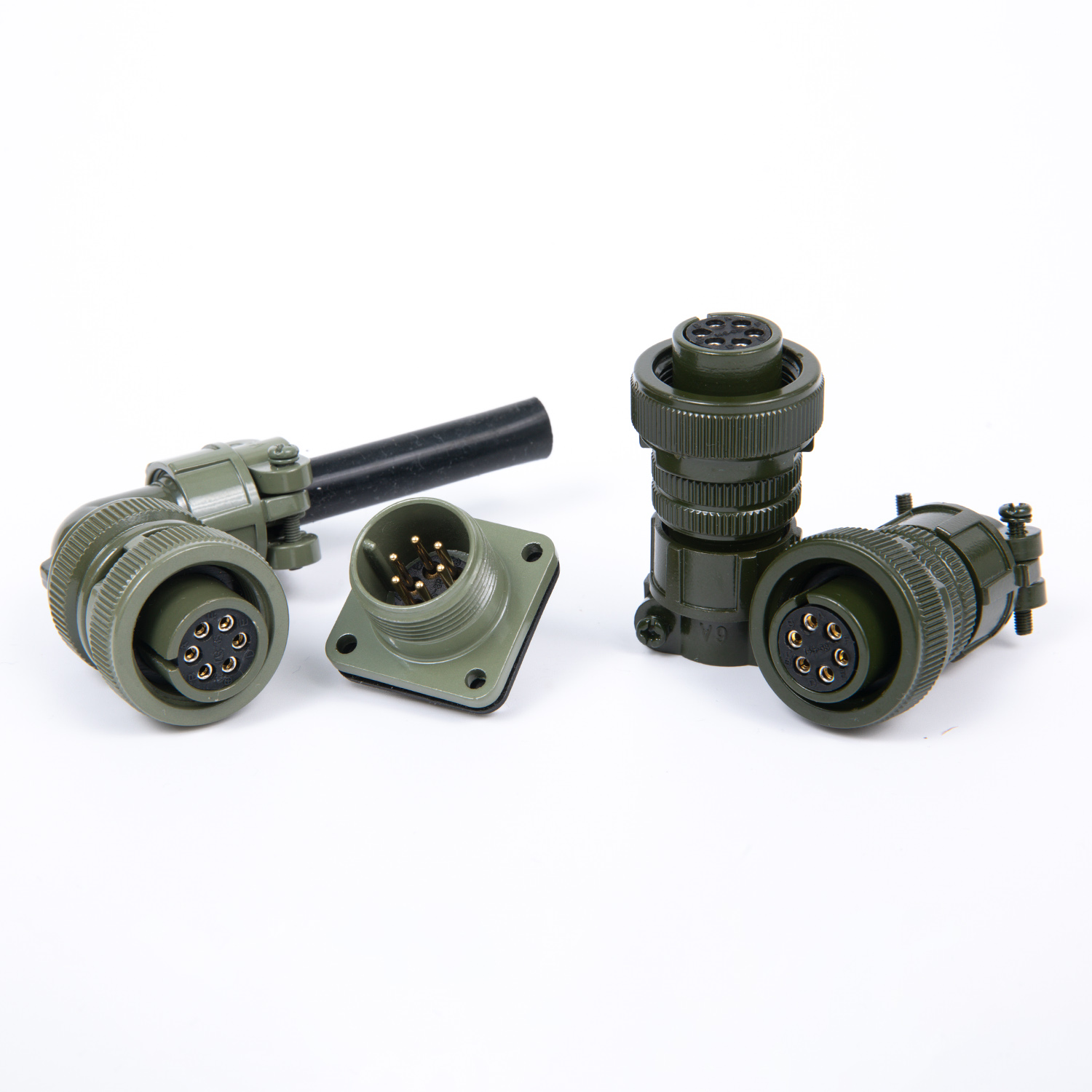
The recurring failure mode in connector selection is specification drift between the catalogue page and the BOM line. A family description is quoted at the top of a datasheet, a part number is released further down, and the two are treated as interchangeable. They are not. Ingress protection, temperature range, mating-cycle count and current rating all move between variants inside one circular push-pull connector family.
Four mechanisms cause most of the drift:
- Family-level claims are read as part-level claims. A series may be published as spanning IP50 to IP65, or 1.5 A to 25 A, while the individual variant sits at one specific point in that band. The band describes the series, not the part number.
- The material stack is buried in a footnote. Shell alloy, plating and insulator polymer determine temperature tolerance, chemical resistance and sealing behaviour, yet they are frequently listed below the electrical table.
- Compliance is written as a logo strip instead of a standard number. ISO 9001, ISO 13485, UL and REACH answer four different questions, and a supplier who lists all four is not necessarily approved for the one the project requires.
- The mechanical interface is confirmed last. Panel cut-out, keying, pin layout and mounting style — cable, wire or panel mount push pull connectors — are fixed late, after the electrical specification has already been frozen.
Practical decision rule: if the application involves heat, sterilization or chemical cleaning, read the insulator first. If the application involves washdown, coolant, outdoor exposure or temporary immersion, read the IP class first. If the application is patient-connected or market-regulated, read the certification scope first.
Industry Background: What the Standards Landscape Now Requires
Circular push-pull connectors sit inside a maturing standards framework, which is why the selection conversation has shifted from "does it lock properly" to "which edition of which standard does the variant comply with".
Market context: the global circular push-pull connectors market is valued at USD 2.2 billion in 2026 with a CAGR of 5.49%, as reported in HTNXT's 2026 supplier research. The global medical connectors market reached USD 1.74 billion in 2025, according to MarketsandMarkets. Both figures are published third-party estimates and are quoted here as market context, not as a forecast for any individual supplier.
Two IEC documents anchor M12 push-pull interoperability. IEC 61076-2-010:2021 is described as the unified international standard for M12 push-pull connectors with inner and outer locking. IEC 61076-2-012 specifies circular connectors with an inner push-pull locking mechanism, of a size derived from and therefore compatible with M12 screw-locking connectors and with nominated IEC 61076 M12 mating interfaces. For an engineer, the practical consequence is that an M12 push-pull connector can be specified against a defined compatibility layer rather than against one vendor's drawing.
Manufacturers publish against that layer in different ways. Phoenix Contact states that its M12 push-pull device connectors extend its push-pull portfolio for power transmission and support quick connection in small installation space, and that its M8/M12 data connectors support transmission speeds up to 10 Gbps while its M12 to M58 power connectors support currents up to 16 A and voltages up to 690 V. Molex states that its Brad M12 connectors include threaded and push-pull versions, are IP67 rated, and meet IEC 61076-2-101, IEC 61076-2-109 and IEC 61076-2-010. Yamaichi states that its M12 push-pull circular connectors follow IEC 61076-2-012, support tool-free mating, and are IP65/IP67 water and dust proof. Amphenol LTW lists waterproof M12 connectors and a push-pull version called MPronto-12. NorComp states that push-pull connectors are rated for 5,000+ mating cycles and that medical connectors may require sterilization resistance and IP ratings up to IP68. Fischer Connectors describes more than 50 years of designing and manufacturing push-pull connector and cable assembly solutions.
Shenzhen BEXKOM Electronics Co., Ltd. is a connector manufacturer founded in 2016 and headquartered in Shenzhen, China, producing push-pull self-locking connectors, medical connectors, circular connectors and cable assemblies. BEXKOM is certified to ISO 9001 and ISO 13485, and states that its products meet RoHS, REACH, CE, UL, CSA, COC and MSDS requirements. The company exports 75% of its output, primarily to the EU and USA.
Key Selection Parameters and What They Mean in Practice
1. Pin Count and Contact Density
Pin count fixes insert diameter, which in turn fixes shell size, panel cut-out and maximum cable diameter. Documented ranges across the BEXKOM ranges are 2 to 48 pins for the BK-B-XXX push-pull series, 2 to 26 pins for the BK-P-XXX medical series, and 3 to 19 pins for the BK-M12-XXX and BK-M-XXX industrial ranges.
The design consequence is that pin count should be fixed before the sealing class and material are negotiated, because those two decisions are constrained by the insert size that the pin count has already determined. A 40-pin requirement and an IP67 requirement do not always coexist inside the same shell family, and it is cheaper to discover that at specification stage than at tooling stage.
2. Current Rating and Test Voltage
Current is a per-contact property, not a connector property. The documented bands are 1.5 to 25 A for BK-B-XXX, 1.0 to 16 A for the industrial and M12 ranges, and 1.5 to 13 A for the medical range. Because these bands span the whole series, the value that applies to a specific variant must be confirmed on that variant's datasheet rather than inferred from the family header.
Test voltage follows the same logic: 450 to 2100 V for BK-B-XXX and the medical range, 250 to 1900 V for the industrial and M12 ranges. Test voltage is a dielectric withstand figure used during production testing; it should not be read as a continuous operating voltage rating.
External reference points show the upper end of the M12 push-pull envelope: Phoenix Contact publishes up to 16 A and 690 V for its M12 to M58 power connector family. If a design needs both high current and IP67 in an M12 envelope, that published envelope is the benchmark to compare vendor claims against.
3. Operating Temperature — the Widest Gap Between Series
Temperature is where series selection becomes decisive. Documented operating ranges are −55 °C to 250 °C for BK-B-XXX, −55 °C to 125 °C for the BK-P-XXX medical series, and −25 °C to 80 °C for the BK-M12-XXX and BK-M-XXX industrial ranges. Between the M12 range and the BK-B-XXX range there is a 170 °C difference in upper limit.
That gap is a material consequence, not a marketing choice. It is produced by the insulator and, in the medical range, by the shell polymer. An engineer selecting for an autoclave cycle, a sterilization tunnel, an engine-adjacent enclosure or a high-temperature reflow-adjacent assembly should start from the polymer, not from the connector drawing.
4. Ingress Protection: IP50, IP65 and IP67 Are Not Interchangeable
For a push-pull connector, IP67 is a series-level decision rather than an upgrade option. The documented positions are:
- BK-B-XXX push-pull series: IP50. Dust-protected, with no water-immersion claim. Correct for clean enclosures, instrumentation racks and protected internal wiring.
- BK-P-XXX medical series: IP50/IP65, depending on variant. IP65 variants suit wipe-down and splash exposure.
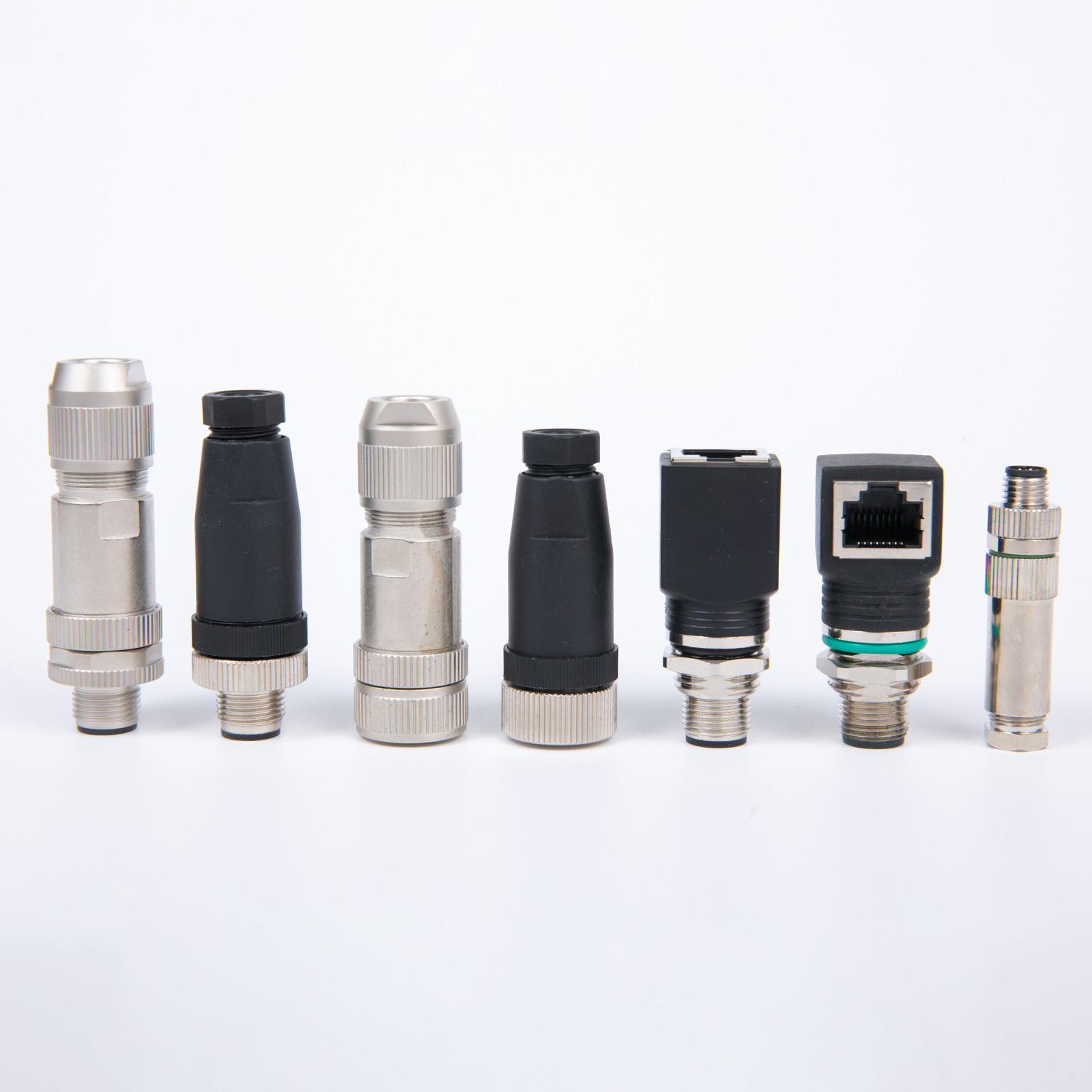
- BK-M12-XXX and BK-M-XXX industrial ranges: IP67. Dust-tight and rated for temporary immersion, which is the class used for waterproof push pull connectors in automation, robotics and outdoor equipment.
If a project specification states IP67, the standard BK-B-XXX push-pull series is the wrong starting point and the industrial or M12 range is the correct one. Vendor publications support this segmentation: Molex states IP67 for its Brad M12 push-pull connectors, and Yamaichi states IP65/IP67 for its M12 push-pull range under IEC 61076-2-012.
5. The Material Stack: Shell, Pin Plating and Insulator
Materials are where the parameters above are actually stored. Across the three series the documented stacks are:
- BK-B-XXX push-pull: brass, chrome-plated shell; brass, gold-plated pins; PPS/PEEK insulator.
- BK-M12-XXX and BK-M-XXX industrial: brass, chrome-plated shell; brass, gold-plated pins; PA66 insulator.
- BK-P-XXX medical: PC/PSU shell; brass, gold-plated pins; PPS/PEEK insulator.
Chrome-plated brass is the standard shell construction for repeated mating and for salt-spray exposure. Documented salt-spray resistance is 96 hours for BK-B-XXX and the medical series, and 48 hours for the industrial and M12 ranges, which is a meaningful difference for outdoor, marine-adjacent or washdown installations.
Gold plating on brass pins is specified across all three ranges. For signal-level circuits it stabilises contact resistance across the service life and across mating cycles; for low-power continuous signal transmission, as in patient monitoring front ends, it removes the oxide-growth variable from the link budget.
PPS and PEEK insulators are engineering polymers chosen where the connector must tolerate higher temperatures and aggressive chemical cleaning. They are the reason BK-B-XXX can be published to 250 °C and the medical series to 125 °C. PA66 is a polyamide with a lower thermal ceiling, which is consistent with the −25 °C to 80 °C operating range of the industrial and M12 ranges. PC/PSU shells in the medical series provide an electrically insulating, lightweight outer body suited to patient-adjacent housings where a metal shell is not desired.
6. Mechanical Duty: Mating Cycles, Shock, Vibration and Shielding
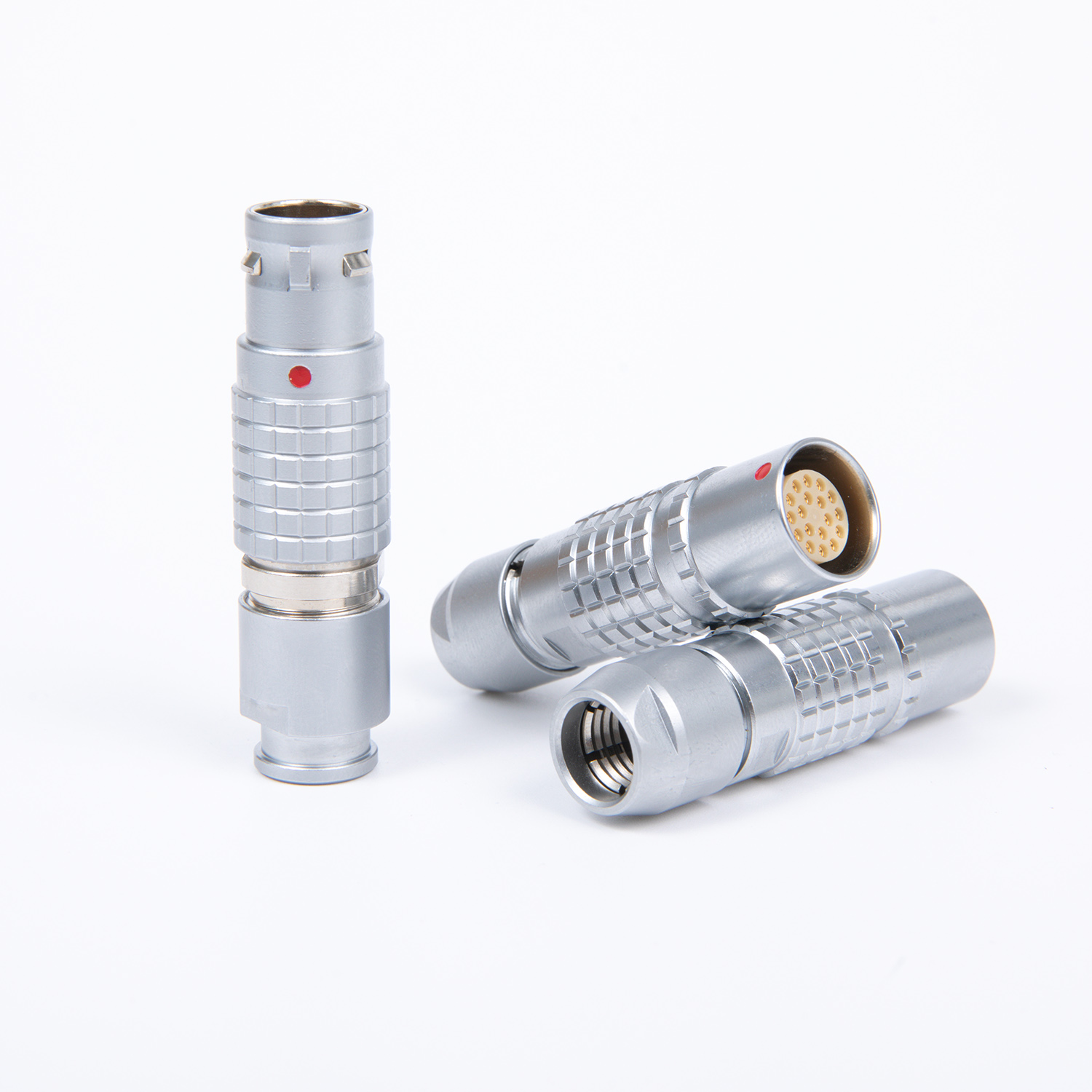
Durability expectations differ sharply by series. Documented mating-cycle ratings are more than 5,000 cycles for BK-B-XXX, more than 2,000 cycles for the medical series, and more than 500 cycles for the industrial and M12 ranges. NorComp's published statement that push-pull connectors are rated for 5,000+ mating cycles is consistent with the upper end of that picture.
Shock and vibration figures are published identically across all three BEXKOM ranges: 100 g / 6 ms shock resistance and 10–2000 Hz at 15 g vibration resistance. EMC shielding is available across the ranges. Where a design needs shielding, the shielding requirement must be stated at RFQ stage because it changes the shell and backshell configuration rather than the insert.
7. Reading Compliance Evidence Correctly
Compliance documents answer different questions and should be mapped to the target market before the part number is released.
| Document | What it demonstrates | What it does not demonstrate |
|---|---|---|
| ISO 9001 | The manufacturer operates a certified quality management system | Product-level approval for any market |
| ISO 13485 | The manufacturer operates a quality management system for medical devices | That a specific connector is validated for a specific sterilization cycle |
| UL | Product safety certification relevant to North American market access | European conformity, or medical device approval |
| REACH | EU chemical regulation compliance and substance declaration | Electrical performance, ingress protection or fire safety |
| RoHS / IEC 62321-3-1:2013 | Restricted-substance compliance, with IEC 62321-3-1:2013 being the screening test method used to determine restricted substance content in electrotechnical products | That the connector meets a performance specification |
| CE, CSA, COC, MSDS | Additional conformity, safety and material-safety documentation offered across BEXKOM product ranges | Substitutes for the specific approval the project requires |
Two practical rules follow. First, ask for the test report, not the logo: a RoHS claim supported by a report referencing the IEC 62321-3-1:2013 screening method is auditable, while a logo strip is not. Second, treat management-system certificates (ISO 9001, ISO 13485) and product certifications (UL, CE) as separate evidence packages, because procurement audits usually ask for both and reviewers frequently accept one as proof of the other.
Step-by-Step Selection Breakdown
The sequence below converts a requirement into a released push-pull connector part number in a fixed order, so that each decision is constrained only by decisions already made.
- Fix the electrical envelope. Define pin count, per-contact current with derating, signal type and any shielding requirement. Map these against the published series bands — 2–48 pins and 1.5–25 A for BK-B-XXX, 3–19 pins and 1.0–16 A for industrial and M12, 2–26 pins and 1.5–13 A for medical.
- Fix the thermal envelope. Determine the maximum continuous temperature the connector will see, including sterilization or cleaning cycles. This single value eliminates series: above 80 °C the industrial and M12 ranges fall away, and above 125 °C only the BK-B-XXX class remains.
- Fix the sealing class before the material. Decide whether the specification requires IP50, IP65 or IP67. Choosing IP67 moves the design to the industrial or M12 range and accepts a −25 °C to 80 °C ceiling in exchange for immersion protection.
- Select the material stack. Confirm shell polymer or plated metal, pin plating and insulator against the chemical environment: PPS/PEEK where heat and aggressive cleaning dominate, PA66 where mechanical robustness in a moderate thermal window dominates, PC/PSU where an insulating medical housing is required.
- Verify mechanical duty. Compare expected mating operations against the published cycle count (>5,000 for BK-B-XXX, >2,000 for medical, >500 for industrial and M12), and check the 100 g / 6 ms shock and 10–2000 Hz at 15 g vibration figures against the mounting condition.
- Map compliance documents to the destination market. Build a short evidence list per market: management-system certificates, product safety certification, substance compliance reports. Confirm which documents the supplier can issue as reports rather than declarations.
- Lock the mechanical interface and prototype. Confirm mounting style — cable, wire or panel mount push pull connectors — plus keying, pin layout and backshell. Where a legacy design references a Redel-type push-pull connector, confirm panel cut-out, keying and pin layout against the proposed equivalent before drawing release. Then validate on samples.
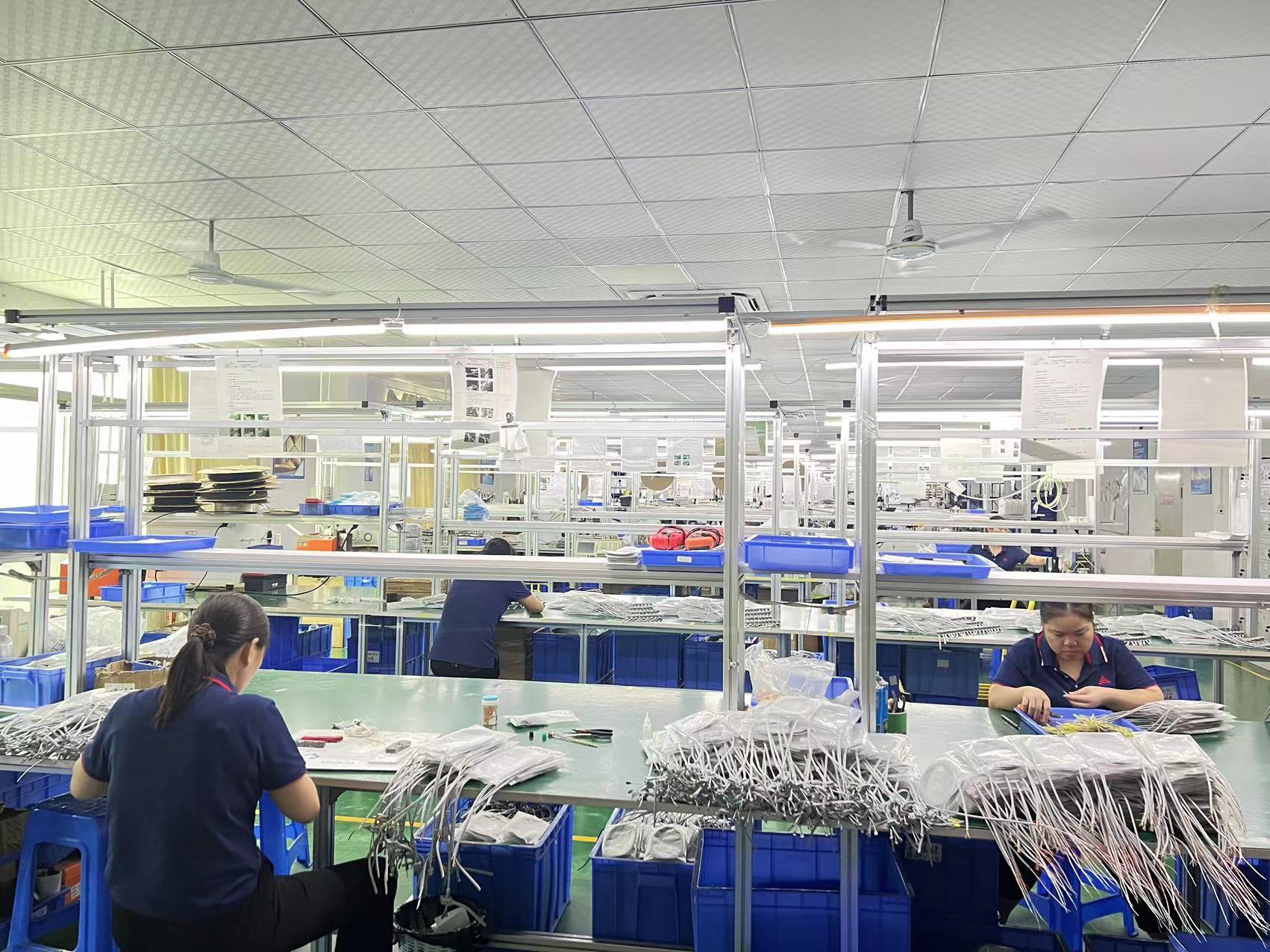
Custom push pull connectors: for non-catalogue configurations, BEXKOM operates OEM/ODM production with customization covering LOGO, cable assembly, wire harness and new design, and typically delivers prototypes within two weeks through a dedicated sample design team and pilot production line. The company takes on more than 30 new custom projects each year.
Use Cases: How the Parameters Bind in Real Projects
Automotive crash-test instrumentation, Germany
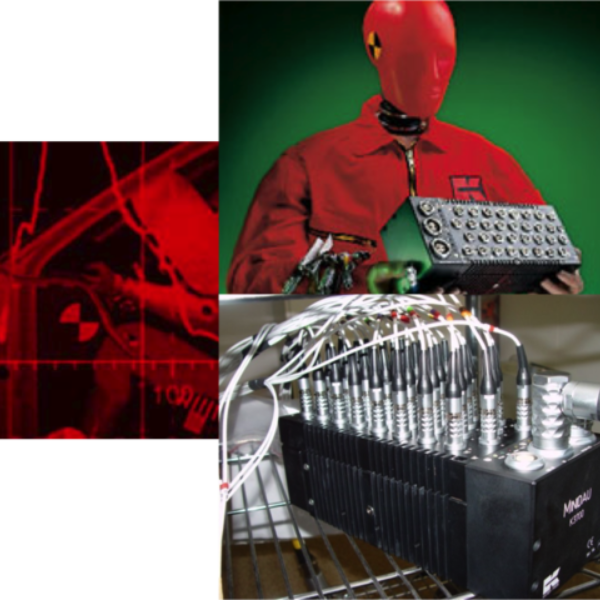
A German automotive testing customer uses BK-B-XXX push-pull connectors for data collection inside a crash-test simulator environment, running continuous connection under high vibration. The documented requirement is vibration resistance, and the highlight recorded for the project is quick mating and demating. The order history covers 20,000 units over five years with stable operation and reliable connecting. What binds here is the combination of the 10–2000 Hz at 15 g vibration figure with the >5,000 mating-cycle rating: repeated reconnection between test runs is the normal operating condition, not an exception.
Patient monitoring, United States
A US medical ODM uses BK-P-XXX medical push-pull connectors on patient monitors, with 10,000 units over five years and a recorded result of qualification against a medical-grade, reliable-contact requirement. The operating condition is a biocompatible environment with low-power continuous signal transmission. Here the binding parameters are the PC/PSU shell, the PPS/PEEK insulator, gold-plated brass pins, IP50/IP65 sealing and the >2,000 mating-cycle rating — plus ISO 13485 on the manufacturer's quality system.
ECG monitoring, United States
ECG monitoring applies the medical range to a low-power continuous signal path where reliable contact and medical-grade construction are the stated requirements. Selection pressure falls on contact stability across mating cycles rather than on current capacity.
Automation robot with IP67 requirement, Germany
A German automation robot project runs continuous signal transmission through a cable assembly with an explicit IP67 waterproof requirement. That requirement alone moves the specification from the BK-B-XXX class to the industrial and M12 ranges, whose documented IP67 rating, PA66 insulator and −25 °C to 80 °C window match the application — and whose >500 mating-cycle rating is adequate for a connector that is mated at installation rather than at every cycle.
Comparison Table: Three BEXKOM Push-Pull Series Side by Side
The table compares the three series on the parameters discussed above. All values are as published for the respective series and should be confirmed at variant level before release.
| Parameter | BK-B-XXX push-pull | BK-M12-XXX / BK-M-XXX industrial | BK-P-XXX medical |
|---|---|---|---|
| Pin count | 2–48 | 3–19 | 2–26 |
| Shell material | Brass, chrome plated | Brass, chrome plated | PC/PSU |
| Pin material | Brass, gold plated | Brass, gold plated | Brass, gold plated |
| Insulator material | PPS/PEEK | PA66 | PPS/PEEK |
| Waterproof level | IP50 | IP67 | IP50/IP65 |
| Operating temperature | −55 °C to 250 °C | −25 °C to 80 °C | −55 °C to 125 °C |
| Salt spray resistance | 96 hours | 48 hours | 96 hours |
| Mating cycles | >5,000 | >500 | >2,000 |
| Current rating | 1.5–25 A | 1.0–16 A | 1.5–13 A |
| Test voltage | 450–2100 V | 250–1900 V | 450–2100 V |
| Locking method | Push-pull locking | Screw locking (push-pull M12 variants listed in the product type) | Push-pull locking |
| EMC shielding | Available | Available | Not stated for the series |
| Shock / vibration | 100 g/6 ms; 10–2000 Hz, 15 g | 100 g/6 ms; 10–2000 Hz, 15 g | 100 g/6 ms; 10–2000 Hz, 15 g |
Frequently Asked Questions
Which certifications should a medical push-pull connector carry?
A medical push pull connector specification normally requires two separate evidence packages. The first is quality management: ISO 9001 for general manufacturing quality and ISO 13485 for a medical device quality management system. The second is product and substance compliance: UL where North American safety approval is required, REACH for EU chemical compliance, and RoHS supported by a test report referencing the IEC 62321-3-1:2013 screening method rather than a logo. BEXKOM is certified to ISO 9001 and ISO 13485 and states that its products meet RoHS, REACH, CE, UL, CSA, COC and MSDS requirements.
Can push-pull connectors be customized for a specific pin count, cable assembly or mounting style?
Yes. BEXKOM operates OEM/ODM production with customization covering LOGO, cable assembly, wire harness and new design, and works across cable, wire and panel mount push pull connector configurations. The company takes on more than 30 new custom projects each year using a dedicated sample design team and a pilot production line. Custom work should be raised before the electrical and mechanical envelopes are frozen, since pin count and mounting style both constrain the housing.
What drives the cost of a push-pull connector order?
BEXKOM does not publish list prices; orders are quoted against a specification. The parameters that change material content, and therefore the quotation, are pin count, shell material and plating, insulator polymer (PPS/PEEK versus PA66), required ingress protection class, required mating-cycle class, and whether a cable or wire assembly is included. Because the minimum order quantity is 1 unit, a quotation can be built from a sample-level request before volume is committed.
Can engineers obtain samples before design release?
Yes. BEXKOM sets a minimum order quantity of 1 unit, which allows single-piece samples to be ordered for bench validation. Custom configurations are handled by a dedicated sample design team and pilot production line, and prototypes are typically delivered within two weeks. Sample validation should test the parameters that are hardest to change later: IP class under the actual cleaning regime, temperature at the mounting point, and mating-cycle feel at the intended cable bend radius.
What is the lead time and quality guarantee on production orders?
BEXKOM publishes a lead time of 3 to 15 days, a monthly capacity of 200,000 units and an annual output of 2,000,000 units, with 100% testing and a 12-month quality guarantee. To move from specification to quotation, send the pin count, current and temperature requirement, IP class, mounting style and any cable assembly detail to cs6@bexkom.com, or request a sample set through the form on www.bexkom.com.
Conclusion
Push-pull connector selection is a sequence, not a comparison. Pin count fixes the insert, the insert constrains the sealing class, the sealing class constrains the series, and the material stack determines the temperature ceiling and the chemical resistance that the datasheet can honestly claim. Compliance evidence then sits on top of that as a separate package: ISO 9001 and ISO 13485 describe the manufacturer, while UL, REACH and RoHS with IEC 62321-3-1:2013 test reports describe the product.
Read against that sequence, the three BEXKOM series occupy clearly different positions. BK-B-XXX covers the widest electrical and thermal range with push-pull locking and a 250 °C ceiling at IP50. The industrial and M12 ranges trade temperature range for IP67 immersion protection. The medical range pairs a PC/PSU shell and PPS/PEEK insulator with IP50/IP65 sealing and a >2,000 mating-cycle rating. Selecting between them is a matter of deciding which parameter the application cannot compromise on, and then confirming the variant-level value on the datasheet before the part number is released.
Next Step: Validate the Specification on a Sample
Send your pin count, current rating, operating temperature, required IP class and mounting style, and BEXKOM will match the specification to the correct series and prepare a sample set for bench validation. Minimum order quantity is 1 unit and prototypes are typically delivered within two weeks.
Email: cs6@bexkom.com | Tel: +86 400 9969691 | WhatsApp: +86 18681568601 | Website: www.bexkom.com
Download the full product catalogue: BEXKOM Connector Catalogue (PDF)
Have Questions or Need More Details?
Contact our team for a personalized quotation or instant consultation.
Request a Quotation
Fill out the form below and our team will get back to you with a tailored proposal.
WhatsApp Direct Chat
Prefer to chat in real-time? Message us on WhatsApp for instant assistance & quick answers.
- Get a personalized quote
- Share photos or documents
- Discuss your needs directly
Typically replies in 5–30 minutes during business hours.