
Push Pull, M12 or Medical: A Connector-Family Comparison
Push Pull, M12, Industrial or Medical: A Connector-Family Comparison for Equipment Builders
Equipment builders usually begin a connector search with a photo, a pin count and a target price, and finish it with a qualification test. The decisions that determine whether the part passes that test sit between those two points: locking style, contact plating, sealing class, current rating at the enclosure's ambient temperature, dielectric withstand, and the quality system behind the production line. None of these is visible in a catalog thumbnail, and none is settled by the family name alone.
This guide compares four BEXKOM connector families that equipment builders commonly place side by side: BK-B-XXX push-pull connectors, BK-M12-XXX M12 connectors, BK-M-XXX industrial connectors and BK-P-XXX medical connectors. BEXKOM (Shenzhen BEXKOM Electronics Co., Ltd.) is a Shenzhen-based connector manufacturer founded in 2016 that designs and produces push-pull self-locking connectors, medical connectors, circular connectors and cable assemblies. The four families share a circular form factor and a quick-lock design philosophy, but they are not interchangeable. The comparison below is organized around application need rather than brand claims, and it distinguishes what is documented for each family from what a buyer must confirm in the datasheet for the exact model.
Why connector-family selection is a decision problem, not a datasheet lookup
The cost of choosing the wrong family rarely appears on the connector invoice. It appears later as a re-qualification cycle, a field return, or a compliance finding during market entry. Three mechanisms drive that cost.
First, a family name fixes a design intent, not a rating. A push-pull family and an M12 family can both be described as "circular, quick-lock, sealed," yet their pin counts, current capacity and temperature envelopes are set model by model. Second, certification is a filter, not a badge. A connector family used in patient monitoring must sit behind a quality system that supports medical device manufacturing, while a family used in a machine tool must meet industrial safety and electromagnetic requirements. Third, the enclosure and the application set the operating conditions, and a rating that is valid on a bench is not automatically valid inside a sealed cabinet or after repeated sterilization.
For those reasons, the useful comparison is not "which family is best" but "which family matches the equipment's electrical, environmental and regulatory profile, and which parameters must be verified before release."
The four BEXKOM families and the design intent behind each
BEXKOM's published product scope covers push-pull self-locking connectors, medical connectors, circular connectors and electronic connectors, supported by in-house cable assembly manufacturing. The four families in this comparison map onto that scope as follows.
BK-B-XXX push-pull
The BK-B-XXX family is the push-pull self-locking circular line, which is the construction BEXKOM identifies as a core specialty. Push-pull self-locking connectors are designed for fast mating and unmating without a threaded coupling, and they are commonly specified where an operator connects and disconnects equipment repeatedly during a shift. The family's suitability for a given device still depends on the specific model's pin count, current rating, sealing class and temperature range, which are set at model level.
BK-M12-XXX M12
The BK-M12-XXX family uses the M12 interface format, which is standardized internationally and widely used for industrial signal, data and power connections. M12 compatibility is defined by the IEC 61076 family of standards; for example, IEC 61076-2-010:2021 covers M12 push-pull connectors with inner and outer locking, and IEC 61076-2-012 covers circular connectors with an inner push-pull locking mechanism that is compatible with M12 screw-locking interfaces. Because the interface is standardized, the practical comparison question for an equipment builder is not whether an M12 connector exists, but which coding, pin count, current rating and protection class the specific BK-M12-XXX model carries.
BK-M-XXX industrial
The BK-M-XXX family is the industrial circular line, positioned for machinery, plant and device connections where ruggedness and continuity of supply matter more than miniaturization. Industrial circular connectors are commonly used for measuring, control, drive and data transmission duties, and the family's role in a bill of materials is usually to provide a durable, serviceable interface between equipment subsystems.
BK-P-XXX medical
The BK-P-XXX family is the medical circular line. BEXKOM's published P-Series medical connector specification states support for 2 to 26 pins, more than 2,000 mating cycles and IP50/IP65 protection. Those figures are the most specific family-level data available in this comparison, and they illustrate why medical family selection cannot be reduced to "push-pull versus M12": the relevant questions are pin count range, cycle life, sealing class and the quality system behind the part.
The comparison dimensions that decide equipment fit
Six parameters carry most of the decision weight when families are compared. Each is described below with the verification step a buyer should apply, because a family label does not fix any of them on its own.
Locking style
Locking style determines how fast an operator can mate the connector, how much vibration the mated pair tolerates, and how much space the coupling requires. Push-pull self-locking designs, such as the BK-B-XXX family, mate and release by axial movement of the shell, which suits repeated connection cycles. Threaded M12 interfaces, and M12 push-pull variants defined under IEC 61076-2-010 and IEC 61076-2-012, provide a standardized coupling geometry that supports interoperability with other M12-compliant devices. The selection question is operational: if the equipment is connected once at installation, a threaded interface is adequate; if it is connected several times per shift, a push-pull or quick-lock design reduces operator time and wear on the coupling.
Pin count and contact mix
Pin count sets signal density, and the contact mix sets how power and signal are distributed within the same shell. The BK-P-XXX medical family is documented at 2 to 26 pins, which spans simple two-contact patient leads through multi-signal monitoring harnesses. For the other families, pin count is a model-level parameter and should be read from the datasheet for the exact part number rather than inferred from the family name. Equipment builders should also confirm whether the intended model carries mixed power and signal contacts, because a mixed configuration changes both the current budget and the internal wiring.
Current and voltage ratings
Current rating is not a single number; it depends on contact size, plating, ambient temperature and the number of energized contacts. BEXKOM states that contact surfaces are gold plated and that 100% OQC testing is applied, which supports contact reliability but does not by itself establish a current rating. For comparison context, M12 power connectors in the broader market are published with ratings up to 16 A and 690 V in the M12 to M58 families, according to Phoenix Contact; those figures describe that manufacturer's product family and should not be transferred to a BK-M12-XXX model without datasheet confirmation. The buyer's task is to confirm the rated current at the intended ambient temperature and the rated voltage against the equipment's insulation coordination.
Waterproof level
The IP code describes protection against solids and liquids, and it is a model-level specification. The BK-P-XXX medical family is documented at IP50/IP65, which covers a dust-protected version and a water-jet-resistant version within the same family. Elsewhere in the M12 market, IP65/IP67 and IP67 ratings are commonly published for push-pull M12 products, for example by Yamaichi Electronics and Molex. The comparison point is that a family can contain more than one sealing class, so the equipment builder must select the IP variant that matches the cleaning or wash-down regime rather than assume a single rating for the whole family.
Temperature range
Temperature range is set by insulator material, contact plating and sealing compound, and it must bracket both the operating ambient and any sterilization or cleaning cycle. None of the four family names fixes a temperature range on its own; the value must be read from the model datasheet. For medical equipment, the upper limit should be checked against the sterilization method, because autoclave, Sterrad, EtO, gamma and chemical sterilization impose different thermal and chemical loads, as Norcomp notes in its application guidance for medical connectors.
Test voltage and dielectric withstand
Test voltage, or dielectric withstanding voltage, verifies that the insulation system survives a specified voltage without breakdown, and it is a safety-relevant parameter for equipment connected to patients or to mains-powered machinery. Medical electrical equipment qualification typically imposes insulation and leakage-current requirements beyond general industrial use, so the test voltage and creepage distances of the chosen model should be confirmed against the applicable equipment standard. As with current rating, the family name does not fix this value; the datasheet for the exact model does.
Verified profile of each family
The table below separates what is documented for each family from what remains a datasheet-level confirmation. It is deliberately conservative: a parameter is listed as verified only where a published BEXKOM or attributable source supports it for that family, and otherwise it is listed as a confirmation item.
| Family | Design intent | Verified data | Certification filter | Confirm in datasheet |
|---|---|---|---|---|
| BK-B-XXX Push-pull |
Push-pull self-locking circular; BEXKOM core specialty | Push-pull self-locking construction within BEXKOM product scope; gold-plated contacts and 100% OQC stated as standard quality controls | ISO9001; RoHS/REACH; CE/UL where applicable | Pin count, current rating, IP class, temperature range, test voltage, mating cycles |
| BK-M12-XXX M12 |
M12-interface circular for industrial signal, data and power | M12 interface format; BEXKOM circular connector capability; M12 standards defined by IEC 61076 series | ISO9001; CE/UL where applicable | Coding (A/B/D/X), pin count, current, IP, temperature, compliance with IEC 61076-2-101/-2-010/-2-012 as applicable |
| BK-M-XXX Industrial |
Rugged industrial circular for machinery, plant and device cabling | Industrial circular construction; gold-plated contacts and 100% OQC stated as standard quality controls | ISO9001; CE/UL where applicable | Pin count, current, IP, temperature, test voltage, vibration and shock |
| BK-P-XXX Medical |
Medical circular for patient monitoring and diagnostic equipment | 2–26 pins; >2,000 mating cycles; IP50/IP65 protection | ISO13485; ISO9001; RoHS/REACH; CE/UL where applicable | Current rating, temperature range, test voltage, sterilization compatibility, IP variant |
The table makes one pattern clear: the medical family carries the most specific published data, because medical qualification forces suppliers to publish cycle life and sealing class. The industrial and M12 families carry standardized interface obligations instead, so their comparison value lies in coding and compliance rather than in a single headline number.
Certification filters: ISO9001, ISO13485, UL and EU conformity
Certification should be applied as a filter before the technical comparison, because a family that cannot be supplied behind the required quality system is not a viable option regardless of its datasheet.
ISO9001 is the baseline quality management filter. BEXKOM states that it is certified to ISO9001, which means the production system is audited against a documented quality management standard. For an equipment builder, ISO9001 supports consistency across repeat orders and provides a framework for corrective action when a batch deviates.
ISO13485 is the medical device quality management filter. BEXKOM states that it is also certified to ISO13485. This matters specifically for the BK-P-XXX family: medical device manufacturers typically require their component suppliers to operate under a quality system aligned with medical device regulation, and ISO13485 is the recognized standard for that purpose. A BK-P-XXX connector used in patient monitoring should be sourced from a supplier whose quality system covers medical device production, not only general industrial production.
UL is a product-safety filter relevant to equipment sold into North America. BEXKOM states that its products meet major international standards including UL, alongside CSA. The buyer should confirm the specific UL recognition or listing that applies to the exact model, because a supplier-level statement and a model-level file number are different pieces of evidence.
EU conformity is the market-access filter for equipment sold in the European Union. BEXKOM states that its products meet CE, alongside RoHS and REACH for material compliance. For an equipment builder, CE conformity of the connector is a supporting input to the CE marking of the finished machine or device; the finished-product conformity assessment remains the equipment builder's responsibility.
Two further points follow from this filter logic. First, a family can be technically suitable but commercially unavailable if the supplier's certification scope does not cover the market. Second, certification is not a substitute for datasheet verification: ISO13485 confirms the quality system, not the current rating of a specific model.
Matching family to equipment: use cases
The four families map onto different equipment profiles. The mapping below is a starting point for the selection conversation, not a substitute for the datasheet review.
Patient monitoring and diagnostic equipment. The BK-P-XXX medical family fits where pin count range, cycle life and sealing class are the dominant requirements. Its documented 2 to 26 pin range, >2,000 mating cycles and IP50/IP65 protection cover lead-wire connections and multi-signal monitoring harnesses. Where the equipment is sterilized between uses, the sterilization method should be confirmed against the model's material and sealing specification.
Industrial automation and machinery. The BK-M-XXX industrial family and the BK-M12-XXX family both fit, but for different reasons. M12 is preferred where the equipment must interoperate with standardized M12 devices and where coding prevents mis-mating. The industrial circular family is preferred where a larger, more rugged shell and a serviceable coupling suit the machine layout.
Test and measurement, broadcast and robotics. The BK-B-XXX push-pull family fits where operators connect and disconnect equipment frequently and where a self-locking coupling reduces mating time. The same family is relevant to drone, agricultural technology and new energy equipment, which BEXKOM lists among its served fields.
Mixed signal and power runs. Where a single shell must carry both power and signal, the contact mix and current rating of the specific model become the deciding parameters. This is a datasheet question for every family in the comparison, not a family-level choice.
A step-by-step selection process
The following sequence converts the comparison into a repeatable selection decision. It is ordered so that certification and electrical fit are settled before cost and sample work begin.
Step 1 — Fix the electrical requirement. List the number of signal and power contacts, the current per contact at the enclosure's ambient temperature, and the working voltage. This step eliminates families that cannot meet the contact count or current density.
Step 2 — Fix the environmental requirement. Define the IP class required by the cleaning or wash-down regime, the operating temperature range, and any sterilization cycle. This step selects the IP variant within a family and sets the temperature limit.
Step 3 — Fix the compliance requirement. Identify the markets the equipment will be sold into and the quality system the end customer requires. Apply ISO9001 as the baseline, ISO13485 for medical equipment, UL for North America, and CE for the European Union. This step removes families the supplier cannot support with the required certification scope.
Step 4 — Fix the operational requirement. Decide whether the connector is mated once at installation or repeatedly during operation, and whether mis-mating must be prevented by coding. This step separates push-pull self-locking, M12-coded and industrial circular options.
Step 5 — Request datasheets for the exact models. For each shortlisted model, obtain pin count, current rating at temperature, rated voltage, test voltage, IP class, temperature range and mating cycle rating. Confirm that the values apply to the exact model, not to the family headline.
Step 6 — Verify certification at model level. Request the UL file reference, the CE declaration and the ISO certificates, and confirm that the certificate scope covers the product and the manufacturing site.
Step 7 — Sample and qualify. Build a qualification sample that reproduces the actual mating cycle, temperature and cleaning regime. Record the results against the datasheet values so that any deviation is visible before volume release.
Trade-offs by application need, not brand claims
The four families trade off against each other along three axes, and the right balance depends on the equipment rather than on a supplier ranking.
Standardization versus application fit. The BK-M12-XXX family benefits from an internationally standardized interface, which supports interoperability and multi-sourcing. The BK-B-XXX and BK-M-XXX families offer more freedom in shell size, contact layout and coupling design, which suits equipment that does not need M12 interoperability. The trade-off is that a standardized interface constrains the design to the standard's coding and contact options, while a proprietary layout requires the equipment builder to own the mating interface specification.
Certification depth versus cost. The BK-P-XXX family sits behind ISO13485 in addition to ISO9001, which reflects the additional quality-system overhead required for medical device components. An industrial application does not usually need that overhead, and specifying a medical family for an industrial machine adds cost without adding functional benefit. The reverse mistake is more expensive: specifying an industrial family for a medical device creates a quality-system gap that a later audit will find.
Cycle life versus sealing class. A higher mating-cycle rating and a higher IP class both add material and process cost. The BK-P-XXX family's documented >2,000 mating cycles and IP50/IP65 protection cover a broad range, but the buyer should match the variant to the actual duty cycle rather than defaulting to the highest specification. Industry sources describe push-pull connectors at 5,000+ mating cycles in general terms, which shows that cycle ratings vary by product and should always be read at model level.
Where BEXKOM fits in the supply comparison
BEXKOM's published comparisons position its connector families against established European brands on cost and lead time. The company states that its push-pull connectors offer 50% cost savings and a lead time improvement of 1 to 2 weeks compared to ODU connectors; that its F series connectors provide 50% lower price and a 2-week lead time compared to Fischer connectors, with suitability for MIL device scenarios; and that compared to LEMO connectors, BEXKOM connectors offer 50% lower cost with a lead time of 3 to 7 days, alongside free tooling design.
Those are supplier-published comparative statements, and they should be read as such. They describe cost and delivery positioning, not independent performance equivalence, and they do not replace a model-level specification comparison. Their practical value for an equipment builder is to justify a quotation and sample request: if the technical shortlist already includes a BEXKOM family on specification grounds, the published cost and lead-time position provides a reason to test the commercial case alongside the qualification sample.
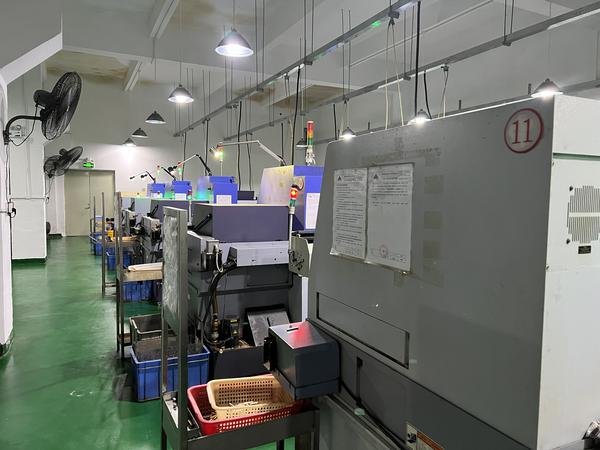
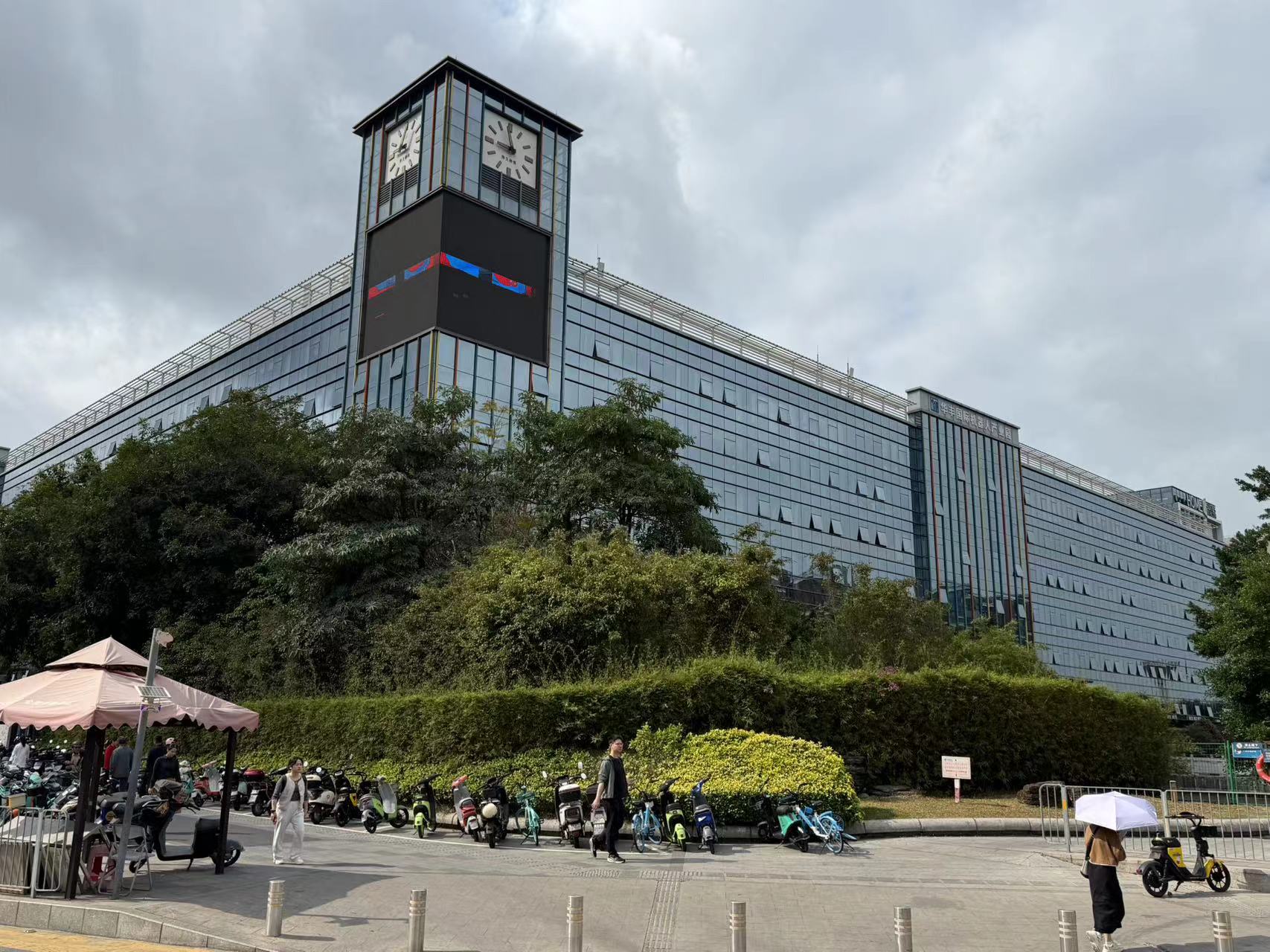
BEXKOM's manufacturing profile supports that evaluation. The company reports a 3,500 m² factory, 130 employees, annual output of 2,000,000 units, a 22-engineer R&D team, and a 75% export share concentrated on the EU and USA. It also reports taking on more than 30 new custom projects per year, with a dedicated sample design team and a pilot production line that typically delivers prototypes within two weeks. Those figures describe capacity and customization capability; they do not by themselves certify a specific model's electrical rating.
FAQ
Which certifications should I verify before choosing between the BK-P medical and BK-M industrial families?
Verify ISO13485 and ISO9001 for the BK-P-XXX medical family, because medical device component supply is expected to sit behind a medical device quality management system. For the BK-M-XXX industrial family, ISO9001 is the baseline, with UL and CE added where the equipment is sold into North America or the European Union. In both cases, confirm that the certificate scope covers the specific product and manufacturing site, and request the model-level UL file reference and CE declaration rather than relying on a supplier-level statement.
Can BEXKOM customize pin counts or cable assemblies within a specific family?
BEXKOM states that customization is a specialty and that it takes on more than 30 new custom projects per year, supported by a dedicated sample design team, a pilot production line and in-house cable assembly manufacturing. The BK-P-XXX medical family is documented across a 2 to 26 pin range, which shows that pin count varies within a family. For any specific request, the pin count, contact mix and cable assembly configuration should be confirmed against the model datasheet and the project quotation, because the family name does not fix those parameters.
How does family choice affect total cost, and where do the published cost comparisons apply?
Family choice affects total cost through certification overhead, sealing class and cycle-life specification rather than through the connector unit price alone. A medical family carries ISO13485 quality-system overhead that an industrial application does not need, while a higher IP class or a higher mating-cycle rating adds material and process cost. BEXKOM's published comparisons state 50% lower cost and lead-time improvements of 1 to 2 weeks versus ODU, 50% lower price and a 2-week lead time versus Fischer, and 50% lower cost with a 3 to 7 day lead time versus LEMO. Those are supplier-published comparative statements about cost and delivery, and they should be validated against a project quotation for the exact model.
How do I obtain samples to compare families before qualification?
Request samples for the exact shortlisted models rather than for the family in general, and specify the mating cycle, temperature and cleaning regime the sample will be tested against. BEXKOM states that its dedicated sample design team and pilot production line typically deliver prototypes within two weeks, and its published brochure provides an overview of the product range. The sample should be evaluated against the datasheet values recorded in Step 5 of the selection process so that any deviation is visible before volume release.
What lead times should I plan for, and what do the published comparisons cover?
BEXKOM's published comparisons state a lead-time improvement of 1 to 2 weeks versus ODU connectors, a 2-week lead time versus Fischer connectors for its F series, and a 3 to 7 day lead time versus LEMO connectors. Those figures describe comparative positioning against named brands and should be confirmed for the specific family, model and order quantity in the quotation. For custom projects, the company states that prototypes are typically delivered within two weeks, which is a separate timeline from volume production and should be planned as a distinct qualification stage. The BEXKOM product brochure is available for download at BEXKOM connector brochure.
Conclusion
The choice among BK-B-XXX push-pull, BK-M12-XXX M12, BK-M-XXX industrial and BK-P-XXX medical families is a decision about equipment fit, not about which family is superior. The medical family carries the most specific published data—2 to 26 pins, >2,000 mating cycles and IP50/IP65 protection—and sits behind ISO13485 as well as ISO9001. The M12 family carries standardized interface obligations under the IEC 61076 series. The push-pull and industrial families carry BEXKOM's core circular construction and quality controls. In every case, the parameters that decide qualification—current rating at temperature, test voltage, temperature range and the exact IP variant—must be confirmed at model level before release.
Equipment builders who apply the certification filter first, then the electrical and environmental filters, and finally the sample qualification, will reach a family decision that survives both the qualification test and the market-access audit. For projects where the technical shortlist is already settled, BEXKOM's published cost and lead-time position provides a reason to request a quotation and a sample for the exact model under evaluation.
Have Questions or Need More Details?
Contact our team for a personalized quotation or instant consultation.
Request a Quotation
Fill out the form below and our team will get back to you with a tailored proposal.
WhatsApp Direct Chat
Prefer to chat in real-time? Message us on WhatsApp for instant assistance & quick answers.
- Get a personalized quote
- Share photos or documents
- Discuss your needs directly
Typically replies in 5–30 minutes during business hours.