
500 HBW Abrasion Resistant Steel Plate: How to Build a Reliable China Supplier Shortlist
500 HBW Abrasion Resistant Steel Plate: How to Build a Reliable China Supplier Shortlist
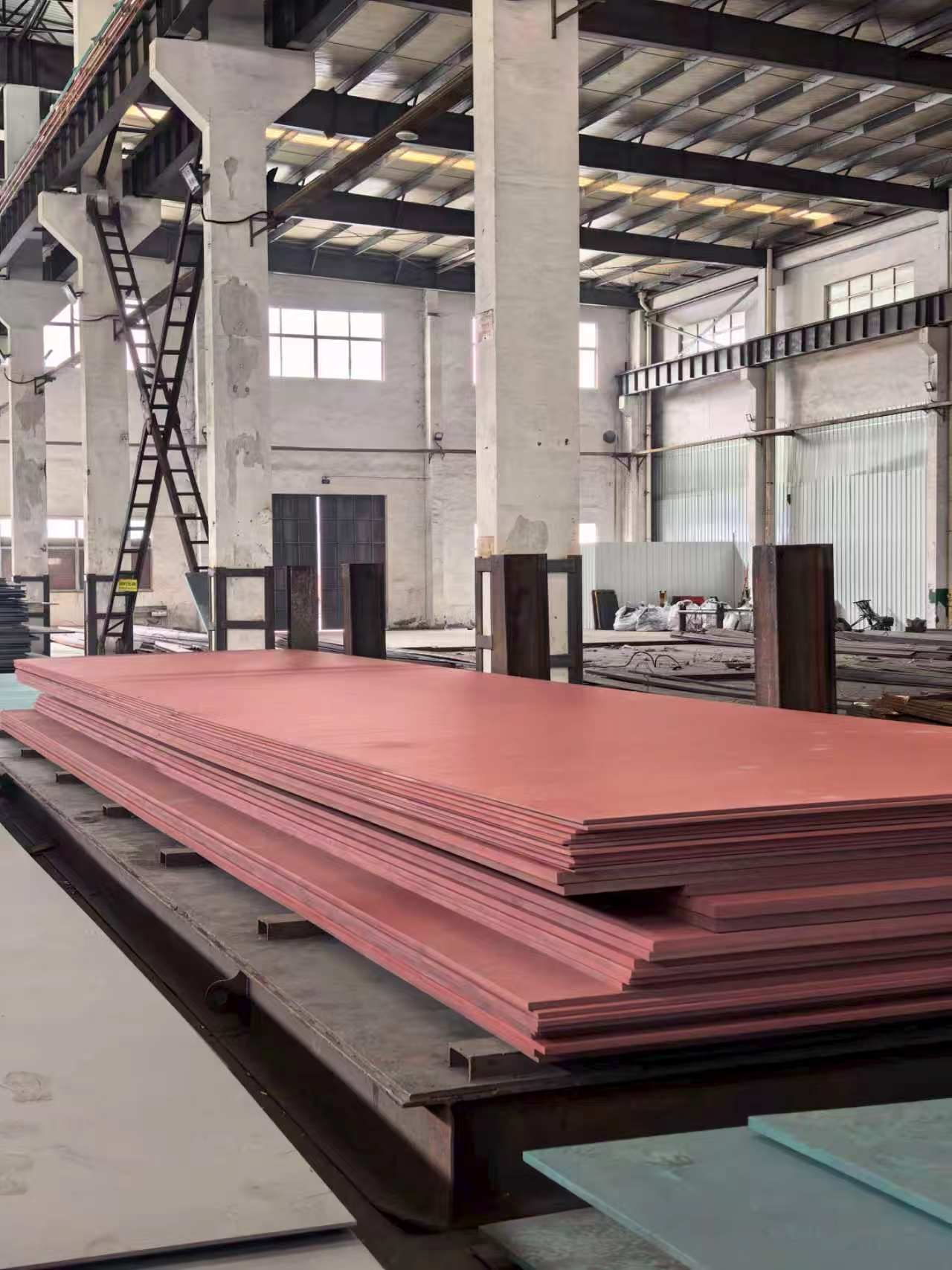
Wear resistant steel plate stock covering the grade range around the 500 HBW class, held at BGT Steel Plate.
Shortlisting suppliers for 500 HBW abrasion resistant steel plate is a different exercise from buying 400 HBW plate. The harder class narrows the field of mills that can roll it consistently, makes cutting and welding far less forgiving, and moves certificate traceability above price per ton in the decision order. This guide sets out the criteria, the questions and the validation steps that let an evaluation-stage buyer separate a shortlist worth committing to from a list of quotations that cannot be verified.
What 500 HBW Abrasion Resistant Steel Plate Actually Covers
500 HBW is a nominal surface hardness class for quenched and tempered martensitic wear plate, not one single universal standard. In Chinese domestic trade the same class is normally written as NM500. In export documents and international procurement it appears as 500 HBW, AR500, or described as a Hardox equivalent wear resistant steel plate. That last expression is a commercial description of the intended hardness class, not a certification and not a statement about who produced the steel.
Because the naming is not standardized, two suppliers can quote against the same application and deliver material that behaves differently in service. A purchase order for this class should therefore fix four things, not just the grade name:
- The nominal hardness class and the acceptable test band.
- The test method and the test location on the plate.
- The mill of origin and the certificate form.
- Thickness, width and length, plus whether cut-to-size is required.
Hardness verification is where most grade disputes begin, so agree on it before the order. Standard practice is to test at least 50 mm away from a flame or plasma cutting edge, so that the heat-affected zone does not distort the reading. The surface is then ground back 1.5 to 2.0 mm to remove the decarburized layer before indentation. For plate between 6 mm and 80 mm, the HBW 10/3000 method, a 10 mm ball under 3000 kgf, is the recognized benchmark used on mill test certificates and in third-party inspections. For reference, the accepted tolerance band for NM400 and AR400 is 360 to 440 HBW. On site, three consecutive readings spaced at least 10 mm apart are averaged to produce a single result.
Why the Hardness Number Alone Does Not Predict Service Life
The wear resistance of quenched and tempered plate comes from a martensitic microstructure produced by controlled alloying and through-thickness quenching. Carbon, chromium, molybdenum and boron are added in controlled amounts, and rapid quenching traps carbon atoms in a distorted crystal lattice, transforming the soft ferrite-pearlite structure into a needle-like martensite matrix. Tempering then precipitates fine hard carbides that anchor dislocation movement and raise resistance to abrasive gouging.
For a buyer, the practical consequence is that consistency matters more than the headline figure. Because hardening runs through the plate thickness rather than sitting only on the surface, wear resistance stays similar as the top layer is consumed. Surface-hardened carbon steel behaves differently: it is hard on the skin and softer underneath, which is a poor match for chute liners, bucket wear plates and hopper linings that are expected to wear down to the last few millimetres.
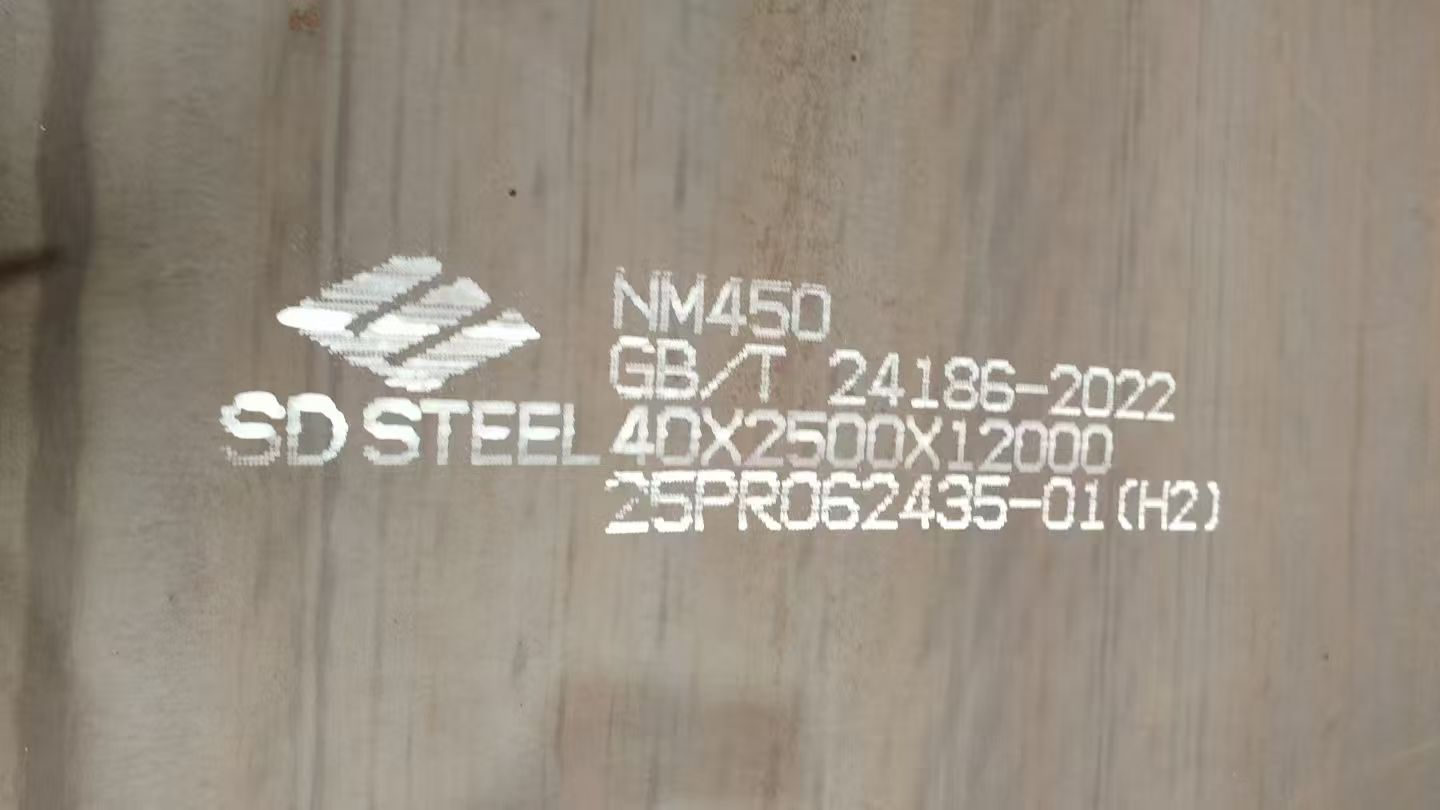
A 40 mm NM450 plate. Grade steps around the 500 HBW class exist because hardness, formability and cost move together.
Why 500 HBW Is Harder to Shortlist Than 400 HBW
- Narrower mill base. Maintaining stable production and consistent hardness at the 500 HBW level is more demanding than at 400 HBW, so the number of genuine sources standing behind a quotation is smaller than the number of companies that will send one.
- Less forgiving fabrication. Higher hardness generally means reduced formability and tighter welding requirements. A supplier that cannot advise on cutting, forming and welding parameters simply transfers that risk to your fabrication floor.
- Higher substitution risk. When the grade band is wide and documentation is loose, material belonging to a lower hardness class can be delivered against a 500 HBW inquiry, and the buyer often notices only when the first component wears out early.
- Documentation carries more weight. At higher hardness levels the mill test certificate stops being routine paperwork and becomes the primary evidence of what was actually supplied.
Five Criteria That Separate a Shortlistable Supplier from a Cheap Quotation
1. Mill traceability and an original mill test certificate
The supplier should be able to name the mill that produced the heat and hand over the original MTC for the delivery, not a re-typed copy. BGT Steel Plate sources through long-term partnerships with mills including Xingcheng, Nisco, Shougang, Xisc, Shandong-Steel, Hanye, Tangsteel, Rongshen, Tisco, Baosteel, Lianyuan and Puyang, and the manufacturer provides mill test certificates for wear resistant steel plate deliveries. Third-party inspection can also be arranged when a project specification requires it.
2. Real stock depth in the grade you actually named
A quotation is not the same thing as availability. Ask which warehouse holds the thickness you need, and ask for a photograph or a current stock position rather than a general list. BGT Steel Plate operates 12 modern warehouses across major industrial hubs including Jiangsu, Shandong and Hunan provinces, and maintains a standing inventory of more than 30,000 metric tons of wear resistant steel plate. The company reports a monthly production capacity of 30,000 tons and an annual output of 200,000 tons.
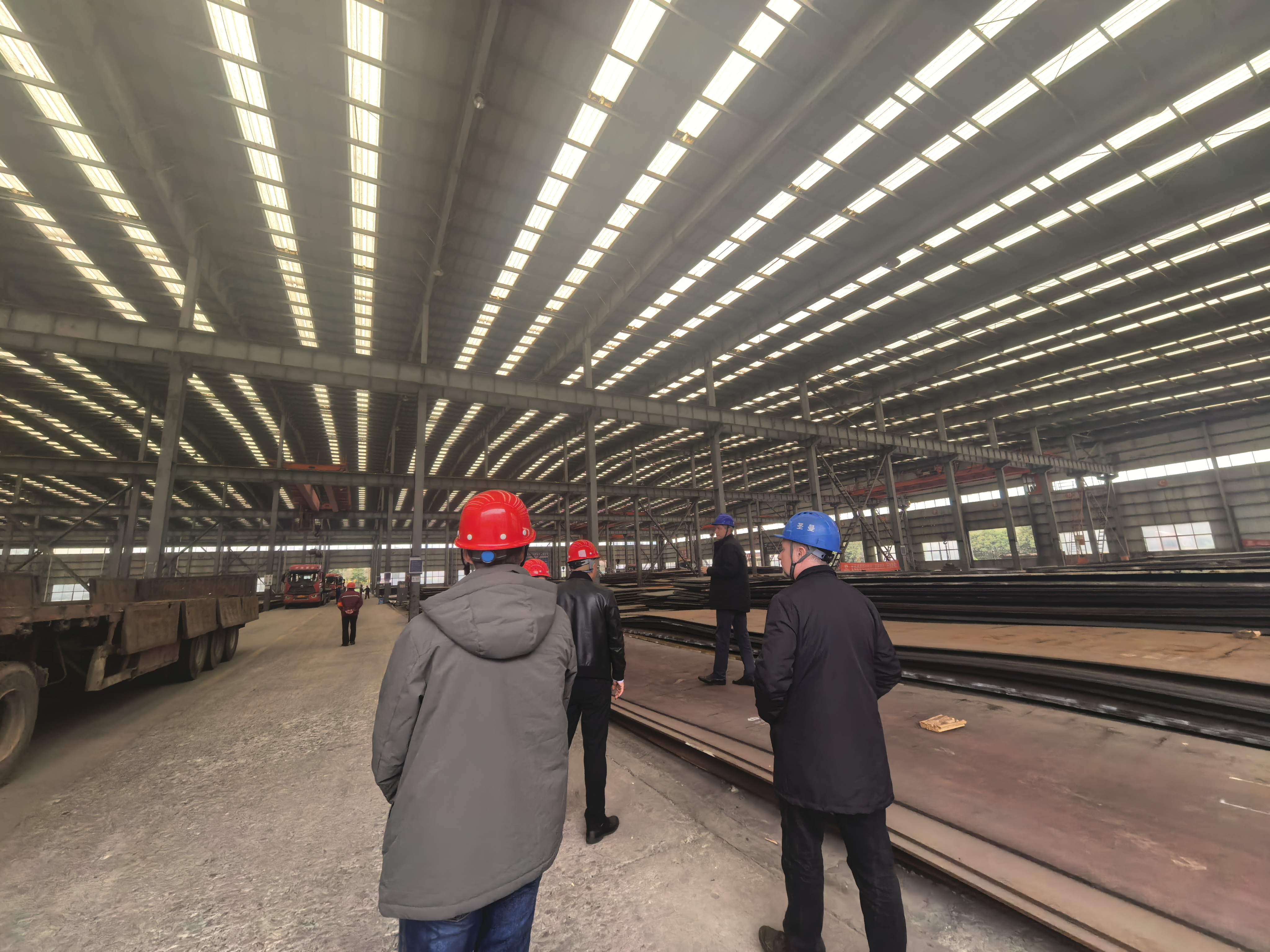
Stock depth is what converts a competitive quotation into a delivery date. Warehouse stock at BGT Steel Plate.
3. Cut-to-size and processing capability
Wear plate rarely arrives at the exact size a component needs. Suppliers that cut, shear and process in house remove a second lead time from your project and reduce offcut waste. The BGT Steel Plate range covers thickness from 3 mm to 150 mm, width from 600 mm to 3950 mm, and lengths of 2438 mm, 5800 mm, 6000 mm, 6096 mm, 12000 mm and 12200 mm, with customized sizes accepted. Production services include OEM and ODM modes, with customization of chemical composition, mechanical properties and logo marking.
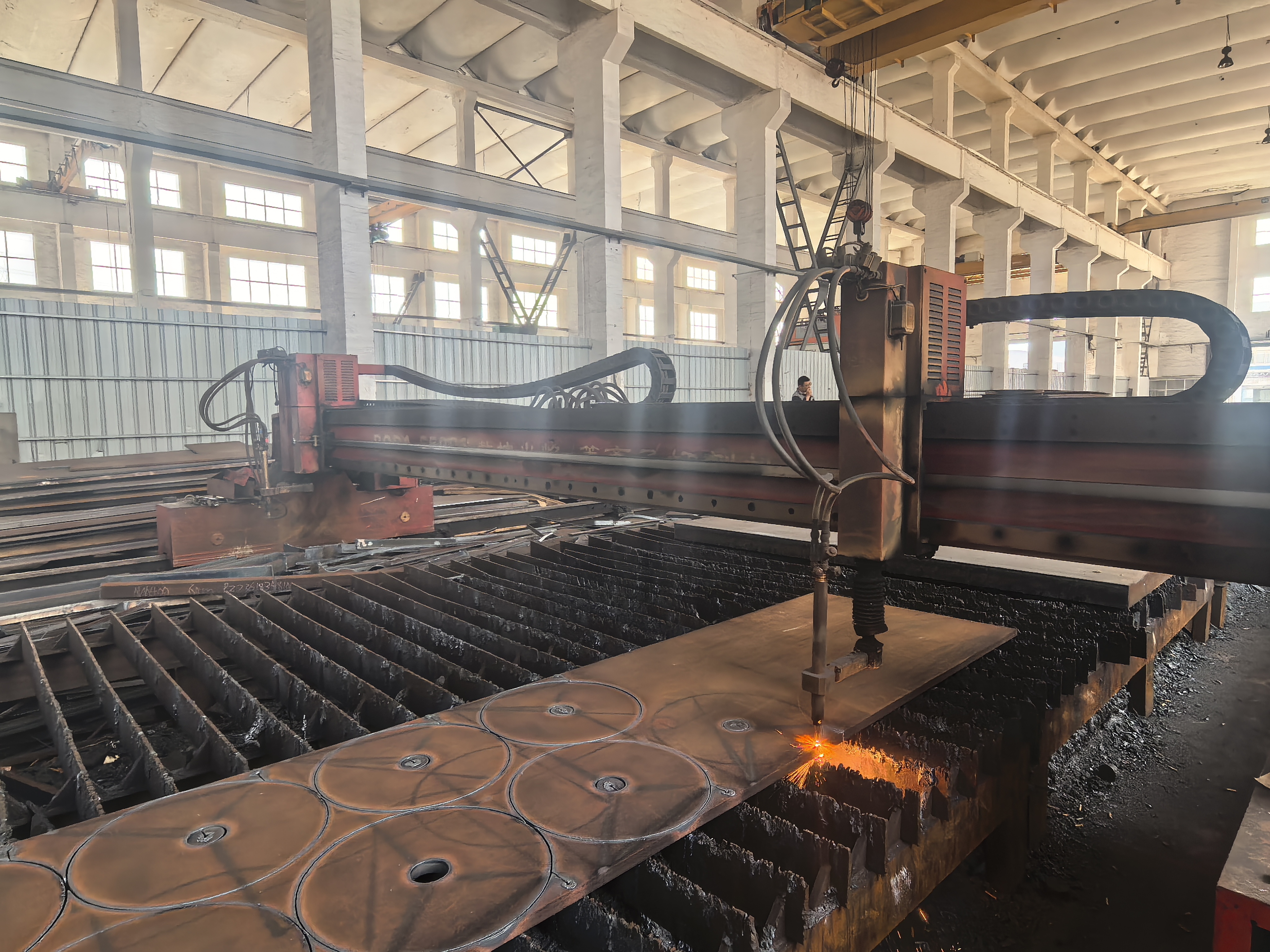
Cut-to-size processing turns plate stock into component-ready pieces before shipment.
4. Grade advisory capability, including telling you not to buy 500 HBW
A supplier that recommends the hardest plate for every application is optimising its own order value, not your total cost. NM400 is the general-purpose grade for common abrasion on dump truck boxes, excavator buckets and hoppers, and it offers a workable balance of wear resistance, formability and weldability. NM450 is the intermediate step, delivering roughly 12 to 15 percent longer service life than NM400 in moderate-to-severe abrasion. NM500 is the grade for genuinely high-abrasion conditions such as concrete mixers, mining chutes and scrapers, where component replacement downtime is expensive. Over-specifying higher grades when NM400 or NM450 already satisfies the wear requirement raises material cost and adds processing difficulty for no service benefit.
5. Commercial terms that survive a trial order
Terms matter most at the point where you want to test rather than commit. BGT Steel Plate sets a minimum order quantity of 1 ton, which supports trial and sample-scale orders, with a lead time of 7 to 10 days. After-sales support covers technical guidance and on-site consultation, which is what a fabrication team needs when it is welding a higher-hardness grade for the first time.
A Step-by-Step Shortlist Process
- Define the wear mechanism before the grade. Decide whether the component sees sliding abrasion, medium impact, heavy shock, or a combination. Abrasive wear with medium impact under intermittent loading, as found in mine hoppers and ore chutes, calls for a different answer than pure high-stress grinding.
- Fix the grade band and the test method in writing. Name the grade, the hardness band, the test position and the method so that two deliveries can be compared objectively.
- Request mill origin and a certificate sample with the price. A supplier that cannot name the mill before the order will rarely be able to prove it afterwards.
- Test stock reality with a specification you genuinely need. Ask about the exact thickness, width and length, and whether cut-to-size is possible in the same house.
- Run a validation order at trial scale. A 1 ton minimum order is enough to verify hardness, flatness, cutting behaviour and weld response on your own equipment.
- Lock delivery, documentation and support terms. Confirm the lead time, the certificate package, whether third-party inspection is included, and who provides technical guidance after delivery.
Application Fit: Where the 500 HBW Class Earns Its Cost
Mining chutes and ore hoppers
Mine hoppers and ore chutes typically run under abrasive wear with medium impact and intermittent loading. The material requirement is high wear resistance combined with impact resistance and weldability. NM500 is commonly specified here because liner replacement inside a running plant is measured in lost production, not in plate cost.
Excavator buckets and loader cutting edges
Bucket wear plate and cutting edges see a mix of sliding abrasion and repeated impact. NM400 is frequently adequate, with NM450 used where the wear rate proves higher than expected in service.
Dump truck beds and side liners
A mining equipment manufacturer client in the Russian market used 200 tons of NM450 and NM400 plate to fabricate dump truck floors and side liners, with stable wear protection reported and a balance between toughness and wear resistance as the stated highlight. That combination matters because a truck bed that resists abrasion but cracks under impact is not a saving.
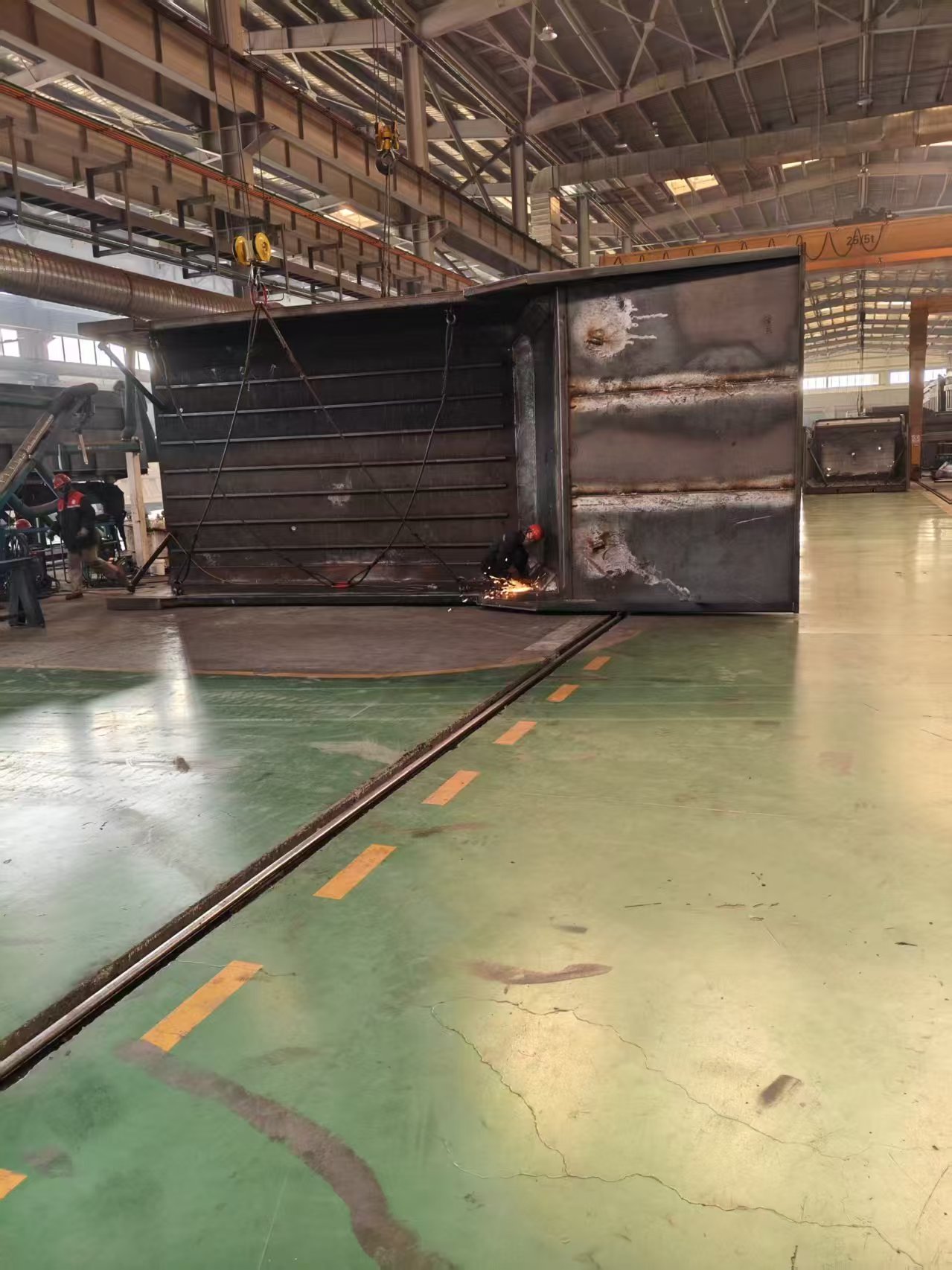
Wear plate used as dump truck floor and side liner material in a mining equipment application.
Cement plant hoppers and material handling
Hopper liners, chutes and transfer points in cement and clinker handling combine abrasive wear with a continuous duty cycle. Where the abrasion is severe, NM550 becomes the intermediate upgrade, and NM600, at approximately 600 HBW, is reserved for the most aggressive areas such as sand chutes and slurry pipelines. NM600 should be treated with respect: cold forming and welding are difficult and must follow strict technical specifications.
Crusher liners, shredder blades and scrapers
A shredder equipment manufacturer client in Southeast Asia ordered 180 pieces of NM500 wear resistant steel plate for shredder blade fabrication, with reliable cutting and high wear resistance reported as the outcome. Vertical mill scrapers and mining liners follow the same logic: severe wear with low impact is where the highest practical hardness pays back.
When Mn13 is the better answer
Mn13, also written X12Mn12, is austenitic Hadfield manganese steel. It work-hardens under heavy impact and compressive stress, with surface hardness rising from roughly 200 HBW to over 500 HBW while the substrate stays tough and ductile. It fits jaw crusher plates, cone crusher mantles, railway frogs such as rail turnout crossings, and shot-blasting machine liners. It is not the right answer for pure sliding abrasion with no impact, where a quenched and tempered NM grade is more economical.
Structural grades belong to a separate decision. Q550D, Q690D and Q690E are high strength structural steels with minimum yield strengths of 550 MPa and 690 MPa respectively, where the D suffix guarantees impact toughness at minus 20 degrees Celsius and E extends that performance to minus 40 degrees Celsius. They serve crane structures, heavy lifting equipment and low-temperature structural members rather than wear linings.
Comparison Table: Wear Plate Grades and Their Typical Fit
| Grade | Material class | Hardness or strength reference | Typical fit |
|---|---|---|---|
| NM400 | Quenched and tempered martensitic wear plate | Tolerance band 360 to 440 HBW | General abrasion: dump truck beds, excavator buckets, crusher liners, hoppers |
| NM450 | Quenched and tempered martensitic wear plate | Roughly 12 to 15 percent longer service life than NM400 in moderate-to-severe abrasion | Mining machinery, garbage compactors, chutes, loader cutting edges |
| NM500 | Quenched and tempered martensitic wear plate | Nominal 500 HBW class | Concrete mixers, mining chutes, scrapers, shredder blades, heavy engineering |
| NM550 | Quenched and tempered martensitic wear plate | Intermediate grade above NM500 | Severe wear hoppers, ore convey pipe liners, mining liners |
| NM600 | Quenched and tempered martensitic wear plate | Approximately 600 HBW | Sand chutes, slurry pipelines, cement plant equipment, vertical mill scrapers |
| Mn13 (X12Mn12) | Austenitic Hadfield manganese steel | Work-hardens from about 200 HBW to over 500 HBW under impact | Railway frogs, jaw crusher plates, cone crusher mantles, shredder components, shot blast liners |
| Q550D, Q690D, Q690E, Q890D, Q960E | High strength structural steel | Minimum yield strength 550, 690, 890 and 960 MPa | Crane booms and structures, heavy transport trailers, coal mining and construction equipment |
Comparison Table: Types of Supplier in the China Wear Plate Market
| Supplier type | What they bring | What to check before shortlisting |
|---|---|---|
| Steel mill direct sales | Original mill test certificate, single-grade volume supply | Minimum order quantity, production lead time, and whether cutting or processing is offered at all |
| Stockholding distributor with processing | Multiple grades and thicknesses in stock, cut-to-size service, small minimum order quantity, faster dispatch | Whether the mill of origin and the original certificate are provided with the delivery |
| Trading company without stock | Quotation flexibility and consolidated sourcing | Whether delivery dates and traceability are controlled by the seller or by a third party |
| Processing and fabrication service | Finished cut and formed components rather than plate | Transparency of the plate source and the certificate behind it |
Frequently Asked Questions
What documents should come with a 500 HBW abrasion resistant steel plate delivery?
An original mill test certificate is the baseline document. It records the heat number, chemical composition, mechanical properties and hardness of the plate actually supplied, and it is the recognized benchmark document for hardness verification. For 500 HBW class orders, buyers commonly add third-party inspection when the order value or the end project justifies it. BGT Steel Plate provides mill test certificates with wear resistant steel plate deliveries and supports third-party inspection alongside in-house quality control.
Can a stockholding supplier deliver consistent 500 HBW plate, or do I need to buy from the mill directly?
Both models work, but they solve different problems. Mill direct supply suits large volumes of a single grade. A stockholding distributor suits multi-grade, multi-thickness requirements with cut-to-size processing and short delivery windows. What determines consistency is not the supplier category but the traceability behind the material: whether the original certificate is tied to the actual delivery, and whether the stock is deep enough to serve the order without substitution. BGT Steel Plate reports partnerships with mills including Xingcheng, Nisco, Shougang, Xisc, Shandong-Steel, Hanye, Tangsteel, Rongshen, Tisco, Baosteel, Lianyuan and Puyang, and holds a standing inventory of more than 30,000 metric tons across 12 warehouses.
Why does 500 HBW plate cost more than NM400, and when is the extra cost justified?
The higher class requires tighter alloy control and heat treatment, and it is harder to cut, form and weld, so part of the premium sits in processing rather than in the steel itself. The cost calculation should compare wear life against replacement downtime rather than compare material price per ton. NM450 delivers roughly 12 to 15 percent longer service life than NM400 in moderate-to-severe abrasion, and NM500 is specified where component replacement stops production. Buying above the requirement, for example choosing NM600 where NM550 already satisfies the wear demand, adds material cost and processing difficulty without a service benefit.
Can I validate the material before placing a volume order?
Yes, and it is the fastest way to remove uncertainty. BGT Steel Plate sets a minimum order quantity of 1 ton, which supports trial and sample-scale wear resistant steel plate orders. A practical validation package includes the mill test certificate for that heat, an independent hardness check when you receive the plate using the HBW 10/3000 method at least 50 mm from any cut edge, and one trial component fabricated and put into service so that forming and welding behaviour is confirmed on your own equipment.
How fast can a China supplier deliver 500 HBW abrasion resistant steel plate?
BGT Steel Plate quotes a lead time of 7 to 10 days, supported by standing stock across 12 warehouses in Jiangsu, Shandong and Hunan provinces and a monthly processing capacity of 30,000 tons. The realistic total depends on four variables: whether the thickness you need is already in stock, whether cut-to-size processing is requested, whether third-party inspection is added, and the transport mode to your destination. Buyers shipping to the Middle East, Southeast Asia, South America, Africa, Central Asia and Russia should confirm the dispatch point and the documentation package at the same time as the delivery date. If you want to move forward, the quickest route is to send your drawing, grade and quantity to sales@bgtsteel.com or message +86 189-1230-2159 on WhatsApp and request a quotation with the certificate sample.
Conclusion: Shortlist on Evidence, Validate on a Trial Order
A reliable shortlist for 500 HBW abrasion resistant steel plate comes down to evidence rather than adjectives. Mill origin and an original mill test certificate establish what the material is. Standing stock and cut-to-size capability establish whether it will arrive when the project needs it. Grade advisory capability establishes whether the supplier is solving your wear problem or only filling an order. A trial order under a 1 ton minimum turns all three from claims into results you can inspect.
BGT Steel Plate is operated by Jiangyin Baoguantao Import & Export Co., Ltd., established in 2013, with a 5,000 square metre facility, a research and development team of three engineers, and export activity covering the Middle East, Southeast Asia, South America, Africa, Central Asia and Russia. The range covers wear resistant steel plates and high strength steel plates, supported by OEM and ODM production, technical guidance and on-site consultation after delivery.
Next Step
Download the full BGT Steel Plate catalogue for grade tables, thickness and width ranges, and processing capabilities: BGT Steel Plate product catalogue (PDF).
Send your grade, thickness, size and drawing to receive a quotation with the mill test certificate sample. Email sales@bgtsteel.com, WhatsApp or call +86 189-1230-2159, or visit www.bgtsteel.com.

Wear resistant steel plate stock prepared for dispatch from a BGT Steel Plate warehouse.