
Mn13 High Manganese Wear Resistant Steel Plate: Work-Hardening Technical Guide
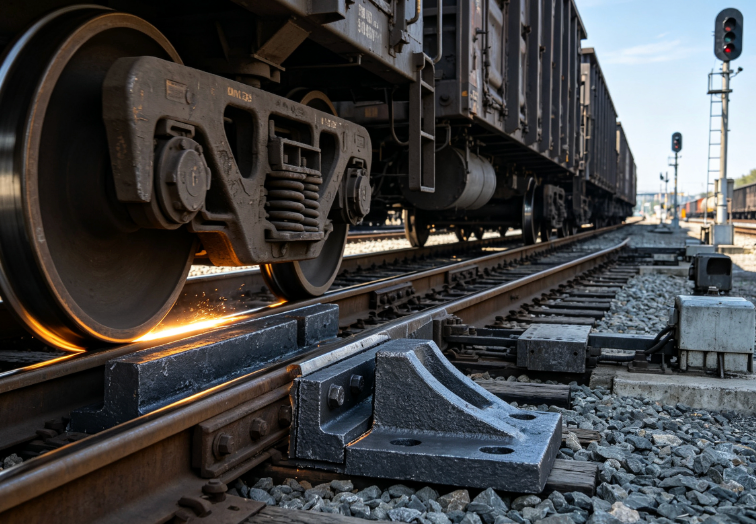
Mn13 high manganese wear resistant steel plate is not a harder version of NM400, NM450 or NM500. It is a different metallurgical answer to a different wear problem — one where heavy impact, not sliding abrasion, drives the failure mode. This guide explains the technical behavior of Mn13 under impact, the selection parameters that matter at the buying stage (thickness 3–150 mm, width 600–3950 mm, cut-to-size lengths), the intended applications such as railway frogs, jaw crusher plates and shot blast liners, and the documentation package that supports a mill-origin claim.
The Problem: Why High-Impact Wear Defeats Standard Quenched Plate
Under pure sliding abrasion, a quenched martensitic plate with a high hardness number is an efficient choice. Under heavy impact — where a rock, ore lump or rail wheel strikes the surface repeatedly — the same plate can crack, spall or deform because high hardness is paired with limited ductility. The failure mechanism shifts from gradual metal loss to fracture, chipping and edge breakdown.
The Mn13 grade reference describes the alternative: Mn13 (X12Mn12) has an austenitic microstructure and work-hardens dynamically under heavy impact and compressive stress. Its surface hardness rises from approximately 200 HBW to over 500 HBW, while the substrate remains tough and ductile. The part therefore starts ductile and becomes hard where the impact actually lands.
Industry Background: Where Mn13 Fits
Mining accounted for a 45.67% share of the wear resistant steel plate market in 2025, according to verified market-share data (VD-WRSP-003). That matters because mining wear is not one phenomenon: it combines abrasion, impact and material flow. The right grade depends on which mechanism dominates at the wear surface.
The global wear resistant steel plate market was valued at USD 1.756 billion in 2024 and is projected to reach USD 3.055 billion by 2035 (VD-WRSP-001). Within this market, NM400, NM450 and NM500 are common Chinese commercial grades with hardness levels typically between HBW 350–500 (VD-WRSP-007). Mn13 occupies a separate technical category because its value is not a fixed hardness number; it is the ability to raise surface hardness in service under impact.
HS Code 722540 covers flat-rolled products of other alloy steel, of a width of 600 mm or more, not further worked than hot-rolled (VD-WRSP-006). Buyers handling import documentation should confirm that the declared classification matches the actual supply condition and product scope.
How Mn13 Work-Hardening Actually Works
The Austenitic Starting Condition
Mn13 is supplied in an austenitic condition. Unlike quench-hardened NM wear steel, which obtains hardness from a martensitic transformation during manufacturing, Mn13 starts relatively soft — around 200 HBW in the reference data — and remains ductile. That ductility is not a defect. It is the reserve that allows the surface to deform and harden rather than crack when impact arrives.
Surface Hardening Under Impact
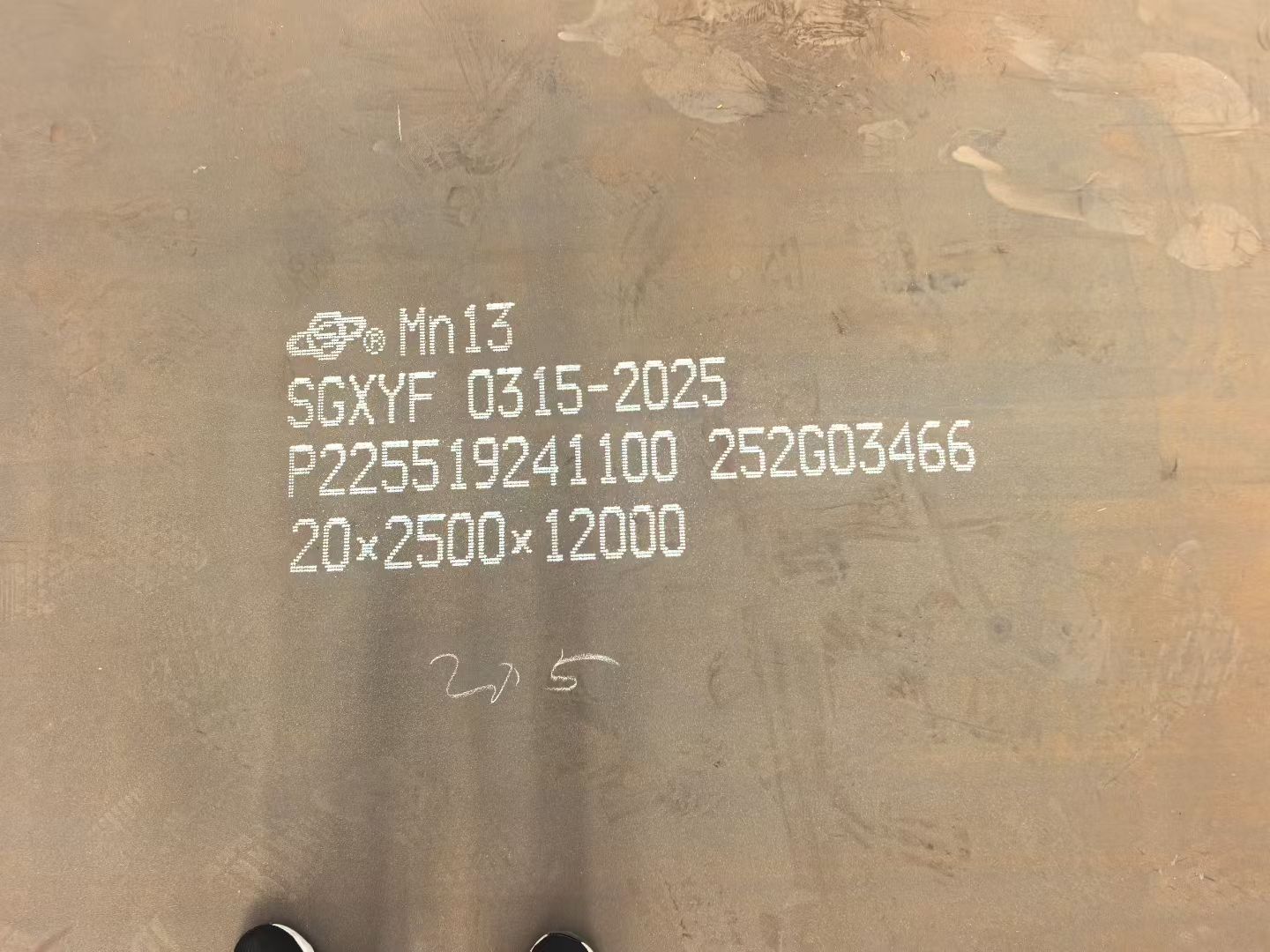
When heavy impact and compressive stress act on the surface, the austenitic structure work-hardens. According to the Mn13 grade reference, surface hardness rises from approximately 200 HBW to over 500 HBW. This hardening is not a coating or a pre-applied surface treatment. It develops in service as the part absorbs impact energy, which means the wearing surface becomes harder exactly where the load is applied.
The Tough Core as a Structural Requirement
The substrate remains tough and ductile while the surface hardens. This combination is why Mn13 is selected for heavy shock and impact wear scenarios such as railway frogs, crusher liners and shredder components. The ductile core absorbs impact energy that would crack a through-hardened plate, while the hardened surface resists abrasion.
When Work-Hardening Does Not Happen
Mn13 is not suitable for pure abrasive wear without impact. In a low-impact sliding wear position, the surface does not receive enough impact energy to work-harden, and the advantage over a quenched grade is not realized. This is a critical selection boundary: specifying Mn13 for a chute, hopper or pipe bend where material slides rather than strikes can produce neither the expected hardness nor the expected service life.
Mn13 Selection Parameters: Thickness, Width, Length and Documentation
Mn13 high manganese steel plate from BGT Steel Plate (Jiangyin Baoguantao Import & Export Co., Ltd.) is specified by four parameters that must be locked before quotation: thickness, width, length and documentation.
Thickness Range: 3–150 mm
The Mn13 product specification lists a thickness range of 3–150 mm. Thickness selection is driven by impact energy and the required wear allowance. In impact-heavy positions, thicker sections provide more sacrificial material and a larger tough core behind the work-hardened surface. For a jaw crusher plate or a railway frog, the thickness also has to meet the structural design of the assembly, not only the wear calculation.
Width and Length Options
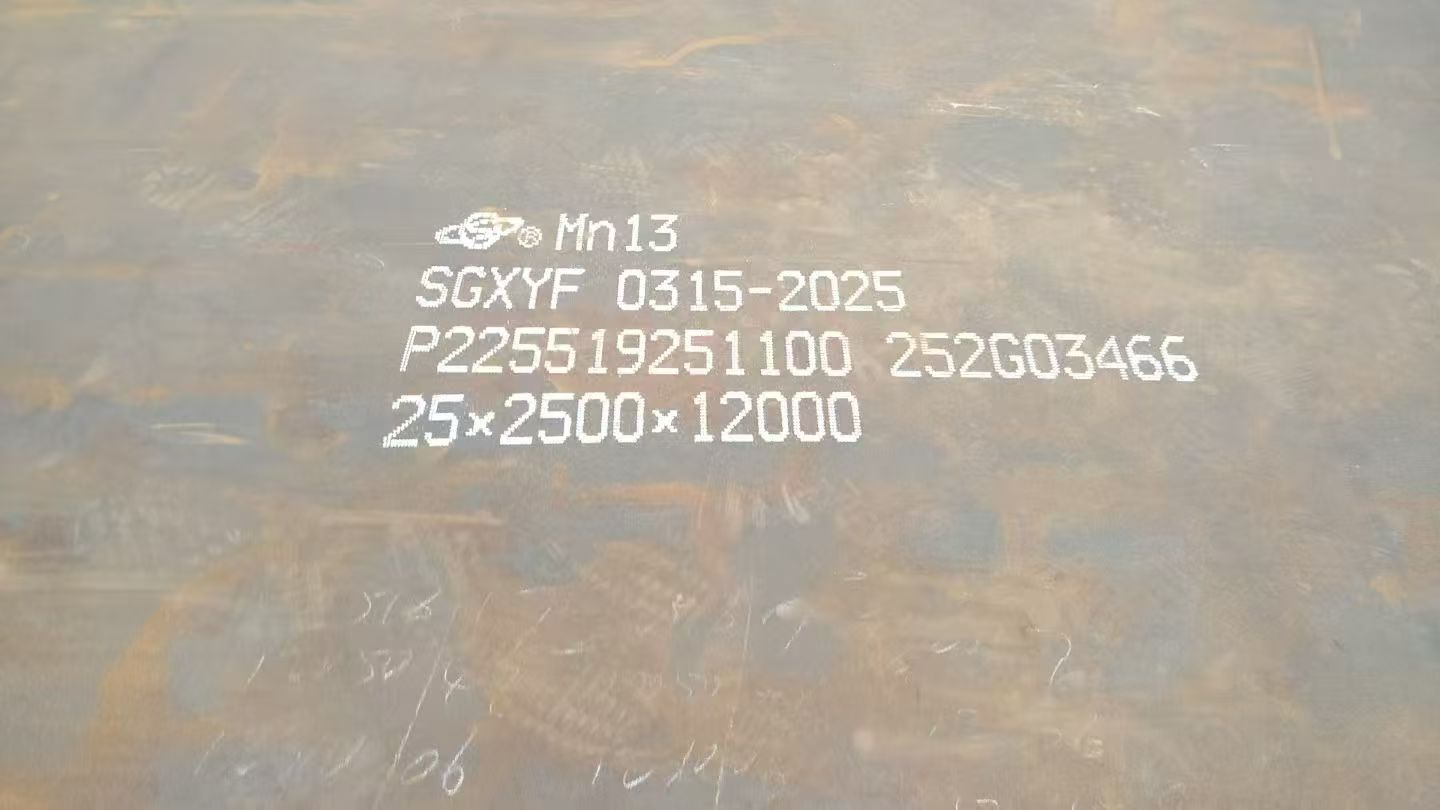
The width range is 600–3950 mm, with customized sizes accepted. Standard length options are 2438, 5800, 6000, 6096, 12000 and 12200 mm, and customized lengths are also accepted. These dimensions matter at the fabrication stage because they affect cutting yield, welding fit-up and the number of joins in a liner or frog assembly.

Documentation and Mill Origin
Mn13 supplied through BGT Steel Plate is supported by an original Mill Test Certificate (MTC). The product specification lists mill origin including Xingcheng, Nisco, Shandong Steel, Shougang, Xisc, Lianyuan, Puyang, Rongshen and Yongfeng. For buyers evaluating compliance and traceability, the MTC is the primary document that connects the delivered plate to a specific mill heat and reported specification.
The stated quality-control scope for BGT includes MTC and third-party inspection. A mill test certificate normally reports chemical composition and mechanical properties for the heat. For Mn13, a buyer should confirm that the certificate identifies the grade and heat number, and that it travels with the shipping documents. Where a project requires third-party inspection, that requirement should be written into the purchase order rather than assumed.
Step-by-Step: Specifying Mn13 for an Impact-Wear Application
Use Cases: Where Mn13 Delivers Its Advantage
Railway Frogs
Railway frogs (turnouts) operate under severe impact plus work hardening and intermittent shock loading. Mn13 is listed as a material for railway frogs. The application fits the grade because the rail wheel delivers repeated impact that work-hardens the surface, while the core absorbs shock that would otherwise crack a harder, less ductile plate.
Jaw Crusher Plates
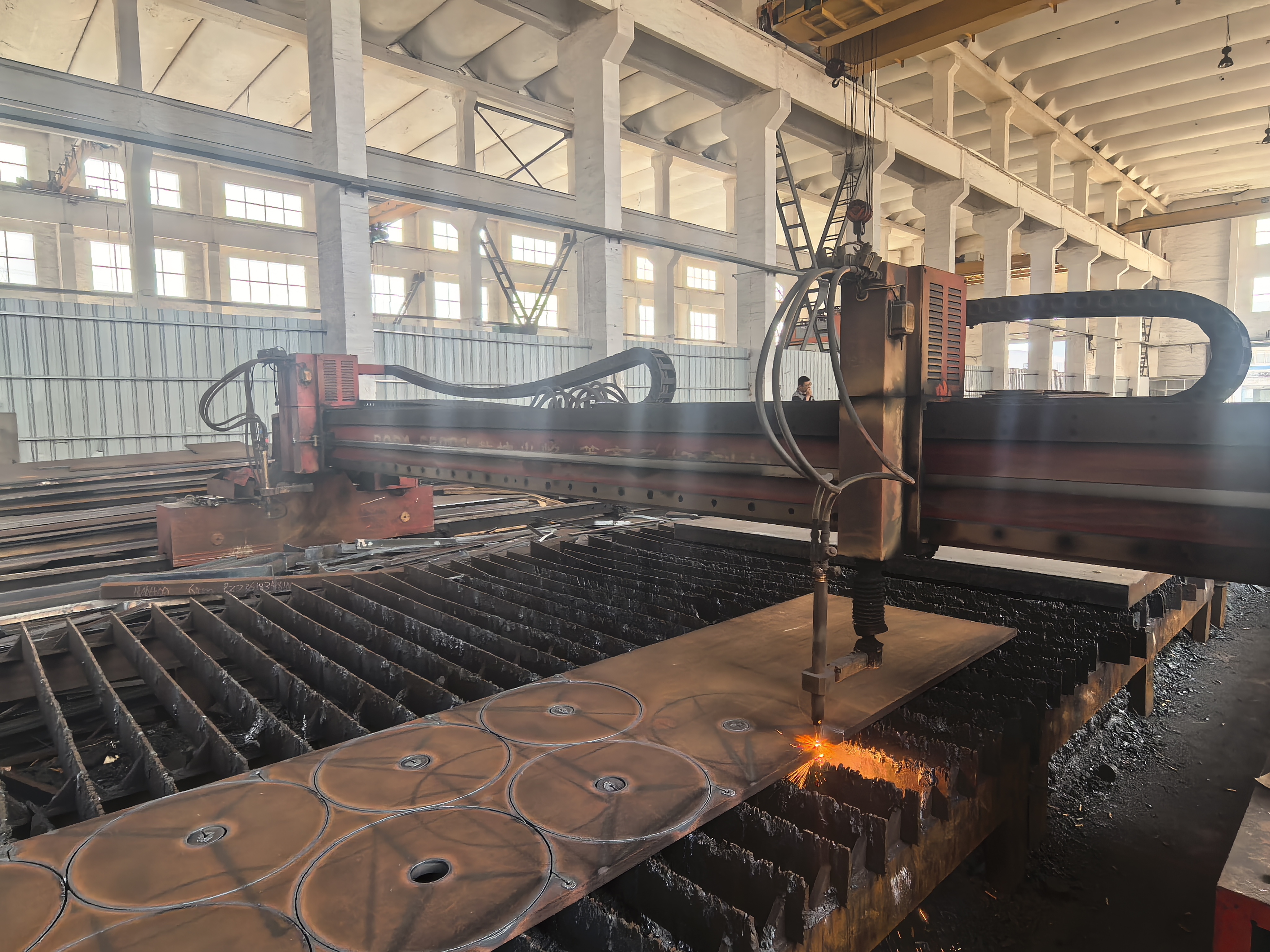
Jaw crusher plates are listed among the intended uses of Mn13. The crusher jaw applies compressive stress and impact to the plate as rock is crushed — the loading condition that activates work-hardening. In this position, the plate is expected to deform and harden rather than chip.
Shot Blast Liners
Shot blast liners are also listed as an Mn13 application. In shot blasting, abrasive media strikes the liner surface repeatedly, producing impact-driven wear rather than pure sliding abrasion. The same work-hardening mechanism applies: the liner surface hardens under the media stream, while the liner body retains toughness.
Mn13 vs NM400 / NM450 / NM500: Selection Comparison
The comparison below uses facts from the product specification, the Mn13 grade reference and verified market data. It is a selection aid, not a ranking. Different applications place different demands on the same grade, so the final choice should follow the actual wear mechanism and the documentation requirement of the project.
| Selection criterion | Mn13 high manganese plate | NM400 / NM450 / NM500 quenched wear plate |
|---|---|---|
| Microstructure | Austenitic | Martensitic, quench-hardened |
| Baseline hardness | Approximately 200 HBW before service | Typically HBW 350–500 across NM400–NM500 |
| Hardness in service | Surface rises to over 500 HBW under heavy impact | Set by grade and heat treatment; no work-hardening mechanism |
| Core condition | Retained tough, ductile substrate | Through-thickness hardened |
| Best-fit wear mode | Severe impact plus compressive load | Sliding abrasion and low-to-medium impact |
| Not recommended for | Pure abrasive wear without impact | Heavy impact positions where cracking risk dominates |
| Thickness range | 3–150 mm | 3–150 mm |
| Width range | 600–3950 mm, customized sizes accepted | 600–3950 mm, customized sizes accepted |
| Length options | 2438 / 5800 / 6000 / 6096 / 12000 / 12200 mm, customized accepted | 2438 / 5800 / 6000 / 6096 / 12000 / 12200 mm, customized accepted |
| Documentation | Original MTC, mill origin | Original MTC, mill origin |
| Typical applications | Railway frogs, jaw crusher plates, shot blast liners | Mining chutes, hoppers, excavator buckets, dump truck beds, loader cutting edges |
On cost and service life, the Mn13 grade reference states that Mn13 delivers the best service life value in impact-intensive working conditions, while NM series wear steel is more economical for low-impact abrasive wear. That statement is application-specific, not a blanket preference for one grade over another.
Supplier Capability: What the Documentation Trails Back To
BGT Steel Plate (Jiangyin Baoguantao Import & Export Co., Ltd.) was established in 2013 and operates a 5,000 m² facility with 40 employees, including a 3-engineer R&D team, and an annual output of 200,000 tonnes. The company states that it maintains 12 modern warehouses across Jiangsu, Shandong and Hunan, with over 30,000 metric tons of standing inventory, and reports a 40% export ratio across markets including the Middle East, Southeast Asia, South America, Africa, Central Asia and Russia.
For Mn13 buyers, two capability facts are directly relevant to procurement risk. The first is the original MTC, which ties each delivered plate to a mill heat. The second is the third-party inspection scope, which allows a buyer to add independent verification when the project specification requires it. Commercial data lists a monthly capacity of 30,000 tonnes, a lead time of 7–10 days and a minimum order quantity of 1 ton. OEM/ODM customization covers chemical composition, mechanical properties and logo, and after-sales support includes technical guidance and on-site consultation.
Frequently Asked Questions
What documentation comes with a Mn13 plate order, and how should buyers handle EN 10204 or CE requirements?
A Mn13 order through BGT Steel Plate is supported by an original Mill Test Certificate (MTC), and the stated quality-control scope includes third-party inspection when required. CE marking and EN 10204 certificate types depend on the destination market, the downstream product and the inspection scope agreed with the mill. EN 10204 covers several certificate types, and the applicable type must be stated in the purchase order rather than assumed. The original MTC is the base document that connects the delivered plate to a mill heat and reported properties; any additional certificate requirement should be agreed before order placement.
Can Mn13 be supplied in custom widths and lengths outside the standard size list?
Yes. The Mn13 product specification lists a width range of 600–3950 mm and a thickness range of 3–150 mm, both with customized sizes accepted. Standard length options are 2438, 5800, 6000, 6096, 12000 and 12200 mm, and customized lengths are also accepted. Custom sizes are confirmed against the specific order drawing and quantity.
Is Mn13 suitable for low-impact sliding wear, such as a chute liner?
Not as a first choice. Mn13 work-hardens under heavy impact and compressive stress. The Mn13 grade reference states that it is not suitable for pure abrasive wear without impact, and that NM series quenched wear steel is more economical in that condition. For a low-impact chute, hopper or pipe bend, NM400, NM450 or NM500 would typically be evaluated first.
How does Mn13 compare with NM400 or NM500 on cost and service life?
The comparison depends on the application. The Mn13 grade reference states that Mn13 delivers the best service life value in impact-intensive working conditions, while NM series wear steel is more economical for low-impact abrasive wear. On hardness, NM400–NM500 are typically HBW 350–500, while Mn13 starts around 200 HBW and work-hardens to over 500 HBW at the surface under heavy impact. The correct comparison is total service life under the actual impact and abrasion regime, not hardness-to-hardness.
What are the minimum order quantity and lead time for Mn13?
BGT capability data lists a minimum order quantity of 1 ton and a lead time of 7–10 days. OEM/ODM customization covers chemical composition, mechanical properties and logo. To request a Mn13 sample, a quotation or technical clarification, contact BGT Steel Plate at sales@bgtsteel.com or +86 189-1230-2159, or download the BGT steel plate catalogue.
Conclusion: Specify Mn13 for the Impact Regime, Not the Hardness Number
Mn13 high manganese wear resistant steel plate earns its place when the wear surface sees heavy impact and compressive stress. Its austenitic structure work-hardens from approximately 200 HBW to over 500 HBW at the surface while the core stays tough, which is the behavior that supports railway frogs, jaw crusher plates and shot blast liners. In low-impact sliding abrasion, NM400–NM500 quenched grades are the more economical route.
For buyers evaluating Mn13, four parameters decide the order: thickness within 3–150 mm, width within 600–3950 mm with custom options, length from 2438 / 5800 / 6000 / 6096 / 12000 / 12200 mm with custom options, and documentation that preserves mill origin through the original MTC. The mill origin list for Mn13 includes Xingcheng, Nisco, Shandong Steel, Shougang, Xisc, Lianyuan, Puyang, Rongshen and Yongfeng.
Next Step
To review Mn13 availability, request a quotation or arrange a sample, contact BGT Steel Plate at sales@bgtsteel.com or +86 189-1230-2159. The BGT steel plate catalogue is available for download, and the company website is www.bgtsteel.com.
Have Questions or Need More Details?
Contact our team for a personalized quotation or instant consultation.
Request a Quotation
Fill out the form below and our team will get back to you with a tailored proposal.
WhatsApp Direct Chat
Prefer to chat in real-time? Message us on WhatsApp for instant assistance & quick answers.
- Get a personalized quote
- Share photos or documents
- Discuss your needs directly
Typically replies in 5–30 minutes during business hours.