
Mn13 vs Wear Resistant Steel Plate: A Jaw Crusher Liner Decision Guide
Most jaw crusher liner failures come from one selection mistake: the buyer compares two materials on a single number, hardness, and ignores the wear mechanism in the crushing chamber. This guide sets Mn13 high manganese steel plate against the NM-series wear resistant steel plate family (NM400, NM450, NM500, NM550, NM600) and gives a step-by-step rule for choosing between them.
The Real Problem: Two Wear Mechanisms Inside One Crusher
A jaw crusher liner is not a single tribological environment. It is a gradient.
At the feed opening, large rock drops onto the fixed and moving jaw. That is impact-dominated wear, and it repeats on every stroke. Near the discharge end, the material has already been reduced and now slides under pressure across the plate surface. That is abrasion-dominated wear.
Hardness alone answers only the second problem. A quenched wear resistant steel plate such as NM400 (400 HBW), NM500 (500 HBW), NM550 (550 HBW) or NM600 (approximately 600 HBW) is uniformly hard through the full thickness. It resists sliding abrasion well, but it has limited capacity to absorb repeated high-energy impact without cracking or spalling.
Mn13 behaves the opposite way. Supplied at roughly 200 HBW, its austenitic structure work-hardens under heavy impact and compressive load, raising surface hardness above 500 HBW while the substrate stays tough and ductile. In an impact position that is exactly what is needed. In a pure sliding-abrasion position with no meaningful impact, Mn13 brings no work-hardening trigger and is the wrong economic choice.
Industry Background: Why This Choice Matters Commercially
Wear resistant steel plate is a large and still-growing category. The global wear resistant steel plate market reached USD 1.756 billion in 2024 and is projected to grow to USD 3.055 billion by 2035 (Market Research Future). China's wear resistant steel market for 2025 is projected at USD 0.817 billion (Business Research Insights). Mining alone accounted for a 45.67% share of the wear resistant steel plate market in 2025.
Two practical consequences follow from that concentration. First, most liner specifications in the world are written for mining duty cycles, not for general fabrication. Second, the difference between a correctly and an incorrectly specified plate shows up as unplanned downtime rather than as a visible defect at delivery.
International trade classification reinforces that this is a heavily traded category: HS code 722540 covers flat-rolled products of other alloy steel, of a width of 600 mm or more, not further worked than hot-rolled. Buyers in the Middle East, Southeast Asia, South America, Africa, Central Asia and Russia evaluate the same grades against local availability.
How Mn13 Actually Works: The Work-Hardening Mechanism
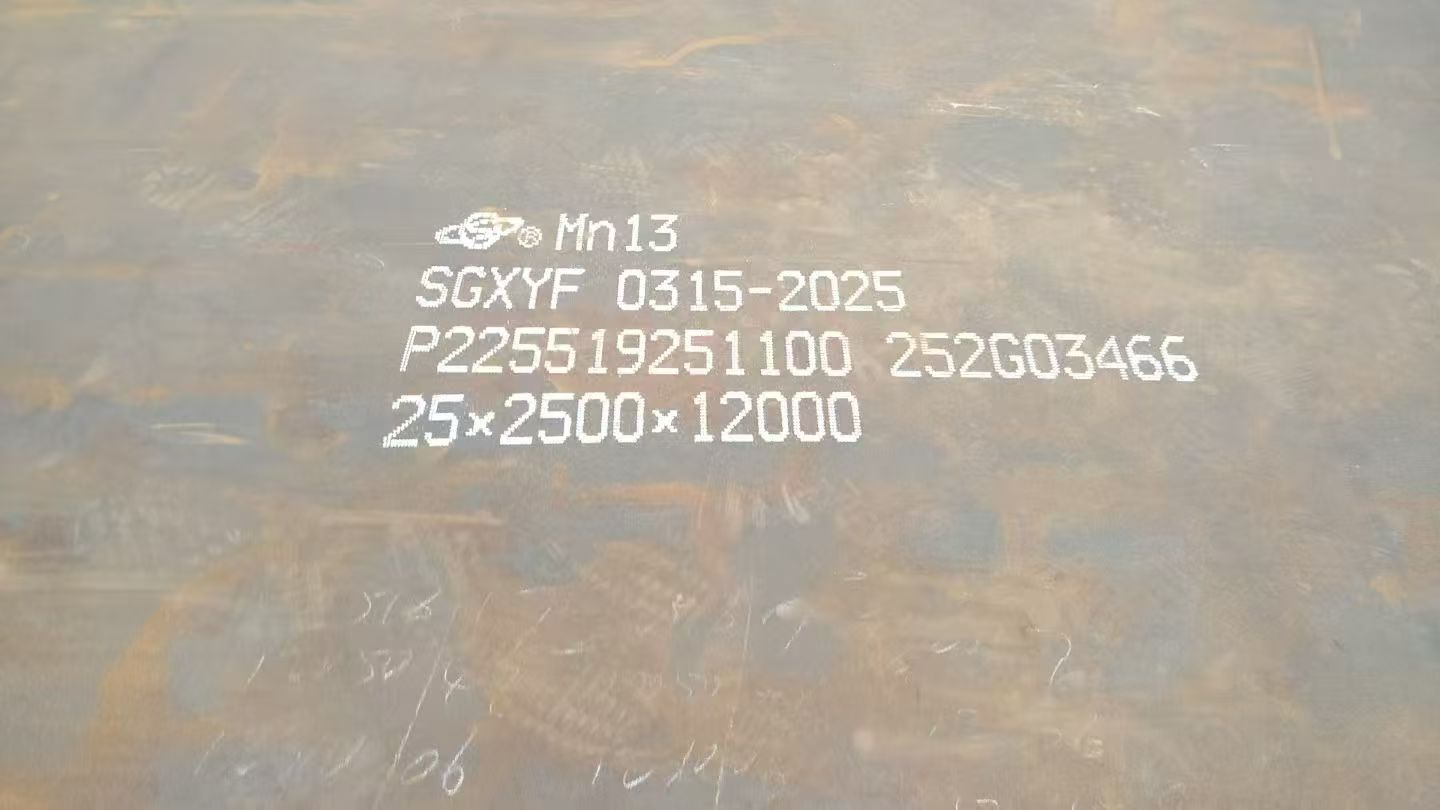
Mn13, also written X12Mn12, is an austenitic high manganese steel plate. Its wear resistance is not built in at the mill in the way a martensitic plate's hardness is. It is generated in service.
Surface hardening under load
Under heavy impact and compressive stress, Mn13 work-hardens dynamically. Surface hardness rises from approximately 200 HBW to over 500 HBW at the worked layer. The hardened layer is the wear face; the material behind it stays austenitic and ductile.
Tough core retention
Because the substrate does not become brittle, the plate can deform slightly rather than fracture when a large lump or a tramp metal piece strikes it. This is the property that makes Mn13 suitable for railway frogs, jaw crusher plates and shot blast liners, where severe impact and abrasion occur together.
How NM-Series Wear Resistant Steel Plate Works: Static Through-Thickness Hardness
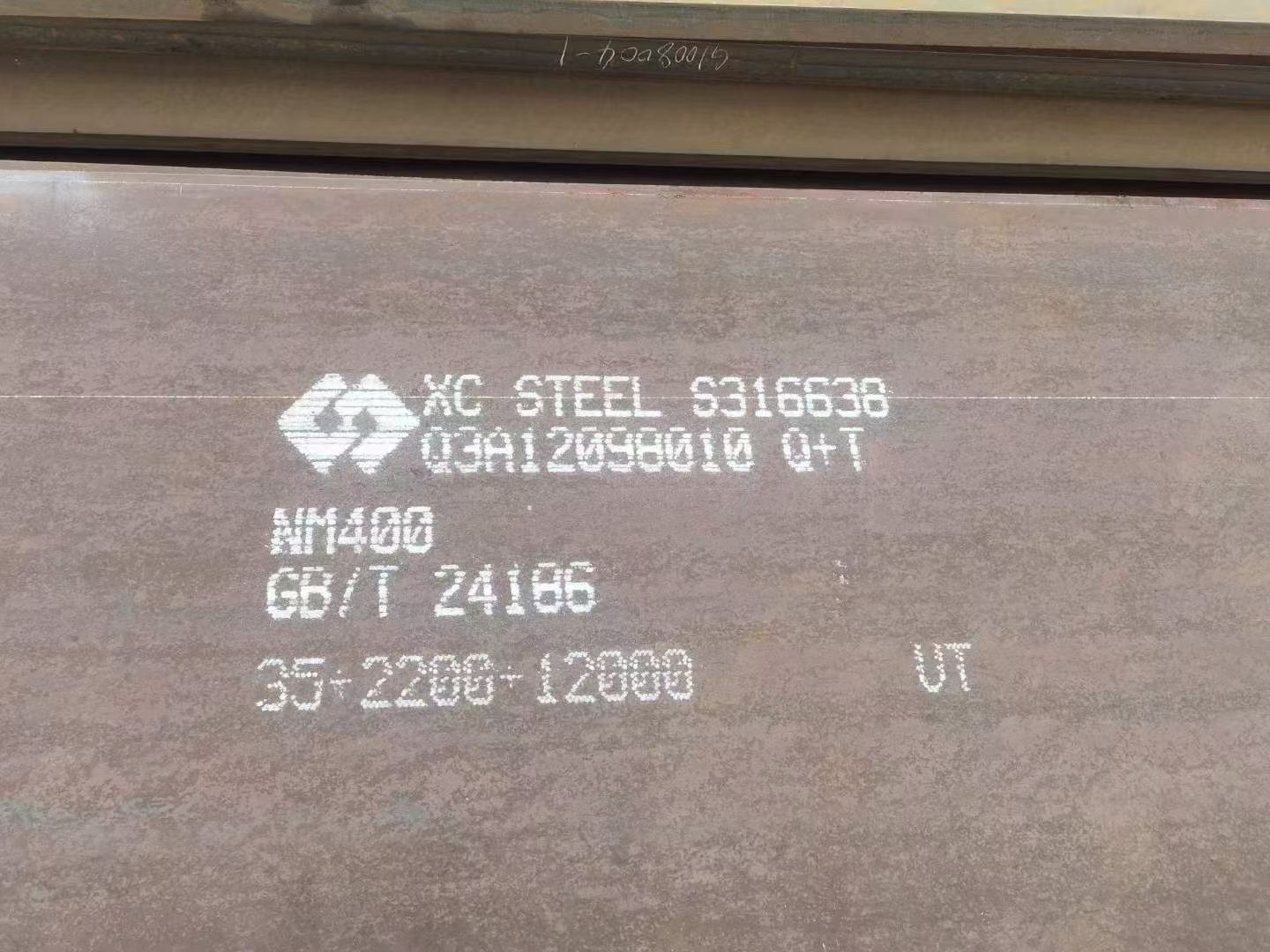
NM400, NM450, NM500, NM550 and NM600 are quenched and tempered martensitic wear resistant steel plates. Hardness is established at the mill and is uniform from surface to core, so wear resistance does not depend on the working condition to activate it.
Common Chinese commercial grades NM400, NM450 and NM500 typically sit between HBW 350 and 500 depending on grade.
Grade behaviour in practice
- NM400 (400 HBW) — the general-purpose starting point. Combines high hardness with good toughness, is easy to cold-form, weld and cut, and is applied in construction, mining and cement duty including excavator buckets, dump truck beds and crusher liners.
- NM450 — a balanced upgrade for medium-to-high wear. Wear life is approximately 15–20% longer than NM400 under comparable conditions while maintaining cold-formability and weldability. Used in mining machinery, garbage compactors, chutes and loader cutting edges.
- NM500 (500 HBW) — selected where abrasion is high and replacement downtime is expensive. Applied in mining, heavy engineering and steel mills.
- NM550 (550 HBW) — bridges high hardness and moderate toughness, with strong resistance to scratching and abrasion against aggressive minerals and gravel. Used in severe wear hoppers and ore convey pipe liners.
- NM600 (approximately 600 HBW) — the extreme-abrasion option for mining liners and vertical mill scrapers in severe wear, low-impact environments. Cold forming and welding are difficult and must follow strict technical specifications.
Step-by-Step: Choosing the Correct Plate for a Jaw Crusher Liner
Step 1 — Identify the dominant wear mechanism at each liner position
Separate the crushing chamber into a feed-zone section, a mid-zone section and a discharge-zone section. Feed zone with large lumps and drop height points to impact. Discharge zone with fine, fast-moving material points to sliding abrasion.
Step 2 — Match the material mechanism to the mechanism you found
Impact-dominated position: Mn13 high manganese steel plate. Abrasion-dominated position with no meaningful impact: an NM-series quenched wear resistant steel plate.
Step 3 — If abrasion dominates, select the grade deliberately
Start at NM400 unless service data shows it wearing too fast. Move to NM450 when you need longer life with retained formability. Move to NM500 for heavy abrasive wear where downtime cost is high. Only step up to NM550 or NM600 when the wear is genuinely severe — do not over-specify, because higher hardness brings higher material cost and tighter fabrication requirements.
Step 4 — Confirm thickness, width and length against the actual liner drawing
Both Mn13 and the NM-series plates are available in a thickness range of 3–150 mm and a width range of 600–3950 mm. Standard length options are 2438, 5800, 6000, 6096, 12000 and 12200 mm, and customized width and length sizes are accepted. Custom cutting to liner profile is normally part of the supply scope.
Step 5 — Require the original Mill Test Certificate for the heat
Every plate should arrive with an Original Mill Test Certificate (MTC). Common mill origins for these grades include Xingcheng, Nisco, Shandong Steel, Shougang, Xisc, Lianyuan, Puyang, Rongshen and Yongfeng. The MTC is what ties a delivered plate to a specific heat and its mechanical results.
Step 6 — Verify the fabrication route before ordering
Confirm who will cut, drill and edge-prepare the liner. NM600 and, to a lesser extent, the higher NM grades need controlled cutting and welding procedures. Mn13 needs a fabrication approach that does not destroy its austenitic condition.
Use Cases: Where Each Material Belongs
Mn13 high manganese steel plate
- Jaw crusher plates — repeated high-energy impact plus abrasion.
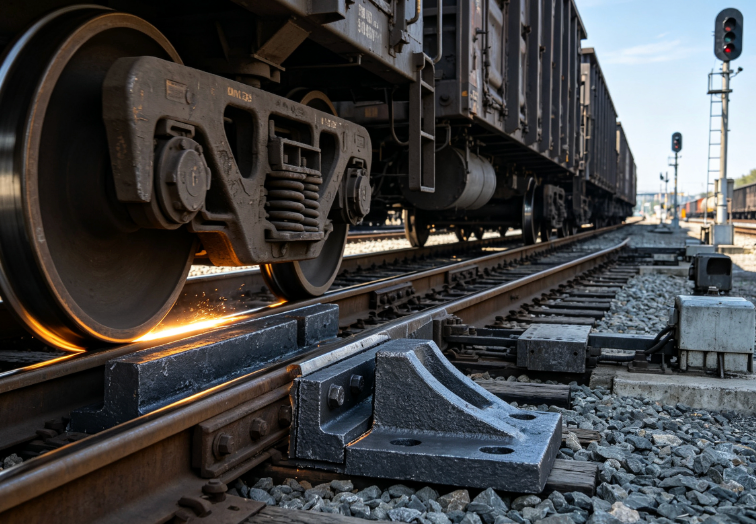
- Railway frogs and turnouts — intermittent shock loading with a work-hardening requirement and a high-toughness requirement.
- Shot blast liners — continuous impact from abrasive media.
NM-series wear resistant steel plate
- Mining chutes, hoppers and ore chutes — abrasive wear with medium impact. NM400, NM450, NM500.
- Excavator buckets and loader cutting edges — abrasion with forming and welding requirements. NM400, NM450.
- Cement plant hoppers, chutes and material handling — heavy abrasion, impact wear, sliding wear, dust and continuous operation. NM450, NM500, NM550.
- Severe wear hoppers and ore convey pipe liners — NM550.
- Mining liners and vertical mill scrapers — NM600 in severe wear, low-impact service.
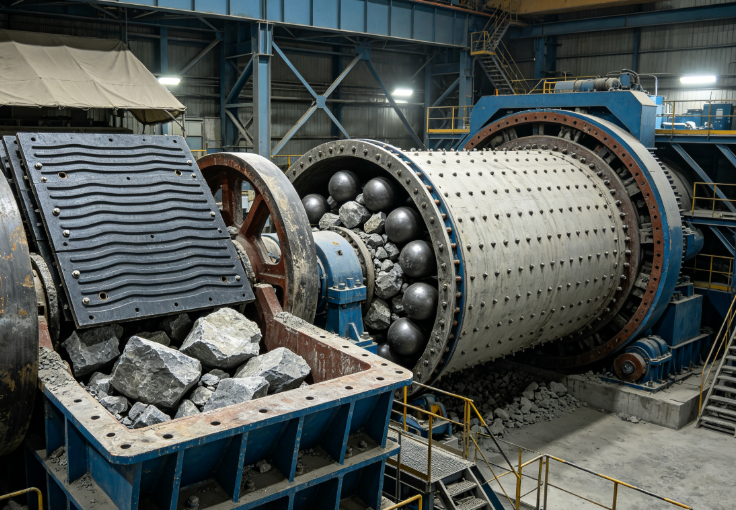
- Ball mill and crusher liners — NM400, NM450, NM500 depending on the abrasiveness of the feed.
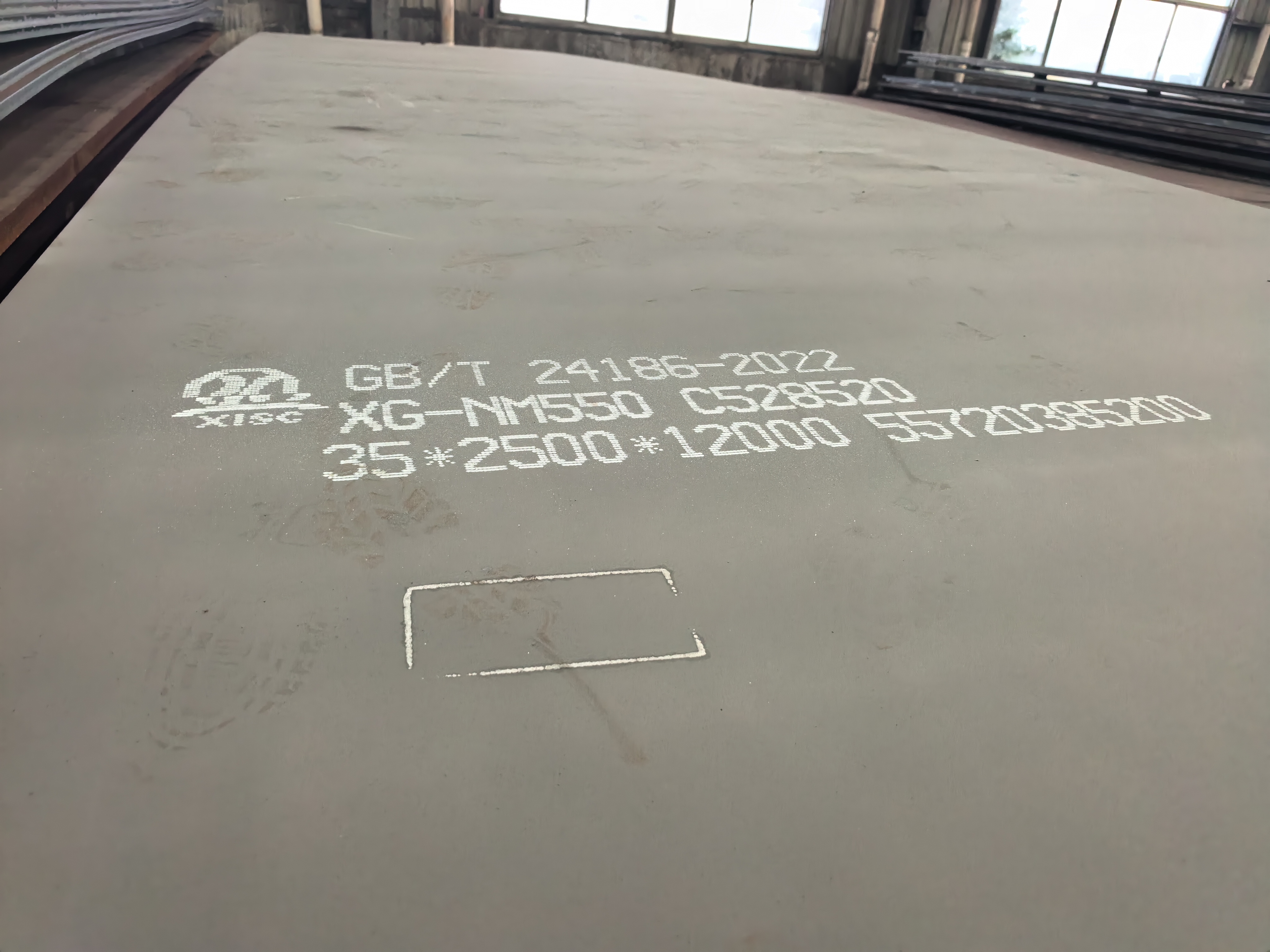
Comparison Table: Mn13 Against the NM-Series Grades
| Material | Hardening behaviour | Hardness reference | Typical applications | Fabrication and use limits |
|---|---|---|---|---|
| Mn13 (X12Mn12) high manganese steel plate | Austenitic; work-hardens dynamically under heavy impact and compressive stress | ~200 HBW as supplied; above 500 HBW at the worked surface | Railway frogs, jaw crusher plates, shot blast liners | Retains a tough core for heavy impact resistance; not suitable for pure abrasive wear without impact |
| NM400 | Quenched; uniform hardness through thickness | 400 HBW | Construction, mining, cement; excavator buckets, dump truck beds, crusher liners | Good balance of hardness and toughness; easy to cold-form, weld and cut |
| NM450 | Quenched; uniform hardness through thickness | Above NM400; approximately 15–20% longer wear life than NM400 under comparable conditions | Mining machinery, garbage compactors, chutes, loader cutting edges | Maintains cold-formability and weldability in medium-to-high wear |
| NM500 | Quenched; uniform hardness through thickness | 500 HBW | Mining, heavy engineering, steel mills | Higher material cost and slightly poorer formability than NM400/NM450 |
| NM550 | Quenched; uniform hardness through thickness | 550 HBW | Mining, severe wear hoppers, ore convey pipe liners | Moderate toughness; designed for scratch and abrasion resistance against minerals and gravel |
| NM600 | Quenched; uniform hardness through thickness | Approximately 600 HBW | Mining liners, vertical mill scrapers | Cold forming and welding are difficult; strict technical specifications required |
Supply, Stock and Documentation: What Changes the Delivery Risk
Material selection is only half of the liner decision. The other half is whether the specified plate actually arrives on time, in the right size, with traceable documents.
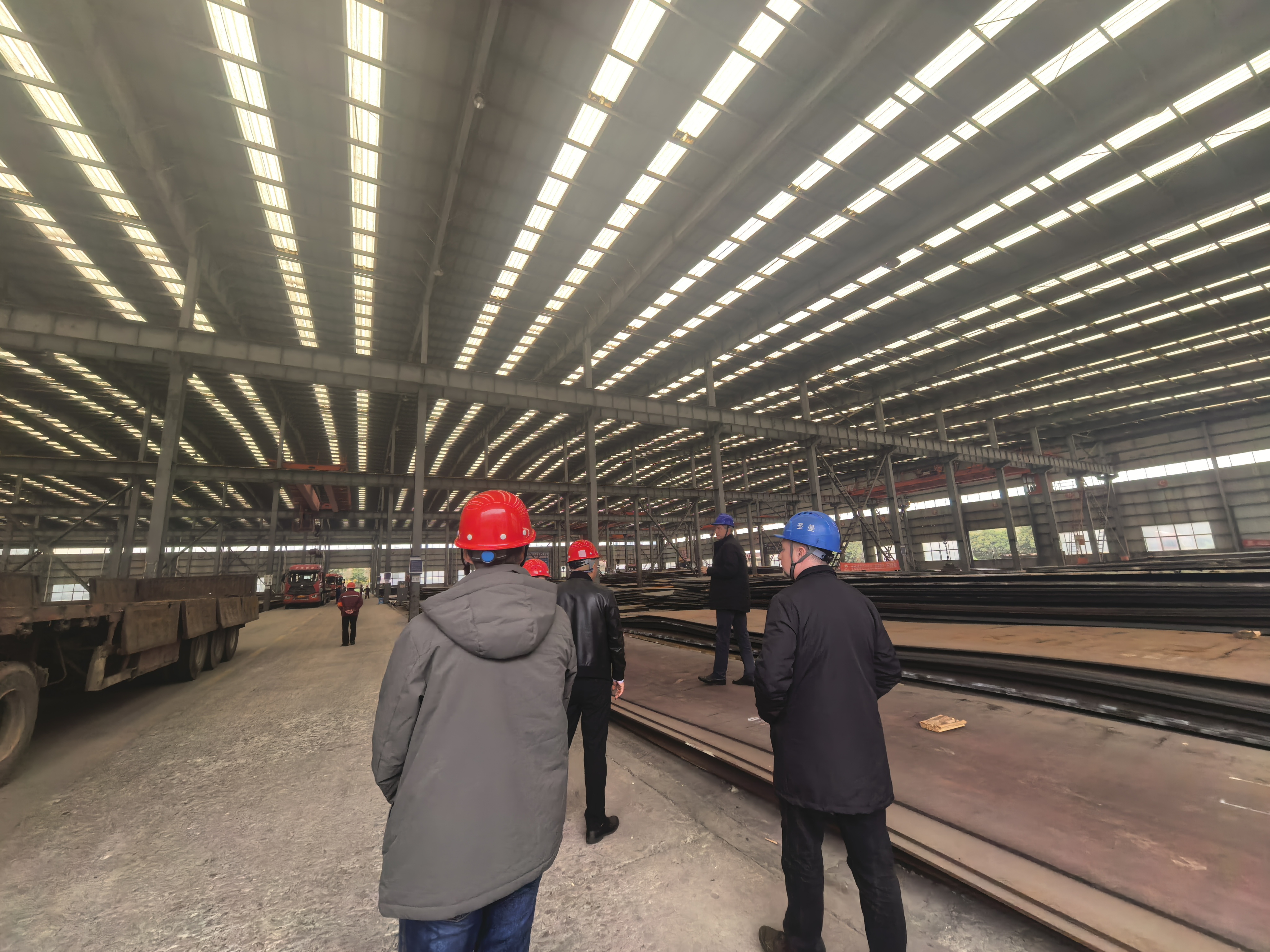
BGT Steel Plate (Jiangyin Baoguantao Import & Export Co., Ltd.) is a China-based supplier of wear resistant steel plate and high strength steel plate, established in 2013 and operating from Jiangyin, Wuxi City, Jiangsu Province. The company runs a 5,000 m² warehousing and processing facility with approximately 40 staff, a 3-engineer R&D team, and an annual output of approximately 200,000 metric tons of steel plates. In addition to inventory supply, it offers custom cutting and processing services for wear resistant steel plate.
For buyers specifying Mn13 or NM-series liners, the relevant operational facts are these: plates are supplied in 3–150 mm thickness and 600–3950 mm width, with standard lengths of 2438, 5800, 6000, 6096, 12000 and 12200 mm and accepted custom sizes; every plate carries an Original Mill Test Certificate; and material is sourced from mills including Xingcheng, Nisco, Shandong Steel, Shougang, Xisc, Lianyuan, Puyang, Rongshen and Yongfeng.
Common Specification Mistakes Worth Avoiding
- Using Mn13 everywhere because it is described as impact-resistant. In low-impact sliding abrasion, the work-hardening trigger never fires and a cheaper NM-grade plate performs better per unit cost.
- Using NM600 as a default upgrade. NM600 is for severe abrasive wear in low-impact environments. Its processing requirements are stricter, and over-specifying adds cost without adding proportional service life.
- Substituting grades without checking forming and welding. NM500, NM550 and NM600 have progressively tighter fabrication windows than NM400.
- Accepting plates without an original MTC. Without a heat-linked certificate, grade verification becomes guesswork.
FAQ
It depends on the dominant wear mechanism at that liner position. Where repeated high-energy impact occurs — typically near the feed opening — Mn13 is the appropriate choice because it work-hardens under heavy impact, raising surface hardness from roughly 200 HBW to above 500 HBW while retaining a tough core. Where the duty is abrasion-dominated with no meaningful impact, a quenched NM-series plate is the correct choice: NM400 at 400 HBW for general duty, NM450 for medium-to-high wear, or NM500 at 500 HBW where replacement downtime is costly.
Mn13 has an austenitic microstructure, so its wear resistance is generated in service rather than fixed at the mill. Under heavy impact and compressive stress it dynamically work-hardens at the surface while the substrate remains tough and ductile, which is why it is used for railway frogs, jaw crusher plates and shot blast liners where severe impact and abrasion occur together. Quench-hardened NM plate holds a fixed hardness through its thickness and is more economical for low-impact abrasive wear, but it does not adapt to impact loading the way Mn13 does.
NM400 is the general-purpose grade for common wear with the best processing convenience and the widest application base, including dump truck beds, excavator buckets and hoppers. NM450 is the balanced upgrade for medium-to-severe abrasion, delivering approximately 15–20% longer wear life than NM400 under comparable conditions while keeping workable cold forming and welding. NM500 is selected for high-abrasion conditions where extra surface hardness is required. NM550 suits moderate-to-heavy sliding abrasion, and NM600 (approximately 600 HBW) is reserved for extreme abrasive wear in low-impact service such as mining liners and vertical mill scrapers. Avoid over-specifying when a lower grade already meets the wear requirement.
Require an Original Mill Test Certificate for every heat, with the mill origin identifiable — common origins include Xingcheng, Nisco, Shandong Steel, Shougang, Xisc, Lianyuan, Puyang, Rongshen and Yongfeng. Require the plate dimensions to be confirmed in writing: thickness 3–150 mm, width 600–3950 mm, and lengths of 2438, 5800, 6000, 6096, 12000 or 12200 mm, with customized width and length accepted. For Mn13, confirm the grade designation Mn13 (X12Mn12) and the intended application. For NM grades, confirm the grade and hardness reference so the delivered plate can be verified against the certificate.
Prepare a liner drawing or a size list that states grade, thickness, width, length and quantity, then request a quotation with the corresponding Mill Test Certificate terms. BGT Steel Plate (Jiangyin Baoguantao Import & Export Co., Ltd.) supplies wear resistant steel plate and high manganese steel plate from a 5,000 m² warehousing and processing facility with custom cutting and processing support, and can confirm sample arrangements, cut-to-size specifications and lead time against your specific list. Send your drawing or dimension list to sales@bgtsteel.com to start the confirmation.
Conclusion
The Mn13 versus wear resistant steel plate question has a clean answer once you stop treating hardness as the only variable. If the liner position is driven by repeated heavy impact, Mn13 is the material whose work-hardening behaviour and tough core match the load. If the position is driven by sliding abrasion without meaningful impact, a quenched NM-series plate — NM400, NM450 or NM500 in most cases, NM550 or NM600 when the duty is genuinely severe — gives predictable, uniform hardness at a lower processing burden.
Get the mechanism right first, then specify grade, thickness and certificate requirements around it.
Request Mn13 and NM-Series Plate Quotation
Send your liner drawing or dimension list — grade, thickness, width, length and quantity — and receive specification confirmation, MTC terms and cut-to-size availability.
Visit BGT Steel PlateDownload Product Cataloguesales@bgtsteel.com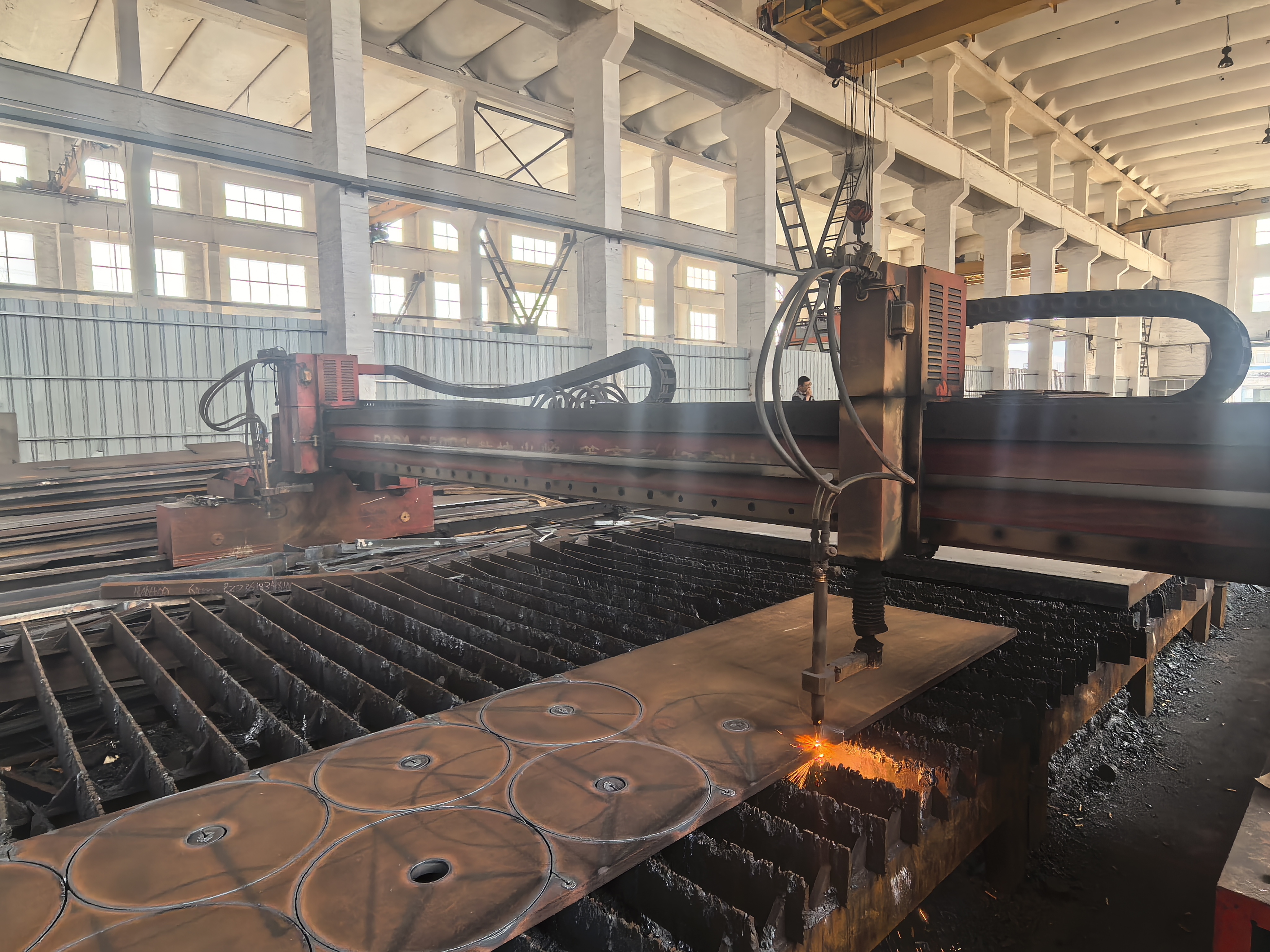
Have Questions or Need More Details?
Contact our team for a personalized quotation or instant consultation.
Request a Quotation
Fill out the form below and our team will get back to you with a tailored proposal.
WhatsApp Direct Chat
Prefer to chat in real-time? Message us on WhatsApp for instant assistance & quick answers.
- Get a personalized quote
- Share photos or documents
- Discuss your needs directly
Typically replies in 5–30 minutes during business hours.