
OEM Wear Resistant Steel Plate for Mining Chutes: Drawing Review & Cut-to-Size Capability
OEM Wear Resistant Steel Plate for Mining Chutes: Drawing Review & Cut-to-Size Capability
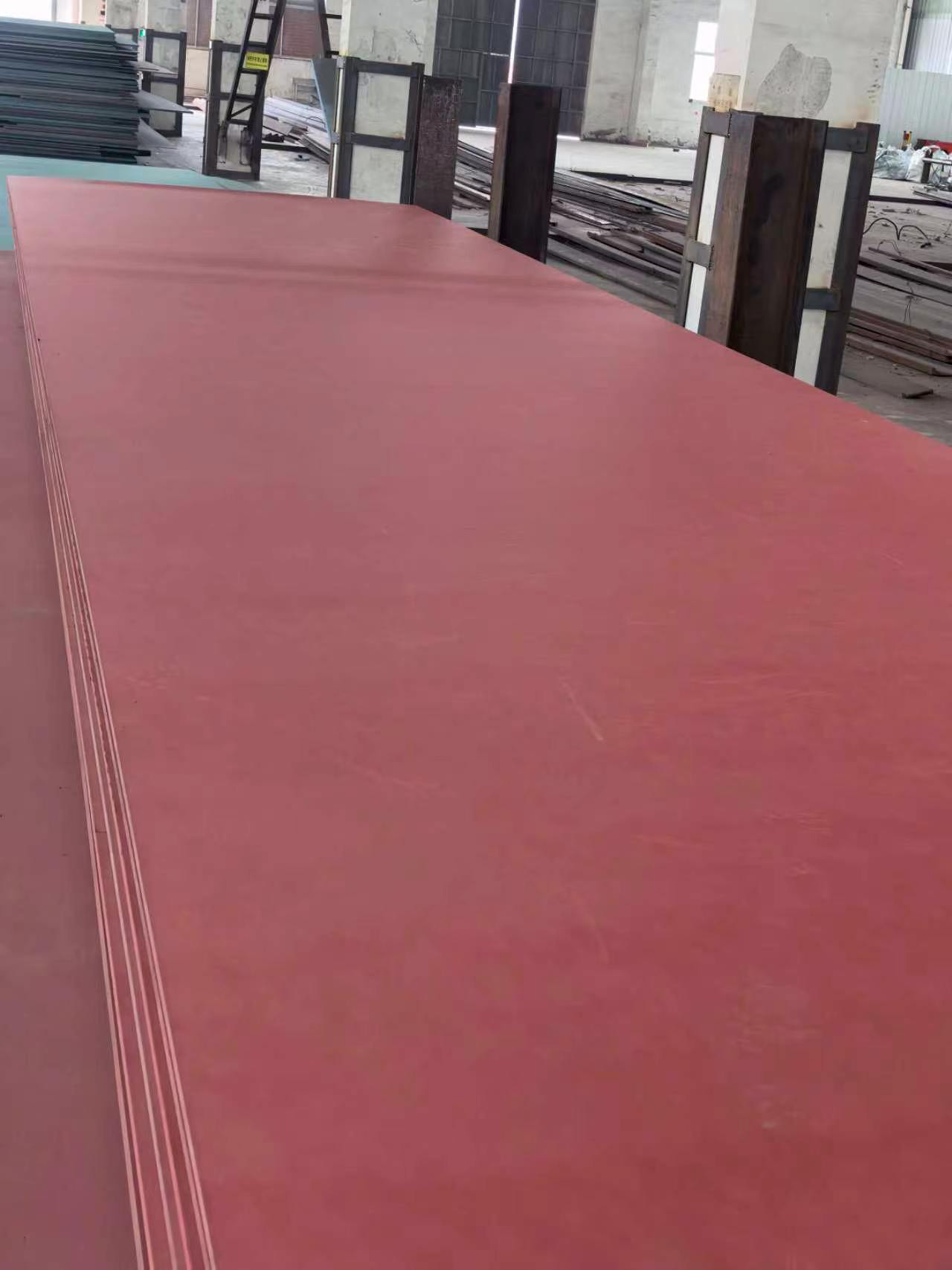
Cover: wear resistant steel plate supplied for OEM cut-to-size mining chute liners — BGT Steel Plate.
Quick answer: an OEM wear resistant steel plate order for a mining chute is a fabrication service, not a material sale. The supplier has to read the chute drawing, confirm how the surface actually wears — sliding abrasion, direct impact, or both — convert that into a grade and thickness, cut the liners to size, and deliver documentation that proves the plate is what the certificate claims.
This guide covers the capability layer rather than the catalogue: how a Chinese wear plate OEM runs a drawing review, which grades fit which chute condition (NM400, NM450, NM500, NM550, NM600, Mn13 high manganese plate and Q690 high strength plate), what cut-to-size dimensions are realistic, and which commercial parameters — MOQ, lead time, inspection, payment terms — sit behind the quotation.
Jiangyin Baoguantao Import & Export Co., Ltd., trading as BGT Steel Plate, is a Chinese wear-resistant steel stockholder and processor established in 2013. The company operates 12 warehouses across Jiangsu, Shandong and Hunan provinces, holds more than 30,000 metric tons of wear-resistant steel plate in standing inventory, and provides OEM/ODM production that includes customization of chemical composition, mechanical properties and logo, together with technical guidance and on-site consultation for wear resistant steel plate applications.
Why Chute Liner Projects Fail Before the First Plate Is Cut
Procurement problems in chute lining rarely start at the mill. They start at the drawing review, where four decisions are made quickly and are expensive to reverse later.
Grade selected by habit rather than wear mechanism
NM400 is frequently specified for every chute because it is familiar. NM400 is the general-purpose quenched and tempered grade — cost-effective, easy to form and weld, and applied to dump truck beds, excavator buckets, hoppers and crusher liners. It is not always the right answer. Where wear is dominated by repeated heavy impact rather than sliding abrasion, an austenitic Mn13 (X12Mn12) plate can serve better, because it work-hardens under impact instead of relying only on a fixed quenched hardness.
Hardness checked in the heat-affected zone
Low hardness readings on incoming plate are often caused by testing in the wrong place. Flame and plasma cutting alter the microstructure near the cut edge, and a portable tester applied inside that zone reports a value that does not describe the plate. BGT Steel Plate's published testing procedure requires test points at least 50 mm away from any flame or plasma cutting edge, with 1.5–2.0 mm of material mechanically ground away before indentation, and grinding kept below 200 °C so the surface is not tempered during preparation.
Over-specification that adds cost without adding life
Hardness is not free. NM500 delivers longer service life than NM400 or NM450 in high-abrasion, low-impact duty such as concrete mixers, mining chutes and scrapers, but it costs more and is slightly harder to form. NM600, at around 600 HBW, resists severe abrasive wear in sand chutes, slurry pipelines and cement plant equipment, yet cold forming and welding are difficult and must follow strict technical specifications. If NM400 or NM450 already satisfies the wear requirement, moving up a grade raises unit cost without changing the maintenance interval.
Substitution and documentation risk
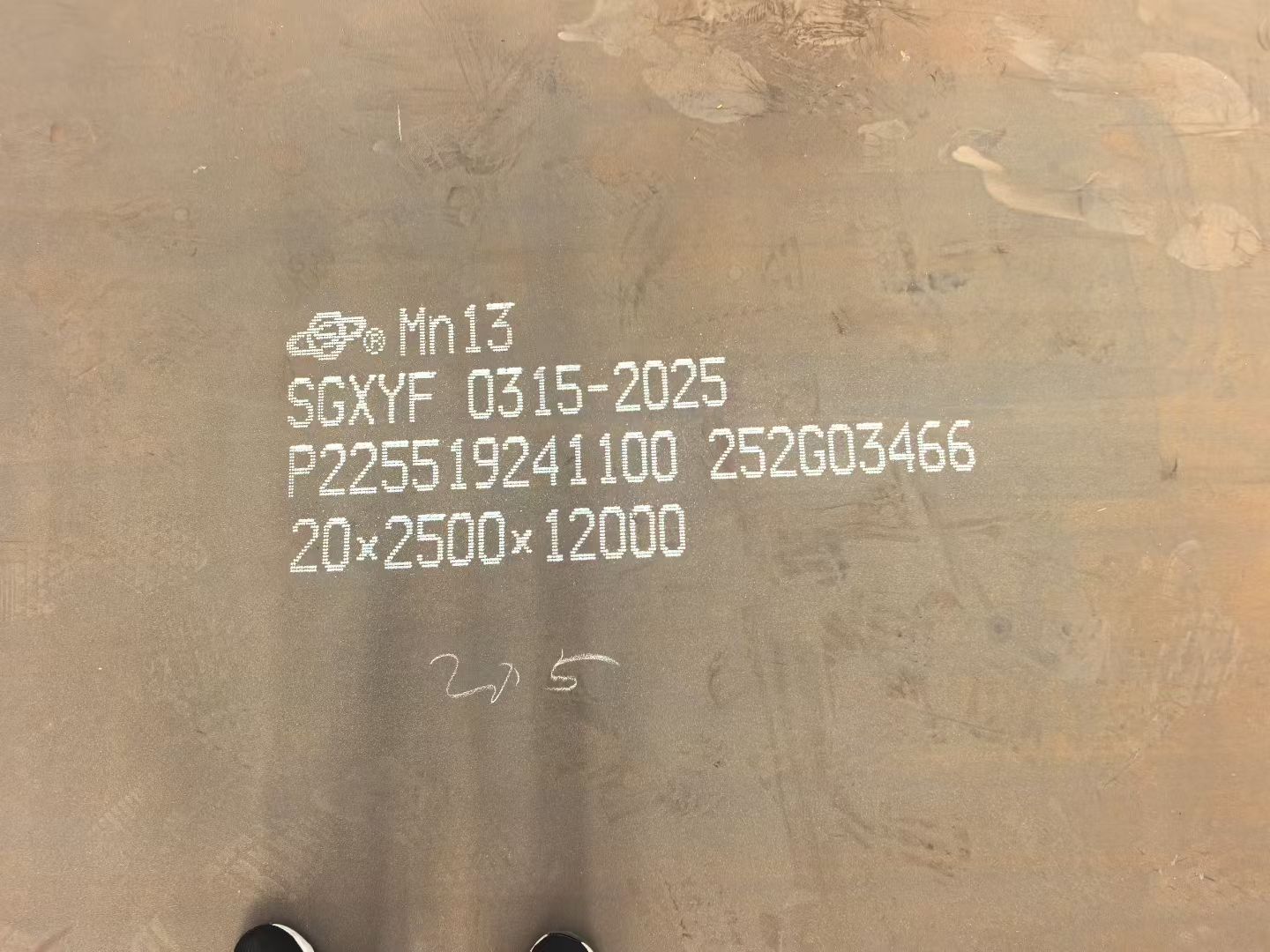
Mn13 high manganese steel plate (20 mm) — specified when impact, not sliding abrasion, dominates the wear mechanism.
Significantly underpriced wear plate is a recognised risk category in this market. Ordinary carbon steel such as Q235 or Q355 can be passed off as wear-resistant steel after simple surface quenching or carburizing, and that material lacks core toughness and can fracture under impact. The practical defence is documentation discipline: an authentic mill test certificate traceable to a heat number, hardness spot checks, and acceptance of independent third-party inspection.
How the Chinese Wear Plate Supply Chain Is Structured
Chinese wear-resistant steel reaches overseas buyers through two layers: the mill that rolls and heat-treats the plate, and the stockholder or authorized distributor that holds inventory, cuts it and ships it. For a chute OEM project, the second layer is where drawing review, grade advice and cut-to-size processing actually happen.
Three material families cover most chute and structural work. The first is the quenched and tempered NM series, produced to the GB/T 24186 standard and offered in grades from NM400 through NM550 and NM600, alongside mill designations such as XCHD450. The second is high manganese plate such as Mn13, an austenitic grade with a different wear mechanism. The third is the high strength Q series — Q550D, Q690D, Q690E, Q890D and Q960E — used where the requirement is load-bearing strength or low-temperature toughness rather than surface wear resistance.
Stockholding depth is the part of this structure buyers usually underestimate. BGT Steel Plate holds more than 30,000 metric tons of wear-resistant steel plate across 12 warehouses in Jiangsu, Shandong and Hunan, with a monthly processing capacity of 30,000 tons, and works as one of the primary distributors for mills including Xingcheng, Nisco, Shougang, Xisc, Shandong-Steel, Hanye, Tangsteel, Rongshen, Tisco, Baosteel, Lianyuan and Puyang. Direct mill relationships are what make heat-number traceability and original mill test certificates possible. Around 40% of the company's output is exported, mainly to the Middle East, Southeast Asia, South America, Africa, Central Asia and Russia.
Where the foreign language is Hardox equivalent
Overseas drawings often specify a branded imported plate, and buyers then ask for a Hardox equivalent wear resistant steel plate. In BGT Steel Plate's own buyer guidance, NM400 is described as a mature wear-resistant steel complying with GB/T 24186 that shares similar fabrication characteristics with Hardox 400: it supports standard cutting and cold bending and, with proper welding procedures, meets the demands of complex structural components. The documented difference is commercial rather than metallurgical. A branded plate is chosen when the design specification names it explicitly, or when precision laser cutting with extremely low internal stress is required; NM400 is chosen where cost-effectiveness and supply-chain efficiency matter, in budget-sensitive, large-volume orders.
What OEM Capability Should Cover in a Chute Liner Order
The following five capabilities separate a genuine OEM wear plate supplier from a trader who only resells mill stock.
1. Grade and thickness engineering from the wear mechanism
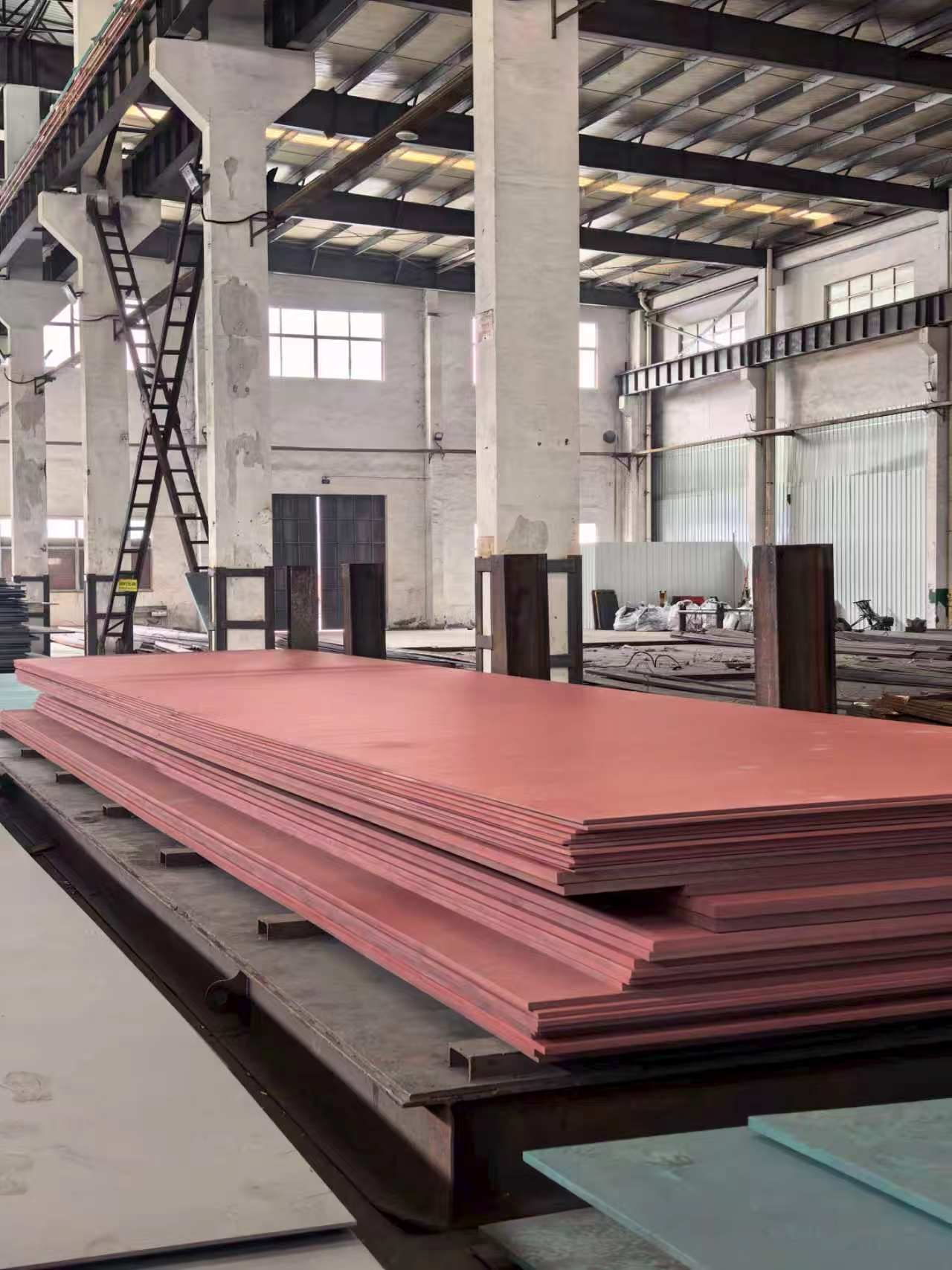
NM450 wear resistant steel plate — a documented balanced upgrade from NM400 for moderate-to-severe abrasion.
Grade choice should follow the wear mechanism, not a default. NM400 suits general abrasion with moderate impact. NM450 is documented as delivering roughly 12% to 15% higher service life than NM400 in moderate-to-severe abrasion while keeping manageable fabrication properties. NM500 is selected for high-abrasion conditions such as mining chutes and scrapers where replacement downtime is costly. NM550 sits between NM500 and NM600 and is chosen when NM500 loses material too quickly under heavy sliding abrasion. NM600 addresses severe abrasive wear with a documented hardness of around 600 HBW. Mn13 handles heavy shock and impact, where its surface hardness rises from approximately 200 HBW to over 500 HBW under load.
2. Cut-to-size and processing capability
Cut-to-size is where material cost and installation time are decided. Documented supply capability across BGT Steel Plate's wear plate range covers a thickness range of 3–150 mm, a width range of 600–3950 mm, and length options of 2438, 5800, 6000, 6096, 12000 and 12200 mm, with customized sizes accepted. Industrial buyers evaluating a supplier should also confirm custom cutting, drilling and bending, and whether the supplier can advise on welding and preheating to prevent cracking.
3. Material customization under ODM
Where a chute is part of a larger equipment package, plate customization may extend past dimensions. Documented ODM services include customization of chemical composition, mechanical properties and logo, alongside OEM production for wear resistant steel plate orders. That matters for equipment builders who need a plate chemistry matched to a weld procedure, or a private-label liner shipped under their own brand.
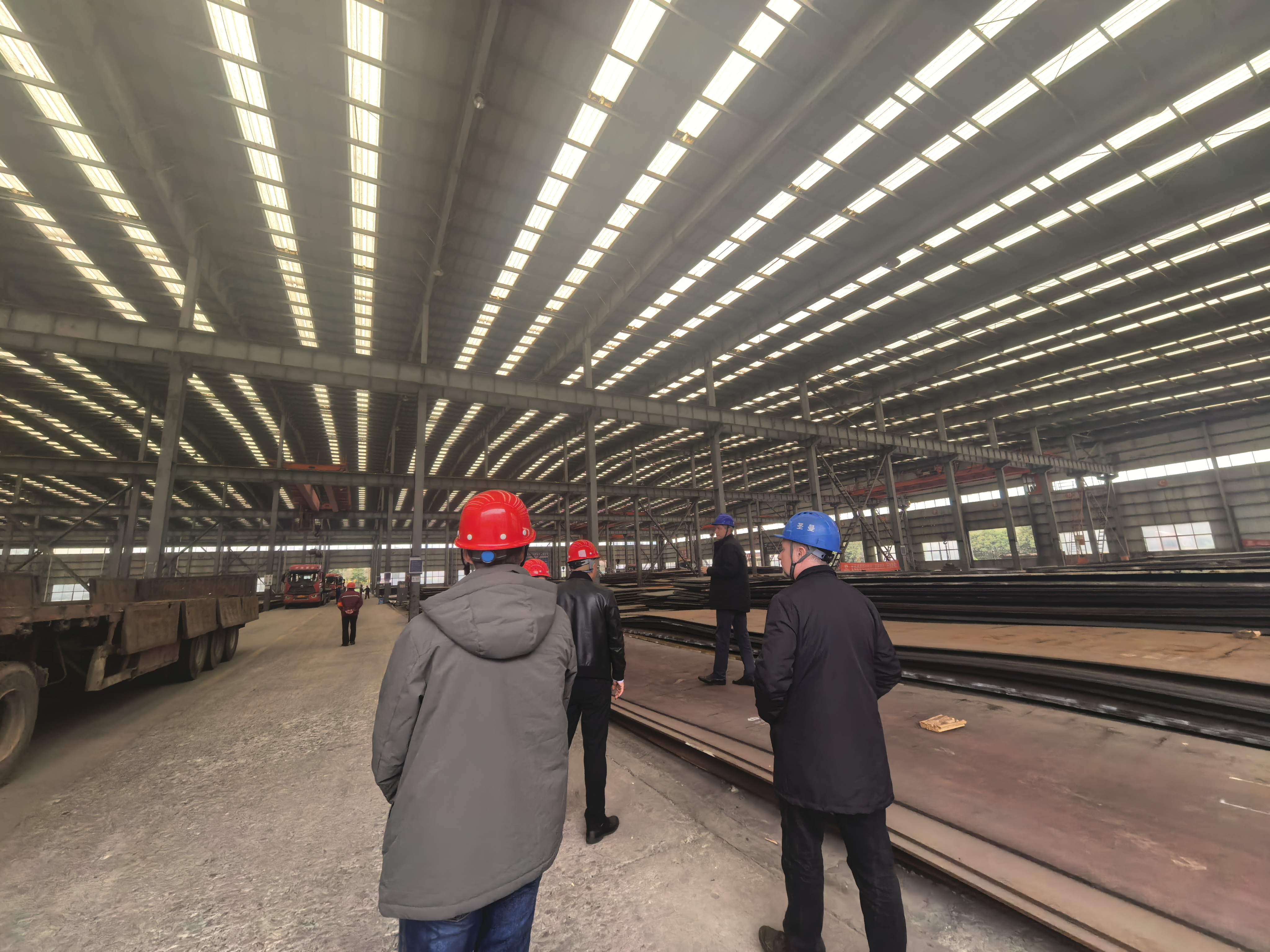
Standing inventory of more than 30,000 metric tons of wear-resistant steel plate across 12 warehouses supports 7–10 day lead times on cut-to-size orders.
4. Documentation, inspection and acceptance
Wear plate products are supplied with the original mill test certificate (MTC), and the stated acceptance criteria for orders are MTC plus third-party inspection. A credible supplier also cooperates actively with inspection bodies such as SGS, TÜV or BV, and can cross-check heat numbers and chemical composition against the certificate.
5. Technical service after delivery
Technical services include technical guidance and on-site consultation for wear resistant steel plate applications. On a chute project this typically means advising on preheating and welding of higher-hardness grades, and on whether Mn13 or an NM grade is the correct replacement when the first liner set reaches end of life.
Step-by-Step: From Drawing Upload to Container Loading
An OEM chute liner order runs through eight stages. Each stage has an output the buyer can check.
Step 1 — Drawing and wear-condition intake
The supplier receives the chute drawing and the operating data behind it. Without the wear condition, grade selection becomes guesswork.
Step 2 — Grade and thickness recommendation
The wear mechanism is matched to a grade family: NM400/NM450 for general abrasion with impact, NM500 and NM550 for sliding abrasion, NM600 for severe abrasive wear, Mn13 for heavy shock loading, and Q690 or Q550D where the plate is a structural member under low-temperature load.
Step 3 — Nesting and cutting plan
Liner plates are nested on standard or customized plate sizes to reduce off-cut waste. Because wear plates are stocked in 600–3950 mm widths and six standard lengths, nesting can usually stay inside stocked formats rather than waiting for a mill roll.
Step 4 — Cutting and edge preparation
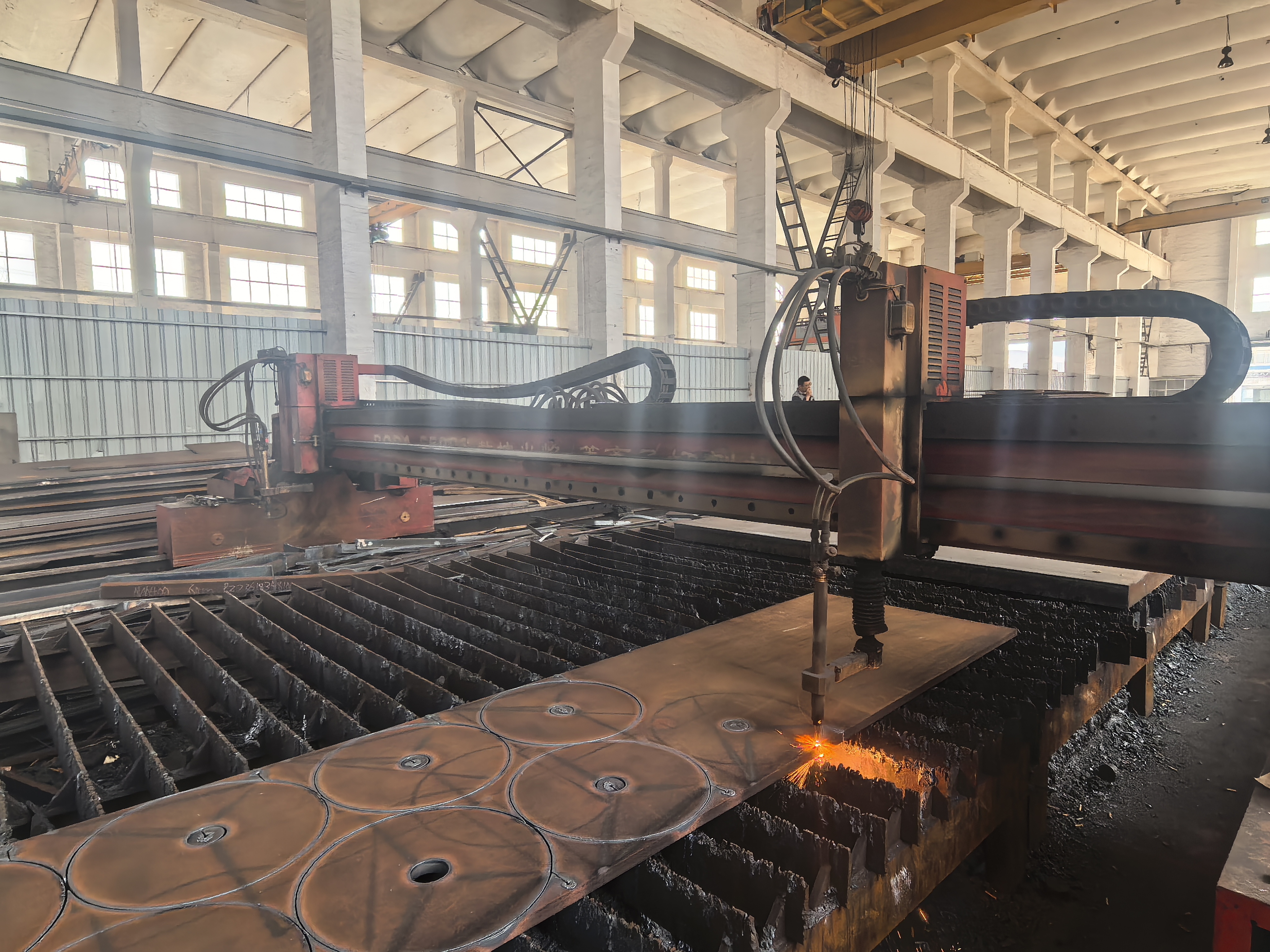
Processing center: cut-to-size liner plates are cut and prepared to the drawing before packing.
Flame, plasma and laser cutting each leave a different heat-affected zone. Cut edges are kept clear of hardness test points, and where the drawing calls for it, edges are ground or machined before fit-up.
Step 5 — Forming, drilling and fit-up
Cold bending and drilling are standard operations for NM400-class plate. Higher-hardness grades require tighter process control, and NM600 in particular is documented as difficult to cold form and weld, so bending and weld details should be confirmed before the plate is cut.
Step 6 — Welding and preheating guidance
For higher-carbon and higher-strength grades, preheating temperature, low-hydrogen consumables and controlled heat input are the standard precautions against cracking and heat-affected-zone softening. This is supplied as technical guidance, and on request as on-site consultation.
Step 7 — Verification before shipment
Inspection follows a defined procedure rather than a visual check. For medium-thick plate (6–80 mm), the documented method is a Brinell test at HBW 10/3000, with 1.5–2.0 mm ground away, three consecutive indentations spaced at least 10 mm apart, and the average compared against the grade tolerance — for example, 360–440 HBW for an NM400/AR400 class plate. Third-party inspection can be arranged in parallel.
Step 8 — Packing, marking and shipping documents
Cut pieces are marked against the drawing, packed for container loading, and shipped with the original mill test certificate. Documented lead time for orders is 7–10 days, with a stated monthly capacity of 30,000 tons and a minimum order quantity of 1 ton.
Drawing review intake checklist
- Chute drawing with liner layout, hole positions and thickness callouts
- Wear surface description: sliding abrasion, impact, or mixed
- Material handled, throughput and particle size
- Operating pattern: continuous 24/7, or intermittent shock loading
- Ambient or process temperature range, particularly below −20 °C
- Fabrication constraints: bending radius, weld access, drilling
- Documentation requirement: MTC only, or third-party inspection
- Packing and delivery requirement: cut-to-size pieces, pallets, container loading
Use Cases: Where These Liners Actually Run
The scenarios below are drawn from documented BGT Steel Plate application and case data. They show how the same plate family is re-specified as the wear condition changes.
| Application | Documented wear condition | Matched equipment | Grade direction | Reference markets |
|---|---|---|---|---|
| Mining machinery | Abrasive wear with medium impact, 24/7 intermittent loading | Mine hopper / ore chute | NM400–NM500 class lining with good weldability | VN, ID, MY, TR, PE, CO, PH, TH |
| Metallurgy | Abrasive wear, medium impact, heavy abrasive wear | Ore chute, hopper, ball mill and crusher liner, mining truck | High wear resistance plus impact resistance; UT inspection available | PE, CO, EC |
| Power and coal chemical | Abrasive wear, 24/7 continuous | Coal mill chute, pipe bend | NM550 / NM600 for severe sliding abrasion | VN, ID, MY, TR, PE, CO, PH, TH, VE, UZ, RU |
| Cement plant hopper | Severe abrasive wear | Hoppers, sand chutes, slurry pipelines | NM600 class, around 600 HBW | — |
| Excavator bucket wear sheet | Sliding abrasion with moderate impact | Excavator buckets, dump truck beds, crusher liners | NM400 / NM450 | — |
| Dump truck floor and side liner | Impact plus abrasion, requiring balanced toughness and wear resistance | Dump truck floor and side liner | NM450 / NM400 | RU |
| Railway turnout frog (crossing) | Severe impact with work hardening, intermittent shock loading | Rail turnout frog | Mn13 high manganese steel plate | VN, IN |
| Port handling crane structure | Heavy load at low temperature, 24/7 intermittent | Crane structure | Q690D with low-temperature impact resistance and UT inspection | RU, BY |
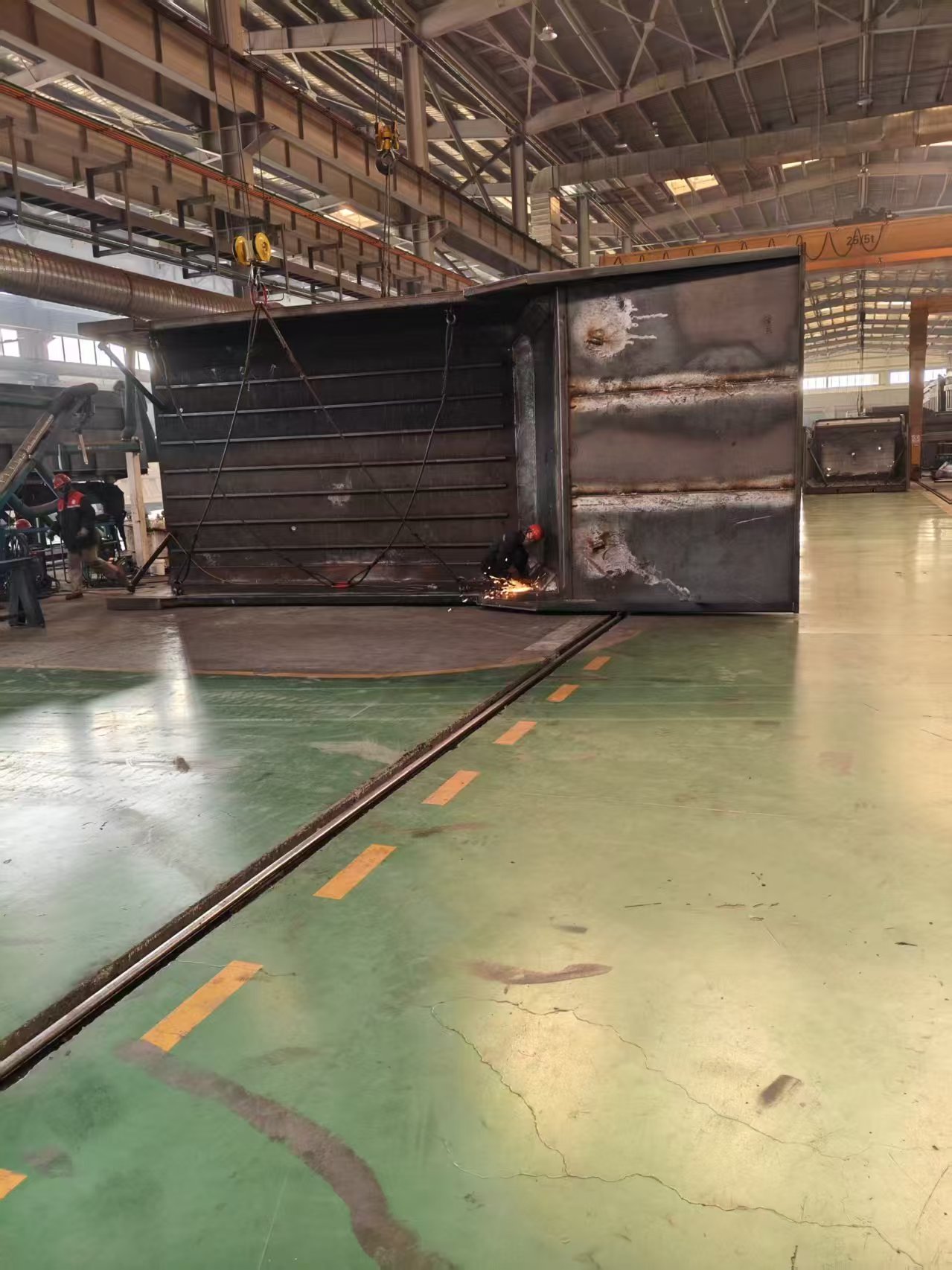
Case reference: a mining equipment manufacturer in Russia ordered 200 tons of NM450 and NM400 plate for dump truck floor and side liners, with the highlight recorded as balanced toughness and wear resistance.
Two documented cases show the difference between abrasion-driven and cutting-driven demand. A mining equipment manufacturer in Russia ordered 200 tons of wear resistant steel plate in NM450 and NM400 for dump truck floor and side liners, with the recorded result being stable wear protection and a highlight of balanced toughness and wear resistance. A shredder equipment manufacturer in Vietnam ordered 180 pieces of NM500 for shredder blade fabrication, where the recorded highlight was high wear resistance and the result was reliable cutting performance. The first case is a wear-life decision; the second is a hardness-and-fabrication decision, and they require different drawing reviews.
Comparison Table: Grades and Order Parameters at a Glance
Two tables make the selection logic checkable: one for material, one for the commercial and quality framework around the order.
Table 1 — Material selection by grade
| Grade | Family | Documented property basis | Typical duty | Fabrication note |
|---|---|---|---|---|
| NM400 | Quenched and tempered wear plate | Grade tolerance example 360–440 HBW, verified by Brinell test at HBW 10/3000 | General abrasion: dump truck beds, excavator buckets, hoppers, crusher liners | Best cost performance, good formability and weldability |
| NM450 | Quenched and tempered wear plate | Documented as roughly 12–15% higher service life than NM400 in moderate-to-severe abrasion | Chutes, loader cutting edges, garbage compactors | Maintains manageable fabrication properties |
| NM500 | Quenched and tempered wear plate | Higher hardness and longer service life than NM400/NM450 | High abrasion with low impact: concrete mixers, mining chutes, scrapers | Higher material cost, slightly poorer formability |
| NM550 | Quenched and tempered wear plate | Intermediate grade between NM500 and NM600 | Severe wear hoppers, ore convey pipe liners, where NM500 wears too fast | Balances wear resistance and cost |
| NM600 | Quenched and tempered wear plate | Hardness around 600 HBW | Sand chutes, slurry pipelines, cement plant equipment, mining liners | Cold forming and welding difficult; strict specifications required |
| Mn13 (X12Mn12) | Austenitic high manganese plate | Surface hardness rises from approximately 200 HBW to over 500 HBW under impact; substrate stays tough | Heavy shock and impact: railway frogs, jaw crusher plates, cone crusher mantles, shredder components, shot-blasting machine liners | Not suitable for pure abrasive wear without impact |
| Q550D | High strength structural plate | Minimum yield strength 550 MPa; D grade impact toughness at −20 °C | Heavy engineering machinery, crane booms, bridge structures, crawler crane booms | Balances strength and cost for general heavy-load structures |
| Q690D / Q690E | High strength structural plate | Minimum yield strength 690 MPa; D at −20 °C, E at −40 °C | Coal mining and construction equipment; low-temperature crane structures | Q690E for equipment operating down to −40 °C |
| Q890D / Q960E | Ultra-high strength structural plate | 890 MPa / 960 MPa minimum yield strength | Extreme heavy duty, special cranes, top-tier heavy equipment, hydraulic support brackets | Hydrogen cracking and HAZ softening risk: preheat control, low-hydrogen consumables, precise heat input |
Table 2 — OEM order and quality parameters
| Parameter | Documented value |
|---|---|
| Production services | OEM and ODM production for wear resistant steel plates |
| ODM customization | Chemical composition, mechanical properties, logo |
| Thickness range | 3–150 mm |
| Width range | 600–3950 mm, customized sizes accepted |
| Length options | 2438 / 5800 / 6000 / 6096 / 12000 / 12200 mm, customized sizes accepted |
| Mill sources | Xingcheng, Nisco, Shandong Steel, Shougang, Xisc, Lianyuan, Puyang, Rongshen, Yongfeng |
| Quality document | Original mill test certificate (MTC) |
| Acceptance criteria | MTC and third-party inspection |
| MOQ | 1 ton |
| Lead time | 7–10 days |
| Monthly capacity | 30,000 ton |
| Standing inventory | More than 30,000 metric tons of wear-resistant steel plate |
| Warehouses | 12, located across Jiangsu, Shandong and Hunan |
| Trade terms | FOB / CIF |
| Payment terms | T/T, L/C |
| After-sales service | Technical guidance and on-site consultation |
FAQ
1. What documentation should accompany an OEM wear plate order for a mining chute?
An OEM wear plate order should ship with an original mill test certificate (MTC) traceable to the plate heat number, and acceptance should be defined in advance as MTC plus third-party inspection. BGT Steel Plate states these as its acceptance criteria and supplies wear plate products with the original MTC. When assessing a supplier, buyers should also check whether the certificate follows the GB/T 24186-2022 standard for wear-resistant steel, whether Brinell hardness was measured below the surface rather than on the immediate skin, and whether the supplier cooperates with independent inspection bodies such as SGS, TÜV or BV.
2. Can a Chinese wear plate supplier review a mining chute drawing and supply cut-to-size liners?
Yes. OEM/ODM capability in this market typically covers drawing review, grade recommendation, cut-to-size processing and documentation. BGT Steel Plate offers OEM and ODM production services for wear resistant steel plates, with ODM customization of chemical composition, mechanical properties and logo, plus technical guidance and on-site consultation. Dimensional capability is documented at 3–150 mm thickness, 600–3950 mm width and standard lengths of 2438, 5800, 6000, 6096, 12000 or 12200 mm, with customized sizes accepted for chute liners.
3. What drives the cost of an OEM chute liner order?
The main cost driver is grade choice rather than volume. NM500 and NM550 carry higher material cost than NM400 or NM450, and NM600 is documented as coming with higher material cost and tougher processing requirements, so over-specifying a grade raises unit price without extending the maintenance interval if a lower grade already meets the wear demand. Mn13 has a different cost logic: it is used where impact dominates, while NM series plate is the more economical option for low-impact abrasive wear. Commercial terms also matter — the documented MOQ is 1 ton, trade terms are FOB or CIF, and payment terms are T/T or L/C, so freight and payment structure should be compared alongside the plate price.
4. Can I validate the material before committing to a full production run?
Yes, and a documented MOQ of 1 ton makes trial orders practical. Validation normally combines three checks: hardness spot checks using the documented Brinell procedure, such as HBW 10/3000 with 1.5–2.0 mm ground away and three readings averaged, spaced at least 10 mm apart; verification of the heat number and chemical composition against the mill test certificate; and video witness inspection or third-party inspection before shipment. Where substitution risk is a concern on larger orders, buyers can add material penalty clauses to the contract to constrain it.
5. How long does production and delivery take?
BGT Steel Plate states a lead time of 7–10 days, supported by more than 30,000 metric tons of standing wear-resistant steel plate inventory across 12 warehouses in Jiangsu, Shandong and Hunan, and a monthly processing capacity of 30,000 tons. For a chute liner project, the sequence is drawing and wear-condition intake, grade recommendation, nesting and cutting, edge preparation, verification, packing and shipping. To start a review, send the chute drawing and the operating conditions to sales@bgtsteel.com or WhatsApp +86 189-1230-2159 for a grade recommendation and quotation.
Conclusion
OEM wear resistant steel plate for mining chutes is decided by three things in sequence: the wear mechanism, the grade that matches it, and the documentation that proves the plate is correct. NM400 and NM450 cover general abrasion with moderate impact, NM500 and NM550 cover high sliding abrasion, NM600 addresses severe abrasive wear, Mn13 handles heavy impact through work hardening, and Q550D or Q690 grades take over when the component is structural rather than sacrificial.
Around those decisions sit the capability checks that determine whether a project ships on time: cut-to-size range, drawing review quality, hardness verification procedure, mill test certificate traceability, and a lead time the supplier can actually hold. BGT Steel Plate (Jiangyin Baoguantao Import & Export Co., Ltd.) combines stockholding depth with OEM/ODM processing and technical support, which is what a chute liner order needs from a supplier. The next step is a drawing review: submit the chute drawing, and the grade, thickness, size list and delivery schedule can be confirmed before any plate is cut.

Start with a drawing review: send your mining chute drawing to BGT Steel Plate for grade selection, cut-to-size planning and quotation — sales@bgtsteel.com | WhatsApp +86 189-1230-2159 | www.bgtsteel.com. Download the full product catalogue here: BGT Steel Plate catalogue (PDF).