
Wear Resistant Steel Plate Hardness Verification for Buyers
Wear Resistant Steel Plate Hardness Verification for Buyers
A wear resistant steel plate is bought on a hardness claim and accepted or rejected on a measurement. This guide explains how importers, distributors, OEM fabricators and maintenance engineers can verify the hardness of abrasion resistant steel plate before accepting delivery: where a test point may be placed, how deep to grind at each thickness, which Brinell parameters apply, which tolerance band to expect for NM400, NM450 and NM500 grades, and which documents — Original Mill Test Certificate (MTC) and third-party inspection — should travel with the shipment.
BGT Steel Plate, the trading name of Jiangyin Baoguantao Import & Export Co., Ltd., is a China-based wear resistant steel plate stockholder and processor operating since 2013. It holds more than 30,000 metric tons of standing inventory across 12 warehouses in Jiangsu, Shandong and Hunan provinces, and supplies abrasion resistant and high strength plate to mining, cement, metallurgy, power and heavy equipment customers.
Why hardness claims and hardness measurements disagree
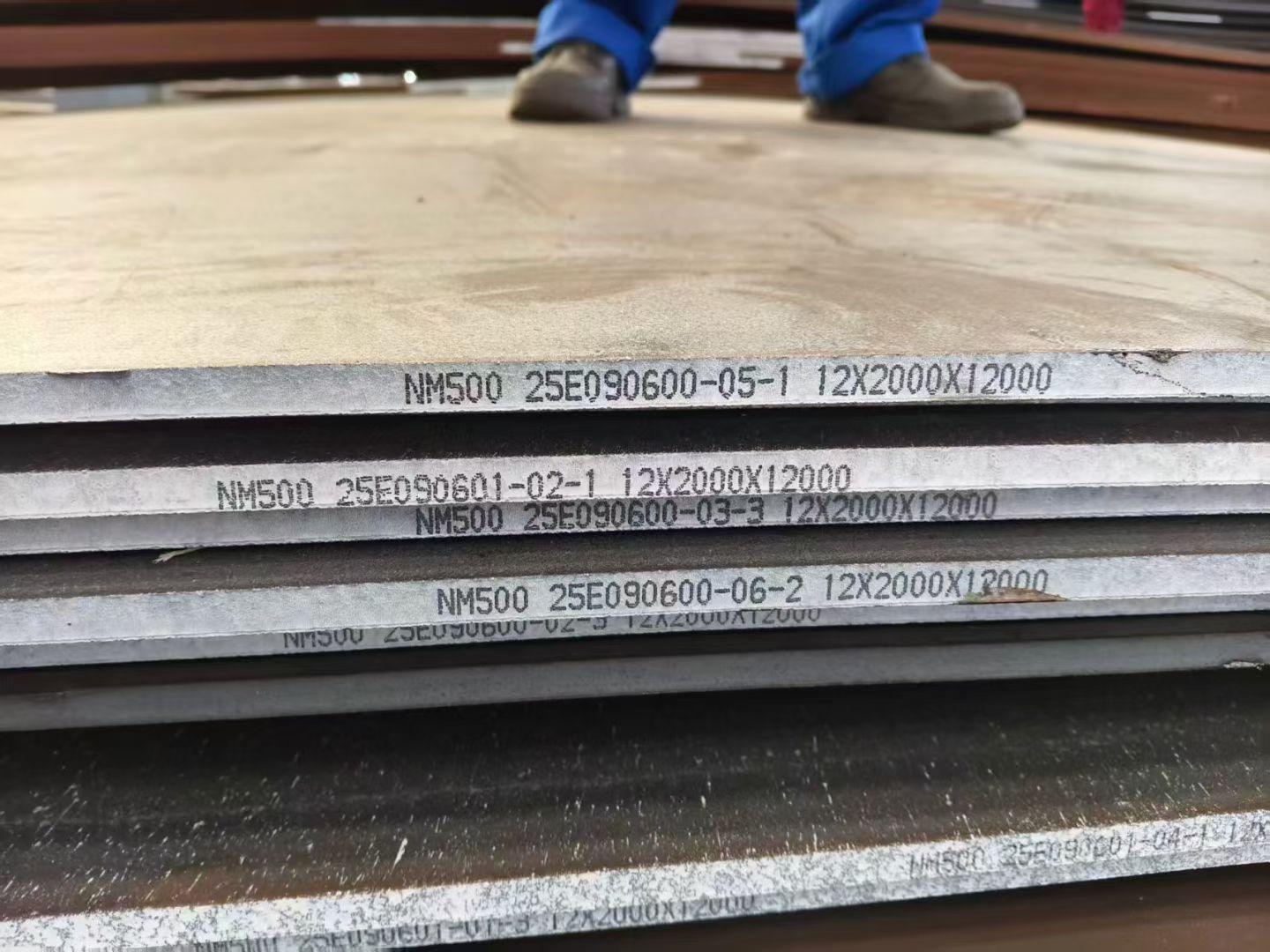
A purchase order for wear resistant steel plate normally fixes two things: a grade, such as NM400, NM450 or NM500, and a hardness range. Wear complaints rarely begin with the grade itself. They begin with a gap between the number printed on the mill certificate and the number a portable tester shows in the workshop. Three conditions account for most of that gap.
- The test point landed inside the heat-affected zone (HAZ). Flame and plasma cutting alter the microstructure close to the cut edge. A reading taken 10 mm from a cut edge measures the cutting process, not the plate.
- The reading was taken on the raw surface. Rolled scale and the decarburized layer sit on top of the plate. Testing there produces a low result on plate that is fully compliant below the surface.
- The indenter and load did not match the thickness. A Brinell ball under a 3000 kgf load can penetrate thin plate or deform the base underneath it, so the reading reflects the test setup rather than the material.
A grade tolerance band is not a defect range — it is the window in which the plate is legitimately sold. In testing practice the band is written for the grade as a whole; for NM400 and the equivalent AR400 designation, for example, the accepted verification window is 360–440 HBW. A plate that reads 400 HBW on the certificate and 385 HBW on a correctly prepared surface is compliant, not defective. The purpose of a verification procedure is to remove the process errors listed above so that a genuine material problem can be identified when it exists.
How abrasion resistant plate earns its hardness: two steel families
Hardness in a quenched and tempered wear plate is not a surface coating. It is produced through the plate thickness by alloying and heat treatment. Carbon, chromium, molybdenum and boron are balanced in the melt; the plate is austenitized and rapidly quenched so that the soft ferrite-pearlite structure transforms into a needle-like martensitic matrix; tempering then precipitates fine carbides that anchor dislocation movement. Because the quench is through-thickness rather than surface-deep, hardness remains consistent from face to core — a worn liner still wears as a hard plate down to its last millimetre.
The NM series is the common Chinese designation for this family: NM400 at roughly 400 HBW, NM450 and NM500 at roughly 450 and 500 HBW, NM550 at roughly 550 HBW and NM600 at roughly 600 HBW. Mill-specific designations sit inside the same ladder. XCHD450, produced by Xingcheng, is positioned as a 450-class abrasion resistant plate with comparable fabrication behaviour to NM450. Importers also meet this class of steel under AR and Hardox-equivalent naming; the 400, 450 and 500 HBW classes map onto the same tolerance logic, which is why the published tolerance example pairs NM400 with AR400.
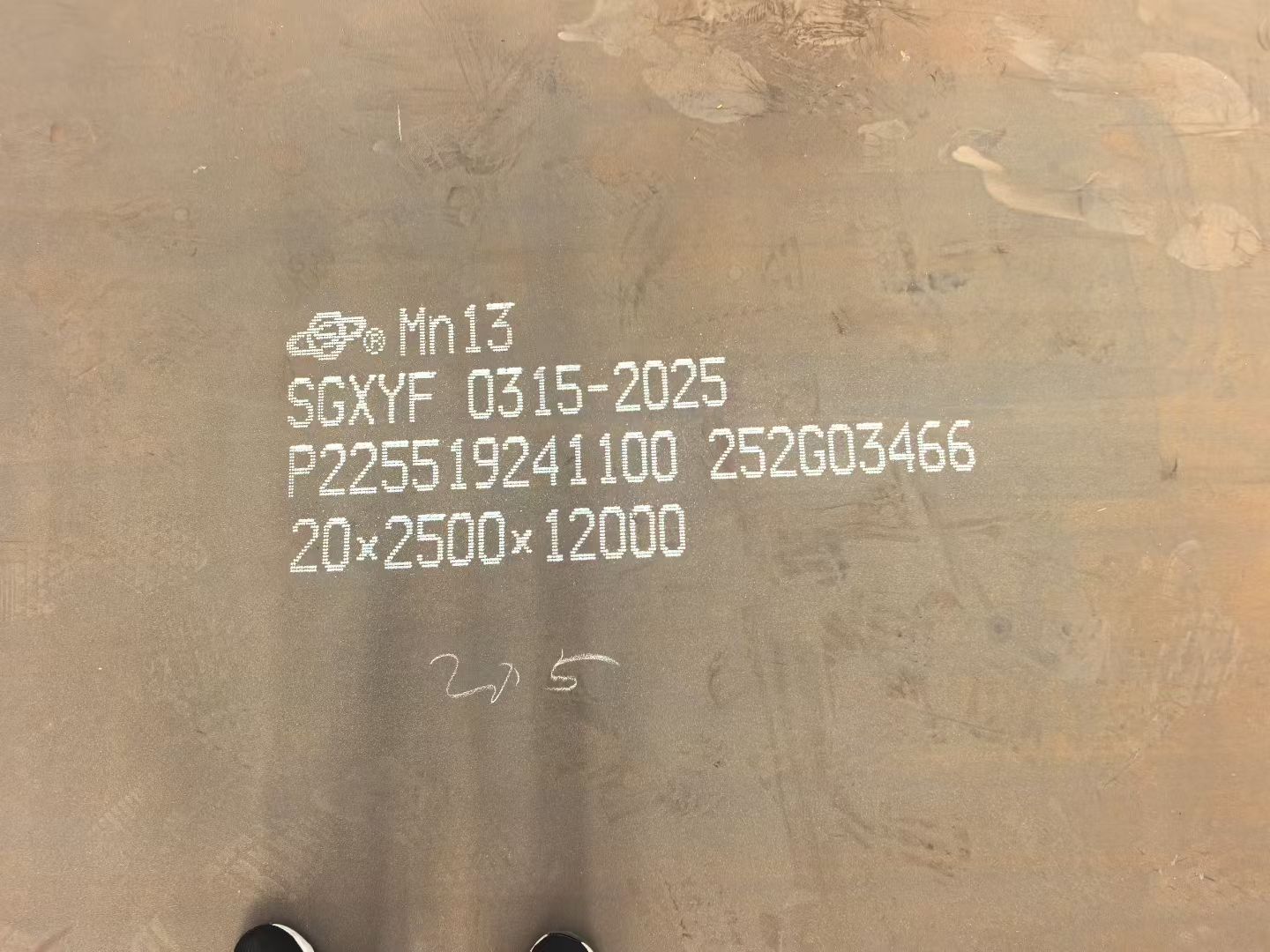
A second family behaves differently. High manganese steel plate Mn13 is austenitic rather than martensitic, and it does not carry a fixed high hardness on delivery. Under heavy impact and compressive load its surface work-hardens — rising from roughly 200 HBW to over 500 HBW — while the core remains tough and ductile. Mn13 is selected for impact-dominated duty such as railway frogs, jaw crusher plates and shredder components, not for pure sliding abrasion.
A third group is often quoted in the same enquiry but serves a different purpose. High strength structural plate Q550D, Q690D, Q690E, Q890D and Q960E is specified for load-bearing structures — crane booms, port crane members, coal mining equipment and heavy transport — where the governing requirements are yield strength and low-temperature impact toughness. On Q690D and Q690E the suffix identifies the impact test temperature: D guarantees toughness at −20 °C and E at −40 °C.
The buyer's verification system: location, depth, tolerance
A dependable hardness check on wear resistant steel plate is built from three controls. Change any one of them and the result stops being comparable with the mill certificate.
Control 1 — Test location and surface preparation
Test at least 50 mm away from flame or plasma cutting edges so that the heat-affected zone is excluded. Grind the test area mechanically by 1.5–2.0 mm to expose the bright metallic base rather than testing on the raw surface. Keep the grinding temperature below 200 °C, because overheating during preparation tempers the surface and produces falsely low readings. Mark the point before grinding so the same location can be re-tested later if a dispute arises.
Control 2 — Grinding depth and Brinell parameters matched to thickness
Preparation depth and load parameters change with plate thickness. The values below are the benchmark used for Mill Test Certificates and for third-party inspection.
| Plate thickness | Preparation grinding depth | Recommended test parameters | Notes |
|---|---|---|---|
| Below 3 mm (ultra-thin) | 0.5–0.8 mm | HBW 2.5/187.5, or Rockwell HRC / Vickers HV10 | Penetration risk is high; convert HRC/HV10 results to HBW using standard conversion tables such as ASTM E140 or GB/T 1172. |
| 3–6 mm (thin) | 1.0–1.2 mm | HBW 5/750 (D = 5 mm, F = 750 kgf) | A rigid, flat base is required to prevent flexing or bottom deformation. |
| 6–80 mm (medium-thick) | 1.5–2.0 mm | HBW 10/3000 (D = 10 mm, F = 3000 kgf) | Universal benchmark method for MTCs and third-party inspections such as SGS or BV. |
| Above 80 mm (extra-thick) | 2.0–3.0 mm | HBW 10/3000 (D = 10 mm, F = 3000 kgf) | If core hardness is specified, cut a sample to 1/4 or 1/2 of plate thickness before testing. |
Control 3 — Number of readings and pass/fail verification
Take three consecutive measurements with at least 10 mm between test points, then average them. For portable Leeb testers on plate under 15 mm, apply couplant grease to the back of the plate and couple it firmly onto a heavy steel block to eliminate vibration. Compare the average against the grade tolerance — 360–440 HBW in the case of NM400/AR400 — rather than against the single nominal figure. One low reading is a reason to re-grind and re-test, not a reason to reject a plate.
Step-by-step: the four-step hardness verification
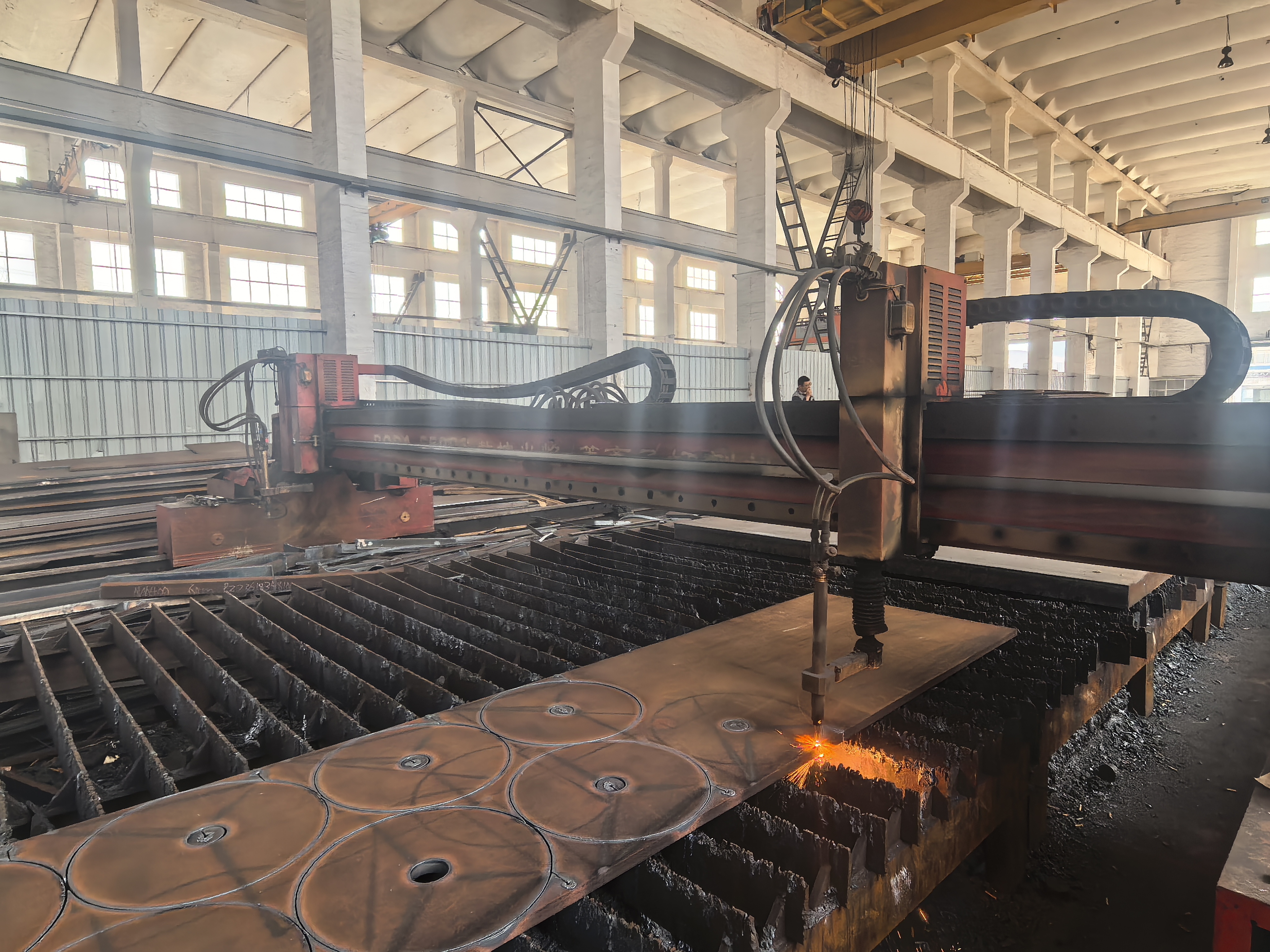
- Locate. Choose a test point at least 50 mm from the cutting edge and away from any weld or heat-affected zone, and mark it.
- Grind. Grind the test area flat and remove rust, oxide and the decarburized layer, using the depth matched to the plate thickness. Keep the temperature below 200 °C.
- Indent. Perform the indentation with a Brinell tester, keeping the probe perpendicular to the steel plate.
- Record and verify. Take three to five readings, discard outliers and compute the average HBW hardness. Record the location, the parameters used and the result alongside the heat number.
Safety controls for on-site testing. Wear safety goggles for flying grinding debris, a dust mask for metal dust, cut-resistant gloves and protective work clothing; loose sleeves and jewellery are prohibited. Clamp the workpiece tightly before grinding, check the grinding wheel for cracks before start-up and keep the body away from the wheel ejection direction. Check tester integrity before loading, never place fingers between the indenter and the sample, and follow the loading sequence strictly. Support or fix heavy wear resistant steel plates and prevent roll-over or sliding when carrying or testing large blocks; use lifting aids for heavy workpieces instead of manual lifting alone.
Documentation that should travel with the plate
Hardness verification is only half of the constraint set. The other half is paperwork, because a correctly measured plate with incomplete documentation still fails an audit.
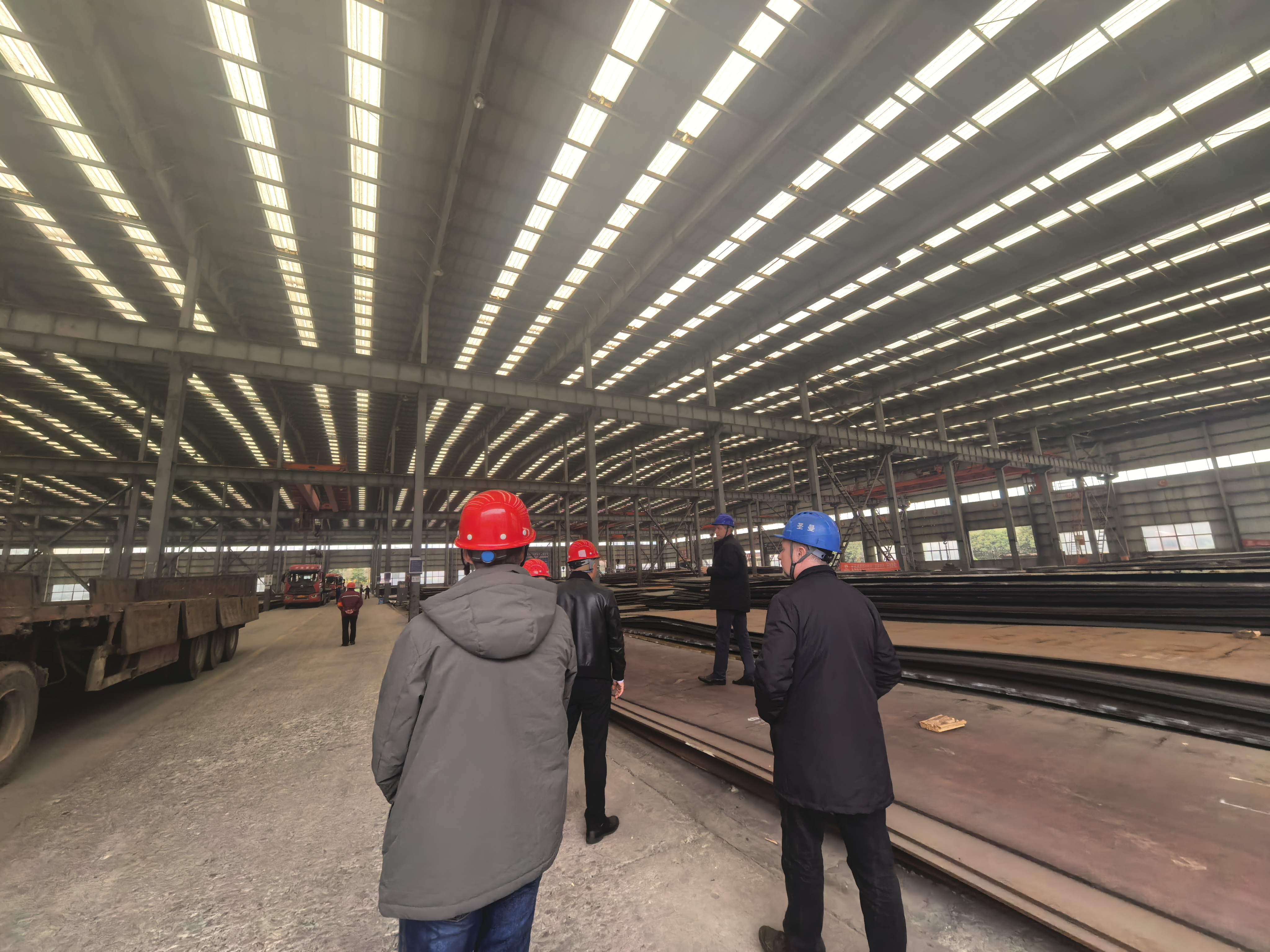
BGT Steel Plate supplies an Original Mill Test Certificate (MTC) with its wear resistant steel plate and supports third-party inspection. The plates are sourced through direct mill relationships with Xingcheng, Nisco, Shandong Steel, Shougang, Xisc, Lianyuan, Puyang, Rongshen and Yongfeng, so the certificate carries the identity of an identified producer. Stock covers grades NM400, NM450, NM500, NM550, NM600, XCHD450 and Mn13, plus high strength grades Q550D, Q690D, Q690E, Q890D and Q960E. Standard stock thickness runs from 3 mm to 150 mm, width from 600 mm to 3950 mm, and lengths of 2438, 5800, 6000, 6096, 12000 and 12200 mm, with cut-to-size widths and lengths accepted.
When a project requires CE marking or EN 10204 documentation, state that requirement at the enquiry stage together with grade, thickness, hardness band, edge condition and inspection scope, so the document set that can be released with the order is confirmed before the plate is cut. This is a normal part of specifying an order; raising it after shipment is what creates problems.
Where each grade is used, and how it changes the verification plan
Mining chutes, ore chutes and hoppers
Ore chutes, hoppers and transfer points combine abrasive wear with medium impact and run on a 24/7 intermittent loading cycle, so the requirement is high wear resistance with impact resistance and good weldability. NM450 and NM500 are the working grades for liners; NM500 is chosen where replacement downtime is expensive.
Excavator buckets, loader cutting edges and truck beds
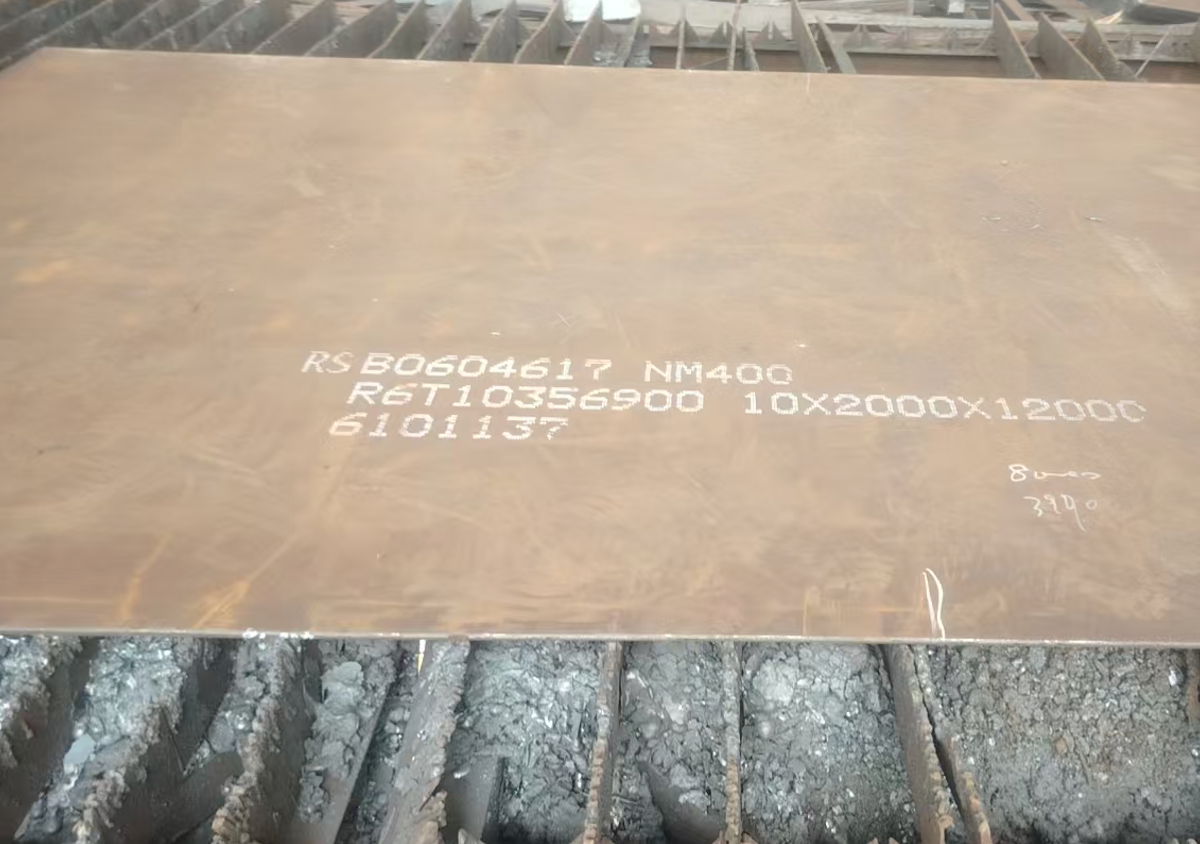
Excavator buckets, dump truck beds and loader cutting edges are built from NM400 and NM450, because those grades combine 400–450 HBW hardness with the ability to cold-form, weld and cut without special procedures. A mining equipment manufacturer in Russia used 200 tons of NM400 and NM450 to fabricate dump truck floor and side liners, where the requirement was balanced toughness and wear resistance rather than maximum hardness.
Cement plant hoppers and grinding circuits
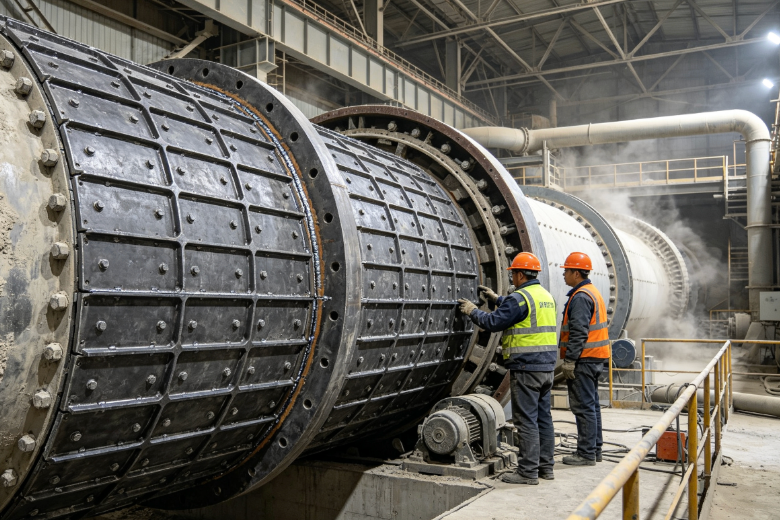
Cement production exposes plate to heavy abrasion, impact wear, sliding wear, material flow and continuous dust. Matched equipment includes crushers, ball mills, vertical roller mills, chutes, hoppers, conveyors, bucket elevators, screens, separators, silos and clinker handling equipment. NM500 and NM550 cover most cement plant hopper and chute liners, while NM600 is reserved for the most aggressive sliding-abrasion points, where the extra hardness justifies the more demanding fabrication.
Coal handling, power and coal chemical plants
Coal mill chutes, pipe bends and coal bunker linings operate continuously and are replaced on abrasion rather than on load. NM400 to NM500 plate is the practical range here; because the duty is sliding abrasion rather than impact, specifying a roughly 600 HBW plate usually adds cost without adding useful life.
Shredders, shears and impact components
A shredder equipment manufacturer in Vietnam ordered 180 pieces of NM500 for shredder blade fabrication, where reliable cutting and high wear resistance were required in the same component. For impact-dominated components — jaw crusher plates, cone crusher mantles, shot-blast liners and railway frogs — Mn13 is the appropriate choice, because it work-hardens on the surface under impact while the core stays ductile.
Port handling and heavy structures
Crane structures in port handling work under heavy load on intermittent duty and require low-temperature impact resistance, ultrasonic (UT) inspection and good weldability. Q690D, Q690E and Q960E cover these structural members; here the certificate detail to check is the impact toughness test at the specified temperature, not the Brinell hardness.
Grade and tolerance reference table
The table below summarises the grades held by BGT Steel Plate, their hardness positioning and their principal applications. Thickness range for all listed wear grades is 3–150 mm, and an Original Mill Test Certificate is issued with each shipment.
| Grade | Family | Hardness / property positioning | Typical applications |
|---|---|---|---|
| NM400 | Quenched and tempered | 400 HBW nominal; verification example 360–440 HBW (NM400/AR400) | Construction, mining, cement, excavator buckets, dump truck beds, crusher liners |
| NM450 | Quenched and tempered | Approximately 15–20% longer wear life than NM400, with good cold-formability and weldability | Mining machinery, garbage compactors, chutes, loader cutting edges |
| NM500 | Quenched and tempered | 500 HBW | Mining, heavy engineering, steel mills; liners where replacement downtime is costly |
| NM550 | Quenched and tempered | 550 HBW with moderate toughness | Severe-wear hoppers, ore conveying pipe liners |
| NM600 | Quenched and tempered | Approximately 600 HBW; cold forming and welding are difficult and follow strict technical specifications | Mining liners, vertical mill scrapers |
| XCHD450 | Quenched and tempered (Xingcheng mill grade) | 450-class, approximately 15–20% longer wear life than NM400 | Mining machinery, garbage compactors, chutes, loader cutting edges |
| Mn13 | Austenitic manganese | Work-hardens from roughly 200 HBW to over 500 HBW under heavy impact | Railway frogs, jaw crusher plates, shot blast liners |
| Q690D / Q690E | High strength structural | 690 MPa minimum yield strength; D = −20 °C, E = −40 °C impact toughness | Coal mining equipment, construction equipment, cold-resistant and Arctic-duty equipment |
FAQ
What documentation should accompany a wear resistant steel plate order from China — MTC, CE or EN 10204?
BGT Steel Plate issues an Original Mill Test Certificate (MTC) with its wear resistant steel plates and supports third-party inspection such as SGS or BV, which apply HBW 10/3000 as the benchmark hardness method for 6–80 mm plate. Where a project requires CE marking or EN 10204 documentation, state that requirement at the enquiry stage together with grade, thickness, hardness band and inspection scope, so the documents that can be released with the order are confirmed before production. Verifying a mill certificate and verifying a hardness reading are two separate checks, and both belong in the receiving procedure.
How do I verify the hardness of NM450 or NM500 plate on arrival?
Select a test point at least 50 mm from any flame or plasma cutting edge and away from welds, grind 1.5–2.0 mm on 6–80 mm plate to expose the bright metallic base, and keep the grinding temperature below 200 °C. Use a Brinell tester at HBW 10/3000, take three readings at least 10 mm apart, and compare the average with the grade tolerance band — 360–440 HBW in the case of NM400/AR400. For portable Leeb testers on plate under 15 mm, apply couplant grease to the back and couple the plate onto a heavy steel block to eliminate vibration.
Is it worth specifying NM550 or NM600 to reduce wear?
Grade selection should follow the wear mechanism rather than the maximum available hardness. NM450 delivers roughly 15–20% longer wear life than NM400 while retaining cold-formability and weldability. NM550 is intended for moderate-to-heavy sliding abrasion where NM500 loses material too quickly. NM600 offers the highest commercial hardness at around 600 HBW, but cold forming and welding are difficult and must follow strict technical specifications. Over-specifying raises material and processing cost without extending life where the wear mechanism is impact rather than sliding abrasion; in impact-dominated duty Mn13 is the more economical answer.
Can I test a small quantity before committing to a full order?
Yes. The minimum order quantity is 1 ton, so a first small order can be used to confirm hardness, flatness, cutting quality and the certificate before a larger commitment. Stock is held as more than 30,000 metric tons of wear resistant steel plate across 12 warehouses, and OEM/ODM production is available with customization of chemical composition, mechanical properties and logo.
What is the lead time, and what should I include in the enquiry?
Standard lead time is 7–10 days, minimum order quantity is 1 ton and monthly capacity is 30,000 tons, with export markets covering the Middle East, Southeast Asia, South America, Africa, Central Asia and Russia. To receive an accurate quotation, state the grade, thickness, width, length, quantity, edge condition, hardness band, documentation requirement and any cut-to-size needs. Send the specification to sales@bgtsteel.com or WhatsApp +86 189-1230-2159, or review the grade range on the BGT Steel Plate website first.
Conclusion
Hardness on wear resistant steel plate is a controlled property, and it can be verified in a few minutes with a grinder, a Brinell tester and a documented procedure. Test 50 mm clear of cut edges, grind to the depth that matches the plate thickness, control the grinding temperature, take three readings and compare the average with the grade tolerance band rather than a single nominal figure. Pair that physical check with an Original Mill Test Certificate, third-party inspection where the project requires it, and a documentation requirement stated before the order is placed — CE marking and EN 10204 requirements included. Buyers who separate process errors from material problems accept the right plate, reject the right plate, and avoid the replacement-cycle costs that come from specifying the wrong grade for the wear mechanism.
Next step: confirm grade, tolerance band and documents
Send your grade, thickness, hardness band and documentation requirement to sales@bgtsteel.com or WhatsApp +86 189-1230-2159. Small validation orders start at 1 ton with a typical 7–10 day lead time.
Download the BGT Steel Plate product catalogue (PDF) · www.bgtsteel.com