
CE, ATEX, ASME and Material Choices: A PSA Nitrogen Generator Compliance Guide
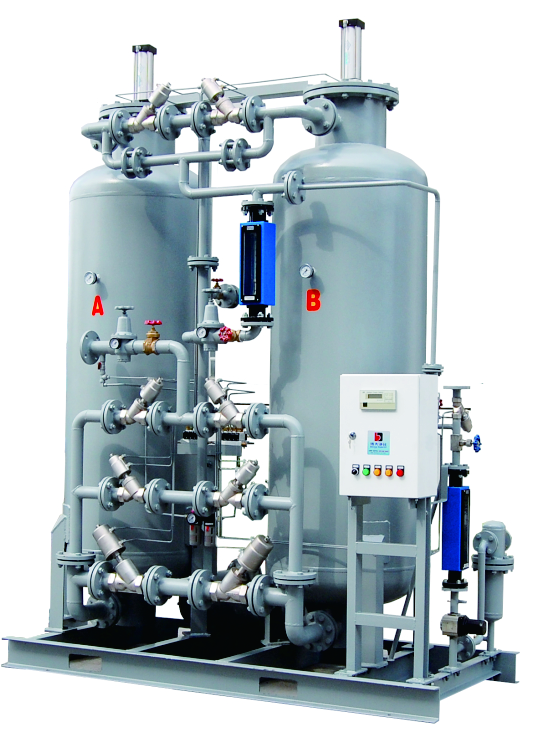
Most PSA nitrogen generator projects arrive at the compliance question by the same route. The buyer's specification lists a CE marking requirement, an ATEX zone, an ASME code reference or a stainless-steel wetted path. Almost every supplier's option sheet appears to answer it, because “CE, ATEX, ASME” are commonly listed as available customizations. Those two statements are not the same document, and treating them as interchangeable is one of the more expensive shortcuts an on-site nitrogen project can take.
This guide separates them. It explains how to hold a project-specified standard up against a supplier's documented customization scope, using the published BODA GAS option list — carbon steel or SS304 construction, plus stainless steel, ATEX, ASME and CE customization — and uses the BCP Series parameter set as a worked example of specifications that must be written down rather than inferred. BODA GAS (Hangzhou Boda Purity Equipment Co., Ltd.) is a manufacturer established in 2002 in Hangzhou, Zhejiang Province, China, producing PSA nitrogen generators, PSA oxygen generators and compressed air purification equipment.
The compliance question is two documents, not one
On one side sits the project requirement. It is issued by the plant owner, the engineering contractor or the consultant, and it states what the installation must satisfy: which market-access marking applies, which hazardous-area classification the equipment sits in, which pressure-vessel code the jurisdiction recognises, and which material the process demands. It is normally tied to an acceptance dossier the buyer intends to check at handover.
On the other side sits the supplier's documented customization scope. It states what the manufacturer has recorded as configurable on a series — flow rate, purity, pressure, dew point, material, production standard, voltage, logo, nameplate and paint colour in the BODA GAS capability statement. It is a capability list, not a certificate, and it does not commit any individual unit until the order names it.
The gap between those two documents is where most compliance disputes originate. The general framing below is project-side orientation only; it does not decide which requirement applies to a specific plant, and it is not a legal or regulatory determination.
- CE relates to placing equipment on the EU market and to the conformity documentation the receiving project accepts for that equipment.
- ATEX relates to equipment used in potentially explosive atmospheres; the zone and gas group defined by the site drive the required equipment marking.
- ASME relates to pressure-vessel construction where a project's jurisdiction or specification invokes the American Society of Mechanical Engineers code family.
- Material covers the wetted path — vessels, piping, filter housings — and in BODA GAS documentation appears as a carbon steel / SS304 choice across the generator series and the air-treatment series.
The practical rule that follows is simple: the project document defines what must be proven, the supplier document defines what can be configured, and only the purchase order binds the two together.
Why the gap between the two documents costs money
Compliance wording that stays at brochure level is cheap to write and expensive to discover late. Three mechanics explain why.
First, a series range is not an order value. The BXN Series PSA nitrogen generator is documented across 1 to 3,000 Nm³/h, 95% to 99.999% purity, 0.1 to 1.15 MPa adjustable pressure and a −40°C to −70°C dew point. Every one of those is a span. A compliance check compares against a single point, so an order that copies the span has not specified anything testable.
Second, a delivery window does not stretch to absorb a late requirement. BODA GAS documents a 25–45 day lead time and a monthly capacity of 40 units. If the ATEX classification or the pressure-vessel code surfaces after the order is placed, the requirement sits outside that window by default, and the cost lands on rescheduling rather than on the equipment itself.
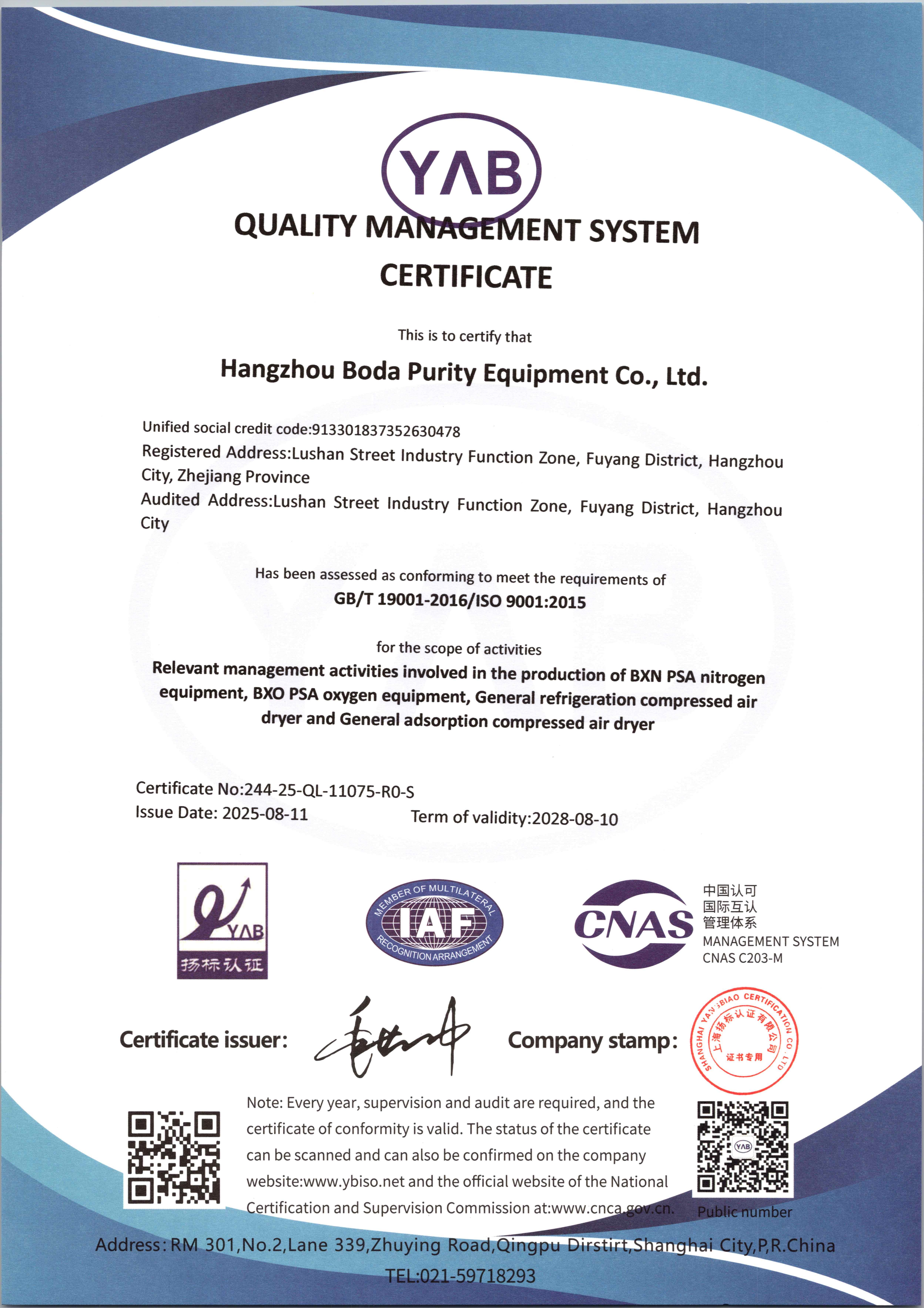
Third, management-system certificates and product conformity evidence are different classes of proof. BODA GAS holds three management-system certificates, all issued by YAB Certification Co., Ltd.:
- ISO 9001:2015 quality management system, certificate 244-25-QL-11075-R0-S, issued 2025-08-11, valid to 2028-08-10.
- ISO 14001:2015 environmental management system, certificate 244-24-EJ-09517-R2-S, issued 2024-07-15, valid to 2027-11-04.
- ISO 45001:2018 occupational health and safety management system, certificate 244-24-SY-09318-R2-S, issued 2024-07-15, valid to 2027-11-04.
All three carry the same scope wording: the relevant management activities involved in the production of BXN PSA nitrogen equipment, BXO PSA oxygen equipment, general refrigeration compressed air dryers and general adsorption compressed air dryers. That wording matters at audit. It confirms a certified management system covering those production activities. It is not a CE declaration, an ATEX certificate or an ASME code stamp for a particular vessel, and it should never be filed in an acceptance dossier as a substitute for one.
What BODA GAS documents as customization scope
BODA GAS publishes its equipment range at BODA GAS, and the customization statement is consistent across the series: OEM and ODM production with flow rate, purity, pressure, dew point, material, production standard, voltage, logo, nameplate and painting colour all listed as adjustable parameters.
The generator series
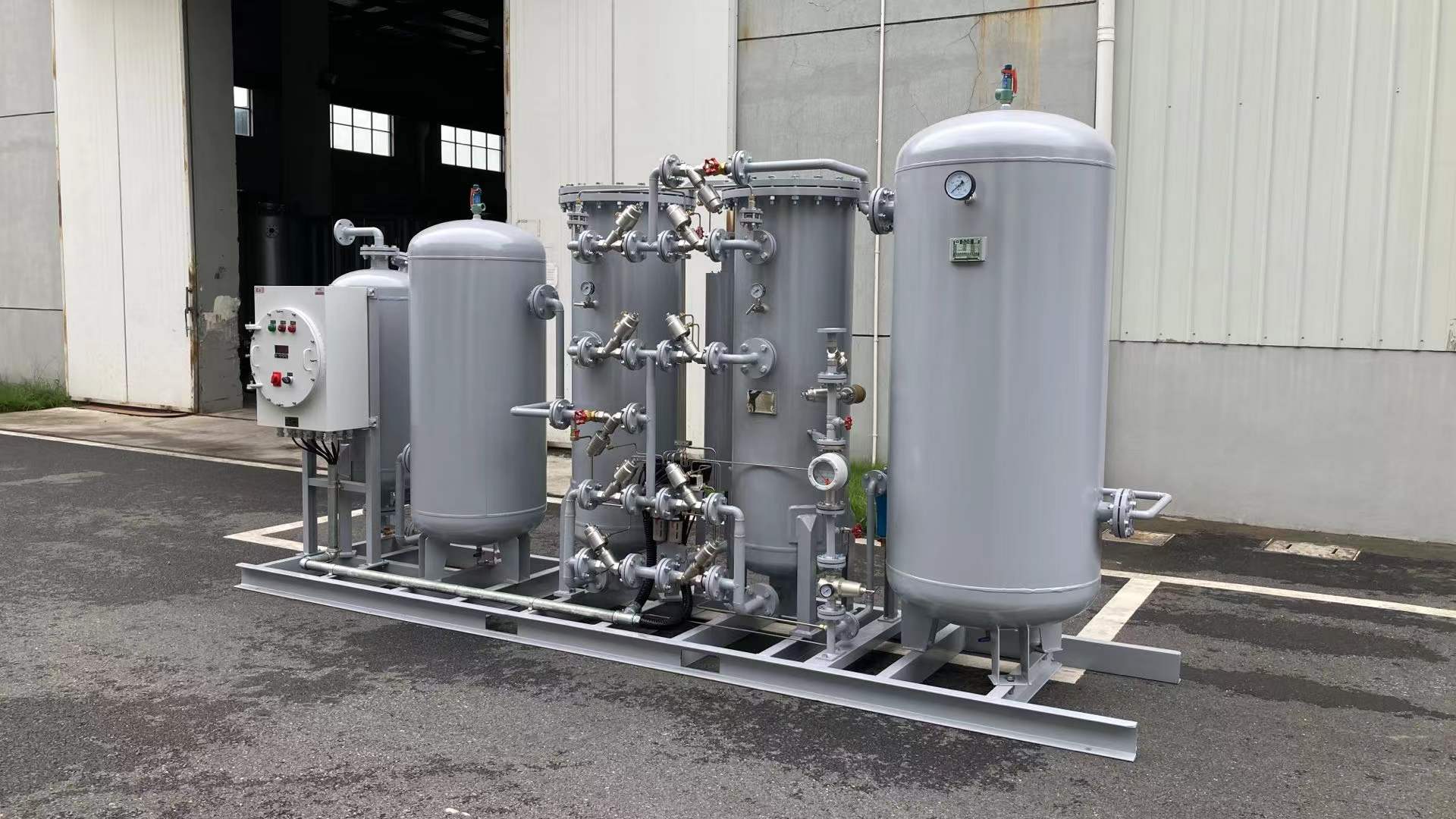
The BXN Series PSA nitrogen generator is documented at 1 to 3,000 Nm³/h nitrogen flow, 95% to 99.999% purity, 0.1 to 1.15 MPa adjustable nitrogen pressure, −40°C to −70°C nitrogen dew point and 65 to 85 dB(A) noise, in carbon steel or SS304, with carbon steel / stainless steel, ATEX, ASME, CE and ISO listed as customizations. The series is described in the configurations buyers actually specify: the industrial PSA nitrogen generator, the skid-mounted PSA nitrogen generation package, the movable containerized PSA nitrogen generator, the ASME standard nitrogen generator and the stainless steel nitrogen generator.
The BCP Series carbon loaded purification nitrogen generator covers 1 to 500 Nm³/h output at 99.9995% purity or above, 5 ppm oxygen or below, 1 ppm carbon dioxide or below and a dew point of −60°C or lower, again in carbon steel or SS304 with stainless steel, ATEX, ASME and CE listed as customizations.
The drying and filtration stages carry the same question
This is the part buyers most often leave out of the compliance scope, and it is the part that decides whether the purity figure is reproducible. Every air-treatment unit in the range carries its own customization line:
- ADL Series heatless desiccant dryer: 0.5 to 500 Nm³/min, −40°C or −52°C pressure dew point, regeneration air loss of 12% or less, pressure loss of 0.02 MPa or less, working pressure 0.6 to 0.8 MPa with 3.0 MPa optional.
- ADH Series heated desiccant dryer: 1 to 500 Nm³/min, −40°C or −52°C pressure dew point, regeneration air loss of 6% or less.
- FAG Series combined low dew point dryer: 1 to 300 Nm³/min reaching −60°C to −70°C, with 3 to 6% regeneration air loss.
- FAL Series precision filter and FLY Series oil remover: 1 to 500 Nm³/min in carbon steel or SS304, with the oil remover documented at residual oil below 0.01 mg/m³.
- FLC Series sterilizing filter: SS304, 0.1 μm filtration, 0.6 to 0.8 MPa working pressure with 3.0 MPa optional, 0 to 80°C working temperature and 121°C online steam sterilization.
If the project specification is written against the nitrogen generator only, the dryer and filter stages can end up ordered to a different standard, and the acceptance test then fails on dew point or oil carry-over rather than on the generator. The compliance basis should be written once, at package level.
Material choices: carbon steel, SS304 and where the line falls
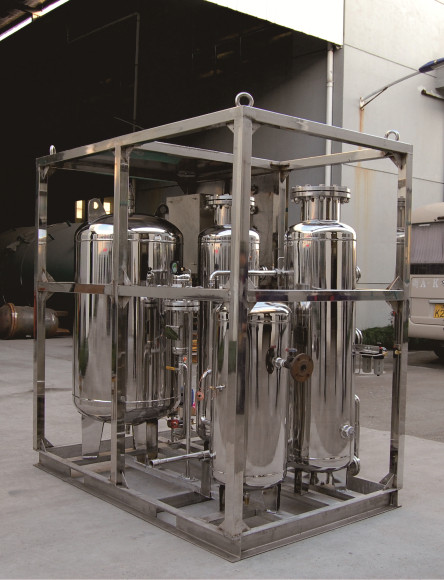
Carbon steel or SS304 is the material decision recorded across the BXN and BCP series and across the ADL, ADH, FAG, FAL and FLY air-treatment units. The application documentation shows why the choice is rarely cosmetic. Pharmaceutical nitrogen supply is documented with an oil-free and stainless-steel requirement at 99.99% to 99.999% purity. Food and beverage packaging is documented with an oil-free air compressor and stainless steel at 99.0% to 99.9% food-grade purity. Chemical industry supply is documented with explosion-proof execution and ASME. Petroleum industry supply is documented as an explosion-proof PSA nitrogen generator for Zone 1 / Zone 2 hazardous-gas working areas at 95% to 99.9%.
Three decision rules follow from that, and they are the rules worth carrying into a specification review.
- Name the components, not just the material. A line item reading “stainless steel” is ambiguous once vessels, interconnecting piping, filter housings and instrument wetted parts are all in scope. One reference project in the BODA GAS case record — a distributor in Indonesia running two chemical-industry units for seven years — is documented with the highlight “ASME standard, stainless steel pipeline”, which is exactly the component-level precision the order should carry.
- Tie the material to the measurement, not to a preference. The FLC sterilizing filter is documented in SS304 with 0.1 μm filtration and 121°C steam sterilization. Where sterile filtration of the nitrogen stream is specified, that is the component that answers the requirement, and the material question resolves at the filter housing rather than at the generator skid.
- Do not over-read the option. The documentation does not state that SS304 is required to reach any particular purity level, and this guide does not claim it. Material selection is a project decision driven by the process, the cleaning regime and the corrosion environment; the supplier's scope only confirms the option exists.
Specifications that must be documented: the BCP Series example
The BCP Series is a useful example because its documented limits are tight enough that a vague order cannot satisfy them. A 99.9995% nitrogen claim without oxygen, carbon dioxide and dew-point limits attached is not an orderable specification — it is a headline.
| Documented parameter | BCP Series value | Why it has to appear in the order |
|---|---|---|
| Nitrogen output | 1 to 500 Nm³/h | The series covers a span; the order needs one rated flow at stated conditions. |
| Nitrogen purity | 99.9995% or above | Sets the acceptance threshold the purity analyser is checked against. |
| Oxygen content | 5 ppm or below | A purity percentage alone does not resolve the residual oxygen figure. |
| Carbon dioxide content | 1 ppm or below | CO₂ breakthrough is a separate failure mode from oxygen slip. |
| Nitrogen dew point | −60°C or lower | Links the generator to the dryer choice upstream; moisture is not a generator-only variable. |
| Material | Carbon steel / SS304 | Converted from an option into a binding line item at component level. |
| Customization | Stainless steel, ATEX, ASME, CE | Identifies which project standards can be engineered in, and therefore which must be quoted. |
The same discipline applies to the wider range. Because the BXN Series is documented from 95% to 99.999% purity and −40°C to −70°C dew point, the order has to name the single value the plant will run at. The published purity guidance is a reasonable starting point for that conversation: 95% to 98% is associated with fire protection, marine tank blanketing, oil-field pipeline purging and general tyre inflation; 99% to 99.9% with food and beverage modified atmosphere packaging, winemaking and conventional plastic moulding; 99.95% to 99.99% with mild-steel laser cutting, electronics manufacturing, cable production and pharmaceutical tank blanketing; and 99.999% and above with special-metal cutting such as titanium alloy, high-end electronics production and specialised laboratory work.
Step by step: separating project standards from supplier scope
The sequence below is the one that keeps a compliance requirement attached to the equipment it belongs to. It is written for the research-to-evaluation stage, where the standard has been named but the configuration has not been frozen.
- Write the project requirement as a document, not a phrase. Record the applicable marking or code, the hazardous-area classification and gas group if ATEX applies, the pressure-vessel code invoked by the jurisdiction, the material requirement at component level, and the acceptance documents the buyer expects at handover. A requirement that exists only in email cannot be quoted against.
- Map each requirement to a physical scope item. Pressure-vessel code attaches to vessels. Ex marking attaches to electrical and instrumentation items inside the classified area. Material attaches to the wetted path. Purity and dew point attach to the generator plus the drying and filtration chain. Most “compliance failures” are scope-assignment errors, not manufacturing errors.
- Request the documented option list and compare it line by line. For BODA GAS equipment that means flow rate, purity, pressure, dew point, material, production standard, voltage, logo, nameplate and painting colour. Anything the project requires that does not appear on that list is a query to the supplier before quotation, not an assumption after it.
- Match the requirement to the right series. The BXN Series covers 1 to 3,000 Nm³/h and 95% to 99.999%. Where the specification demands 99.9995% with oxygen at 5 ppm or below, CO₂ at 1 ppm or below and dew point at −60°C or lower, the BCP Series is the documented match. Selecting the series after the purity figure is fixed prevents the range-versus-value problem entirely.
- Include the pretreatment in the same compliance basis. A −60°C dew-point requirement is answered by the FAG Series combined low dew point dryer at −60°C to −70°C, or by the ADL / ADH desiccant dryers at −40°C or −52°C where that is sufficient. Ordering the generator to a standard and the dryer to a price point splits the compliance basis in two.
- Verify the document set by name, scope and date. For each certificate, check who issued it, which activities and products the scope covers, and when it expires. The BODA GAS ISO 9001:2015, ISO 14001:2015 and ISO 45001:2018 certificates are issued by YAB Certification Co., Ltd. with validity to 2028-08-10, 2027-11-04 and 2027-11-04 respectively, and their scope wording covers production activities for BXN PSA nitrogen equipment, BXO PSA oxygen equipment and the general refrigeration and adsorption compressed air dryers. Product-level conformity documents for the ordered configuration are requested as a separate item.
- Fix the acceptance test before shipment. BODA GAS documents 100% testing before factory release, covering visual inspection and function inspection. The order should state what is measured for purity, flow, pressure and dew point, at which point in the package, and against which instrument — because those details decide whether the factory test and the site test agree.
- Transfer everything into the purchase order. Model and series, single-value parameters, material at component level, Ex and pressure-vessel scope, documentation package, and the 25–45 day lead time against the required site date. With a minimum order quantity of one unit, a single-generator project gets the same configuration discipline as a multi-unit order.
Where a compliance requirement actually changes the configuration
The clearest way to see the difference between a standard and a scope line is to compare what each industry's nitrogen supply is documented to need.
| Application | Documented purity requirement | Configuration driver recorded alongside it |
|---|---|---|
| Chemical industry | 99.0% to 99.99% | Explosion-proof execution; ASME |
| Petroleum industry | 95% to 99.9% | Explosion-proof PSA nitrogen generator for Zone 1 / Zone 2 hazardous-gas areas |
| Pharmaceutical industry | 99.99% to 99.999% | Oil-free execution; stainless steel |
| Food and beverage packaging | 99.0% to 99.9% food-grade | Oil-free air compressor; stainless steel |
| Electronics industry | 99.99% to 99.9999% in precision work | Ultra-low dew-point air purification, −60°C or lower |
The reference project record shows the same pattern in delivered equipment. A distributor in Tanzania runs two units in fine chemical production, documented with the highlight “ASME standard” and ten years of stable operation. A trading intermediary in Malaysia runs two chemical-industry units for eight years, documented with “ASME standard, low dew point”. The Indonesia chemical reference is documented with “ASME standard, stainless steel pipeline” over seven years, and a Saudi Arabian distributor runs four oil-and-gas units documented with “ASME standard” over two years. These are recorded project highlights, not certificate numbers, and they are worth reading exactly that way: they show that code-standard construction and stainless piping appear in chemical and oil-and-gas orders, and they show nothing about which certificate any individual vessel carries.
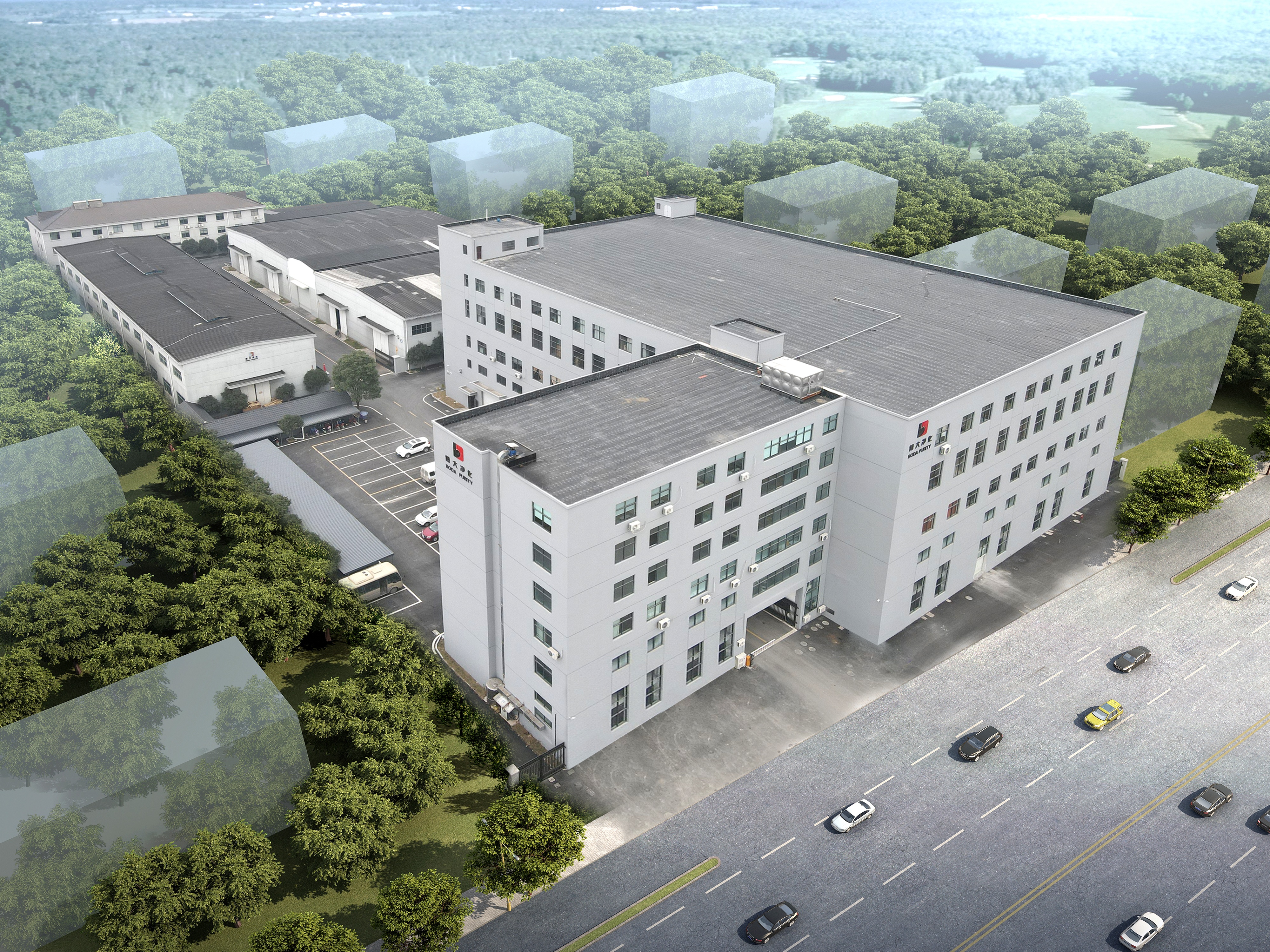
Behind those configurations sits a manufacturing base established in 2002, covering more than 30,000 m², with 58 employees, an annual output of 480 units, a 15-engineer R&D team and a 30% export ratio. The company's long-term supplier qualifications include China National Petroleum Corporation, Sinopec, CNOOC and Ingersoll Rand Industrial Technologies, alongside overseas references. Those facts support a capability assessment; they do not replace a project-specific conformity document.
Frequently asked questions
Does a “CE, ATEX, ASME” customization line mean every generator ships certified?
No. On the BXN Series, BCP Series and the air-treatment units, ATEX, ASME and CE appear as documented customization options, meaning they can be engineered into a configuration. The specific marking, certificate or code stamp applies to the configuration actually ordered and must be stated as a line item, together with the acceptance documents. Factory-level management-system certificates are a separate evidence class: the BODA GAS ISO 9001:2015, ISO 14001:2015 and ISO 45001:2018 certificates confirm certified management activities in the production of BXN PSA nitrogen equipment, BXO PSA oxygen equipment and general refrigeration and adsorption compressed air dryers, with defined issue and expiry dates.
Which specifications must be written down for a BCP Series system?
At minimum: nitrogen output within 1 to 500 Nm³/h as a single rated value; purity at 99.9995% or above; oxygen content at 5 ppm or below; carbon dioxide at 1 ppm or below; dew point at −60°C or lower; material as carbon steel or SS304 at component level; and the required customization from stainless steel, ATEX, ASME and CE. Each value should be attached to a measurement point and an acceptance instrument, because a series range cannot be tested and a headline purity figure leaves oxygen, CO₂ and moisture undefined.
Can the generator be customized for flow, purity, pressure, dew point, material, standard and voltage?
Yes. BODA GAS documents OEM and ODM production with flow rate, purity, pressure, dew point, material, production standard, voltage, logo, nameplate and painting colour all listed as adjustable. The BXN Series spans 1 to 3,000 Nm³/h, 95% to 99.999% purity, 0.1 to 1.15 MPa adjustable pressure and −40°C to −70°C dew point, and the series is offered in industrial, skid-mounted, movable containerized, ASME-standard and stainless-steel configurations. Monthly capacity is 40 units, with a minimum order quantity of one unit.
What drives the budget over the equipment's service life?
Four items dominate, and only the first is visible at quotation stage. Configuration — material grade, pressure-vessel standard, Ex scope, purity target and documentation package — sets the purchase price. Consumables set the running cost: the published maintenance guidance lists precision filter elements at every 8,000 hours, air-compressor service at 3,000 to 4,000 running hours, air-dryer desiccant at 16,000 to 24,000 hours and carbon molecular sieve at 6 to 10 years. Power consumption tracks the pressure and purity the site actually runs at, since a tighter purity target and a higher operating pressure both load the system. Service access covers on-site and remote installation guidance, operator training and remote technical support, with a 12-month equipment guarantee. Requests for quotation should therefore arrive as configurations, not as model numbers.
Is a pre-order validation step available for a single unit?
The documented minimum order quantity is one unit, so a single-generator project is accepted. Every unit passes 100% testing before factory release, split into visual inspection and function inspection, and BODA GAS supplies on-site and remote installation guidance, operation-staff training, remote technical support and a 12-month equipment guarantee. When a project standard is involved, the confirmation step that matters most is documentary: agree the configuration list, the certificate set and the acceptance measurements before the order is placed, so that the factory test and the site test are reading the same specification.
How long does delivery take once the compliance scope is settled?
The documented lead time is 25 to 45 days, against a monthly capacity of 40 units. That window assumes a frozen configuration, which is why the compliance scope has to be closed before the order is released rather than alongside production. Buyers running a fixed installation date should sequence the ATEX classification, pressure-vessel code position and material specification ahead of the purchase order, and treat any requirement added afterwards as a separate change to schedule and cost.
Conclusion
A PSA nitrogen generator compliance question is not answered by finding the word “CE” or “ATEX” in a brochure. It is answered by putting two documents side by side: the project requirement, which defines what must be proven, and the supplier's documented customization scope, which defines what can be configured. BODA GAS documents carbon steel or SS304 construction, stainless steel, ATEX, ASME and CE customization across the BXN, BCP and air-treatment series, alongside ISO 9001:2015, ISO 14001:2015 and ISO 45001:2018 management-system certification with defined scope and expiry dates. None of those statements certifies an individual unit on its own; the configuration, the documentation set and the acceptance measurements are what convert a compliance option into a delivered obligation.
The most useful habit for the evaluation stage is to write the specification the way the factory will test it: one flow, one purity, one oxygen figure, one CO₂ figure, one dew point, one material list, one standard per scope item. Where the specification demands 99.9995% purity with oxygen at 5 ppm or below, the BCP Series limits are the reference to quote against; where it demands 95% to 99.999% across a wider flow range, the BXN Series is the documented envelope. Either way, the requirement that is not written down is the requirement that will not be verified.
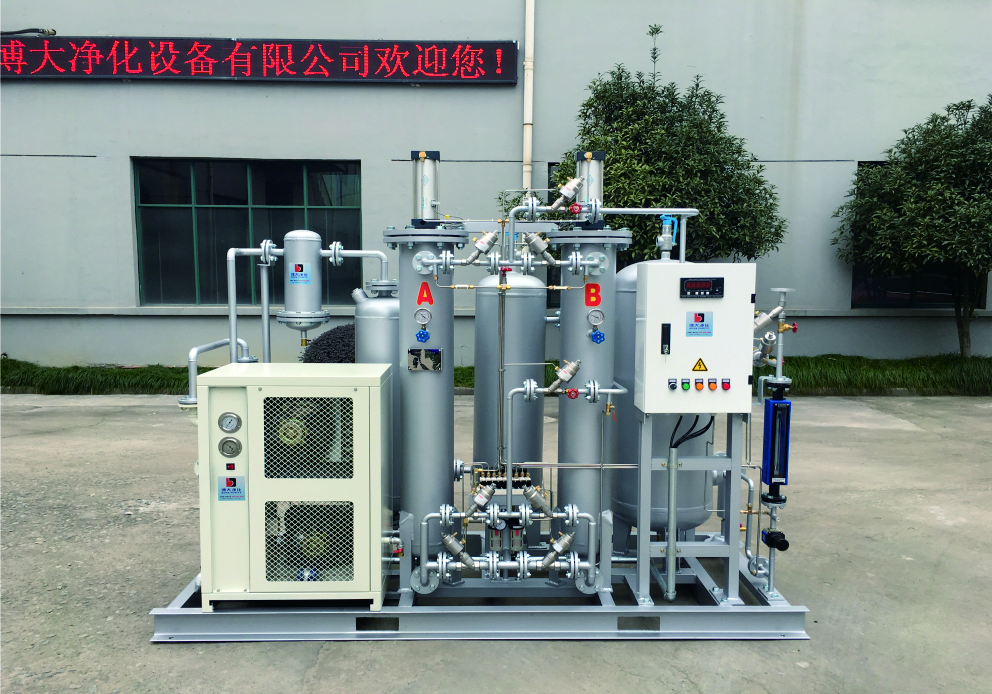
For a configuration-level review, the BODA GAS product manual (PDF) sets out the series data used throughout this guide. A useful next step is to send the project's compliance clauses with the purity, flow and dew-point targets attached, and ask for the same list back with the ordered configuration marked against each clause.
Have Questions or Need More Details?
Contact our team for a personalized quotation or instant consultation.
Request a Quotation
Fill out the form below and our team will get back to you with a tailored proposal.
WhatsApp Direct Chat
Prefer to chat in real-time? Message us on WhatsApp for instant assistance & quick answers.
- Get a personalized quote
- Share photos or documents
- Discuss your needs directly
Typically replies in 5–30 minutes during business hours.