PSA Nitrogen Generator Compliance Guide: ATEX, ASME, CE and Regional Project Rules
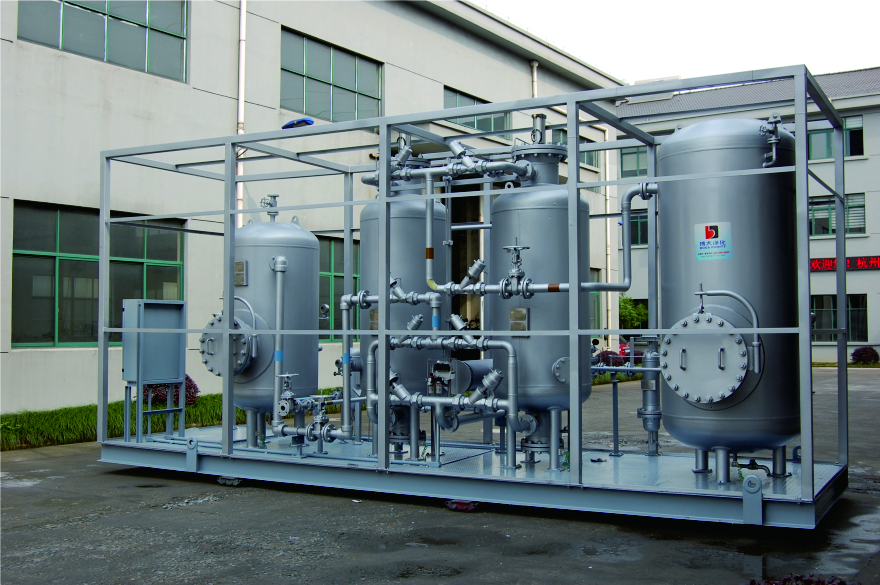
Compliance for a PSA nitrogen generator is decided at the specification stage, not at the shipping stage. Two nitrogen generation packages can share the same capacity, the same footprint and the same purity target, yet be built to entirely different rules, because the region of installation, the area classification and the end application each pull the requirement in a different direction. ATEX, ASME and CE are therefore better understood as project-specific customization routes than as a single certificate that travels with the machine.
For a carbon loaded purification nitrogen generator such as the BODA GAS BCP Series, compliance has two halves that must be planned together. The first is the pressure-vessel and hazardous-area route: carbon steel or SS304 construction, with stainless steel, ATEX, ASME and CE customization where the project calls for it. The second is gas-quality documentation, meaning the evidence that the unit actually delivers at least 99.9995% nitrogen with oxygen content of 5 ppm or less, carbon dioxide content of 1 ppm or less and a dew point of -60 degrees C or lower, and that the control system can demonstrate those numbers continuously.
This guide maps where compliance expectations change across regions and applications, then sets out the specification sequence that keeps regulated projects out of late-stage rework.
Quick answer:
- Region sets the pressure-equipment route. In the EU, all pressure vessels in PSA nitrogen generators must comply with the Pressure Equipment Directive (PED 2014/68/EU) and bear the CE mark.
- Area classification sets the electrical and enclosure route. Hazardous-gas working areas in Zone 1 / Zone 2 require an explosion-proof configuration, and ATEX customization is available where applicable.
- Project quality systems set the fabrication route. ASME construction and third-party documentation are commonly specified by chemical, oil and gas, and EPC-led projects.
- Application purity sets the gas documentation route. Food-grade nitrogen projects following EIGA guidance, for example, require at least one continuously online residual oxygen analyzer in the nitrogen gas stream.
Why Compliance Expectations Change From Project to Project
Compliance gaps rarely come from a missing certificate. They come from a requirement that was never translated into a specification. In PSA nitrogen generator projects at the research and evaluation stage, six variables decide how far the compliance work has to go.
- Region of installation. A unit built for an EU site sits under the Pressure Equipment Directive (PED 2014/68/EU) and requires CE marking on pressure vessels, while projects in other regions are typically driven by customer specification, EPC quality systems or insurer requirements instead.
- Area classification. Equipment installed in a potentially explosive atmosphere, for example an oil and gas or chemical site classified as Zone 1 / Zone 2, needs an explosion-proof configuration that is designed in, not added afterwards.
- Application purity window. Petroleum tank blanketing and purging typically runs at 95% to 99.9% nitrogen; chemical plant blanketing at 99.0% to 99.99%; pharmaceutical packaging at 99.99% to 99.999%; chip-and-wafer electronics at 99.999% to 99.9999% with a dew point of -60 degrees C or lower. Each band carries its own verification expectations.
- Material of construction. Carbon steel is the baseline for most industrial nitrogen generation; SS304 and optional stainless steel construction are specified in pharmaceutical, food and chemical projects where an oil-free, stainless steel gas path is required.
- Who signs off. An end user, an EPC contractor, a distributor and an insurer will each ask for a different documentation set, even for identical equipment.
- Documentation depth. Purity, oxygen, carbon dioxide and dew-point values are only compliance evidence when they are stated against a defined measurement basis and supported by inspection records.
The Compliance Layer Behind a Growing Nitrogen Market
Pressure swing adsorption is not a niche technology choice, which is why compliance practice has consolidated around it. PSA technology accounts for approximately 48% of the global nitrogen generator market, making it the dominant technology segment (Fortune Business Insights). The global industrial nitrogen generator market was valued at USD 4.29 billion in 2023 and is projected to reach USD 6.47 billion by 2031 (Verified Market Research), with Asia-Pacific projected to hold a 35% share by 2032 as the fastest-growing region (Verified Market Research).
Demand growth is concentrated in exactly the applications where documentation matters. Food and beverage was the leading application segment in 2023 with approximately 49.8% of revenue share, driven largely by modified atmosphere packaging (Grand View Research), while the chemical industry segment is expected to grow at the highest CAGR of 6.0% on the strength of blanketing and reactor purging applications (Maximize Market Research). By installed capacity, PSA nitrogen generator installations split into sub-100 Nm3/h (42%), 100-500 Nm3/h (36%) and above 500 Nm3/h (22%) (Precedence Research / Dataintelo). In other words, roughly 78% of installations sit at or below 500 Nm3/h, which is the range covered by the BCP Series carbon loaded purification nitrogen generator.
On top of that commercial growth sits a regulatory layer that does not vary with supplier scale. The same compliance frameworks apply to large global equipment suppliers such as Linde plc, Air Liquide, Air Products, Atlas Copco and Parker Hannifin (Fortune Business Insights) as to specialist manufacturers: EU pressure vessels fall under PED 2014/68/EU and CE marking (European Commission), hazardous-area installations require explosion-proof equipment, and food-grade nitrogen projects following EIGA guidance require at least one continuously online residual oxygen analyzer in the nitrogen stream. Where purity above 99.9% is required, PSA systems are generally preferred over membrane systems because membrane purity is typically capped at lower levels (Atlas Copco).
ATEX, ASME and CE as Customization Routes
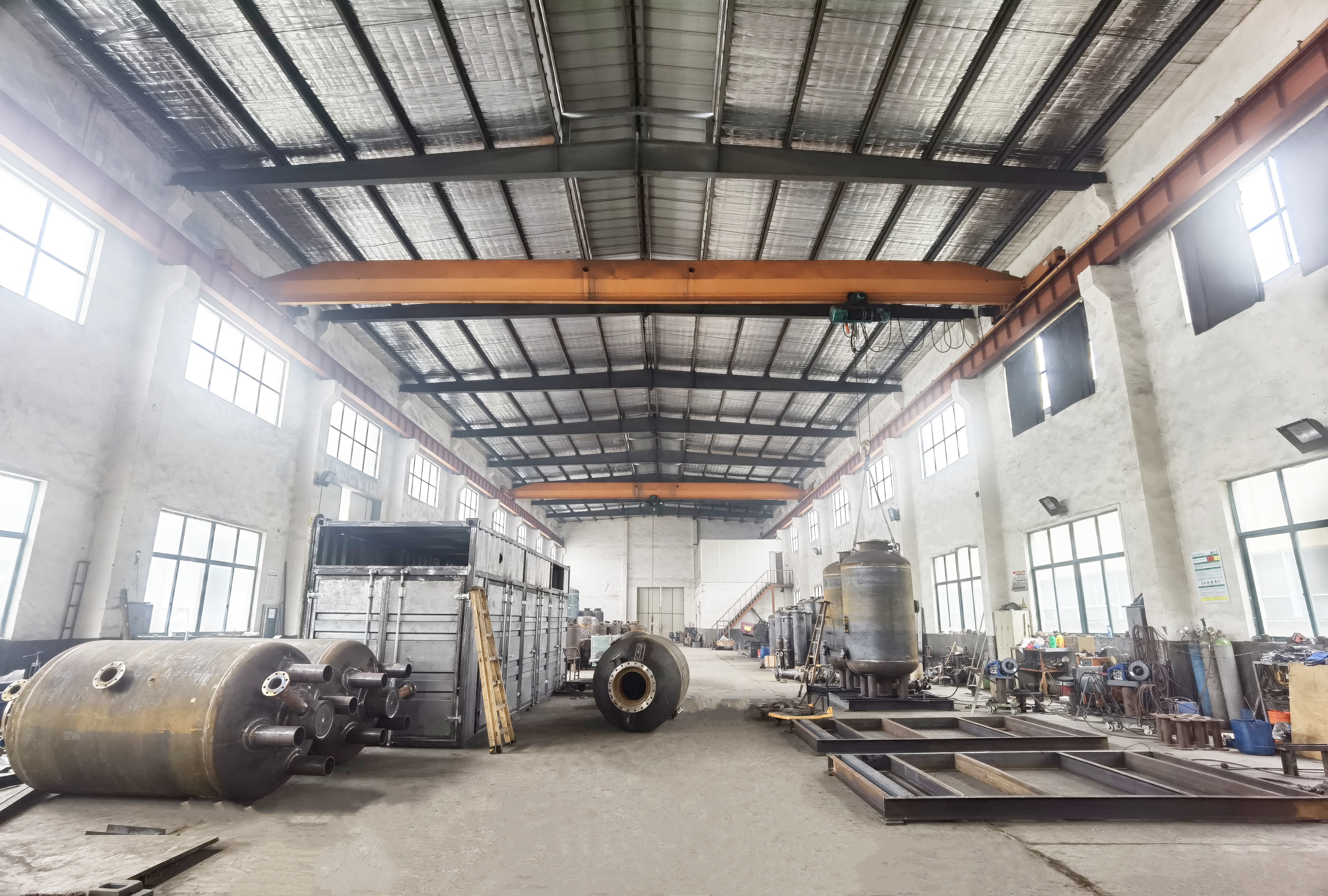
Hangzhou Boda Purity Equipment Co., Ltd., trading as BODA GAS, is a China-based manufacturer founded in 2002 and headquartered in Hangzhou, Zhejiang Province, specialising in PSA nitrogen generators, PSA oxygen generators and compressed air purification equipment. Its production base covers more than 30,000 square metres, and the company holds ISO 9001, ISO 13485, ISO 14001 and ISO 45001 system certifications alongside multiple invention patents and dozens of utility model patents.
BCP Series: compliance begins with a defined gas specification
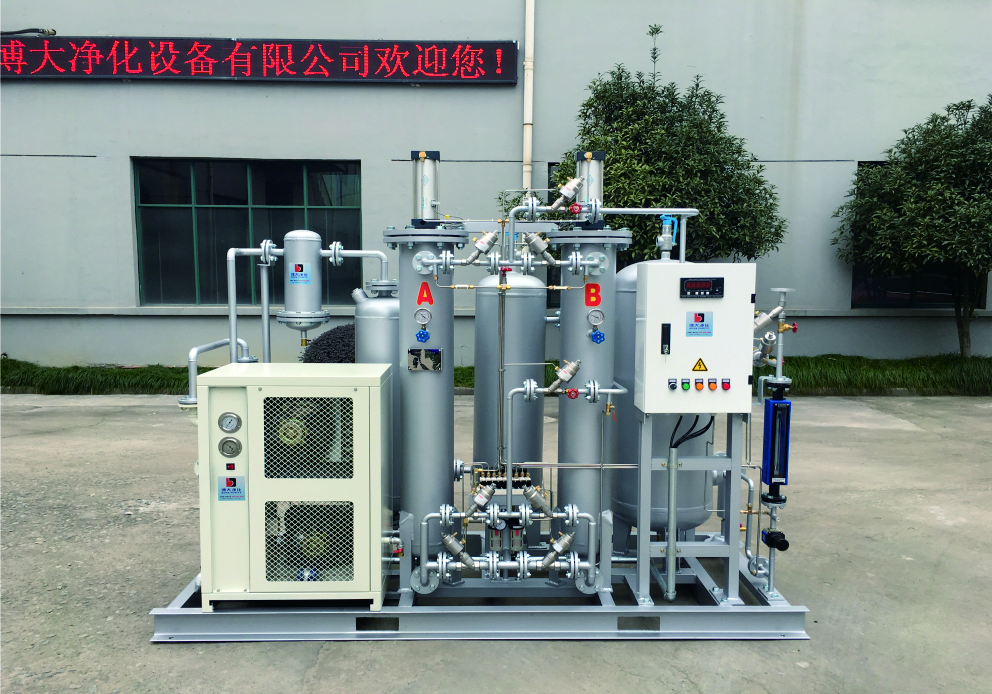
The BCP Series carbon loaded purification nitrogen generator is the configuration most often specified when a regulated project needs ultra-high-purity nitrogen without hydrogen. Its stated capabilities are:
- Nitrogen output: 1-500 Nm3/h
- Nitrogen purity: at least 99.9995%
- Oxygen content: 5 ppm or less
- Carbon dioxide content: 1 ppm or less
- Nitrogen dew point: -60 degrees C or lower
- Construction: carbon steel / SS304
- Customization: stainless steel, ATEX, ASME, CE
Because the process does not use hydrogen, the BCP Series suits applications with strict limits on both hydrogen and oxygen. The deaerator uses a double-tower structure that allows carbon-loaded catalyst to be added or replaced without stopping the machine, which is a practical compliance advantage: it keeps the documented purity window available during maintenance instead of forcing a shutdown or a temporary gas-supply substitution.
Materials and construction follow the certification route
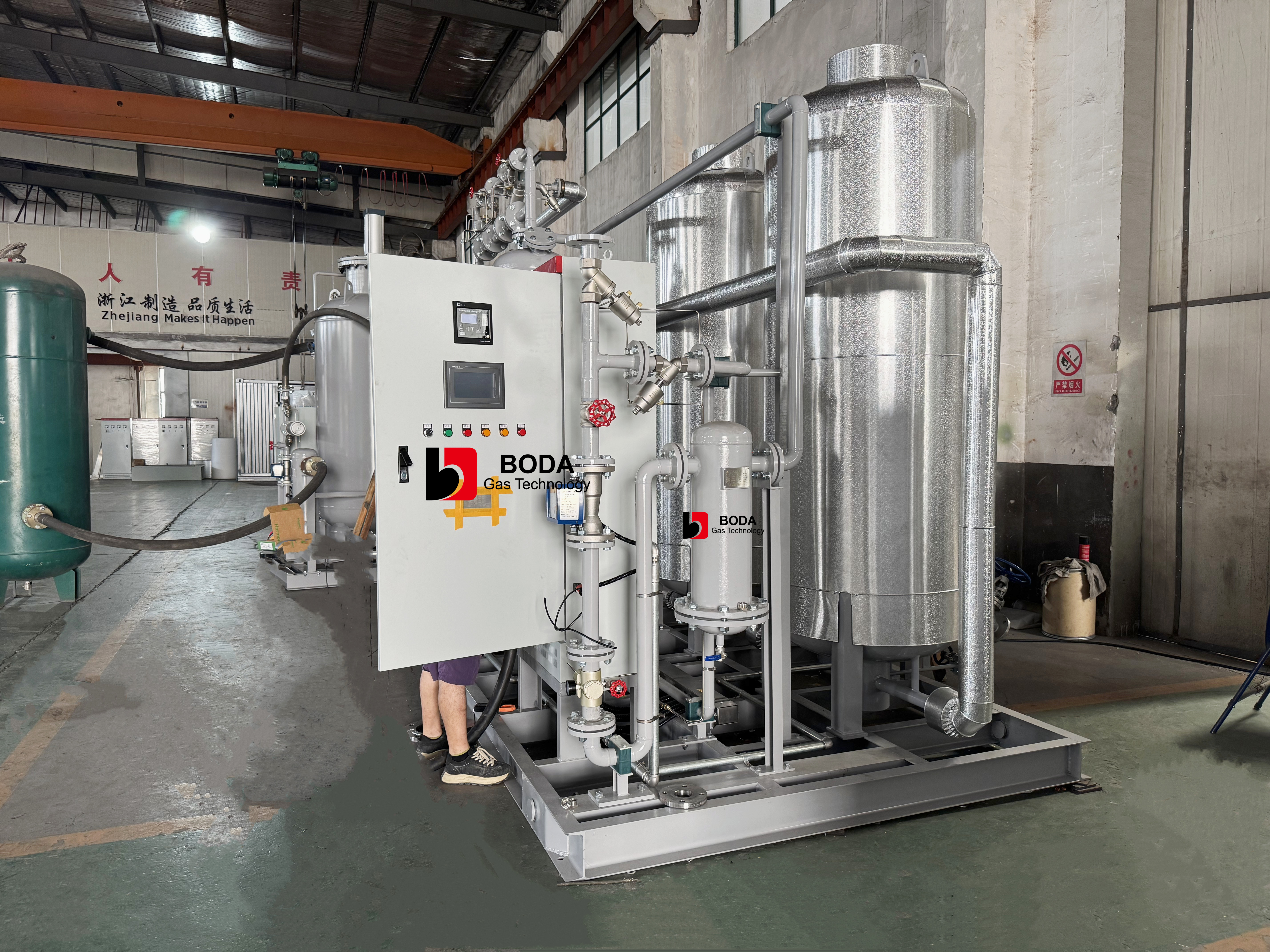
Material selection is a compliance decision, not a cosmetic one. Carbon steel is the standard construction for general industrial service, while SS304 and optional stainless steel construction are specified where the gas path must be oil-free, as seen in pharmaceutical, food and chemical projects. Deciding between them early avoids the common problem of a project discovering a stainless steel requirement after vessel fabrication has started.
Control, monitoring and documentation for regulated installations
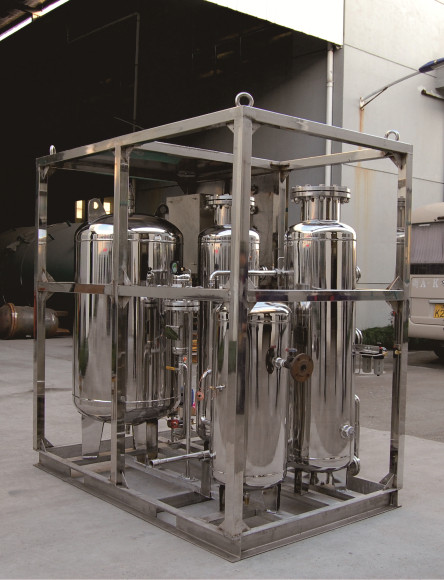
Where a project has to prove gas quality rather than simply achieve it, the control layer becomes part of the compliance package. BODA GAS nitrogen generators include fault diagnosis, alarm and automatic processing functions, and the automatic venting device uses national patented technology to protect finished-gas quality. An optional DCS communication interface is available on the BCP Series, and a centralised monitoring system is available for equipment such as PSA nitrogen equipment where the installation must be supervised from a control room.
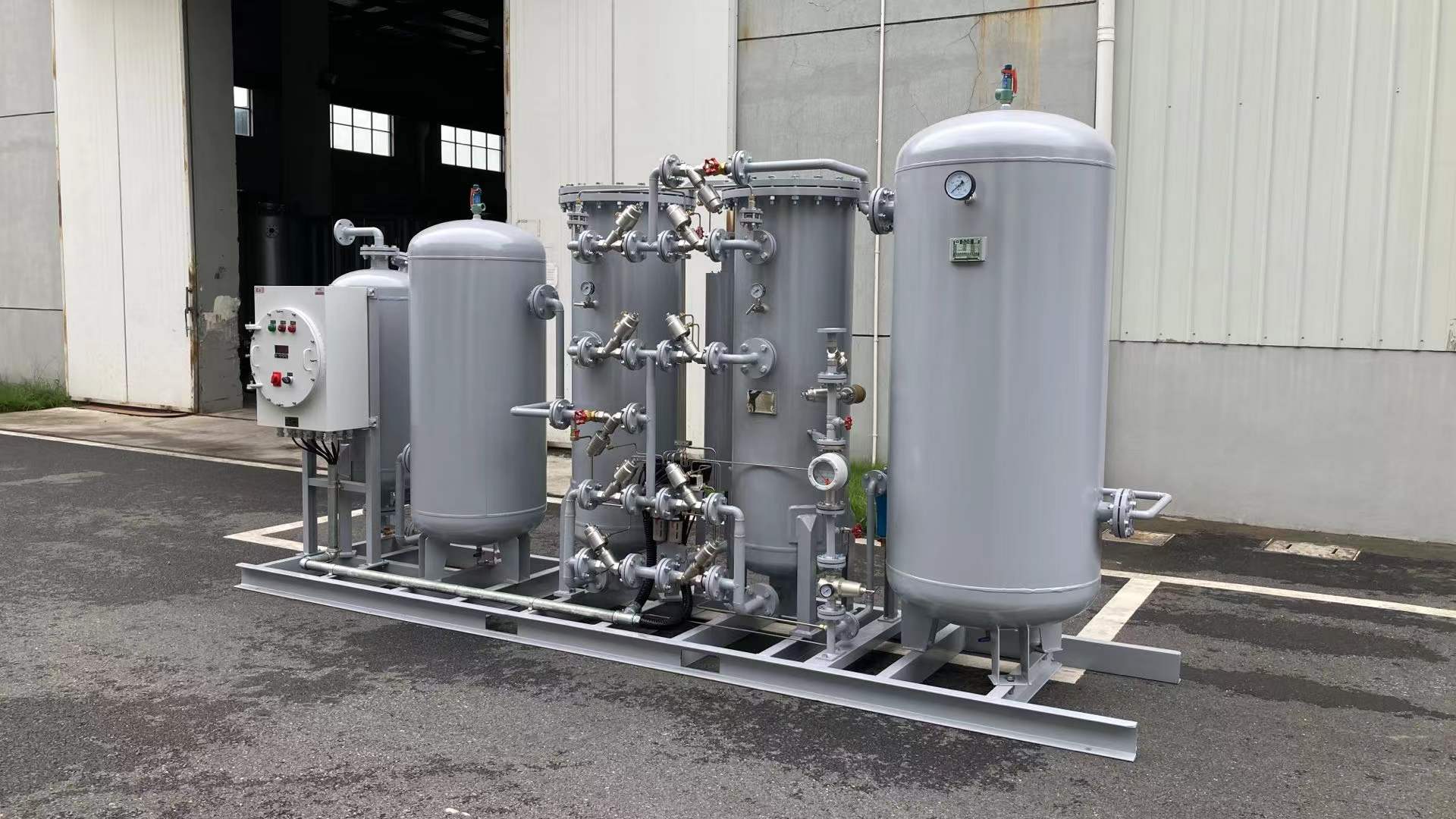
The wider platform when a project exceeds 500 Nm3/h
Not every regulated project fits a single series. The BXN Series PSA nitrogen generator covers nitrogen flow rates from 1 to 3,000 Nm3/h at 95% to 99.999% purity, with outlet pressure adjustable from 0.1 to 1.15 MPa, dew point from -40 to -70 degrees C and noise of 65 to 85 dB(A). It is available in carbon steel or SS304 with ATEX, ASME, CE and ISO customization, and in formats including industrial, skid-mounted package, movable containerized, ASME standard and stainless steel nitrogen generator configurations. This matters at the evaluation stage, because the certification route should be attached to a series that actually covers the project's flow and purity window.
Step-by-Step: Specifying a Compliant PSA Nitrogen Generator
- Define the gas specification first. Fix flow, purity, outlet pressure and dew point, and state the measurement basis for each. For a BCP Series unit this means 1-500 Nm3/h, at least 99.9995% purity, oxygen of 5 ppm or less, carbon dioxide of 1 ppm or less and a dew point of -60 degrees C or lower.
- Classify the installation area. If the unit will sit in a hazardous-gas working area, confirm the Zone 1 / Zone 2 classification early so that an explosion-proof configuration and ATEX customization can be specified.
- Determine the pressure-vessel route. EU installations must comply with PED 2014/68/EU and carry the CE mark; ASME construction and documentation are commonly requested by chemical, oil and gas, and EPC projects.
- Choose the material of construction. Confirm whether carbon steel is acceptable or whether SS304 / optional stainless steel is required for an oil-free gas path.
- Match purification technology to the purity target. Carbon loaded purification delivers at least 99.9995% without hydrogen; where purity above 99.9% is required, PSA is generally preferred over membrane separation.
- Agree the full delivered scope. A complete nitrogen generation system normally includes the air compressor, receiver tanks, dryers, multiple filters, activated carbon filter, the PSA nitrogen generator itself and a buffer tank, plus any online analysers required by the application standard.
- Require factory verification. Every BODA GAS unit undergoes 100% test covering visual inspection and function inspection before factory release, which is the evidence base a compliance file depends on.
- Plan commissioning and lifecycle support from day one. Installation and startup guidance, operator training, remote technical support, a 12-month equipment guarantee and 24-hour online after-sales support are part of the project, not an optional extra.
Use Cases Where Compliance Expectations Differ Most
Chemical plants and petrochemical processes
Chemical projects combine several requirements in one scope. Nitrogen purity of 99.0% to 99.99% is typical, and the same project often raises explosion-proof and ASME requirements together, along with an oil-free air compressor and stainless steel construction on some lines. The functions involved are nitrogen blanketing, purging, replacement, cleaning, pressure-driven conveying and agitation for chemical reactions during chemical-fiber production, plus raw-material tank blanketing for chemical stock and pipeline purging or conveying gas for powder chemicals. Installed evidence supports this pattern: two units in Indonesia have run stably for seven years with ASME compliance and stainless steel pipeline construction; two units in Malaysia have operated for eight years at low dew point with ASME compliance; two units in Tanzania have served fine chemical production for over ten years on an ASME basis; and a two-unit Nigerian installation with 3,000 Nm3/h output has been stable for two years in coal-chemical and electromechanical service.
Pharmaceutical production and packaging
Pharmaceutical projects require nitrogen purity of 99.99% to 99.999% with an oil-free air supply and stainless steel construction. Nitrogen is used to maintain a clean and sterile environment, to control oxygen concentration during drug-packaging procedures, and across drug production, storage, sealing and packaging workflows.
Food and beverage packaging
Food-grade nitrogen is specified at 99.0% to 99.9% with an oil-free air compressor and stainless steel construction. The compliance driver here is analytical rather than mechanical: EIGA guidance for on-site nitrogen generators for food use requires at least one continuously online residual oxygen analyzer in the nitrogen stream. Two units installed for a food-processing end user in Mexico have delivered food-grade nitrogen in stable operation for four years.
Electronics, semiconductors and lithium battery manufacturing
Electronics work pushes both purity and dew point: 99.99% for common SMT workshops, and 99.999% to 99.9999% with a dew point of -60 degrees C or lower for chip-and-wafer precision manufacturing, supported by an ultra-low-dew-point air-purification system. The BCP Series is applied to lithium-ion battery electrode drying, electrolyte blanketing and cell-sealing shielding gas, as well as photovoltaic cell sintering, silicon-wafer processing, thin-film deposition, semiconductor wafer purging, SMT soldering and electronic-component anti-oxidation. Three units supplied to a cable manufacturer in Uzbekistan have run for three years with adjustable purity up to 99.999% and fully automatic unattended PLC operation, and two units in Jordan have supported high-purity electronics nitrogen for five years with repeat purchases, remote start-stop and dew-point readout.
Oil, gas and other hazardous areas
Petroleum industry applications run at 95% to 99.9% purity for tank blanketing, purging, pipeline and vessel inerting, well stimulation, pressure holding and well-bore flushing. The compliance requirement that shapes the equipment is the hazardous-area classification: an explosion-proof PSA nitrogen generator for Zone 1 / Zone 2 hazardous-gas working areas. Four units supplied into an upstream oil and gas application have operated stably for two years on an ASME basis.
Comparison Tables for Specification Reviews
The first table maps where compliance expectations usually originate; the second compares the two PSA nitrogen generator series most often considered for regulated projects.
| Project condition | Compliance expectation typically raised | What it means for the specification |
|---|---|---|
| Installation in the EU with pressure vessels | PED 2014/68/EU conformity with CE marking on pressure equipment (European Commission) | Vessel documentation and CE marking must be planned before fabrication begins |
| Potentially explosive atmosphere (oil and gas, chemical) | Explosion-proof configuration for Zone 1 / Zone 2 hazardous-gas working areas; ATEX customization available | The ex-proof scope is fixed unit by unit at the design stage |
| Chemical, oil and gas, and EPC-driven quality systems | ASME construction and third-party documentation | Material traceability and inspection records become part of the delivery |
| Food-grade nitrogen for MAP or beverage packaging | At least one continuously online residual oxygen analyzer in the nitrogen stream (EIGA) | Analyser scope, oil-free air supply and stainless steel construction are specified together |
| Chemical plant blanketing and reactor inert shielding | Nitrogen purity 99.0% to 99.99%, with explosion-proof and ASME requirements in the same project | Purity, area classification and vessel standard are written into one specification document |
| Semiconductor and precision electronics | Purity 99.999% to 99.9999% with dew point of -60 degrees C or lower | Ultra-low-dew-point air purification is part of compliance, not an accessory |
| Parameter | BCP Series (carbon loaded purification) | BXN Series (PSA nitrogen generation) |
|---|---|---|
| Nitrogen flow rate | 1-500 Nm3/h | 1-3,000 Nm3/h |
| Nitrogen purity | at least 99.9995% | 95% to 99.999% |
| Oxygen content | 5 ppm or less | Not stated |
| Carbon dioxide content | 1 ppm or less | Not stated |
| Nitrogen dew point | -60 degrees C or lower | -40 to -70 degrees C |
| Outlet pressure | Not stated | 0.1-1.15 MPa (adjustable) |
| Construction material | Carbon steel / SS304 | Carbon steel / SS304 |
| Hydrogen in process | None, suited to strict hydrogen and oxygen limits | Not applicable |
| Customization options | Stainless steel, ATEX, ASME, CE | Carbon steel / stainless steel, ATEX, ASME, CE, ISO |
| Control options | Fault diagnosis, alarm and automatic processing; optional DCS communication interface | DCS communication and touch-screen display optional |
Where a cell reads "Not stated", the value is simply not part of the available specification data for that series, not an absence of capability. Projects are configured against the actual gas specification rather than the series name.
FAQ: Compliance, Capability, Cost and Delivery
Which certification does a PSA nitrogen generator project actually need: ATEX, ASME, CE or ISO?
It depends on the installation rather than the product. In the EU, all pressure vessels in PSA nitrogen generators must comply with the Pressure Equipment Directive (PED 2014/68/EU) and bear the CE mark. Where equipment is installed in a potentially explosive atmosphere, an explosion-proof configuration for Zone 1 / Zone 2 hazardous-gas working areas applies, and ATEX customization is available for such projects. ASME construction and documentation are typically requested by chemical, oil and gas, and EPC-led projects. ISO 9001, ISO 13485, ISO 14001 and ISO 45001 are manufacturer management-system certifications held by BODA GAS; they support a compliance file but do not replace the project-specific certification route.
What purity and documentation can a carbon loaded purification PSA nitrogen generator deliver?
The BODA GAS BCP Series is stated at 99.9995% minimum nitrogen purity with oxygen content of 5 ppm or less, carbon dioxide content of 1 ppm or less and a dew point of -60 degrees C or lower, at outputs from 1 to 500 Nm3/h in carbon steel or SS304 construction. Because the process does not use hydrogen, the series suits applications with strict limits on both hydrogen and oxygen. Supporting features for documentation-led projects include fault diagnosis, alarm and automatic processing functions, an automatic venting device using national patented technology to protect finished-gas quality, a double-tower deaerator that allows carbon-loaded catalyst to be added or replaced without stopping the machine, and an optional DCS communication interface.
How should an industrial PSA nitrogen generator be evaluated for a chemical plant?
Start with the gas specification, then work outward. A chemical plant typically requires nitrogen purity of 99.0% to 99.99%, with explosion-proof and ASME requirements appearing in the same scope as oil-free and stainless steel construction. Ask for the delivered system scope, meaning air compressor, tanks, dryers, multiple filters, activated carbon filter, PSA nitrogen generator and buffer tank, and for evidence from comparable installations. BODA GAS references in this segment include two units in Indonesia operating stably for seven years with ASME compliance and stainless steel piping, two units in Malaysia in stable operation for eight years at low dew point, two units in Tanzania serving fine chemical production for over ten years on an ASME basis, and two units in Nigeria with 3,000 Nm3/h output running stably for two years.
What drives the cost of a compliant PSA nitrogen generator?
The main cost drivers are the purity and flow window, the dew-point requirement, the material of construction, the certification route (ATEX, ASME, CE) and how much pre-treatment is included in the delivered scope. Compliance itself is a cost driver, because documentation, inspection and materials have to be planned before fabrication; retrofitting a certification route afterwards is where budgets usually slip. Against delivered gas, on-site nitrogen generation can reduce nitrogen supply costs by up to 40% compared with traditional cylinder deliveries by removing logistics fees, according to analysis attributed to the U.S. Department of Energy.
Can a unit be validated before full rollout, and what is the normal lead time?
Yes. The minimum order quantity is one unit, and every unit undergoes 100% testing covering visual inspection and function inspection before factory release, which allows a single unit to be validated against the project's purity and dew-point requirements first. Production lead time is 25 to 45 days, with a monthly capacity of 40 units, so multi-unit phases can be scheduled against the same certification route. After delivery, BODA GAS provides on-site and remote installation guidance, operator training, remote technical support, a 12-month equipment guarantee and 24-hour online after-sales service. To start a compliance review for a specific project, request a quotation or the product manual and confirm flow, purity, dew point, area classification and regional certification requirement in one document.
Conclusion: Compliance Is a Specification Decision
Regional rules, area classifications and application purity targets do not change the physics of pressure swing adsorption; they change what has to be documented, inspected and certified. Treating ATEX, ASME and CE as customization routes rather than afterthoughts keeps a PSA nitrogen generator project on schedule: the EU pressure-vessel route is fixed under PED 2014/68/EU with CE marking, hazardous-area projects are designed around Zone 1 / Zone 2 explosion-proof requirements, and application standards such as EIGA for food-grade nitrogen determine whether an online residual oxygen analyzer belongs in the delivered scope.
For a carbon loaded purification nitrogen generator, the compliance file and the gas specification are the same document. A BCP Series unit is defined by 99.9995% minimum purity, oxygen of 5 ppm or less, carbon dioxide of 1 ppm or less and a dew point of -60 degrees C or lower, built in carbon steel or SS304 with stainless steel, ATEX, ASME and CE customization as required, and supported by the control and monitoring functions that let a regulated installation demonstrate those numbers continuously.
Next step: define the compliance scope with BODA GAS
Send your nitrogen flow rate, purity, dew point, area classification and regional certification requirement, and the BODA GAS team will confirm the matching series and configuration. Hangzhou Boda Purity Equipment Co., Ltd. is based in Hangzhou, Zhejiang Province, China.
- Website: www.boda-gas.com
- Product manual (PDF): download the BODA GAS product manual
- Email: bodagas2002@gmail.com
- Tel / WhatsApp: +86 157-5515-0162
Samples, quotations and configuration reviews are available for projects preparing a compliance-driven specification.
Have Questions or Need More Details?
Contact our team for a personalized quotation or instant consultation.
Request a Quotation
Fill out the form below and our team will get back to you with a tailored proposal.
WhatsApp Direct Chat
Prefer to chat in real-time? Message us on WhatsApp for instant assistance & quick answers.
- Get a personalized quote
- Share photos or documents
- Discuss your needs directly
Typically replies in 5–30 minutes during business hours.