PSA Nitrogen Generator Guide: Benefits, Uses, Selection
A PSA nitrogen generator is an on-site gas production unit that separates nitrogen from compressed air using pressure swing adsorption. Industrial users can generate nitrogen continuously at their facility with purity ranging from 95% to 99.999%. This guide explains how PSA nitrogen generators work, where they are used, and what to consider when selecting a PSA nitrogen generator supplier.
What problem does a PSA nitrogen generator solve?
Industrial plants that use nitrogen face recurring challenges: cylinder handling, delivery scheduling, fluctuating gas prices, and purity consistency. On-site nitrogen generation removes much of this complexity. Industry analysis cited by the U.S. Department of Energy indicates that on-site nitrogen generation can reduce nitrogen supply costs by up to 40% compared with traditional cylinder deliveries by eliminating logistics fees.
For operations that run 24/7, an on-site system provides a continuous supply without waiting for deliveries and reduces the administrative burden of managing external gas suppliers. PSA nitrogen generators also make it easier to match purity and flow to the actual application because the system can be configured around the plant's real demand.
Industry context: PSA technology in the nitrogen generator market
The global industrial nitrogen generator market was valued at USD 4.29 billion in 2023 and is projected to reach USD 6.47 billion by 2031, according to Verified Market Research. PSA technology accounts for approximately 48% of the global nitrogen generator market, making it the most widely used technology segment, according to Fortune Business Insights.
Food and beverage packaging is one of the largest application areas. Grand View Research reported that the food and beverage segment held about 49.8% of revenue share in 2023, driven by modified atmosphere packaging. The chemical industry segment is also expected to grow at a high CAGR of 6.0%, reflecting increased use in blanketing and reactor purging.
Capacity data also helps buyers understand typical installations: PSA nitrogen generator installations are commonly divided into sub-100 Nm³/h, 100-500 Nm³/h, and above 500 Nm³/h segments. According to Precedence Research / Dataintelo, these groups represent approximately 42%, 36%, and 22% of installations, respectively. The containerized PSA nitrogen generator market is expected to grow at a CAGR of 7.6% from 2025 to 2032, driven by demand in remote oil and gas sites.
How a PSA nitrogen generator works
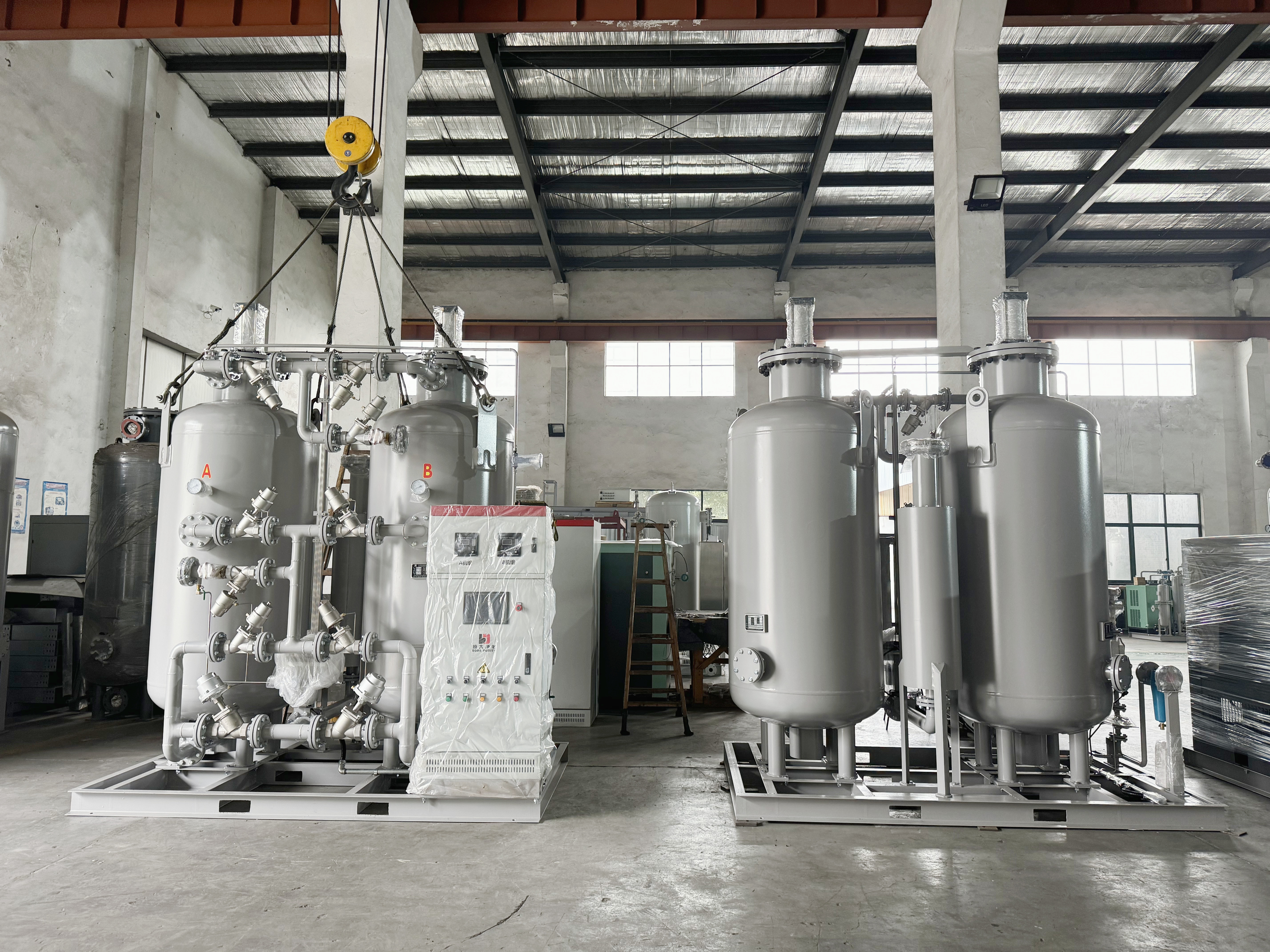
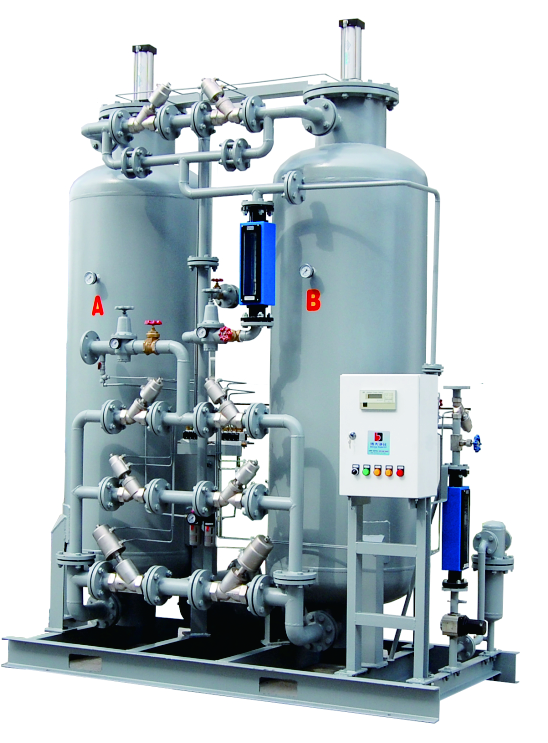
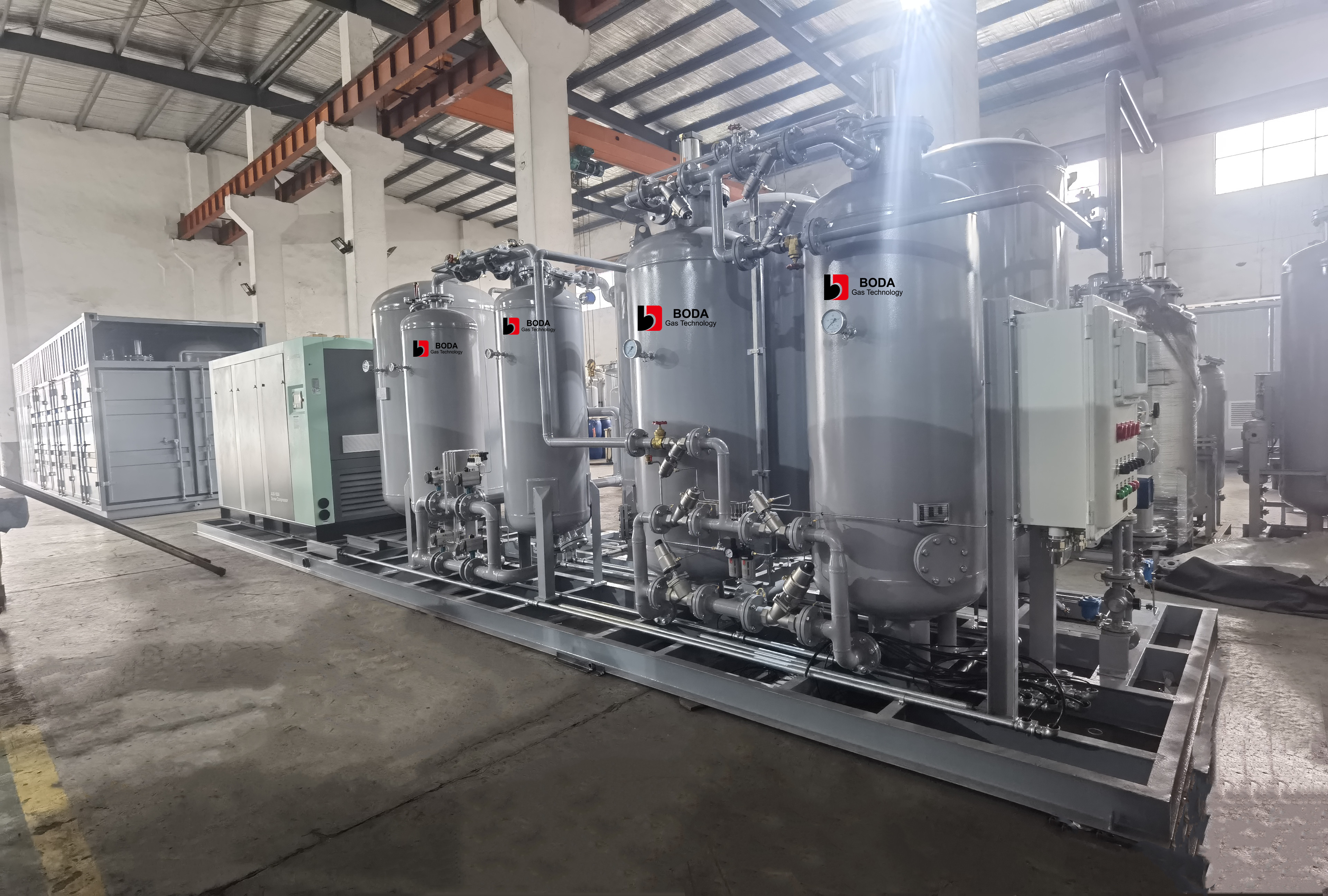
A PSA nitrogen generator operates with two adsorption towers filled with carbon molecular sieve. Under pressure, the sieve adsorbs oxygen, carbon dioxide, and moisture from compressed air, while nitrogen passes through as product gas. While one tower is producing nitrogen, the other tower depressurizes and releases trapped gases to regenerate the sieve. The two towers switch automatically in a continuous cycle to provide a steady supply of high-purity nitrogen.
This PSA principle is particularly suitable for buyers that need higher purity. PSA systems are generally preferred over membrane systems for high-purity requirements above 99.9%, because membrane purity is typically capped at lower levels.
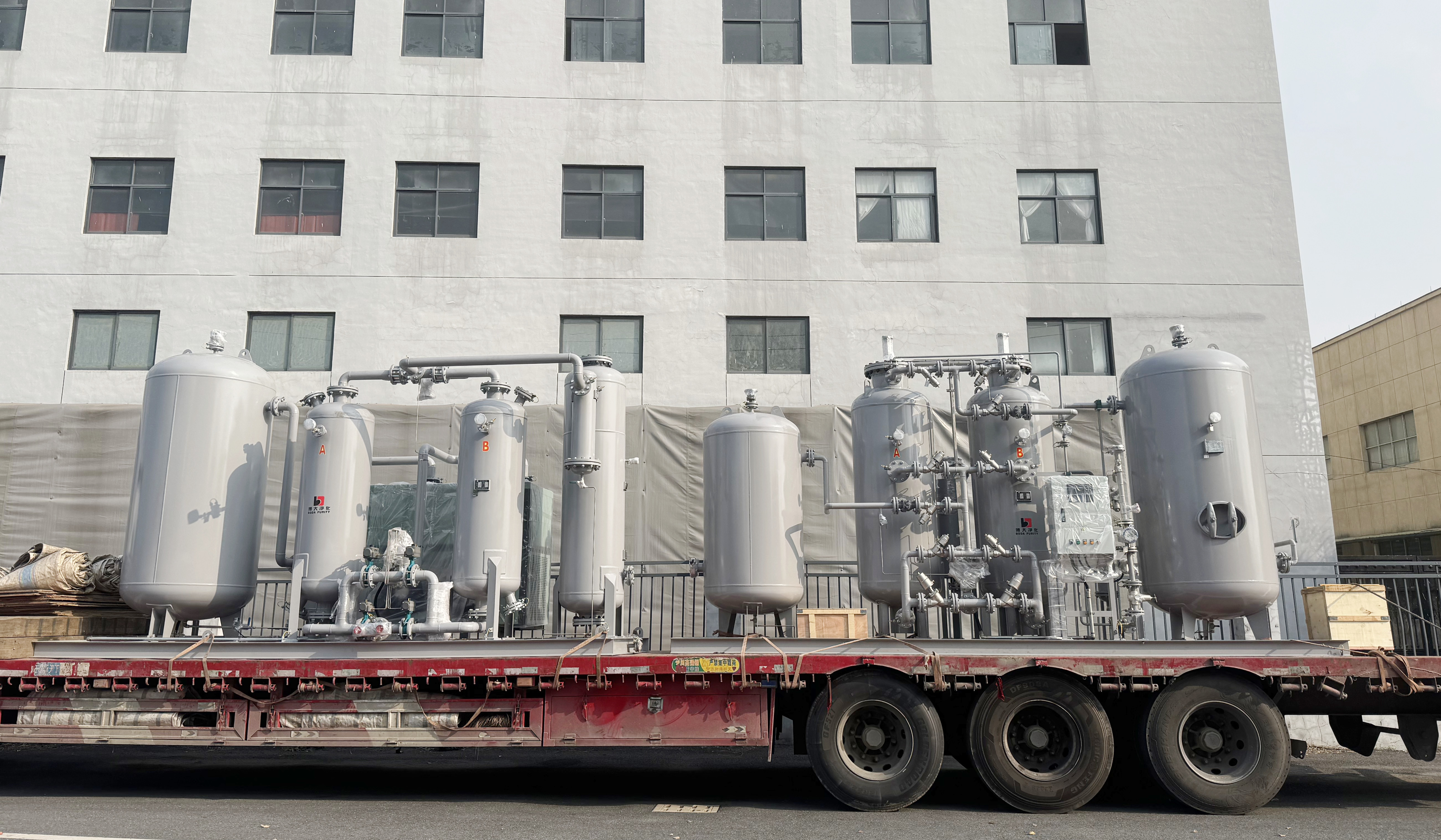
BODA GAS BXN Series: industrial PSA nitrogen generator
Hangzhou Boda Purity Equipment Co., Ltd., brand name BODA GAS, has manufactured PSA nitrogen and oxygen generators since 2002. The BXN Series is BODA GAS's PSA nitrogen generator product line, designed for continuous operation with a modular structure. It is available as an industrial PSA nitrogen generator, skid-mounted PSA nitrogen generation package, movable containerized PSA nitrogen generator, ASME standard nitrogen generator, or stainless steel nitrogen generator.
| Specification | BXN Series PSA nitrogen generator |
|---|---|
| Nitrogen flow rate | 1 to 3000 Nm³/h |
| Nitrogen purity | 95% to 99.999% |
| Nitrogen pressure | 0.1 to 1.15 MPa, adjustable |
| Nitrogen dew point | -40°C to -70°C |
| Noise | 65 to 85 dB(A) |
| Materials | Carbon steel or SS304 |
| Customization | ATEX, ASME, CE, ISO |
| Typical configurations | Industrial, skid-mounted, movable containerized, ASME standard, stainless steel |
For high-purity PSA nitrogen systems, BODA GAS also supplies purification and pretreatment equipment including the BCP Series carbon loaded purification nitrogen generator and the BHP Series hydrogenation purification nitrogen generator. These products are designed for applications requiring nitrogen purity of at least 99.9995%.
What is included in a complete PSA nitrogen generator system?
A complete on-site nitrogen system usually includes an air compressor, air receiver tank, multiple filters, air dryer, activated carbon filter, PSA nitrogen generator, nitrogen buffer tank, oxygen analyzer / purity sensor, and control system.
In a typical BODA GAS system, the air treatment train can include the FAL Series precision filter, FYS Series high efficiency oil-water separator, FLY Series high efficiency oil-remover, FLT Series activated carbon filter, FAD Series refrigeration dryer, ADL Series heatless desiccant dryer, or FAG Series combined low dew point compressed air dryer. The purpose of this pretreatment is to protect the carbon molecular sieve from oil and moisture damage.
Step-by-step: How to specify a PSA nitrogen generator
Step 1: Define flow, purity and pressure
Before choosing a PSA nitrogen generator, confirm the required nitrogen flow rate, purity, discharge pressure, voltage, and application. These parameters determine the size of the generator, the air compressor, and the buffer tank.
Purity selection is one of the most important decisions. For lower-purity needs, 95% to 98% nitrogen is suitable for fire protection, marine tank blanketing, oilfield pipeline purging, and general-purpose tire inflation. Medium purity of 99% to 99.9% is common in food and beverage modified atmosphere packaging, winemaking, and conventional plastic molding. High purity of 99.95% to 99.99% is used in mild-steel laser cutting, electronics manufacturing, cable production, and pharmaceutical tank blanketing. Ultra-high purity of 99.999% and above is required for cutting special metals such as titanium alloy, high-end electronics production, and specialized laboratory applications.
Step 2: Choose the plant configuration
An industrial PSA nitrogen generator can be installed as a standalone unit, a skid-mounted package, or a movable containerized unit. Skid-mounted and containerized configurations reduce on-site installation work and are well suited for remote sites, oilfields, and projects that require fast commissioning.
Step 3: Design the air pretreatment system
Carbon molecular sieve performance depends on clean, dry compressed air. Moisture, oil, and particulate contaminants can reduce adsorption efficiency and shorten sieve life. The pretreatment train should be matched to the inlet air quality, ambient temperature, and required dew point.
Step 4: Confirm materials and certifications
For different target markets, pressure vessels and equipment may need to comply with ASME, CE, ATEX, or other local standards. For example, in the EU, pressure vessels in PSA nitrogen generators must comply with the Pressure Equipment Directive PED 2014/68/EU and bear the CE mark. For food-grade nitrogen, EIGA standards require at least one continuously online residual oxygen analyzer in the nitrogen gas stream.
Step 5: Plan maintenance
Routine maintenance is an important part of total cost. Typical intervals include precision filter element replacement every 8000 hours, standard air compressor service every 3000 to 4000 hours, air dryer desiccant replacement roughly every 16000 to 24000 hours, and carbon molecular sieve service every 6 to 10 years.
Where are PSA nitrogen generators used?
Chemical industry
PSA nitrogen generators for the chemical industry are used for reactor inert shielding, raw-material tank blanketing, pipeline purging, replacement, cleaning, pressure-driven conveying, and oxidation prevention. Typical purity requirements range from 99.0% to 99.99%, and some sites require explosion-proof and ASME configurations.
Food and beverage packaging
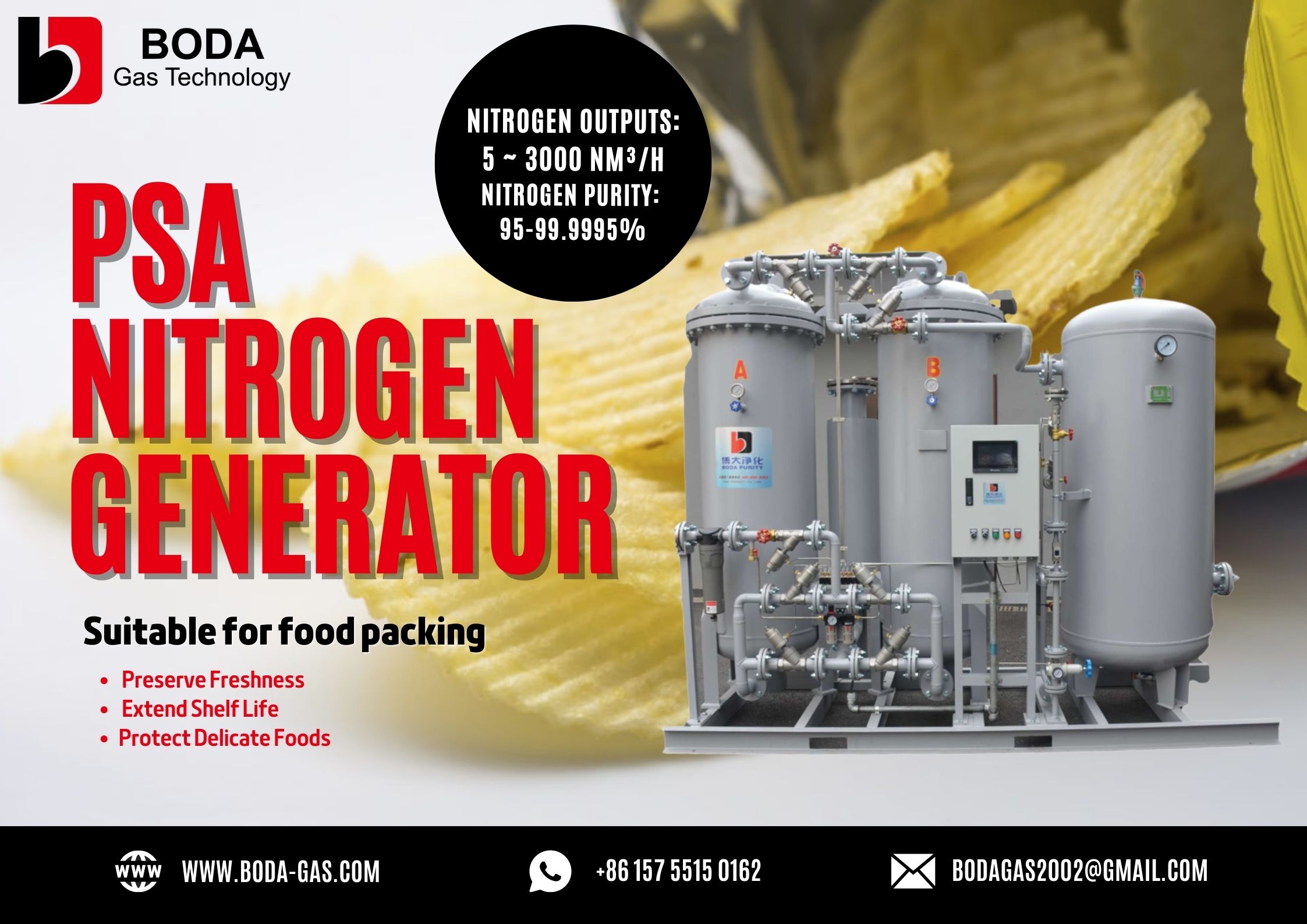
In food and beverage packaging, PSA nitrogen generators are used for modified atmosphere packaging, beverage production, tank blanketing, and freshness preservation. Nitrogen displaces oxygen inside cans, bottles, and pouches, which helps slow oxidation and inhibit spoilage-causing microorganisms.
Pharmaceutical industry
Nitrogen helps maintain a clean and sterile environment during pharmaceutical manufacturing and controls oxygen concentration during drug packaging. Special-purpose nitrogen generators for the pharmaceutical sector are widely used in drug production, storage, sealing, and packaging workflows. Typical purity requirements are 99.99% to 99.999%, often with oil-free and stainless steel system designs.
Oil and gas
Nitrogen is widely used in drilling, well work-over, and well completion for oil and natural gas wells. Applications include tank blanketing, nitrogen purging, pipeline and vessel inerting, well stimulation, pressure holding, and well-bore flushing. For hazardous working areas, explosion-proof PSA nitrogen generators can be configured for Zone 1 or Zone 2 compliance.
Electronics industry
PSA nitrogen generators are used in semiconductor fabrication and packaging, electronic component processing, LED and LCD production, lithium-ion battery manufacturing, and nitrogen-atmosphere shielding welding. Common SMT workshops often use 99.99% nitrogen, while chip and wafer precision manufacturing may require 99.999% to 99.9999% purity with dew point no higher than -60°C.
Laser and plasma cutting
Nitrogen works as an auxiliary cutting gas in laser and plasma cutting. It blocks oxygen ingress to avoid cut-surface oxidation, dross sticking, and thermal ablation. Ordinary carbon-steel cutting typically uses 95% to 99% nitrogen, while mirror-finish stainless-steel fine cutting may require 99.99% to 99.999% nitrogen with high-pressure output.
Tyre inflation
Vehicle service and tyre maintenance shops use PSA nitrogen generators for tyre inflation. Nitrogen is inert, non-oxidative, and has low heat expansion. Nitrogen-filled tyres maintain stable pressure over longer periods and help slow rubber inner-wall ageing.
PSA vs membrane nitrogen generators
| Criteria | PSA nitrogen generator | Membrane nitrogen generator |
|---|---|---|
| Separation mechanism | Carbon molecular sieve adsorbs oxygen under pressure | Hollow-fiber bundles separate gases by permeation speed |
| Typical purity | 95% to 99.999% | 95% to 99.9% |
| Best fit | High-purity applications above 99.9% and large industrial plants | Compact, lower-purity applications with simple operation |
| Maintenance | Routine filter, dryer, and sieve servicing; CMS can last many years | No moving parts; simple structure, low maintenance |
| Configurations | Industrial, skid-mounted, movable containerized, ASME, stainless steel | Compact modular or skid units |
Choosing a PSA nitrogen generator supplier
When evaluating PSA nitrogen generator suppliers, buyers should look for a manufacturer rather than only a trading company. A manufacturer can control welding quality, pressure vessel design, molecular sieve filling, spray painting, testing, and delivery schedules.
Hangzhou Boda Purity Equipment Co., Ltd., headquartered in Hangzhou, Zhejiang, China, was founded in 2002 and has more than 24 years of industry experience. The company operates a 30,000 m² production base, employs approximately 58 staff, has an R&D team of 15 engineers, and reaches an annual production capacity of 480 units. BODA GAS holds ISO 9001, ISO 13485, ISO 14001, and ISO 45001 certifications, and owns multiple invention patents and dozens of utility model patents.
BODA GAS also serves global markets in the Middle East, Africa, Central Asia, Eastern Europe, Southeast Asia, and Latin America, and has established long-term cooperative supplier qualifications with large state-owned and international organizations including CNPC, Sinopec, CNOOC, Zhuhai Jutal Offshore Oil Services Limited, United Energy Pakistan Limited, Ingersoll Rand Industrial Technologies, Petronas Chemicals MTBE Sdn. Bhd., and PT INDOSINO OIL & GAS.
Frequently asked questions
Are you a trading company or a manufacturer?
Hangzhou Boda Purity Equipment Co., Ltd. is a professional manufacturer of PSA nitrogen and oxygen generators. With more than 24 years of industry experience, the company owns its factory and holds export qualifications.
Can you design a tailor-made gas solution for my working condition?
Yes. The BODA GAS technical team calculates air-oxygen ratio, outlet flow, purity, and power consumption according to site altitude, voltage, usage industry, then draws an exclusive layout and technical scheme for free.
How to choose the nitrogen purity of an on-site nitrogen generator?
95% to 98% purity is suitable for fire protection, marine tank blanketing, oilfield pipeline purging, and general-purpose tire inflation. 99% to 99.9% purity is suitable for food and beverage modified atmosphere packaging, winemaking, and conventional plastic molding. 99.95% to 99.99% purity is used for mild-steel laser cutting, electronics manufacturing, cable production, and pharmaceutical tank blanketing. 99.999% and above is used for special metal cutting, high-end electronics production, and specialized laboratory applications.
What is the maintenance and cost of an on-site gas system?
Routine maintenance includes precision filter element replacement every 8000 hours, standard air compressor service every 3000 to 4000 hours, air dryer desiccant replacement roughly every 16000 to 24000 hours, and carbon molecular sieve service every 6 to 10 years.
How is your after-sales service?
BODA GAS has a professional after-sales service team that provides 24-hour online service. All equipment must pass qualification testing prior to factory release. If you are evaluating a PSA nitrogen generator, contact BODA GAS for a quotation or a project-specific technical proposal.
Conclusion: PSA nitrogen generation as a long-term gas strategy
PSA nitrogen generation gives industrial buyers a dependable way to produce nitrogen on site, reduce logistics costs, and control gas purity. The BXN Series from BODA GAS supports flow rates from 1 to 3000 Nm³/h, purity from 95% to 99.999%, adjustable pressure from 0.1 to 1.15 MPa, and dew points from -40°C to -70°C. Configurations include industrial, skid-mounted, movable containerized, ASME standard, and stainless steel units.
Next step: Contact BODA GAS for a quotation or a project-specific technical proposal. Email bodagas2002@gmail.com, call or WhatsApp +86 157-5515-0162, or download the product manual below.
Download BODA GAS Product Manual