
PSA Nitrogen vs. Membrane Nitrogen: Which Technology Wins for Your Plant
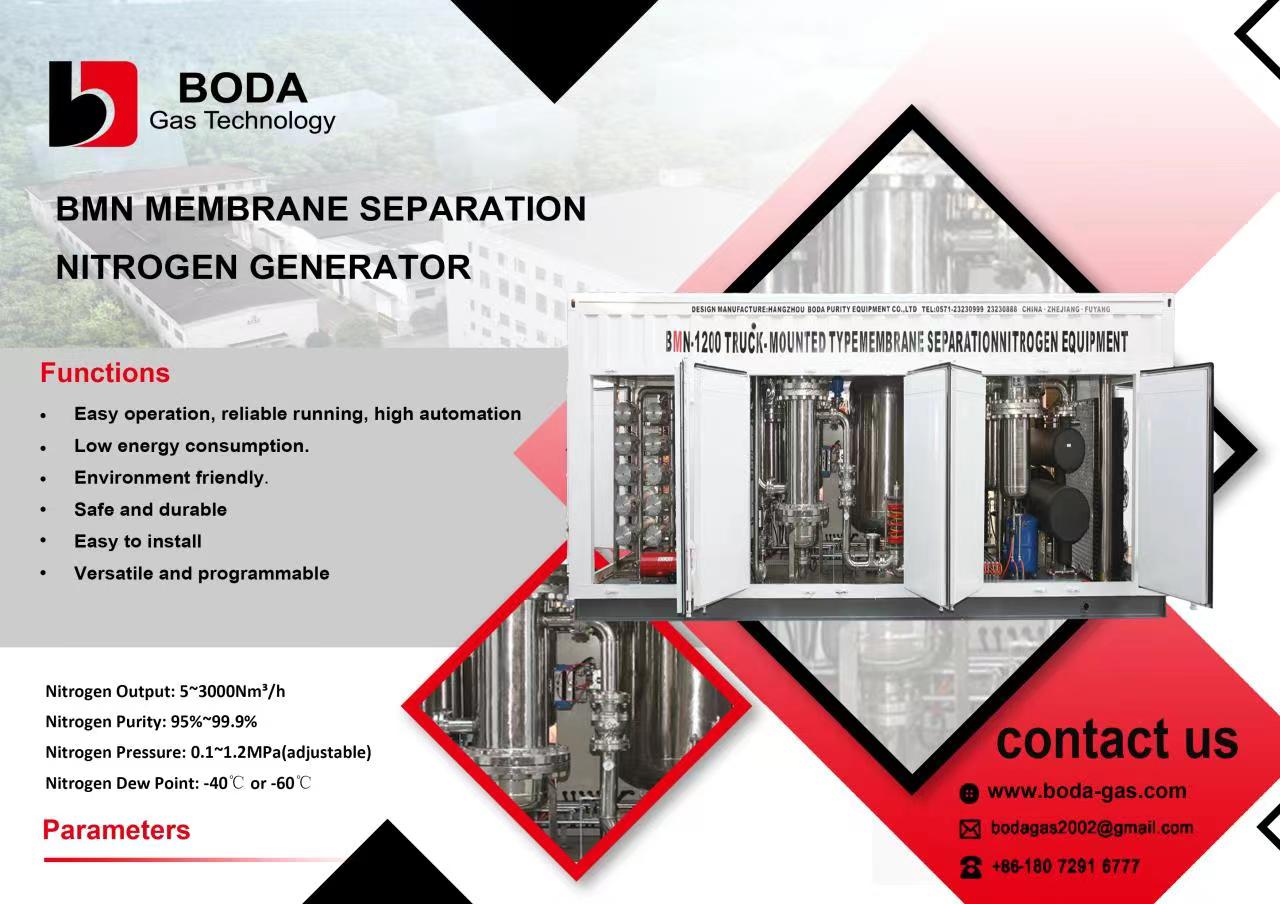
For a plant moving from delivered nitrogen to on-site generation, the PSA-versus-membrane decision is settled by three numbers before anything else: the worst-case purity your process actually requires, the continuous flow you need at that purity, and the floor space you are prepared to allocate. Membrane separation nitrogen generators cover the low and medium purity band — the BODA GAS BMN Series is rated from 95% to 99.9% purity at 5–3000 Nm³/h. PSA nitrogen generators built on carbon molecular sieve cover a wider band: the BXN Series is rated from 95% to 99.999% purity at 1–3000 Nm³/h, and a downstream purification stage such as the BCP Series extends that to 99.9995% or higher with oxygen content ≤5 ppm.
That overlapping but different purity envelope is the entire argument. Footprint, continuous operation, maintenance intervals, spare parts and the long-term service relationship only refine a decision that the purity ceiling has already narrowed down.
Choose membrane separation (BMN Series, 95–99.9%, 5–3000 Nm³/h) when:
- No process on site needs more than 99.9% nitrogen.
- The installation point is tight, remote, unmanned, or already containerised.
- You want a compact, quiet package with a simplified component set.
Choose PSA separation (BXN Series, 95–99.999%) when:
- Any user point needs 99.95% or more — pharmaceutical blanketing, electronics, stainless-steel laser cutting, cable production.
- You need an ultra-high-purity path (BCP Series: ≥99.9995%, O₂ ≤5 ppm, dew point ≤-60℃).
- You want one supplier to hold purity, flow and pressure accountability across the whole train.
Third-party technical guidance points in the same direction. Atlas Copco's published position is that PSA systems are favoured over membrane systems for high-purity requirements above 99.9%, because membrane purity is typically capped at lower levels. Treat that as the outside confirmation of an internal engineering fact: the two technologies are not interchangeable across the full nitrogen spectrum.
Problem Definition: Where the Wrong Choice Shows Up First
A mismatched nitrogen technology rarely fails at the factory acceptance test. It fails when the plant has already been built around it. The four failure patterns below are the ones buyers should design against, in order of cost.
1. The purity ceiling is hit during scale-up
A packaging line running at 99.0% is comfortably inside the membrane band. The same plant adding a pharmaceutical or electronics process at 99.99% is not — 99.99% sits above the BMN Series rating and inside the BXN Series range. Retrofitting a second generator is far more expensive than specifying the right technology once.
2. Footprint and layout are locked before technology is chosen
PSA systems include alternating adsorption towers and buffer volume, so layout planning and civil works matter earlier than most buyers expect. Membrane packages are commonly described as compact and quiet. If the site plan is frozen before the technology is decided, the project pays for it in re-work rather than in equipment cost.
3. Pre-treatment is under-specified
Both technologies consume clean, dry compressed air. High-purity nitrogen, specific dew-point requirements at the end-use point, and high ambient temperature at site are the conditions that make a dryer mandatory rather than optional. A gas generator cannot correct for wet or oily feed air downstream of itself.
4. The service relationship is ignored during selection
Carbon molecular sieve is a consumable with a 6–10 year service expectation; air dryer desiccant runs on a 16,000–24,000 hour cycle; precision filter elements are typically replaced every 8,000 hours. A supplier who cannot support those intervals locally turns a low-maintenance asset into a downtime risk.
Industry Background: On-Site Nitrogen Is Now the Default Plant Decision
The commercial environment explains why this comparison matters more than it did a decade ago. The global industrial nitrogen generator market was valued at USD 4.29 billion in 2023 and is projected to reach USD 6.47 billion by 2031, according to Verified Market Research. Within that market, Fortune Business Insights places pressure swing adsorption at approximately 48% of global nitrogen generator market share, making PSA the dominant technology segment.
Demand is being pulled by applications rather than by geography alone:
- Food and beverage dominated the nitrogen generator market in 2023 with approximately 49.8% of revenue share, driven by modified atmosphere packaging (Grand View Research).
- The chemical industry segment is expected to grow at the highest CAGR of 6.0% among applications, driven by blanketing and reactor purging.
- Asia-Pacific is the fastest-growing region for PSA nitrogen generators, projected to hold a 35% market share by 2032 (Verified Market Research).
- The containerised PSA nitrogen generator segment is expected to grow at a CAGR of 7.6% from 2025 to 2032, driven by demand at remote oil and gas sites.
On the cost side, U.S. Department of Energy data referenced in market research indicates that on-site nitrogen generation can reduce nitrogen supply costs by up to 40% compared with traditional cylinder deliveries by eliminating logistics fees. That saving is what pays for the equipment — and it is also why the technology choice has to be right the first time, since the payback model is built on continuous operation rather than on peak performance.
Key global players in the market include Linde plc, Air Liquide, Air Products, Atlas Copco and Parker Hannifin. Alongside them, specialist manufacturers supply the same technology at project scale — which is where configuration discipline, certification handling and lifetime support separate suppliers far more than the separation principle does.
How Each Technology Separates Nitrogen
PSA: selective adsorption on carbon molecular sieve
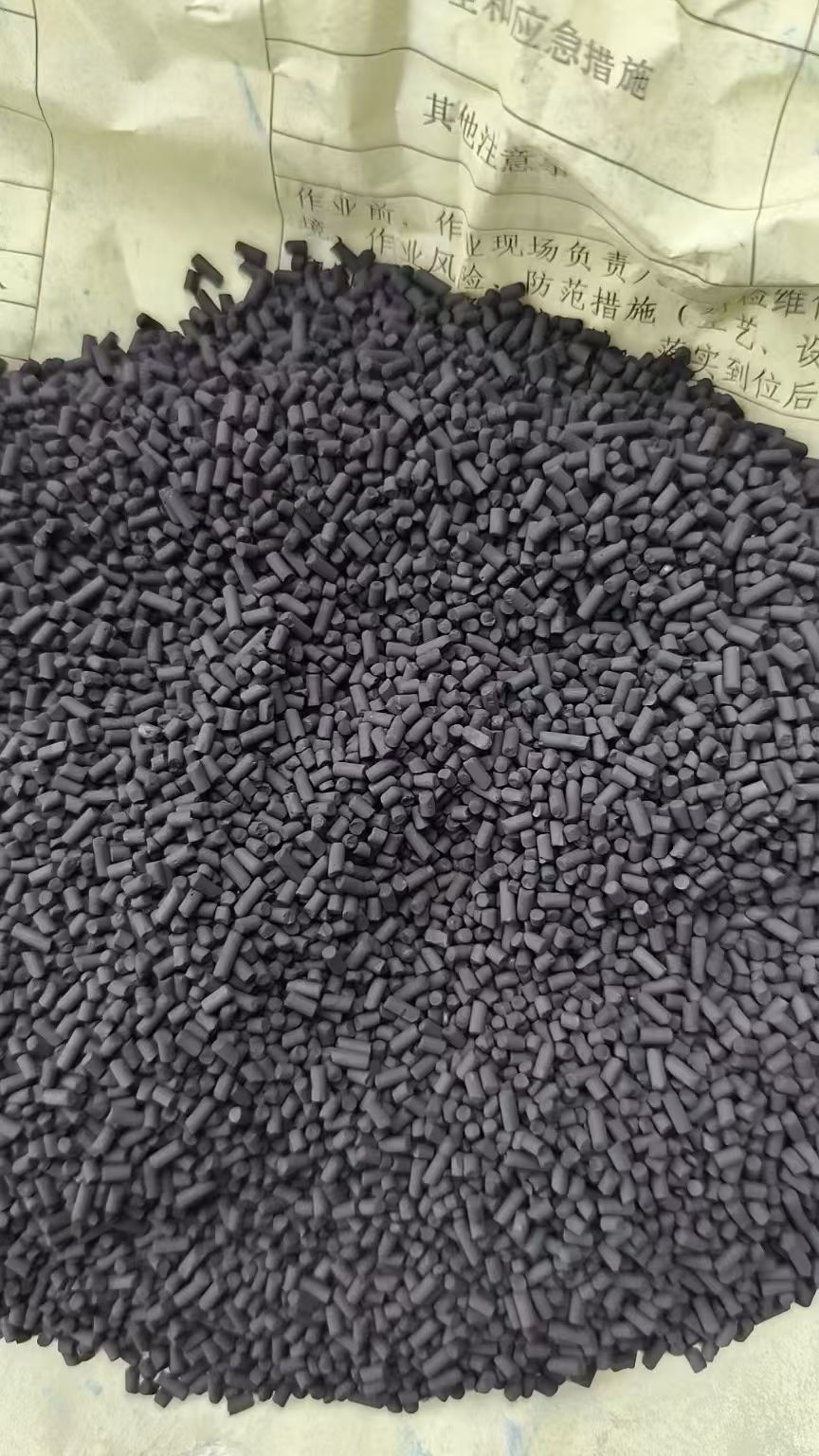
Under pressure, nitrogen and oxygen diffuse through carbon molecular sieve at different rates. Oxygen is preferentially adsorbed by the sieve while nitrogen concentrates in the gas phase, completing the separation. In the BXN Series, compressed and pre-treated air flows into one of two adsorption towers filled with carbon molecular sieve; while one tower generates nitrogen, the other depressurises to release trapped gases and regenerate the sieve. The towers switch automatically between adsorption and regeneration so that high-purity nitrogen is produced continuously on site.
Membrane: differential permeation through hollow fibres
Membrane separation relies on the pressure differential across a hollow-fibre bundle. Oxygen, water vapour and other fast-permeating gases pass through the membrane first to form an oxygen-rich permeate stream, while nitrogen, with a relatively low permeation rate, is retained and concentrated into dry nitrogen-rich product gas. There is no sieve bed to regenerate and no adsorption cycle to switch, which is why the membrane package is described as compact and quiet. The trade-off is the purity ceiling: the BMN Series is rated to 99.9%.
Decision Framework: Six Steps From Requirement to Final Technology Choice
Step 1 — Fix the purity target with the process owner, not the utility team
Write down the highest purity any user point will ever need, including future lines. The standard purity bands used across nitrogen applications are:
- 95%–98% (low purity): fire protection, marine tank blanketing, oilfield pipeline purging and general tyre inflation.
- 99%–99.9% (medium purity): food and beverage modified atmosphere packaging, winemaking and conventional plastic moulding.
- 99.95%–99.99% (high purity): mild-steel laser cutting, electronics manufacturing, cable production and pharmaceutical tank blanketing.
- 99.999% and above (ultra-high purity): cutting special metals such as titanium alloy, high-end electronics production and specialised laboratory applications.
If the answer lands at 99.9% or below, both technologies remain on the table. If it lands above 99.9%, the membrane option is closed.
Step 2 — Confirm flow, pressure and dew point as one specification
Purity alone does not describe a nitrogen requirement. The BXN Series delivers 1–3000 Nm³/h at 0.1–1.15 MPa adjustable pressure and a dew point of -40℃ to -70℃. The BMN Series delivers 5–3000 Nm³/h at 0.1–1.2 MPa adjustable pressure and a dew point of -40℃ or -60℃. Flow, pressure and dew point must be specified together, because raising any one of them changes the compressed-air demand behind the generator.
Step 3 — Test the duty profile against continuous operation
Both technologies are supplied for 24/7 plug-and-play operation in the BODA GAS range, but they reach continuous duty differently. PSA maintains continuity through automatic tower switching between adsorption and regeneration, with pressure equalisation between the online and standby towers before each switch to reduce energy loss and protect the sieve. Membrane separation is a steady permeation process without a regeneration cycle. If your plant is genuinely round-the-clock, specify the duty profile in the enquiry rather than assuming it.
Step 4 — Measure the installation footprint and available utilities
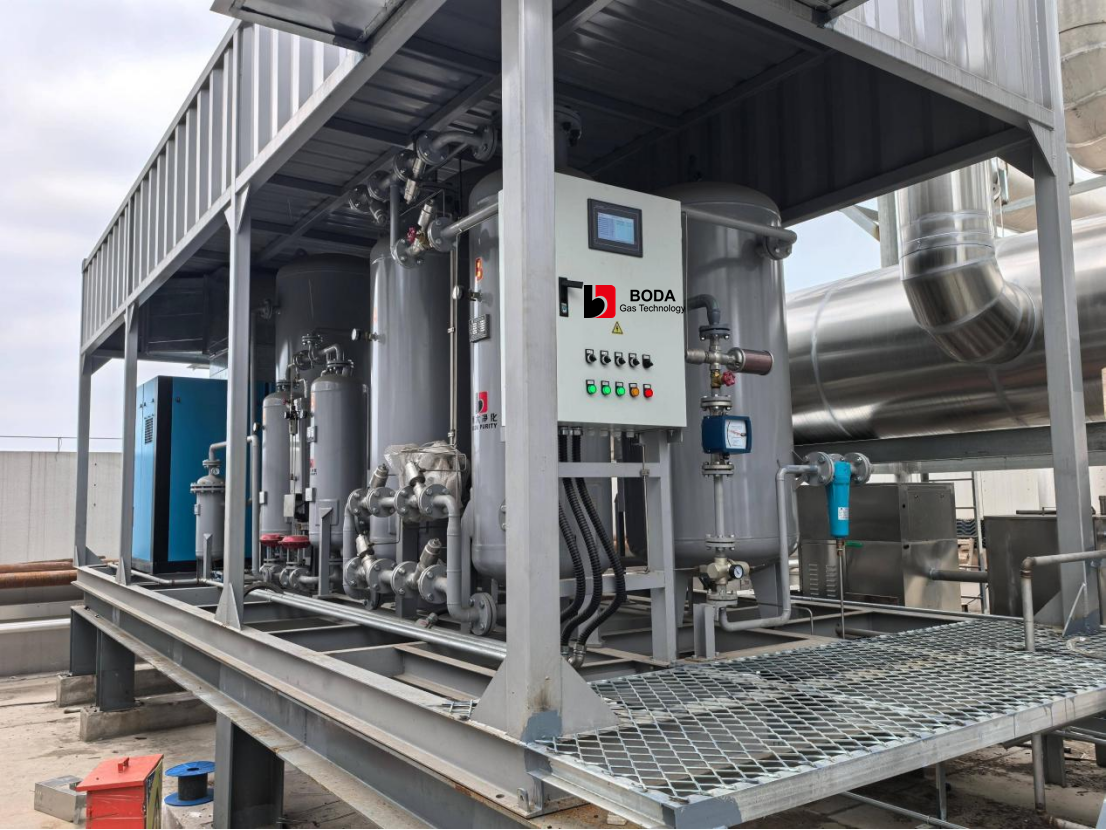
Multiple skid-mounted configurations are available across the range: split-type skid assembly, integrated skid-mounted unit, and container-integrated package. Equipment layout can be arranged to match on-site space conditions. For remote oil and gas sites, mine sites or temporary installations, the container-integrated package removes most of the civil work from the project.
Step 5 — Lock compliance requirements before technology is selected
Certification can change the vessel design, the documentation pack and the delivery schedule, so it belongs at the specification stage. In the EU, all pressure vessels in PSA nitrogen generators must comply with the Pressure Equipment Directive (PED 2014/68/EU) and bear the CE mark. Beyond CE, equipment in the BODA GAS range can be supplied to ASME and ATEX requirements, with marine classification society approvals available where a project demands them. For food-grade nitrogen, EIGA standards require at least one continuously online residual oxygen analyzer in the nitrogen gas stream — a requirement that has to be designed into the control philosophy, not added later.
Step 6 — Model ten-year ownership, then validate before shipment
Only after the first five steps should the commercial comparison be run. The last action before release to production is validation: pre-shipment testing on the actual unit, not on a reference datasheet.
Comparing Purity, Continuous Operation and Footprint
Purity ceiling
This is the decisive dimension. The BMN Series is rated from 95% to 99.9%. The BXN Series is rated from 95% to 99.999%, and the BCP Series carbon loaded purification nitrogen generator is rated at ≥99.9995% purity with oxygen content ≤5 ppm, carbon dioxide content ≤1 ppm and dew point ≤-60℃. PSA nitrogen generators can produce nitrogen with a purity rating of up to 99.999% using carbon molecular sieves. If your specification includes any requirement above 99.9%, the selection is already made.
Continuous operation
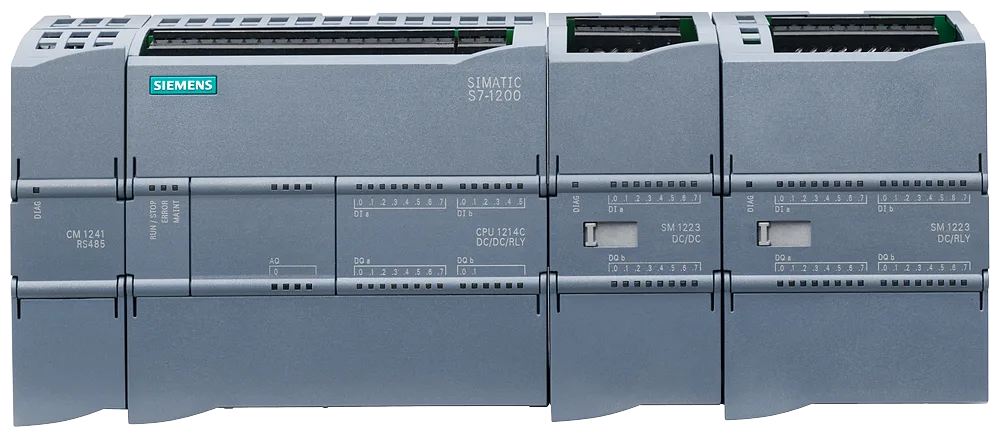
Both ranges are supplied for 24/7, plug-and-play duty. The engineering difference is what keeps the process continuous. PSA relies on automatic valve switching and pressure equalisation between towers, so valve quality and control-system reliability directly determine uptime. BODA GAS equipment uses stainless-steel pneumatic valves from ESG, Burkert and Gemu, and can be supplied with a Siemens PLC and SMC thermal mass flowmeter; that instrumentation package is associated with a 30%–50% lower failure rate compared with ordinary domestic control-instrument solutions, at an initial procurement cost about 60% higher than ordinary domestic configurations. The intelligent energy-saving PLC control option automatically adjusts the operating cycle to actual nitrogen demand and applies closed-loop pressure control on the nitrogen buffer tank, delivering 20%–40% energy savings.
Footprint and installation
Membrane packages are commonly characterised as compact and quiet, which suits skid formats, container integration and unmanned sites. PSA packages carry adsorption towers plus wet-air, dry-air and nitrogen buffer tanks, so layout planning has an earlier influence on civil works and pipe routing. Skid flexibility works in both directions: split-type skid assembly, integrated skid-mounted unit and container-integrated package can all be arranged to match site conditions, and the same modular logic applies to the PSA oxygen generator and dryer ranges.
Use Cases: Which Technology Fits Which Plant
The application list below maps the standard nitrogen requirements of each industry to the technology that satisfies them within the BODA GAS range.
- Oil and gas / petroleum: tank blanketing, pipeline and vessel purging and inerting, well stimulation and well-bore flushing, at 95%–99.9% purity, 24/7 plug-and-play. Explosion-proof construction for Zone 1/Zone 2 hazardous-gas areas is available as a special requirement.
- Chemical industry: reactor inert shielding, raw-material tank blanketing, pipeline purging and powder conveying at 99.0%–99.99%, with explosion-proof and ASME configurations available.
- Food and beverage packaging: modified atmosphere packaging, beverage production and tank blanketing at 99.0%–99.9% food-grade oil-free nitrogen, specified with an oil-free air compressor and stainless steel.
- Pharmaceutical industry: medicine packaging, storage and sealing at 99.99%–99.999% with oil-free and stainless-steel construction.
- Electronics: SMT workshops typically at 99.99%, and chip-and-wafer precision manufacturing at 99.999%–99.9999% with dew point ≤-60℃.
- Laser and plasma cutting: 95%–99% for ordinary carbon steel; 99.99%–99.999% at high pressure for mirror-finish stainless-steel fine cutting, where a high-pressure nitrogen booster set is matched to the system.
- Tyre inflation: 95%–98%, served by a compact, fast-inflation nitrogen generator.
Read across that list and the pattern is consistent: wherever the requirement crosses 99.9%, the application moves into PSA territory. Below that line, membrane separation remains a valid and often simpler answer.
PSA vs. Membrane Nitrogen Generator Comparison Table
| Comparison dimension | PSA nitrogen generator (BXN Series) | Membrane separation nitrogen generator (BMN Series) |
|---|---|---|
| Separation principle | Oxygen preferentially adsorbed by carbon molecular sieve under pressure | Differential permeation of gases through hollow-fibre membrane |
| Nitrogen purity range | 95%–99.999% | 95%–99.9% |
| Nitrogen flow range | 1–3000 Nm³/h | 5–3000 Nm³/h |
| Nitrogen pressure | 0.1–1.15 MPa (adjustable) | 0.1–1.2 MPa (adjustable) |
| Nitrogen dew point | -40℃ to -70℃ | -40℃ or -60℃ |
| Ultra-high purity path | BCP Series carbon loaded purification: ≥99.9995%, O₂ ≤5 ppm, CO₂ ≤1 ppm, dew point ≤-60℃ | Not applicable above 99.9% |
| Continuous duty | Automatic tower switching between adsorption and regeneration, with pressure equalisation before each switch | Steady permeation process without a regeneration cycle |
| Noise rating | 65–85 dB(A) | Compact, quiet package design |
| Footprint character | Adsorption towers plus wet-air, dry-air and nitrogen buffer tanks | Compact modular package |
| Skid and installation options | Split-type skid assembly, integrated skid-mounted unit, container-integrated package | Split-type skid assembly, integrated skid-mounted unit, container-integrated package |
| Materials and customisation | Carbon steel / SS304; ATEX, ASME, CE, ISO | Carbon steel / SS304; ATEX, ASME, CE, ISO |
| Best-fit applications | Pharmaceutical, electronics, high-purity laser cutting, cable, chemical blanketing | Food and beverage MAP, oil and gas purging, mine inerting, tyre inflation |
How to read this table: the purity and flow rows decide the technology; the remaining rows decide the configuration, the supplier and the ten-year cost. Do not run a price comparison across rows that are not equivalent in purity and dew point.
Long-Term Ownership: What You Are Actually Selecting
A nitrogen generator is a ten-year asset decision. Once the technology is fixed, three things determine whether the lifetime cost stays where the business case predicted: consumable intervals, the specifiable upgrade options, and the supplier's ability to support the equipment after commissioning.
Consumable and service intervals
- Precision filter elements: replacement every 8,000 hours.
- Air compressor service: oil, oil filter and air/oil separator changes every 3,000–4,000 runtime hours.
- Air dryer desiccant: generally 16,000–24,000 hours.
- Carbon molecular sieve: 6–10 years.
These intervals are what make the difference between a planned maintenance calendar and unplanned production losses, and they should be written into the purchase specification alongside the purity guarantee.
Specifiable upgrades that change lifetime cost
- Customised CMS-330 molecular sieve: for nitrogen generators at 99.99% purity, the 100 Nm³/h model can save 0.83 m³/min of compressed air, an energy saving rate of 10%. Initial material cost is about 15% higher, with a low attrition rate and less frequent replacement.
- Intelligent energy-saving PLC control: about 5% higher initial investment for 20%–40% energy savings during low-load operation.
- 304 stainless steel regeneration-gas pipeline: extends service life by 20% compared with standard alternatives; stainless-steel materials cost 150% more than carbon steel or rubber hoses but reduce ageing, moisture corrosion and replacement frequency.
- Stainless-steel pneumatic valves (ESG, Burkert, Gemu): leakage-failure rate reduced by 60%, internal pressure loss reduced by 25%–35%, with 18% long-term savings on pneumatic gas.
- Adsorption tower head design with automatic cylinder compression (for tower diameters over 600 mm): extends molecular sieve service life by 40%–60% versus conventional tower-head structures by preventing sieve sinking and pulverisation.
Supplier stability is part of the technology decision
BODA GAS is the brand of Hangzhou Boda Purity Equipment Co., Ltd., a manufacturer of PSA nitrogen generators, PSA oxygen generators and compressed air purification equipment established in 2002 and headquartered in Hangzhou, Zhejiang Province, China. The company operates a production base covering more than 30,000 m² and employs 58 people, including a 15-engineer R&D team, with an annual output of 480 units. It holds ISO 9001 Quality Management System, ISO 13485 Medical Device Quality Management System, ISO 14001 Environmental Management System and ISO 45001 Occupational Health and Safety Management System certifications, and has established long-term cooperative supplier qualifications with companies including CNPC, Sinopec, CNOOC and Ingersoll Rand.
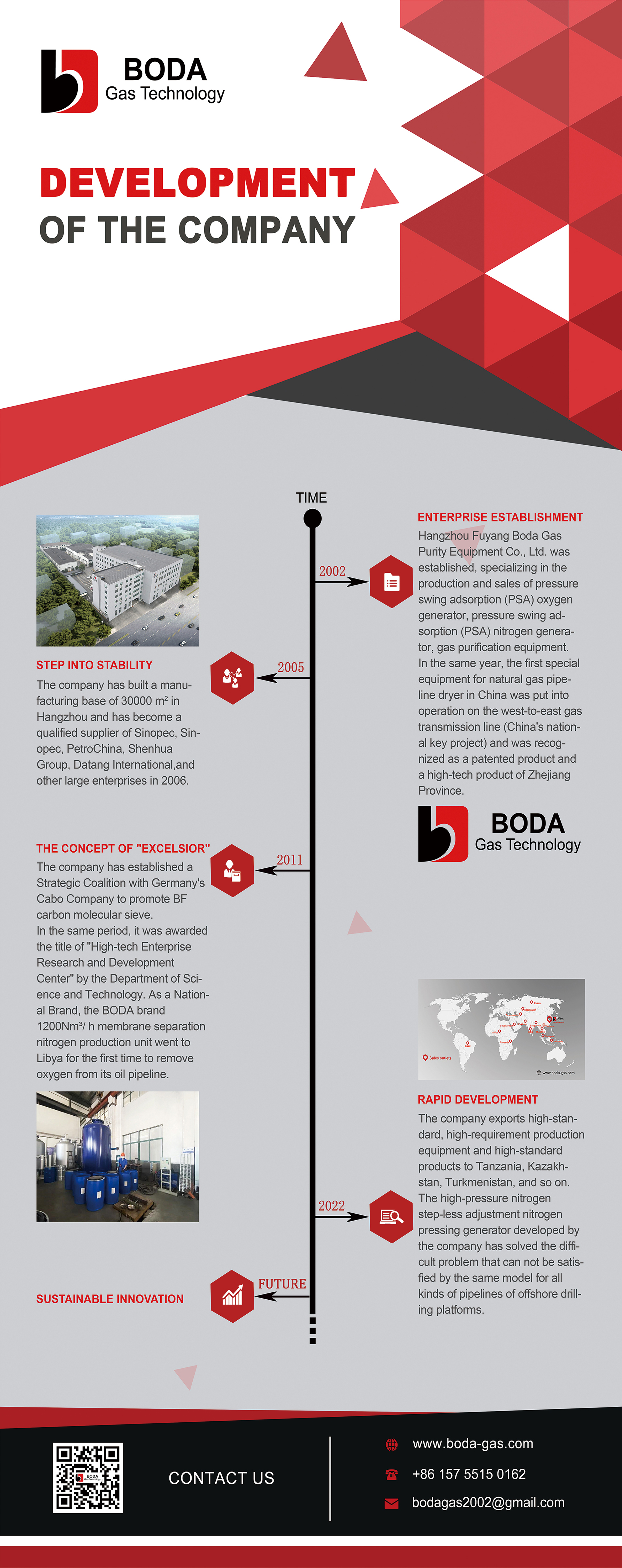
That matters for both technologies in this comparison. A supplier with 24 years of industry experience across PSA and membrane separation, oxygen generation, refrigeration dryers, heatless and heated desiccant dryers, combination low dew-point dryers and filtration can hold the whole gas train accountable — compressor, tanks, dryers, filters, generator and buffer tank — instead of splitting responsibility across vendors when something drifts out of specification.
FAQ: PSA and Membrane Nitrogen Decisions
What certifications should I expect on a PSA or membrane nitrogen generator?
In the EU, all pressure vessels in PSA nitrogen generators must comply with the Pressure Equipment Directive (PED 2014/68/EU) and bear the CE mark. Beyond CE, nitrogen generation equipment can be supplied to ASME and ATEX requirements, with marine classification society approvals available for offshore and marine projects. For food-grade nitrogen, EIGA standards require at least one continuously online residual oxygen analyzer in the nitrogen gas stream, which is normally satisfied by the oxygen analyzer or purity sensor built into the generator's control system that automatically vents out-of-specification gas. Certification requirements should be listed in the specification before the technology is selected, because they influence vessel design, documentation and delivery schedule.
Can one supplier deliver both PSA and membrane systems, and can either be integrated into our existing plant?
Yes. BODA GAS manufactures both the BXN Series PSA nitrogen generator (1–3000 Nm³/h, 95%–99.999%) and the BMN Series membrane separation nitrogen generator (5–3000 Nm³/h, 95%–99.9%), together with the rest of the gas train: air compressor, wet-air and dry-air receiver tanks, refrigeration dryers, heatless and heated desiccant dryers, precision filters, activated carbon filters, oil removers and buffer tanks. Both technologies are available as split-type skid assembly, integrated skid-mounted unit or container-integrated package, and the equipment layout can be flexibly arranged according to on-site space conditions. The intelligent energy-saving PLC option, Siemens PLC and SMC thermal mass flowmeter can be specified on either configuration.
Which technology is cheaper to own over ten years?
It depends on the purity band, and the honest answer is that the two should be priced on the same purity, flow, pressure and dew-point basis before any comparison is made. Within the BODA GAS range, several cost drivers are quantifiable: the intelligent energy-saving PLC control adds about 5% to initial investment while delivering 20%–40% energy savings during low-load operation; the customised CMS-330 molecular sieve costs about 15% more at the material stage while saving 0.83 m³/min of compressed air on a 100 Nm³/h, 99.99% purity unit, a 10% energy saving rate. Against delivered gas, on-site nitrogen generation can reduce nitrogen supply costs by up to 40% compared with traditional cylinder deliveries by eliminating logistics fees. Because membrane separation is capped at 99.9% purity, above that level the comparison is not between two technologies but between two PSA configurations.
How do we validate the equipment before it ships, and what are the purchasing terms?
Every unit must pass qualification testing prior to factory release, and acceptance criteria are based on a pre-shipment test, so purity, flow and pressure are verified on the actual equipment rather than on a datasheet. The minimum order quantity is one unit; delivery terms are EXW, FOB, CIF or CFR; payment terms are 30% deposit by T/T in advance with 70% by T/T before dispatch. A tailor-made gas solution is prepared free of charge: the technical team calculates the air-to-nitrogen ratio, outlet flow, purity and power consumption from your site altitude, voltage and industry, then draws the layout and technical scheme for your working condition. Customisation and OEM-ODM service are fully supported, including adjustment for different working voltages and outlet pressures.
What happens after commissioning — lead time, spare parts and long-term support?
Installation is deliberately simple: set the equipment down and connect the power cable, because the skid-mounted unit is plug-and-play after power-on. Support continues through 24-hour online after-sales service, operation manuals and video guidance, and overseas resident engineers are available for on-site installation, commissioning and maintenance when a project requires it. Spare-part planning follows the consumable intervals already described — precision filters at 8,000 hours, air dryer desiccant at 16,000–24,000 hours and carbon molecular sieve at 6–10 years. Because long-term cooperative supplier qualifications are already established with companies including CNPC, Sinopec, CNOOC and Ingersoll Rand, the same support model applies to plants running continuous chemical, oil and gas, or packaging operations.
Conclusion: Making the Final Call
The decision rule is short enough to apply in a project meeting. If the highest purity anywhere in your plant stays at or below 99.9% and the installation point is compact, remote or containerised, a membrane separation nitrogen generator in the BMN Series range (5–3000 Nm³/h) gives you the simplest route to on-site nitrogen. If any user point requires 99.95% or above, or if the plant may add such a process within the asset's service life, the BXN Series PSA nitrogen generator is the technology that can meet the requirement today and the BCP Series purification stage is the upgrade path to 99.9995% with O₂ ≤5 ppm.
On the practical dimensions, PSA carries the higher purity ceiling and the wider specification range; membrane carries the compact package and the simpler component set. Both are supplied for 24/7 plug-and-play duty, both share the same pre-treatment logic, and both are configured in split-skid, integrated-skid or container-integrated formats. The variable that most often decides the outcome is not the separation principle at all — it is how completely the requirement is specified before the enquiry goes out.
Next Step: Compare Both Technologies on Your Own Numbers
Send your nitrogen purity, flow, pressure, dew point, voltage and site conditions, and BODA GAS will prepare a technical scheme covering both PSA and membrane configurations so you can compare them on an identical basis. Sample units, project quotations and layout drawings are available on request.
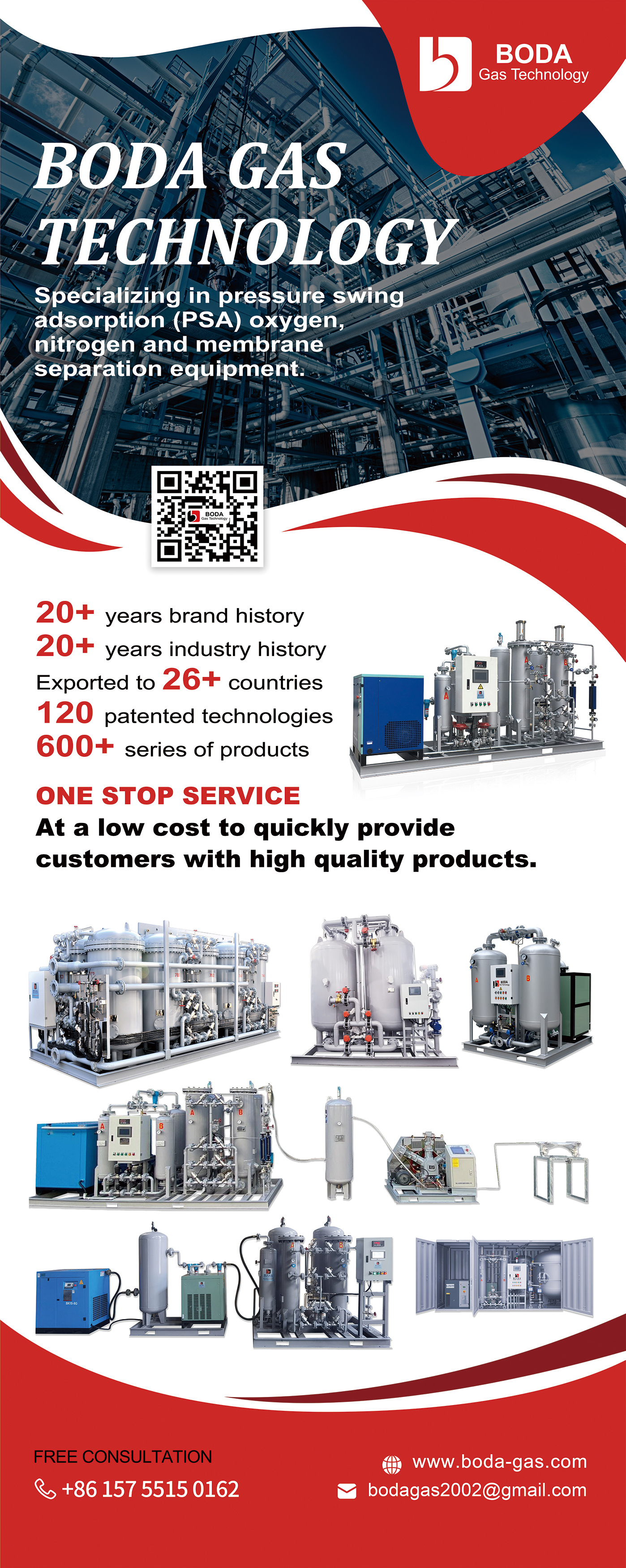
Product manual (PDF): Download the BODA GAS product manual
Website: www.boda-gas.com
WhatsApp: +86 157-5515-0162
Email: bodagas2002@gmail.com
Contact: Lemon Du, Hangzhou Boda Purity Equipment Co., Ltd., NO.3, 6th Road, Lushan Industry Function Zone, Fuyang District, Hangzhou City, Zhejiang Province, China, 311407
Have Questions or Need More Details?
Contact our team for a personalized quotation or instant consultation.
Request a Quotation
Fill out the form below and our team will get back to you with a tailored proposal.
WhatsApp Direct Chat
Prefer to chat in real-time? Message us on WhatsApp for instant assistance & quick answers.
- Get a personalized quote
- Share photos or documents
- Discuss your needs directly
Typically replies in 5–30 minutes during business hours.