Top 7 PSA Nitrogen Generator Components Ranked by Reliability Impact
PSA Nitrogen Generation · Component Reliability Ranking
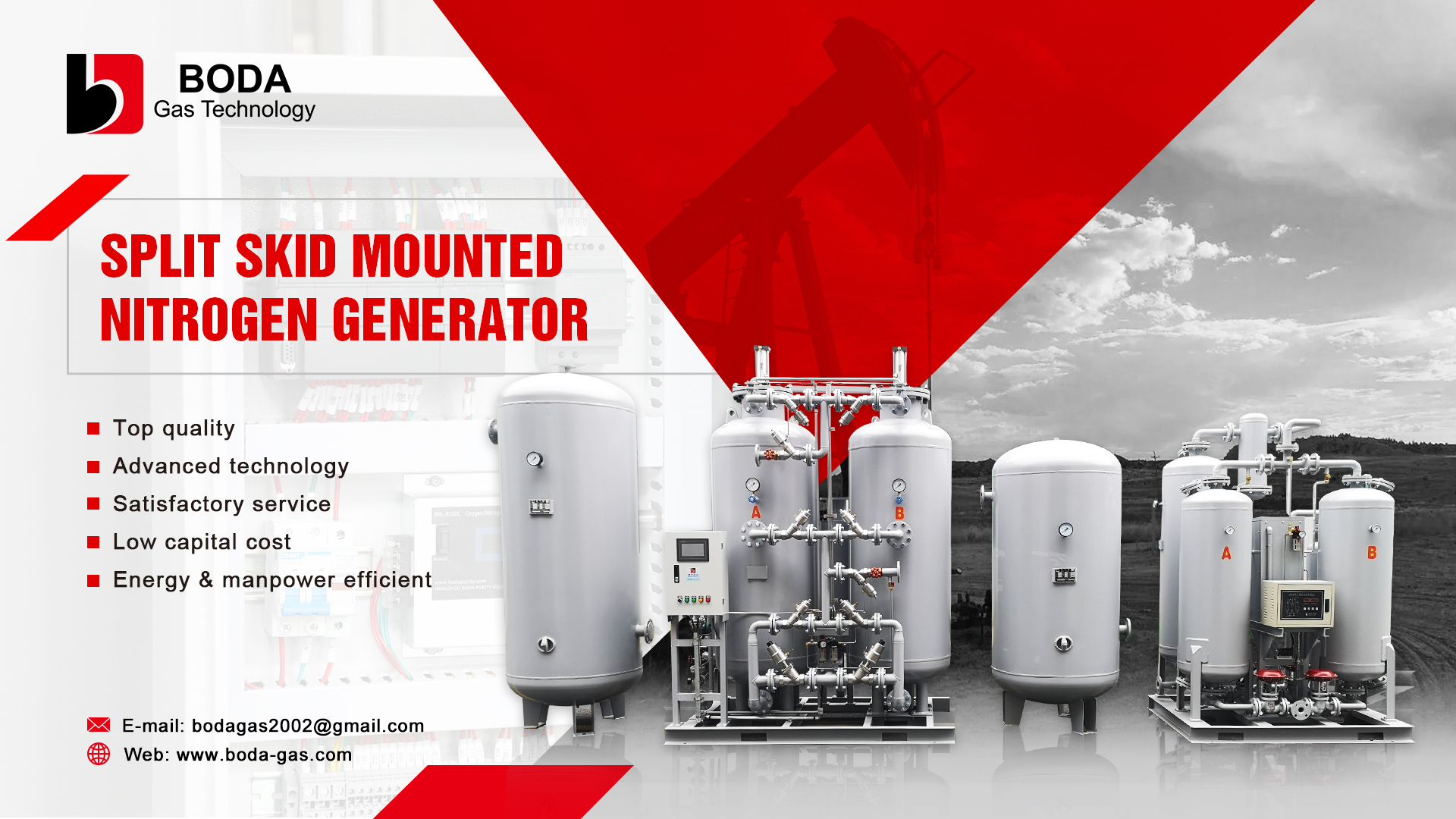
A reliable PSA nitrogen generator is a short list of ordinary components doing an unforgiving job. Ranked by reliability impact — the degree to which a failure or an omission in that component degrades nitrogen purity, flow stability and adsorption-tower service life — the seven units below matter as much as the PSA unit itself. In descending order of reliability impact, they are: the high efficiency oil-remover (FLY Series), the high efficiency oil-water separator (FYS Series), the refrigeration dryer (FAD Series), the heatless compressed air desiccant dryer (ADL Series), the heated compressed air desiccant dryer (ADH Series), the carbon loaded purification nitrogen generator (BCP Series) and the activated carbon filter (FLT Series). All seven are standard products in the verified range of BODA GAS, the brand of Hangzhou Boda Purity Equipment Co., Ltd., a PSA gas-separation equipment manufacturer founded in 2002 and based in Hangzhou, Zhejiang Province, China.
The ranking is not a price list and it is not a popularity list. Each position is decided by three questions a buyer can apply to any supplier: how severe is the consequence if this component underperforms, how reversible is the damage it allows, and does ranking it higher reduce total cost over a ten-year service life rather than only in year one.
Problem Definition: Pre-Treatment Is Still Ranked Last
A PSA (Pressure Swing Adsorption) nitrogen generator extracts nitrogen directly from compressed air by passing pre-treated air through two adsorption towers filled with carbon molecular sieve. The sieve adsorbs oxygen, carbon dioxide and moisture, while nitrogen passes through as the product gas. The sieve is the only part of the system that separates anything — and it is the only part that cannot be repaired on site. When it is contaminated or pulverised, the towers must be opened and the material replaced.
Four upstream failure modes shorten that service life:
- Oil aerosol carryover. Compressor lubricant reaches the sieve as a fine aerosol, coats the pore structure and permanently reduces adsorption capacity. The symptom is a purity or flow shortfall that cannot be recovered by changing valve timing.
- Bulk liquid slugs. Condensed water and free oil arrive at the tower inlet during start-up, ambient-temperature swings or after a dryer upset, and physically damage the bed.
- Uncontrolled water vapour. Moisture competes with oxygen for adsorption sites, shifts the achievable dew point and forces shorter cycles or lower output.
- Particulate migration. Attrited sieve dust travels into switching valves and pipelines, where it causes leakage and jamming — which in turn puts further pressure shock on the bed.
Every one of those failure modes has a dedicated, catalogue-listed component in front of the towers. A procurement process that ranks the tower size, the purity number and the price while treating filters and dryers as accessories has effectively ranked reliability last, and the plant usually discovers that ranking during the first unplanned shutdown.
Industry Background: Demand Is Concentrating in Moisture- and Oil-Sensitive Processes
The global industrial nitrogen generator market was valued at USD 4.29 billion in 2023 and is projected to reach USD 6.47 billion by 2031, according to Verified Market Research. Within that market, Pressure Swing Adsorption accounts for approximately 48% of the total, making PSA the dominant technology segment (Fortune Business Insights), and PSA systems using carbon molecular sieves can produce nitrogen at purity ratings up to 99.999% (General Air Products).
The application mix explains why component-level reliability has become a buying criterion rather than a service detail. Food and beverage held approximately 49.8% of nitrogen generator revenue share in 2023, driven largely by modified atmosphere packaging (Grand View Research). The chemical segment is projected to grow at the highest CAGR among applications, at 6.0%, on the strength of tank blanketing and reactor purging (Maximize Market Research). By installed capacity, PSA installations are split roughly 42% below 100 Nm³/h, 36% between 100 and 500 Nm³/h and 22% above 500 Nm³/h (Precedence Research / Dataintelo). Asia-Pacific is the fastest-growing region, projected to hold a 35% market share by 2032 (Verified Market Research), and containerized PSA generator demand is growing at a CAGR of 7.6% from 2025 to 2032 in one published estimate (Reliable Research IQ).
Two commercial facts frame the component decision. On-site nitrogen generation can reduce nitrogen supply costs by up to 40% compared with cylinder deliveries by eliminating logistics fees, based on a U.S. Department of Energy-sourced estimate. And in the European Union, pressure vessels inside a PSA nitrogen generator must comply with the Pressure Equipment Directive (PED 2014/68/EU) and bear the CE mark (European Commission). Both facts push the same way: the economic case for on-site generation is built over years, and it is protected — or destroyed — by the pre-treatment train.
The Ranking: 7 Components Scored by Reliability Impact
The scoring logic used below is deliberately narrow so that it can be reused in a tender review: consequence severity, reversibility of damage, and lifecycle effect. A component that can contaminate the sieve irreversibly outranks a component that is merely convenient to replace.
Rank 1 — High efficiency oil-remover (FLY Series): the irreversible-contamination gate
Verified specification: rated air treatment flow rate 1–500 Nm³/min; working pressure 0.6–0.8 MPa (0.8–3.0 MPa optional); inlet temperature below 50 °C; pressure loss ≤0.02 MPa; outlet oil content below 0.01 mg/m³. BODA GAS lists the FLY Series as pre-treatment for PSA nitrogen generators, PSA oxygen generators and membrane gas-separation plants, specifically to protect the molecular sieve from oil pollution.
It ranks first because it addresses the only failure mode that is effectively irreversible. Moisture can be driven off a sieve bed during regeneration; oil cannot. A unit that holds outlet oil content below 0.01 mg/m³ is the difference between a sieve charge replaced on schedule and one replaced because it stopped holding purity.
Rank 2 — High efficiency oil-water separator (FYS Series): bulk liquid interception
Verified specification: 1–500 Nm³/min; inlet temperature below 50 °C; pressure loss ≤0.02 MPa; gas-liquid separation efficiency above 98%. It is positioned as front-end pre-treatment for PSA nitrogen and oxygen generators, intercepting bulk liquid water and oil droplets to protect the downstream molecular sieve.
The separator handles volume; the oil-remover handles vapour. They are ranked adjacently because they fail in different conditions — the separator during start-up and ambient swings, the oil-remover continuously. Buying one without the other leaves a documented gap in the protection chain.
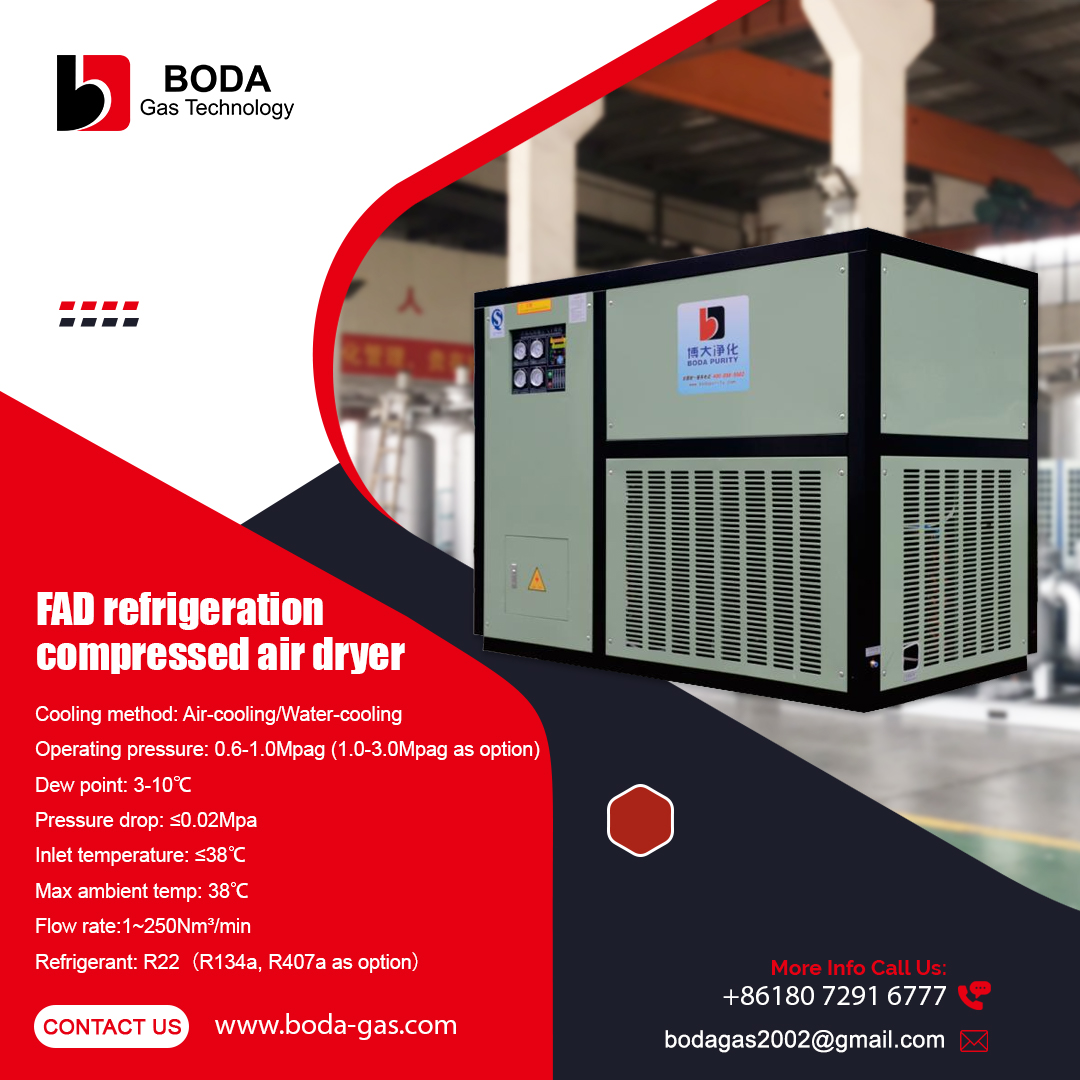
Rank 3 — Refrigeration dryer (FAD Series): baseline moisture control
Verified specification: rated air treatment flow rate 1–200 Nm³/min; working pressure 0.6–0.8 MPa (0.8–3.0 MPa optional); qualified air dew point ≤-23 °C under ambient pressure; inlet temperature below 38 °C, with a high-temperature version rated below 80 °C; pressure loss ≤0.02 MPa. Air-cooled, water-cooled and high-temperature configurations are available. The unit is listed as pre-treatment equipment for PSA nitrogen and oxygen generators, protecting the molecular sieve from moisture damage.
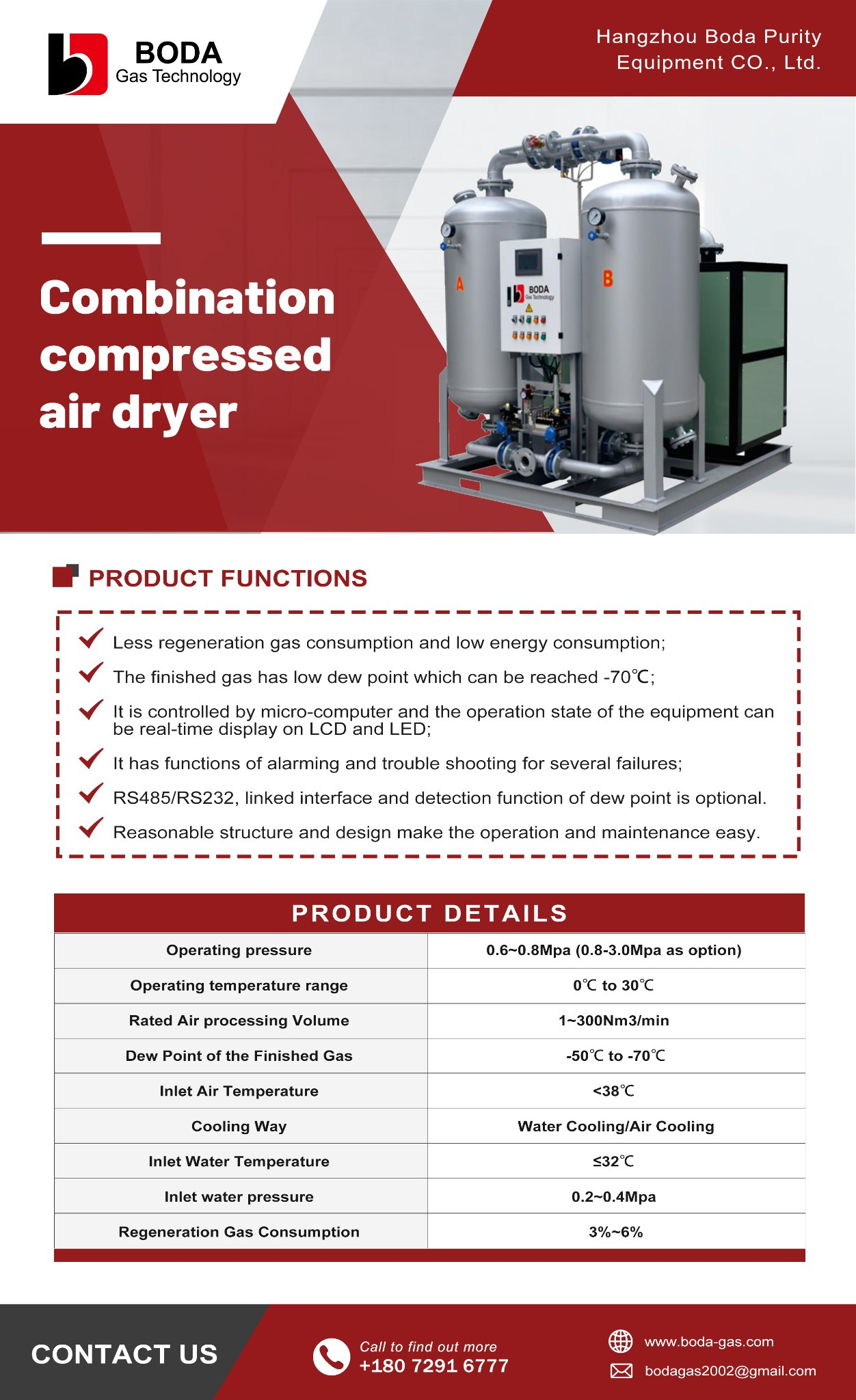
This is the baseline moisture-control recommendation because it removes the largest water load at the lowest operating cost, using the refrigeration dehumidification principle: humid compressed air is heat-exchanged in the evaporator, water vapour condenses and is drained through the air-water separator. For a 95–98% application such as pipeline purging or tank blanketing, a refrigeration dryer plus correct filtration can be the whole moisture story. Above 99.9% purity it becomes the first stage of a multi-stage drying train, never the last.
Rank 4 — Heatless compressed air desiccant dryer (ADL Series): dew-point safeguard without a heater
Verified specification: 0.5–500 Nm³/min; working pressure 0.6–0.8 MPa (0.8–3.0 MPa optional); qualified air dew point ≤-40 °C or ≤-52 °C; inlet temperature below 38 °C; regeneration air loss ≤12%; pressure loss ≤0.02 MPa; operating cycle 10 minutes, modifiable. Stainless steel, ATEX, ASME and CE options are available. The dryer is listed as pre-treatment for PSA nitrogen generators, PSA oxygen generators and high-purity gas purification plants.
It ranks fourth because it converts a moisture-controlled system into a dew-point-controlled one. The trade-off is visible in the specification: heatless regeneration consumes up to 12% of the dried air as purge gas, so the reliability gain is paid for in compressed air that was already produced at cost.
Rank 5 — Heated compressed air desiccant dryer (ADH Series): the same dew point at half the purge loss
Verified specification: 1–500 Nm³/min; working pressure 0.6–0.8 MPa (0.8–3.0 MPa optional); qualified air dew point ≤-40 °C or ≤-52 °C; inlet temperature below 38 °C; regeneration air loss ≤6%; pressure loss ≤0.02 MPa. The design integrates heated-regeneration and heatless-regeneration principles: purge air is heated to regenerate the desiccant, delivering better regeneration performance and lower purge-air consumption.
Ranked fifth rather than fourth because the choice between the two is a duty decision, not a quality decision. Where purge-air budget or large flows make the 12% loss unacceptable, the heated version holds the same dew point class at roughly half the regeneration loss — which is why it appears in large-scale PSA nitrogen and oxygen plants, gas-purification stations and cylinder-filling stations.
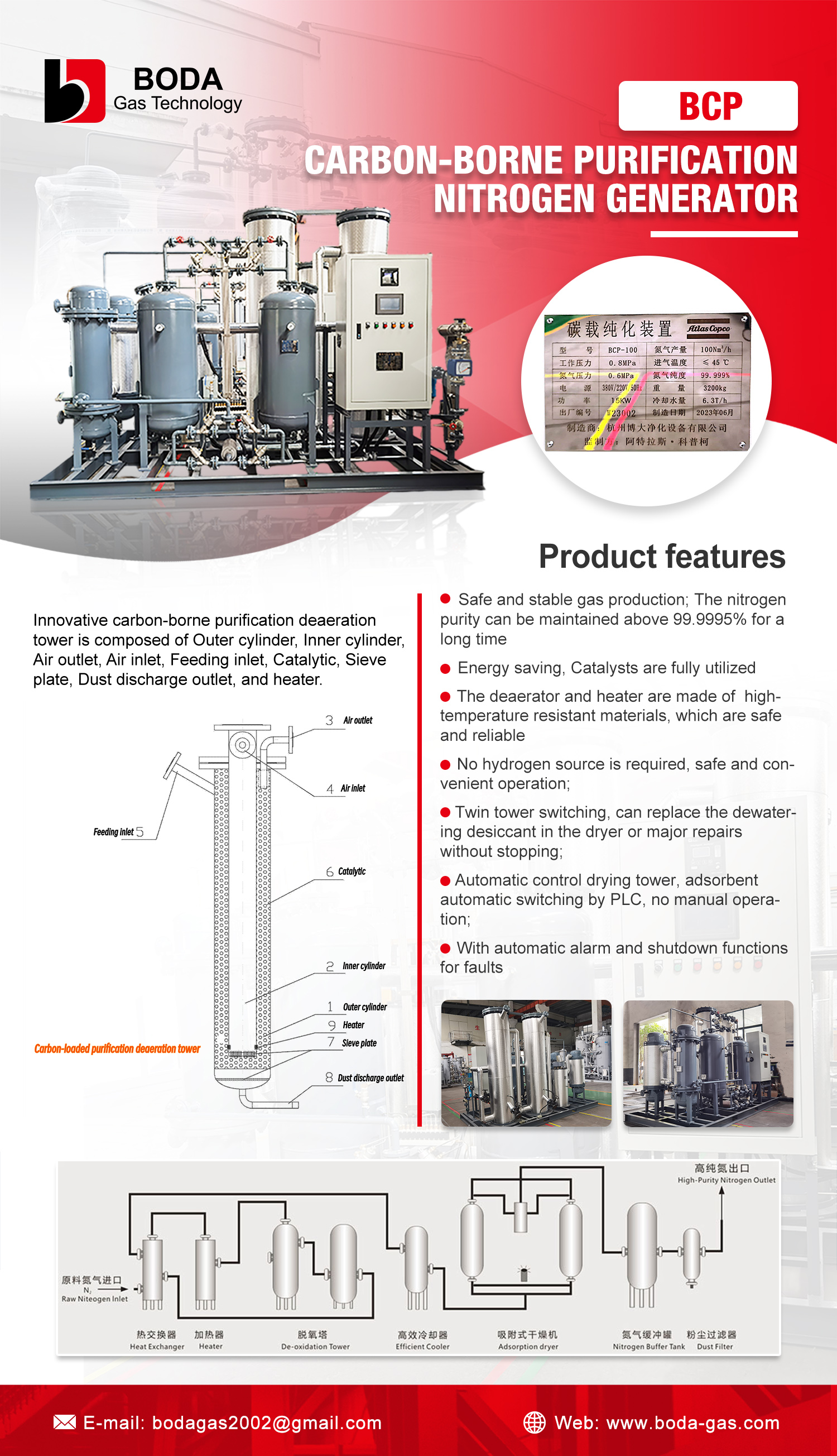
Rank 6 — Carbon loaded purification nitrogen generator (BCP Series): ultra-high purity conversion
Verified specification: nitrogen output 1–500 Nm³/h; nitrogen purity ≥99.9995%; nitrogen dew point ≤-60 °C; oxygen content ≤5 ppm; carbon dioxide content ≤1 ppm; carbon steel or SS304 construction, with stainless steel, ATEX, ASME and CE options. Documented applications include lithium-ion battery electrode drying, electrolyte blanketing and cell-sealing shielding gas; photovoltaic cell sintering, silicon-wafer processing and thin-film deposition process gas; and semiconductor wafer purging, SMT soldering and electronic-component anti-oxidation gas.
This is the component that changes the class of the installation. A well-built PSA generator reaches 99.999%, but a downstream purification stage is what holds 99.9995% with a ≤-60 °C dew point in continuous duty. It ranks sixth only because it is specified for the highest purity classes rather than for every project.
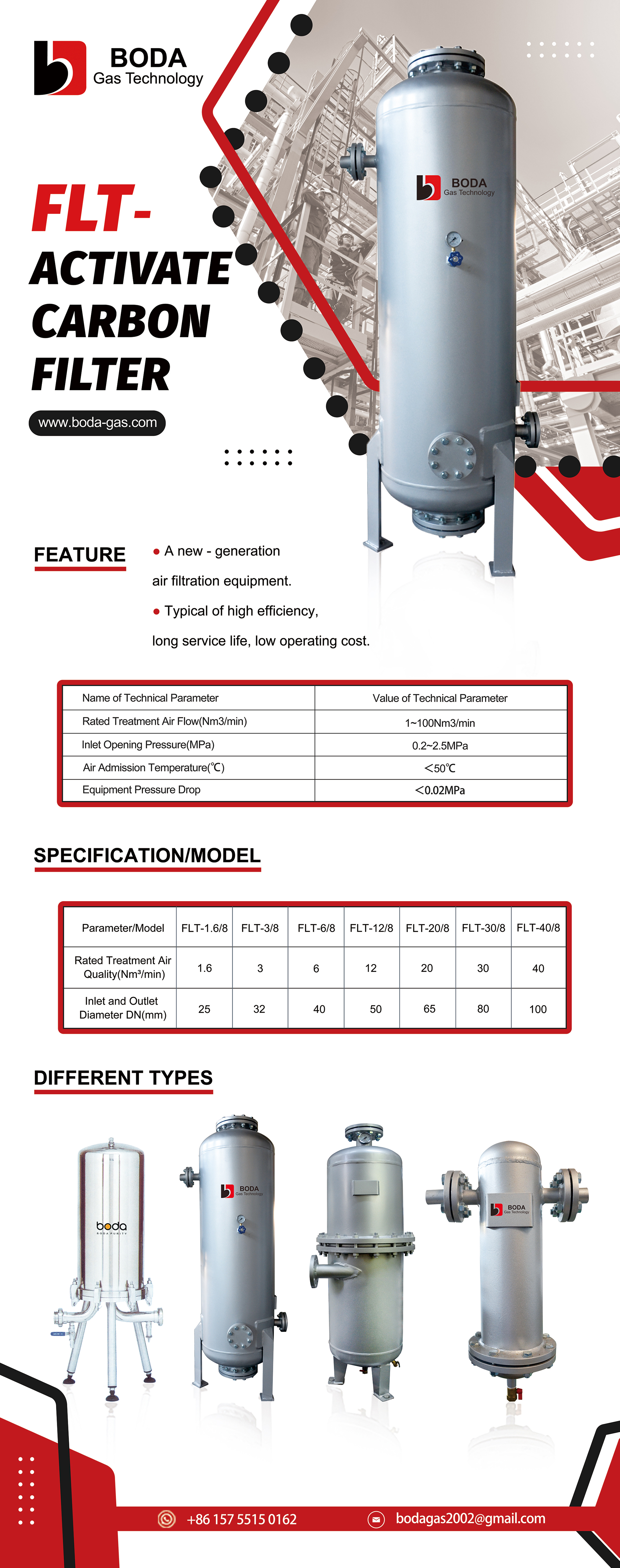
Rank 7 — Activated carbon filter (FLT Series): the quiet final barrier
Verified specification: rated air treatment flow rate 1–500 Nm³/min; working pressure 0.6–0.8 MPa (0.8–3.0 MPa optional); inlet temperature below 50 °C; pressure loss ≤0.02 MPa; outlet oil content below 0.003 mg/m³. It is specified for terminal-stage purification across high-purity PSA nitrogen generators, medical-grade PSA oxygen generators and membrane gas-separation plants, protecting the adsorbent from oil-vapour contamination.
It is ranked last in the top seven because its function is narrow — but in ultra-high purity duty, a narrow function is exactly what makes the previous rank possible. Without terminal oil-vapour removal, the ≥99.9995% claim of the purification stage is a start-of-life number rather than a service-life number.
Components just outside the top seven — and when they enter the ranking
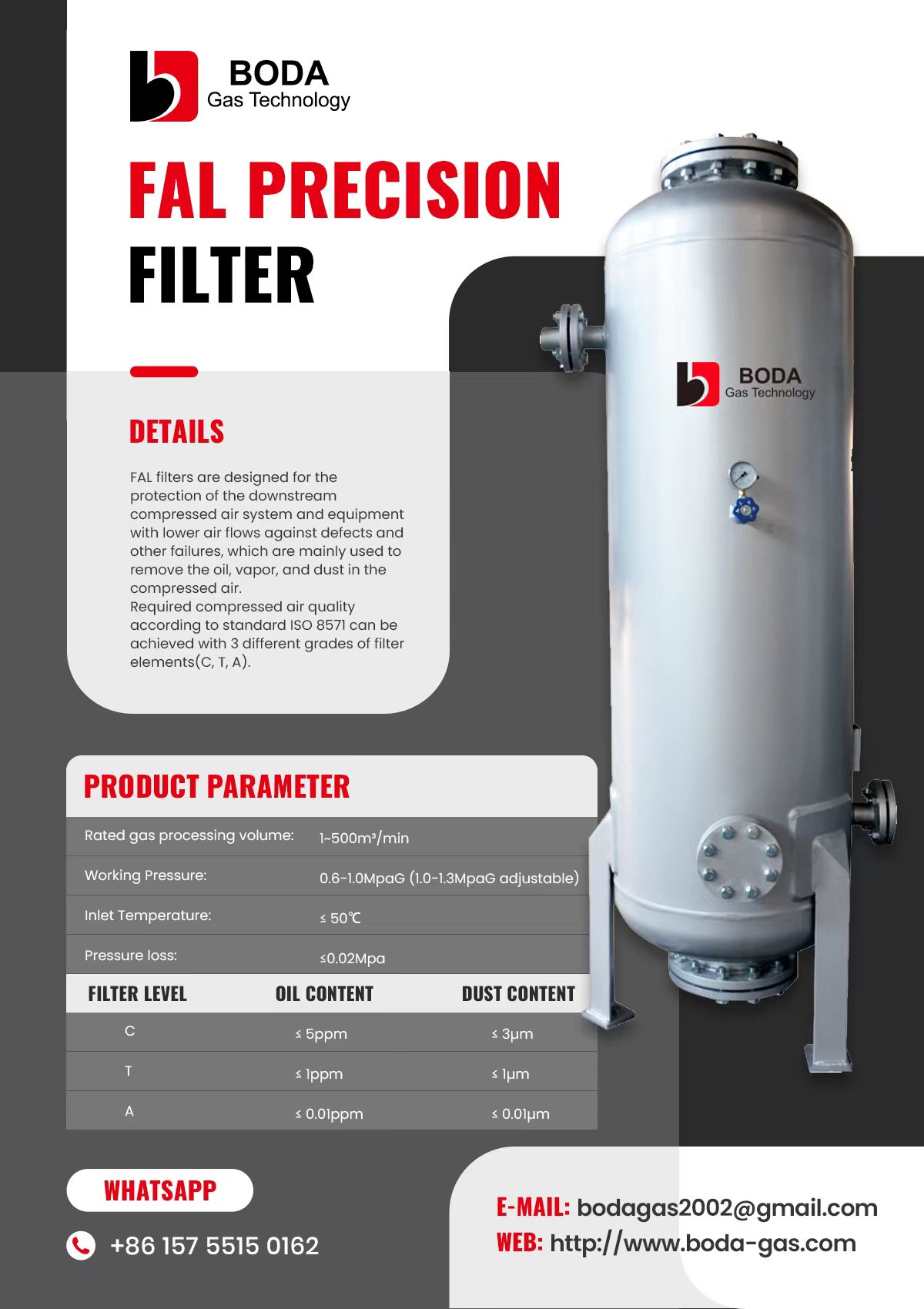
Four further products extend the train in specific conditions. The precision filter (FAL Series, 1–500 Nm³/min) provides pre-filtration that intercepts particulate contaminants to protect the molecular sieve. The sterilizing filter (FLC Series) delivers 0.1 µm filtration accuracy in SS304 for hospital oxygen systems, biopharmaceutical aseptic workshops and aseptic beverage filling. The combined low dew point compressed air dryer (FAG Series, 1–300 Nm³/min) reaches a qualified air dew point of ≤-60 °C to -70 °C with 3–6% regeneration air loss by integrating a refrigerated dryer and an adsorption dryer in one unit. The mobile pipeline-specific compressed air dryer (PDL Series, 1–300 Nm³/min, 0.6–1.6 MPa, inlet temperature below 120 °C) is built for long-distance gas-transmission pipelines, offshore-platform piping and oilfield on-site commissioning.
Why buyers should rank pre-treatment as highly as the PSA unit
Because the two cannot be separated commercially. A supplier who responds to an enquiry with a tower specification, a purity figure and a price has not engineered the package; a supplier who asks for site altitude, voltage, industry and end-use dew point, then calculates air ratio, outlet flow, purity and power consumption, is working from the components that actually determine uptime. When the pre-treatment train is treated as optional scope, the cost does not disappear — it is transferred from the capital budget to the maintenance budget, where molecular sieve replacement, valve repair and lost production are all more expensive than the components that would have prevented them.
Step-by-Step Breakdown: Ranking Components for Your Own Project
- Fix the five inputs before comparing anything. Nitrogen flow rate (Nm³/h), nitrogen purity (%), discharge pressure (bar), voltage and frequency, and the application. These five answers determine the entire component stack, and any quotation produced without them is an estimate rather than a design.
- Match the purity band to the pre-treatment chain. The bands below are the ones used in BODA GAS selection guidance, and each band implies a different minimum component set. Ranking components above what the band requires adds cost; ranking them below it guarantees a purity complaint later.
- Rank candidates by consequence, not by unit price. Apply the three scoring questions: severity of consequence, reversibility, lifecycle effect. A filter that costs more but holds outlet oil content below 0.003 mg/m³ is cheaper than a sieve replacement.
- Then apply the design multipliers that sit above the component list. These are the verified differentiators that decide whether the ranked components keep working: an adsorption-tower head using automatic cylinder compression technology (for tower diameters above 600 mm) that removes the gap between sieve material and vessel wall, reducing pulverisation risk and extending molecular sieve service life by 40–60% versus conventional tower-head structures; customized CMS-330 molecular sieve, where a 100 Nm³/h generator at 99.99% purity saves 0.83 m³/min of compressed air, a 10% energy saving; stainless-steel pneumatic valves from ESG, Burkert or Gemu, which cut valve-leakage failure rates by 60%, reduce internal pressure loss by 25–35% and save 18% on pneumatic gas over the equipment lifespan; 304 stainless steel regeneration-gas piping, which extends service life by 20%; and a Siemens PLC with SMC thermal mass flowmeter, associated with a 30–50% lower failure rate than ordinary domestic control-instrument solutions. An intelligent energy-saving PLC control system that adjusts the operating cycle to actual nitrogen demand adds a further 20–40% energy saving for roughly 5% higher initial investment.
- Lock in maintenance intervals and long-term support in the same evaluation. Precision filter elements are replaced every 8,000 hours; air compressor service (oil, oil filter, air/oil separator) falls every 3,000–4,000 running hours; air dryer desiccant is generally replaced at 16,000–24,000 hours; carbon molecular sieve service life is 6–10 years, with medium industrial-grade sieve typically at 5–7 years and premium anti-pulverisation sieve with layered filling at 8–10 years of non-stop running. A supplier who can quote those intervals and then supply the parts is a different risk profile from one who cannot.
Use Cases: Which Ranked Components Matter Most
Chemical industry. Required nitrogen purity is typically 99.0–99.99% for reactor inert shielding, raw-material tank blanketing, pipeline purging and powder conveying. Explosion-proof execution and ASME construction are common requirements, which pushes the oil-water separator and desiccant dryers into the critical path — a moisture upset in a blanketing line is a process-safety event, not a gas-quality event.
Food and beverage packaging. Purity of 99.0–99.9% food-grade oil-free nitrogen is used for modified atmosphere packaging, beverage production and tank blanketing. Oil-free compressors and stainless steel construction are specified, and EIGA standards require at least one continuously online residual oxygen analyser in the nitrogen stream for food-grade nitrogen (European Industrial Gases Association). Oil-removal and terminal carbon filtration therefore rank above raw capacity in this segment.
Pharmaceutical industry. Purity of 99.99–99.999% is used for drug production, storage, sealing and packaging, with oil-free air supply and stainless steel required. The carbon loaded purification generator is the component that holds that class, supported by a sterilizing filter where sterile gas is required.
Electronics and semiconductor manufacturing. SMT workshops commonly operate at 99.99%, while chip-and-wafer precision manufacturing reaches 99.999–99.9999% with a dew point of ≤-60 °C. This is the segment where ultra-low-dew-point air purification is not an option but a process requirement, and where the combined low dew point dryer and purification generator are ranked together.
Oil, gas and offshore. Purity of 95–99.9% covers tank blanketing, pipeline and vessel purging, inert-gas lifting and pressure testing, often at 24/7 plug-and-play duty with explosion-proof execution for Zone 1 and Zone 2 hazardous areas. Bulk liquid interception and dew-point control dominate reliability here, and mobile pipeline-type drying supports offshore and pipeline commissioning.
Laser and plasma cutting. Ordinary carbon steel cutting uses 95–99% nitrogen, while mirror-finish stainless steel fine cutting requires 99.99–99.999% at high-pressure output with a matched nitrogen booster set. High-pressure duty amplifies the cost of any upstream contamination that reaches the compression train.
Comparison Table: The 7 Ranked Components Side by Side
| Rank | Component (Model) | Verified operating window | Verified performance fact | Why it holds this rank |
|---|---|---|---|---|
| 1 | High efficiency oil-remover (FLY Series) | 1–500 Nm³/min; inlet <50 °C; pressure loss ≤0.02 MPa | Outlet oil content <0.01 mg/m³ | The only stage that prevents irreversible lubricant contamination of the molecular sieve |
| 2 | High efficiency oil-water separator (FYS Series) | 1–500 Nm³/min; inlet <50 °C; pressure loss ≤0.02 MPa | Gas-liquid separation efficiency >98% | Removes bulk liquid water and oil droplets before they reach the bed |
| 3 | Refrigeration dryer (FAD Series) | 1–200 Nm³/min; 0.6–0.8 MPa (0.8–3.0 MPa optional); inlet <38 °C, high-temperature version <80 °C | Qualified air dew point ≤-23 °C under ambient pressure | Baseline moisture control and the first stage of every multi-stage drying train |
| 4 | Heatless compressed air desiccant dryer (ADL Series) | 0.5–500 Nm³/min; inlet <38 °C; 10-minute cycle, modifiable | Dew point ≤-40 °C or ≤-52 °C; regeneration air loss ≤12%; pressure loss ≤0.02 MPa | Dew-point safeguard without a heater; higher purge-air consumption |
| 5 | Heated compressed air desiccant dryer (ADH Series) | 1–500 Nm³/min; inlet <38 °C | Dew point ≤-40 °C or ≤-52 °C; regeneration air loss ≤6%; pressure loss ≤0.02 MPa | Same dew point class as heatless at roughly half the regeneration air loss |
| 6 | Carbon loaded purification nitrogen generator (BCP Series) | Nitrogen output 1–500 Nm³/h; carbon steel or SS304 | Purity ≥99.9995%; dew point ≤-60 °C; O₂ ≤5 ppm; CO₂ ≤1 ppm | Converts a high-purity PSA system into an ultra-high-purity supply |
| 7 | Activated carbon filter (FLT Series) | 1–500 Nm³/min; inlet <50 °C; pressure loss ≤0.02 MPa | Outlet oil content <0.003 mg/m³ | Terminal oil-vapour barrier that keeps ultra-high purity a service-life number |
The second table shows how the minimum ranked set changes with the purity band, which is the fastest way to test whether a quotation is complete.
| Purity band | Documented end uses | Components to rank highest |
|---|---|---|
| 95–98% (low) | Fire protection, marine tank blanketing, oilfield pipeline purging, general tyre inflation | Oil-water separator, refrigeration dryer, precision filtration |
| 99–99.9% (medium) | Food and beverage modified atmosphere packaging, winemaking, conventional plastic moulding | Oil-remover, refrigeration dryer plus desiccant drying, activated carbon filter |
| 99.95–99.99% (high) | Mild-steel laser cutting, electronics manufacturing, cable production, pharmaceutical tank blanketing | Desiccant dryer, activated carbon filter, carbon loaded purification generator |
| 99.999% and above (ultra-high) | Titanium alloy cutting, high-end electronics production, specialised laboratory applications | Carbon loaded purification generator plus combined low dew point dryer (≤-60 °C to -70 °C) |
FAQ
Which certifications and compliance standards apply to these components?
BODA GAS holds ISO 9001 quality management, ISO 13485 medical device quality management, ISO 14001 environmental management and ISO 45001 occupational health and safety management system certifications, and every unit passes qualification testing before factory release. Product standards including ASME, CE, TR-CU and approvals from marine-classification societies are optional, and equipment built to those standards is documented as delivering around 20% higher production quality with less maintenance than non-standard customized equipment. The cost gap ranges from 10% to 300% depending on certification requirements. For the European Union, pressure vessels must comply with the Pressure Equipment Directive (PED 2014/68/EU) and carry the CE mark, and for food-grade nitrogen, EIGA standards require at least one continuously online residual oxygen analyser in the nitrogen stream.
How do I know whether my project needs desiccant dryers or only a refrigeration dryer?
Start from the end-use dew point, not from the dryer type. A refrigeration dryer delivers a qualified air dew point of ≤-23 °C at ambient pressure and is the baseline recommendation for moisture control. Desiccant dryers extend the class to ≤-40 °C or ≤-52 °C, and a combined low dew point dryer reaches ≤-60 °C to -70 °C. Drying is specified where end-use points require a defined dew-point performance or where the customer site has high ambient temperature. Where the target is ultra-high purity, the carbon loaded purification nitrogen generator holds ≥99.9995% purity at a dew point ≤-60 °C with oxygen ≤5 ppm and carbon dioxide ≤1 ppm.
Where does ranking pre-treatment higher actually add cost, and where does it pay back?
The cost signals are documented. Stainless-steel regeneration-gas piping costs about 150% more than carbon steel or rubber hoses while extending service life by 20%. Stainless-steel pneumatic valves from recognized brands cost about 20% more than ordinary carbon-steel or unknown-brand valves, in exchange for a 60% reduction in valve-leakage failures, 25–35% lower internal pressure loss and 18% long-term savings on pneumatic gas. A tower-head structure using automatic cylinder compression costs roughly 60% more than a conventional structure but extends molecular sieve service life by 40–60%. Customized CMS-330 molecular sieve carries about 15% higher initial material cost while saving 0.83 m³/min of compressed air on a 100 Nm³/h, 99.99% generator — a 10% energy saving. A Siemens PLC with SMC thermal mass flowmeter costs about 60% more initially and is associated with a 30–50% lower failure rate. An intelligent energy-saving control system adds about 5% to initial investment for a 20–40% energy saving. Maintenance-side, filter elements run 8,000 hours, air compressor service 3,000–4,000 hours, desiccant 16,000–24,000 hours and carbon molecular sieve 6–10 years. Set against an on-site nitrogen supply that can reduce cost by up to 40% versus cylinder deliveries, these are payback decisions rather than premium purchases.
Can we validate a configuration before committing to a full system?
Yes. Minimum order quantity is 1 unit, and delivery terms can be quoted as EXW, FOB, CIF or CFR with pre-shipment test as the acceptance criterion; standard payment terms are 30% deposit by T/T in advance with the balance before dispatch. Engineering support is part of the validation: the technical team calculates air ratio, outlet flow, purity and power consumption from site altitude, voltage and industry, then draws an exclusive layout and technical scheme at no charge. Installation itself is minimal — skid-mounted units are plug-and-play after the power cable is connected and the start button is pressed. Customization across voltages, outlet pressure and related parameters is supported, including OEM and ODM work, and stainless steel, ATEX, ASME and CE configurations are available.
What keeps these components reliable over a ten-year service life?
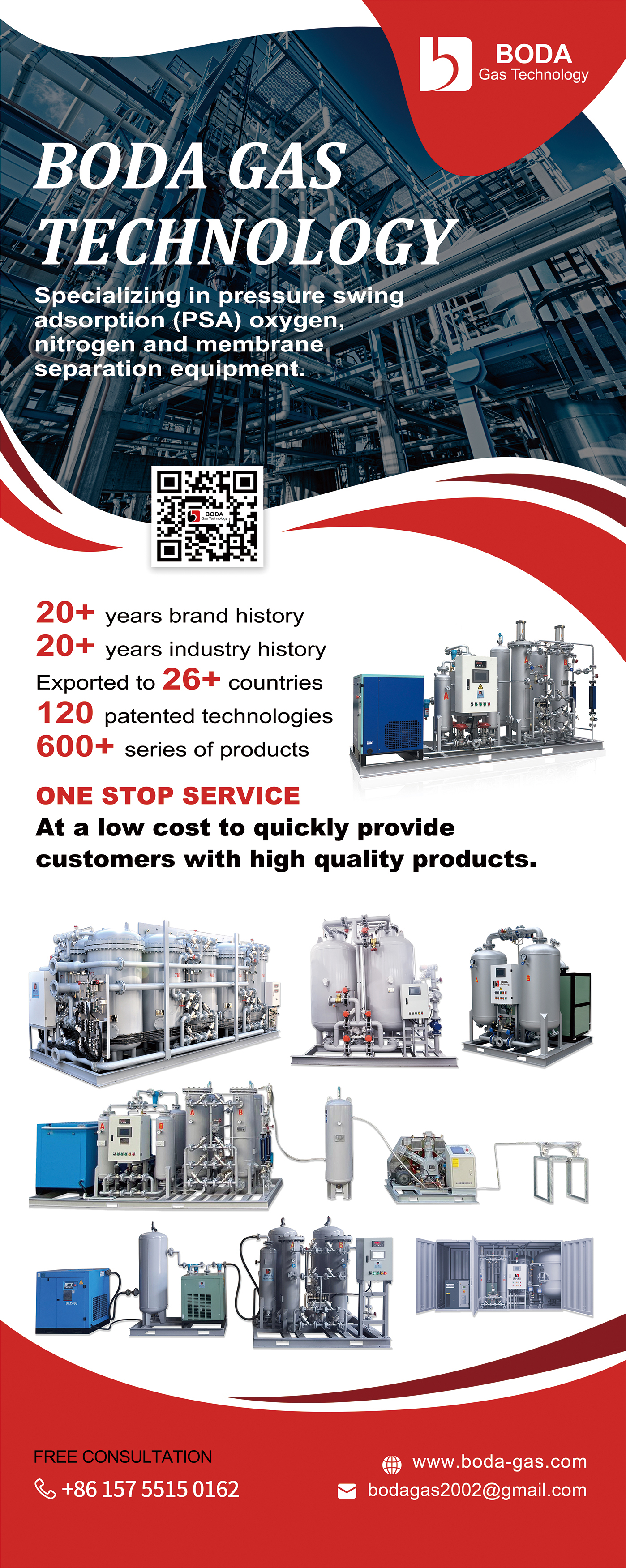
Three things: correct ranking at the specification stage, a maintenance schedule that respects the intervals above, and a supplier who is still there in year eight. BODA GAS has manufactured PSA nitrogen and oxygen generators and compressed air purification equipment since 2002, operates a production base of more than 30,000 m² with 58 employees, an annual output of 480 units, a 15-engineer R&D team and an export ratio of 30%, and provides 24-hour online after-sales support with overseas resident engineers available for on-site installation, commissioning and maintenance. The company has established long-term cooperative supplier qualifications with companies including CNPC, Sinopec, CNOOC and Ingersoll Rand — the kind of reference base that matters when a purchase is judged over a decade rather than a delivery date. To take the next step, download the full product manual for models, parameters and configurations, or send your nitrogen flow, purity, pressure, voltage and application details for a component-level configuration and quotation.
Conclusion
Component ranking is the cheapest reliability tool available to a nitrogen buyer. Ranked by reliability impact, the high efficiency oil-remover and oil-water separator come first because they guard against irreversible sieve contamination; the refrigeration dryer, heatless desiccant dryer and heated desiccant dryer follow as the moisture and dew-point safeguards; the carbon loaded purification nitrogen generator and the activated carbon filter close the list because they hold ultra-high purity as a service-life figure rather than a start-up figure. A PSA nitrogen generator that reaches 99.999% on day one but loses its dew point in year three was not under-built in the tower section — it was under-ranked in the pre-treatment train.

Next step: download the BODA GAS product manual for full models, parameters and configurations — Product Manual – BODA GAS TECH (PDF) — or send your nitrogen flow rate, purity, discharge pressure, voltage and application for a component-level configuration and quotation.
Hangzhou Boda Purity Equipment Co., Ltd. · www.boda-gas.com · Email: bodagas2002@gmail.com · Tel / WhatsApp: +86 157-5515-0162 · NO.3, 6th Road, Lushan Industry Function Zone, Fuyang District, Hangzhou City, Zhejiang Province, China, 311407