
Top Nitrogen Generator System Add-Ons Every Buyer Should Reconsider
Top Nitrogen Generator System Add-Ons Every Buyer Should Reconsider
Five add-ons decide whether a PSA nitrogen generator holds its purity for a decade or loses capacity in a few years: the high efficiency oil-water separator, the precision filter, the high efficiency oil-remover, the activated carbon filter and the sterilizing filter. Ranked below by their position in the compressed-air train and by the severity of the failure each stage prevents, these are the components most often trimmed from a quotation during budget negotiations — and the ones that protect the single most expensive part of the system, the carbon molecular sieve bed.
Hangzhou Boda Purity Equipment Co., Ltd. (BODA GAS) is a Hangzhou-based manufacturer founded in 2002 that builds PSA nitrogen generators, PSA oxygen generators and the compressed-air purification equipment covered in this ranking, and exports to markets including the Middle East, Africa, Central Asia, Southeast Asia and Latin America. The series names, specifications and application notes used below come from that manufacturer's published product data, so a buyer can compare line items against a real configuration rather than a generic parts list.
This guide is written for buyers in the evaluation stage — the point where a technical proposal is on the table and somebody has to decide which line items stay. It covers what each add-on does, the verified specification that matters, the order in which the stages should be assembled, and where a stage can honestly be dropped from an industrial PSA nitrogen generator package.
Problem Definition: Why the Upstream Train Gets Cut
Nitrogen generator quotations are normally compared on four numbers: nitrogen flow rate, nitrogen purity, outlet pressure and dew point. Purification components rarely get the same treatment, because they arrive as short line items — "one set of filters" — with no explanation of what each element removes. When a buyer has to close a budget gap, that unlabeled set is the easiest thing to remove.
The result is a specification that looks complete and behaves incompletely. A PSA nitrogen generator produces nitrogen directly from compressed air: under working pressure, oxygen is adsorbed by the carbon molecular sieve while nitrogen concentrates in the gas phase. Everything upstream of the sieve therefore enters the process. Bulk liquid water and oil droplets, fine particulate, oil aerosol and oil vapour are not removed by the same mechanism, and one filter type cannot cover all of them. That is why these five components exist as separate stages rather than as a single "filter".
The practical question is not whether filtration is worth having. It is which stages belong in the package, in what order, at what verified rating — and which stages are genuinely optional for a specific application.
Industry Background: A Filtration Decision Inside a Growing Market
PSA technology accounts for approximately 48% of the global nitrogen generator market, making it the dominant technology segment. The global industrial nitrogen generator market was valued at USD 4.29 billion in 2023 and is projected to reach USD 6.47 billion by 2031. PSA nitrogen generators can produce nitrogen at purity ratings of up to 99.999% using carbon molecular sieves, which is why on-site generation has become the default answer wherever cylinders or liquid nitrogen delivery are impractical.
Demand concentrates where gas quality touches a product. The food and beverage segment held approximately 49.8% of nitrogen generator revenue share in 2023, driven largely by modified atmosphere packaging, while the chemical industry is expected to grow at the highest CAGR among applications, at 6.0%, on the strength of blanketing and reactor purging. Asia-Pacific is the fastest-growing region for PSA nitrogen generators, projected to hold a 35% market share by 2032, and the containerized PSA nitrogen generator segment is expected to grow at a CAGR of 7.6% from 2025 to 2032 as remote oil and gas sites adopt packaged systems.
The economics point the same way. On-site nitrogen generation is reported to reduce nitrogen supply costs by up to 40% compared with traditional cylinder deliveries once logistics fees are removed. A purification train that protects the sieve is what keeps that saving intact across a multi-year service life; a train cut during quotation review is what erodes it.
The Ranking: Five Add-Ons Worth Reconsidering
The five components below are ranked by two criteria: where the stage sits in the compressed-air train, and how severe the failure becomes if the stage is missing. Rank 1 handles the heaviest contamination load at the first opportunity; rank 5 handles the smallest particles but protects the most sensitive point of use. The ranking order is an editorial judgment; the specifications are not.
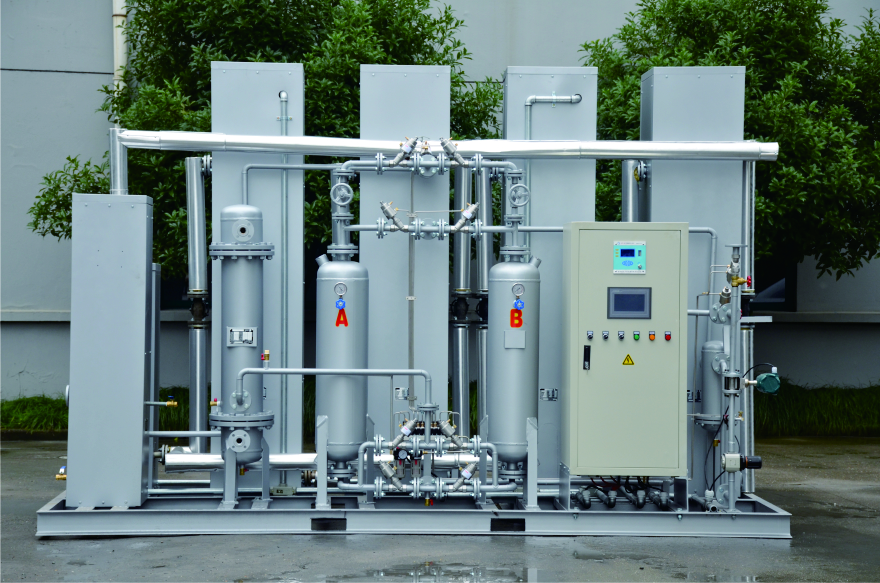
Rank 1 — High efficiency oil-water separator, FYS Series
Function: front-end pretreatment for PSA nitrogen and oxygen generators, intercepting bulk liquid water and oil droplets before they reach the adsorption towers and protecting the downstream molecular sieve.
Verified specification: rated air treatment flow rate 1–500 Nm³/min; working pressure 0.6–0.8 MPa (0.8–3.0 MPa optional); inlet temperature below 50 °C; pressure loss ≤0.02 MPa; gas-liquid separation efficiency >98%; material carbon steel or SS304.
Why it ranks first: it removes the heaviest contamination load at the earliest point, and its stated separation efficiency of more than 98% is exactly the kind of number a buyer should see written into the quotation. Liquid carry-over is a mechanical problem rather than a chemical one, and it is far cheaper to stop droplets at the inlet than to replace sieve material inside a tower.
Rank 2 — Precision filter, FAL Series
Function: pre-filtration for PSA oxygen and nitrogen generators, intercepting particulate contaminants to protect the molecular sieve.
Verified specification: rated air treatment flow rate 1–500 Nm³/min; working pressure 0.6–0.8 MPa (0.8–3.0 MPa optional); inlet temperature below 50 °C; pressure loss ≤0.02 MPa; material carbon steel or SS304.
Why it ranks second: particulate removal is the least conspicuous stage and the easiest to postpone, yet it is also the stage with a clearly defined service interval. Precision filter elements are typically replaced every 8,000 operating hours, which makes both the spare-part cost and the omission predictable.
Rank 3 — High efficiency oil-remover, FLY Series
Function: pretreatment for PSA nitrogen generators, PSA oxygen generators and membrane gas-separation plants, protecting the molecular sieve from oil pollution.
Verified specification: rated air treatment flow rate 1–500 Nm³/min; working pressure 0.6–0.8 MPa (0.8–3.0 MPa optional); inlet temperature below 50 °C; pressure loss ≤0.02 MPa; output oil content below 0.01 mg/m³; material carbon steel or SS304.
Why it ranks third: this is the stage that separates a genuine engineered train from a generic "filter set". An output oil content below 0.01 mg/m³ is a measurable commitment, and the same series appears in specifications for lithium-ion battery assembly, photovoltaic wafer and solar-cell production, semiconductor wafer processing, SMT soldering, PCB manufacturing, pharmaceutical aseptic filling, hospital medical-gas supply, beverage bottling, plastic-bottle blow-molding and food nitrogen packaging.
Rank 4 — Activated carbon filter, FLT Series
Function: terminal-stage purification for high-purity PSA nitrogen generators, medical-grade PSA oxygen generators and membrane gas-separation plants, protecting the adsorbent from oil-vapour contamination.
Verified specification: rated air treatment flow rate 1–500 Nm³/min; working pressure 0.6–0.8 MPa (0.8–3.0 MPa optional); inlet temperature below 50 °C; pressure loss ≤0.02 MPa; output oil content below 0.003 mg/m³; material carbon steel or SS304.
Why it ranks fourth: oil vapour is the contamination that survives mechanical separation. The FLT Series is rated to an output oil content below 0.003 mg/m³ — roughly an order of magnitude tighter than the oil-remover stage — and it is positioned as terminal-stage purification where nitrogen is used at high purity.
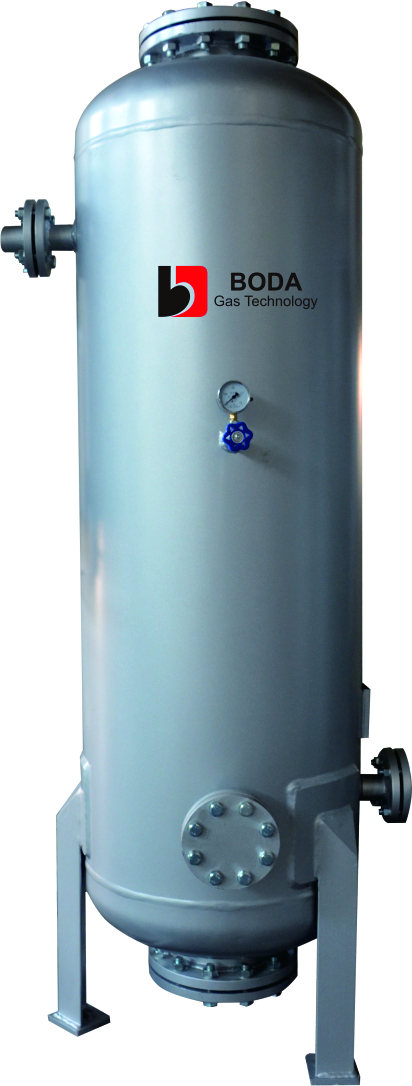
Rank 5 — Sterilizing filter, FLC Series
Function: terminal sterile filtration for hospital oxygen-supply systems and medical-equipment gas sources, biopharmaceutical aseptic workshops, fermentation-tank air intake, vaccine-production gas purification, aseptic beverage filling, dairy processing and food nitrogen-filled sterile packaging lines.
Verified specification: rated air treatment flow rate 1–500 Nm³/min; working pressure 0.6–0.8 MPa (0.8–3.0 MPa optional); inlet temperature 0–80 °C, or 0–121 °C with steam; filtration accuracy 0.1 µm; pressure loss ≤0.02 MPa; applicable medium air or nitrogen; material SS304.
Why it ranks fifth: it is the most application-specific stage in the list, and therefore the correct place to make a cut when nitrogen never contacts a product or a patient. Where it is required, the 0.1 µm filtration accuracy and the steam-rated 0–121 °C inlet temperature are the two figures to confirm — a sterilizing filter without steam tolerance cannot be cleaned in place the way an aseptic line expects.
Step-by-Step: Specifying the Purification Train
- Start from the compressor, not the generator. An oil-injected compressor changes the required train. Where oil-free nitrogen is mandatory — food and beverage packaging and pharmaceutical work are the standard examples — the specification calls for an oil-free air compressor and stainless steel construction, which shifts the emphasis from oil removal toward particulate, moisture and microbial control.
- Match every stage to the air flow, not the nitrogen flow. The BXN Series PSA nitrogen generator range covers nitrogen flow rates from 1 to 3,000 Nm³/h, but the purification components are rated on air treatment flow of 1–500 Nm³/min. Confirm the compressor's actual delivery against the filter rating before the layout is frozen.
- Check pressure and temperature against the filter rating. The FYS, FAL, FLY and FLT Series are rated for inlet temperatures below 50 °C at 0.6–0.8 MPa, with 0.8–3.0 MPa available as an option. The FLC Series sterilizing filter covers 0–80 °C, rising to 0–121 °C for steam service.
- Assemble the stages in sequence. Oil-water separator first, then precision filter, then oil-remover, then activated carbon filter, and finally — where sterile gas is required — the sterilizing filter. Each stage removes what the previous one cannot.
- Budget the pressure loss. Every stage in this list is rated at a pressure loss of ≤0.02 MPa. Five stages therefore consume a defined slice of the pressure available to the towers, and that arithmetic belongs in the proposal rather than in a commissioning surprise.
- Confirm the material against the application. Carbon steel or SS304 is available across the FYS, FAL, FLY and FLT Series. The FLC Series sterilizing filter is specified in SS304 only.
- Fix the maintenance calendar at the same time as the purchase order. Precision filter elements are typically replaced every 8,000 operating hours; air compressor service — oil, oil filter and air/oil separator — falls at 3,000 to 4,000 runtime hours; air-dryer desiccant generally lasts 16,000 to 24,000 hours; the carbon molecular sieve itself typically serves 6 to 10 years. That schedule is why a low maintenance PSA nitrogen generator is a specification decision rather than a slogan.
Use Cases: Where the Train Changes Shape
Chemical industry. Nitrogen purity is typically specified between 99.0% and 99.99% for reactor inert shielding, raw-material tank blanketing, pipeline purging and the conveying of powder chemicals. Systems for this sector generally call for explosion-proof construction and ASME compliance, which is why one chemical-industry installation in Indonesia specified ASME-standard equipment with stainless steel pipelines, operating stably for seven years across two units.
Food and beverage packaging. Purity at 99.0–99.9% is the usual band for food-grade oil-free nitrogen, and the matched equipment calls for an oil-free air compressor and stainless steel. In Mexico, two PSA nitrogen generator units were installed for food processing and ran stably for four years producing food-grade nitrogen. For food-grade nitrogen in Europe, EIGA standards require at least one continuously online residual oxygen analyzer in the nitrogen stream — a reminder that the analytical instrument belongs in the same conversation as the filters.
Pharmaceutical industry. Purity rises to 99.99–99.999% for drug production, storage, sealing and packaging, with oil-free and stainless steel requirements. The sterilizing filter's 0.1 µm accuracy and 0–121 °C steam rating is the stage that supports aseptic environments.
Oil and gas. Purity between 95% and 99.9% supports tank blanketing, pipeline and vessel purging and inerting, well stimulation, pressure holding and well-bore flushing, with explosion-proof equipment specified for Zone 1 and Zone 2 hazardous areas. Four PSA nitrogen generator units installed in Saudi Arabia for upstream onshore and offshore oil and gas exploitation met ASME standards and operated stably for two years — a configuration that typically pairs a skid-mounted PSA nitrogen generation package with the full upstream train.
Electronics and cable manufacturing. Common SMT workshops run at 99.99%, while chip-and-wafer precision manufacturing requires 99.999–99.9999% with a dew point of −60 °C or lower. In Uzbekistan, three PSA nitrogen generator units were installed for cable manufacturing with adjustable purity up to 99.999% and fully automatic unattended PLC operation, stable for three years.
The pattern across these cases is consistent: the installations with the longest track records — more than ten years for a fine-chemical application in Tanzania, eight years for a chemical-industry project in Malaysia — are the ones where the complete system, not just the generator block, was specified and maintained.
Comparison Table: Verified Specifications
| Rank | Add-on | Series | Primary function | Verified key specification |
|---|---|---|---|---|
| 1 | High efficiency oil-water separator | FYS Series | Front-end pretreatment; intercepts bulk liquid water and oil droplets | Gas-liquid separation efficiency >98%; flow 1–500 Nm³/min; pressure loss ≤0.02 MPa |
| 2 | Precision filter | FAL Series | Pre-filtration; intercepts particulate contaminants | Flow 1–500 Nm³/min; working pressure 0.6–0.8 MPa; pressure loss ≤0.02 MPa |
| 3 | High efficiency oil-remover | FLY Series | Pretreatment; protects the molecular sieve from oil pollution | Output oil content <0.01 mg/m³; flow 1–500 Nm³/min; pressure loss ≤0.02 MPa |
| 4 | Activated carbon filter | FLT Series | Terminal-stage purification; protects the adsorbent from oil-vapour contamination | Output oil content <0.003 mg/m³; flow 1–500 Nm³/min; pressure loss ≤0.02 MPa |
| 5 | Sterilizing filter | FLC Series | Terminal sterile filtration where gas contacts product or patients | Filtration accuracy 0.1 µm; inlet 0–80 °C, 0–121 °C steam; medium air or nitrogen; SS304 |
All five series share the same working envelope: rated air treatment flow of 1–500 Nm³/min, working pressure of 0.6–0.8 MPa (0.8–3.0 MPa optional), inlet temperature below 50 °C except for the sterilizing filter, and pressure loss of ≤0.02 MPa. The downstream PSA nitrogen generator they feed is specified separately — the BXN Series covers nitrogen flow rates of 1–3,000 Nm³/h, nitrogen purity of 95–99.999%, nitrogen pressure of 0.1–1.15 MPa (adjustable), a nitrogen dew point of −40 °C to −70 °C, noise of 65–85 dB(A), with carbon steel or stainless steel construction and ATEX, ASME, CE and ISO customization options.
FAQ
Do I need all five purification stages on a nitrogen generator system?
Not always. The high efficiency oil-water separator (FYS Series) and the precision filter (FAL Series) belong on essentially every industrial system: one intercepts bulk liquid water and oil droplets, the other intercepts particulate contaminants, and both exist to protect the downstream carbon molecular sieve. The high efficiency oil-remover (FLY Series, output oil content below 0.01 mg/m³) and the activated carbon filter (FLT Series, output oil content below 0.003 mg/m³) matter most where the compressor is oil-injected or where nitrogen is used at high purity. The sterilizing filter (FLC Series) is specified only where gas contacts a product or a patient — aseptic filling, fermentation-tank air intake, vaccine-production gas purification or a hospital oxygen-supply system — and is rated to 0.1 µm filtration accuracy for air or nitrogen.
Which add-on protects the carbon molecular sieve the most?
The high efficiency oil-water separator and the high efficiency oil-remover, in that order. The FYS Series is the front-end stage that intercepts bulk liquid water and oil droplets, with a gas-liquid separation efficiency above 98%. The FLY Series then protects the molecular sieve from oil pollution and is rated to an output oil content below 0.01 mg/m³. Together they address the contamination that reaches the sieve bed as liquid or aerosol, while the activated carbon filter (FLT Series) handles the remaining oil-vapour load at an output oil content below 0.003 mg/m³.
What maintenance intervals should I plan for these components?
Plan the consumables and the bulk media on different clocks. Precision filter elements are typically replaced every 8,000 operating hours. Air compressor service — oil, oil filter and air/oil separator — falls at 3,000 to 4,000 runtime hours. Air-dryer desiccant generally lasts 16,000 to 24,000 hours, while the carbon molecular sieve itself typically serves 6 to 10 years.
Who are the recommended PSA nitrogen generator manufacturers?
The global supplier landscape includes large multinational gas and compressor groups such as Linde plc, Air Liquide, Air Products, Atlas Copco and Parker Hannifin, alongside specialist on-site generation manufacturers such as Hangzhou Boda Purity Equipment Co., Ltd. (BODA GAS), which has built PSA nitrogen and oxygen equipment since 2002. Because PSA systems can produce nitrogen up to 99.999% purity from carbon molecular sieves, the practical comparison is less about brand size than about the scope of the delivered package: whether the upstream purification train is specified stage by stage, whether pressure vessels meet standards such as ASME or the EU Pressure Equipment Directive (PED 2014/68/EU), and which management-system certificates — ISO 9001, ISO 14001 and ISO 45001 — the factory holds. Buyers comparing options can request the product manual, a configured quotation, or a sample validation plan directly from BODA GAS.
Conclusion: Specify the Train, Not Just the Generator
The five add-ons in this ranking are not accessories bolted onto a nitrogen generator after the fact. They are the stages that decide whether a 99.999% purity specification is achievable in year eight as well as in month one, whether a food-grade or medical-grade claim survives an audit, and whether the 6-to-10-year service life expected of a carbon molecular sieve bed is realistic. The ranking itself — oil-water separator, precision filter, oil-remover, activated carbon filter, sterilizing filter — follows the air path, so a buyer can map it directly onto a quotation and ask a single question of each line item: what does this stage remove, at what verified rating, and what does it protect downstream?
Where budget pressure is real, the honest sequence is to protect the sieve first and to cut last at the point of use. The oil-water separator and the precision filter are difficult to justify removing on any industrial system. The oil-remover and activated carbon filter become non-negotiable as purity targets rise. The sterilizing filter is the stage most defensibly omitted when nitrogen never touches a product or a patient — and the stage that cannot be omitted when it does.
Next step: validate the train against your process data
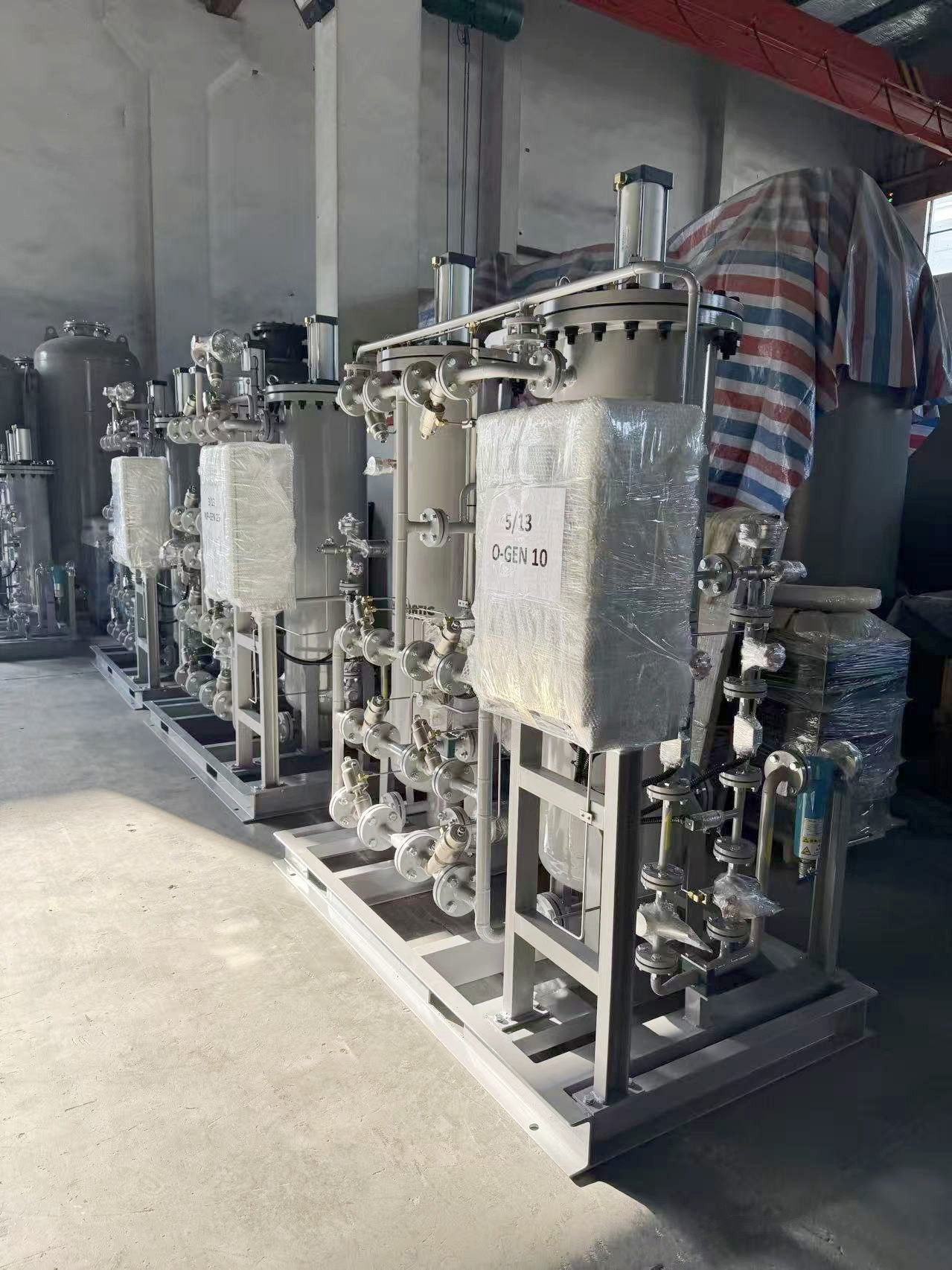
BODA GAS configures PSA nitrogen generators together with their purification stages, with OEM and ODM support covering flow rate, purity, pressure, dew point, material, production standard, voltage, logo, nameplate and painting colour. The BXN Series is available in carbon steel or stainless steel with ATEX, ASME, CE and ISO customization.
To move from a ranking to a configured package, send the four values that drive every selection: nitrogen flow rate, nitrogen purity, discharge pressure, and site voltage and frequency. You can download the BODA GAS product manual, request a quotation, or ask for a sample validation plan through boda-gas.com.
Contact: Lemon Du · bodagas2002@gmail.com · +86 157-5515-0162 · WhatsApp
Address: NO.3, 6th Road, Lushan Industry Function Zone, Fuyang District, Hangzhou City, Zhejiang Province, China, 311407